There is no reliable fixed number of days between waterings in cooler weather. Check moisture in the root zone and water only when it has dried enough for your tree’s growing conditions. A potted lemon usually needs checking more often than an in-ground tree because its container dries faster.
How to decide when to water
Cooler weather generally slows growth and reduces water use and evaporation, but it does not eliminate the need to check the soil. The interval depends on recent rain, temperature, soil and drainage, and whether the tree is in a pot or the ground. Use the soil as your guide rather than carrying over a summer routine or setting a winter watering day.
As an Amazon Associate I earn from qualifying purchases.
Watering guidance by growing situation
| Tree situation | Check before watering | Guidance |
|---|---|---|
| Established in-ground tree | Soil in the root zone | The University of California Agriculture and Natural Resources advises letting the top 3–6 inches dry before watering. Its guidance is source-specific, not a universal schedule. |
| Container-grown tree | Medium below the surface | Texas A&M AgriLife Extension advises letting the upper inch of medium dry, then watering slowly until excess drains from the pot. Check deeper in the mix as well; a dry surface alone is not a reason to water. |
| Indoor container tree | Moisture in the potting mix | Wisconsin Extension describes the target as moist but not soggy. How quickly the mix dries varies with pot size, plant, medium, temperature and humidity. |
Adjust for the tree’s age and recent weather
Newly planted trees
A new planting needs closer monitoring than an established tree because its roots have not spread as far. Make sure water reaches the root area. As the tree establishes, irrigation can be applied farther from the trunk.
Rain, soil and drainage
- Rain: Skip supplemental watering when rain has kept the root zone moist. UC guidance says mature trees need no irrigation during rains.
- Sandy soil: Available water is lost more readily, so check the root zone rather than assuming a long interval will hold.
- Clay soil: Water enters more slowly, making application rate and drainage important. Do not leave roots in soggy soil.
- Temperature: Cooler conditions often mean less water use, but local winter weather varies; the calendar alone cannot set the interval.
Flowering and fruit development
Tree stage can also affect needs. UF/IFAS Florida guidance notes irrigation during flowering and fruit development and says watering older trees benefits growth and yield only during very prolonged dry periods. This is Florida-specific advice, not a general rule for every climate.
#1 Best Overall

- Made for Lemon & Citrus Trees – Formulated to support healthy growth in lemon and citrus plants.
- Supports Fruit Development & Tree Strength – Helps encourage strong roots and consistent fruit production.
- Balanced Nutrition for Citrus Care – Provides nutrients suited for steady growth and seasonal harvests.
- Ideal for Garden & Container Trees – Suitable for patios, orchards, and backyard citrus planting.
- Made in USA
Water carefully, especially in pots
For a container tree, apply water slowly and let excess drain freely from the bottom. Do not let the root ball become completely dry, but avoid keeping the mix saturated: overwatering can impair container citrus and excess moisture can predispose citrus to root and crown rots.
For an established in-ground tree, UC’s soil-drying guidance is one way to judge when to water. Texas A&M gives a different regional example: during the cooler part of the year, apply 1 inch of irrigation after measuring cans dry. That is an established-tree example, not a universal prescription for home lemon trees.
Rank #2

- Made for Lemon & Citrus Trees – Formulated to support healthy growth in lemon and citrus plants.
- Supports Fruit Development & Tree Strength – Helps encourage strong roots and consistent fruit production.
- Balanced Nutrition for Citrus Care – Provides nutrients suited for steady growth and seasonal harvests.
- Ideal for Garden & Container Trees – Suitable for patios, orchards, and backyard citrus planting.
- Made in USA
Check soil rather than relying on the surface
Before watering, inspect below the surface. Mississippi State University Extension advises checking for moisture below the top inch or two of soil, not just judging by a dry surface. A tactile check is enough; a soil moisture meter is optional.
For pots, combine that check with the upper-inch guidance and confirm that the container drains. For in-ground trees, assess moisture several inches down in the root zone. Water when the relevant root area has dried to the source-specific depth for that growing situation, taking rain and drainage into account.
Quick Recap
Best Value
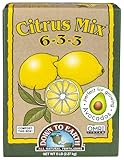
- Down To Earth Citrus Mix is a five pound box of all natural fertilizer with 6-3-3 formula and is listed by the Organic Materials Review Institute (OMRI) for use in organic production
- Formulated with primary and secondary plant nutrients like calcium, sulfur, zinc and iron, plus selected micronutrients
- It supplies the proper ration of nitrogen, phosphorus and potassium that helps promote lush new growth, abundant green foliage, fragrant blossoms and bountiful fruit
- An excellent option for citrus trees of all kinds and may also be used to feed other fruit trees, vines and ornamentals for equally enjoyable results
- Ingredients: feather meal, fish bone meal, alfalfa meal, greensand, langbeinite, basalt, sulfate of potash, zinc sulfate and kelp meal. DOES NOT EXPIRE, if kept in a cool, dry place
Rank #4

- Balanced Organic Nutrition – Supplies a 6‑3‑3 NPK ratio along with calcium, sulfur, iron, and zinc to foster healthy foliage, flowering, and fruit.
- Crafted from Premium Natural Sources – Includes feather meal, fish bone meal, alfalfa meal, langbeinite, basalt, potassium sulfate, zinc sulfate, kelp, and humic acids derived from leonardite for enhanced nutrient uptake.
- OMRI-Listed for Organic Use – Certified for organic gardening, ensuring no synthetic additives—a great match for organic or sustainable gardens.
- Mini Box, Maximum Flexibility – Compact 1 lb packaging is ideal for small-scale use, raised beds, containers, or trial applications before committing to larger sizes.
- Easy Application Schedule – Apply 3–4 times a year—late winter, late spring, and early fall—by spreading around the drip line or mixing in fresh soil at planting or repotting.
Rank #3

- Made for Lemon & Citrus Trees – Formulated to support healthy growth in lemon trees and citrus plants
- Supports Fruit Development & Leaf Health – Helps encourage strong foliage and consistent fruit production.
- Granular Nutrition for Steady Feeding – Designed to release nutrients gradually through soil for balanced support.
- Ideal for Garden & Container Citrus – Suitable for backyard citrus trees, patios, and potted lemon plants.
- Made in USA
Product prices and availability are accurate as of the date/time indicated and are subject to change. Any price and availability information displayed on Amazon at the time of purchase will apply.