Some links on this page are affiliate links: if you buy through them we may earn a commission, at no extra cost to you.
A new industrial project can change nearby traffic, sound levels, and air quality, but the size and duration of those changes depend on the site, design, construction schedule, operating hours, vehicle fleet, access routes, controls, and local approval rules. Construction impacts often look different from normal operations. A credible review should therefore separate construction, start-up or maintenance periods, and routine operation; identify sensitive locations; show baseline and forecast conditions; and attach enforceable mitigation to a responsible party. There is no single reliable “industrial development” impact number that applies to every site.
How will a new industrial development affect traffic near me?
Traffic effects come from two distinct periods. Construction can create a temporary surge of dump trucks, concrete deliveries, cranes, equipment haulers, worker vehicles, and utility crews. Once the facility opens, daily employee trips, deliveries, outbound shipments, waste movements, service calls, and occasional oversized loads determine the operating pattern. Start-up, shutdown, major maintenance, or expansion work can create a third, unusually intensive period.
As an Amazon Associate I earn from qualifying purchases.
Crashes, No Sound, or Screen Glitches?
Random freezes, missing sound and display glitches usually trace back to one bad driver. Find and replace yours safely.Free scan · under a minuteWindows Errors? Fix Them Before They Spread
Repair common Windows errors and clear accumulated junk for a smoother, more stable PC - no reinstall needed.Free scan · no reinstallAsk the project team to quantify each period rather than presenting one blended estimate. The Federal Highway Administration (FHWA) environmental-review framework emphasizes assessing effects, alternatives, mitigation, agency coordination, public involvement, and documentation; the exact review and hearing requirements for an industrial proposal depend on its jurisdiction and permits. FHWA’s NEPA transportation decisionmaking guidance describes that framework.
Traffic questions that produce usable answers
- What vehicles? Request counts for heavy trucks by class, employee cars and vans, buses, tankers, rail movements, and oversized or hazardous-material loads where applicable.
- How many trips? Distinguish one-way trips from round trips and show average daily, peak-hour, and peak-day volumes.
- When do they travel? Check shift changes, overnight deliveries, school arrival and dismissal periods, weekends, and seasonal or campaign peaks.
- Which roads? Require a map of gates, intersections, designated truck routes, turn restrictions, and any route through residential streets.
- What is the background? Determine whether the analysis includes existing traffic growth, other approved developments, road construction, and cumulative intersection conditions.
- What happens during construction? Look for haul routes, worker parking, staging areas, delivery windows, road closures, and controls for mud or debris on public roads.
An official environmental assessment for one facility describes continuing truck traffic, transport routing, and facility safeguards under a new operating licence. That document is a case example, not a typical or quantified impact for all industrial projects. The EPA assessment shows why the actual proposal’s traffic study matters more than a generic industry assumption.
Popular on Amazon

- 2.25-inch LCD Screen with Backlight: This TS-501B sound level meter is measured noise levels are expressed in decibels and displayed on the 2.25-inch LCD screen, it easy to read on a big display design. Long press the backlight button to turn on a backlight, making it easy to view even in dim light
- Decibel Meter with A/C Weighting: TopTes TS-501B decibel meter uses a precise condenser microphone to capture sound. It’s equipped with A-weighting and C-weighting facilities that measure noise levels from 30 to 130 dB with an accuracy of 1.5 dB, Frequency from 30 to 8000Hz. Perfect for monitoring noise levels in communities, home theaters, audio systems, automobiles, workshops, schools, offices, factories
- MAX/MIN Measurement: The sound pressure level (SPL) meter has Max or Min measurement values to represent the maximum/minimum (high/low peak) value of the sound produced within a certain time, and the data hold function can freeze the current reading based on the sound measurement according to individual needs
- Easy Use and Feature Packed: The non-slip side design ensures that the portable noise meter fits easily in the hand. TS-501B SPL meter is a battery-operated noise meter that comes with three durable batteries and has an automatic power off function to extend battery life. A low battery indicator will appear on the screen when the battery is low to remind the user to replace the battery in time
- What’s in the Box: One TS-501B Decibel Meter, Three AAA Batteries, One User Manual, One Carry Case. The device has been factory calibrated to ensure high measurement accuracy and compliance with quality standards.
What to look for in a traffic study
A useful study identifies existing counts, forecast project trips, the method used to assign trips to roads, intersection performance, sight-distance or safety issues, and proposed improvements. Check whether “truck trips” means vehicle movements at the gate or trips on each road segment; the numbers are not interchangeable. Ask whether queues are modeled at security gates, weighbridges, loading bays, or rail crossings, and whether emergency access remains available.
For construction, verify that the schedule covers the busiest earthwork and concrete periods, not only the average month. For operation, compare ordinary days with the highest projected shift or shipping period. If the applicant offers a route-management plan, it should identify who enforces it, how drivers receive instructions, and what happens after repeated violations.
Will a new industrial development make the area noisier?
Noise depends on the source, distance, shielding, ground and weather conditions, hours of activity, and the sensitivity of nearby land uses. Construction may bring intermittent high-energy sounds from pile driving, rock breaking, blasting, grading, generators, and reversing alarms. Operations may produce steadier sound from fans, compressors, pumps, conveyors, cooling systems, truck movements, loading, alarms, and rail equipment. Night work can be more disruptive even when measured levels are lower because background sound and community activity are reduced.
Also popular on Amazon
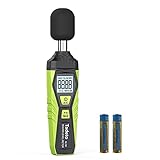
- 【Accurate Measurement】 The measuring range of the sound level meter is 30dB to 130dB . Highly accurate with ± 2.0 dB. Real-time monitoring can give you accurate data on the sound level in the area.
- 【A/C Weighted Measurement】 The A weighted simulates the frequency characteristics of low-intensity human ear noise, which is suitable for the detection of ambient noise. The C weighted simulates the frequency properties of high-intensity noises of the human ear, which are suitable for the sound pressure analysis of machine motors and machines. More professional measurement methods provide users with a more perfect user experience.
- 【Fast and Slow Measurement】 The sound level meter has the function of converting the fast and slow response rate. The fast response rate uses a time constant of 0.125s/time for general environmental measurement. The slow response rate uses a 1s/time constant, which is used for environmental measurements with relatively large changes in noise levels.
- 【Digital LCD Display 】 The digital display is a 4-digit LCD display with a resolution of 0.1 dB. Backlit LCD digital display, the reading effect is clearer in dark places. When the battery is low, the LCD display will display a low voltage icon, indicating that the power is low at this point and the battery needs to be replaced.
- 【Convenient and Lightweight 】Tadeto sound level meter is lightweight and easy to carry. It's widely used in factories, transportation, car, baby room and audio system offices, sound quality control in homes, schools, and construction sites.
FHWA’s noise-review guide says an analysis should identify noise-sensitive land uses, establish existing and future noise levels, discuss construction noise, identify impacted uses, apply the relevant criteria, and evaluate abatement plus indirect or cumulative effects. Those procedures are for FHWA and state highway studies under rules applicable to covered federal highway projects; they are not universal industrial-facility noise limits. Read the FHWA noise-analysis review guide alongside the local ordinance, permit, or approval conditions that govern the industrial site.
Noise evidence worth requesting
- Receptors: Show the nearest homes, schools, hospitals, care facilities, parks, places of worship, and outdoor work or recreation areas.
- Baseline: Ask how existing sound was measured, on which dates and times, and whether unusual events were excluded or documented.
- Forecast: Require modeled day and night levels for construction and operation, including truck routes, loading, alarms, and major equipment.
- Criteria: Identify the exact local, state, federal, permit, or project criteria used. A highway criterion cannot be silently substituted for an industrial standard.
- Worst cases: Check whether simultaneous equipment, nighttime conditions, meteorology, reflecting surfaces, and tonal or impulsive sounds were considered.
- Mitigation: Look for equipment enclosures, barriers, building orientation, quieter alarms, restricted delivery hours, equipment maintenance, and a complaint-response procedure.
Ask whether the model includes indirect and cumulative effects, such as a new access road carrying trucks past homes or several facilities operating in the same industrial corridor. A forecast that reports only the facility boundary may miss the location where neighbors actually experience the sound.
Can a new industrial development affect air quality?
Potential air effects come from both fixed and moving sources. Construction can generate soil and aggregate dust, diesel exhaust, welding fumes, and emissions from generators. Operations may add stack emissions, process vents, storage-tank losses, boilers, emergency engines, truck and forklift exhaust, and fugitive dust from roads, stockpiles, conveyors, or loading. The relevant pollutants depend on the process and fuels; a credible assessment should name the pollutants rather than promise that “air quality” is acceptable in the abstract.
Also popular on Amazon

- Accurate 30-130dB Noise Measurement: The Goldeep SL750A decibel meter measures sound levels from 30 to 130dB with ±1.5dB accuracy and a 31.5Hz-8KHz frequency response. This sound decibel meter is ideal for checking home noise, neighbor noise, traffic sound, office noise, construction sites, factories, classrooms, baby rooms and musical instruments.
- A/C Weighting for Different Sound Environments: This digital sound level meter supports A/C weighting modes for more flexible noise testing. A-weighting is suitable for environmental noise such as urban traffic, schools, offices, business areas and construction sites. C-weighting is designed for industrial noise from machinery, equipment, aerospace, high-speed rail and other high-intensity sound sources.
- dB/SONE Units for Sound & Loudness Testing: Use the dB unit to measure sound intensity for environmental noise, machine noise, traffic noise and workplace noise. Switch to SONE to better understand perceived loudness, making this db meter useful for music, audio systems, acoustic checks and instrument noise control..
- FAST/SLOW Response with MAX/MIN Tracking: The spl meter includes FAST and SLOW response settings. FAST response, 0.125s per reading, is useful for changing noise levels, while SLOW response, 1s per reading, is suitable for steady-state noise. MAX/MIN value tracking helps record peak and minimum noise levels over a period of time.
- Easy-to-Use Sound Meter for Daily & Professional Needs: Designed with data hold, clear LCD display, anti-slip grip and a windbreak ball, this sound meter is practical for indoor and outdoor use. Package includes 1 sound level meter, 2 AAA 1.5V batteries and 1 user manual, so you can start measuring noise right away.
Request the source inventory, operating assumptions, control equipment, meteorological data, modeled receptor locations, background concentrations, and applicable standards or permit limits. Ask whether the assessment covers routine operation, start-up and shutdown, malfunctions, maintenance, and construction separately. A project may comply with one permit condition while still needing dust controls or monitoring for another source.
The Western Australia Environmental Protection Authority’s Winu Project assessment page lists separate dust and air-quality emissions documents. That illustrates a project-specific assessment approach; it does not establish what another industrial project will emit or how far effects will travel.
Dust and vehicle-emission controls to check
- Watering, stabilizing, covering, or promptly cleaning exposed soil and haul roads.
- Wheel-wash or road-sweeping arrangements where mud or material could reach public streets.
- Speed limits and enclosed conveyors, chutes, or stockpiles where those controls fit the process.
- Low-sulfur fuel, maintained engines, anti-idling rules, and routing that limits unnecessary residential travel.
- Stack controls, filters, scrubbers, leak detection, and operating limits tied to permit conditions.
- Monitoring locations, averaging periods, trigger levels, reporting frequency, and corrective action when controls fail.
“Fugitive” does not mean harmless or unregulated. It means emissions are not released through a single controlled stack, so the study should explain how they were estimated and controlled. Ask which agency will inspect, what records the operator must keep, and whether residents can obtain monitoring or complaint data.
Also popular on Amazon

- 【Widely Used】The noise meter is the use of environmental sound level instrument, can be widely used in such as factories, workshops, schools, residential, office areas, traffic roads, audio and other occasions of sound level measurement. Also suitable for noise engineering, product quality control, health,prevention and control.
- 【Accurate Measurement】Measuring Range:30~130dB ;Accuracy:±1.5dB(94dB@1KHz);Display Resolution:0.1dB
- 【A Weighted Measurement】 A Weighted network (automatic switching range display)
- 【Fast/Slow mode selection】Press the MODE key, you can convert the response speed of the noise meter, FAST fast, SLOW slow
- 【MAX/MIN Measurement】Press RANGE key to measure the maximum value of MAX and minimum value of MIN.A maximum duration of more than 3 seconds is recorded, with a normal test sampling rate of 0.5 seconds. The maximum error is ± 5%.
How to compare layouts, routes, and operating plans
When a proposal offers alternatives, compare them on the same evidence rather than choosing the shortest map distance or the lowest headline trip count. Use this checklist:
The Tool Desk
Outbyte PC Repair FREEClear out junk files and repair common Windows errorsFree Scan →Outbyte Driver Updater FREEScan for outdated or missing drivers - takes under a minuteDriver Scan →| Comparison area | Questions for every alternative | Evidence to find |
|---|---|---|
| Phase | How do construction, routine operation, start-up, shutdown, and major maintenance differ? | Construction schedule, operating calendar, delivery windows, and peak-period assumptions |
| Traffic | How many heavy-vehicle and employee trips occur, where do they enter, and which roads carry them? | Trip tables, route maps, intersection analysis, queue estimates, and background-growth assumptions |
| Noise | Which sensitive uses are closest, what are existing levels, and what are forecast day and night levels? | Measurement logs, model inputs, receptor maps, criteria, construction analysis, and abatement design |
| Air and dust | Which sources and pollutants are included, and how are weather, receptors, and controls handled? | Emissions inventory, dispersion or dust analysis, meteorology, monitoring plan, and permit limits |
| Accountability | Who performs each mitigation measure, when does it start, and what happens after a failure? | Permit conditions, mitigation commitments, reporting rules, inspection authority, and complaint procedure |
A slightly longer truck route may keep heavy vehicles away from homes and schools; a compact site may reduce internal travel but place a gate beside a sensitive receptor. The decision should be based on documented conditions and enforceable commitments, not on the label “preferred alternative.”
Independent reader supportYour contribution helps us test, update, and keep practical guides available for everyone.How to read the project documents step by step
- Start with the proposal and alternatives. Confirm the site boundary, process, building and stack locations, access points, hours, workforce, storage, and expansion assumptions. Find the environmental assessment or impact statement if one is required, technical appendices, permit applications, and the public-comment notice.
- Audit the traffic analysis. Separate construction and operation. Check vehicle categories, one-way versus round-trip definitions, peak periods, routes, background traffic, cumulative projects, queues, road safety, and worker parking.
- Audit the noise analysis. Locate sensitive receptors and baseline measurement points. Check future modeled levels for day and night, construction sources, applicable local or project criteria, and the reasoning for proposed or rejected abatement.
- Audit air and dust work. Identify every source and pollutant, the operating rate, fuel and control assumptions, meteorology, receptor locations, background data, dust-management measures, monitoring, and the authority’s findings.
- Match promises to obligations. Highlight measures that appear only in a narrative description. Determine whether each commitment is in a permit, condition of approval, contract, or monitoring plan; identify the responsible party, deadline, performance measure, and remedy.
- Compare alternatives on the same axes. Use the table above and note missing information as “not stated” rather than assuming the options are equivalent.
- Record deadlines and submit specific comments. Use the actual agency notice for dates, delivery method, hearing rules, and eligible topics. FHWA describes early and continuing public involvement for covered transportation processes, but other industrial proposals follow their own jurisdictional procedures. FHWA’s environmental-document guidance explains how agencies document impacts, mitigation, and coordination.
How to comment effectively on a proposed industrial project
Specific, document-based comments are easier for an agency to answer than a general objection. Identify the document and page or map, state the missing or questionable assumption, explain the nearby consequence, and request a measurable correction or condition.
Also popular on Amazon
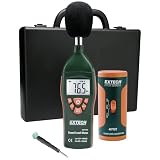
- Datalogs up to 16,000 readings with USB interface for downloading to a PC
- Triple LCD displays humidity, temperature, and date (year, month, and day)
- Programmable from keypad or PC
- Selectable data sampling rate
- User programmable audible and visual alarms
- “The traffic study counts average weekday trucks but does not show the peak concrete-pour week. Please model that period and identify the haul route and delivery hours.”
- “The noise map shows receptor locations but not nighttime baseline measurements. Please explain the baseline method and model simultaneous loading, reversing alarms, and maintenance activity.”
- “The dust plan names watering but gives no trigger, inspection frequency, or corrective action. Please add those requirements and identify who reports results.”
- “The preferred access road passes a school. Please compare the alternative route using school arrival and dismissal periods and explain any safety mitigation.”
FHWA reproduces 23 CFR § 771.105(c): “Public involvement and a systematic interdisciplinary approach are essential parts of the development process for proposed actions.” That principle supports asking for coordinated answers across traffic, noise, air, safety, and land-use reviews, while remembering that the quoted regulation applies within the federal transportation context described by FHWA.
Mitigation, monitoring, and what happens after approval
Mitigation is meaningful only when it is specific enough to verify. Look for a drawing, operating limit, schedule, monitoring location, reporting interval, and enforcement mechanism. Examples include restricted truck hours, designated routes, covered loads, paved or stabilized haul roads, sound barriers, enclosed equipment, low-noise alarms, stack controls, dust monitors, and automatic shutdowns or corrective work when a limit is exceeded.
What’s actually slowing this PC down?
Pick the symptom - the matching free tool is one click away.
Ask who receives complaints, how quickly the operator must investigate, what records are public, and whether repeated exceedances trigger penalties, changed operating hours, additional controls, or permit review. A voluntary statement in an application is weaker than a permit condition with inspection and reporting requirements. If the project changes materially, ask whether a revised assessment or permit modification is required.
Can residents measure traffic, noise, or dust themselves?
Residents can keep a dated log of truck movements, blocked intersections, delivery times, visible dust, odors, and unusually loud events. Photographs and video can help establish timing and location when collected lawfully and safely. A consumer sound level meter may help record informal ambient readings, but it cannot establish regulatory compliance or replace a qualified acoustic assessment. Calibration, microphone placement, weather, frequency weighting, and averaging time all affect results. Treat personal readings as context for a complaint, not as proof that a legal limit was violated. FHWA’s noise-analysis guide explains why formal studies require defined methods and criteria.
What the evidence can—and cannot—tell you
The official materials available for this topic do not establish a general statistic for traffic, noise, or air-quality changes from industrial development as a class. They show how to evaluate a particular project. FHWA guidance supplies a transportation environmental-review and highway-noise framework; an EPA assessment supplies a site-specific example of truck traffic, noise, fugitive emissions, routing, and safeguards; and the Western Australia EPA page demonstrates that dust and air emissions may be documented in separate project analyses. None should be converted into a universal prediction for your neighborhood.
The most reliable answer will come from the proposal’s own baseline data, forecasts, alternatives, permit conditions, and monitoring commitments, interpreted under the rules of the responsible jurisdiction.
Quick wins for a faster PC:
Fix the driver behind crashes, sound loss and screen glitchesFind Drivers →Clear out junk files and repair common Windows errorsFree Scan →Quick Recap
Product prices and availability are accurate as of the date/time indicated and are subject to change. Any price and availability information displayed on Amazon at the time of purchase will apply.

