Quick wins for a faster PC:
Clear out junk files and repair common Windows errorsFree Scan →Fix the driver behind crashes, sound loss and screen glitchesFind Drivers →Repair Windows errors before they cause bigger problemsFix Now →Some links on this page are affiliate links: if you buy through them we may earn a commission, at no extra cost to you.
Maker culture gives architecture, engineering, and construction teams a practical way to explore uncertainty: build something tangible, test it, learn from what fails, and carry the useful insight into the next iteration. A 2016 report in Building Design + Construction documented how Sasaki and NBBJ used fabrication programs, hackathons, software, sensors, and prototypes to change how their people solved problems. The examples are historical, but they show a durable operating principle for AEC firms: making is not only a route to a finished object; it is a method for learning.
What maker culture means in an AEC firm
The term is broad, so it helps to define it in the way the 2016 article used it. Douglas Wittnebel, AIA, IIDA, LEED AP BD+C, then a Design Director/Principal at Gensler, described the maker movement as an emphasis on “physical explorations, the act of doing and creating and making.” Participants get their hands dirty, test ideas, try new approaches, and experience the results directly. In an AEC setting, that can mean a full-scale mock-up, a small physical model, a digitally fabricated component, a sensor installation, a script, or an application that lets people interact with data.
As an Amazon Associate I earn from qualifying purchases.
What’s actually slowing this PC down?
Pick the symptom - the matching free tool is one click away.
The important distinction is between presenting a finished answer and investigating how an answer might be produced. A drawing can communicate intent; a prototype exposes tolerances, assembly problems, user behavior, cost implications, and unexpected opportunities. Digital work is part of the same loop. Scripting, analysis, and data collection can prepare a fabrication file or reveal a pattern that deserves a physical test.
Why failure is part of the method
Pablo Savid-Buteler, LEED AP, a managing principal at Sasaki, told the magazine that contemporary culture has become more accepting of failure and that, if a team is going to fail, it should fail often while pursuing an achievement. In practice, this means defining small, reversible experiments instead of hiding uncertainty until late design or construction. A failed joint in a model costs less than a failed installation in the field, and a rejected script can still teach the team which variables matter.
Popular on Amazon

- Up to 16 Colors: Bring your designs to life with vibrant multi-color/multi-material printing capabilities, perfect for showcasing your creativity. Note: Connecting Bambu Lab AMS is required.
- 500mm/s and 20000 mm/s² Acceleration True High Speed: Don't wait around for your masterpieces. Lightning-fast printing speed lets you focus on creating, not waiting.
- Enclosed Design: Fully enclosed body improves print performance for advanced filaments. Automatic Bed Leveling: Say hello to high-quality, successful prints. Auto bed leveling makes 3D printing such an easy thing.
- Set Up in 15 Minutes: Spend more time printing and less time setting up. User-friendly design ensures a hassle-free assembly experience for all skill levels.
- Supported Filament: Ideal: PLA, PETG, TPU, PVA, PET ABS, ASA; Capable : PA, PC; Not Recommended: Carbon/Glass Fiber Reinforced Polymer.
Failure is useful only when the team records what it learned and decides what happens next. Otherwise, a workshop can become entertainment rather than a design process. The strongest maker programs connect each experiment to a question, a test condition, an observation, and a decision.
What the reported Sasaki program changed
The article described a multi-week fabrication assignment for new Sasaki employees. Each cohort designed and built a physical object; one year the object was a chair and the next year it was a table. The purpose was hands-on exposure to fabrication, not simply the production of office furniture. New designers had to confront material behavior, tool limitations, sequencing, and the difference between a digital model and an object that must stand, fit, and be assembled.
PC Slower Than It Used to Be?
A free scan shows the junk files, broken settings and background clutter dragging Windows down - then fixes them in one click.Free scan · Windows 10 & 11Outdated Drivers Are Slowing You Down
One free scan finds every outdated or missing driver and matches the right update for your exact hardware.Free scan · exact hardware matchFrom a workshop to an office laboratory
Sasaki maintained a model workshop or fabrication space at its Watertown, Massachusetts, office. The 2016 account said the firm was expanding the idea so the entire office could operate more like a laboratory, including the addition of 3D-printing stations across the building. It also described plans to redesign workstations for more creative and collaborative spaces. Those details describe the facilities and intentions reported at that time; they are not a current inventory of Sasaki equipment or workplace layouts.
The organizational lesson is broader than a room full of machines. Locating tools near everyday work lowers the effort required to test an idea and makes experimentation visible to colleagues. A dedicated shop can support safe, repeatable fabrication, while distributed access encourages people to make a quick study before a concept becomes too expensive to change.
Also popular on Amazon

- One-Click Automatic Printing: Experience hassle-free 3D printing with the Adventurer 5M Series. Enjoy automatic bed leveling for flawless first layers, ensuring consistent adhesion and saving time with no manual adjustments required.
- 12X Ultra Fast Printing: Featuring a CoreXY structure with 600mm/s travel speed and 20000mm/s² acceleration, the AD5M maximizes efficiency, reduces production cycles, and ensures high precision, making it ideal for rapid prototyping and mass production.
- Smart and Efficient Design: Quick 3-second nozzle changes, a high-flow 32mm³/s nozzle, and fast 35-second warm-up to 200°C deliver stable high-speed printing. Its dual-sided PEI platform and versatile options provide easy removal and adaptability for various creative projects.
- Superior Print Quality & Adaptability: Combines a 280°C direct drive extruder with dual-fan cooling and vibration compensation. Includes a standard 0.4mm nozzle and accepts optional sizes from 0.25mm to 0.8mm to fit various printing needs.
- Real-Time App Monitoring: Monitor print progress, adjust settings, and receive instant status alerts remotely with the Flash Studio. Smart mobile control ensures a seamless, effortless printing experience anytime, anywhere.
Digital preparation drives physical making
Sasaki’s Strategies group brought together programmers, software developers, analysts, and mathematicians to address specific questions with customized scripts and digital tests. Colin Booth, a Sasaki associate, summarized the relationship: “The software side is as important and really drives a lot of the fabrication side of things.” A parametric model, analysis routine, or data workflow can determine what should be fabricated, how many variants are practical, and which measurement will distinguish one option from another.
A campus toolkit instead of a single master plan
For an unnamed international client with 32 campuses, the article reported that Sasaki created a recombinable toolkit of campus solutions rather than one conventional master plan. Space prototypes were intended to be fabricated in a maker space and then combined in different configurations. At the time of publication, the first prototype was being built at the client’s main campus: the foundation and ground structure were built traditionally, while the remainder was fabricated offsite, transported, and assembled onsite.
Recommended Free Tools
This approach treats prototypes as components in a system. A one-off object answers whether a particular idea can be made. A toolkit asks whether related ideas can be repeated, adapted, and assembled under different site conditions. The report did not name the client or provide a later completion status, so the example should be read as a description of the strategy at that point, not as proof of a completed rollout.
How NBBJ combined hackathons, shops, and sensors
NBBJ’s Design Computation Group offered a different route into maker culture. The 2016 article said the group aimed to hold at least one hackathon every quarter and had hosted six internal hackathons during the preceding two years. NBBJ studios were described as having woodshops and maker spaces equipped with 3D printers and laser cutters, while staff could work throughout the firm rather than being confined to one department or corner.
Also popular on Amazon
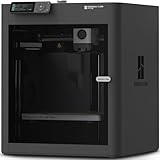
- Up to 16 Colors: Bring your designs to life with vibrant multi-color/multi-material printing capabilities, perfect for showcasing your creativity. Note: Connecting Bambu Lab AMS is required.
- 500mm/s and 20000 mm/s² Acceleration True High Speed: Don't wait around for your masterpieces. Lightning-fast printing speed lets you focus on creating, not waiting.
- Enclosed Design: Fully enclosed body improves print performance for advanced filaments. Automatic Bed Leveling: Say hello to high-quality, successful prints. Auto bed leveling makes 3D printing such an easy thing.
- Set Up in 15 Minutes: Spend more time printing and less time setting up. User-friendly design ensures a hassle-free assembly experience for all skill levels.
- Supported Filament: Ideal: PLA, PETG, TPU, PVA, PET ABS, ASA; Capable : PA, PC; Not Recommended: Carbon/Glass Fiber Reinforced Polymer.
Hackathons turn a question into a testable idea
The Goldilocks concept began with a practical workplace question: could building conditions be measured in real time so occupants, as well as facility managers, could respond? The reported system measured light, humidity, motion, and sound. It connected the readings to an app intended to help employees find workspaces that matched their comfort preferences.
More than 50 sensors had been installed in NBBJ’s New York offices when the article was published. That count is a historical figure, not a current deployment number. The significance lies in the chain from question to intervention: identify an experience that is usually managed indirectly, instrument the environment, present the data in a usable form, and observe whether people can make better choices.
Why building a tool can be better than buying one
Dan Anthony, a Design Computation Leader in NBBJ’s Design Computation Group, said, “We found that in order to get the kind of performance we needed, we had to build our own.” A custom sensor-and-software system can be shaped around the firm’s research question, data format, and workplace behavior. It also forces the team to understand the assumptions behind the tool instead of treating a vendor’s interface as a black box.
Anthony also said the group was not relegated to a corner and could work properly anywhere in the firm. That is an organizational point: computation and fabrication become more effective when specialists can reach project teams early, rather than receiving a narrow production task after decisions have hardened.
Also popular on Amazon

- High-Speed Precision: The Bambu Lab P2S 3D printer prints up to 600 mm/s while maintaining exceptional accuracy. With the PMSM Servo Extruder and Active Flowrate Compensation, every layer of your printed object stays sharp and smooth, delivering flawless corners and consistent results.
- Ready to Print in 15 Minutes: Set up your P2S FDM 3D printer and start printing in just 15 minutes. With AI failure detection, quick-swap nozzles, and automatic calibration, this 3D printer makes professional-grade 3D printing effortless, even for beginners.
- Effortless Multi-Color Printing: The AMS 2 Pro enables seamless multi-color/multi-material 3D printing. It features built-in filament drying at up to 65 °C, keeping every spool ready for flawless prints. (Note: The P2S 3D printer does not support multi-color printing; Combo version required.)
- Smart Airflow for Any Filament: The Adaptive Airflow System automatically balances cooling and heat retention—keeping overhangs crisp with cool air, or maintaining a 50 °C chamber for engineering-grade materials. A carbon filter ensures clean, safe air while you print.
- Limitless Creativity, Seamless Workflow: Explore over one million 3D models on MakerWorld and bring them to life with a smooth, unified workflow using Bambu Studio, Bambu Handy, and your FDM 3D printer, from design to finished print.
When a prototype does not become a product
The article characterized Goldilocks as being at an early stage. It reported that the data could inform planning for future projects and that clients had shown interest, but it did not establish later product availability, commercial deployment, or a continuing sensor count. Anthony noted that a tool can be a showcase yet still inspire ideas in other areas. In other words, the value of a prototype may be a new question, method, or design principle rather than a directly marketable system.
Two complementary modes of making
The Sasaki and NBBJ examples suggest several useful distinctions when an AEC firm designs its own program. They are not a controlled comparison, and the 2016 report supplied no industry-wide productivity or return-on-investment statistics. The table simply separates the modes visible in the reported cases.
Free tools Windows power users keep installed
One-click scans. No signup required.
| Dimension | Physical exploration | Digital exploration | Combined practice |
|---|---|---|---|
| Typical activity | Fabricating chairs, tables, models, mock-ups, or building components | Custom scripting, analysis, sensor data, and software tools | Using digital tests to choose and refine physical prototypes |
| Reported example | Sasaki’s multi-week new-employee fabrication projects | Sasaki Strategies and NBBJ’s Design Computation Group | NBBJ’s Goldilocks concept linking environmental sensors to an app |
| Primary learning | Material behavior, assembly, tools, and scale | Variables, patterns, performance, and user interaction | Whether an insight survives contact with people, materials, and space |
| Potential output | An object, mock-up, or fabrication method | A script, dataset, interface, or analytical workflow | A repeatable system, toolkit, or project decision |
A second distinction is between a dedicated maker space and a maker culture spread across the office. A shop provides controlled equipment, supervision, and storage. Distributed access makes experimentation part of normal project work. Firms may need both: a safe, well-managed core facility plus smaller tools and collaboration areas near teams.
Independent reader supportYour contribution helps us test, update, and keep practical guides available for everyone.How to establish a maker program without losing project discipline
The historical examples point to a practical sequence for firms that want to try the approach today.
Also popular on Amazon

- 600mm/s Speed & CoreXY Structure — Powered by an all-metal CoreXY frame and 20,000mm/s² acceleration, Adventurer 5M Pro reaches speeds up to 600mm/s. Integrated vibration compensation algorithms eliminate ghosting and ringing for smooth, high-precision surface finishes.
- 3-Second Quick-Swap Nozzle & Auto Leveling — Features a tool-free, quick-release nozzle mechanism for effortless 3-second replacements across multiple sizes (0.25/0.4/0.6/0.8mm). One-click full auto-leveling ensures precise bed calibration and a perfect first layer every time.
- Dual Filtration System & Quiet Enclosure — Built with an integrated dual filtration system and a fully enclosed chamber to ensure a clean printing environment and thermal stability. Powered by low-noise motion control, it operates quietly under 50dB for seamless home, office, or classroom use.
- 280°C High-Temp Extruder & Broad Material Compatibility — With a 280°C max nozzle temperature and a 110°C heated bed, it reliably prints engineering materials like ABS, ASA, and PETG-CF, as well as standard PLA and PETG.
- Smart Camera & Mobile Control — Features a built-in camera for real-time monitoring and time-lapse video creation. Monitor progress, adjust settings, and receive instant status alerts via Flash Studio. Integrated with filament detection, power loss recovery, and a 4.3-inch touchscreen for effortless operation.
- Start with a bounded question. Choose a problem whose answer is uncertain but whose experiment can be completed in days or weeks. Examples include a connection detail, a daylight-control idea, a workspace-comfort question, or a repeatable room module.
- Form a cross-disciplinary team. Include the people who frame the design problem, the people who can model or script it, and the people who understand fabrication, installation, operations, or user behavior. The point is to bring together roles that normally meet late.
- Set a learning objective and a stop condition. Decide what observation would support continuing, changing, or abandoning the idea. Define a modest material and time budget so a failed test remains affordable.
- Choose the least expensive credible prototype. Use a sketch or digital simulation when it can answer the question; build a physical mock-up when touch, movement, tolerance, acoustics, or assembly is the issue. Escalate fidelity only after the earlier test resolves the basic uncertainty.
- Document the experiment. Record the version, materials, dimensions, code or settings, test conditions, observations, and unresolved risks. A shared record lets another project reuse the insight instead of repeating the same failed attempt.
- Invite users and builders early. Occupants can reveal comfort or usability problems that designers miss. Fabricators and contractors can identify tolerances, access constraints, fire or safety concerns, and sequencing issues before the idea reaches procurement.
- Decide how the result travels. A successful experiment may become a project specification, a reusable component, a script, a training exercise, or a toolkit. If it is not ready for deployment, preserve the method and the lesson rather than forcing a product launch.
Equipment is a means, not the program
The article named 3D printers and laser cutters as equipment in professional maker spaces, but it did not evaluate brands, models, costs, or a required purchasing list. Firms should select tools based on the questions they need to answer, available supervision, ventilation and fire controls, electrical capacity, material storage, and the ability to maintain and calibrate equipment. A well-run low-fidelity workshop can produce more useful learning than an expensive room that no project team uses.
Managing risk, safety, and expectations
Maker culture does not suspend professional obligations. Any prototype that could affect structural performance, fire safety, accessibility, indoor air quality, electrical safety, or occupant health needs review by the appropriate qualified professionals. Sensor data may also raise privacy questions if it can be connected to identifiable people or movement patterns. Establish what is being measured, who can access it, how long it is retained, and whether consent is required.
The Tool Desk
Outbyte Driver Updater FREEScan for outdated or missing drivers - takes under a minuteDriver Scan →Outbyte PC Repair FREEClear out junk files and repair common Windows errorsFree Scan →Set clear boundaries between an exploratory model and an approved construction document. Label prototypes with their scale, materials, date, and intended use. Keep an approval gate before a fabricated component is installed in a building, and involve the contractor or fabricator before promising a production method that has not been tested for repeatability.
What the evidence says about current relevance
The Sasaki and NBBJ details above come from the October 11, 2016 Building Design + Construction article. They demonstrate how two firms described their programs at that time; they do not establish how those programs operate now. The available account does not confirm whether Sasaki’s new-employee projects or distributed 3D-printing stations continue, whether NBBJ still runs quarterly hackathons, or whether the Goldilocks sensors remain deployed.
NBBJ ESI’s current “About ESI | Pioneers in Story-Driven Experience Design” page lists mock-up and prototype development and production/fabrication among its capabilities, including coordination with clients, fabricators, architects, and media teams. That supports the continuing relevance of prototyping and fabrication as a service area at the studio, but it does not verify continuity with the 2016 Goldilocks project or maker program.
What can be carried forward with confidence is the method: treat making as a form of inquiry, connect physical and digital work, give cross-disciplinary teams room to experiment, and preserve useful learning even when a prototype never becomes a building solution. The reported firms used different structures, but both made experimentation visible and actionable inside professional practice.
Quick Recap
Product prices and availability are accurate as of the date/time indicated and are subject to change. Any price and availability information displayed on Amazon at the time of purchase will apply.

