Recommended Free Tools
Insulation, windows and shading reduce different kinds of heat flow, so the best results come from coordinating them. Insulation slows heat transfer through walls and roofs; glazing balances heat loss, solar gain and daylight; shading controls how much direct sun reaches the glass. The right combination depends on climate, orientation, the building’s existing construction and whether heating or cooling is the larger concern.
How do insulation, windows and shades work together?
A building envelope separates indoor and outdoor conditions. Its performance depends on several interacting paths: heat can pass through solid walls and roofs, move through or around windows, and enter as sunlight. Insulation, glazing and shading address those paths in different ways. They are complementary measures, not interchangeable upgrades.
As an Amazon Associate I earn from qualifying purchases.
Insulation slows heat flow through opaque assemblies
Walls, roofs and below-grade construction are opaque parts of the envelope. Insulation in these assemblies reduces heat transfer through them, helping limit heat loss in cold weather and heat gain in hot weather. The U.S. Department of Energy describes continuous thermal insulation as “the backbone of a zero energy building’s envelope” in its building-envelope guidance.
Continuity matters: gaps and interruptions can create thermal bridges, where heat travels more readily through parts of the assembly than through the insulated areas around them. DOE generally recommends continuous exterior insulation to reduce thermal bridging, while noting that appropriate insulation types and values depend on climate. That is a design principle, not a universal insulation specification; assembly details, moisture strategy and local code all matter.
#1 Best Overall
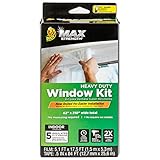
- Save on energy costs during cold weather months. Duck Max Strength shrink window film is puncture-resistant and two times thicker than standard window kits to create an airtight seal inside your home to block drafts and cold weather
- Easy-to-install roll of shrink film means no measuring needed - once applied, cut film to size
- Tools needed: scissors and hair dryer. For best results apply window films indoors on clean and dry surfaces, including painted or finished wood, aluminum or vinyl
- After installation, crystal clear and transparent window film is easy to see through. Once season is over, the window kit removes easily
- Window Kit includes 1, 62" x 210" roll of shrink film and 1, 0.5" x 84' foot roll of tape; Can insulate up to 5 standard sized 3' x 5' windows
Glazing manages heat, sunlight, daylight and views
Windows are a special part of the envelope because they must control heat transfer while still providing daylight, views and sometimes ventilation or useful passive solar heat. DOE says windows account for about 10% of building energy use and influence end uses that comprise 40% of building energy use. The page does not state a publication year for those figures, so they should be read as DOE’s reported estimates rather than as a newly measured current total. See DOE’s windows overview.
Window ratings distinguish heat moving through the window from solar heat transmitted through it. The window’s frame and installation also affect how well the whole opening performs. Shading then changes the amount of direct sun reaching the glass, without replacing the role of the window or the insulated wall around it.
What do U-factor, SHGC and visible transmittance mean?
These ratings answer different questions. A low value is not automatically best across every measure: the useful combination depends on the climate, exposure and daylight needs. DOE’s residential window purchasing guidance and window technology guidance explain the performance factors to consider.
| Measure | What it describes | How to use it |
|---|---|---|
| U-factor | The rate of heat flow through the glazing; lower values mean less heat transfer. | Consider it when limiting heat loss or heat flow through the window is important. |
| Solar heat gain coefficient (SHGC) | The solar heat transmitted through the window. | A lower SHGC blocks more solar heat, often useful where cooling and strong sun are concerns. A higher SHGC may help admit winter sun in suitable cold-climate settings. |
| Visible transmittance (VT) | Daylight passing through the window. | Use it to consider daylight separately from solar heat gain; it does not describe heat in the same way as SHGC. |
In practice, compare U-factor and SHGC together rather than selecting a window by one rating alone. For example, a cooling-dominated location may benefit from lower solar gain, while a heating-dominated location may place greater emphasis on reducing winter heat loss and may use suitable higher-SHGC glazing to admit useful sun. Neither example is a specification: climate zone, orientation, shading and the building’s heating and cooling needs affect the choice.
Rank #2

- Save on energy costs during cold weather months. Duck Max Strength shrink window film is puncture-resistant and two times thicker than standard window kits to create an airtight seal inside your home to block drafts and cold weather
- Easy-to-install roll of shrink film means no measuring needed - once applied, cut film to size
- Tools needed: scissors and hair dryer. For best results apply window films indoors on clean and dry surfaces, including painted or finished wood, aluminum or vinyl
- After installation, crystal clear and transparent window film is easy to see through. Once season is over, the window kit removes easily
- Window Kit includes 2, 62" x 210" roll of shrink film and 2, 0.5" x 54' foot rolls of tape; Can insulate up to 10 standard sized 3' x 5' windows
How do climate and orientation change the combination?
Climate affects whether the priority is to limit unwanted solar heat, reduce winter heat loss, or balance both across seasons. Orientation affects when and how sunlight reaches a window. An approach that works for one facade may be a poor fit for another, even in the same building.
In cooling-dominated conditions
Where strong sun and cooling demand are significant, lower-SHGC glazing can reduce solar heat transmitted through windows. Exterior shading can further limit direct solar exposure, particularly when it intercepts sunlight before it reaches the glass. DOE’s technical window guide recommends combining shade management with low-SHGC windows in hot climates. These measures address solar gain; they do not eliminate the need for an appropriately insulated envelope.
In heating-dominated conditions
Where winter heat loss is a concern, a low U-factor helps limit heat transfer through the window. In appropriate cold-climate settings, a higher-SHGC window can also admit useful winter solar heat. The trade-off is seasonal: sunlight that can be helpful at one time may increase cooling load or discomfort at another. Shading and orientation therefore belong in the same decision as glazing selection, rather than being considered only after the windows are chosen.
The Tool Desk
Outbyte PC Repair FREEClear out junk files and repair common Windows errorsFree Scan →Outbyte Driver Updater FREEScan for outdated or missing drivers - takes under a minuteDriver Scan →Pay attention to east- and west-facing glass
East- and west-facing windows can be harder to shade effectively than windows with exposures suited to an overhang. ENERGY STAR advises attention to west-facing summer exposure, and DOE’s window guide discusses using vertical elements on east and west facades. South-side overhangs are another approach described in the guide. The effect depends on the building and sun exposure, so a single shading detail should not be assumed to work equally well on every elevation.
Rank #3

- Designed for interior use on windows
- Accommodates up to 4 standard sized windows
- Shrinks with hair dryer and applies with included double-faced tape
- Each sheet measures 62 in. L x 42 in. W
- Helps R-value increase up to 90%
For residential windows, ENERGY STAR’s listed performance criteria vary by climate zone. Its product page says certified products can reduce heating and cooling costs by up to 13% on average nationwide compared with non-certified products. That is a program estimate, not a household guarantee; the page lists October 23, 2023 as the effective date of the criteria represented there. Check ENERGY STAR’s residential windows, doors and skylights page for current criteria and product-finder information before using its specifications for a project.
What shading options can help control solar exposure?
Shading limits direct sunlight at the window. Exterior shading can stop some solar exposure before it strikes the glass, while interior measures control light and glare after sunlight has entered. The U.S. Department of Energy’s Building America guide puts the distinction plainly: “The best place to shade a window is on the outside, before the sun strikes the window.” Read the DOE window performance and selection guide for its technical discussion.
- Overhangs: DOE discusses south-side overhangs as one way to shade windows. Their usefulness depends on orientation and the building’s design.
- Vertical elements: The guide identifies vertical shading elements for east- and west-facing windows, where low-angle sun can be difficult to manage.
- Awnings and solar screens: These are additional options identified in DOE guidance. Their actual effect depends on the product, window, orientation and how the shade is used.
- Landscaping: DOE also identifies landscaping as a shading strategy. Its suitability depends on site conditions and the desired solar access.
High-performance glazing can still benefit from shading, especially for summer comfort and glare control. A shade that reduces direct sun may also change the amount of daylight or view available, and interior blinds may be kept closed if glare or overheating becomes uncomfortable. Include those practical effects when deciding how much glass to expose and what type of shade to use.
Should you choose low-e windows, film, storm windows or exterior shades?
These options act at different points in the envelope and should be compared with the existing window, not as generic substitutes for one another. Insulated glazing typically uses two or more panes separated by a sealed space. DOE identifies low-emissivity (low-e) coatings, gas fills and frame choices as factors affecting window thermal performance. Low-e coatings can be designed for different solar-gain and daylight outcomes; the label alone does not tell you whether a specific product suits the facade.
Rank #4

- Save on energy costs during cold weather months. This rolled window kit creates an airtight seal inside your home to block drafts and cold weather
- Easy-to-install roll of shrink film means no measuring needed - once applied, cut film to size
- Tools needed: scissors and hair dryer. For best results apply window films indoors on clean and dry surfaces, including painted or finished wood, aluminum or vinyl
- After installation, crystal clear and transparent window film is easy to see through. Once season is over, the window kit removes easily
- Window Kit includes 3, 62" x 210" rolls of shrink film and 3, 0.5" x 54' foot rolls of tape; Can insulate up to 15 standard sized 3' x 5' windows
Insulated glazing and low-e coatings
When selecting replacement glazing, consider the full combination of U-factor, SHGC, visible transmittance, frame and installation. A low-e coating is one part of that system. The appropriate coating and window characteristics depend on climate and orientation, so do not treat “low-e” as a universal performance target. DOE’s window technology guidance describes glazing options and performance factors.
Storm windows
A storm window is a distinct retrofit option, particularly relevant when the existing windows are single-pane and do not already have storm windows. ENERGY STAR reports an estimate of about 20% annual heating and cooling bill savings for its certified low-e storm windows over single-pane clear glass windows without existing storm windows. It also reports about a three-year payback for the incremental storm-window cost under the page’s assumed conditions. These figures are tied to that comparison and are not guarantees for other window types, climates, installation quality or household use. See ENERGY STAR’s storm window information.
Window film and exterior screens
DOE notes that DIY low-e window films are available, but film is a product-specific retrofit, not equivalent to a complete insulated window. Exterior solar screens are another shading option. For either measure, check compatibility with the existing glazing and the exposure, and evaluate the likely result for the actual product rather than assuming a fixed energy saving. A film may affect daylight and views as well as solar transmission; a screen’s shading effect likewise depends on its design and use.
Replacement glazing, storm windows, film and exterior screens are not directly interchangeable. Compare each against the current window, the exposure it serves and the problem you want to solve. A measure that reduces direct sun will not fix discontinuous wall insulation, and adding insulation to an opaque wall will not control glare through a large, sun-exposed window.
Best Value
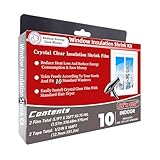
- Window insulation kit Contains 62"x 420" Of Window Clear Shrink Film And 1/2 Inch By 168 Feet Roll of Double Sided Tape
- Clear Insulation Shrink Film To Keep Out The Wind And Cold, Dust Prevention
- By Insulating Your Window Save Energy Costs And Reduce Heat Loss
- Crystal Clear Shrink Film Without Blocking Sunlight
- Easy And Quick Installation
How should you plan a coordinated retrofit?
Start with the building’s conditions and the outcome you need. DOE says fenestration savings vary with climate and advises choosing U-factor and SHGC for the appropriate climate zone. ENERGY STAR likewise bases its residential criteria on climate-zone performance levels. There is no universal window rating or package that can be specified accurately without location and project details.
- Identify the main problem. Establish whether the priority is winter heat loss, summer solar gain, uncomfortable glare, or a broader envelope issue. Consider heating and cooling needs rather than assuming one season tells the whole story.
- Map the windows by orientation. Record which openings face each direction and note the exposures that receive strong or difficult-to-control sun. This helps distinguish a window-wide issue from a problem concentrated on one facade.
- Understand the existing construction. Note the window type, whether storm windows are present, and how the opaque envelope is insulated. Existing conditions determine whether a retrofit is an addition, repair or replacement—not simply which product has the most attractive rating.
- Compare the right performance measures. For windows, consider U-factor, SHGC and visible transmittance together. For walls and roofs, consider insulation continuity and thermal bridging as well as air leakage. For solar control, account for exterior shade, orientation and seasonal use.
- Check daylight, views and comfort alongside energy goals. Consider whether occupants will keep a shade closed to manage glare, and whether a proposed screen or film changes daylight or views. A nominal solar-control benefit may not meet the practical goal if the space remains uncomfortable.
- Plan installation and moisture details. Coordinate window work with the surrounding air and water control layers, flashing and insulation. DOE warns that poor window installation can contribute to air leakage, heat loss, condensation risk and water leakage; product ratings do not make those site details irrelevant.
- Compare full project scope. Consider product and installation together, and whether the proposed measure addresses a substantial part of the building or only a limited exposure. Verify any utility incentives locally: ENERGY STAR says incentives may be available in some areas, but that does not establish eligibility for a particular project.
A home energy assessment, insulation professional or window installer can help when the existing assembly, moisture strategy or installation scope is unclear. For project-specific recommendations, verify applicable code and assembly details with qualified local professionals; general envelope guidance cannot determine the right insulation value or window specification for every building.
What can undermine the expected result?
- Choosing by one number: A low U-factor does not answer the solar-gain question, and a low SHGC does not establish daylight performance. Match the measure to the concern.
- Ignoring thermal bridges: Insulation that is interrupted can leave paths for heat flow through the envelope. Continuity is a design consideration, not just the nominal insulation value.
- Shading only after the sun reaches the glass: Interior glare control may improve comfort, but DOE identifies exterior shading before sunlight strikes the window as the preferred place to intercept it.
- Applying a generic saving to a different building: Product, climate, baseline window, installation and occupant use affect results. ENERGY STAR’s storm-window estimate applies to its stated comparison, not every retrofit.
- Overlooking installation: Gaps or poor integration around a window can compromise performance and create air, water or condensation problems. Coordinate installation with the surrounding assembly rather than relying on product ratings alone.
Because the cited guidance and program criteria are U.S.-oriented, climate-zone labels, codes, incentives, product availability and installation practices may differ elsewhere. Confirm local requirements and current program criteria before applying them to a project.
Quick Recap
Product prices and availability are accurate as of the date/time indicated and are subject to change. Any price and availability information displayed on Amazon at the time of purchase will apply.