The Tool Desk
Outbyte Driver Updater FREEScan for outdated or missing drivers - takes under a minuteDriver Scan →Outbyte PC Repair FREERepair Windows errors before they cause bigger problemsFix Now →A composting toilet works by treating toilet waste on site instead of flushing it into a sewer or septic system. The toilet contains the solids, manages urine and other liquids, supplies airflow and carbon-rich material, and gives aerobic microorganisms time to break the waste down. Depending on the design, moisture may be drained, collected, evaporated, or treated; some systems also use fans, heaters, agitators, drums, or multiple chambers.
That description covers several different technologies. A compact urine-diverting toilet in an RV may mainly dry and partially decompose solids for later emptying, while a larger central system may provide more controlled treatment over a longer period. Neither should automatically be assumed to produce safe, finished compost. The model, installation, operating conditions, certification, and local disposal rules all matter.
The basic process: what happens inside a composting toilet?
A conventional toilet uses water to move waste away from the building. A composting toilet replaces that flush-and-discharge step with a contained treatment process. In broad terms, the process has six parts:
As an Amazon Associate I earn from qualifying purchases.
Do these 3 things before closing this tab:
1Clear out junk files and repair common Windows errors2Fix the driver behind crashes, sound loss and screen glitches3Repair Windows errors before they cause bigger problems- Waste falls into a contained reactor, vault, drum, or removable solids chamber.
- Urine and other liquids are separated, drained, collected, evaporated, or treated.
- Carbon-rich bulking material absorbs moisture and keeps the solids porous.
- A vent and often a small fan move air through the system.
- Aerobic bacteria and fungi break down organic matter.
- Time, drying, agitation, and sometimes heat reduce the volume and stabilize the material.
The U.S. Environmental Protection Agency describes the principle as similar to ordinary yard-waste composting, but sanitation systems require more careful containment, ventilation, liquid management, and pathogen control than a normal garden compost pile. EPA technical guidance explains the underlying process and its limitations.
1. Waste enters a sealed or contained chamber
The bowl directs feces, toilet paper, and sometimes urine into a treatment chamber. On a self-contained unit, that chamber is directly below the seat. A central system may place the vault or reactor beneath the building or in a separate service area.
#1 Best Overall
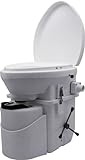
- No one - and I mean no one - will beat my customer service and individual support
- Easy to install by any reasonably handy person.
- Absolutely No Odor. No Maintenance. 5 Year Warranty.
- Huge Capacity. 2 people using full time will empty every 4-6 weeks. Easy empty in 5 minutes.
- A vast improvement over older composting toilet designs. This one works!
Containment is essential. Waste must be isolated from people, groundwater, surface water, soil, insects, and rodents while it is being treated. A composting toilet is not simply an open container with a seat attached; the housing, seals, access doors, venting, and liquid-management components are part of the sanitation system.
2. Liquids are managed separately
Urine contains much of the liquid entering a small toilet and is a major source of odor when it mixes with feces. Many compact toilets therefore use a urine-diverting bowl. The front portion directs urine into a removable bottle, an external tank, a drain, or another approved treatment route, while the solids fall into a separate chamber.
What’s actually slowing this PC down?
Pick the symptom - the matching free tool is one click away.
Other systems process both fractions together or use evaporation and drainage to control moisture. The correct arrangement depends on the model. Some toilets are designed for a self-contained liquid bottle; others need a permanent drain connection, an evaporation system, or a separate approved waste-management arrangement.
Liquid separation is not just a convenience. Excess liquid can saturate the solids, collapse air spaces, encourage anaerobic conditions, increase odor, and produce leachate that is difficult to manage. The system must therefore be installed so that urine cannot back up into the solids chamber and any drain or collection container can be safely accessed and emptied.
3. Bulking material adds carbon and air space
Compact urine-diverting toilets commonly use a carbon-rich medium such as coco coir, peat-based material, or another product specified by the manufacturer. The medium performs several jobs:
- absorbs some of the remaining moisture;
- adds carbon to a waste stream that is relatively nitrogen-rich;
- reduces compaction;
- limits exposed waste and helps control odor; and
- creates air spaces for aerobic microorganisms.
Depending on the design, suitable bulking agents may include sawdust, leaves, grass clippings, or finely chopped straw. However, a material that works in one system may interfere with another. Use the manual’s specified medium rather than assuming that any sawdust, soil, garden compost, or peat product is interchangeable.
Owners shopping for a compact unit may see coco coir composting medium marketed for this purpose. It can be a practical maintenance supply where the manufacturer permits coco coir, but it is not a universal substitute for the medium listed in the toilet’s instructions.
4. Airflow supplies oxygen and removes moisture
Most modern systems have an air inlet and an exhaust vent that terminates outdoors. Many use a small continuous or near-continuous fan to draw air through the bowl and chamber. The airflow supplies oxygen, carries water vapor out of the system, and directs odor compounds outside rather than into the bathroom.
Installation details matter. The vent should be routed as the manufacturer specifies, with the correct pipe or hose size, minimal restrictions, suitable weather protection, and insect screening where required. A crushed hose, blocked outlet, failed fan, poorly sealed access panel, or incorrect airflow direction can turn a normally low-odor toilet into a noticeable source of smells.
Rank #2
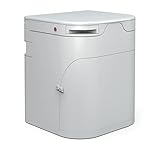
- SMALLEST FOOTPRINT FOR TIGHT BUILDS (15"x16") Designed for Sprinter/Transit vans, tiny homes & boats where space is everything. The OGO fits corners other composting toilets can’t—no bulky side crank, no redesigning your bathroom. More legroom, cleaner layout, modern appliance look.
- PUSH-BUTTON ELECTRIC AGITATOR = ZERO CRANKING 12V motor mixes solids with one tap—no manual handle, no mess, no chore after every use. Better breakdown, better odor control, effortless daily routine. Feels like a real toilet, not a campsite workaround.
- URINE-DIVERTING = NO BLACK TANK SMELL Liquids separate to a 2.4-gal bottle while solids stay dry in the rear bin (25–30 uses). Dry waste = no sewage odor, safer storage, and confident hosting in your van or tiny home.
- MADE FOR REAL OFF-GRID LIFE Built in the USA from durable polypropylene. Quiet fan ventilation, low 12V power draw, simple emptying, and serviceable parts. Perfect for full-time van lifers, retro-fit RV owners, marine cabins, and off-grid couples.
- MODERN DESIGN, NOT PORT-A-POTTY VIBES Clean Scandinavian-style aesthetic that belongs in a premium build. Go anywhere, smell nothing, crank nothing—upgrade your rig with the “smart toilet” built for civilized freedom.
For a new installation, a composting toilet vent kit can simplify the parts list, but it still has to match the toilet, vent diameter, building layout, climate, and local requirements. If a fan needs replacement, check voltage, airflow direction, connector, mounting arrangement, and manufacturer compatibility before buying a 12V composting toilet fan.
Quick wins for a faster PC:
Clear out junk files and repair common Windows errorsFree Scan →Fix the driver behind crashes, sound loss and screen glitchesFind Drivers →5. Microorganisms break down the organic matter
Aerobic bacteria and fungi consume organic matter when the chamber has a workable balance of oxygen, moisture, carbon, and temperature. This biological activity reduces the volume of solids and changes their texture over time.
Some models include an agitator, rotating drum, or mixing mechanism to redistribute material and prevent a wet mass from forming in one location. Others use multiple chambers, allowing fresh material to remain separate while older material is retained for longer treatment. Central systems may use a larger vault, inclined channels, fans, heaters, or other process controls.
Heating can support evaporation or improve cold-weather operation, but a heater does not automatically make the output pathogen-free. Many composting toilets do not maintain the high temperatures needed to rapidly destroy pathogens. Retention time, drying, system design, maintenance, and environmental conditions remain important.
6. Time completes—or partly completes—the treatment
The word “composting” can be misleading if it suggests that every toilet produces finished, garden-ready compost inside the unit. Some products actively treat material through several stages. Others primarily separate and dry solids, after which the material still requires additional composting, permitted disposal, or another approved treatment route.
Free tools Windows power users keep installed
One-click scans. No signup required.
Temperature, humidity, frequency of use, paper volume, ventilation, liquid separation, and the time between emptying visits all affect the result. A unit used seasonally in a dry cabin may behave very differently from the same basic design used continuously by several people in a humid climate.
Main types of composting toilet
Self-contained urine-diverting toilets
These compact units are common in RVs, boats, vans, cabins, workshops, and small off-grid buildings. The bowl separates urine into a bottle or external line. Solids fall into a chamber containing carbon-rich material, and a small fan vents that chamber outside.
Their advantages are relatively simple installation, low water use, and suitability for locations without sewer or septic connections. Their constraints include limited chamber capacity, regular liquid emptying, careful vent installation, and the need to handle solids when the container is full.
When comparing a urine-diverting composting toilet, look beyond the advertised seat or cabinet dimensions. Check the actual solids and liquid capacities, fan power requirements, vent route, emptying method, paper limitations, replacement-part availability, and whether the design is appropriate for an RV, boat, cabin, or permanent building.
Self-contained evaporative or actively treating systems
These units may use a rotating drum, multiple chambers, heaters, evaporative surfaces, fans, or more substantial liquid-management equipment. Some are intended for residential or cottage use and may have third-party certification and stated daily-use ratings.
Rank #3

- DESIGNED FOR THE ADVENTURER - No Electric, No Plumbing, No Hassle. The NOMAD is the simple, affordable compost toilet solution built for rugged environments. No power source or wiring required—perfect for truck campers, pop-up tents, primitive camping, and remote field setups.
- ODOR FREE URINE DIVERTING SYSTEM - Built with a proven separation design that keeps liquids and solids apart to prevent odor—without chemicals, black tanks, or septic connections. Stay longer outdoors without relying on dump stations or chemical toilets.
- PORTABLE AND SPACE SAVING - Compact footprint fits in truck beds, car trunks, TentBox-style rooftop tents, rental camper vans, small boats, and temporary field shelters. Lightweight and easy to move, store, load, or deploy wherever nature takes you.
- SIMPLE BAG SYSTEM - No special liners required. The system works with widely available 8-gallon bags for easy clean-up and fast campsite turnaround. A great option for day boaters, weekend adventurers, hunters, and guides.
- DURABLE, LOW MAINTENANCE - Made for mud, dust, weather, and repeated weekend trips. Just add composting medium, use, tie off the bag, and dispose per local guidelines. Made with rugged materials and manufactured with care in the USA.
A larger cabinet does not automatically mean that the unit can accept unlimited use. Capacity ratings are model-specific and may depend on temperature, ventilation, electricity, occupancy, and the manufacturer’s definition of a user or daily use.
Central or remote systems
A central system locates the treatment chamber beneath or away from the toilet room and may serve several fixtures or a higher-use facility. The bathroom fixture can look relatively conventional, but the building needs space for the vault or reactor, access for inspection and emptying, carefully designed ventilation, structural support, and a capacity calculation based on expected occupancy.
Central systems are often better suited to new construction or major renovation than to an improvised retrofit. They can reduce the need for multiple small units, but they also increase the importance of engineering, access, permitting, and service planning.
Windows Errors? Fix Them Before They Spread
Repair common Windows errors and clear accumulated junk for a smoother, more stable PC - no reinstall needed.Free scan · no reinstallOutdated Drivers Are Slowing You Down
One free scan finds every outdated or missing driver and matches the right update for your exact hardware.Free scan · exact hardware matchDry or storage toilets marketed as composting toilets
Some products in the broad composting-toilet category mainly separate, dry, or store waste. Drying reduces odor and volume, but it does not necessarily complete composting or eliminate pathogens. The material may need secondary composting, controlled disposal, or handling as a regulated waste.
The World Health Organization notes that pathogen reduction in composting toilets varies with design and operation. It also warns that leachate can have a high pathogen level. WHO sanitation guidance covers treatment, emptying, and disposal risks.
How to operate one correctly
A composting toilet is low-water, not maintenance-free. The exact schedule comes from the product manual, but routine operation commonly includes the following:
- Keep the fan and vent unobstructed. Confirm that the fan operates as instructed and that the outdoor termination is not blocked by debris, snow, nests, or insects.
- Maintain the correct bulking medium. Add the specified quantity and keep it loose enough to preserve air spaces.
- Prevent urine buildup. Inspect the separator, hose, bottle, and drain for blockage. Empty the liquid container before it overflows.
- Agitate only when the design calls for it. Use the built-in handle, drum, or rake as directed; unnecessary mixing can create spills or expose material.
- Use compatible cleaning products. Harsh chemicals can damage components or disrupt biological activity. Some manufacturers specifically recommend diluted vinegar and water and warn against bleach-based cleaners. Follow the manual for the particular toilet.
- Prevent overloading. Empty the solids chamber before it reaches the manufacturer’s limit, not after waste begins pressing against the seat, separator, vent, or access door.
- Plan for power interruptions. If the system relies on a fan or heater, determine how long it can operate without power and what temporary measures the manufacturer permits.
Useful supplies may include a composting toilet replacement urine bottle, compost-safe toilet cleaner, and appropriate protective equipment. These products support maintenance, but they do not replace proper treatment or lawful disposal.
How often does a composting toilet need emptying?
There is no single answer. A small unit may be advertised for several dozen uses or roughly a month for two people under particular conditions, while a central system may be rated for many users per day. Those figures are examples for specific models, not universal promises.
Actual intervals depend on:
- number of occupants and frequency of use;
- whether urine is diverted successfully;
- temperature and humidity;
- amount of toilet paper entering the solids chamber;
- how much bulking material is used;
- available chamber volume;
- time between visits to a seasonal property; and
- whether the system evaporates or drains liquid.
Before construction, calculate peak occupancy rather than average occupancy. A cabin that normally hosts two people may need to accommodate a holiday gathering, and an RV toilet may be used continuously during a trip. Confirm the manufacturer’s capacity rating and the physical route for removing the container before framing walls or building cabinetry around the unit.
Rank #4

- Item Category: Toilet Seat
- Item Trademark: Nature's Head
- manufacturer: Nature's Head Inc.
- Item shape: Foot-Spider
What causes odors or poor performance?
A correctly installed and maintained system should not smell strongly of sewage. A mild earthy or musty odor may occur, particularly during servicing, but a persistent strong odor usually points to a correctable problem.
| Symptom | Likely areas to inspect | First response |
|---|---|---|
| Sewage-like smell inside | Failed fan, blocked vent, poor seals, excess moisture, or urine entering the solids chamber | Check airflow, vent termination, access-door seals, separator, and liquid path. |
| Wet or soupy solids | Urine blockage, excessive liquid, insufficient bulking material, or poor evaporation | Clear the liquid route, follow the manual for adding medium, and check ventilation. |
| Flies or insects | Missing screen, open seal, exposed waste, or blocked airflow | Inspect the vent screen, bowl seal, access panels, and cleaning routine. |
| Material is unusually dry and inactive | Low humidity, excessive airflow, insufficient moisture, or long periods without use | Follow the manufacturer’s moisture guidance; do not add water casually. |
| Liquid backs up | Full bottle or tank, kinked hose, blocked separator, or incorrect drain slope | Stop use until the liquid route is safely cleared and inspected. |
Do not mask odor with fragrance or pour disinfectant into the chamber unless the manufacturer specifically permits it. The remedy is usually to restore separation, airflow, moisture balance, or capacity.
Recommended Free Tools
Is the material safe to use in a garden?
Not automatically. Material that looks dry, dark, or soil-like may still contain pathogens. EPA guidance warns that inadequately treated end product can create health risks, and WHO characterizes pathogen reduction as variable rather than guaranteed.
The safest approach is to:
- follow the toilet manufacturer’s instructions for retention and secondary treatment;
- keep untreated or uncertain material away from edible crops, children, pets, wells, surface water, and areas where people may contact it;
- wear gloves and avoid splashing or creating dust while emptying the system;
- wash hands thoroughly after handling containers or solids; and
- use the disposal method required by the local health or environmental authority.
Independent certification can be useful. NSF explains its evaluation of certified composting toilets, including capacity, odor, bacterial content of output, testing conditions, and field-performance confirmation. Certification is evidence that a particular model was evaluated against an applicable standard; it is not blanket permission to spread material anywhere or a substitute for local approval.
For safe emptying, use nitrile gloves for waste handling and sturdy, leak-resistant containers or bags where permitted. Protective equipment reduces exposure risk but does not make untreated waste suitable for ordinary household trash or garden use.
Independent reader supportYour contribution helps us test, update, and keep practical guides available for everyone.Installation, construction, and permitting considerations
For a construction project, select the sanitation system before finalizing the floor plan. The toilet itself is only one component. The design may need to accommodate:
- a level, load-bearing base;
- clearance for the seat, bowl, access doors, and service panels;
- a vertical or otherwise approved vent route to the exterior;
- fan wiring, a dedicated circuit, or a 12-volt supply;
- urine drainage or a safe location for a removable container;
- access for cleaning, inspection, and solids removal;
- weatherproof exterior vent termination and insect screening;
- protection against freezing where liquid lines or tanks are used; and
- space for temporary storage or transport of material during servicing.
Do not assume that eliminating a sewer connection eliminates all plumbing or approval requirements. Depending on the jurisdiction and building type, the project may still require building, plumbing, wastewater, health-department, environmental, or marine approval. EPA states that composting-toilet policies and regulations are set at state and local levels. Check with the local health department, building official, wastewater authority, or marine regulator before purchase or installation.
Requirements can differ even within the same country. Some jurisdictions approve specific alternative toilets under residential wastewater rules; others regulate residual solids as septage or require a permitted hauler or disposal location. On boats, a composting toilet may be treated as a Type III marine sanitation device when designed to prevent overboard discharge, but both liquid and solid contents still need proper disposal.
For a permanent building, obtain written confirmation of the proposed model, capacity, venting, liquid-management method, and disposal plan before construction begins. A product listing or NSF certification may help demonstrate suitability, but it does not by itself replace a permit.
Best Value

- Urine-Separating Compost System: Waterless composting toilet with urine diverting technology for off-grid use without additives or mixing required
- High-Capacity Design: Spacious construction accommodates extended use between emptying cycles, suitable for residential and remote applications
- No Water Required: Completely waterless operation eliminates the need for plumbing connections and conserves water resources
- Versatile Installation Options: Suitable for homesteads, converted school buses, cottages, cabins, and other off-grid living spaces
- Low Maintenance Operation: Simple design requires no chemical additives, mixing, or complex maintenance procedures for hassle-free composting
Advantages and trade-offs
| Potential benefit | Corresponding trade-off |
|---|---|
| Uses no flush water or very little water | Waste and liquids must be monitored and handled on site. |
| Can work where sewer or septic installation is difficult | Venting, access, capacity, and local approval still need to be solved. |
| Reduces wastewater volume | It does not eliminate sanitation work or disposal requirements. |
| Useful for remote, seasonal, low-water, high-water-table, or difficult-terrain sites | Cold, humidity, irregular occupancy, and long service intervals can affect performance. |
| Can have low electrical demand | Fans or heaters may still require continuous power, particularly in some climates. |
| May reduce dependence on septic infrastructure | Liquid drainage, graywater, and other household wastewater still require their own compliant design. |
The practical trade is straightforward: a composting toilet can simplify wastewater infrastructure, but it transfers more responsibility to the owner, installer, and service plan. It is best viewed as an alternative sanitation system—not as a conventional flush toilet that happens to use less water.
What to compare before buying
Once the mechanism is clear, compare a composting toilet by installation requirements rather than appearance alone. For an RV, boat, cabin, workshop, tiny home, or off-grid property, check:
- System type: urine-diverting, evaporative, actively composting, central, or primarily dry-storage;
- Capacity: solids and liquids separately, with ratings matched to peak occupancy;
- Ventilation: fan voltage, noise, vent diameter, maximum route, exterior termination, and backup arrangements;
- Liquid management: bottle, tank, drain, evaporation, or treatment connection;
- Power: continuous electrical demand and behavior during outages;
- Maintenance: medium, cleaning products, moving parts, access panels, and replacement components;
- Emptying: how the solids container is removed and transported without spills;
- Certification: whether the exact model—not merely the brand—is listed under a relevant standard;
- Climate: expected cold, heat, humidity, and seasonal occupancy; and
- Legal status: written confirmation from the authority responsible for the site.
For a compact system, the correct choice may be a self-contained composting toilet. For a larger residence or public-use building, a central system with a documented capacity and service plan may be more appropriate. Product examples from Nature’s Head, Air Head, Sun-Mar, Separett, and Clivus Multrum illustrate different approaches, but model specifications and availability should be verified at the time of purchase.
Bottom line
A composting toilet works through containment, liquid control, carbon-rich bulking material, airflow, aerobic biological activity, and time. Its success depends less on the word “composting” on the label than on whether the system is correctly sized, ventilated, maintained, emptied, and legally managed.
It can be an effective solution for a remote cabin, RV, boat, or difficult-to-service building, especially where water and sewer infrastructure are limited. It is not maintenance-free, and the material inside is not automatically safe garden compost. Treat the toilet as a complete sanitation system, verify the installation and disposal rules before construction, and follow the exact manufacturer’s instructions.
The Tool Desk
Outbyte Driver Updater FREEFix the driver behind crashes, sound loss and screen glitchesFind Drivers →Outbyte PC Repair FREEClear out junk files and repair common Windows errorsFree Scan →Frequently Asked Questions
Does a composting toilet need electricity?
Some systems can operate without electricity, but many modern units use a fan continuously or use electricity for heating and evaporation. Check the model’s power requirements, including its behavior during an outage, before installation.
Do composting toilets smell?
A correctly installed system should generally have little odor because airflow moves moisture and odor compounds outdoors. Strong sewage-like smells commonly indicate blocked ventilation, poor seals, excess moisture, urine entering the solids chamber, overloading, or a failed fan.
Can toilet paper go into a composting toilet?
That depends on the model. Some systems accept toilet paper in the solids chamber, while others recommend limiting it or disposing of it separately to preserve capacity and airflow. Follow the specific manual.
How long does waste take to compost?
There is no universal time. Temperature, moisture, airflow, occupancy, bulking material, chamber design, and retention time all affect treatment. Some compact units mainly dry and partially decompose solids that require further treatment or compliant disposal.
Are composting toilets legal everywhere?
No. Approval and disposal requirements vary by state, province, municipality, building type, and sometimes site conditions. Ask the local health department, building official, wastewater authority, or marine regulator before ordering the system.
Quick Recap
Product prices and availability are accurate as of the date/time indicated and are subject to change. Any price and availability information displayed on Amazon at the time of purchase will apply.




