Quick wins for a faster PC:
Scan for outdated or missing drivers - takes under a minuteDriver Scan →Repair Windows errors before they cause bigger problemsFix Now →Fix the driver behind crashes, sound loss and screen glitchesFind Drivers →Some links on this page are affiliate links: if you buy through them we may earn a commission, at no extra cost to you.
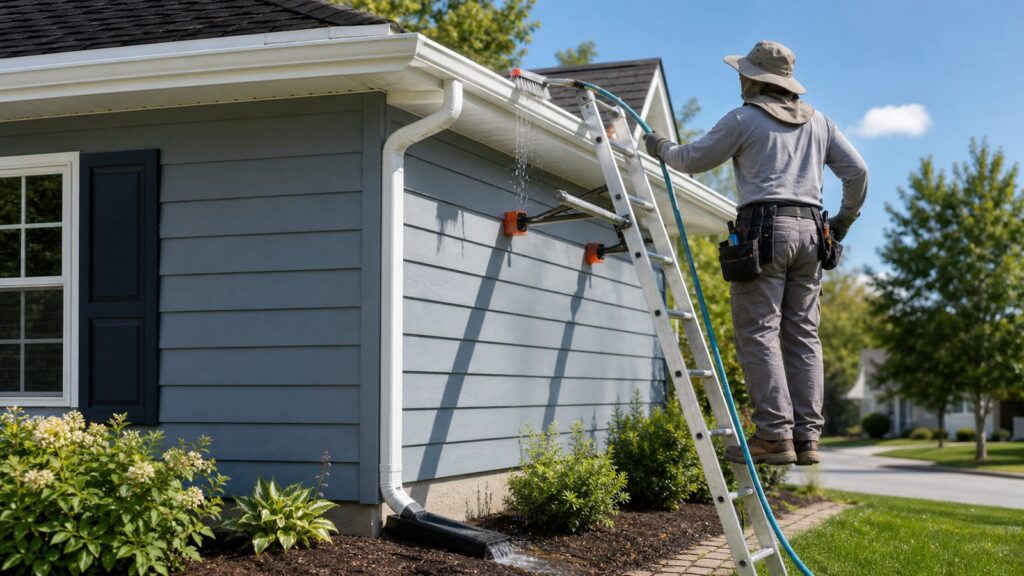
A good homemade gutter cleaning solution can remove dirt, mildew, algae, mineral stains, and black streaks from the outside of your gutters for less than $50 in supplies. But clean-looking gutters are not the same as working gutters. The bigger construction issue is whether roof water is moving through the gutter, into the downspout, and away from fascia boards, siding, slab edges, crawlspaces, basements, and foundations.
For most homeowners, the best place to start is simple: warm water, mild dish soap, a soft brush, gloves, a hose, and a dry debris cleanout before any water goes into the trough. Vinegar, baking soda paste, oxygen bleach, and carefully diluted household bleach each have a place, but the right choice depends on the stain, gutter material, and whether you are cleaning the inside for drainage or the outside for curb appeal.
As an Amazon Associate I earn from qualifying purchases.
Recommended Free Tools
On our job sites, we treat gutter cleaning as a small drainage inspection. If water is backing up, spilling over, running behind the gutter, ponding near the foundation, or leaking through seams, the cleaning solution is only part of the work. The system may need pitch correction, hanger replacement, resealing, downspout clearing, or a discharge extension.
Start With the Goal: Drainage First, Appearance Second
Gutter cleaning usually means two different jobs. The first is functional cleaning: removing leaves, shingle grit, pine needles, seed pods, sludge, and nests from inside the gutter so water can move. The second is cosmetic cleaning: washing dirt, algae, mildew, oxidation, and tiger striping from the face of the gutter.
#1 Best Overall

- CLOGGED GUTTERS → FAST FIX Deep, curved scoop pulls out wet leaves, pine needles, and compacted debris in fewer passes—so water can flow through your gutters again (without digging by hand).
- MESSY CLEANOUTS → CLEANER DUMPING Shovel-style trough helps keep debris contained while you work—then tip and dump straight into a bucket or bag for faster cleanup and less dripping mess.
- TIGHT CORNERS & HANGERS → BETTER ACCESS Slim profile and curved nose are designed to reach corners and work around common gutter obstacles—so you don’t leave “problem patches” behind.
- FLIMSY TOOLS → LIGHTWEIGHT DURABILITY Made from high-impact polypropylene that won’t rust and is built for seasonal use—while staying lightweight (approx. 4.2 oz) to reduce arm fatigue.
- ONE-SEASON TOOL → MULTI-USE AROUND THE HOME Use it for gutter cleanouts and other outdoor messes like clearing small debris areas or spreading salt/fertilizer—then rinse clean and store for the next season.
Do the functional work first. If you scrub the exterior until it shines but leave packed debris around the outlet, the gutter can still overflow during the next hard rain. Overflowing water can soak fascia, stain siding, wash out mulch beds, dump water beside the foundation, and contribute to basement or crawlspace moisture. In cold climates, clogged gutters can also worsen ice buildup at roof edges.
A basic cleaning sequence looks like this:
- Remove dry debris by hand, scoop, gutter tool, or vacuum attachment before using a hose.
- Bag the debris instead of washing it into the lawn, patio, splash block, French drain, or underground drain line.
- Work from the downspout end backward while removing debris so the outlet does not get packed tighter.
- Flush from the far end toward the downspout after the trough is clear.
- Confirm that water exits every downspout quickly and discharges away from the house.
- Inspect for sagging runs, loose hangers, separated seams, rotted fascia, rust stains, and standing water.
After the gutter drains properly, then choose a cleaner for the exterior finish. That order prevents one of the most common DIY mistakes: making the gutter look better while the hidden drainage problem remains.
Best Homemade Gutter Cleaning Solutions by Problem
No single homemade solution is best for every gutter. Aluminum gutters, which are common on US homes, usually respond best to mild soap and water. Vinyl can tolerate many household cleaners, but it can still stain or chalk. Copper, zinc, galvanized steel, older painted gutters, and specialty coated systems need more caution. Always spot-test in a hidden area and keep dwell times short.
| Problem | Best DIY Cleaner | Typical Mix | Best Use | Watch-Outs |
|---|---|---|---|---|
| Loose dirt, pollen, soot, light grime | Dish soap and warm water | 1 to 2 tablespoons mild dish soap per gallon of warm water | Routine exterior washing on aluminum, vinyl, and painted gutters | Rinse fully so soap film does not attract dirt |
| Light mildew, algae, mineral spots | White vinegar and warm water | 1:1 vinegar to warm water | Small stained areas, light deposits, non-delicate finishes | Do not use prolonged contact on reactive metals; spot-test first |
| Tiger striping and oxidation marks | Baking soda paste | 3 parts baking soda to 1 part water | Spot work on black streaks and dull oxidation | Use a soft pad only; aggressive scrubbing can dull paint |
| Mildew or algae growth | Oxygen bleach solution | Follow product label; commonly mixed with warm water | Plant-friendlier cleaning on exterior surfaces | Still rinse plants, siding, and gutters thoroughly |
| Heavier mildew on vinyl or painted surfaces | Diluted household bleach | 1 part bleach to 4 parts water | Short-contact mildew treatment | Never mix with vinegar, ammonia, or acids; protect plants and rinse fast |
| Interior leaves and roof grit | No chemical cleaner | Manual removal, then hose flush | Restoring water flow | Do not wash debris into downspouts or underground drains |
Dish Soap and Warm Water
This is the safest first choice for most painted aluminum and vinyl gutters. Mix 1 to 2 tablespoons of mild dish soap into 1 gallon of warm water. Apply it with a Soft-bristle brush, microfiber pad, or sponge. Let it sit for 3 to 5 minutes, scrub lightly, and rinse from the top down.
Use this mix for general dirt, road film, pollen, soot, and the gray film that builds up under roof edges. It is inexpensive, easy to rinse, and less likely to damage paint than harsher cleaners.
White Vinegar and Warm Water
A 1:1 mix of white vinegar and warm water can help with light mineral deposits, mild mildew, and small water stains. Spray or wipe it on, let it dwell for about 5 minutes, scrub with a soft brush, and rinse thoroughly.
Do not treat vinegar as harmless just because it is a kitchen product. It is acidic. Avoid long dwell times on copper, zinc, galvanized steel, bare metal scratches, and older finishes. If the gutter coating is chalky, peeling, or already compromised, use soap first and test carefully before stepping up to vinegar.
Baking Soda Paste for Tiger Striping
Black vertical streaks on gutter faces are often called tiger stripes. They are usually caused by dirty water, oxidation, pollutants, and runoff patterns bonding to the gutter finish. For small areas, mix 3 parts baking soda with 1 part water to make a paste. Apply it to the streak, wait 2 to 3 minutes, and scrub gently with a damp microfiber pad or soft brush.
The key word is gently. Baking soda is mildly abrasive. It can help lift stains, but hard scrubbing can dull painted aluminum. If the streaks do not respond after two light passes, stop and move to a gutter-safe commercial exterior cleaner or call a pro. Grinding away at the finish is not worth it.
Oxygen Bleach for Algae and Mildew
Oxygen bleach can be a useful middle ground for exterior mildew and algae. It is generally easier to manage around landscaping than chlorine bleach, though it still needs careful rinsing. Mix it according to the product label, apply it to the stained area, keep it wet during the recommended dwell time, scrub softly, and rinse well.
Pre-wet nearby plants, siding, windows, and painted trim before using any cleaner. Rinse again after the cleaner is off the gutter. That simple step reduces streaking and chemical spotting.
Diluted Bleach: Useful, But Easy to Misuse
For mildew on vinyl or painted surfaces, a diluted bleach mix can work. A conservative starting point is 1 part household bleach to 4 parts water. Keep the dwell time short, usually 3 to 5 minutes, and rinse thoroughly.
Never mix bleach with vinegar, ammonia, acidic cleaners, toilet cleaners, or unknown products. Those combinations can create dangerous fumes. Also keep bleach away from copper, zinc, bare metal scratches, landscaping, stained wood, and delicate finishes. If you cannot control runoff, do not use it.
Tools and Materials You Actually Need
Most DIY gutter cleaning does not require a long shopping list. If you already own a hose and a safe ladder, the basic supplies often cost about $15 to $50. Adding a gutter scoop, extension pole, hose wand, or shop-vac attachment may add roughly $10 to $75. The cost changes quickly if you need to buy a quality extension ladder, which can run several hundred dollars.
For a typical one-story home, gather:
- Heavy gloves that can handle wet debris and sharp metal edges
- Safety glasses
- Bucket or contractor bags for debris
- Plastic gutter scoop or small hand trowel
- Garden hose with spray nozzle
- Soft-bristle brush or microfiber pad
- Extension pole for exterior scrubbing where practical
- Dish soap, white vinegar, baking soda, or oxygen bleach
- Ladder with stable footing and a standoff when needed
Avoid wire brushes, abrasive scouring pads, harsh acids, and uncontrolled pressure washing. A pressure washer can dent lightweight aluminum, force water behind fascia, strip paint, open seams, and push debris deeper into elbows or underground drain connections. If you use one at all, use low pressure, a wide fan tip, and keep the spray angle away from seams and roof edges.
Step-by-Step: How to Clean Gutters With Homemade Solutions
1. Check the Weather and the Ground
Pick a dry day with mild temperatures and low wind. Wet roofs, soft soil, icy walkways, and steep grades make the job more dangerous. Do not work near overhead service lines. If the ladder cannot sit flat and stable, stop before you start.
2. Remove Dry Debris First
Start near the downspout outlet and clear the packed debris around it by hand or with a scoop. Then work backward along the run. This keeps the outlet from becoming a plug. Place debris in a bucket or bag instead of throwing it into planting beds or washing it across hardscape.
Expect more than leaves. Gutters often hold shingle granules, decomposed organic sludge, small twigs, seed pods, pine needles, roof-valley debris, and sometimes fasteners or broken sealant. Shingle grit is heavy, so do not overload a bucket hanging from the ladder.
The Tool Desk
Outbyte Driver Updater FREEScan for outdated or missing drivers - takes under a minuteDriver Scan →Outbyte PC Repair FREEClear out junk files and repair common Windows errorsFree Scan →3. Flush the Run
After the trough is clear, put the hose at the far end and flush toward the downspout. Watch how fast water moves. A properly pitched gutter should drain without standing water across long sections. Small residual wetness is normal; broad puddles after flushing are a sign of sagging, poor pitch, or obstruction.
At ground level, confirm the downspout discharges freely. If water backs up at the top, an elbow or vertical section may be clogged. If the downspout connects to an underground drain and water backs up, do not keep forcing debris into that line. Underground clogs are harder and more expensive to clear than gutter trough debris.
Rank #2

- POWERFUL CHISEL TEETH FOR TOUGH DEBRIS REMOVAL – Heavy-duty scraping teeth break through packed leaves, mud, and gutter sludge with ease. The rugged front edge works like a chisel to loosen stubborn debris so you can clean clogged gutters faster and more efficiently.
- FAST-DRAIN GRID DESIGN PREVENTS MESSY WATER BUILDUP – Integrated drainage screen allows dirty water to flow through the scoop while capturing leaves and debris. This keeps your gutter cleaning process cleaner and allows water to continue draining down the downspout while you work.
- HEAVY-DUTY REINFORCED SCOOP BUILT FOR REAL GUTTER CLEANING – Durable reinforced bottom panel and rigid side walls make this gutter cleaning scoop stronger than standard plastic scoops. Designed to handle wet leaves, silt, sludge, and years of seasonal gutter maintenance.
- DESIGNED FOR MOST 5" & 6" STANDARD RESIDENTIAL GUTTERS – Unique profile fits the most common gutter sizes found on homes. NOTE: EXCESSIVE ROOF SHINGLE OVERHANG MAY LIMIT FIT IN SOME GUTTERS, so check gutter clearance if possible before use.
- MULTI-PURPOSE SCOOP – MORE THAN JUST GUTTERS – Large 4.2 cup capacity makes this tool perfect for pet food, grains, fertilizer, soil amendments, ice melt, and other household or gardening uses where a durable scoop is needed.
4. Wash the Exterior Face
Pre-wet siding, windows, trim, and nearby plants. Apply the cleaner that matches the stain. Work in sections you can rinse before the solution dries. For most homes, 6 to 10 linear feet at a time is manageable.
Use light pressure and a soft brush. Scrub with the length of the gutter rather than across seams. Rinse from the top down and check for streaks before moving to the next section.
Do these 3 things before closing this tab:
1Repair Windows errors before they cause bigger problems2Scan for outdated or missing drivers - takes under a minute3Clear out junk files and repair common Windows errors5. Inspect While Everything Is Wet
Water testing shows defects better than a dry visual inspection. Look for dripping seams, loose end caps, water behind the gutter, stained fascia, sagging runs, and overflow at inside corners. Take photos of anything questionable. Those photos help a contractor quote repairs accurately if the issue is beyond cleaning.
Gutter Material Matters
Cleaning chemistry should match the gutter material. A cleaner that is fine on vinyl may be a poor choice for copper or a compromised painted aluminum finish.
Painted Aluminum Gutters
Painted aluminum is common because it is light, affordable, and corrosion-resistant when the finish is intact. Use mild soap first. Vinegar and baking soda can be used carefully for spot work, but avoid harsh acids, metal brushes, aggressive pads, and prolonged bleach contact. Pay attention to seams, fasteners, and scratches where corrosion can begin.
Vinyl Gutters
Vinyl handles soap, oxygen bleach, and diluted bleach reasonably well, but it can become brittle with age and UV exposure. Do not lean ladders on it, and do not use high pressure close to joints. Older vinyl sections can crack when stressed.
Windows Errors? Fix Them Before They Spread
Repair common Windows errors and clear accumulated junk for a smoother, more stable PC - no reinstall needed.Free scan · no reinstallCrashes, No Sound, or Screen Glitches?
Random freezes, missing sound and display glitches usually trace back to one bad driver. Find and replace yours safely.Free scan · under a minuteCopper, Zinc, and Galvanized Steel
These materials require a lighter hand. Copper and zinc develop patina, and aggressive cleaning can create uneven color. Galvanized steel depends on its protective coating. Use water and mild soap unless you are intentionally restoring the finish with a product made for that material. When in doubt, leave specialty metals to a contractor familiar with them.
How Often Gutters Should Be Cleaned
Most US homes should have gutters cleaned at least twice per year: once in spring and once in fall. Spring cleaning removes seed pods, blossoms, winter debris, and early growth. Fall cleaning removes leaves before heavy winter rain, snow, or freeze-thaw cycles.
Some homes need more frequent checks. Quarterly inspection is reasonable if the house sits under heavy tree cover, has pine needles, has roof valleys that dump debris into short gutter runs, sits in a storm-prone region, or has known downspout issues. Gutter guards reduce debris, but they do not eliminate maintenance. Pine needles, grit, small leaves, and seed pods can still collect on top of or inside guard systems.
Use rainfall as a test. During a moderate rain, walk the perimeter from the ground. Look for overflow, waterfalls at inside corners, water shooting over the front edge, downspouts with little discharge, and water pooling beside the foundation. Those are signs the schedule needs to tighten or the system needs repair.
DIY Cost vs Professional Gutter Cleaning Cost in 2026
Homemade cleaners are inexpensive. The real DIY cost is access, time, and risk. If you already own the ladder and tools, basic supplies may cost $15 to $50. If you add a scoop, wand, extension pole, or vacuum attachment, plan for another $10 to $75. If you need to buy an extension ladder, the economics change because a good ladder can cost several hundred dollars.
Professional gutter cleaning prices vary by linear footage, height, roof pitch, debris level, guards, and local labor rates. For 2026 planning, a straightforward one-story home often falls around $125 to $250. Many two-story or heavier-debris homes land around $175 to $400. Difficult access, neglected gutters, steep roofs, guard removal, or underground downspout troubleshooting can push the job above $400.
| Option | Typical 2026 Cost | Best Fit | Limitations |
|---|---|---|---|
| DIY cleaning supplies only | $15-$50 | One-story homes with safe access and light debris | Does not include ladder cost or repair ability |
| DIY with added tools | $25-$125 | Homes needing a scoop, wand, brush, or extension pole | Still depends on safe ladder work |
| Professional one-story cleaning | $125-$250 | Routine service with accessible gutters | Repairs may cost extra |
| Professional two-story or heavier-debris cleaning | $175-$400 | Higher eaves, more debris, more ladder movement | Price rises with guards, pitch, and access issues |
| Difficult or neglected systems | $400+ | Steep roofs, clogged underground drains, heavy buildup, guard removal | May require separate repair or drainage work |
The cheapest cleaner is not cheap if it leads to a fall, bent gutter, damaged roof edge, stripped paint, or an unresolved drainage problem. We look at DIY gutter cleaning the same way we look at any small exterior maintenance job: if access is safe and the issue is simple, it can make sense. If the work requires risky positioning or repair judgment, hire it out.
Safety Rules That Should Decide the Job
OSHA rules apply to workers, not ordinary homeowners, but they provide useful safety benchmarks. In construction, fall protection starts at 6 feet. Portable ladders used for roof access should extend at least 3 feet above the landing surface. Extension ladders are commonly set at a 4:1 angle, which means the base sits about 1 foot out for every 4 feet of vertical height.
What’s actually slowing this PC down?
Pick the symptom - the matching free tool is one click away.
For homeowner work, that translates into a few practical rules:
- Do not stand on the top rung or overreach sideways to save a ladder move.
- Do not lean the ladder directly on the gutter if it can crush or deform the run.
- Use stable footing, level ground, and a ladder standoff where appropriate.
- Keep three points of contact when climbing.
- Do not work from wet roofs, icy surfaces, or steep roof edges.
- Stay clear of overhead electrical service lines.
- Do not work alone on risky access points.
Two-story eaves, steep slopes, poor ladder footing, fragile roof materials, heavy clogs, and overhead utilities are strong reasons to hire a professional. A contractor should have insurance, proper ladders, ladder standoffs, fall-protection practices, and the ability to handle minor repairs during the same visit.
Independent reader supportYour contribution helps us test, update, and keep practical guides available for everyone.When to DIY vs When to Hire a Pro
DIY is reasonable when the gutters are one story, the ground is stable, the roof edge is easy to reach from a proper ladder, debris is light to moderate, and the downspouts discharge above grade where you can see the flow. It is also reasonable for exterior stain cleaning from the ground with an extension pole, especially when using mild soap and water.
Hire a pro when the home is two stories or taller, the roof is steep, the soil around the house is sloped or soft, the gutters are packed with wet sludge, downspouts connect to underground drains, guards must be removed and reinstalled, or you see signs of repair work. Those signs include sagging gutters, loose hangers, separated miters, leaking seams, pulled spikes, rusted fasteners, rotted fascia, water behind the gutter, or stains running down siding below the roof edge.
Free tools Windows power users keep installed
One-click scans. No signup required.
Cleaning becomes construction work when the gutter is not properly attached, pitched, sealed, or discharging. A clean but sagging gutter will still hold water. A clean downspout that dumps next to a foundation can still create moisture problems. A clean seam that leaks onto fascia still needs resealing or replacement.
Rank #3

- 2-1/2in Black, plastic Gutter scoop for use on standard 5in gutters
- Easily removes stubborn leaves & dirt
- Scatter salt in winter, spread fertilizer in spring
- Scooper conforms to clean any size Gutter
- Gardening, potting, and much more
Permit and Code Notes for Gutter Work
Basic gutter cleaning usually does not require a permit. Minor maintenance, such as clearing debris, washing exterior faces, tightening a small number of hangers, or resealing a seam, is typically treated as routine home maintenance. Local rules vary, so check with your city or county if the work expands beyond cleaning.
Permits may come into play when gutter work is part of a larger roof replacement, structural fascia repair, drainage modification, stormwater management change, historic district work, or commercial project. Some jurisdictions also regulate where downspouts can discharge. Many homes should direct water to splash blocks, extensions, storm drains, dry wells, or approved drainage areas rather than dumping roof runoff onto a neighbor’s property, a sidewalk, or a foundation wall.
From a building-performance standpoint, the target is simple: discharge roof water away from the structure. Downspout extensions commonly move water at least 4 to 6 feet from the foundation where grading allows, and more may be needed on flat sites or clay soils. If water returns toward the house after discharge, cleaning the gutter will not solve the drainage problem.
Common Mistakes to Avoid
The most common mistake is confusing exterior washing with functional cleaning. A bright white gutter face does not mean the outlet is open. Always flush the run and verify downspout discharge.
Another serious mistake is mixing cleaners. Bleach and vinegar do not belong together. Bleach and ammonia do not belong together. If you used one cleaner and need to switch, rinse thoroughly first and give the area time to clear.
Do not blast clogs into downspouts. If a horizontal run is full of decomposed leaves and shingle grit, scoop it out dry or damp before flushing. Washing that material into elbows, corrugated extensions, French drains, or underground pipes can turn a simple cleaning into a more expensive drain-clearing job.
Do not ignore standing water. If water sits in a gutter after cleaning, the run may be sagging, pitched incorrectly, or blocked near the outlet. The fix may be as simple as adjusting hangers, but it needs attention. Standing water adds weight, attracts pests, accelerates deterioration, and can overflow in the next storm.
PC Slower Than It Used to Be?
A free scan shows the junk files, broken settings and background clutter dragging Windows down - then fixes them in one click.Free scan · Windows 10 & 11Crashes, No Sound, or Screen Glitches?
Random freezes, missing sound and display glitches usually trace back to one bad driver. Find and replace yours safely.Free scan · under a minuteFinally, do not assume gutter guards make the system maintenance-free. Guards reduce leaves, but they still need inspection. Roof grit, pine needles, seed pods, and fine debris can collect along valleys, guard edges, and downspout openings.
A Practical Maintenance Schedule
For a typical home, plan on a spring and fall cleaning. Add a quick visual check after major storms, high winds, or heavy leaf drops. If trees overhang the roof, inspect valleys and gutter outlets every 3 months. If the home has underground drains, verify discharge during a hose test at least once per year.
Set aside 2 to 4 hours for a one-story DIY cleaning on an average-size home, depending on debris and access. Exterior stain cleaning can add another 1 to 3 hours. A professional crew may complete a straightforward home much faster because they have the ladders, standoffs, tools, and workflow already set up.
Keep a short record. Note the date cleaned, problem areas, downspouts that clogged, seams that dripped, and any sections that held water. Over a few seasons, that record tells you whether you need more frequent cleaning, tree trimming, additional downspouts, guard changes, or gutter repairs.
Quick wins for a faster PC:
Scan for outdated or missing drivers - takes under a minuteDriver Scan →Clear out junk files and repair common Windows errorsFree Scan →Fix the driver behind crashes, sound loss and screen glitchesFind Drivers →Bottom Line
The best homemade gutter cleaning solution is the mildest one that solves the problem: dish soap and warm water for routine dirt, vinegar for light mineral staining, baking soda paste for small tiger-stripe areas, oxygen bleach for algae and mildew, and carefully diluted bleach only when the surface and surrounding area can handle it. Chemicals do not clear a drainage system. Debris removal, flushing, downspout testing, and inspection do that.
If your gutters are safely reachable from a stable one-story setup, DIY cleaning can be a smart maintenance task. If the job involves two-story ladder work, steep roofs, heavy clogs, underground drains, loose gutters, or signs of fascia damage, professional service is usually the better value. Gutters are small compared with the roof and foundation they protect, and the goal is not just a cleaner exterior. The goal is controlled water from the roof edge to a safe discharge point away from the house.
Frequently Asked Questions
What is the best homemade solution for cleaning gutters?
For most painted aluminum or vinyl gutters, start with 1 to 2 tablespoons of mild dish soap mixed into 1 gallon of warm water. It is the safest first option for dirt, pollen, soot, and light grime. Use vinegar, baking soda paste, oxygen bleach, or diluted bleach only for specific stains.
Can I use vinegar to clean aluminum gutters?
Yes, but use it carefully. A 1:1 mix of white vinegar and warm water can help with light mineral deposits or mildew, but it should be spot-tested first and rinsed thoroughly. Avoid long dwell times on older painted aluminum, scratched metal, copper, zinc, or galvanized gutters.
Is bleach safe for cleaning gutters?
Diluted bleach can help with mildew and algae on some vinyl or painted gutters, but it must be handled carefully. A common conservative mix is 1 part bleach to 4 parts water. Never mix bleach with vinegar, ammonia, or acidic cleaners, and always protect plants and rinse thoroughly.
How do I remove black streaks or tiger stripes from gutters?
Use a baking soda paste made from about 3 parts baking soda to 1 part water. Apply it to the streaks, let it sit briefly, and scrub gently with a soft pad. Do not use aggressive abrasives, because they can dull or damage painted gutter finishes.
How often should gutters be cleaned?
Most homes should have gutters cleaned at least twice per year, usually spring and fall. Homes with heavy tree cover, pine needles, roof valleys, or frequent storms may need quarterly checks.
When is DIY gutter cleaning too dangerous?
Hire a professional for two-story eaves, steep roofs, poor ladder footing, wet or icy surfaces, overhead utility lines, heavy clogs, gutter guard removal, underground downspout problems, or any signs of sagging gutters, loose hangers, rotted fascia, or leaking seams.
Free tools Windows power users keep installed
One-click scans. No signup required.
Quick Recap
Product prices and availability are accurate as of the date/time indicated and are subject to change. Any price and availability information displayed on Amazon at the time of purchase will apply.

