Short answer: A gas boiler usually costs much less to install, while a heat pump can cost less to run when the home is well insulated, the system is correctly designed, and electricity is bought at a suitable price. Neither technology is universally cheaper to maintain: current UK evidence does not provide a reliable, like-for-like average for annual maintenance.
The result depends on your heat demand, seasonal efficiency, radiator temperatures, controls, standing charges, tariff and installation quality. A heat pump is not automatically cheaper because it is more efficient, and a boiler is not automatically cheaper because gas has historically been less expensive per unit of energy.
As an Amazon Associate I earn from qualifying purchases.
The decision in one table
| Question | Heat pump | Gas boiler |
|---|---|---|
| Typical installed cost before grants | About £11,600 in the Public Accounts Committee’s illustrative figures | About £2,500–£3,000 for a new boiler in the same figures |
| Capital-cost advantage | Usually loses before grant support | Usually wins on upfront price |
| Energy efficiency | Typically 2.5–3 times more efficient than a gas boiler, according to the UK Government’s Net Zero Strategy | Depends on seasonal boiler efficiency; the academic parity analysis used 85% |
| Annual running cost | Can be lower when seasonal performance and electricity tariffs are favourable | Can be lower when gas is cheap relative to electricity or the heat pump operates inefficiently |
| Maintenance cost | No dependable UK average proving it is cheaper or dearer | No dependable UK average proving it is cheaper or dearer |
| Most important design issue | Low-temperature operation, accurate heat-loss calculation and high seasonal performance | Correct sizing, condensing operation, controls and safe commissioning |
These are different cost questions. “Cheaper to run” means the recurring cost of delivering heat. “Cheaper to maintain” means servicing, repairs, parts and warranty exposure. “Cheaper overall” adds the installation price, grants, replacement timing and the value of any electricity or gas standing charge.
The Tool Desk
Outbyte Driver Updater FREEFix the driver behind crashes, sound loss and screen glitchesFind Drivers →Outbyte PC Repair FREEClear out junk files and repair common Windows errorsFree Scan →Why efficiency does not automatically mean a lower bill
A boiler burns gas at the property. A heat pump moves heat from outside air or the ground into the building, using electricity to drive a refrigeration cycle. Because it moves heat rather than creating all of it by combustion, a heat pump can deliver several units of heat for each unit of electricity consumed.
#1 Best Overall

- SpringBreath 1.0 Heating System with Quantifiable Results---Built to efficiently handle large pools up to 3,500 gallons. H5, centered on a corrosion-proof pure titanium heat exchanger, delivers an industry-leading the Max COP up to 6.0. This isn't just heating; it's high-efficiency engineering for rapid, reliable temperature rise.
- Drastically Cuts Energy Costs---Intelligent Chip and Dynamic Algorithm provide intelligent inverter control, constantly optimizing performance for unwavering reliability. The result is dramatically lower operating costs compared to gas or conventional electric heaters, maximizing your long-term investment.
- Ultimate Ease of Use & Installation---Simplicity from start to finish. Enjoy a worry-free, straightforward installation process, followed by effortless daily control via the intuitive mobile App or the sleek, modern touch panel at home. Total convenience is at your fingertips.
- Sub-50 dB Quiet Operation---Protect the tranquility of your property. With a noise level below 50 dB, its operation is quieter than the hum of a standard refrigerator. You'll get powerful heating without the disruptive noise, ensuring your backyard remains a peaceful retreat.
- Engineered Safety: Water & Electricity Fully Separated---Invest with absolute confidence. The core of our design is a fully isolated system that guarantees complete separation of water and electrical components. It's the failsafe, industrial-grade protection you require for total peace of mind.
The Net Zero Strategy describes heat pumps as typically 2.5–3 times more efficient than gas boilers. The same strategy also says that, at the time it was written, heating a home with a heat pump cost more on average because electricity was expensive relative to gas. Efficiency and price are separate variables: the first describes energy conversion, while the second depends on unit rates, standing charges and the amount of heat your home needs.
Seasonal performance is the number that matters
A heat pump’s instantaneous coefficient of performance (COP) changes with outdoor temperature and the water temperature it must produce. For bills, use a seasonal performance factor (SPF) or seasonal coefficient of performance (SCOP), which averages performance over the heating season and includes real operating conditions.
High flow temperatures, poor defrost control, short cycling, inadequate emitters or incorrect settings can reduce the seasonal figure well below the headline rating. A comparison based only on a manufacturer’s maximum COP can therefore overstate savings.
Boiler efficiency is also seasonal
A modern condensing boiler is most efficient when it can return relatively cool water and remain in condensing mode. Oversizing, high return temperatures, poor controls and intermittent operation can reduce its seasonal efficiency. The academic Great Britain analysis that examined parity used an 85%-efficient boiler as its reference, not a perfect 100% conversion.
The government’s worked example: a small heat-pump saving
The UK Government modelled a well-insulated three-bedroom detached home and estimated annual heating costs of roughly £1,900 with a heat pump versus £2,000 with a gas boiler. That is a saving of about £100 a year for the heat pump in that scenario, not a guaranteed bill for every household.
| Model assumption | What was used |
|---|---|
| Property | Well-insulated three-bedroom detached home |
| Heat-pump performance | Seasonal performance factor of 3.13 |
| Electricity pricing | Octopus Cosy prices used in the model |
| Gas pricing | Ofgem price cap assumptions for July 2023–July 2024 |
| Standing charges | The gas standing charge was removed from the heat-pump scenario |
| Estimated annual cost | About £1,900 heat pump; about £2,000 gas boiler |
| Difference | About £100 per year in favour of the heat pump |
Prices, caps and tariffs have changed since that model was prepared. Treat the figures as a transparent illustration of how the result can work, not as a current quote. The fact that the saving is only around £100 also shows why installation cost and grant eligibility dominate the payback calculation.
Rank #2
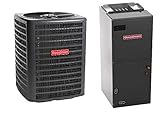
- Home Comfort Solution: Elevate your living with Goodman's standout HVAC products. Merge the efficiency of the Goodman 5 Ton 14.5 SEER2 Heat Pump GLZS4BA6010 and the Goodman Multi-Position Air handler AMST60DU1300. This duo forms the basis of a system, promising efficient heating and cooling and precision in temperature control, all crafted to deliver sustained performance over years. Note that you will want a heat kit if you live in a cold climate.
- Efficient and Reliable Cooling: Dive into a cooling experience with Goodman's 5 Ton 14.5 SEER2 Single Stage Heat Pump GLZS4BA6010. Designed for user-friendliness, it includes service valves, gauge ports, and inspection points. Pre-charged for 15’ of tubing, it's ready to ensure your home's comfort.,Couple its enduring build with a reassuring 10-year parts warranty, and you're set for efficient and reliable cooling throughout the year.
- Upgrade Your HVAC System: Goodman's Multi-Position Air handler AMST60DU1300 represents HVAC evolution. Constructed with corrosion-resistant aluminum, it boasts grooved tubing for better heat transfer. Rigorous helium pressure tests during its making vouch for its quality. This unit is tailored for versatile, long-standing cooling and heating needs.
- Efficient Cooling: The AMST60DU1300 R-32 only air handler features internal factory-installed thermal expansion valves that optimize cooling, ensuring efficient operation. The unit is equipped with appropriately sized evaporator coil tubes, ensuring effective transfer and improved cooling performance. Featuring a direct-drive, 9-speed ECM blower motor, ensuring efficient airflow and enhanced comfort. The coil mounting track enables easy repositioning and flexible installation options.Flexible Installation: The Goodman AMST60DU1300 air handler can be installed in an upflow, horizontal right or horizontal left configuration.
- AHRI certified. See certificate number 215213862. This system uses R-32 refrigerant.
How to calculate your own running cost
Start with the amount of useful heat your home needs. An EPC can provide a starting estimate, but a room-by-room heat-loss calculation or a carefully interpreted history of energy bills is more useful for a system comparison. Do not compare technologies using the boiler’s gas consumption alone if your hot-water use, cooking or other gas appliances are included.
- Estimate annual useful heat demand. Use the space-heating figure from an EPC, a heat-loss calculation, or a reliable set of bills adjusted for weather and hot-water use. Keep the unit consistent, such as kilowatt-hours of useful heat per year.
- Calculate boiler energy input. Divide useful heat demand by the boiler’s seasonal efficiency, then multiply by your gas unit rate. Add the electricity used by pumps and controls if it is material, plus the gas and electricity standing charges that remain on your account.
- Calculate heat-pump electricity. Divide the same useful heat demand by the heat pump’s realistic seasonal performance factor, then multiply by your electricity unit rate. Add any electricity standing charge and any residual gas standing charge if gas remains connected for another appliance.
- Separate space heating from hot water. A heat pump may need a higher temperature for domestic hot water than for space heating. Ask for the design assumptions and include both loads rather than applying one optimistic SCOP to everything.
- Run tariff scenarios. Test your standard tariff, a time-of-use tariff and high and low energy-price cases. A smart meter may be needed to access some smart tariffs; the government model specifically identified smart meters as an enabler.
- Compare annual totals, not unit prices. A cheaper electricity unit rate does not guarantee a lower bill if the heat pump runs at a low seasonal performance factor or if a gas standing charge remains.
The core calculation can be written as:
Boiler heat cost = (useful heat demand ÷ seasonal boiler efficiency) × gas unit rate + relevant standing charges
Heat-pump heat cost = (useful heat demand ÷ seasonal performance factor) × electricity unit rate + relevant standing charges
The academic Great Britain analysis found parity with an 85%-efficient boiler at an SCOP of about 3.3 under its assumptions. That is a modelling result, not a universal threshold: your tariff ratio, heat demand, standing charges and hot-water requirement can move the break-even point.
Upfront installation cost and grants
Capital cost is the clearest advantage for a gas boiler. The Public Accounts Committee reported that an average heat pump cost about four times as much as a gas boiler. Its detailed illustrative figures were approximately £11,600 for a heat pump and £2,500–£3,000 for a new gas boiler.
Recommended Free Tools
| Capital item | Illustrative figure | Qualification |
|---|---|---|
| Air- or ground-source heat-pump installation | About £11,600 | Public Accounts Committee illustrative figure; actual quotes vary by property and specification |
| New gas boiler installation | About £2,500–£3,000 | Public Accounts Committee illustrative figure; actual quotes vary by boiler, flue, controls and labour |
| Heat-pump grant described in the Net Zero Strategy | £5,000 for air-source; £6,000 for ground-source | Policy figures described in that strategy; verify current scheme rules, eligibility and amounts before relying on them |
After a £5,000 air-source grant, the illustrative £11,600 heat-pump cost would leave about £6,600 before any property-specific extras. That is still more than the illustrative boiler price, although the exact gap depends on the quotation and the grant available when you buy.
Rank #3
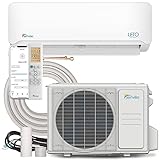
- Alexa Enabled Mini Split AC/Heating System: Seamlessly integrate with voice control or app, allowing you to adjust your mini split air conditioner from anywhere. Set routines for optimal temperature changes
- Versatile 4-in-1 Mini Split: Dive into an all-season solution with our mini split AC and heating system, featuring air conditioning, a robust heat pump (functional up to 5F/-15C), dehumidifier, fan, and an accelerated turbo function. Enjoy the reliability of a DC Inverter that's UL Listed, AHRI Certified, and Works with Alexa
- Stylish & Functional Mini Split AC: Crafted for both home and business, this mini split air conditioner provides dynamic performance without compromising on aesthetics. Suitable for bedrooms, living areas, commercial spaces like stores, eateries, and warehouses
- Installation Package Included: Comes with an indoor air handler, outdoor condenser, intuitive remote control, and a comprehensive installation kit featuring a 16ft. line set and communication wire. Pre-loaded with refrigerant catering up to 25 ft. This system mandates professional installation and is not a DIY mini split AC
- 5 Year Manufacturer's Warranty: Your investment is safeguarded with our mini split heat pump's industry-leading warranty covering 5 years on parts replacement and another 5 on the compressor. Benefit from the established quality of Senville, complemented by complimentary technical assistance. Labor not included
Quotes can differ because of the heat-loss survey, outdoor unit location, cylinder and controls, electrical work, emitter upgrades, pipework changes, removal of old equipment and commissioning. Ask each installer to show these items separately. A low headline price that omits necessary work is not a meaningful comparison.
Design and installation determine the result
Heat-loss calculation and sizing
A heat pump should be sized from the building’s heat loss at the local design outdoor temperature, not from the output of the old boiler. Oversizing can increase cycling and capital cost; undersizing can force backup heating or high flow temperatures. Request the heat-loss method, design temperature, proposed output and expected seasonal performance in writing.
Radiators, underfloor heating and flow temperature
Heat pumps are most economical when they deliver heat at lower water temperatures over longer periods. Existing radiators may be adequate, but some rooms may need larger radiators, additional emitters or improved airflow. If the design relies on very high flow temperatures to produce quick bursts of heat, seasonal efficiency and running-cost savings can deteriorate.
What’s actually slowing this PC down?
Pick the symptom - the matching free tool is one click away.
Insulation and draughts
Reducing heat loss lowers the required heat-pump size and every subsequent unit of energy consumed. Prioritise practical insulation and draught improvements where they are cost-effective, but do not assume that every retrofit must be completed before a heat pump can be designed. The installer should identify the measures that materially change the heat-loss calculation.
Controls and commissioning
Weather compensation, correctly positioned sensors, balanced circuits and a properly commissioned heating curve help a heat pump run steadily. Ask for commissioning records, flow and return temperatures, control settings and an explanation of how to adjust the system. Poor commissioning can erase the benefit of a good machine.
Tariff and meter access
Electricity tariffs can reverse the comparison. A household with a suitable time-of-use tariff, flexible demand and a smart meter may reduce the cost of some heat-pump operation. A household on an expensive electricity tariff with little ability to shift demand may see no saving even when the equipment performs well.
Rank #4
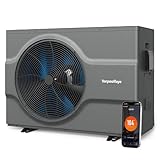
- Extended Swim Season & Pool Usage: This pool heat pump is equipped with a titanium spiral heat exchanger, suitable for above-ground pools with a capacity of up to 17,000 gallons. It enables precise heating (46°F–104°F) and cooling (46°F–82°F)
- Rapid Heating & APP Control: Delivers 40% faster heating with one-touch rapid heating mode; supports APP & touchscreen control for remote temp adjustment, energy tracking, and schedule setting to reduce waste. More cost-effective, intelligent, and user-friendly than gas pool heaters
- Ultra-Quiet Operation: The above ground pool heater is equipped with additional soundproofing devices, operating at a noise level as low as 45 decibels. This allows you to enjoy undisturbed quiet time in the warm pool water, and you don't have to worry about it disturbing your sleep when the equipment heats up at night
- Inverter Low Consumption: Delivers an impressive COP of 6.60 even with low power input by absorbing heat from the air; compatible with both freshwater and saltwater pools. Features inverter technology that auto-adjusts frequency based on environment and operation for steadier performance and longer service life
- Easy to Install: Our product includes hose adapters suitable for 1.5-inch hoses, as well as an 118-inch (approximately 3-meter) power cord
Is a heat pump cheaper to maintain?
There is no current, like-for-like UK dataset in the available official material that establishes a universal annual maintenance cost for heat pumps versus gas boilers. It is therefore not accurate to promise that either system is cheaper to maintain.
Crashes, No Sound, or Screen Glitches?
Random freezes, missing sound and display glitches usually trace back to one bad driver. Find and replace yours safely.Free scan · under a minutePC Slower Than It Used to Be?
A free scan shows the junk files, broken settings and background clutter dragging Windows down - then fixes them in one click.Free scan · Windows 10 & 11Maintenance depends on the equipment, warranty, installer, service interval, controls, water quality, location and whether a repair is covered. A heat-pump quote may include a service plan, while a boiler quote may offer a different warranty and call-out structure; comparing those packages is more useful than comparing technology labels.
What to request in a maintenance comparison
- Recommended service interval and the exact tasks included.
- Annual service-plan price, call-out charges and exclusions.
- Length and scope of parts and labour warranty.
- Who will carry out warranty repairs and typical response arrangements.
- Prices for likely out-of-warranty components and controls.
- Whether the quote includes commissioning, balancing and a handover record.
Keep service-plan prices and warranty terms with your quotation. They are local, product-specific evidence, not a national average.
Independent reader supportYour contribution helps us test, update, and keep practical guides available for everyone.Calculate total cost and payback
Running-cost savings alone do not justify a heat pump if the additional capital cannot be recovered within the period you plan to own the property. Calculate the capital premium after grants, then divide it by a realistic annual saving.
Heat-pump capital premium = heat-pump installed cost − applicable grant − comparable boiler installed cost
Do these 3 things before closing this tab:
1Fix the driver behind crashes, sound loss and screen glitches2Clear out junk files and repair common Windows errors3Scan for outdated or missing drivers - takes under a minuteSimple payback (years) = heat-pump capital premium ÷ annual running-cost saving
Best Value

- High-Performance 75,000 BTU Pool Heat Pump: Designed for above-ground and inground pools up to 21,000 gallons, this high-performance 75,000 BTU pool heat pump delivers fast, reliable water heating. Equipped with a titanium heat exchanger, it is fully compatible with both freshwater and saltwater systems for long-term efficiency and corrosion resistance.
- Energy-Efficient Air Source Heat Pump Technology: Using advanced air-source heat pump technology, this electric pool heat pump transfers heat from the surrounding air rather than generating heat directly, significantly reducing energy consumption compared with traditional gas-powered pool heating systems while maintaining stable heating performance.
- Smart App & Digital Control: Monitor and control your pool heat pump remotely through the mobile app or onboard digital control panel. Heating range: 46°F–104°F. Cooling range: 45°F–82°F. Integrated auto-defrost technology helps maintain efficient operation during colder weather conditions.
- Extended Season Heating & Cooling: Engineered to operate in outdoor temperatures from 32°F to 109°F, this pool heat pump heater helps maintain comfortable water temperatures throughout spring, summer, and fall. Heating and cooling modes provide greater flexibility for changing weather conditions.
- Quiet, Durable & Built for Outdoor Use: Operating at approximately 53 dB, this smart heat pump provides efficient pool heating with minimal noise. The durable ABS cabinet resists UV exposure, corrosion, fading, and cracking, making it ideal for long-term outdoor installation in demanding environments.
If the heat pump costs more to run in your scenario, there is no energy-bill payback; the result should be presented as a choice based on other objectives rather than claimed savings.
| Your situation | Likely financial effect | What to verify |
|---|---|---|
| High SPF, good insulation and favourable electricity tariff | Heat pump has the best chance of lower annual running cost | Measured or modelled SPF, tariff terms and standing charges |
| High flow temperature and poor emitters | Heat-pump savings can shrink or disappear | Room heat loss, radiator outputs and design flow temperature |
| Large grant and long ownership period | Capital premium becomes easier to recover | Current eligibility, installer requirements and payment timing |
| Low-cost gas and expensive electricity | Gas boiler may remain cheaper to run | Current unit rates, standing charges and realistic seasonal efficiencies |
| Short ownership period | Lower-capital boiler is more likely to be financially attractive | Resale plans, remaining warranty and expected replacement date |
Which option fits common UK homes?
A well-insulated home with suitable emitters
This is the strongest case for a heat pump. Low heat demand, low design flow temperature and a high seasonal performance factor improve the chance of lower annual bills. Check the tariff and capital premium before concluding that the investment pays back.
An existing home with a working gas connection
A replacement condensing boiler normally requires much less capital. A heat pump can still make sense if you expect to stay for many years, qualify for a grant, can improve emitters or insulation, and have a tariff that supports efficient operation.
A draughty home with small radiators
Do not compare equipment until the heat loss and emitter requirements are understood. Installing a heat pump without addressing the design constraints can produce high flow temperatures, comfort complaints and disappointing bills.
A property without mains gas
The comparison changes because a gas boiler may require a new connection or a different fuel system. Include all connection, storage, standing-charge and replacement costs rather than using the price of a straightforward like-for-like boiler swap.
A new-build or major renovation
Lower heat demand and easier integration of emitters, insulation and controls can reduce the heat-pump capital premium. Confirm the design performance and commissioning arrangements before signing the building contract.
Carbon and policy exposure
A heat pump’s operational emissions depend on the electricity used, while a gas boiler directly burns fossil gas. The comparison of carbon is therefore separate from the bill calculation and changes as the electricity mix and tariffs change. Gas users also remain exposed to future policy, network and fossil-fuel cost changes; heat-pump owners remain exposed to electricity prices and equipment-replacement costs.
Quick wins for a faster PC:
Repair Windows errors before they cause bigger problemsFix Now →Scan for outdated or missing drivers - takes under a minuteDriver Scan →Clear out junk files and repair common Windows errorsFree Scan →Grant schemes are policy decisions, not permanent price reductions. The £5,000 air-source and £6,000 ground-source figures described in the Net Zero Strategy must be checked against the current scheme before you include them in a project budget.
Buying and installation checklist
- Collect two or three years of gas and electricity bills, separating heating from other uses where possible.
- Obtain the property’s EPC and ask for a room-by-room heat-loss calculation.
- Ask a heat-pump installer to state the design outdoor temperature, required flow temperature, SPF or SCOP assumption and backup-heater strategy.
- Ask a boiler installer to state the seasonal efficiency assumption, controls and commissioning scope.
- List radiator, underfloor-heating, cylinder, pipework, electrical and insulation changes as separate quote items.
- Check current grant eligibility before accepting a quotation; do not subtract a historic grant automatically.
- Use your actual gas and electricity rates, including standing charges, in the calculation.
- Test standard, time-of-use and high-price scenarios rather than relying on one tariff forecast.
- Compare warranties, service intervals, call-out terms and replacement-part coverage in writing.
- Require commissioning records, user training and a clear handover procedure.
Common problems and how to correct them
| Symptom | Likely issue | Practical response |
|---|---|---|
| Heat-pump bills are much higher than predicted | Actual SPF is below the design assumption, electricity tariff is expensive, or standing charges were omitted | Check meter data, flow temperatures, weather-compensation settings and the calculation inputs before blaming the equipment |
| Some rooms are cold | Emitter output, balancing or heat-loss assumptions are inadequate | Request room-by-room checks and balancing; do not simply increase the flow temperature without understanding the effect |
| System cycles frequently | Oversizing, restrictive controls or incorrect minimum output settings | Ask the installer to review sizing, control logic and minimum modulation |
| Quoted saving depends on a grant | Eligibility, scheme amount or installer conditions may have changed | Verify the current scheme and obtain written confirmation before committing |
| Boiler costs exceed the estimate | High return temperatures, poor controls or a boiler that rarely condenses | Review controls, flow temperatures and commissioning; compare actual gas use with the original assumption |
Bottom line
A gas boiler is normally the cheaper purchase. A heat pump can be cheaper to run, but only when its seasonal performance, building fabric, emitters, controls and electricity tariff work together. The government’s worked example found a modest £100 annual heat-pump saving under specific 2023–2024 price assumptions, while the capital premium was many thousands of pounds. Treat maintenance as an item to compare through local service quotes and warranties, not as a guaranteed advantage for either technology.
Quick Recap
Product prices and availability are accurate as of the date/time indicated and are subject to change. Any price and availability information displayed on Amazon at the time of purchase will apply.

