What’s actually slowing this PC down?
Pick the symptom - the matching free tool is one click away.
Some links on this page are affiliate links: if you buy through them we may earn a commission, at no extra cost to you.
Choose the contractual role your project needs, not the label on a firm’s business card. A general contractor (GC) accepts a construction contract and delivers the work. An owner-side construction management (CM) firm may advise and represent the owner without building anything. In a construction manager/general contractor (CM/GC) or construction-manager-at-risk arrangement, the same firm can advise during design and later become the GC if the owner accepts a negotiated construction price.
The right choice depends on how defined the scope is, how much early constructor input could improve the design, the owner’s internal capacity, the required level of control, and the procurement rules governing the project. These are delivery and risk-allocation decisions, not simply a choice between two types of company.


As an Amazon Associate I earn from qualifying purchases.
Start with the contract relationship
Before comparing firms, draw the project’s contractual map. Identify who contracts with the designer, who holds the construction contract, who can direct the builder, and who bears each defined risk. The terms “general contractor,” “construction manager,” “CM/GC,” “CM-at-risk,” and “CMc” overlap in everyday use but do not create identical obligations in every state, agency, or contract.
A firm can provide design-phase management and later perform construction. Conversely, a company marketed as a construction-management firm may be only an owner’s adviser and have no authority to direct trades. The agreement, applicable law, and procurement documents—not the marketing label—determine the role.
Popular on Amazon
The three questions that remove most confusion
- Who has the construction contract? If the firm contracts to perform the work, it is functioning as the constructor or GC for that phase.
- Who represents the owner? An owner-side CM can coordinate, monitor, and report while the owner retains contracts with the designer and builder.
- When is the constructor selected? A conventional method selects a builder after design is sufficiently complete; CM/GC brings a constructor into design and negotiates a later construction contract.
What a general contractor does under a conventional contract
A GC is the party contracted to perform construction. It typically plans and supervises site work, hires and manages subcontractors, coordinates deliveries and sequencing, maintains safety and quality systems, manages changes, and turns the design documents into a completed facility. The exact duties, warranties, insurance, schedule obligations, payment terms, and risk allocation come from the construction contract.
Design-bid-build as the straightforward comparison point
Under design-bid-build, the owner and designer develop the design under one contract. After the design is sufficiently defined, the owner solicits construction bids or proposals and awards a separate construction contract to a GC. Design and construction proceed sequentially, with the architect-engineer retaining its design responsibilities and the GC responsible for construction performance as stated in the contract.
Crashes, No Sound, or Screen Glitches?
Random freezes, missing sound and display glitches usually trace back to one bad driver. Find and replace yours safely.Free scan · under a minutePC Slower Than It Used to Be?
A free scan shows the junk files, broken settings and background clutter dragging Windows down - then fixes them in one click.Free scan · Windows 10 & 11This sequence can make price comparison easier when quantities, interfaces, site information, and performance requirements are mature. It also means the builder’s practical knowledge arrives after many design decisions have been made. If phasing, utilities, traffic control, access, or constructability are unusually difficult, the owner may need another way to obtain that input earlier.
When a conventional GC is a sensible fit
- The design is sufficiently developed to describe the scope and solicit comparable prices.
- The owner can manage the designer–builder interface or has separately engaged an adviser to do so.
- Competitive construction pricing after design completion is a priority.
- The project does not require substantial contractor decisions before design advances.
- The procurement authority permits the selected bidding or negotiated method.
A conventional GC is not automatically the lowest-cost or fastest solution. The method is simply a clear way to assign one party responsibility for construction after the design basis is established.
What an owner-side construction management firm does
An owner-side CM provides professional services to help the owner plan, procure, coordinate, and oversee the project. Depending on the scope, those services may include program management, schedule development and updates, cost estimating and controls, procurement support, design coordination, constructability review, construction observation, change analysis, payment review, risk tracking, reporting, and closeout support.
What the CM does not necessarily do
An owner-side CM does not automatically become the builder, employer of the trades, or party responsible for construction means and methods. The owner may hold the construction contract directly with a GC while the CM monitors performance. The CM’s authority to approve changes, stop work, certify payment, direct the GC, or accept completed work must be written precisely. Federal acquisition guidance treats construction-management services separately from construction contracting; the exact legal duties still come from the contract and applicable jurisdiction.
Also popular on Amazon
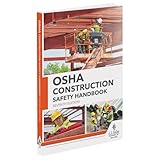
- 2024 OSHA Construction Safety Book is the seventh edition with the new OSHA HazCom final rule on 5/20/24. While the rule takes effect 7/19/24, the compliance dates don’t begin until 1/19/26 per 29 CFR 1910.1200(j).
- Construction Site Book offers quick access to essential OSHA regulations, jobsite hazards, and practical safety tips. It also helps employees identify hazards and prevent injuries and illnesses.
- Features easy-to-read format, full-color images, chapter quizzes with answer key, and comes in a compact size making it a convenient reference for employees.
- Critical topics include Confined Space Entry; Cranes & Derricks; Electrical Safety; Emergency Response; Ergonomics & Back Safety; Excavations; Fall Protection; First Aid & Bloodborne Pathogens; HazCom; Health & Wellness; Jobsite Exposures; Lockout/Tagout; Ladders & Stairways; Materials Handling/Storage; Motor Vehicles; PPE; Scaffolds; Site Safety & Security; Slips, Trips & Falls; Tool Safety; Welding, Cutting & Brazing; and Work Zone Safety.
- Specifications: 5 1/4” x 7 1/4", English, Soft bound. 7th Edition. Copyright 2024.
When owner-side CM is useful
- The owner has multiple projects, funding sources, permits, or public interfaces to coordinate.
- Internal staff need additional schedule, cost, procurement, or reporting capacity.
- The owner wants an independent adviser rather than a builder controlling both oversight and construction.
- The project requires continuous coordination among a designer, several contractors, utilities, agencies, or stakeholders.
- The owner wants to retain direct control of construction contracting while delegating day-to-day management tasks.
An owner-side CM can be paired with design-bid-build, progressive design-build, multiple prime contracts, or other authorized delivery methods. Do not assume that hiring a CM eliminates the owner’s need to make timely decisions or retain appropriate technical and legal advisers.
How CM/GC and CM-at-risk work
CM/GC is a two-phase approach. The owner hires a construction manager during design to provide constructability, scheduling, pricing, phasing, and related input. When the design is sufficiently developed, the owner and CM negotiate a construction price. If the price is acceptable, they execute a construction contract and the CM becomes the GC. Some states use the term “construction manager at risk” for a similar structure; terminology and statutory requirements vary.
Phase 1: select the constructor for preconstruction
- Define the preconstruction scope. State the required reviews, estimating milestones, schedule deliverables, site investigations, subcontractor outreach, risk workshops, and reporting format.
- Procure the CM under the authorized method. Confirm whether qualifications, best value, or another permitted basis is required, and disclose how Phase 1 compensation will be paid.
- Bring practical construction input into design. The CM reviews constructability, access, staging, utilities, work packaging, market conditions, schedule logic, and likely cost drivers while changes are still feasible.
- Maintain independent design responsibility. The architect-engineer remains responsible for its design obligations under the design contract. The CM’s review identifies issues and options; it does not silently transfer the designer’s professional responsibility.
- Update cost and schedule information. Estimates, assumptions, allowances, contingencies, exclusions, and schedule impacts should be traceable as the design develops.
FHWA describes the value this way: “The CM/GC delivery method allows an owner to engage a construction manager during the design process to provide constructability input.” That input can help the owner make informed choices about phasing, traffic, access, utility conflicts, sequencing, and other constraints before they become construction changes.
Phase 2: negotiate and award construction
- Set the pricing basis. The proposal may be a guaranteed maximum price (GMP) or another negotiated structure. Identify the estimate date, labor and material assumptions, escalation treatment, allowances, contingencies, alternates, owner-furnished items, and exclusions.
- Test scope and risk openly. Reconcile the estimate with the drawings, specifications, geotechnical information, permits, utility data, schedule, and identified risks. A single number without these qualifications is not a usable decision document.
- Negotiate the construction terms. Address fee, general conditions, self-performed work, subcontracting, bonds, insurance, schedule milestones, change procedures, savings or overruns, and dispute mechanisms as required by the procurement documents.
- Decide whether the price is acceptable. FHWA states: “If this price is acceptable to both parties, they execute a contract for construction services, and the construction manager becomes the general contractor.”
- Plan the alternative if negotiations fail. The owner should know whether it may solicit another constructor, complete design and bid the work, terminate Phase 1, or use another remedy. The answer depends on the governing law and contract.
“At risk” does not mean every project risk transfers to the CM, and a GMP does not remove all owner exposure. Unforeseen conditions, owner changes, scope gaps, allowances, force majeure, differing site conditions, and other specifically negotiated matters may remain the owner’s responsibility. Read the risk clauses instead of inferring them from the title.
Recommended Free Tools
How the federal CMc example separates design and construction
The U.S. General Services Administration’s construction-manager-as-constructor (CMc) guidance illustrates a federal approach in which the owner has separate design and construction contracts before the design documents are complete. Constructor services can include scheduling, systems analysis, subcontractor involvement, cost estimating, constructability reviews, cost reconciliation, and market analysis.
In that example, the architect-engineer remains contractually responsible for design while the construction contractor supplies defined design-phase services and pricing feedback. This separation is a federal procurement example, not a universal rule. A state transportation agency, municipality, utility, or private owner may use different terminology, authority, insurance requirements, and contract relationships.
Also popular on Amazon
General contractor versus construction-management roles
| Decision point | Conventional GC | Owner-side CM | CM/GC or CM-at-risk |
|---|---|---|---|
| Primary contract role | Performs construction under a construction contract. | Advises and represents the owner under a professional-services contract; may not build. | Provides design-phase services, then may hold the construction contract as GC. |
| When constructor input arrives | Usually after design and procurement. | When the owner commissions it; the CM may advise throughout planning and construction. | During design, before the final construction price is negotiated. |
| Who holds construction risk | As allocated in the GC contract; the GC is responsible for its defined construction obligations. | Usually the owner and GC retain construction obligations; the CM’s duties are those stated in its services contract. | Risk is divided by the preconstruction and construction agreements; “at risk” is not a blanket transfer. |
| Price decision | Bid or proposal is evaluated for the defined scope. | Does not necessarily provide a construction price. | Owner and CM negotiate a construction price, often a GMP; construction proceeds only if acceptable under the agreement. |
| Owner’s management burden | Owner must coordinate design and construction interfaces, directly or with assistance. | Owner gains management capacity but must define authority and still make governance decisions. | Owner collaborates with the CM during design and must govern the negotiation and risk allocation. |
| Best starting question | Is the scope mature enough to procure construction? | Where does the owner lack planning, controls, or oversight capacity? | Would early constructor input materially improve design, phasing, schedule, or price decisions? |
Decision framework for an infrastructure owner
Evaluate the following dimensions together. A method that looks attractive on price can be unsuitable if the owner cannot staff it, obtain authority, or make timely decisions.
1. Scope and design maturity
If requirements, quantities, interfaces, geotechnical information, and permits are sufficiently defined, a conventional GC procurement may be practical. If major staging, utility, traffic, access, or systems decisions remain open, early CM/GC input may expose problems while the design team can still respond.
The Tool Desk
Outbyte PC Repair FREEClear out junk files and repair common Windows errorsFree Scan →Outbyte Driver Updater FREEFix the driver behind crashes, sound loss and screen glitchesFind Drivers →2. Schedule sensitivity
Ask which dates are fixed and what is driving them: funding deadlines, seasonal work windows, service continuity, public events, traffic restrictions, or interdependent contracts. CM/GC can support phased planning during design, but it does not guarantee a shorter schedule. Require a baseline, milestone logic, assumptions, and update procedures rather than relying on a delivery-method slogan.
3. Owner capability and desired control
Inventory the people who will manage design review, procurement, cost, schedule, utilities, permits, claims, public communication, safety oversight, and closeout. If the owner needs an independent coordinator, an owner-side CM may fit. If it wants one party accountable for construction execution, a GC contract may fit. If it wants contractor expertise without surrendering design responsibility, CM/GC can bridge those needs.
4. Price and scope certainty
Determine when the owner needs a firm construction commitment and how much uncertainty it can retain. For a negotiated GMP, require a detailed basis: scope included, design status, allowances, contingencies, escalation, labor assumptions, subcontractor coverage, owner-furnished work, exclusions, and the treatment of savings and overruns. Compare like scopes, not headline totals.
5. Risk allocation and incentives
Map responsibility for design errors, differing site conditions, existing utilities, permitting, third-party access, hazardous materials, escalation, schedule delay, safety, quality, and public impacts. Then check whether payment incentives and decision rights support that allocation. A party cannot manage a risk it lacks information, authority, or control to influence.
Also popular on Amazon
6. Public, safety, quality, and life-cycle outcomes
Infrastructure work affects users, neighbors, businesses, agencies, and future operators. Include safety, quality assurance, maintainability, resilience, social and economic effects, public perception, and life-cycle cost in the evaluation alongside initial price. The least expensive initial proposal may not produce the lowest total cost of ownership.
7. Procurement and legal authority
Confirm state and local statutes, agency policy, grant or funding conditions, bonding and insurance rules, labor requirements, protest procedures, and any applicable federal acquisition requirements. Federal guidance can explain a delivery structure but cannot substitute for project-specific procurement and legal review.
Practical selection paths
Choose a conventional GC when
- The owner has a defined design and a procurement method that permits competitive construction proposals.
- Construction accountability should sit with one builder after design completion.
- The owner can manage interfaces or has separately procured that capability.
- Early constructor involvement is unlikely to change major design or phasing decisions.
Choose an owner-side CM when
- The owner needs planning, cost, schedule, procurement, coordination, observation, or reporting capacity.
- The owner wants the CM to remain independent from the construction contractor.
- The owner is prepared to state exactly what the CM may approve, direct, certify, or recommend.
- Several contracts or stakeholders require a dedicated integration role.
Evaluate CM/GC or CM-at-risk when
- Constructability, staging, utilities, traffic, market capacity, or phasing can materially affect design decisions.
- The owner wants a constructor involved before the design is complete.
- The owner can manage a two-phase procurement and a transparent price negotiation.
- The solicitation and contract provide a credible path if the negotiated construction price is not accepted.
How to write the solicitation and contract
- State the delivery method and terminology. Define whether the procurement is for a GC, owner-side CM, CM/GC, or CMc and identify the governing authority.
- Separate services by phase. List preconstruction deliverables and construction obligations independently, including the point at which a construction contract may be awarded.
- Define authority lines. Show who directs the contractor, approves submittals, accepts work, manages changes, certifies payment, controls design decisions, and communicates with the public.
- Specify information and assumptions. Identify geotechnical reports, surveys, utility records, environmental documents, permits, design milestones, owner-furnished equipment, and known constraints.
- Require transparent pricing. Set the estimate format, fee and general-conditions breakdown, subcontractor coverage, allowances, contingencies, escalation, alternates, exclusions, and audit rights.
- Describe the price-negotiation process. State milestones, review periods, required estimate reconciliation, approval authority, and the remedy if the parties do not agree.
- Align insurance, bonds, safety, quality, and reporting. Make these obligations consistent with the actual role and with applicable law.
- Reserve change and dispute procedures. Explain notice, documentation, time extensions, differing conditions, design clarifications, claims, and escalation paths.
Illustrative infrastructure situations
Defined roadway rehabilitation
If drawings, pavement limits, traffic plans, utility information, and permits are sufficiently mature, the owner may procure a GC under the authorized conventional method. An owner-side CM can still support schedule, payment, and field oversight if the owner’s staff need capacity.
Transit or utility work with difficult staging
When service must continue while work proceeds through constrained access, early constructor input may help the designer test phasing, work windows, temporary systems, and procurement assumptions. CM/GC is worth evaluating if the owner can negotiate a transparent construction price and retain the required design accountability.
Quick wins for a faster PC:
Fix the driver behind crashes, sound loss and screen glitchesFind Drivers →Clear out junk files and repair common Windows errorsFree Scan →Large public program with several contracts
A program-level owner-side CM may be more relevant than selecting one construction contractor to manage unrelated packages. The owner can define controls, reporting, interfaces, and procurement support while each GC remains responsible for its own construction contract.
These examples illustrate questions to ask, not universal prescriptions. Asset type, jurisdiction, funding, market conditions, and design maturity can change the answer.
Also popular on Amazon
Common mistakes and how to correct them
Mistake: treating the labels as mutually exclusive
Correction: ask which contract the firm will sign, what it will deliver in each phase, and whether it may become the constructor.
Mistake: assuming a GMP is a complete promise without reading its basis
Correction: require scope, allowances, contingencies, exclusions, escalation assumptions, schedule, and owner responsibilities to accompany the price.
Free tools Windows power users keep installed
One-click scans. No signup required.
Mistake: transferring design responsibility by implication
Correction: preserve the architect-engineer’s contractual design duties and define the CM’s review and coordination obligations expressly.
Mistake: giving an owner-side CM vague authority
Correction: create a responsibility matrix covering direction, approvals, payment certification, change control, safety escalation, records, and communications.
Mistake: assuming “at risk” eliminates owner exposure
Correction: read every risk clause and identify retained risks, owner changes, unknown conditions, allowances, force majeure, and dispute remedies.
Mistake: selecting a method before checking procurement authority
Correction: obtain jurisdiction-specific legal and procurement review before issuing the solicitation.
Questions to ask finalists
- Which legal entity will contract with the owner, and in what capacity during each phase?
- What preconstruction deliverables will you provide, on what schedule, and using which assumptions?
- How will you document constructability findings and show their effect on design, cost, and schedule?
- What exactly is included in your proposed price or GMP, and what is excluded?
- How will allowances, contingencies, escalation, savings, overruns, and owner changes be handled?
- Who remains responsible for design, and how will design comments be resolved?
- What authority will the owner, CM, designer, and GC each have in the field?
- What happens if the owner does not accept the negotiated construction price?
- How will safety, quality, public access, utilities, and third-party interfaces be managed?
- Which reports, records, audits, and decision logs will the owner receive?
Bottom-line decision
Hire a conventional GC when the owner primarily needs one party to build a sufficiently defined scope under an authorized construction contract. Engage an owner-side CM when the owner needs independent planning, controls, coordination, or oversight and wants to retain construction contracting authority. Evaluate CM/GC or CM-at-risk when early constructor expertise could materially improve constructability, phasing, schedule, or pricing decisions—and only after defining the negotiated-price process, risk allocation, and fallback if agreement is not reached.
The strongest procurement documents make the role, authority, design responsibility, price basis, and retained risks explicit. That discipline matters more than whether a firm’s brochure calls it a general contractor or a construction-management firm.
Quick Recap
Product prices and availability are accurate as of the date/time indicated and are subject to change. Any price and availability information displayed on Amazon at the time of purchase will apply.

