The Tool Desk
Outbyte Driver Updater FREEFix the driver behind crashes, sound loss and screen glitchesFind Drivers →Outbyte PC Repair FREEClear out junk files and repair common Windows errorsFree Scan →Some links on this page are affiliate links: if you buy through them we may earn a commission, at no extra cost to you.
The smart home is becoming less a collection of voice-controlled gadgets and more a coordinated household system. It will sense conditions, interpret what is happening, adjust comfort and energy use, improve access and security, and alert residents to problems.
That future is arriving at different speeds. Matter and Thread are already becoming practical foundations; AI-generated routines, energy coordination, ambient sensing, and specialized robots are emerging; fully autonomous homes and general-purpose domestic robots remain aspirational. For homeowners, renovators, renters, and builders, the best strategy is to invest in useful infrastructure—not speculative features.
As an Amazon Associate I earn from qualifying purchases.
Outdated Drivers Are Slowing You Down
One free scan finds every outdated or missing driver and matches the right update for your exact hardware.Free scan · exact hardware matchPC Slower Than It Used to Be?
A free scan shows the junk files, broken settings and background clutter dragging Windows down - then fixes them in one click.Free scan · Windows 10 & 11What the smart home is becoming
A mature smart home has six connected layers:
- Sensing: It measures occupancy, temperature, humidity, air quality, water flow, energy use, and security events.
- Understanding: It interprets those signals as events, such as an open window or an unoccupied room.
- Decision-making: It selects an action based on schedules, preferences, tariffs, weather, or safety rules.
- Actuation: It changes lighting, heating, ventilation, locks, appliances, shades, or charging.
- Feedback: It checks whether the action worked.
- Governance: It manages permissions, privacy, safety, manual overrides, and household disagreements.
This is a more useful way to evaluate the future than counting gadgets. The important question is not whether a device is clever, but whether it makes the home more comfortable, efficient, accessible, reliable, and maintainable.
1. Matter and Thread will provide the foundation
Matter is an application-layer smart-home standard designed to let certified devices work across participating ecosystems, including Apple Home, Google Home, Amazon Alexa, and Samsung SmartThings. It can operate over Wi-Fi, Ethernet, and Thread; Bluetooth Low Energy is used for commissioning in the initial architecture.
Popular on Amazon

- Echo Hub — An easy-to-use smart home control panel redesigned for your home. Arrange controls on your dashboard to quickly adjust devices, view cameras, start routines, and more.
- Customize your dashboard — Arrange devices into sections and resize them to focus on what matters most. Create a personalized layout that matches how your family uses their connected devices.
- Reimagined for your home - With an Alexa+ and compatible Ring subscription (sold separately), get Ring camera event summaries to stay in the know. Search your Ring footage using simple voice commands. Create routines by voice, activate modes to manage multiple devices at once, and chat with Alexa to easily control your smart home.
- Home security for the whole family — Use Echo Hub to easily arm and disarm your compatible security system, making it easy for everyone in your family to manage home security. Use the Alexa app and compatible cameras, locks, alarms, and sensors to check in while you're out.
- Works with thousands of Alexa compatible devices — WiFi, Bluetooth, Zigbee, Matter, Sidewalk, and Thread devices sync seamlessly with the built-in smart home hub.
Thread is especially useful for low-power sensors. Its mesh design can suit battery-powered devices better than Wi-Fi in appropriate installations, although a compatible Thread border router may be required.
Matter is real, but it is not universal compatibility. A Matter light may work in several platforms while advanced scenes, camera features, subscriptions, remote access, firmware updates, or manufacturer services remain different. A certified device may also still require a manufacturer account.
Free tools Windows power users keep installed
One-click scans. No signup required.
As of the research snapshot dated August 18, 2026, some documentation identifies Matter 1.5 as the current version, with expanded direction for cameras, closures, and energy management. That version number should not be confused with support on every platform or device. Check the exact model and ecosystem before buying.
What to check before purchase
- Matter certification, rather than only “works with” marketing.
- The device type and whether it uses Matter over Thread or Wi-Fi.
- Whether a hub or border router is required.
- Multi-admin support for use across ecosystems.
- Local operation during an internet outage.
- Manufacturer update commitments and migration options.
- Which advanced features remain proprietary.
For a new build or renovation, plan network coverage, electrical outlets, low-voltage pathways, hub locations, and access to replaceable batteries before walls are closed.
2. AI home agents will act on goals
The next generation of assistants will move beyond “turn on the lights.” A resident might ask the system to make the home comfortable on arrival, prepare a movie-night scene, explain why a bedroom is colder, reduce consumption during expensive hours, or create a routine that switches off unnecessary equipment when everyone leaves.
Google is already marketing natural-language automation creation and conversational features through Google Home Premium. But an AI recommendation is not the same as safe autonomy. It helps to grade capabilities:
- Suggestion.
- Natural-language routine setup.
- Event summarization.
- Routine execution.
- Adaptive optimization.
- Unsupervised autonomous action.
AI is most appropriate for low-risk, reversible actions such as lighting, scenes, comfort adjustments, reminders, and energy recommendations. Locks, ovens, alarms, medical alerts, and access permissions need confirmation, strict rules, or reliable fallbacks.
Potential failures include ambiguous instructions, incorrect camera interpretations, conflicting family preferences, cloud outages, inaccessible devices, and vendor changes. A good system should show what it plans to do, allow editing, record why an automation ran, and provide a physical override.
3. Energy-aware homes will coordinate electricity
Energy management may be more valuable than voice control. Future systems will connect time-of-use tariffs, solar generation, batteries, electric vehicles, heat pumps, thermostats, appliances, and demand-response programs.
A coordinated system could delay EV charging until rates fall, pre-cool a home before peak pricing, run a washing machine while rooftop solar is producing, use a battery during expensive periods, or preserve stored energy before a forecast storm. Apple’s Home and EnergyKit initiatives illustrate the direction toward energy-aware software, while newer Matter development includes broader energy-management capabilities.
Do these 3 things before closing this tab:
1Repair Windows errors before they cause bigger problems2Scan for outdated or missing drivers - takes under a minute3Clear out junk files and repair common Windows errorsAlso popular on Amazon

- [Multi-Protocol Hub with Matter Bridge] The M3 is a versatile hub supporting Aqara Zigbee and Thread devices. It integrates third-party devices into the Aqara Home app. Supports advanced Matter bridge functionality, enabling Aqara-exclusive scenes and signals to sync with Matter ecosystems such as Home Assistant for seamless integration. Supports up to 127 Aqara Zigbee devices (** Not third-party Zigbee devices) and 127 Thread devices (Repeaters are needed).
- [Edge Compatibilities and Local Automations] The M3 serves as an Edge Hub, prioritizing local control and automation. Upon integration, it supersedes existing Aqara hubs, shifting the automations among them to local operation (Some cloud-based notifications still require internet). Upgrade-friendly, it supports migrating Zigbee devices from older Aqara hubs.
- [Smart IR Blaster with Feedback and Learning] The 360°IR blaster not only sends commands but also provides accurate status updates by detecting traditional remote use. It connects IR air conditioning units to Matter, functioning as an AC thermostat when paired with an Aqara Temperature and Humidity Sensor. (Note: Only one AC device can be exposed to Matter. Functionality may vary based on the Matter integration app. For Apple Home exposure, use Matter integration instead of HomeKit.)
- [Optimal Wired and Wireless Connectivity] Offering both wired and wireless solutions, the smart home hub M3 provides dual-band Wi-Fi (2.4/5 GHz) with advanced WPA3 security, and a Power over Ethernet (PoE) port. The addition of a USB-C port allows for mini-UPS and power bank connections, delivering unparalleled stability. (2A USB power adapter is not included. ) . Note: To ensure a stable connection, place the Hub M3 between 6 to 19 feet from the router.
- [Privacy-Focused with Encrypted Storage, Easy Setup and Versatile Placement] The M3 prioritizes privacy by excluding microphone or camera components. It boasts 8GB end-to-end encrypted local storage, for device lists, configuration parameters, and automation configuration data. Additionally, it includes a mount and screws for flexible placement on flat surfaces, walls, or ceilings. Magic Pair technology ensures effortless detection by the Aqara Home app upon power-up.
Results depend on local tariffs, climate, equipment, installation quality, user preferences, and utility programs. Automation can also reduce comfort, increase battery cycling, or create confusing decisions. Energy data may reveal occupancy and daily routines, so privacy matters.
For construction projects, energy-ready design may include adequate electrical capacity, conduit for future equipment, EV charging provisions, solar and battery space, efficient HVAC, and a control strategy that can integrate these systems without forcing one vendor’s cloud platform.
4. Ambient sensors will reduce reliance on cameras
Smart homes will increasingly understand their surroundings through motion, presence, temperature, humidity, light, sound events, door and window contacts, radar or radio-frequency sensing, air-quality monitors, water flow, and electrical-load data.
This shifts the emphasis from controlling individual devices to understanding state: whether a room is occupied, whether a window is open, whether conditions are becoming unhealthy, or whether water is flowing unexpectedly.
Sensor-first design can reduce visual surveillance, but it is not automatically private. Occupancy patterns, audio events, sleep schedules, and energy consumption can still expose sensitive information. Sensors also have limitations: pets trigger occupancy detectors, sleeping people may be missed, furniture changes can affect performance, and walls or metal can interfere with radio signals.
Use cameras where they add clear value, and use less intrusive sensors for routine occupancy, comfort, leak, and air-quality automation.
5. Cameras will become more capable—and more complicated
Smart cameras can already identify people, animals, vehicles, packages, and unusual activity. Future systems may provide natural-language summaries, configurable privacy zones, local event processing, and tighter connections among cameras, lights, locks, doorbells, and alarms.
Matter 1.5 is associated with expanded camera-related capabilities, but that does not mean existing cameras instantly become interchangeable. Basic camera functions and cloud-service interoperability are different things. A common standard may expose a device’s core functions while advanced detection, video history, or AI descriptions remain tied to the manufacturer’s application and subscription.
Before installing cameras, ask where video is processed, whether recordings can remain local, how long data is retained, who can access it, what happens when a subscription ends, and whether every household member and guest has consented. False positives, facial-recognition risks, account compromise, and law-enforcement access policies deserve as much attention as image quality.
6. Specialized robots will handle more chores
Consumer robots are already practical in narrow roles: vacuuming and mopping, mowing lawns, cleaning pools, and in some cases washing windows. The near-term future is likely to be coordinated specialist machines, not one humanoid robot that performs every household task.
Also popular on Amazon
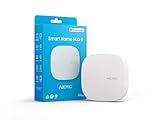
- Powered by SmartThings: Connect, monitor, and automate your home through the SmartThings app. Build a reliable, unified smart home using Samsung's proven ecosystem
- Matter + Zigbee Smart Home Hub: Supports the newest Matter standard plus Zigbee for lighting, sensors, plugs, switches, thermostats, and more - thousands of compatible devices. PLEASE NOTE: Z-Wave not supported
- Easy Setup with Wi-Fi or Ethernet: Get started in minutes using Wi-Fi or a wired Ethernet connection for apartments, houses, and expanding smart home systems - Z-Wave not supported
- Automations That Work for You: Create custom routines for security, lighting, comfort, and energy savings. Many local automations continue working even if your internet goes offline
- Wide Device Compatibility: Connect compatible smart devices from Aeotec and many other brands to build a unified system for lighting, voice control, energy management, and climate settings
A home agent could schedule cleaning around a video call, pause a mower when children or pets are detected, run an appliance when solar power is available, or coordinate charging and maintenance.
Stairs, clutter, moving objects, poor maps, outdoor boundaries, consumables, proprietary parts, cameras, and repair costs remain serious constraints. General-purpose domestic robots should be treated as a longer-term possibility rather than a current consumer norm.
7. Digital keys will make access more granular
Smart access systems combine smartphones, wearables, NFC, Bluetooth Low Energy, ultra-wideband, temporary credentials, audit logs, and building-system integration. Their real benefit is permission management: a dog walker might receive access for 30 minutes, a cleaner on scheduled days, or a delivery worker only to a designated area.
The risks are equally practical. Phones are lost, accounts are compromised, batteries die, guests may lack compatible devices, and emergency responders need dependable access. Every smart lock should have a fallback such as a physical key, keypad, local credential, or emergency power method. Builders should also consider door hardware, wiring, battery access, and how the lock will be replaced when its software support ends.
8. Smart homes will support aging and independent living
Connected homes may help older adults, disabled residents, people recovering from surgery, and caregivers through medication reminders, activity patterns, indoor-air monitoring, fall-risk alerts, nighttime lighting, and emergency notifications.
However, a consumer sensor is not automatically a medical device. Convenience monitoring, wellness tracking, caregiver alerts, clinical monitoring, and regulated medical alarms are different categories. A missed fall, false alert, connectivity failure, or incorrect routine can have serious consequences.
Recommended Free Tools
NIST has highlighted cybersecurity and privacy risks when smart-home IoT is used in telehealth and hospital-at-home settings. Higher-stakes use requires clear escalation procedures, human oversight, redundancy, and a plan for internet and power failures.
9. Comfort systems will adapt room by room
Heating, cooling, lighting, motorized shades, ventilation, humidifiers, dehumidifiers, and air purifiers will increasingly work together. A system might use occupancy and sunlight to adjust each room, close shades before overheating, improve ventilation when carbon dioxide rises, and reduce conditioning in empty spaces.
Evaluate temperature accuracy, humidity control, CO2 and particulate measurements, sensor placement, HVAC compatibility, power requirements, noise, filter costs, local control, and manual overrides. Open windows can undermine HVAC automation; sunny and shaded rooms behave differently; occupancy learning can be wrong; and poor air-quality sensor placement can produce misleading readings.
For construction and remodeling, this is where good design matters most: zoning, ductwork, insulation, shading, ventilation, equipment access, and sensor locations often matter more than the app used to control them.
Quick wins for a faster PC:
Repair Windows errors before they cause bigger problemsFix Now →Fix the driver behind crashes, sound loss and screen glitchesFind Drivers →Also popular on Amazon

- LOCAL PROCESSING FOR INSTANT RESPONSE: The Hubitat Elevation C-8 Pro runs automations directly on the hub, not on remote servers, so lights, locks, thermostats, and routines keep working even when your internet goes down; this local-first architecture delivers near-instant response to every trigger without relying on remote servers to process commands; compatible with 1,000+ devices across 100+ brands, and device data stays at home for enhanced privacy
- WORKS WITH ALEXA, GOOGLE HOME, AND APPLE HOMEKIT: Connect your preferred voice assistant and start controlling your smart home from day 1; the C-8 Pro is compatible with Amazon Alexa, Google Home, and Apple HomeKit, so your existing ecosystem works alongside the hub without compromise; Ring camera integration adds a concrete layer of security awareness; approachable setup is supported by step-by-step documentation and an active online community ready to guide you through every stage
- MULTI-PROTOCOL SUPPORT WITH EXTENDED RANGE: A single hub covers Matter 1.5, Z-Wave 800 Series with Long Range, Zigbee 3.0, and Bluetooth, so existing devices stay compatible without extra bridges or adapters; 800 Series Z-Wave and Zigbee 3.0 deliver improved reliability and mesh stability, backed by Z-Wave Alliance membership; 2 dedicated external antennas, one for Z-Wave and one for Zigbee, extend wireless reach in larger homes and device-dense environments where signal consistency is critical
- AI-ASSISTED AUTOMATION AND ADVANCED RULE ENGINE: The AI-assisted routine builder suggests and builds automations based on your connected devices, no programming required; Rule Machine enables multi-condition logic across lighting scenes, geofenced arrivals, layered security responses, and whole-home scheduling; when your family arrives after dark, the hub can unlock the door, activate pathway lights, and adjust the thermostat, turning complex sequences into reliable hands-free routines
- NO SUBSCRIPTION REQUIRED AND CONTINUOUS UPDATES: Full platform functionality needs no recurring subscription; every automation, integration, and advanced feature is available from setup; continuous platform updates since 2018 have expanded compatibility without requiring new hardware; an active community of tech-savvy homeowners and DIY smart home builders shares custom apps, drivers, and automation blueprints for ongoing value; compact at 3.23 x 2.95 x 0.67 in and just 0.16 lb, it fits anywhere
10. Predictive maintenance will detect problems earlier
Connected homes can identify anomalies such as slow leaks, unusual appliance vibration, HVAC performance changes, refrigerator temperature drift, sump-pump failure, electrical-load changes, and abnormal water use. Early warning can be more valuable than novelty: a leak alert may prevent extensive damage, while an HVAC warning may avoid a failure during extreme weather.
These systems usually identify an anomaly; they do not diagnose a mechanical fault with certainty. Treat an alert as a prompt for inspection. Energy and appliance data also reveal when people are home, sleeping, away, or using particular equipment, so access controls and retention policies matter.
11. Local processing will become a major buying criterion
A mature smart home should make clear where data is processed: on the device, on a local hub, on a private home server, in a vendor cloud, or through a hybrid model. Apple positions its Matter implementation around privacy and user control, while Matter itself identifies security and privacy as core principles. Neither fact eliminates the separate cloud policies of participating manufacturers.
Ask:
- Does the device work when the internet is down?
- Is video processed locally?
- Can recordings be stored without a subscription?
- How long are logs retained?
- Can data be deleted?
- Is two-factor authentication available?
- How long will security updates continue?
- Can the device be transferred to another platform?
- What happens if the vendor closes the service?
“Private” is not a single feature. No camera, local processing, encrypted transmission, encrypted cloud storage, no account, and no subscription are separate properties.
What’s actually slowing this PC down?
Pick the symptom - the matching free tool is one click away.
12. Interfaces will become multimodal
Voice will remain useful, but future control will combine voice, text, apps, wearables, wall displays, presence, gestures, environmental context, and predictive suggestions. A resident may speak a request, edit the result on a phone, confirm it on a display, and receive an alert on a watch.
Multimodal design can improve accessibility, but it introduces trade-offs. Voice is convenient but unsuitable for private commands; screens add cost; presence can feel intrusive; gestures may fail in poor conditions; and AI-generated automations can be hard to audit. Physical buttons and manual controls should remain available for essential functions.
What is available now—and what should wait?
Practical today
- Matter-certified lights, plugs, sensors, thermostats, locks, and other devices.
- Thread sensors and compatible controllers.
- AI-assisted routines on some platforms.
- Energy monitors and connected HVAC controls.
- Cameras with AI event detection.
- Robotic cleaning and lawn equipment.
- Smart locks with temporary credentials.
- Air-quality sensors, leak detectors, and local or hybrid controllers.
Still emerging or aspirational
- One AI agent controlling every brand and appliance.
- Fully autonomous general-purpose household robots.
- Reliable prediction of every maintenance problem.
- Medical-grade monitoring from ordinary consumer sensors.
- Perfectly interchangeable cameras and security services.
- Homes that negotiate energy markets independently without oversight.
Should you buy now or wait?
Buy now when
- The product solves a specific recurring problem.
- It supports Matter or another established local protocol where appropriate.
- It has a physical or local fallback.
- The manufacturer has a credible security-update policy.
- Subscription costs are acceptable.
- You can replace it without rebuilding the whole system.
Wait when
- The main attraction is an unproven AI promise.
- The product depends on an immature proprietary platform.
- It controls a safety-critical function without manual fallback.
- The vendor’s service or business model is unclear.
- A standards-based replacement is likely soon.
- Installation is expensive for a minor convenience.
A buying and building checklist
| Priority | Questions to ask |
|---|---|
| Interoperability | Is it Matter-certified? Does it support Thread where useful? Can it work with the preferred platform and multiple administrators? |
| Reliability | What happens during an internet outage, power cut, router failure, or hub failure? Is there a physical control? |
| Privacy | Are microphones or cameras present? Where is data processed? Is an account or subscription required? |
| Total cost | Include hardware, hubs, installation, batteries, filters, subscriptions, replacement parts, energy use, and vendor lock-in. |
| Accessibility | Are voice, physical buttons, large text, visual and audible alerts, caregiver permissions, and manual overrides available? |
| Construction | Will the design provide network coverage, electrical capacity, sensor locations, conduit, HVAC compatibility, equipment access, and future replacement options? |
Renters should favor removable, battery-powered products and avoid wiring, drilling, or electrical work requiring landlord approval. Homeowners undertaking renovations can plan for future sensors, EV charging, solar, batteries, smart shades, and local networking without committing to one vendor.
The likely shape of the future smart home
The most successful smart homes will not be the ones with the largest number of connected products. They will combine dependable sensors, interoperable devices, energy-aware equipment, accessible controls, local fallbacks, and carefully limited automation.
AI will make systems easier to configure and more capable of interpreting context. Matter and Thread will improve the baseline for compatible devices. Energy coordination, leak detection, indoor-air control, and support for independent living may deliver more practical value than futuristic demonstrations. The best investment is a home that remains useful when the internet fails, private when residents want privacy, understandable when automation makes a decision, and manually controllable when technology gets it wrong.
Quick Recap
Product prices and availability are accurate as of the date/time indicated and are subject to change. Any price and availability information displayed on Amazon at the time of purchase will apply.

