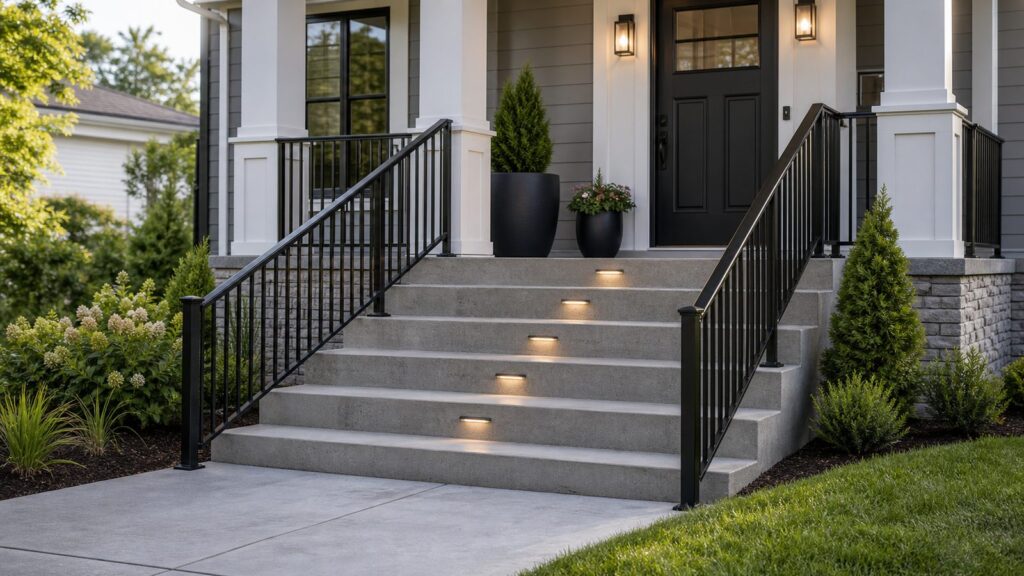
Front porch steps are one of the fastest ways to change how a house feels from the street. They sit where the walkway, porch, railing, landscaping, lighting, and front door all meet. When the steps look undersized, cracked, slippery, or out of proportion, the whole entry looks tired. When they are built cleanly, they make the house feel cared for before anyone reaches the door.
For most homeowners, the right front step upgrade falls into one of three buckets: a cosmetic refresh, a material upgrade, or a full structural replacement. In 2026, simple exterior stair projects often land around $500 to $2,000, while concrete front step replacement commonly ranges from about $900 to $5,000 depending on size, demolition, footing needs, railing, and finish. Stone slab steps can run much higher, often about $1,500 to $9,000 installed and sometimes up to $12,000 for premium layouts.
As an Amazon Associate I earn from qualifying purchases.
On our job sites, we start with measurements before style. Total rise, available run, landing depth, door swing, porch condition, drainage, and local code decide what is practical. A beautiful step idea is only a good idea if it drains, grips underfoot, meets riser and tread requirements, and fits the architecture of the house.
What’s actually slowing this PC down?
Pick the symptom - the matching free tool is one click away.
Start With the Measurements That Control the Design
Before choosing brick, concrete, stone, wood, or composite, measure the entry like a builder. You need the total vertical rise from the finished walkway or grade to the porch landing. Divide that height into even risers. Under the 2021 International Residential Code, stair risers are generally limited to a maximum height of 7 3/4 inches, and treads need a minimum depth of 10 inches. Local amendments can vary, so your building department has the final say.
#1 Best Overall

- 【Friendly Reminder】Please use the included wrench for installation. When drilling, ensure the pre-drilled holes are 8mm in diameter and 85mm in depth. You are viewing the 3-step handrail. Please double-check the number of steps on your staircase to ensure a proper match.
- 【Dual-Use Design & Universal Compatibility】This versatile handrail offers two installation methods (vertical steps or horizontal surfaces) and adapts seamlessly to various materials, including concrete, wood, brick, or composite stairs. Its flexible design ensures a proper fit for diverse environments, from porches to garden steps, without requiring modifications.
- 【Premium Durability for All Weather】Constructed from heavy-duty iron with galvanized and powder-coated finishes, the railing resists rust, peeling, and scratches. It withstands rain, snow, and UV exposure, ensuring long-lasting stability and a sleek black matte appearance that won’t fade or discolor.
- 【Safety & Ergonomic Comfort】The oval-shaped, slip-resistant grip provides secure support for all users, including the elderly, children, or those with mobility challenges. Reinforced joints and waterproof connectors enhance stability, while smooth curved edges prevent hand fatigue.
- 【Easy Installation】All necessary hardware, such as screws, anchors, and wrenches, is included. No special skills are needed. Simply mark, drill, and secure. Pre-drilled holes and a detailed guide enable setup in minutes (a drill is required).
Every riser in a stair run should be consistent. A common mistake is adding pavers, stone caps, tile, or a concrete overlay and accidentally making the first or last step taller or shorter than the others. Even a small surprise in step height can create a trip hazard.
Also check the landing. Exterior doors need a stable landing, and the landing must work with the door swing. If the porch or stoop has settled, cracked, or pulled away from the house, cosmetic work will not solve the problem. In freeze-thaw climates, steps need proper base preparation and, where required, frost-depth footings so they do not heave and crack after one or two winters.
20 Front Porch Step Ideas That Add Curb Appeal
1. Wider Welcoming Steps
Widening the step field is one of the biggest visual upgrades for a narrow entry. A 36-inch stair can meet minimum access needs, but many front elevations look better with 48 to 72 inches of width when the porch and walkway allow it. Wider steps make the entry feel generous and give room for two people to pass comfortably.
Best for: Colonials, ranch homes, transitional homes, and houses with a wide front door or double sidelights. Cost level: Medium to high because widening usually means new forms, new footings or base work, and railing changes.
2. Flared Bottom Steps
A flared bottom step spreads outward as it meets the walkway. It softens the transition from yard to porch and can make a small stoop look more custom. The trick is keeping all walking surfaces code-compliant and making sure the flare does not create awkward triangular areas that collect water.
Best for: Traditional homes, cottage entries, and houses with curved landscaping beds. Watchout: Railing layout and tread depth must be planned before forming or masonry work begins.
3. Brick Steps With Limestone or Bluestone Caps
Brick steps with stone caps are a classic front-entry combination. Brick gives color and texture, while limestone or bluestone caps create a flatter, more refined walking surface. This works especially well when the house already has brick veneer, brick chimneys, or masonry details.
Free tools Windows power users keep installed
One-click scans. No signup required.
Best for: Colonial, Georgian, Tudor, and traditional homes. Cost level: Medium to high. Matching historic brick, rebuilding failed masonry, or adding custom cheek walls can raise the budget quickly.
4. Poured Concrete With a Broom Finish
For durability per dollar, a properly built poured concrete stoop is hard to beat. A broom finish adds traction without looking busy. In 2026, a basic three-step broom-finish concrete stoop often runs about $1,000 to $1,800, while wider or more decorative concrete entries can reach roughly $3,500 to $5,500.
Best for: Modern, ranch, split-level, and practical family homes. Watchout: Concrete must slope away from the house and be placed over a stable, compacted base.
5. Stamped Concrete Steps
Stamped concrete can imitate stone, slate, or brick at a lower cost than many masonry installations. It can look sharp when the pattern and color are restrained. We usually recommend simple textures near the front door instead of high-contrast patterns that fight the house.
Best for: Homes with stamped walkways, decorative patios, or existing concrete hardscape. Maintenance: Sealers need upkeep, and glossy sealers can become slippery if not specified correctly.
6. Exposed Aggregate Treads
Exposed aggregate gives concrete a textured, natural surface. It hides dirt better than plain concrete and provides good grip when finished correctly. It also pairs well with simple black railings and low-maintenance landscaping.
Rank #2

- Hand Rails for Outdoor Steps: Made of high-quality iron for stability and durability, this handrail withstands harsh outdoor conditions, including rain and snow; Thick black powder coating reduces chance of peeling off, rust, scratches, and discoloration, making the railing easy to maintain and clean
- Adjustable & Flexible: This stair railing offers effortless adjustability to match your preferred step height, all without the need for rail modifications; Its angle adjustment spans from 0 to 45 degrees, accommodating various height requirements
- Safe & Stylish: This product not only provides essential support when ascending stairs but also ensures stability during rainy or wintry conditions, preventing slips on wet or icy surfaces;the surface is smooth and does not hurt the hands, and the grip is comfortable.it's beautifully shaped with a striking metal texture.
- Easy to Install: Metty well-packaged stair railing kit includes all the tools, parts, and hardware you need for assembly, making the installation process fast and easy. Our outdoor railings for steps kit also includes a detailed and thorough easy installation guide to help you set up your rail in just a few minutes
- Wide Applications: This handrail is suitable for outdoor and indoor stair railing kits, as well as multi-purpose stair handrails for commercial, industrial and residential projects. (Also a great alternative to wooden handrails)
Best for: Midcentury, ranch, modern, and casual homes. Watchout: Aggressive aggregate can be uncomfortable under bare feet, so choose the texture intentionally.
7. Precast Concrete Treads
Precast concrete steps are manufactured off-site and set in place. They are often faster to install than custom poured steps and commonly cost about $200 to $600 per step before project-specific labor, delivery, base prep, and railings. The tradeoff is less flexibility in dimensions and style.
The Tool Desk
Outbyte Driver Updater FREEFix the driver behind crashes, sound loss and screen glitchesFind Drivers →Outbyte PC Repair FREEClear out junk files and repair common Windows errorsFree Scan →Best for: Simple replacements, rental properties, side entries, and budget-conscious projects. Timeline: Many installs can be completed in one day after demolition and base prep are ready.
8. Natural Stone Slab Steps
Large stone slabs create a premium entry with very little visual clutter. Bluestone, granite, limestone, and fieldstone all have different looks and price points. Installed stone step projects commonly range from about $1,500 to $9,000, with granite and complex layouts near the high end.
Best for: High-end traditional homes, landscape-forward entries, and homes with natural stone veneer. Watchout: Stone needs a stable base and good drainage. Movement under a heavy slab is expensive to correct.
9. Wood Steps With Painted Risers
Wood steps can look warm, crisp, and appropriate on farmhouse, cottage, and older homes. Painted risers with stained treads can add contrast without feeling decorative. Use exterior-rated lumber, proper flashing, and fasteners suited to the material.
Recommended Free Tools
Best for: Farmhouse, cottage, craftsman, and porch-framed homes. Maintenance: Expect periodic paint or stain work, especially on south-facing or wet entries.
10. Composite or PVC Stair Treads
Composite and PVC treads reduce rot concerns and work well in wet, coastal, or shaded locations. They cost more upfront than basic wood but can save maintenance over time. Use compatible framing, clips, screws, and spacing from the manufacturer.
Best for: Low-maintenance porches, coastal homes, and shaded entries. Watchout: Some products expand and contract noticeably, so installation details matter.
11. Black Metal Railings
Black metal railings are one of the cleanest curb-appeal upgrades for concrete, brick, stone, and wood steps. They add definition without making the entry look heavy. A simple square or round profile usually ages better than ornate scrollwork unless the house specifically calls for it.
Do these 3 things before closing this tab:
1Clear out junk files and repair common Windows errors2Scan for outdated or missing drivers - takes under a minute3Repair Windows errors before they cause bigger problemsBest for: Transitional, modern, colonial, and brick homes. Code note: Confirm handrail height, graspability, return details, and mounting strength before ordering custom rails.
12. Cable Railings Where Appropriate
Cable railings can open up a porch visually, especially where the steps face a garden, water view, or clean modern elevation. They are not right for every house, and inspectors can be particular about spacing, tension, and guard requirements.
Best for: Modern and coastal homes. Watchout: Cable systems require careful posts and hardware. Do not assume a standard wood post layout is stiff enough.
Rank #3

- 220 lbs Robust Load Capacity: This stair handrail is built for durability, providing lasting safety for both elderly individuals and children. Its thickened grip ensures comfort, making it safe and easy to use for everyone, including pregnant women and the elderly. IMPORTANT TIPS:Before purchasing, please measure the maximum center distance and height difference of your stairs to ensure they match the handrail dimensions. Otherwise, the handrail may not be installable!!!!!!
- Suitable for 2-3 Step Levels: With an adjustable angle ranging from 5 to 40 degrees, this handrail is perfect for accommodating 2-3 step levels. It is ideal for various applications such as doorsteps, garage entrances, and garden railings, ensuring a versatile fit.
- Easy Installation: Featuring stainless steel expansion bolts for double reinforcement, this handrail offers enhanced stability. The included manual guides you through the installation process, making it quick and straightforward.
- Versatile Use: Designed for outdoor staircases, this handrail can be installed on concrete, wood, tile, marble, and other solid surfaces. Its unique style complements a variety of staircase types, enhancing both function and appearance.
- Durable Accessories: Comes with a complete set of installation hardware—screws, nuts, expansion bolts, and metal anchors—ensuring a secure and stable installation. The comprehensive hardware set facilitates a smooth and efficient setup.
13. Craftsman Wood Railings
Craftsman railings with square posts, simple balusters, and substantial caps can make a front entry feel grounded. This is a strong choice when the porch columns and trim already have craftsman proportions.
Quick wins for a faster PC:
Repair Windows errors before they cause bigger problemsFix Now →Scan for outdated or missing drivers - takes under a minuteDriver Scan →Clear out junk files and repair common Windows errorsFree Scan →Best for: Bungalows, craftsman homes, and front porches with wood columns. Maintenance: Paint, caulk, and end-grain protection matter. Railings fail early when water sits in joints.
14. Integrated Step Lights
Step lights improve safety and curb appeal at the same time. Recessed riser lights, side-wall lights, or low-profile fixtures on cheek walls can highlight the entry without glare. At minimum, exterior entries need lighting at the top landing; layered lighting makes the approach feel more finished.
Best for: Any front entry used after dark. Cost level: Low to medium for low-voltage systems, higher when new line-voltage electrical work is needed.
15. Low-Voltage Path Lighting Leading to the Steps
The walkway-to-step transition is where many entries feel unfinished. Low-voltage path lights guide guests toward the stair and reduce shadows at the bottom riser. Space fixtures consistently and keep them out of shovel, mower, and foot traffic paths.
Best for: Long walkways, darker lots, and entries with landscaping beds. Watchout: Avoid airport-runway spacing. Fewer, better-placed fixtures usually look more professional.
16. Planter-Lined Steps
Planters can make existing steps look intentional without structural work. Use matching containers and keep them outside the required walking path. Oversized pots on narrow stairs are a common safety problem.
Best for: Sound steps that need a fast seasonal refresh. Budget: Often under $300 to $1,000 depending on planter size, plants, irrigation, and lighting.
17. Contrasting Riser and Tread Colors
Contrast helps define each step and can make the entry easier to read. Painted risers with natural wood treads, dark caps over light masonry, or charcoal railings against pale concrete all work. Keep the palette restrained: one main stair material and one accent usually looks cleaner than three or four competing finishes.
PC Slower Than It Used to Be?
A free scan shows the junk files, broken settings and background clutter dragging Windows down - then fixes them in one click.Free scan · Windows 10 & 11Crashes, No Sound, or Screen Glitches?
Random freezes, missing sound and display glitches usually trace back to one bad driver. Find and replace yours safely.Free scan · under a minuteBest for: Homes with strong trim color, painted doors, or black window accents. Watchout: Use exterior coatings with anti-slip additives on walking surfaces.
18. Curved or Radius Steps
Curved steps can turn a plain stoop into a focal point. They are more expensive because forming, masonry cuts, railing fabrication, and layout take more time. Done well, they make the entry feel custom. Done poorly, they look awkward and can create inconsistent tread depths.
Best for: Formal entries, landscape-heavy front yards, and homes with arched or radius details. Cost level: High.
19. Matching Walkway-to-Step Materials
One of the most reliable ways to improve curb appeal is to connect the walkway and steps visually. A bluestone walk meeting bluestone caps, a concrete walk meeting broom-finish concrete steps, or brick edging that repeats at the stoop makes the entry feel planned.
Rank #4

- 𝗖𝗢𝗠𝗣𝗔𝗧𝗜𝗕𝗜𝗟𝗜𝗧𝗬, 𝗟𝗘𝗗 𝗪𝗜𝗧𝗛 𝗕𝗘𝗡𝗘𝗙𝗜𝗧: This stair railing kit gives seniors and anyone using steps a secure grip in rain, snow, or everyday use. Includes 2x 36" posts, a 40" top rail, a 25" middle rail, and all mounting hardware. Fits residential porches, patios, decks, concrete steps, and commercial entryways, indoors or outdoors.
- 𝗘𝗔𝗦𝗬 𝗗𝗜𝗬 𝗜𝗡𝗦𝗧𝗔𝗟𝗟𝗔𝗧𝗜𝗢𝗡: Chain multiple stair railing kits using top rail connectors (sold separately) for a continuous run on longer staircases. No cutting or welding required.
- 𝗧𝗘𝗦𝗧𝗘𝗗 𝗙𝗢𝗥 𝗦𝗧𝗥𝗘𝗡𝗚𝗧𝗛: Tested to hold 238 lbs of lateral force per post. Rated for the kind of load that happens when someone grabs the outdoor handrail hard, catches a stumble, or leans with full weight.
- 𝗗𝗨𝗥𝗔𝗕𝗟𝗘 𝗣𝗢𝗪𝗗𝗘𝗥 𝗖𝗢𝗔𝗧 𝗙𝗜𝗡𝗜𝗦𝗛: Five-layer matte black coating resists fingerprints, grease, rain, snow, UV exposure, and temperature extremes. Built to resist peeling and fading and wipes clean with ease.
- 𝗘𝗡𝗖𝗟𝗢𝗦𝗘𝗗 𝗦𝗔𝗙𝗘𝗧𝗬 𝗕𝗥𝗔𝗖𝗞𝗘𝗧𝗦: Fully enclosed brackets eliminate exposed edges and help seal out water at the base to reduce the risk of rust from the inside out.
Best for: Almost every home style. Watchout: Keep drainage moving away from the house and avoid creating a low spot at the bottom step.
20. Low-Rise, Deep-Tread Entry Design
Where site grades allow it, lower risers and deeper treads make an entry more comfortable and accessible-friendly. For example, instead of three steep risers, a design might use more gradual steps with wider landings integrated into the walk. This requires space, but it is one of the best long-term upgrades for aging-in-place planning.
Best for: Homes with generous front yards, gradual slopes, and homeowners planning for long-term use. Watchout: This is a design and grading project, not just a stair replacement.
Front Porch Step Cost Comparison for 2026
Costs vary by region, access, demolition, footing depth, railing style, electrical work, and whether the porch itself needs repair. Use the table below as a planning range, not a bid.
What’s actually slowing this PC down?
Pick the symptom - the matching free tool is one click away.
| Step Idea or Material | Typical 2026 Installed Cost | Durability | Maintenance | Best Fit |
|---|---|---|---|---|
| Paint, stain, planters, lighting refresh | $300-$1,500 | Depends on existing structure | Low to medium | Sound steps needing curb appeal |
| Simple exterior wood steps | $500-$2,000 | Medium | High | Cottage, farmhouse, older porches |
| Precast concrete steps | $200-$600 per step, plus prep and labor | High when set correctly | Low | Simple replacements and budget projects |
| Poured concrete stoop and steps | $1,000-$5,500 typical for many small to decorative projects | High | Low | Modern, ranch, practical entries |
| Concrete or stone front step replacement | $900-$5,000 common range | High | Low to medium | Most permanent front entries |
| Natural stone slab steps | $1,500-$9,000 common; up to $12,000 for premium work | Very high with stable base | Low to medium | Traditional, luxury, landscape-forward homes |
| Custom curved steps with railings | $5,000-$12,000+ | High | Varies by material | Formal entries and major curb appeal projects |
Code, Safety, and Permit Notes Homeowners Should Not Skip
Front steps are not just decorative. They are part of the exit path from the house, so geometry and safety matter. Many jurisdictions use versions of the International Residential Code, but local rules can differ. For planning purposes, expect inspectors to care about riser height, tread depth, landings, handrails, guardrails, lighting, and attachment details.
As a general reference, residential stair risers are commonly limited to 7 3/4 inches maximum, and treads commonly need to be at least 10 inches deep. Handrails are often required when there are four or more risers, though some local rules are stricter. Handrails also need to be graspable, continuous where required, mounted at the right height, and returned or terminated safely.
Slip resistance should be specified before the work starts. Good exterior options include broom-finished concrete, textured stone, exposed aggregate, anti-slip additives in coatings, grooved composite treads, and appropriate nosing visibility. Avoid smooth tile, polished stone, glossy paint, or slick sealers on exterior treads.
Permits depend on the scope and local jurisdiction. Repainting steps may not require a permit. Replacing structural stairs, changing dimensions, adding railings, modifying a porch landing, or installing electrical lighting often does. If the project changes the means of egress from the home, assume it needs a permit until your local building department says otherwise.
Recommended Free Tools
How to Choose the Right Material for Your House
Material should follow the house first and the inspiration photo second. Brick and stone suit traditional, colonial, Tudor, and historic homes. Clean concrete, large-format slabs, metal railings, and exposed aggregate work well on modern and midcentury homes. Painted wood fits cottages, farmhouses, bungalows, and porch-heavy homes. Composite and PVC are practical for wet, shaded, or coastal locations where rot resistance is worth the higher upfront cost.
Climate matters too. In freeze-thaw areas, trapped water destroys masonry and overlays. Steps need slope, drainage, compatible mortar or concrete mixes, and sealers where appropriate. In hot climates, dark treads can become uncomfortable and may fade faster. In coastal areas, hardware and railings need corrosion-resistant finishes and fasteners.
For the cleanest curb appeal, use one primary material and one accent. Examples include concrete treads with black metal railings, brick risers with bluestone caps, wood treads with painted risers, or stone steps with simple path lighting. Too many materials make a small entry look patched together.
Independent reader supportYour contribution helps us test, update, and keep practical guides available for everyone.When to Refresh, Repair, or Replace Front Steps
A refresh makes sense when the structure is sound. If the steps are stable, drain well, and have consistent riser heights, curb appeal can improve quickly with paint, stain, new railings, step lights, matching planters, or a cleaner walkway transition. Many of these projects can be completed in a weekend or over two to three working days with a contractor.
Repair may be appropriate when damage is localized: a loose brick, a small spalled concrete area, failing mortar joints, or a railing that needs better anchoring. The key is understanding why the damage happened. If water, settlement, or frost heave caused the issue, patching the surface will not last.
Best Value

- 【Friendly Reminder】Please use the included wrench for installation. When drilling, ensure the pre-drilled holes are 8mm in diameter and 85mm in depth. You are viewing the 4-step handrail. Please double-check the number of steps on your staircase to ensure a proper match.
- 【Dual-Use Design & Universal Compatibility】This versatile handrail offers two installation methods (vertical steps or horizontal surfaces) and adapts seamlessly to various materials, including concrete, wood, brick, or composite stairs. Its flexible design ensures a proper fit for diverse environments, from porches to garden steps, without requiring modifications.
- 【Premium Durability for All Weather】Constructed from heavy-duty iron with galvanized and powder-coated finishes, the railing resists rust, peeling, and scratches. It withstands rain, snow, and UV exposure, ensuring long-lasting stability and a sleek black matte appearance that won’t fade or discolor.
- 【Safety & Ergonomic Comfort】The oval-shaped, slip-resistant grip provides secure support for all users, including the elderly, children, or those with mobility challenges. Reinforced joints and waterproof connectors enhance stability, while smooth curved edges prevent hand fatigue.
- 【Easy Installation】All necessary hardware, such as screws, anchors, and wrenches, is included. No special skills are needed. Simply mark, drill, and secure. Pre-drilled holes and a detailed guide enable setup in minutes (a drill is required).
Replacement is the right call when steps are settling, pulling away from the porch, cracking through, holding water against the house, or creating unsafe tread and riser dimensions. Full replacement generally includes demolition, haul-off, base or footing work, forming or masonry, curing time, railing installation, and inspection. A straightforward precast job may be done quickly, while custom masonry or poured concrete with railings can take several days to several weeks depending on weather, lead times, and inspections.
When to DIY vs. When to Hire a Pro
DIY is reasonable for cosmetic work on sound steps: cleaning, painting risers, staining wood, replacing simple trim, placing planters, adding solar path lights, or installing low-voltage landscape lighting if you are comfortable following the manufacturer instructions. A careful homeowner can also handle minor caulking and surface touch-ups.
Hire a pro when the work changes stair dimensions, involves concrete forming, masonry rebuilding, structural wood framing, porch attachment, railings, electrical wiring, drainage correction, or permit inspections. These details affect safety and liability. A front stair that looks good but has one bad riser height, a loose railing, or poor drainage is not a finished job.
Crashes, No Sound, or Screen Glitches?
Random freezes, missing sound and display glitches usually trace back to one bad driver. Find and replace yours safely.Free scan · under a minutePC Slower Than It Used to Be?
A free scan shows the junk files, broken settings and background clutter dragging Windows down - then fixes them in one click.Free scan · Windows 10 & 11On our projects, we also inspect the porch framing, posts, and landing before committing to step work. Step failure can be a symptom of porch movement. If the porch is settling or rotting, replacing only the steps may hide the bigger issue for a short time and make the eventual repair more expensive.
Common Mistakes That Hurt Curb Appeal and Safety
The most common mistake is choosing from a photo before checking whether the existing rise and run can work. The second is covering deteriorated concrete with tile, stone veneer, or wood without fixing movement and moisture. Overlays can trap water, change step heights, and fail quickly when the base is already compromised.
Another frequent problem is treating railings as decoration instead of safety equipment. Railings need proper height, spacing, graspability, and anchoring. Custom metal, cable, and wood systems should be planned around code before fabrication, not adjusted after installation.
Decor also creates hazards when it narrows the walking path. Planters, lanterns, seasonal items, and packages should not force people to step around obstacles on the stairs. If you want decoration, widen the step field, use side planters, or build cheek walls that keep the walking surface clear.
Free tools Windows power users keep installed
One-click scans. No signup required.
Best Value Upgrades for Instant Curb Appeal
If the steps are structurally sound, the best value usually comes from a coordinated refresh: clean or resurface the treads, repaint or restain worn areas, replace dated railings, improve landing and path lighting, add matching planters, and make the walkway-to-step transition feel intentional. That can often change the whole entry for far less than a full rebuild.
If the steps are unsafe or badly out of proportion, put the budget into proper replacement. Wider concrete steps with a broom finish and black metal railings can look better than a complicated decorative stair that was squeezed into the wrong footprint. For higher-end homes, stone caps, masonry cheek walls, integrated lighting, and a matching walkway can make the entry look original to the house rather than added later.
The right front porch steps should do three things at once: fit the home, feel safe underfoot, and handle water. When those basics are right, the curb appeal follows naturally.
Frequently Asked Questions
How much does it cost to replace front porch steps in 2026?
Most concrete or stone front porch step replacements fall around $900 to $5,000, depending on size, demolition, footing work, railings, and finish. A basic poured three-step concrete stoop may run about $1,000 to $1,800, while wider or decorative entries can reach $3,500 to $5,500 or more.
What is the best material for front porch steps?
Concrete is the best all-around value for durability and cost. Stone is the premium choice when the budget allows and the base is stable. Wood looks warm on older or farmhouse-style porches but needs more maintenance. Composite or PVC works well in wet or coastal climates where rot resistance matters.
Do I need a permit to replace front porch steps?
Often, yes. Cosmetic work such as painting may not need a permit, but structural replacement, new railings, changed stair dimensions, porch landing work, or electrical lighting commonly does. Check with your local building department before starting.
How many porch steps can you have before a handrail is required?
Many residential codes require a handrail when a stair has four or more risers, but local rules can be stricter. Handrail height, graspability, continuity, and mounting details also matter, so confirm local requirements before ordering materials.
What front porch step upgrades add the most curb appeal for the money?
For sound steps, the best value upgrades are usually fresh paint or stain, new railings, better lighting, matching planters, and a cleaner walkway-to-step transition. If the steps are cracked, settled, or unsafe, replacement is the better long-term investment.
Do these 3 things before closing this tab:
1Fix the driver behind crashes, sound loss and screen glitches2Repair Windows errors before they cause bigger problems3Scan for outdated or missing drivers - takes under a minuteQuick Recap
Product prices and availability are accurate as of the date/time indicated and are subject to change. Any price and availability information displayed on Amazon at the time of purchase will apply.

