Recommended Free Tools
Some links on this page are affiliate links: if you buy through them we may earn a commission, at no extra cost to you.
Freestanding vs. slide-in ranges differ mainly in placement, controls, backguard, and installation: freestanding models have finished sides and usually rear controls, while slide-in models fit between cabinets with front or top controls and no rear backguard. A slide-in replacement can require countertop, gap, wall, clearance, and hookup checks.
The right choice depends less on the label than on the existing opening and the exact appliance. A like-for-like freestanding replacement is often simpler; a slide-in is appealing when a cleaner built-in appearance and visible backsplash matter enough to justify more careful preparation.
Key takeaways
- freestanding ranges have finished sides and can stand alone or fit between cabinets, while slide-in ranges are designed primarily for a cabinetry-oriented opening.
- Freestanding ranges usually have rear controls and a backguard; slide-in ranges usually have front or top controls and no rear backguard.
- Replacing a freestanding range with a slide-in model is not automatically plug-and-play because the change can expose gaps, alter countertop requirements, or require wall preparation.
- Freestanding versus slide-in is an installation-style decision, not a fuel decision: both categories include gas, electric, induction, and some dual-fuel models.
- The exact manufacturer installation guide determines required clearances, dimensions, trim or filler accessories, hookups, and anti-tip installation.
What is the difference between a freestanding and slide-in range?
A freestanding range is the more flexible, conventional option: its finished sides allow standalone placement or installation between cabinets, and its controls and backguard usually sit at the rear. A slide-in range is designed to sit between cabinetry, usually has front or top controls, lacks a rear backguard, and provides a more built-in appearance with the backsplash visible.
As an Amazon Associate I earn from qualifying purchases.
The category-level distinction is summarized in Whirlpool’s freestanding-versus-slide-in range guide, but individual models can differ. Treat the exact model’s specifications and installation instructions as the final authority.
| Decision factor | Freestanding range | Slide-in range |
|---|---|---|
| Intended placement | Can stand alone or sit between cabinets | Designed for an opening between cabinets |
| Side panels | Finished sides support flexible placement | Often intended to be concealed by adjacent cabinetry; verify the model |
| Controls | Usually on a rear console or backguard | Usually on the front or top |
| Backguard | Typically included | Typically absent |
| Backsplash visibility | Partly covered by the backguard | More of the backsplash remains visible |
| Replacement flexibility | Usually the simpler like-for-like replacement | Requires closer checks of the opening, counter, rear gap, and wall |
| Fuel options | Gas, electric, induction, and some dual-fuel models | Gas, electric, induction, and some dual-fuel models |
How does a freestanding range work in a kitchen?
A freestanding range is finished on both sides, so the appliance does not need cabinetry to hide its exterior panels. The design makes a freestanding range suitable for an exposed end position, a standalone location, or a conventional opening between base cabinets.
Popular on Amazon
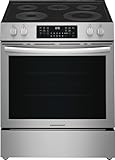
- Large 5.3 cu. ft. Oven Capacity – Spacious interior accommodates family‑size dishes and multiple racks for baking and roasting.
- 5‑Element Smoothtop Cooktop – Powerful electric elements including EvenTemp distribution and a Keep‑Warm zone handle all your stovetop needs.
- No Preheat Function – Skip the wait and start cooking immediately — ideal for everyday meals and frozen foods.
Most freestanding models place the control panel at the back, above the cooktop. The raised rear console commonly includes a backguard, which helps shield the wall from cooking splashes. A rear control panel can also keep controls farther from young children, although the exact design and safety implications vary by model.
PC Slower Than It Used to Be?
A free scan shows the junk files, broken settings and background clutter dragging Windows down - then fixes them in one click.Free scan · Windows 10 & 11Crashes, No Sound, or Screen Glitches?
Random freezes, missing sound and display glitches usually trace back to one bad driver. Find and replace yours safely.Free scan · under a minuteFreestanding does not mean that every dimension is interchangeable. Width, height, depth, door clearance, countertop height, ventilation, gas or electrical connections, and required wall clearances still have to match the replacement model.
How does a slide-in range differ during installation?
A slide-in range is designed to occupy the space between cabinets and create a more integrated transition from the countertop to the appliance. The cooktop edges may overlap or align with the counter, depending on the model, which makes the surrounding opening more important than it is for many freestanding replacements.
Slide-in models generally put controls on the front or top rather than on a raised rear console. The missing backguard leaves more of the wall or decorative backsplash visible, but it also means the wall behind the range must be suitable for the manufacturer’s clearance and surface requirements.
Some current slide-in ranges are engineered for a conventional freestanding cutout. That fact does not make every slide-in model a universal replacement. A particular appliance may need model-specific filler, trim, or rear-clearance treatment, while another may fit without those accessories. Check the installation guide before ordering a slide-in electric range or any other configuration.
Can I replace a freestanding range with a slide-in?
You can replace a freestanding range with a slide-in range in some kitchens, but the replacement is not automatically a plug-and-play swap. The new appliance can reveal a gap, require countertop changes, or require preparation of the wall behind the range.
Whirlpool specifically cautions that changing between freestanding and slide-in styles can leave a gap of two inches or more, change how the countertop wraps around the cooktop, or create a need for wall preparation. The actual result depends on the old opening and the exact dimensions and design of the new model.
Before buying, compare the old range’s measured opening with the new model’s installation diagram. Confirm all of the following:
- Opening width, height, and depth
- Countertop height and the shape of the counter edges
- Whether the new cooktop overlaps, meets, or sits below the countertop
- Rear clearance and the condition of the wall or backsplash
- Clearance from adjacent cabinets, side walls, and combustible surfaces
- Door and oven-handle clearance into walkways
- Gas-line location, shutoff access, voltage, amperage, and circuit requirements
- Required or optional trim, filler, leveling, and anti-tip hardware
Lowe’s measurement guidance for cooking appliances recommends recording the existing opening and surrounding conditions before shopping. A useful construction-site measurement includes the countertop edges, nearby cabinet faces, backsplash thickness, wall condition, and the position of the utility connection—not just the width of the old appliance.
Quick wins for a faster PC:
Scan for outdated or missing drivers - takes under a minuteDriver Scan →Clear out junk files and repair common Windows errorsFree Scan →Can a freestanding range go between cabinets?
Yes. A freestanding range can go between cabinets when the opening, clearances, countertop height, and utility connections meet the appliance manufacturer’s requirements. Finished side panels allow a freestanding range to be used in locations where the sides may remain partly visible.
A freestanding range may leave a different visual relationship with the countertop than a slide-in model. The rear console and backguard can extend above the counter and cover part of the backsplash. That conventional appearance is often an advantage when replacing an existing freestanding range without remodeling the surrounding cabinetry.
Do slide-in ranges need a backsplash?
No, a slide-in range does not inherently require a backsplash, and its lack of a rear backguard is one reason homeowners choose the style. A slide-in range leaves the wall visible, so the wall surface and the required clearance behind the appliance still need to comply with the manufacturer’s installation instructions.
A backsplash can be decorative, practical, or both, but its thickness and position may affect the opening. A backsplash that projects behind the range can reduce usable depth or interfere with the fit. Check the installation diagram before installing new tile, changing wall finishes, or selecting a replacement range.
Do these 3 things before closing this tab:
1Scan for outdated or missing drivers - takes under a minute2Clear out junk files and repair common Windows errors3Fix the driver behind crashes, sound loss and screen glitchesWhich is better: freestanding or slide-in?
Neither style is inherently the better cooker. Freestanding versus slide-in ranges differ mainly in placement, controls, appearance, and installation conditions; cooking performance depends on the exact fuel type, heating technology, oven capacity, burner layout, controls, and features.
| Choose a freestanding range when… | Choose a slide-in range when… |
|---|---|
| You want the most flexible placement. | You want a more integrated, cabinetry-oriented appearance. |
| You are making a like-for-like replacement with minimal surrounding work. | You want front or top controls instead of a rear console. |
| A backguard is useful for protecting the wall from splashes. | You want more of a decorative backsplash to remain visible. |
| The sides may be exposed at the end of a cabinet run. | The opening and countertop have been checked against the installation guide. |
| You prefer a conventional appliance layout. | You are prepared to address model-specific trim, filler, clearance, or counter requirements. |
For most straightforward replacements, a matching freestanding range is the lower-risk default. A slide-in range can be worthwhile when the integrated appearance and front controls justify the additional measurement and installation checks.
Does range style determine whether the appliance is gas, electric, or induction?
No. Freestanding versus slide-in is a configuration choice, while gas, electric, induction, and dual fuel describe the cooking technology and utility requirements. Product lines include both freestanding and slide-in gas and electric ranges, plus induction and some dual-fuel options.
Also popular on Amazon

- COMPACT & SPACE-SAVING DESIGN: At just 20 inches wide, this freestanding electric range is perfect for small kitchens, RVs, studio apartments, condos, and vacation homes.
- VERSATILE COOKING POWER: Features 4 coil burners (three 6-inch and one 8-inch) with chrome reflector bowls and temperature safety sensors for efficient, even heating.
- 2.1 CU. FT. OVEN WITH BROILER: The spacious oven includes a bake/broil function, an electronic thermostat for precise temperature control, and a broiling pan for added convenience.
- USER-FRIENDLY FEATURES: A seamless framed glass oven door, interior oven light with an ON/OFF switch, and surface & oven indicator lights enhance visibility and ease of use.
- EXTRA STORAGE & ADA COMPLIANT: A pull-out storage drawer with handle provides additional kitchen organization, while the ADA-compliant design ensures accessibility for all users.
Before choosing a model, identify the existing hookup and confirm that it can support the replacement. A gas or dual-fuel range may require an appropriately located gas supply and shutoff. An electric or induction range may require the correct voltage, amperage, and dedicated circuit. Local code and the manufacturer’s instructions govern the work.
Current range categories cover multiple installation styles and fuel types, but category availability does not confirm that a particular model fits a particular kitchen. Verify the product specification sheet and installation manual for the exact appliance.
Are slide-in ranges more energy-efficient?
There is no defensible universal energy-saving percentage for slide-in ranges compared with freestanding ranges. Installation style alone does not establish that one configuration consumes less energy.
Energy use depends on the fuel and heating technology, cooking habits, insulation, capacity, settings, and model design. ENERGY STAR’s residential electric cooking-product criteria became effective on September 25, 2023, and ENERGY STAR product data distinguishes installation types such as freestanding and slide-in. Certification must still be checked for the exact electric model and should not be generalized to every range or fuel type.
Independent reader supportYour contribution helps us test, update, and keep practical guides available for everyone.What should you measure before ordering?
Measure the complete installation area, not only the width printed on the old range. Record the opening width at several points, opening height, available depth, countertop thickness and edges, cabinet locations, backsplash projection, wall condition, and utility connection positions.
- Measure the opening. Record width, height, and depth at multiple points because walls and cabinets may not be perfectly square.
- Measure the counters and cabinets. Note countertop height, edge profiles, overhangs, cabinet-face depth, and the distance to side walls.
- Inspect the rear wall. Check the backsplash material, thickness, projection, outlets, gas fittings, and the clearance required by the new model.
- Identify the fuel connection. Confirm gas or propane arrangements, or verify the electric voltage, amperage, and circuit.
- Read the installation guide. Look for required clearances, leveling instructions, filler or trim provisions, ventilation requirements, and anti-tip hardware.
- Plan delivery and access. Confirm that the range can pass through doors and hallways and that the oven door and handle will not obstruct a walkway.
For gas, dual-fuel, significant electrical work, cabinetry modifications, or uncertain clearances, budget for a professional range installation rather than assuming the work is an ordinary appliance swap. A qualified installer can also confirm the hookup, leveling, clearances, and anti-tip connection.
Do slide-in ranges always need a trim or filler kit?
No. Slide-in ranges do not universally require a trim or filler kit. Accessory requirements vary by model, opening, and the transition between the appliance and surrounding counters or cabinets.
Some models include the necessary trim, some offer optional pieces, and some are designed to fit a conventional opening without additional parts. Do not buy a generic filler based only on the words “slide-in range.” Match any slide-in range filler kit, range trim kit, or installation accessory to the exact model number and follow the manufacturer’s instructions.
What safety checks matter after installation?
Verify that the supplied anti-tip bracket is installed and engaged after installing either a freestanding or slide-in range. The U.S. Consumer Product Safety Commission warns, A range anti-tip bracket can save you or your child from serious injury.
Read the CPSC range-stability safety alert and the appliance instructions for the required bracket and engagement check.
- Confirm that the anti-tip bracket is secured as specified.
- Verify that the range engages the bracket and cannot tip forward under the manufacturer’s test procedure.
- Check that the appliance is level and that doors operate correctly.
- Have gas connections, electrical work, clearances, and cabinetry modifications completed according to the installation instructions and applicable local requirements.
- Do not operate a gas appliance if the connection, shutoff, or leak test is uncertain.
The anti-tip requirement is a safety issue, not a reason to prefer one installation style. Both freestanding and slide-in ranges need correct installation.
A practical buying decision
Start with the kitchen opening and utility connection, then choose the installation style that fits the project. Select freestanding when a flexible, conventional replacement with a rear console and backguard is the priority. Select slide-in when the front controls, visible backsplash, and integrated appearance justify careful verification of the counter, wall, opening, and accessories.
After the style is decided, compare actual cooking specifications: gas, electric, or induction operation; oven capacity; convection; self-cleaning; burner or element layout; controls; smart features; and electrical or gas requirements. Those model-level differences—not the label “freestanding” or “slide-in”—determine how the range cooks.
Frequently Asked Questions
Can a freestanding range go between cabinets?
Yes, a freestanding range can be installed between cabinets when the opening, clearances, countertop height, and utility connections meet the manufacturer’s requirements. Its finished sides also allow placement where the sides remain visible.
What’s actually slowing this PC down?
Pick the symptom - the matching free tool is one click away.
Do slide-in ranges need a backsplash?
A slide-in range does not inherently need a backsplash. Its missing rear backguard leaves the wall visible, but the wall surface, backsplash projection, and rear clearance must still comply with the exact model’s installation instructions.
Do slide-in ranges always need a trim kit?
No. Slide-in ranges do not always need a trim or filler kit. Requirements vary by model and opening, so match any accessory to the exact model number rather than assuming a universal kit is required.
Are slide-in ranges more energy-efficient than freestanding ranges?
Freestanding versus slide-in does not determine energy efficiency by itself. Energy use depends on fuel, heating technology, model design, capacity, and use; no universal energy-saving percentage is established for either configuration.
The Bottom Line
Bottom line: Freestanding ranges are usually the simpler, more flexible replacement, while slide-in ranges offer front controls and a cleaner built-in appearance. A slide-in can replace a freestanding model, but only after the exact opening, countertop, backsplash, hookups, clearances, accessories, and anti-tip installation have been checked.
Free tools Windows power users keep installed
One-click scans. No signup required.
Quick Recap
Product prices and availability are accurate as of the date/time indicated and are subject to change. Any price and availability information displayed on Amazon at the time of purchase will apply.

