The Tool Desk
Outbyte Driver Updater FREEFix the driver behind crashes, sound loss and screen glitchesFind Drivers →Outbyte PC Repair FREEClear out junk files and repair common Windows errorsFree Scan →Some links on this page are affiliate links: if you buy through them we may earn a commission, at no extra cost to you.
Foundation problems make homeowners nervous for good reason. The foundation carries the house, and once it moves, the symptoms can show up everywhere: drywall cracks, uneven floors, stuck doors, basement water, gaps at trim, brick cracks, and sloping rooms.
The practical answer is this: not every crack means your house is failing, but cracks that move, widen, leak, bow, or appear with other symptoms deserve attention. On our job sites, we treat foundation concerns as a sequence: observe the signs, document whether they are changing, control water around the house, diagnose soil and structural movement, then choose the repair that matches the cause.
As an Amazon Associate I earn from qualifying purchases.
That order matters. Foundation problems are usually moisture-and-soil problems before they are concrete problems. If poor drainage, expansive clay, plumbing leaks, erosion, or frost heave is still active, a cosmetic patch may look good for a season and then fail again.
Quick Answer: What Counts as a Foundation Warning Sign?
Call a qualified foundation contractor or structural engineer if you see stair-step cracks in brick or block, horizontal basement-wall cracks, bowing walls, cracks wider than about 1/4 inch, cracks with one side displaced from the other, doors and windows that suddenly stick, floors that slope noticeably, a leaning chimney, recurring water intrusion, or several symptoms appearing in the same area of the house.
Popular on Amazon

- Included Components: Unlike standard crack monitors, this updated version features two integrated pre-set pegs that supports you to instantly position and secure both sliding plates at the correct starting point
- Key Specifications: Discrimination down to 0.5mm ( 0.02") helps reliable tracking of wall cracks over time
- Practical Operation: Tracks both horizontal ( 20mm / 0.79") and vertical ( 10mm / 0.38") movements
- Construction Details: Made of polymer with a clear measurement grid; The transparent top plate features a fine crosshair cursor, overlapping a millimeter-calibrated bottom plate for quick, accurate readings
- Handling Details: Each unit includes a crack record sheet to log measurements over time
Small vertical hairline cracks in poured concrete can be normal shrinkage, especially if they are stable, dry, and narrow. The concern rises when a crack grows, leaks, shifts, repeats after repairs, or lines up with interior movement.
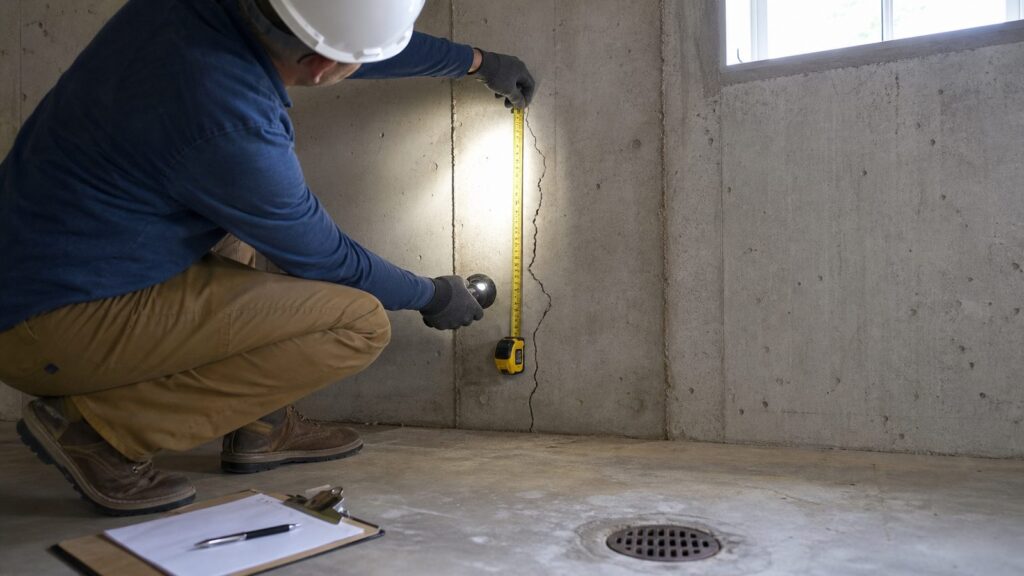
A homeowner can do useful early documentation. Take a clear photo of the crack with a ruler in the frame, write the date, and repeat after heavy rain, long dry periods, freeze-thaw cycles, or seasonal humidity changes. Movement over time is more important than one snapshot.
What’s actually slowing this PC down?
Pick the symptom - the matching free tool is one click away.
Foundation Signs by Severity
The table below is a practical field guide. It does not replace an inspection, but it helps you decide whether to monitor, schedule a contractor visit, or bring in an independent structural engineer.
| Severity | Typical signs | What to do next |
|---|---|---|
| Monitor | Hairline vertical cracks under 1/16 inch, no water, no displacement, no matching interior symptoms | Photograph with a ruler, date it, recheck every 60 to 90 days and after major storms |
| Call a contractor | Cracks from 1/8 to 1/4 inch, active leaks, recurring basement moisture, minor floor slope, doors that stick seasonally, settlement around porches or slabs | Get a foundation and drainage inspection; correct gutters, grading, downspouts, and surface water issues |
| Call an engineer now | Horizontal wall cracks, bowing basement walls, stair-step masonry cracks, cracks over 1/4 inch, visible displacement, sudden movement, leaning chimney, major floor slope | Request an independent structural evaluation before approving a major repair scope |
An independent structural engineer evaluation often costs about $500 to $800 in 2026, depending on the house, market, and report requirements. That can be money well spent when repair bids conflict, the home is being bought or sold, permits are required, or the recommended repair involves piers, wall anchors, major excavation, or structural reinforcement.
How to Read Foundation Crack Patterns
Cracks tell a story, but only if you read the pattern, width, direction, location, moisture, and whether the crack is changing.
Vertical Hairline Cracks
Vertical cracks in poured concrete are often shrinkage cracks from curing. If they are narrow, dry, and not offset, they may only need monitoring or sealing. A typical crack sealing or injection repair can run from about $300 to $3,500 nationally, depending on length, access, water activity, and whether epoxy or polyurethane is used. Individual crack injection quotes commonly land around $800 to $1,300 per crack in many regional markets.
Diagonal Cracks
Diagonal cracks can point to differential settlement, where one part of the foundation moves more than another. A diagonal crack near a corner, especially one that grows wider at one end, deserves more attention than a stable hairline shrinkage crack.
Stair-Step Masonry Cracks
Stair-step cracks in brick, concrete block, or masonry veneer often follow mortar joints. These can indicate settlement, heave, poor support, or lateral movement. If the crack is wider than 1/8 inch, appears near doors or windows, or continues through the foundation wall, schedule an inspection.
Horizontal Basement-Wall Cracks
Horizontal cracks are more serious because they often indicate lateral soil pressure or hydrostatic pressure pushing against the wall. If the wall is bowing inward, the issue is structural, not cosmetic. Wall stabilization may involve carbon fiber straps, steel I-beams, wall anchors, drainage correction, excavation, or a combination of methods.
Cracks With Displacement
If one side of a crack is pushed in, pulled out, raised, or dropped compared with the other side, the structure has moved in more than one direction. That is a strong reason to bring in a professional. Surface patching will not correct the underlying movement.
PC Slower Than It Used to Be?
A free scan shows the junk files, broken settings and background clutter dragging Windows down - then fixes them in one click.Free scan · Windows 10 & 11Outdated Drivers Are Slowing You Down
One free scan finds every outdated or missing driver and matches the right update for your exact hardware.Free scan · exact hardware matchOther Warning Signs Inside and Outside the House
Foundation movement rarely shows up in just one place. On inspections, we look for groups of symptoms that line up with each other.
Doors and Windows That Stick
A single sticky door may be a hinge, humidity, or framing issue. Several doors or windows sticking on the same side of the house, especially after a wet season or drought, can point to foundation movement. Watch for diagonal drywall cracks at the upper corners of door and window openings.
Uneven or Sloping Floors
Older homes may have some slope from long-term framing movement, but sudden or worsening slope is different. A marble test is not a diagnosis. A better first check is to measure floor elevation changes across rooms with a laser level. Large or growing variations should be evaluated.
Gaps at Trim, Cabinets, or Countertops
Gaps opening between walls and trim, cabinets pulling from walls, or countertops separating from backsplashes can indicate that the structure is moving. If these gaps appear near exterior cracks or floor slope, treat them as part of the same investigation.
Free tools Windows power users keep installed
One-click scans. No signup required.
Leaning Chimneys
A chimney can settle independently from the house if it has its own footing or poor bearing soil. A leaning chimney is not only a foundation issue; it can become a life-safety issue if masonry becomes unstable.
Basement Water or Crawl-Space Moisture
Water intrusion is both a symptom and a cause. Moisture can soften soil, increase lateral pressure, corrode steel, rot wood framing, feed mold, and make expansive soils swell. In crawl spaces, high humidity can damage joists, girders, posts, insulation, and subflooring before the homeowner sees obvious interior symptoms.
What Causes Foundation Problems?
Most foundation repairs trace back to soil, water, design, or construction quality. The right repair depends on which of those is actually driving the movement.
Expansive Clay Soil
Expansive soils are a major driver of foundation distress in the United States. Clay soils can swell when wet and shrink when dry. That shrink-swell cycle can lift, drop, and twist slabs and footings over time. Industry sources often cite estimates that roughly one-quarter of U.S. homes have some damage related to expansive soils. The risk is especially familiar in parts of Texas, Colorado, the Carolinas, and other regions with clay-rich soils.
Also popular on Amazon

- Whether you are a professional or a homeowner, this Monitoring Device is a must have tool for detecting wall deformations and cracks.
- The Crack Gauge Set is a durable and reliable measurement tool for monitoring cracks.
- This crack gauge monitor can be used in various scenarios such as home improvement projects and interior decoration.
- Suitable for DIY enthusiasts and professionals, this precise Measuring Tool is perfect for measuring gaps and monitoring crack development.
- acrylicy material, this crack gauge monitor is wear resistant and not easily breakable.
With expansive clay, consistency matters. Letting one side of the house stay soaked while another side dries out can create differential movement. That is why drainage, grading, irrigation, and downspout discharge are part of foundation repair planning, not just maintenance chores.
Poor Drainage and Bad Grading
Surface water should move away from the house. Current residential code guidance and building-science recommendations commonly reference a minimum fall of 6 inches within the first 10 feet where site conditions allow. Another practical way to think about it is 1/2 inch per foot for the first 10 feet on permeable surfaces. Where the property line, driveway, sidewalk, or neighboring lot prevents that slope, swales or drains may be needed.
Short downspouts, clogged gutters, settled backfill, and mulch piled against siding can all keep water at the foundation. We often see expensive structural symptoms that started with a $30 downspout extension missing for years.
Erosion and Washout
Water moving under a slab or beside a footing can remove soil support. This can happen from poor roof drainage, broken storm lines, leaking water service lines, failed sewer lines, or uncontrolled runoff. Voids under slabs may be candidates for polyurethane foam injection, mudjacking, or replacement depending on load, access, and soil conditions.
Poorly Compacted Fill
If a home or addition is built over fill that was not compacted correctly, the soil can compress over time. Settlement may appear years after construction. Piers or underpinning may be needed if the footing is not bearing on competent material.
Plumbing Leaks
A slow leak under a slab can saturate soil, create voids, or trigger clay swelling. Before spending five figures on structural work, it can be smart to run plumbing tests if symptoms suggest an under-slab leak. Some repair scopes include a post-lift plumbing test as well, because lifting a slab can stress brittle lines.
Tree Roots and Moisture Draw
Large trees can pull moisture from clay soils, especially during drought. The issue is not usually roots physically pushing the foundation; it is often uneven soil moisture. Removing a mature tree can also change moisture balance. Tree decisions near a foundation should be made carefully, especially with clay soil.
Freeze-Thaw and Frost Heave
In northern climates, water in the soil can freeze and expand. If footings are too shallow, drainage is poor, or soils are frost-susceptible, frost heave can lift parts of the structure. The repair strategy for heave is different from settlement because the movement is upward, not downward.
Quick wins for a faster PC:
Fix the driver behind crashes, sound loss and screen glitchesFind Drivers →Repair Windows errors before they cause bigger problemsFix Now →Scan for outdated or missing drivers - takes under a minuteDriver Scan →Inadequate Original Design
Some foundations were underbuilt for the soil, slope, load, or drainage conditions. The 2024 International Residential Code includes foundation requirements for footings and walls, including wood, masonry, concrete, and precast concrete foundation systems. Local jurisdictions adopt and amend codes, so the local building department controls what is required on a specific property.
Settlement vs. Heave: Why the Difference Matters
Settlement and heave can look similar from inside the house. Both can cause cracks, stuck doors, floor slope, and trim gaps. But they are opposite movements.
Settlement is downward movement. It can come from compressible soil, erosion, poor compaction, moisture loss in clay, or inadequate bearing. Repairs may include steel push piers, helical piers, slab lifting, compaction grouting, or drainage correction.
Heave is upward movement. It can come from expansive clay swelling, frost, or excess moisture beneath a slab. If a slab is heaving because of active moisture, adding piers without correcting water conditions may not solve the full problem. In some cases, the right first move is moisture control, drainage, plumbing repair, or soil stabilization rather than aggressive lifting.
Recommended Free Tools
This is where an engineer can be valuable. A contractor may be excellent at installing a repair system, but an independent engineer can help confirm whether the problem is settlement, heave, lateral pressure, wood deterioration, or a combination.
Foundation Repair Options and 2026 Cost Ranges
Foundation repair pricing varies widely because access, soil, structure type, depth to competent bearing, permits, engineering, restoration, and drainage all affect the final scope. The numbers below are realistic national 2026 planning ranges, not a substitute for a site-specific bid.
| Repair option | Best for | Typical 2026 cost range |
|---|---|---|
| Crack sealing or injection | Stable or leaking cracks without major movement | $300 to $3,500; many single-crack injections run $800 to $1,300 |
| Drainage correction and regrading | Water collecting near the foundation | $2,800 to $8,000 |
| Basement waterproofing or interior drain tile | Recurring basement water, hydrostatic pressure management | $4,500 to $18,000 |
| Crawl-space repair or encapsulation | Moisture, damaged posts, poor vapor control, humidity | $3,500 to $20,000 |
| Slabjacking or mudjacking | Sunken slabs with accessible voids | $5,000 to $10,800 |
| Polyurethane foam lifting | Void filling and slab lifting with minimal disruption | $4,500 to $11,500 |
| Steel push piers | Settlement where load can drive piers to bearing | About $990 to $3,500 per pier; total projects often $10,000+ |
| Helical piers | Lighter structures, additions, poor soils, specified torque design | About $2,000 to $4,400 per pier |
| Bowing wall stabilization | Basement walls under lateral pressure | $4,000 to $15,000 |
| Major underpinning or piering project | Significant structural settlement | Commonly $10,000 to $30,000+; complex projects can exceed $60,000 |
National average foundation repair figures vary by source and by what is included. Several 2026 homeowner cost guides place typical repairs around $2,200 to $8,400, with averages near $5,000. Other contractor-side data shows higher averages near $11,950 because heavier repair mixes include piering, waterproofing, and drainage. Severe repairs can reach $100,000 on large or complex homes.
Crack Injection
Epoxy injection can bond structural concrete cracks when the crack is dry and stable enough for that approach. Polyurethane injection is often used where water is active because it can expand and seal leaks. Crack injection is not a foundation stabilization method by itself. If the wall is moving, the crack will likely return unless movement is addressed.
Drainage Correction
Drainage is often the first repair, not an afterthought. That may include cleaning and resizing gutters, extending downspouts 6 to 10 feet away from the house where practical, correcting negative grade, adding swales, installing French drains, routing sump discharge away from the foundation, or replacing clogged footing drains.
Also popular on Amazon

- Product Setup: Ideal for both internal and external corners with angles ranging from 70 to 180 degrees
- Simple Installation: The crack monitoring gauge features a hinged construction that enables it to adapt seamlessly to internal corners
- Practical Operation: Record crack movements with 0.1 mm accuracy using Vernier or digital calipers
- Recommended Use: Each crack gauge comes complete with detailed installation instructions, a crack record sheet for ongoing monitoring, and all necessary components for installation
- Construction Details: Constructed from clear material with black/red graduation marks starting at 0 mm
For many homes, the best money is spent outside before it is spent inside. If the soil beside a basement wall is constantly saturated, wall straps alone may not be enough. If water is eroding soil under a slab, foam alone may not last without runoff correction.
Slabjacking and Polyurethane Foam
Slabjacking, sometimes called mudjacking, pumps a cementitious material below a settled slab to lift it. Polyurethane foam injection uses expanding foam to fill voids and lift concrete with less weight. These methods are common for garage slabs, patios, sidewalks, driveways, and some interior slabs.
Foam is useful when access is limited and added weight is a concern. Mudjacking can be cost-effective but adds more mass. Neither method is ideal if the underlying soil is still washing out or if the slab is structurally broken beyond practical lifting.
Do these 3 things before closing this tab:
1Fix the driver behind crashes, sound loss and screen glitches2Repair Windows errors before they cause bigger problems3Scan for outdated or missing drivers - takes under a minuteSteel Push Piers
Steel push piers are driven down using the structure’s weight until they reach competent bearing. They are commonly used for settling foundations. The number of piers depends on load, affected length, soil conditions, and engineering. A small corner may need several piers; a long wall may need many more.
Per-pier pricing can start near $990 to $1,350 in some 2026 contractor data, but broader installed ranges often run $1,500 to $3,500 per pier. Excavation, brackets, depth, access, lifting, permits, engineering, and restoration affect the final number.
Helical Piers
Helical piers are screwed into the ground to a specified torque or depth. They are often used for additions, porches, lighter structures, new construction support, and some retrofit conditions where push piers are not the right fit. Installed costs commonly run about $2,000 to $4,400 per pier in 2026.
Wall Anchors, Beams, and Carbon Fiber
Bowing basement walls need restraint against lateral pressure. Carbon fiber straps can work for limited deflection when the wall is still relatively flat and conditions meet manufacturer and engineering requirements. Steel I-beams or wall anchors may be needed for more significant movement. Wall anchors often require exterior access; beams may reduce usable space inside. Drainage correction is commonly part of the long-term solution.
Crawl-Space Structural Repair
Crawl-space repairs may include new posts, supplemental beams, joist repairs, vapor barrier, drainage, insulation, sump pump, and dehumidification. Encapsulation alone does not fix rotten framing or undersized supports. A complete crawl-space scope should separate moisture control from structural repair so the homeowner knows what is actually being corrected.
When to DIY and When to Hire a Pro
Some foundation-related maintenance is reasonable for a careful homeowner. Structural repair is not.
Reasonable DIY Tasks
You can clean gutters, add downspout extensions, keep soil from touching siding, trim shrubs for inspection access, photograph cracks, mark crack ends with pencil, run a dehumidifier in a damp basement, and improve simple surface drainage with minor grading that does not redirect water toward a neighbor.
You can also seal very small, stable, non-structural cracks with appropriate concrete sealant if the wall is dry and there is no movement. Treat that as maintenance, not proof the foundation is fixed.
The Tool Desk
Outbyte PC Repair FREEClear out junk files and repair common Windows errorsFree Scan →Outbyte Driver Updater FREEFix the driver behind crashes, sound loss and screen glitchesFind Drivers →Hire a Contractor
Hire a foundation contractor for active leaks, drainage systems, sump pumps, crawl-space encapsulation, slab lifting, pier installation, wall stabilization, or cracks that are widening. A good contractor should be able to explain the cause, not just the product they want to install.
Hire an Independent Structural Engineer
Bring in an engineer when there is significant movement, a major real-estate decision, a permit requirement, conflicting bids, visible displacement, bowing walls, a leaning chimney, or a proposed repair over roughly $10,000 to $15,000. The engineer’s report can give you a neutral basis for comparing contractor scopes.
Permits, Codes, and Resale Documentation
Foundation work can trigger permits depending on the jurisdiction and scope. Crack sealing may not require one. Underpinning, structural wall reinforcement, pier installation, excavation, basement egress changes, drainage connections, and structural framing repairs often do.
Codes are local. The 2024 IRC provides model requirements for foundations, footings, walls, drainage, and related construction, but cities and counties adopt and amend codes on their own schedule. Before work starts, ask who is responsible for permit applications, inspections, engineering letters, and final documentation.
Keep every document. That includes engineer reports, stamped drawings, permits, inspection approvals, plumbing test results, pier logs, depth or torque records, waterproofing details, drainage plans, warranty terms, and transferable warranty instructions. These records matter when you sell the home. A buyer may accept a repaired foundation more readily when the repair is documented and permitted.
Independent reader supportYour contribution helps us test, update, and keep practical guides available for everyone.How to Compare Foundation Repair Bids
Do not compare foundation bids by the total price alone. Two proposals can both say “pier repair” and still be completely different scopes.
Ask each contractor to identify the foundation type, the suspected cause, the measured elevations, the affected areas, and the repair objective. Are they stabilizing only, lifting toward level, sealing water, reducing lateral pressure, or correcting drainage? Those are different outcomes.
Also popular on Amazon

- Advanced Dual-Axis Crack Detection: Monitor structural shifts with ±1 mm (±0.04") X-Y axis precision and ±0.5 mm (±0.02") discrimination for accurate crack evolution tracking
- Wide Measurement Range: Capture horizontal displacements up to ±20 mm (±0.79") and vertical movements up to ±10 mm (±0.38") for comprehensive crack monitoring
- Durable Polymer Construction: High-grade weather-resistant material with a laser-etched grid ensures long-lasting clarity and easy readability in harsh environments
- Effortless Installation & Use: Align crosshair center over cracks and secure with adhesive or screws (anchors included) for instant monitoring. Ideal for walls, foundations, and concrete surfaces
- Portable Multi-Directional Gauge: Compact lightweight design enables two-directional tracking (horizontal/vertical) for onsite inspections, engineering surveys, and DIY projects
For pier bids, compare the number of piers, pier type, bracket type, spacing, depth criteria, refusal criteria, load assumptions, whether lifting is included, and how interior finishes are protected. For helical piers, ask about torque requirements and who verifies them. For push piers, ask what defines competent bearing.
For wall repairs, compare carbon fiber straps, steel beams, anchors, excavation, drainage, wall deflection limits, and whether the wall will be straightened or only stabilized. For waterproofing, compare linear footage, sump pump capacity, backup power, discharge route, wall treatment, drain tile location, and whether exterior grading is included.
Also compare permits, engineering, plumbing tests, concrete removal and replacement, landscaping restoration, warranty length, warranty exclusions, transfer fees, and whether drainage maintenance is required to keep the warranty valid.
Homeowner Pre-Call Checklist
Before calling a contractor or engineer, gather the basics. This helps the visit move faster and gives the professional better information.
- Foundation type: slab, crawl space, basement, pier-and-beam, or mixed
- Approximate year built and any known additions
- When symptoms first appeared
- Whether symptoms change after rain, drought, or seasonal temperature swings
- Photos of cracks with a ruler and date
- Locations of stuck doors, window problems, floor slope, trim gaps, and water entry
- Known plumbing leaks, sewer repairs, or high water bills
- Prior foundation, waterproofing, or drainage work
- Gutter and downspout discharge locations
- Large trees near the foundation
- Real-estate deadlines, insurance claim status, or permit concerns
If you have a basement or crawl space, take photos of the inside wall or framing too, but do not enter unsafe areas. Standing water, mold growth, failing temporary supports, exposed wiring, unstable masonry, or strong sewer odors are reasons to stop and call a professional.
Do these 3 things before closing this tab:
1Scan for outdated or missing drivers - takes under a minute2Clear out junk files and repair common Windows errors3Fix the driver behind crashes, sound loss and screen glitchesInsurance and Foundation Problems
Homeowners insurance often excludes gradual settlement, earth movement, poor drainage, wear and tear, and long-term moisture damage. A sudden covered event may be treated differently. For example, damage related to a burst pipe may be evaluated differently than damage from years of expansive soil movement.
The practical move is to document the date, symptoms, photos, repair recommendations, and any sudden event that may have caused the problem. Ask your carrier directly what is covered, what is excluded, and what documentation they need before authorizing major work if a claim may be involved.
What We Look for on a Foundation Site Visit
On our job sites, we do not start with a product. We start with the pattern. We walk the exterior, check drainage, look at roof water discharge, inspect cracks, note soil conditions, check interior symptoms, and look for whether the house is telling one consistent story.
A foundation crack below a short downspout, wet mulch bed, and sunken grade points one direction. A diagonal crack at one corner with dry soil, nearby mature trees, and a history of drought points another. A horizontal basement crack with damp soil and bowing wall movement is a different problem altogether.
Free tools Windows power users keep installed
One-click scans. No signup required.
The best repair is the one that addresses the cause and leaves a clear paper trail. Sometimes that is drainage correction and monitoring. Sometimes it is crack injection and waterproofing. Sometimes it is engineered piering, wall stabilization, or crawl-space structural repair. The goal is not to sell the biggest repair. The goal is to stop movement, manage water, protect the structure, and document the work correctly.
Bottom Line
Foundation problems should be taken seriously, but panic leads to bad decisions. Start with observation and documentation. Look for patterns, not isolated flaws. Control water early. Understand whether the movement is settlement, heave, lateral pressure, or moisture damage. Bring in an independent structural engineer when the movement is significant, the bids conflict, or the repair is expensive.
A stable hairline crack may only need monitoring and sealing. A bowing wall, stair-step masonry crack, leaning chimney, or widening crack needs professional attention. The difference can be thousands of dollars, and the right diagnosis is what keeps a repair from becoming a repeat repair.
Frequently Asked Questions
What is the first sign of foundation problems?
Common early signs include new drywall cracks, doors or windows that start sticking, small exterior cracks, uneven floors, gaps at trim, and water collecting near the foundation. One sign alone may be minor, but several signs in the same area deserve an inspection.
How much does foundation repair cost in 2026?
Typical national averages range from about $2,200 to $8,400, but heavier repairs average higher and can exceed $10,000. Piering and underpinning commonly run $10,000 to $30,000 or more, and severe complex projects can exceed $60,000.
Are horizontal foundation cracks serious?
Yes. Horizontal cracks, especially in basement or block walls, can indicate lateral soil pressure or hydrostatic pressure. If the wall is bowing inward or the crack is widening, call a structural engineer or qualified foundation contractor promptly.
Can drainage correction fix foundation problems?
Sometimes. If the issue is caused by water collecting near the foundation, regrading, downspout extensions, swales, drains, or waterproofing may be the most important repair. If the structure has already moved significantly, drainage may need to be combined with stabilization.
Should I call a contractor or structural engineer first?
For minor cracks or drainage issues, a reputable foundation contractor can often start the evaluation. For bowing walls, major settlement, conflicting bids, real-estate transactions, permit packages, or repairs over roughly $10,000 to $15,000, an independent structural engineer is usually worth considering.
Does homeowners insurance cover foundation repair?
Gradual settlement, earth movement, poor drainage, and long-term moisture problems are often excluded. Sudden covered events, such as a burst pipe, may be handled differently. Document the damage and ask your insurance carrier what applies to your policy.
Quick Recap
Product prices and availability are accurate as of the date/time indicated and are subject to change. Any price and availability information displayed on Amazon at the time of purchase will apply.

