Recommended Free Tools
Some links on this page are affiliate links: if you buy through them we may earn a commission, at no extra cost to you.
A Florida waterfront home must be prepared for two different hazards at once: hurricane wind and storm surge. Start with evacuation-zone and flood-elevation information, then strengthen the roof-to-wall connection and every major opening, move vulnerable equipment above expected water, secure the lot and shoreline equipment, and verify insurance before June 1. Hardening can reduce damage, but it does not make a surge-safe substitute for evacuation.
1. Map the property and make evacuation the first decision
Florida emergency management agencies expect residents to know their storm-surge evacuation zone and leave when local officials direct them to do so. A waterfront address can face rapidly rising water even when the building itself appears strong. Identify the county or municipal authority that issues evacuation orders, sign up for its alerts, and decide in advance where your household, pets and essential records will go.
As an Amazon Associate I earn from qualifying purchases.
What’s actually slowing this PC down?
Pick the symptom - the matching free tool is one click away.
Record the projected flood elevation
Obtain the projected flood elevation for the parcel from local floodplain officials and compare it with every low point in the house. Review the lowest finished floor, crawlspace or basement, electrical equipment, HVAC units, water heater, generator, pumps, fuel, appliances and stored materials. FEMA’s homeowner checklist uses projected flood elevation as the reference for planning these decisions.
- Mark the elevation on a property diagram and keep a copy with insurance and construction records.
- Identify which systems can be elevated, relocated or protected and which cannot be made safe during a surge.
- Plan the route and timing for leaving before bridges, roads or communications become dangerous.
Florida’s Division of Emergency Management describes storm surge as water pushed toward shore by hurricane winds. That water can carry debris, salt and contaminants; a roof upgrade or window shutter cannot remove that life-safety risk.
Popular on Amazon
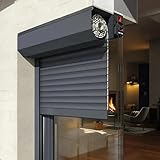
- Custom Sizes & Control Choices: Built to order for windows or doors, select from "Customize" or contact the Seller. To select your size and preferred control type, motorized or manual . Suitable as indoor, outdoor window shutters, patio, garage. etc.
- SECURITY FEATURES: Robust exterior rolling shutter design provides enhanced privacy, light control, and protection from weather elements
- VERSATILE DESIGN: Features 3"-4" aluminum slats with form-filled options, complete with beveled top casing and end caps for a polished look
- INSTALLATION OPTIONS: Adaptable bottom rail system for both window and door applications, includes rubber seal for weather protection
- UV Protection & Energy Efficiency: Helps block strong sunlight and harmful UV rays. Perforated slat gives the ventilation and light.
2. Inspect the complete wind-resistance chain
Wind loads travel through the roof covering, roof framing, roof-to-wall connections and walls before reaching the foundation. A sound roof with weak connections or unprotected openings can still fail. Florida resilience guidance groups the key wind-entry defenses into five areas: the roof, hurricane straps, windows, exterior doors and the garage door.
Roof covering and roof-to-wall connections
Check for missing, lifted, cracked or brittle roofing materials, damaged flashing, loose soffits and exposed sheathing. Ask a qualified contractor to verify how the roof is fastened to the walls and whether galvanized hurricane straps or clips are present, continuous and properly attached. FEMA notes that hurricane straps help keep the roof fastened to the walls in high winds; installing or correcting them may require contractor work and building-department guidance.
Crashes, No Sound, or Screen Glitches?
Random freezes, missing sound and display glitches usually trace back to one bad driver. Find and replace yours safely.Free scan · under a minuteWindows Errors? Fix Them Before They Spread
Repair common Windows errors and clear accumulated junk for a smoother, more stable PC - no reinstall needed.Free scan · no reinstallFor an older home, request documentation of the roof age, prior repairs, permits and any connection retrofit. Do not assume a newer covering automatically means a stronger roof-to-wall load path. The appropriate work depends on the framing, condition, code requirements and access to the connection.
Use a Florida wind-mitigation inspection when documentation matters
An authorized Florida inspector can complete the Uniform Mitigation Verification Inspection Form. The Florida Office of Insurance Regulation states that the form is valid for up to five years when there are no material changes or inaccuracies. Give the completed form to your insurer and ask which features and documents it accepts for any wind-mitigation credit; a retrofit does not guarantee a particular premium reduction.
3. Protect windows, exterior doors and the garage door
Florida guidance says the most important precaution for reducing property damage is protecting the places where wind can enter. For each opening, choose either an impact-resistant assembly or a rated hurricane-shutter system designed for that opening. The product must be approved for the location and installed according to its engineering approval, local code and the manufacturer’s instructions.
Permanent impact-resistant assemblies
Impact-rated windows and doors remain in place and are ready without a last-minute installation. Confirm that the complete assembly—not merely the glass—is rated for the opening, pressure and debris exposure at your site. Inspect frames, anchors, locks, hinges, gaskets and surrounding wall conditions. A damaged frame or failed latch can defeat an otherwise rated panel.
Quick wins for a faster PC:
Fix the driver behind crashes, sound loss and screen glitchesFind Drivers →Repair Windows errors before they cause bigger problemsFix Now →Rated removable shutters
Removable steel or aluminum panels, accordion systems and other approved shutters can protect existing openings when correctly fitted and secured. Label each panel or shutter for its opening, store the fasteners with it and practice installation during calm weather. Check hardware for corrosion, especially in salt-air locations, and replace bent panels, missing anchors and deteriorated seals.
Also popular on Amazon

- One panel per order. If you need more, add additional panels to your cart. Panels MUST overlap the window by at least 3 inches on each side. Keep in mind that stacking panels will reduce the width by 2 inches.
- DIY Installation - Install with simple tools and no professional help required
- Custom Fit - Made to order for your exact window and door dimensions
- 14" (L) x Custom Height - Panels overlap by 2 inches. Stack as many as you need. Just keep in mind that you will lose 2 inches per panel when stacked.
- Customizations is just for ONE panel. If you need more panels, please add the required panels into your cart.
Emergency plywood
NOAA recommends having steel or aluminum panels or proper plywood available for boarding openings. Florida’s home-planning guidance specifies properly secured 5/8-inch plywood as an emergency covering option. Plywood is a contingency, not an excuse to improvise attachment details: pre-measure every opening, mark the panel, pre-drill only where the approved method allows, and use the fastening pattern required by local code or a qualified installer. Store panels dry and where they can be reached before winds rise.
Give the garage door extra attention
NOAA identifies the garage door as the most vulnerable part of many homes. A failed garage door can allow wind to pressurize the building and damage the roof. Check the door, tracks, rollers, hinges, locking hardware and the connection to the surrounding framing. Use an approved bracing or replacement system designed for that door; do not rely on loose lumber or improvised braces.
| Opening protection | Strengths | Trade-offs and checks |
|---|---|---|
| Impact-resistant windows and doors | Always installed; no storm deployment time; integrated appearance | Higher installation scope; inspect the entire rated assembly, anchors and frame |
| Rated removable shutters | Can protect existing openings; panels can be replaced or stored | Requires storage, labeling, maintenance and time to install before conditions deteriorate |
| Properly secured 5/8-inch plywood | Emergency option when rated systems are unavailable | Requires measured panels, approved fastening and substantial labor; not a substitute for engineered protection |
4. Reduce flood and electrical exposure
Have a licensed electrician and the local floodplain or building official review electrical changes. FEMA’s checklist states that the main electrical panel should be at least 12 inches above projected flood elevation and uses that elevation as a reference for outlets, switches, wiring and service lines where conditions permit.
Free tools Windows power users keep installed
One-click scans. No signup required.
- Move or elevate the main panel, subpanels, disconnects and sensitive controls when code and the structure allow.
- Raise outlets, switches and junctions that could be reached by floodwater; use ground-fault protection in areas that may become wet.
- Protect or relocate HVAC equipment, water heaters, generators, pumps, batteries and fuel above the site’s expected water exposure.
- Keep wiring, conduits and service equipment sealed against saltwater intrusion where the applicable code permits.
Do not choose an elevation from a generic rule alone. The 12-inch figure is FEMA’s checklist reference for the main panel; the required elevation for each system must be confirmed against local code, flood-zone data and the equipment manufacturer’s instructions.
5. Secure the lot, shoreline equipment and vegetation
Loose objects and outdoor structures
Before a storm threatens, bring inside or firmly secure patio furniture, umbrellas, grills, planters, tools, signs, trash containers and decorative objects. Complete this work while conditions are safe; an item left outdoors can become windborne debris that damages your home or a neighbor’s property.
Trees and branches
Trim dead, weak or overhanging branches and ask a qualified arborist to assess trees that could strike the roof, windows, pool enclosure, dock or power lines. Do not cut a tree merely to create a clear view if the work compromises its stability. Remove diseased or structurally unsafe limbs well before hurricane season.
Docks, boats and lifts
Secure boats, dock boxes, lifts, personal watercraft, fuel and shoreline equipment according to the marina, county and manufacturer requirements. Tie-down patterns vary with the dock design, exposure, water depth and local rules, so obtain site-specific instructions rather than copying a generic method. Photograph the arrangement after securing it so you can identify missing equipment after the storm.
The Tool Desk
Outbyte PC Repair FREEClear out junk files and repair common Windows errorsFree Scan →Outbyte Driver Updater FREEFix the driver behind crashes, sound loss and screen glitchesFind Drivers →Also popular on Amazon

- 🛡️ Hurricane & Weather Proof:** Provides superior protection against storms, rain, and enhances home security.
- ☀️ Privacy with Natural Light:** Perforated slat option allows light in while maintaining your privacy.
- ⚙️ Smooth Manual Operation:** Features a robust spring system and precision bearings for easy, reliable use.
- 🏠 Versatile Installation:** Perfect for windows, garage doors, patios, and various exterior applications.
- ✨ Durable & Stylish:** Sleek white aluminum design complements any home style with long-lasting performance.
6. Review insurance before hurricane season
Standard homeowners insurance typically does not cover flood damage. Florida’s Office of Insurance Regulation says flood coverage must be purchased separately or added by endorsement. Ask an agent to compare National Flood Insurance Program and private options for your property, and verify the policy in writing.
Questions to ask about flood coverage
- What building and contents limits apply, and are detached structures, docks, equipment or temporary living costs covered?
- What exclusions, deductibles, elevation requirements and waiting-period rules apply to this policy and county?
- How are below-grade areas, seawalls, landscaping, pools and waterborne equipment treated?
- What documentation is needed to establish the building’s elevation and replacement value?
Review wind coverage separately, including named-storm deductibles, roof payment terms and exclusions for neglect or unapproved work. Ask which wind-mitigation features and inspection forms your insurer recognizes. Keep the authorized inspection form, permits, invoices, product approvals and photographs together; do not assume that a feature documented for one policy or carrier produces the same result elsewhere.
Create a dated home inventory
Photograph rooms, contents, roof surfaces, shutters, mechanical equipment, vehicles, dock components and serial numbers before the season. Store copies in secure cloud storage and outside the flood-prone home. Florida’s insurance office provides a home-inventory resource that can help organize the record.
7. Stage warnings, supplies and backup power
Hurricane season runs from June 1 through November 30. Keep a NOAA All-Hazards Weather Radio with battery backup, a disaster-supply kit and a written family communication and evacuation plan. Include medications, water, food, first-aid supplies, chargers, cash, identification, pet supplies and copies of policies and property records.
Prepare equipment before a forecast
- Store shutters, panels, fasteners, tools, batteries and approved fuel where they are dry, accessible and above likely floodwater.
- Test the weather radio, smoke and carbon-monoxide alarms, sump or dewatering pumps and emergency lighting.
- For a generator, plan fuel storage, ventilation, transfer equipment and placement above flood exposure. Use a licensed electrician for permanent wiring and a transfer switch; never connect a generator to a household outlet or operate it in a garage, crawlspace or enclosed porch.
- Know how to shut off electricity, gas and water, but do not enter flooded areas to reach controls.
Monitor official warnings and leave when ordered. NOAA advises that whether residents evacuate or remain, the home should be in good repair and meet local hurricane-building-code specifications. Supplies support a safe decision; they do not justify delaying evacuation.
8. Use this inspection sequence for an older waterfront home
- Confirm hazard data. Record the evacuation zone, projected flood elevation, flood zone and local authority contacts.
- Walk the outside. Photograph the roof, flashing, soffits, vents, windows, doors, garage door, trees, dock and loose objects.
- Trace the load path. Have a qualified contractor inspect roof-to-wall connections, hurricane straps, wall framing and foundation-visible connections.
- Check every opening. Match each window, door and garage opening with its impact rating, shutter label or approved emergency-panel plan.
- Measure equipment exposure. Compare panels, HVAC, water heaters, pumps, generators and fuel with projected flood elevation and local requirements.
- Correct electrical hazards. Use a licensed electrician for elevation, ground-fault protection, service equipment and generator connections.
- Secure the site. Trim hazardous branches, remove loose objects and obtain marina-approved plans for boats and dock equipment.
- Document mitigation. Preserve permits, invoices, product approvals, photographs and the Uniform Mitigation Verification Inspection Form.
- Verify coverage. Confirm separate flood insurance, wind deductibles, contents limits, exclusions and any inspection requirements with the agent.
- Practice the decision. Install a shutter or panel during calm weather, test communications and rehearse the evacuation route before a warning arrives.
Choosing between common retrofit approaches
| Decision | What to evaluate | Important limitation |
|---|---|---|
| Impact assemblies or rated shutters | Debris resistance, installation time, maintenance, appearance, emergency deployment and code approval | Only the complete, approved assembly protects the opening; verify frames and anchors |
| Rated shutters or plywood | Engineering approval, storage space, fastening labor, repeatability and time before landfall | Plywood is an emergency covering and must be properly secured |
| Roof retrofit | Roof age and condition, roof-to-wall connection, code compliance, contractor records and inspection evidence | A roof covering alone does not prove a continuous wind-resistance chain |
| NFIP or private flood policy | Building and contents limits, exclusions, deductibles, elevation documentation and waiting-period rules | Coverage details vary; obtain current terms from the provider |
| Generator or other backup power | Fuel type, flood-safe placement, transfer equipment, ventilation and licensed installation | Improper connection or indoor operation can cause fire, electrocution or carbon-monoxide poisoning |
What to do when a storm is forecast
Follow official evacuation instructions first. If authorities have not ordered an evacuation and you are lawfully remaining, finish outdoor securing, install approved shutters or panels before winds increase, move valuables and records above projected water, unplug sensitive electronics if safe, and keep the weather radio operating. Do not climb onto a roof, work near power lines, handle fuel indoors or enter rising water to save property. After the storm, wait for official clearance, photograph damage before cleanup when safe, and report losses promptly under the applicable wind and flood policies.
Quick Recap
Product prices and availability are accurate as of the date/time indicated and are subject to change. Any price and availability information displayed on Amazon at the time of purchase will apply.

