Free tools Windows power users keep installed
One-click scans. No signup required.
A fishing harbour is organized mainly for fishing vessels and the work of landing and handling catch; a marina is organized mainly for recreational boats and the people who use them. Those are functional patterns, not rigid categories: a marina can sit within a larger harbour, and one harbour may serve both commercial and leisure craft. Environmental effects depend on what is built and done at a particular site—not simply on whether it is called a harbour or a marina.
Fishing harbour vs. marina: how their facilities and impacts differ
The main distinction is the activity each facility supports. Fishing harbours connect berthing and unloading with the people, equipment, and land uses that keep fishing operations moving. Marinas focus on recreational berthing, access between boats and shore, and services for boat users. The Egyptian Environmental Affairs Agency’s older environmental-assessment guidance describes a marina as a shore-side facility for recreational boats and users, with both water- and land-based elements; it is a useful general description, not a universal legal definition. Egyptian Environmental Affairs Agency guidance.


As an Amazon Associate I earn from qualifying purchases.
| Comparison | Fishing harbour | Marina |
|---|---|---|
| Primary purpose | Support fishing vessels and fish-sector operations, including landing and moving catch. | Support recreational boats and their users. |
| Typical waterside layout | Working berths, quays, jetties, and space for vessels to unload or be serviced. | Recreational moorings and berths, planned around vessel access, safe channels, and shore access. |
| Likely associated land uses | May include net-mending, fish sales, cold storage, gear suppliers, warehouses, or processing. | May include visitor-oriented services; the actual offer varies by facility. |
| Environmental questions | Consider construction and dredging, vessel operations, waste, runoff, and fishing-gear handling. | Consider construction and dredging, circulation, boat cleaning and maintenance, fueling, discharges, and runoff. |
These are tendencies, not checklists or guarantees. The UK Maritime and Coastguard Agency says that establishing a marina within a harbour area “requires careful planning and consultation.” A shared harbour can accommodate leisure moorings alongside working uses. Maritime and Coastguard Agency, A guide to good practice on port and marine facilities, section 10.24 (guide edition updated 15 April 2025).
Do these 3 things before closing this tab:
1Clear out junk files and repair common Windows errors2Fix the driver behind crashes, sound loss and screen glitches3Repair Windows errors before they cause bigger problemsWhat facilities does a fishing harbour have?
A fishing harbour is best understood as part of a working chain: vessels berth and unload; crews, equipment, and services support the fleet; and catch may be sold, stored, transported, or processed nearby. Not every harbour contains every link.
#1 Best Overall
The Ghana Ports and Harbours Authority’s description of Tema Fishing Harbour illustrates one possible mix. It lists an artisanal canoe basin and an adjacent commercial area with a fish market, cold storage, banks, warehouses, shops selling fishing gear and parts, and a fish-processing factory. These are details of that facility, not a universal standard. Ghana Ports and Harbours Authority, Tema Fishing Harbour.
The authority’s inventory also shows how varied working berths and waterside structures can be. For Tema alone, it lists an inner-harbour quay of 467 metres for eight vessels of 54 metres length overall, an approximately 60-metre finger jetty, a 155-metre lay-by jetty, a 100-metre net-mending/lay-by wharf, and a protected water area of approximately 10 hectares. Its outer fishing harbour has 486 metres of quay and water depths of 5–7 metres at chart datum. These are facility-specific dimensions, not recommended sizes for fishing harbours generally. Ghana Ports and Harbours Authority, Tema Fishing Harbour.
Rank #2
What facilities does a marina have?
A marina is arranged around recreational berthing and safe, practical movement between boat and shore. Its design has to account for the intended boat types and sizes, water depth and seabed, channel safety, mooring location, and possible effects on environmental or hydrographic conditions. UK guidance also discusses planning for traffic, lighting, noise, emergency pollution response, waste management, safe shore access, and lifesaving equipment. Maritime and Coastguard Agency guidance.
Quick wins for a faster PC:
Clear out junk files and repair common Windows errorsFree Scan →Scan for outdated or missing drivers - takes under a minuteDriver Scan →Those considerations do not mean every marina offers the same services. Fuel, showers, repairs, transient berths, and other amenities must be checked with the operator for the particular site. The UK guide says, in its jurisdictional context, that “All marinas are required to put into operation waste reception management plans.” That UK guidance should not be treated as a rule for facilities elsewhere; applicable local requirements need to be checked. Maritime and Coastguard Agency guidance, section 10.24.
Rank #3
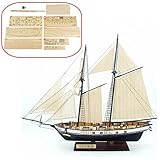
- This product is a wooden classic sailing model kit,not a finished product. It requires buyers to have strong hands-on ability. The kit is designed for low-cost help the players to experience and master the structure and production process of wooden sailing models and it belongs to a self-assembled kit.
- It is a great size,Suitable for home, dining room, hotel, living room, hallway, bedroom.has vibrant colors,looks great.This set of products is suitable for young science kit, to improve the intellectual development and practical ability of young people have a good role in promoting, it is recommended that parents or tutors under the guidance of the production.
- In order to fit the small and exquisite design of the ship model itself, our sailboats use high-quality thin wood boards. Compared with the low-cost thick planks, the thin wood with high quality can highlight the nobleness of the ship model.
- Cut the parts one by one according to the assembly order to avoid loss and confusion.
- NOTE:Apply glue in proper amount. Do not allow glue to splash inside or in the eyes.Children under the age of six should be accompanied by adults.
Are marinas more harmful to the environment?
There is no sound general ranking that makes marinas inherently more harmful than fishing harbours, or the reverse. Both can affect habitat and water quality through construction, dredging, vessel activity, waste, and runoff. The outcome depends on the site’s design and operations, local water movement, nearby habitats, and the scale and method of any works.
Construction, dredging, and shoreline change
Construction and maintenance of marine infrastructure can change coastal processes or habitat. South Australia’s Environment Protection Authority identifies breakwaters, jetties, ports, marinas, and harbours as potential pressures that can alter erosion or sediment patterns, add surfaces where invasive species can settle, or contribute to rubbish. It also describes possible dredging effects such as turbidity, disturbance of pollutants, harm to seagrass and aquatic animals, physical removal of vegetation, and the movement of pests or disease with spoil or equipment. These are potential pathways, not effects that occur at every project. South Australia EPA, marine construction and dredging.
Rank #4

- GRAND SHIP COLLECTION MARINE SHIP is released from BANDAI SPIRITS MODEL KITS!
- NO GLUE: All of the parts can be easily put together without any glue
- EASY COLOR RECREATION: The one and only technology that enables four colors to be available in one set of parts, which we call it “runner”
- RELIABLE HIGH QUALITY: We strive to use our experience and technology to deliver high-quality products to our users around the world
- The product box will have a Bandai Namco warning label, which is proof that you are purchasing an officially licensed product
The Great Barrier Reef Marine Park Authority likewise emphasizes assessing port impacts in light of local conditions, the amount and type of dredging or disposal, and infrastructure configuration. Its port analysis identifies direct habitat removal through dredging and indirect pressures including noise, dust, spills, and light; that discussion is specific to its jurisdiction, while the need for site-specific assessment is broadly useful. Great Barrier Reef Marine Park Authority, port development.
Outdated Drivers Are Slowing You Down
One free scan finds every outdated or missing driver and matches the right update for your exact hardware.Free scan · exact hardware matchWindows Errors? Fix Them Before They Spread
Repair common Windows errors and clear accumulated junk for a smoother, more stable PC - no reinstall needed.Free scan · no reinstallVessel activity, waste, and pollution prevention
For marinas, the US Environmental Protection Agency identifies boat cleaning, fueling, marine-head discharge, stormwater runoff from parking lots, and hull repair and maintenance as possible pollution sources. Its technical guidance also discusses poorly flushed water, boat discharges, habitat alteration during marina construction, and pollutants from maintenance. These risks make circulation and prevention measures important; a marina’s presence alone does not establish poor water quality. US EPA, nonpoint-source pollution from marinas and boating and US EPA marina best-management-practices guidance.
Fishing-related operations have their own waste and pollution concerns. The UK Environment Agency’s 2022 advice highlights lost or discarded fishing gear as a risk to fish stocks and navigation, and addresses preventing pollution from nets, pots, oils, antifouling products, and other hazardous waste. Gear loss is a preventable risk, not something to assume at every fishing harbour. UK Environment Agency, prevent pollution from boats and fishing vessels.
Independent reader supportYour contribution helps us test, update, and keep practical guides available for everyone.How to compare two specific sites
For a real-world comparison, assess the actual facilities and conditions rather than relying on the labels “harbour” and “marina.” The following questions help separate the site’s function from its likely effects:
- Users and vessel activity: Who berths there, and what do vessels do—unload catch, receive repairs, or visit for recreation?
- Berths and access: What berth types, channel access, and depths are available, and do they suit the vessels using the site?
- Supporting services: Are there working services for catch and fishing gear, visitor services for recreational boating, or both?
- Traffic and safety: How are vessel and shore traffic managed, and what emergency and lifesaving arrangements are in place?
- Waste and pollution controls: What waste can users hand in, and how are fueling, cleaning, maintenance, and fishing gear managed?
- Water and shoreline design: What dredging, shoreline structures, or maintenance are involved, and how well does water circulate?
- Local sensitivity: Which habitats or water-quality concerns are nearby, and what do current assessments say about the site’s effects?
For named facilities, confirm current operator inventories, local permissions and waste rules, and environmental assessments for the particular water body. The cited examples span Ghana, the UK, the US, South Australia, and the Great Barrier Reef context; their specific regulations and facility details should not be assumed to apply elsewhere.
Quick Recap
Product prices and availability are accurate as of the date/time indicated and are subject to change. Any price and availability information displayed on Amazon at the time of purchase will apply.




