What’s actually slowing this PC down?
Pick the symptom - the matching free tool is one click away.
Some links on this page are affiliate links: if you buy through them we may earn a commission, at no extra cost to you.
Most residential fence installation projects in the United States cost about $1,500 to $6,500 total in 2026. On a linear-foot basis, common installed prices usually fall between $10 and $60 per linear foot, while premium privacy, composite, ornamental metal, masonry, and custom gate work can run much higher.
The short version: chain-link is usually the budget choice at about $10 to $40 per linear foot installed. Wood is the most flexible midrange option at roughly $15 to $60+ per foot. Vinyl commonly lands around $30 to $60 per foot. Aluminum and ornamental metal often run $25 to $95+ per foot. Composite privacy fencing is a premium category, often around $55 to $85 per foot for full privacy systems.
As an Amazon Associate I earn from qualifying purchases.
Free tools Windows power users keep installed
One-click scans. No signup required.
On our job sites, the fence material is only part of the price. The real number depends on height, total length, post spacing, footing depth, soil, slope, demolition, haul-away, gate count, access, HOA rules, and local permit requirements. A 150-foot backyard fence at $25 per foot is a $3,750 project before upgrades. The same run at $60 per foot is $9,000 before large gates, staining, difficult digging, or removal of an old fence.
2026 Fence Installation Cost by Type
Fence pricing is usually estimated by the linear foot because length drives material, posts, rails, labor, and layout time. Still, two fences with the same footage can price very differently if one is a 4-foot chain-link boundary fence and the other is an 8-foot board-on-board privacy fence with three gates.
Popular on Amazon

- This level has a magnetic strip and a rubber strap for convenient hands-free installation of posts, railings, pipes, and more
- Allows you to plumb and level posts, poles, pipes, railings and more
- Molded frame is durable in all conditions
- Durable molded frame
| Fence type | Typical installed cost per linear foot | Estimated 150-foot project | Best fit |
|---|---|---|---|
| Chain-link | $10 to $40 | $1,500 to $6,000 | Budget, pets, large lots, utility areas |
| Wood | $15 to $60+ | $2,250 to $9,000+ | Privacy, custom looks, traditional yards |
| Wood privacy, 6 feet | $25 to $50 | $3,750 to $7,500 | Backyard privacy and screening |
| Wood privacy, 8 feet | $50 to $85 | $7,500 to $12,750 | Higher screening where allowed by code |
| Vinyl | $30 to $60 | $4,500 to $9,000 | Low-maintenance privacy or picket fencing |
| Composite privacy | $55 to $85 | $8,250 to $12,750 | Premium privacy with lower upkeep |
| Aluminum | $25 to $55 standard; $55 to $95+ premium | $3,750 to $14,250+ | Pools, decorative boundaries, visibility |
| Wrought iron or ornamental steel | $30 to $80+ | $4,500 to $12,000+ | High-end curb appeal and custom metalwork |
These are planning ranges, not bid guarantees. A simple, flat, accessible yard may come in near the low end. A sloped lot with rock, an old fence to remove, limited equipment access, and premium gates can exceed the high end.
Typical Total Fence Cost for Common Yard Sizes
Many residential backyard fence estimates use 150 to 200 linear feet as a practical benchmark. A small side-yard enclosure may be under 100 feet. A larger suburban backyard can require 250 feet or more, especially when fencing both side yards and the rear property line.
| Fence length | At $20/ft | At $40/ft | At $60/ft |
|---|---|---|---|
| 100 linear feet | $2,000 | $4,000 | $6,000 |
| 150 linear feet | $3,000 | $6,000 | $9,000 |
| 200 linear feet | $4,000 | $8,000 | $12,000 |
| 250 linear feet | $5,000 | $10,000 | $15,000 |
This is why small per-foot differences matter. On a 200-foot fence, a $10 per-foot difference changes the contract by $2,000. That may be justified if the higher bid includes deeper footings, better posts, heavier rails, quality hardware, removal, permit handling, and a stronger warranty. It may not be justified if the scope is identical.
When comparing bids, ask each contractor to price the same fence: total footage, height, material grade, post size, post spacing, footing depth and diameter, number of gates, old fence removal, haul-away, permit responsibility, and warranty terms.
Chain-Link Fence Cost
Chain-link is usually the lowest-cost professionally installed fence type. In 2026, most residential chain-link projects cost about $10 to $40 per linear foot installed. A 150-foot chain-link fence commonly ranges from about $1,500 to $6,000.
A basic 4-foot galvanized chain-link fence on level ground is normally near the lower end. Taller fences, heavier gauge fabric, vinyl-coated mesh, privacy slats, tension wire, barbed wire where allowed, and larger gates push the price upward.
The Tool Desk
Outbyte Driver Updater FREEFix the driver behind crashes, sound loss and screen glitchesFind Drivers →Outbyte PC Repair FREEClear out junk files and repair common Windows errorsFree Scan →Galvanized vs. Black Vinyl-Coated Chain-Link
Galvanized chain-link is the economical standard. Black vinyl-coated chain-link costs more but often looks cleaner in residential yards because the dark coating visually recedes. For 4- to 6-foot black chain-link, installed prices commonly run around $10 to $29 per linear foot, with materials around $5 to $19 per foot and labor around $5 to $15 per foot.
We often recommend chain-link for large pet areas, utility yards, garden protection, side-yard containment, and long property lines where privacy is not the goal. It is not the best choice if the homeowner wants full screening from neighbors or the street. Privacy slats help, but they add cost and wind load without making the fence perform like a true wood, vinyl, or composite privacy fence.
Wood Fence Cost
Wood fencing typically costs about $15 to $60+ per linear foot installed in 2026. It remains popular because it can be built in many styles: picket, stockade, shadowbox, board-on-board, horizontal, cap-and-trim, lattice-top, and custom privacy layouts.
Pressure-treated pine is usually the lower-cost wood option. Cedar often costs more, commonly around $18.50 to $46.50 per linear foot installed. Redwood, black locust, premium hardwoods, horizontal layouts, decorative caps, and board-on-board construction can move the price well above standard wood fencing.
Wood Privacy Fence Cost
A 6-foot wood privacy fence commonly costs about $25 to $50 per linear foot installed. An 8-foot privacy fence can reach about $50 to $85 per linear foot because it uses more material, needs stronger posts, catches more wind, and usually takes longer to set correctly.
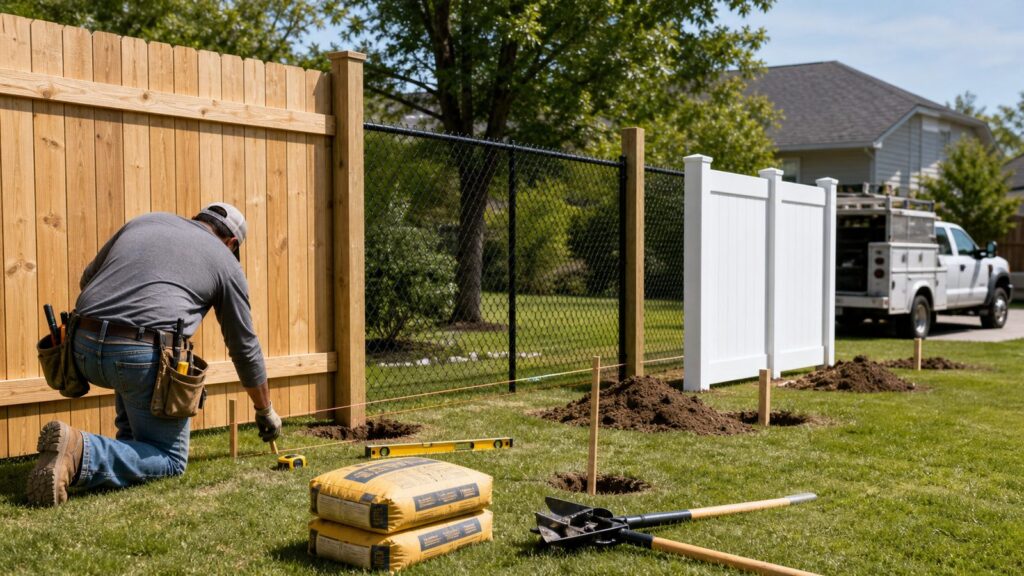
Privacy fences cost more than simple boundary fences for a practical reason: they are taller, heavier, and more exposed to wind. A solid 6-foot or 8-foot panel acts like a sail. On our job sites, we pay close attention to post size, post depth, concrete shape, drainage, and fasteners because those details decide whether the fence still looks straight after several seasons.
Wood Maintenance Cost
Wood has a lower upfront price than vinyl or composite in many cases, but it is not maintenance-free. Depending on species and climate, staining or sealing may be needed soon after installation and then every few years. Homeowners should budget for cleaning, stain or sealer, occasional board replacement, gate adjustments, and fastener repairs.
Also popular on Amazon

- Hands-Free Strip Magnets: Strip magnets lock the level onto steel posts and pull flat to the surface.
- Plumb + Level, Two Axes at Once: Wraps a post, pipe, or pole. Reads plumb on two perpendicular axes simultaneously so the buyer sets one tool instead of two.
- Elastic Strap for Non-Steel Surfaces: Elastic strap holds the level on wood, vinyl, or composite posts where the magnets have nothing to pull against.
- Two-Axis Plumb Read: Both plumb vials read at the same time. Set the face of the post and the side of the post in one wrap; rotate the level to check the third axis.
If a bid includes fence installation only, ask whether finishing is included. A new cedar fence and a new pressure-treated pine fence may both look good at completion, but their 10-year costs can differ depending on sun exposure, moisture, soil contact, finish schedule, and hardware quality.
Quick wins for a faster PC:
Fix the driver behind crashes, sound loss and screen glitchesFind Drivers →Repair Windows errors before they cause bigger problemsFix Now →Vinyl Fence Cost
Vinyl fencing usually costs about $30 to $60 per linear foot installed. For a 200-foot vinyl fence, a realistic planning range is about $6,000 to $12,000, before unusual site conditions or premium gates.
Vinyl costs more upfront than basic chain-link or many wood fences, but it has a strong maintenance argument. It does not need staining or sealing. It will still need cleaning, and damaged panels or posts can require replacement, but the routine upkeep is usually lighter than wood.
Vinyl is common for privacy panels, picket fences, semi-private designs, and clean residential boundaries. The quality of the system matters. Thicker posts, reinforced rails, better brackets, and properly set footings are worth looking at in the bid. Lightweight vinyl on shallow posts may be cheaper on day one and disappointing after wind, heat, or ground movement.
Composite Fence Cost
Composite fencing is a premium category, especially for privacy fences. In 2026, composite privacy fence installation often costs about $55 to $85 per linear foot. Some simpler composite systems may start closer to $30 to $55 per foot, but premium boards, posts, rails, trim, and gates raise the installed price quickly.
The case for composite is lower upkeep with a heavier, more finished appearance than many vinyl systems. It is often selected for modern privacy fences, higher-end backyards, and projects where the homeowner wants less staining, painting, warping, or board replacement over time.
Composite is not automatically the right answer for every yard. It is heavier than vinyl, can require careful system-specific installation, and should be detailed correctly around gates and slopes. If the project is mostly about budget containment on a large lot, chain-link or a simpler wood fence may make more sense.
Aluminum and Ornamental Metal Fence Cost
Aluminum fencing often costs about $25 to $55 per linear foot for standard residential installations. Premium ornamental aluminum, steel, or iron-style fencing can run $55 to $95+ per linear foot. Broad wrought iron or ornamental steel estimates often fall around $30 to $80+ per foot installed, with custom fabrication, powder coating, masonry columns, arched gates, and driveway automation pushing the total much higher.
Aluminum and ornamental metal fences are usually chosen for curb appeal, pools, corrosion resistance, and visibility. They are not privacy fences unless combined with landscaping or a separate screening element. For front yards and corner lots, that openness can be an advantage because local visibility rules may restrict solid fencing near streets, sidewalks, and driveways.
Recommended Free Tools
For pool areas, do not assume any attractive metal fence automatically passes code. Pool barrier rules can specify height, picket spacing, gate swing direction, latch height, climbability, and self-closing hardware. We verify those details before ordering panels because a noncompliant pool fence can be expensive to rework.
Privacy Fence Cost
Privacy fencing is one of the most requested residential fence categories. A typical privacy fence project often costs about $5,000 to $12,000 total. For 6-foot wood or vinyl privacy fencing, installed prices commonly run around $25 to $60 per linear foot.
The price is higher than a simple boundary fence because privacy fences use more material and need stronger support. They also expose workmanship problems faster. Leaning posts, uneven panel tops, poor transitions on slopes, weak gate framing, and visible gaps are all more noticeable on a solid privacy fence.
6-Foot vs. 8-Foot Privacy Fence
A 6-foot privacy fence is the standard backyard choice in many areas. An 8-foot fence can provide more screening, but it may require a permit, special approval, larger posts, deeper footings, and stronger framing. Many 8-foot privacy fences cost about $50 to $85 per linear foot installed.
Also popular on Amazon

- Strip magnets and rubber strap for hands-free work
- Constructed of high impact composite material
- Reflective backing increases vial visibility
- This tool is used to level and plumb posts, flagpoles, water pipes, railings and decks
- Recommended for heavy duty use
Before pricing an 8-foot fence, check local rules. Some cities allow 6 feet in side and rear yards but limit front-yard fencing to 3 or 4 feet. Corner lots may have sight-triangle requirements. Easements, drainage areas, historic districts, and HOA standards can also override the design a homeowner prefers.
What Drives Fence Installation Cost
The material range is useful, but the job conditions usually decide where your fence lands inside that range. The lowest bids often assume easy digging, level ground, clear access, no demolition, standard gates, and no special permit or layout issue.
Fence Height
Height affects material, labor, and structure. A 4-foot chain-link fence is much different from a 6-foot privacy fence. An 8-foot fence may need larger posts, closer spacing, deeper footings, additional rails, and more careful bracing. Taller fences also face more wind load.
Linear Footage
Longer fences cost more, but the per-foot price can sometimes improve on long straight runs because setup time is spread over more footage. Short projects can have a higher per-foot cost because layout, mobilization, utility locating, and gate work still take time.
Do these 3 things before closing this tab:
1Fix the driver behind crashes, sound loss and screen glitches2Repair Windows errors before they cause bigger problems3Scan for outdated or missing drivers - takes under a minutePosts and Footings
Post installation is one of the most important parts of a fence. In wet or freeze-thaw climates, post-setting quality can matter more than panel choice. Good practice may include proper hole diameter, depth appropriate for local frost and soil, a gravel base where suitable, concrete shaped to shed water, and posts aligned before the concrete sets.
Cheap fence bids often get cheaper by reducing post size, post depth, concrete volume, or layout time. Those savings are hard to see on installation day but easy to see later when gates sag or fence lines lean.
Soil, Rock, and Slope
Easy soil keeps labor predictable. Rocky soil, roots, old concrete, buried debris, steep grade, and tight access can add hours or days. Sloped yards also require design decisions. Some fences are stepped, where panels remain level and stair-step down the hill. Others are racked, where panels follow the slope. Not every material handles both methods equally well.
Gates and Hardware
Gates cost more than straight fence runs because they need frames, hinges, latches, bracing, alignment, and stronger posts. A single walk gate may be a modest add-on. Double-drive gates, arched gates, heavy privacy gates, pool-code gates, and automated driveway gates can materially change the budget.
Outdated Drivers Are Slowing You Down
One free scan finds every outdated or missing driver and matches the right update for your exact hardware.Free scan · exact hardware matchPC Slower Than It Used to Be?
A free scan shows the junk files, broken settings and background clutter dragging Windows down - then fixes them in one click.Free scan · Windows 10 & 11Removal and Haul-Away
Removing an old fence is separate work. Demolition may include pulling posts, breaking concrete, cutting panels, loading debris, disposal fees, and cleaning the line for the new fence. If one contractor includes removal and another does not, the bids are not comparable.
Permits, HOA Rules, and Property Lines
Permit requirements vary by city and county. Some jurisdictions allow many rear-yard fences without a permit below a certain height. Others require permits for height, corner lots, retaining walls, pool barriers, masonry walls, or fences in special districts. HOA approval can be stricter than city code, especially for front-yard materials, colors, finished-side orientation, and height.
Property-line placement should be handled before installation. A contractor can build to a marked line, but the homeowner is usually responsible for knowing where that line is. When boundaries are unclear, a survey is cheaper than rebuilding a fence after a dispute.
Build Quality Details Worth Paying For
A fence is simple in concept, but the difference between a good fence and a short-lived fence is usually in the details. On our crews, we look hard at layout, post setting, drainage, fasteners, gate framing, and transitions.
Post Depth and Frost Conditions
In cold regions, posts may need to extend below the frost line or follow local practice for frost movement. In warmer climates, depth still matters for wind and soil stability. A common residential fence post hole may be roughly 24 to 36 inches deep, but local soil, height, wind exposure, and code can change that.
Also popular on Amazon
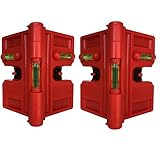
- For simultaneously determining the horizontal and vertical plane for posts, pipes, flag poles, railings.
- Foldable Design, Save time by quickly aligning ceiling joists for rafters.
- Includes three spirit level vials providing incomparable accuracy.
- With 4 magnetic strip and a elastic band for convenient hands-free install.
- Made of PVC for impact resistance. Package Includes: 2 Pack Foldable Post Level
Concrete Shape and Drainage
Concrete should not trap water against wood posts. The top of the footing should be crowned or shaped so water sheds away. In some applications, a gravel base helps drainage at the bottom of the hole. Poor drainage accelerates rot and movement.
Fasteners and Connectors
Exterior fasteners should match the material and treatment. Pressure-treated lumber can be corrosive to the wrong fasteners. Cedar, steel brackets, aluminum components, and coastal conditions can all affect hardware choice. Saving a small amount on fasteners is poor economy when staining, rusting, or failed connections show up later.
Wind Load on Privacy Fences
Solid privacy fences catch wind. Open picket, aluminum, and chain-link fences let air pass through. If a yard is exposed, a tall solid fence needs better structural planning: stronger posts, correct spacing, deeper footings, and sometimes a different layout.
DIY vs. Hiring a Fence Contractor
DIY fence installation can save labor, but it is not just a weekend assembly project unless the scope is small and the site is forgiving. Labor commonly adds about $5 to $30+ per linear foot, depending on material and difficulty, so the savings can be real. The risk is that layout errors, shallow posts, misaligned gates, and code mistakes are expensive to correct.
When DIY Can Make Sense
DIY may be reasonable for a short, straight fence run on level ground, especially chain-link, simple wood picket, garden fencing, or a small dog run. It helps if you have clear property lines, easy soil, no old fence to remove, no major slope, and only one simple gate.
For a 50-foot garden fence, a careful homeowner can often handle layout, digging, posts, and panels with rented tools. For a 200-foot privacy fence with three gates and uneven grade, the labor, layout accuracy, and structural risk are much higher.
When to Hire a Pro
Hire a professional for long runs, privacy fences, 8-foot fences, pool barriers, corner lots, steep slopes, rocky soil, masonry columns, ornamental metal, composite systems, and any fence where gate performance matters. Also hire a pro when the fence affects security, pets, children, a pool, or a neighbor dispute.
Crashes, No Sound, or Screen Glitches?
Random freezes, missing sound and display glitches usually trace back to one bad driver. Find and replace yours safely.Free scan · under a minuteWindows Errors? Fix Them Before They Spread
Repair common Windows errors and clear accumulated junk for a smoother, more stable PC - no reinstall needed.Free scan · no reinstallA good contractor should be able to explain post spacing, footing depth, gate framing, material grade, permit responsibility, and how the fence will handle slope. If the answer is vague, the bid may not include enough detail.
Independent reader supportYour contribution helps us test, update, and keep practical guides available for everyone.How to Compare Fence Quotes
Fence bids should be compared by scope, not just total price. A $5,800 quote can be more expensive than a $6,400 quote if it leaves out removal, permits, gate hardware, staining, or a realistic footing specification.
Ask each contractor to list the following in writing: exact linear footage, fence height, material type and grade, post size and spacing, rail count, picket or panel specification, footing depth and diameter, number and width of gates, latch and hinge type, demolition and haul-away, utility locate responsibility, permit responsibility, start date, estimated duration, cleanup, and warranty.
For wood fences, separate installation from finishing. Staining or sealing may be essential for longevity, but it is often priced separately. For vinyl and composite, ask about the manufacturer, panel thickness, reinforcement, and replacement-part availability. For metal, ask about coating, corrosion resistance, welds or brackets, and gate posts.
Permit and Safety Notes Before You Build
Call 811 before digging. Fence posts are usually shallow compared with foundation work, but utilities can be closer to the surface than expected. Sprinkler lines, low-voltage lighting, drainage pipe, gas lines, and communication lines can all be in the fence path.
Local fence rules vary widely. Common restrictions include front-yard height, side- and rear-yard height, corner-lot sight triangles, pool barrier requirements, easements, drainage paths, historic district review, and HOA design rules. Some cities allow certain fences without a permit up to a set height, while others require review based on location, material, or use.
Also popular on Amazon

- Set of 4 Magnetic Post Levels: each package includes 4 Magnetic post levels for pipes; The post level utilized for simultaneous determination of the horizontal and vertical planes, fast alignment to save time; This set equips you with extra levels for multiple projects or replacements when necessary
- Magnetic Edge for Secure Positioning: the post leveler tool comes with 4 powerful magnets which allows for secure positioning on metal surfaces; This helps in preventing the level from falling from high places while working, enhancing safety and precision
- Precision Measurement with 3 Vials: the post and pipe level features 3 vials, providing high precision in measurements; It is an ideal tool for leveling posts, poles, pipes, railings, flagpoles, and decks, offering comprehensive utilities for your versatile needs
- Extensive Uses: our magnetic post level is designed for decorative, home, and related alignment work, making it suitable for carpentry and personal woodworking; Plus, it allows you to erect straight posts for decks with ease
- Adjustable Elastic Band Design: the pipe level has 4 magnetic strips and an rubber band with an adjustable elastic design that fits most poles of different thicknesses; This makes it convenient for simple installation of posts, railings, pipes, and more
For corner lots and front yards, plan around visibility early. An open picket, aluminum, or chain-link fence may be allowed where a solid privacy fence is not. For pools, confirm barrier height, spacing, self-closing gate hardware, latch position, and climbability before ordering materials.
How to Keep Fence Costs Under Control
The best way to control cost is to simplify the scope before bidding. Straight runs cost less than jogs. Standard heights cost less than custom heights. One properly placed gate costs less than three gates added late. Leveling expectations early helps avoid change orders.
Recommended Free Tools
Use the fence type that matches the job. Chain-link is efficient for large lots and pet containment. Wood is strong for privacy and customization. Vinyl is practical when low maintenance matters. Aluminum works well for decorative boundaries and pool areas where visibility is useful. Composite makes sense when premium privacy and lower upkeep justify the higher upfront price.
Scheduling can also affect cost. Spring and summer are busy seasons in many markets. If your timing is flexible, ask whether late fall, winter, or early-season scheduling improves availability or price. Not every contractor discounts off-season work, but schedule flexibility can help.
Bottom Line
For most homeowners in 2026, a realistic fence installation budget starts around $1,500 to $6,500 for standard residential projects, with many fences priced between $10 and $60 per linear foot installed. A 150-foot project can be as low as about $1,500 for simple chain-link or climb past $12,000 for tall privacy, composite, ornamental metal, difficult terrain, or premium gates.
The right fence is not always the cheapest material. It is the fence that fits the property, code, maintenance expectations, privacy needs, and budget. Before signing, make sure the bid defines the details that matter: length, height, material grade, posts, footings, gates, removal, permits, and warranty. That is where a reliable fence project is won or lost.
Frequently Asked Questions
What is the average cost to install a fence in 2026?
Most residential fence installation projects cost about $1,500 to $6,500 total in 2026. Common materials usually run $10 to $60 per linear foot installed, while composite, ornamental metal, masonry, tall privacy fences, and custom gates can cost more.
What is the cheapest fence to install?
Chain-link is usually the lowest-cost permanent fence type, commonly around $10 to $40 per linear foot installed. Basic 4-foot galvanized chain-link on level ground is typically cheaper than vinyl-coated, taller, or privacy-slat versions.
How much does a 6-foot privacy fence cost?
A 6-foot wood or vinyl privacy fence commonly costs about $25 to $60 per linear foot installed. Many full residential privacy fence projects land around $5,000 to $12,000 depending on length, material, gates, terrain, and removal.
Is vinyl fencing cheaper than wood?
Vinyl usually costs more upfront than basic wood or chain-link, often around $30 to $60 per linear foot installed. Its advantage is lower maintenance because it does not need staining or sealing like wood.
Do I need a permit to install a fence?
Permit rules depend on the city, county, height, location, and fence purpose. Front yards, corner lots, pool barriers, retaining walls, easements, historic districts, and fences over certain heights often have extra rules. Check local code and HOA requirements before work starts.
Is DIY fence installation worth it?
DIY can make sense for short, straight, low-risk fences on level ground. Hire a pro for long runs, privacy fences, 8-foot fences, pool barriers, steep slopes, rocky soil, composite systems, ornamental metal, and any project where gate alignment or code compliance matters.
Quick Recap
Product prices and availability are accurate as of the date/time indicated and are subject to change. Any price and availability information displayed on Amazon at the time of purchase will apply.

