Some links on this page are affiliate links: if you buy through them we may earn a commission, at no extra cost to you.
The simple step is to let cold water drip slowly from a faucet supplied by the plumbing most exposed to the cold. A small, continuous flow can reduce the chance of freezing during severe cold, especially when the faucet serves pipes near an exterior wall, in a crawl space, garage, attic, basement, or other poorly heated area.
But a dripping faucet is not a guarantee—and it cannot protect every pipe in a home. The American Red Cross and the CDC present dripping as one immediate precaution during very cold weather, alongside steady indoor heat, insulation, cabinet doors left open, and protection or drainage for outdoor plumbing.
As an Amazon Associate I earn from qualifying purchases.
Recommended Free Tools
How to use the slow-drip method
- Identify the most vulnerable plumbing. Choose a faucet supplied by pipes running through an unheated basement, crawl space, attic, garage, exterior wall, or another cold area.
- Open the cold-water handle slightly. Adjust it until water produces a small, steady drip or very thin stream.
- Keep it running continuously while freezing conditions are imminent or ongoing. The goal is a modest flow—not a fully open tap.
- Check that the faucet is actually connected to the vulnerable section. Dripping a faucet on a well-protected interior line will not necessarily protect a separate outdoor hose bib, sprinkler line, or isolated section of pipe.
The American Red Cross specifically recommends running water—even at a trickle—to help prevent pipes from freezing. The CDC similarly advises leaving taps slightly open so they drip continuously when very cold or freezing weather is expected.
Why a slow drip can help
When water freezes, it expands. That expansion can create enough pressure inside a stationary, water-filled pipe to rupture either metal or plastic plumbing. The break often occurs at a weak point, while the actual ice blockage may be farther along the line.
Popular on Amazon

- Duck Brand insulating foam pipe stick covers are great for insulating both hot and cold water pipes
- These foam pipe covers are pre-slit for easy opening and installation on curved pipes and the self sealing edges make it easy to secure
- Versatile foam pipe insulation helps prevent winter freezing and summer sweating of indoor water, air conditioning and HVAC pipes. Safe for temperatures up to 212 F.
- These pipe covers have an R Value of 3.6 and can fit 1/2" to 3/4" pipes
- Each foam pipe stick is 12" long for easy installation. 6 pipe sticks come in a pack for a total of 6 feet of pipe insulation
A slow flow gives the water somewhere to move and makes it harder for ice to form a complete blockage in the section served by that faucet. It is best understood as a short-term pressure-and-flow precaution during the coldest weather—not as a way to make an otherwise unprotected plumbing system freeze-proof.
The complete freeze-prevention checklist
1. Keep the house consistently warm
During severe cold, avoid large thermostat setbacks. The Red Cross recommends maintaining the same thermostat setting day and night when temperatures are very low.
If you are leaving the home unattended during cold weather, the Red Cross advises leaving the heat on at no lower than 55°F. That is guidance for an unoccupied home—not a universal rule that every house or every pipe will remain safe at exactly 55°F. Homes differ in insulation, air leakage, plumbing layout, heating-system reliability, and exposure.
2. Open cabinets beneath sinks
Open kitchen and bathroom cabinet doors beneath sinks so warm household air can reach pipes along exterior walls. Before doing so, move cleaning products and chemicals away from children and pets.
This is especially useful where the back of a cabinet is against an exterior wall or where plumbing enters through a drafty opening. Opening a cabinet cannot compensate for a completely unheated crawl space or a severely exposed pipe, but it removes one common barrier to warm air circulation.
3. Close garage doors
Keep garage doors closed when water lines run through the garage. Even a partially open garage door can expose plumbing to much colder air than the rest of the home.
Also popular on Amazon
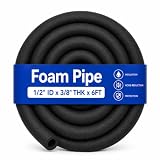
- Application: Pipe insulation foam tube for pipe freeze protection and sharp edge protection.Provides good water pipe insulation, sharp edge collision protection, and has good surface grip.(Please confirm the inner diameter before purchasing)
- Foam Pipe Insulation: Our pipe insulation foam are made of high quality nitrile rubber.Class B flame retardant, good flame retardancy, high elasticity, non-absorbent
- Non-folding packaging: Foam tube is naturally rolled up and put into the packaging bag.Avoid obvious creases caused by folding.Working temperature is -58°F to 230°F(- 50℃ to 110℃)
- No Pre-cut: The foam tube is completely closed structure, better thermal insulation effect.Pipe insulation foam can be cut to length as you need
- Package: You will receive 6 feet of insulation foam tubing. We stand behind of our products if you have any questions
4. Insulate exposed water pipes
Insulation slows heat loss and helps pipes hold onto the warmth already present in the surrounding space. Look first at accessible pipes in basements, crawl spaces, attics, garages, under-sink cabinets, and along exterior walls.
Pipe insulation sleeves are a practical starting point for many exposed straight runs. Measure the pipe diameter, choose insulation designed for that size, and install it according to the product instructions. Seal obvious gaps at joints and around penetrations where cold air can reach the pipe. Insulation is a durable preventive measure, but it does not generate heat; it cannot by itself protect a pipe exposed to prolonged subfreezing conditions.
For recurring problems, the underlying cause may be air leakage, inadequate insulation, a poorly routed water line, or an unheated space. A construction or weatherization professional may need to improve insulation and air sealing, relocate plumbing, or design a more reliable freeze-protection solution.
5. Disconnect and drain outdoor hoses
Before freezing weather, remove outdoor hoses from hose bibs, drain them, and store them. A connected hose can trap water and prevent the faucet from draining properly.
What’s actually slowing this PC down?
Pick the symptom - the matching free tool is one click away.
For an outdoor faucet supplied by an indoor shutoff valve:
- Close the interior valve supplying the outdoor faucet.
- Open the exterior faucet to drain remaining water.
- Leave the exterior faucet open if the fixture and plumbing arrangement calls for it to remain drained.
Outdoor hose bibs, sprinkler-supply lines, and swimming-pool supply lines can remain vulnerable even when the indoor faucet is dripping. Do not put household antifreeze into sprinkler or pool lines unless the manufacturer or installer specifically directs that product and procedure.
When heat cable is appropriate—and when it is dangerous
UL-listed heat tape or heat cable can be an option for an exposed water pipe that remains vulnerable despite insulation. It is not a universal do-it-yourself fix, and “heat tape” is not a sufficient safety specification by itself.
If you use this type of product, select one intended for the application and follow its instructions exactly. The Consumer Product Safety Commission warns that heat tape can create a fire hazard when it is old, damaged, uncertified, incorrectly installed, wrapped over itself, or used contrary to the manufacturer’s directions. Proper grounding and GFCI protection are important, and the CPSC recommends inspecting heat tape annually.
Windows Errors? Fix Them Before They Spread
Repair common Windows errors and clear accumulated junk for a smoother, more stable PC - no reinstall needed.Free scan · no reinstallCrashes, No Sound, or Screen Glitches?
Random freezes, missing sound and display glitches usually trace back to one bad driver. Find and replace yours safely.Free scan · under a minuteAlso popular on Amazon

- PRODUCTS YOU'LL RECEIVE: Our set includes 8 pieces of 1.31 feet long 3/4 pipe insulation, the total length of the pipe insulation is 10.48 feet, the inner diameter is 0.8 inches and the thickness is 0.4 inches, it can be cut to fit different lengths of pipes as needed
- NEW MATERIAL: Unlike the old-fashioned fiberglass insulated pipes, our insulation foam tube are made of safe neoprene rubber, which is gentle to the skin and comes with flame retardant on the surface to prevent fire
- SELF-ADHESIVE PIPE COVERS: Each outdoor pipe foam tube comes with pre-cut seams, our pipe insulation are compatible with pipes 0.8 inch, 3/4 inch or smaller, Simply wrap the pipe insulation around the pipe and peel off the protective paper from the double sided tape on the side of the pre-cut insulated pipe for easy installation without the use of additional tape
- SAFE AND TRUSTWORTHY: Our water pipe insulation have good heat insulating and heat preservation, with good elasticity, easy bending and safe use, Working temperature is -40°C to 80°C(-40°F to 176°F)
- FOUTDOOR PIPE INSULATIO: Our black foam pipe are the perfect choice for protecting your outdoor pipes, the thermal insulation and fireproof Foam Tube can effectively avoid freezing of pipes in winter and prevent heat loss, suitable for the pipes under the water heater, garden water pipes and outdoor water pipes
What to do if a pipe may already be frozen
A faucet that has stopped flowing or produces only a trickle can be a warning sign of a frozen pipe. Leave the faucet open while you carefully warm the suspected section. Opening the faucet allows water and steam pressure to escape as the ice melts.
The Red Cross identifies several slow-thawing options:
- An electric heating pad placed around the pipe
- An electric hair dryer
- A portable space heater positioned well away from flammable materials
- Towels soaked in hot water and replaced as they cool
The CDC also recommends using warm air from an electric hair dryer to thaw pipes slowly.
Never use a blowtorch, open flame, kerosene or propane heater, charcoal stove, or another flame-producing device to thaw household plumbing. These methods can ignite building materials, damage the pipe, or create dangerous fumes. Do not leave electrical heating equipment unattended or use it where it could become wet.
If you cannot locate the frozen section, cannot reach it safely, or do not know how the plumbing is routed, contact a licensed plumber. Repeated freezing is also a reason to seek professional help rather than relying on a nightly drip.
If a pipe bursts
- Shut off the home’s main water valve immediately. This limits additional flooding and water damage.
- Open a faucet briefly if doing so is safe and practical, to relieve pressure in the plumbing.
- Move people away from electrical hazards and do not enter standing water near electrical equipment.
- Call a licensed plumber for emergency repair and inspection.
- Document the damage with photographs after immediate safety concerns are addressed, particularly if an insurance claim may be involved.
Do not depend on a basic repair kit for a split pipe hidden behind a wall, ceiling, or finished surface. Temporary clamps or repair products may have limited uses, but they are not a substitute for shutting off the water and arranging a proper repair.
Also popular on Amazon

- Parameters - This black foam pipe has an inside diameter of 2 inches (51 mm), an outside diameter of 2.72 inches (69 mm), and an overall length of 6 feet (1.8m). It is designed for pipes up to 2 inches (fits pipes with an outside diameter of 1.5"-2.0").
- Parameters - This black foam pipe has an inside diameter of 2 inches (51 mm), an outside diameter of 2.72 inches (69 mm), and an overall length of 6 feet (1.8m). It is designed for pipes up to 2 inches (fits pipes with an outside diameter of 1.5"-2.0").
- Weather Resistant and Flame Retardant - Waterproof insulation wrap with flame retardant properties provides superior thermal protection. High elasticity prevents cracking, making it ideal for outdoor line insulation and pipe insulation.
- Multipurpose - Can be used as foam insulation for air conditioning ducts, winter pipe freeze protection, drain or protective padding for fragile items and table corners.
- TIP - For easy installation into 2-inch pipes, apply lubricant/water to the pipe before sliding it into the insulation foam pipe.
Which action matters most for your situation?
| Situation | Best immediate action | Longer-term protection |
|---|---|---|
| Severe cold is expected tonight | Let a vulnerable faucet drip slowly and keep the thermostat steady. | Insulate exposed pipes and correct drafts or cold spots. |
| Pipes run under an exterior-wall sink | Open the cabinet doors and allow warm air to circulate. | Insulate the pipe and improve wall or cabinet air sealing where appropriate. |
| Water lines run through a garage | Close the garage door and keep the home heated. | Insulate the lines and evaluate whether the plumbing should be relocated or protected. |
| Outdoor hose bib | Remove the hose, close the indoor shutoff, and drain the faucet. | Repair or replace the fixture if it does not drain properly; consider an exterior cover only as supplemental protection. |
| Pipe remains exposed despite insulation | Use only an appropriate, properly installed UL-listed heat cable if suitable. | Have a professional assess electrical safety, insulation, air leakage, and pipe routing. |
| Faucet only trickles during a freeze | Leave it open and thaw the pipe slowly with safe electric heat. | Inspect the plumbing after thawing to find and correct the vulnerability. |
| Pipe has burst | Shut off the main water valve and call a licensed plumber. | Repair the line and address the cause before the next freeze. |
Bottom line: use the drip as a cold-weather precaution, not a complete plan
Letting cold water drip slowly from a faucet connected to vulnerable plumbing is the quickest preventive step when severe freezing weather is approaching. It can reduce the risk of a complete freeze in the section it serves.
For reliable protection throughout winter, combine it with steady heat, open sink cabinets, closed garage doors, pipe insulation, and proper outdoor-line drainage. If the plumbing repeatedly freezes, remains inaccessible, or has burst, professional inspection and repair are safer and more effective than relying on a dripping faucet alone.
Free tools Windows power users keep installed
One-click scans. No signup required.
Sources and guidance
This article follows winter pipe-protection and thawing guidance from the American Red Cross, the U.S. Centers for Disease Control and Prevention, the Insulation Institute, and the U.S. Consumer Product Safety Commission. Product installation and electrical decisions should always follow the applicable manufacturer instructions and local requirements.
Frequently Asked Questions
Should I leave a faucet dripping all winter?
A slow drip is most useful during periods of severe or imminent freezing weather, especially when the faucet serves exposed plumbing. It is not a guaranteed all-winter solution and does not protect separate outdoor, sprinkler, pool, or isolated plumbing lines.
How fast should the water drip?
Use a small, continuous drip or very thin stream rather than fully opening the faucet. The key is continuous flow from a faucet connected to the vulnerable section of pipe.
Can I use a space heater to thaw a frozen pipe?
A portable space heater may be used only with great care, kept well away from flammable materials and water, and never left unattended. Never use an open flame, blowtorch, kerosene or propane heater, charcoal stove, or other flame-producing device.
Do these 3 things before closing this tab:
1Clear out junk files and repair common Windows errors2Fix the driver behind crashes, sound loss and screen glitches3Repair Windows errors before they cause bigger problemsWhat temperature should I leave my house at when I travel in winter?
The American Red Cross advises leaving the heat on at no lower than 55°F when leaving a home unattended during cold weather. This is a general precaution, not a guarantee for every home or plumbing layout.
The Bottom Line
A slow drip from the right faucet can help during the coldest nights, but it is only one layer of protection. Keep the home heated, insulate exposed pipes, open under-sink cabinets, protect or drain outdoor lines, and call a licensed plumber if a pipe freezes repeatedly or bursts.
Quick Recap
Product prices and availability are accurate as of the date/time indicated and are subject to change. Any price and availability information displayed on Amazon at the time of purchase will apply.

