Some links on this page are affiliate links: if you buy through them we may earn a commission, at no extra cost to you.
A central vacuum can reduce the dust that a portable vacuum recirculates, but “dust free” is not a guaranteed result. Wall inlets carry debris through hidden tubing to a remote power unit, where bags and filters capture it. The air then either leaves through an outdoor exhaust or returns indoors after the filtration supported by that specific unit. CentralVac identifies outdoor venting as its preferred option where feasible and describes an optional exhaust filter for some indoor-exhaust installations. Treat those as manufacturer guidance, not independent proof of allergy or air-quality outcomes.
How a central vacuum handles dust
A central vacuum separates the collection point from the cleaning tool. Instead of pulling dust into a canister beside you, the hose plugs into a wall inlet connected to in-wall tubing. Suction carries debris through that tubing to a stationary power unit, usually located in a garage, utility room, basement or other service space.
As an Amazon Associate I earn from qualifying purchases.
Recommended Free Tools
- Pickup: The floor brush or other attachment loosens debris and the hose draws it into the inlet.
- Transport: Airflow moves the debris through dedicated tubing inside the walls.
- Separation and collection: The power unit separates debris and captures it in its bag or filter assembly.
- Exhaust: Filtered air is discharged outdoors when the installation has an exterior vent, or back into the building when the unit is designed for indoor exhaust.
The remote motor and concealed tubing can make cleaning quieter and keep the emptied container away from living areas. They do not, by themselves, prove that a system removes every airborne particle or improves allergy symptoms. Dust control depends on the exact power unit, its filter stages, seals, maintenance and exhaust route.
Does a central vacuum keep dust out of the house?
It can keep collected debris out of the room more effectively when the power unit and exhaust are configured correctly, but no central vacuum should be described as literally dust-free without model-specific test evidence. A system that exhausts outdoors sends the filtered discharge outside rather than into the room. An indoor-exhaust system must rely on the filters and seals specified by its manufacturer.
Popular on Amazon

- Powerful 700 AW Central Vacuum with 40 ft Low-Voltage hose and horse hair floor brush accessory kit included
- POWERFUL: 700AW, 5.7’’, 2-Stage motor — SOFT START-STOP TECHNOLOGY: Adds 20% to the life expectancy of your OVO central vacuum Motor
- SILENT SYSTEM: Integrated muffler and noise-blocking foam added in the MOTOR COMPARTMENT
- HEAVY DUTY: Covers up to 8000 square feet area, 8 INLET OR MORE
- HYBRID FILTRATION: Can be used with disposable bags ( Recommanded) OR Without - 1 permanent machine washable filter ( INCLUDED)
The available CentralVac material does not provide an independent comparison of indoor particle emissions, allergy improvement or health outcomes. Its claim that a two-layer filter removes particles down to 1 micron is a CentralVac product claim; the reviewed material does not establish independent testing or certification for that figure. Do not describe that filter as HEPA unless the documentation for your exact model gives it that classification.
Outdoor versus indoor exhaust
Exhaust location is the first dust-control decision when selecting or retrofitting a system. CentralVac’s FAQ calls outdoor venting the best alternative when it is feasible. Where an exterior route is impractical, the company describes an optional fourth-stage exhaust filter for certain indoor-exhaust installations. CentralVac also says that filter may be unnecessary when the power unit is installed in some garages or utility spaces, where the discharged air is not returned directly to occupied rooms.
| Configuration | What happens to exhaust | What the manufacturer says |
|---|---|---|
| Outdoor exhaust | Filtered air travels through an exhaust line to the exterior. | CentralVac identifies this as its preferred alternative where feasible. |
| Indoor exhaust with supported fourth-stage filter | Air returns to the installation space after the additional filter stage. | CentralVac says the optional filter can be beneficial when outside venting is unavailable. |
| Indoor exhaust without that optional stage | Air returns according to the base unit’s filtration design. | Suitability depends on the exact model and room; CentralVac says the fourth stage may be unnecessary in some garage or utility installations. |
These are configuration descriptions, not universal rules for every manufacturer. Check the power-unit manual for permitted exhaust routing, filter placement, clearances and whether an additional stage is approved. Adding an unapproved filter can restrict airflow or create a fit and safety problem.
Also popular on Amazon
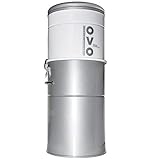
- POWERFUL: 700airwatts, 5.7’’ 2-Stage motor - 140.2 CFM SOFT START / STOP TECHNOLOGY: Adds 20% to the life expectancy of your OVO central vacuum Motor
- SOFT START / STOP TECHNOLOGY: Adds 20% to the life expectancy of your OVO central vacuum Motor
- SILENT SYSTEM: Integrated muffler and noise-blocking foam added in the MOTOR COMPARTMENT
- HEAVY DUTY: Covers up to 9000 square feet area, 8 INLET OR MORE
- HYBRID FILTRATION: Can be used with disposable bags ( Recommanded) OR Without - 1 permanent machine washable filter ( INCLUDED)
What filters and bags does a central vacuum need?
Filter architecture varies. The CentralVac materials describe a first-stage disposable paper bag and a second-stage support cloth bag as required components on the covered 120-volt units. Some installations can also accept a fourth-stage exhaust filter. The manual warns not to operate the unit without both required filters.
| Component | CentralVac identification | Use |
|---|---|---|
| Disposable paper bag | CVB-01-4000 and CVB-01-6000 | First-stage collection for compatible power units; discard when full. |
| Cloth filter bag | CVB-02-1000 | Second-stage support and filtration on compatible units. |
| Optional exhaust filter | Model-dependent | Additional stage for certain indoor-exhaust installations. |
| Pipe-maintenance cloth | CVT-08-0010 | Manufacturer-listed aid for tubing maintenance and possible debris or blockage issues. |
Those part numbers establish products listed for compatible CentralVac power units; they do not establish universal fit across central-vacuum brands or even every CentralVac model. Read the label on your power unit and confirm both the model and the replacement part number before ordering.
How often should bags and filters be changed?
CentralVac’s guidance recommends replacing its paper bag every three to four months and its cloth filter every five to seven years, with frequency affected by how heavily the system is used. Those intervals are manufacturer-specific schedules, not a universal rule. A home with pets, renovation debris or frequent cleaning may fill a bag sooner.
Quick wins for a faster PC:
Scan for outdated or missing drivers - takes under a minuteDriver Scan →Clear out junk files and repair common Windows errorsFree Scan →Fix the driver behind crashes, sound loss and screen glitchesFind Drivers →Also popular on Amazon

- POWERFUL: 630 airwatts, 130" Water-Lift Suction (Not to be used to pick up water) - 13. 8 AMPS - 127.1 CFM
- HYBRID FILTRATION: Can be used with disposable bags ( Recommanded) OR Without disposable bags (INCLUDED) - 1 permanent machine washable filter ( INCLUDED)
- SILENT SYSTEM: Integrated muffler and noise-blocking foam added in the MOTOR COMPARTMENT
- LARGE VACUUM SYSTEM: Covers up to 5000 square feet area, Up to 5 inlets CANISTER – 6. 6 gallon / 25 liters Rolled steel bottom load Canister
- LED STATUS INDICATOR informs users of the status of your central vacuum
| Part | CentralVac replacement guidance | Important condition |
|---|---|---|
| Paper bag | Every three to four months | Interval varies with use; replace sooner when full or airflow falls. |
| Cloth filter | Every five to seven years | Inspect condition; the manufacturer says not to wash it. |
Safe bag and cloth-filter service
- Switch off the power unit and disconnect power according to the unit’s instructions.
- Open the service compartment and remove the disposable paper bag when it is full. The 120-volt manual directs owners to discard a full bag rather than reuse it.
- Inspect the cloth bag for holes, tears or a bent support ring. A damaged cloth filter can let dust bypass filtration and reach the motor.
- Install the specified replacement parts, making sure the bag collar and cloth-ring seating are secure.
- Confirm that both the paper bag and cloth bag are installed before restarting. Never run the covered CentralVac unit without both required filters.
CentralVac specifically says not to wash the cloth filter. Washing can damage its material or alter how it seals. Use the current manual for your model; the cited 120-volt manual is dated 2010 and should not override newer model documentation.
How to choose a dust-control configuration
Start with the exhaust route
Determine whether an exterior wall or roof route can be installed without excessive bends or an impractical run. If outdoor venting is possible, verify the outlet location, weather protection and local construction requirements. If the unit must exhaust indoors, confirm that the power unit accepts the optional stage and identify where replacement filters can be accessed.
Match every consumable to the power unit
Record the model and electrical rating from the power-unit label. Confirm the paper-bag style, cloth-filter design, exhaust-filter option and replacement intervals in the manual. A bag that fits the canister physically may still be wrong for the inlet collar or filtration sequence.
Also popular on Amazon

- Powerful 630 AW Large Central Vacuum + 30 ft Low-Voltage hose with deluxe floor brush accessory kit included
- POWERFUL: 630 Airwatts, 1-Stage motor - 127.1 CFM
- SILENT SYSTEM: Integrated muffler and noise-blocking foam added in the motor compartment
- LARGE VACUUM SYSTEM: Covers up to 5000 square feet area, Up to 5 inlets CANISTER – 6. 6 gallon / 25 liters Rolled steel bottom load Canister
- HYBRID FILTRATION: Can be use with OR Without triple layer Disposable filtration bag (INCLUDED) 1 permanent machine washable filter (INCLUDED for Bagless operation)
Plan airflow and cleaning reach
CentralVac’s installation guidance highlights inlet count and placement, tubing routes, airflow, hose length and reach, filtration needs and power-unit location. Map furniture, stairs and rooms before cutting walls. A poorly placed inlet can force long hose runs; an overly complex tube route can add bends and make blockage diagnosis harder.
Free tools Windows power users keep installed
One-click scans. No signup required.
Retrofitting an existing house
CentralVac says an existing home can be retrofitted, but wall openings for the inlets are required. Before work starts, locate plumbing, wiring, structural members and fire-blocking that could interfere with tubing. Confirm where the power unit will sit, how its exhaust will be routed and whether a service person can reach the bags and filters.
DIY installation may suit a homeowner with remodeling or construction experience who can plan tubing and make clean inlet openings. If you are not confident cutting walls, routing pipe or verifying airflow, the manufacturer recommends professional installation. No fixed installation time or predictable project cost should be assumed; both depend on the home’s layout and the amount of access work required.
Also popular on Amazon
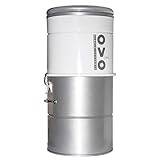
- POWERFUL: 700 airwatts, 5.7’’ 2-Stage motor - 140.2 CFM
- SILENT SYSTEM: Integrated muffler and noise-blocking foam added in the motor compartment e motor - 130" Water-Lift Suction (Not to be used to pick up water) - AirFlow: 140.2 CFM
- LARGE VACUUM SYSTEM: Covers up to 7000 square feet area, Up to 7 inlets CANISTER – 6. 6 gallon / 25 liters Rolled steel bottom load Canister
- HYBRID FILTRATION: Can be used with OR Without triple layer Disposable filtration bag (INCLUDED and RECOMMENDED), 1 permanent machine washable filter included
- SOFT START-STOP TECHNOLOGY: Adds 20% to the life expectancy of your OVO central vacuum Motor
Troubleshooting loss of suction or unexpected dust
Check the simple restrictions first
- Empty a full paper bag and verify that the cloth filter is present and seated.
- Look for a damaged cloth bag, bent ring or loose seal that could allow bypass dust.
- Inspect the hose, wand and floor head for a local obstruction.
- Make sure inlet valves close when not in use and that the power-unit lid is latched.
Investigate tubing blockages
When one inlet has weak suction but others work, the obstruction may be in that branch or hose. CentralVac lists a pipe-maintenance cloth under CVT-08-0010 and its FAQ describes using a plumber’s snake for some clogs. Use those as manufacturer suggestions, not as a substitute for diagnosis. Do not force a tool through tubing if you cannot control where it will emerge or if the pipe may be damaged.
Know when to stop troubleshooting
Persistent loss of suction, dust reaching the motor, unusual motor noise, overheating or repeated filter damage warrants service and a review of the installation. Continuing to run a unit with a bypassing or missing filter can compound motor damage.
Do these 3 things before closing this tab:
1Clear out junk files and repair common Windows errors2Fix the driver behind crashes, sound loss and screen glitches3Repair Windows errors before they cause bigger problemsQuick Recap
A practical purchase and maintenance checklist
- Choose outdoor exhaust when the building and local requirements make it practical.
- For indoor exhaust, confirm whether the exact power unit supports a fourth-stage filter and where that air will discharge.
- Obtain the model number, voltage and approved bag and filter part numbers before buying replacements.
- Plan inlet locations, tubing routes, hose reach and service access before a retrofit.
- Keep paper bags in reserve and record the installation date of the cloth filter.
- Inspect the cloth filter for holes or a distorted ring; do not wash it unless the current model manual explicitly says otherwise.
- Separate manufacturer performance claims from independently verified results; the available material does not establish a universal dust-free or health benefit.
Product prices and availability are accurate as of the date/time indicated and are subject to change. Any price and availability information displayed on Amazon at the time of purchase will apply.

