Do these 3 things before closing this tab:
1Fix the driver behind crashes, sound loss and screen glitches2Repair Windows errors before they cause bigger problems3Scan for outdated or missing drivers - takes under a minuteA driveway is one of the largest hardscape surfaces on most homes, so it has a real effect on curb appeal. The best driveway ideas do two jobs at once: they make the front of the house look finished, and they handle water, vehicle loads, weather, and daily use without early cracking, rutting, or settlement.
For most homeowners, the right choice comes down to budget, house style, drainage, climate, and how much construction work you are willing to take on. Basic gravel may run about $1 to $3 per square foot installed. Asphalt commonly lands around $3 to $12 per square foot. Concrete often falls around $5 to $18 per square foot. Paver or premium decorative systems commonly start around $10 per square foot and can exceed $30 per square foot, especially with complex patterns, borders, drainage work, or natural stone.

As an Amazon Associate I earn from qualifying purchases.
On our job sites, the surface material gets the attention, but the long-term result is usually decided underneath it. Base depth, compaction, slope, edge restraint, drainage, concrete joint layout, and the apron connection at the street all matter. A good-looking driveway that sheds water properly and has a stable base will outperform a more expensive surface installed over poor prep.
Driveway Ideas at a Glance
Use this table to narrow the options before falling in love with a finish. Prices are 2026 typical U.S. installed ranges and can move 25% to 40% or more based on region, demolition, hauling, access, soil, drainage, thickness, and permitting.
#1 Best Overall

- Effortless Pothole Repair: Fix potholes fast with no mixing or special tools. Liquid Rubber Asphalt Patch is a ready-to-use solution—just scoop, spread, and tamp down. Ideal for homeowners or pros tackling driveways, parking lots, or road repairs
- All-Weather Application: Designed to work in rain, shine, heat, or cold. Whether you're fixing damage in the middle of summer or patching during fall weather, this patch performs year-round with a strong bond and reliable hold
- Built to Last: Formulated for strength and flexibility, it resists cracking and shrinking over time. Creates a smooth, durable finish that holds up to foot traffic, cars, and harsh weather conditions
- Trusted by Pros for 20+ Years: With over 1 million gallons sold, Liquid Rubber Asphalt Patch is a proven performer. Whether you’re patching your first pothole or maintaining a commercial lot, you’re backed by decades of performance and support
- Clean Application, Easy Cleanup: No mess, no stress. Apply directly from the pail and clean up with simple tools and baby oil or mineral spirit
| Driveway idea | Best fit | Typical installed cost | Maintenance | Permit likelihood | Curb appeal impact |
|---|---|---|---|---|---|
| Saw-cut concrete grid | Modern, transitional, ranch | $5-$18/sq ft | Low to moderate | Medium | High |
| Broom concrete with paver border | Most home styles | $8-$22/sq ft depending on border | Low | Medium | High |
| Stamped concrete | Traditional, Mediterranean, craftsman | $10-$20+/sq ft | Moderate | Medium | High |
| Exposed aggregate | Mid-century, coastal, traditional | $7-$18/sq ft | Low to moderate | Medium | High |
| Asphalt with stone apron | Long drives, colder climates | $5-$12/sq ft plus apron | Moderate | Medium to high | Medium-high |
| Permeable pavers | Runoff-prone sites | $8-$15+/sq ft | Moderate | Medium to high | High |
| Concrete pavers | Custom front elevations | $10-$30+/sq ft | Moderate | Medium | Very high |
| Natural stone pavers | Luxury or historic homes | $15-$60/sq ft materials before complex installation | Moderate | Medium | Very high |
| Stabilized gravel | Rural, farmhouse, long drives | $1-$3/sq ft basic; more with grid and edging | Moderate | Low to medium | Medium-high |
| Ribbon driveway | Historic, cottage, low-impact designs | Varies by strip material | Moderate | Medium | High |
| Circular driveway | Wide lots, formal entries | Often high due to size | Varies | High | Very high |
| Widened parking court | Multi-driver homes | Medium to high | Varies | High | High when designed well |
| Driveway lighting | Any finished drive | Low to medium | Low | Low | Medium-high |
| Planted or stone edging | Budget refreshes | Low to medium | Moderate | Low | High for the cost |
| Drainage upgrades | Sloped or puddling drives | Medium to high | Low to moderate | Medium | High when integrated |
1. Concrete Driveway With a Saw-Cut Grid
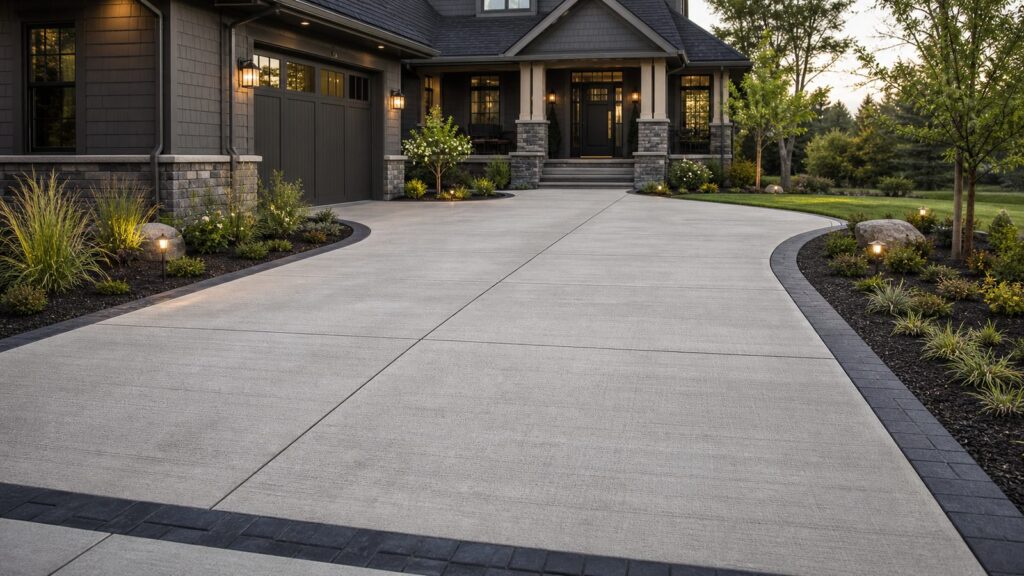
A plain concrete driveway can look sharp when the control joints are planned as part of the design. Instead of random-looking panels, a saw-cut grid creates intentional rectangles or squares that line up with the garage doors, walkway, porch columns, or facade rhythm.
Concrete driveways commonly cost about $5 to $18 per square foot, with many full projects falling roughly between $2,700 and $14,500 depending on size and scope. Tear-out, thicker concrete, reinforcement, poor access, and drainage work increase the price. A typical residential concrete slab is often 4 inches thick for passenger vehicles, with 5 to 6 inches used where heavier vehicles, weak soils, or higher loads are expected.
The key is joint planning. We like to discuss joint spacing before the pour, not after the concrete is down. Control joints help guide shrinkage cracking, and the layout should avoid awkward slivers at the garage, apron, or walkway. For curb appeal, repeat proportions already found on the house. A modern home may look best with larger rectangular panels, while a ranch or craftsman house may suit a tighter grid.
The Tool Desk
Outbyte Driver Updater FREEFix the driver behind crashes, sound loss and screen glitchesFind Drivers →Outbyte PC Repair FREERepair Windows errors before they cause bigger problemsFix Now →2. Broom-Finished Concrete With a Paver Border
This is one of the best value upgrades for a clean, custom-looking driveway. The main field stays economical broom-finished concrete, while the edges get a paver, brick, stone, or cobble border. The border frames the surface, ties into the house materials, and reduces the visual weight of a large gray slab.
For example, a 20-foot by 40-foot two-car driveway is about 800 square feet. Keeping most of that area standard concrete while adding a 6- to 12-inch border can deliver a high-end look without paying for full pavers across the entire drive. Choose a border color that repeats the roof, brick, stone veneer, garage door, shutters, or front walkway. That repetition is what makes the driveway feel designed instead of added later.
Construction details matter. The border needs a proper compacted base and edge support so it does not settle away from the concrete. Where concrete meets pavers, the elevations should be planned so snow shovels, tires, and water flow do not catch on a lip.
3. Stamped Concrete for a Decorative Surface
Stamped concrete can imitate slate, stone, brick, tile, or large-format pavers. It gives more visual detail than broom concrete without the individual units used in a true paver driveway. It is a strong option for front entries, short driveways, or homes where the driveway is highly visible from the street.
Expect stamped concrete to cost more than standard concrete, often around $10 to $20 or more per square foot depending on color, pattern, borders, and sealing. The finish should be sealed periodically, and the texture must be chosen with traction in mind. A driveway should not become slippery every time it rains.
The biggest mistake is treating stamped concrete like a purely decorative patio. It still needs proper thickness, base preparation, slope, and control joints. Ask the contractor where the joints will go and how they will work with the stamped pattern. Random cracks across a decorative field are much more noticeable than cracks that follow planned joints.
4. Exposed Aggregate Concrete
Exposed aggregate is a durable way to add texture and color without a stamped pattern. The surface is finished so selected stone in the mix becomes visible. Depending on the aggregate, it can look warm, coastal, modern, or traditional.
Installed costs often fall in the upper part of standard concrete pricing, commonly around $7 to $18 per square foot depending on stone selection, finish quality, and region. It offers good traction and hides minor dirt better than smooth concrete. It also works well with stone veneer, brick, and natural landscaping because the surface has more visual depth than plain gray concrete.
Free tools Windows power users keep installed
One-click scans. No signup required.
For best results, choose aggregate colors in daylight and compare them against the house. Tan, gray, black, buff, and river-stone mixes all read differently next to siding, garage doors, and roof shingles. Sealing can deepen the color, but it also changes the sheen, so ask for a sample or nearby reference project when possible.
5. Asphalt Driveway With a Stone or Paver Apron
Asphalt is practical, especially for longer driveways and freeze-thaw climates. It is generally less expensive than decorative concrete or pavers, with 2026 installed pricing commonly around $3 to $12 per square foot and many residential projects landing around several thousand dollars. Current asphalt project ranges often run around $2,339 to $6,984, with many projects near $4,010, depending on driveway size and base work.
For curb appeal, pair asphalt with a stone, brick, or paver apron at the street or garage. The black surface becomes a quiet background, while the apron creates a finished transition. This is especially effective on colonial, farmhouse, and traditional homes where a full paver driveway would be costly.
Asphalt needs maintenance. Plan for sealing every few years depending on climate, wear, and contractor guidance. Edge support also matters because unsupported asphalt can crumble at the sides. A clean stone edge, concrete curb, or compacted shoulder keeps the shape crisp.
Outdated Drivers Are Slowing You Down
One free scan finds every outdated or missing driver and matches the right update for your exact hardware.Free scan · exact hardware matchWindows Errors? Fix Them Before They Spread
Repair common Windows errors and clear accumulated junk for a smoother, more stable PC - no reinstall needed.Free scan · no reinstall6. Permeable Pavers for Runoff Control
Permeable pavers are designed to let water move through joints into a stone reservoir below. They can reduce runoff, help manage puddling, and may support stormwater goals where local rules limit impervious coverage. They also look refined when installed with the right pattern and border.
Permeable systems commonly cost about $8 to $15 or more per square foot, often $2 to $5 per square foot more than standard paving. Costs rise when the project needs soil testing, an engineered stone reservoir, underdrains, overflow structures, or municipal stormwater documentation.
Rank #2

- Effortless Pothole Repair: Fix potholes fast with no mixing or special tools. Liquid Rubber Asphalt Patch is a ready-to-use solution—just scoop, spread, and tamp down. Ideal for homeowners or pros tackling driveways, parking lots, or road repairs
- All-Weather Application: Designed to work in rain, shine, heat, or cold. Whether you're fixing damage in the middle of summer or patching during fall weather, this patch performs year-round with a strong bond and reliable hold
- Built to Last: Formulated for strength and flexibility, it resists cracking and shrinking over time. Creates a smooth, durable finish that holds up to foot traffic, cars, and harsh weather conditions
- Trusted by Pros for 20+ Years: With over 1 million gallons sold, Liquid Rubber Asphalt Patch is a proven performer. Whether you’re patching your first pothole or maintaining a commercial lot, you’re backed by decades of performance and support
- Clean Application, Easy Cleanup: No mess, no stress. Apply directly from the pail and clean up with simple tools and baby oil or mineral spirit
These systems are not maintenance-free. The joints need periodic cleaning so sediment does not clog the surface. They are also not the right answer for every site. Poorly draining clay soils, steep slopes, high sediment areas, or sites with heavy leaf and soil wash can require extra engineering. For vehicle areas, use an interlocking pattern and a base section designed for the expected load.
7. Concrete Pavers in a Herringbone Pattern
Concrete pavers give a driveway a finished, high-end look and allow spot repairs because individual units can be lifted and reset. For vehicle areas, herringbone patterns are a smart choice because the interlock handles turning forces better than many running-bond layouts.
Typical paver driveway projects often fall around $6,000 to $18,000, with installed costs commonly around $10 to $30 or more per square foot. The range depends on paver style, base depth, pattern complexity, edge restraints, demolition, and drainage.
The base is the job. A paver driveway needs excavation, compacted aggregate, bedding material, edge restraint, joint material, and compaction. If the base is thin or poorly compacted, the driveway can develop tire ruts, low spots, and lippage. Good installers also plan cuts so small pieces are not concentrated along the most visible edges.
8. Natural Stone Pavers for a Premium Entry
Natural stone is the premium driveway option for homes where the driveway acts as part of the architecture. Granite, cobblestone, bluestone, limestone, and other stones can create a formal, durable entry when installed over the right base.
Material alone can run about $15 to $60 per square foot before installation complexity is considered. Labor is usually significant because stone thickness, size variation, cutting, bedding, and compaction take time. A natural stone driveway can be a major investment, but it can also be one of the strongest curb appeal upgrades for historic, estate, coastal, and custom homes.
Choose stone for the environment. Some stones can be slippery, some absorb stains, and some do not tolerate deicing salts well. Freeze-thaw regions need stone and installation methods suited to winter conditions. The best projects use natural stone where it counts most, such as the apron, border, motor court, or entry band, rather than forcing it across every square foot.
9. Stabilized Gravel Driveway
Gravel is affordable and attractive when it is built as a system instead of dumped on soil. Basic gravel driveways commonly run about $1 to $3 per square foot installed, and national averages are often around $1,500. The range is wide because a short suburban drive and a long rural drive are completely different projects. Excavation, geotextile fabric, grid stabilization, aggregate depth, edging, culverts, and hauling distance all affect price.
For curb appeal, use a defined edge. Steel edging, stone, pressure-treated timbers, concrete curbing, or paver bands keep gravel from migrating into the lawn. On long or sloped drives, geotextile fabric and cellular grid systems can reduce rutting and washout. A layered section may include compacted base stone below a smaller decorative top layer.
Gravel works best when the homeowner accepts periodic maintenance. Expect to rake, regrade, refill, and control weeds. It is a strong choice for rural, farmhouse, cottage, and long-drive settings, but it is less ideal where snow plowing, steep slopes, or strict neighborhood standards create problems.
Quick wins for a faster PC:
Fix the driver behind crashes, sound loss and screen glitchesFind Drivers →Repair Windows errors before they cause bigger problemsFix Now →Scan for outdated or missing drivers - takes under a minuteDriver Scan →10. Ribbon Driveway
A ribbon driveway uses two paved strips for the tires with grass, gravel, groundcover, or permeable material between them. It has a lighter, greener look than a full-width slab and works especially well for historic homes, cottages, and lower-traffic driveways.
Typical tire strips are often 18 to 24 inches wide each, spaced to match common vehicle track widths. Overall driveway width still needs to function safely. Many single-car drives are around 10 to 12 feet wide, while two-car drives are often around 20 to 24 feet, but local zoning and right-of-way standards control actual dimensions.
The center strip must be planned carefully. Turf can rut if the base is weak or the soil stays wet. Gravel or permeable pavers may be more durable. Ribbon driveways are best on relatively straight, low-slope drives where vehicles follow a predictable path.
11. Circular Driveway
A circular driveway can make a home feel more established and improve vehicle flow because drivers can enter and exit without backing into the street. It works best on wider lots with enough frontage and depth to maintain safe turning radii, landscaping, and sight lines.
This is usually not a budget idea. The added square footage, two curb cuts or apron connections, drainage work, landscaping, and potential right-of-way approvals can make it a major construction project. Local rules may limit driveway width, number of access points, distance from intersections, slope, and sight triangles.
For curb appeal, avoid paving the entire front yard. The circle should frame a central landscape island, tree, lawn panel, or planting bed. The surface can be asphalt, concrete, pavers, gravel, or a combination, but drainage must be designed so water does not collect at the low point of the loop.
12. Widened Parking Court
A widened parking court solves a practical problem: modern households often have more vehicles than older driveways were designed to handle. Done well, it looks intentional. Done poorly, it looks like a random slab tacked onto the side.
The best approach is to align the widened area with the garage, walkway, fence, or landscape bed. Use a contrasting border, different paving module, or planted edge to make the expansion feel designed. If the existing driveway is concrete, a paver parking bay or border can help hide the age difference between old and new surfaces.
What’s actually slowing this PC down?
Pick the symptom - the matching free tool is one click away.
Permits matter here. Widening a driveway can change lot coverage, stormwater runoff, apron width, curb cuts, and right-of-way work. Many jurisdictions regulate the portion of the driveway near the street differently from the private portion on your property. Check local requirements before removing grass or forming concrete.
13. Warm, Low-Glare Driveway Lighting
Lighting can improve curb appeal without replacing the driveway surface. It also makes walking, backing, and guest parking safer after dark. The key is restrained placement and warm color temperature.
Use low-voltage path lights, small bollards, recessed wall lights, step lights, or downlights from trees or structures. Keep fixtures shielded so they light the driving and walking surface rather than shining into the street, neighbor windows, or driver eyes. Warm white light, commonly around 2700K to 3000K, usually looks better at residential scale than cool blue-white light.
This is one of the more DIY-friendly upgrades if you are using a low-voltage kit and have simple site conditions. Hire a licensed electrician for line-voltage work, long runs, transformer sizing problems, smart controls tied into house wiring, or any installation near utilities or wet locations.
Recommended Free Tools
14. Planted or Stone Edging
Edging is the fastest way to make an ordinary driveway look finished. It defines the shape, separates pavement from lawn, and gives the eye a clean line from the street to the garage.
Good options include steel edging, cobblestone, brick, concrete curbing, low stone walls, ornamental grasses, evergreen shrubs, and layered planting beds. Keep mature plant size in mind. A shrub that looks small at planting can block doors, mirrors, sight lines, or snow storage in three years.
For a budget refresh, combine pressure washing, crack repair, fresh mulch, clean edging, and a few durable plants. That can change the look of the front elevation without the cost of full replacement. For a more permanent upgrade, use stone or pavers that repeat the walkway or porch material.
15. Drainage Upgrades That Look Built-In
Drainage is not the glamorous driveway idea, but it is one of the most valuable. Puddles, ice, garage flooding, foundation moisture, and stained pavement usually come from grading and water management problems that were ignored during design.
Windows Errors? Fix Them Before They Spread
Repair common Windows errors and clear accumulated junk for a smoother, more stable PC - no reinstall needed.Free scan · no reinstallOutdated Drivers Are Slowing You Down
One free scan finds every outdated or missing driver and matches the right update for your exact hardware.Free scan · exact hardware matchCommon fixes include channel drains at the garage, trench drains across the driveway, swales along the edge, regrading, permeable pavement, catch basins, dry wells, or underdrains. The correct solution depends on slope, soil, outlet location, rainfall intensity, and local stormwater rules.
Water should not be directed toward the garage, foundation, sidewalk, neighboring property, or public street without an approved path. A channel drain can be very effective at the garage threshold, but only if it has somewhere legal and functional to discharge. We prefer solving drainage before choosing decorative finishes because a beautiful driveway that traps water will not stay beautiful.
How to Choose the Right Driveway Material
Start with the house, then the site. A driveway should repeat something already present: roof tone, brick color, stone veneer, trim, walkway material, garage door color, or landscape stone. That connection is usually what separates a polished driveway from one that looks selected from a catalog.
Then look at performance. Asphalt is often strong value for long drives and cold climates, but it needs sealing and edge care. Concrete can last a long time and offers many finishes, but poor finishing, deicing salts, bad drainage, or missing control joints can lead to cracking and spalling. Gravel is economical and attractive for rural settings, but it migrates and needs maintenance. Pavers provide excellent curb appeal and repairability, but only when the base and edge restraints are built correctly. Permeable systems can help with runoff, but they need periodic cleaning and proper subsurface design.
Size also changes the decision. A 400-square-foot urban driveway can justify a premium surface more easily than a 3,000-square-foot rural drive. On larger drives, we often use a practical main surface with upgraded borders, aprons, or entry bands to control cost while still improving the view from the street.
Independent reader supportYour contribution helps us test, update, and keep practical guides available for everyone.Driveway Costs and What Moves the Bid
Two driveways with the same square footage can price very differently. The surface material is only one line item. Demolition, hauling, excavation depth, soil stability, drainage, base stone, compaction, slope, equipment access, reinforcement, concrete or asphalt thickness, decorative finish, paver pattern, edging, and right-of-way work can all change the bid.
As a rough 2026 U.S. planning range, a basic gravel driveway may be $1 to $3 per square foot. Asphalt commonly runs $3 to $12 per square foot. Concrete often runs $5 to $18 per square foot. Pavers and premium decorative systems commonly run $10 to $30 or more per square foot. Natural stone can exceed those numbers quickly, especially when material costs alone are $15 to $60 per square foot.
Regional pricing matters. Northeast and Pacific Coast projects can run materially higher than national averages. Hauling distance, disposal fees, labor rates, material availability, union requirements, and local permitting can swing bids by 25% to 40% or more. That is why a good bid should describe the base section, thickness, drainage assumptions, reinforcement, joint layout, edge restraint, and permit responsibilities, not just the surface price.
Rank #4
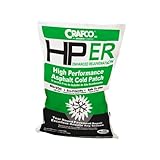
- PERMANENT POTHOLE REPAIR: Polymer-modified mix bonds like hot asphalt with zero VOCs
- ALL-CLIMATE PERFORMANCE: Works from -5 °F to 105 °F in wet or dry conditions
- READY-TO-USE: No heating or mixing; pour, compact, reopen to traffic
- HIGH-LOAD DURABILITY: sStands up to truck traffic & snow-plows
- BULK PALLET: 60 bags cover ~240 sq ft at 4 in depth, slashing restock trips
Permits, Aprons, and Right-of-Way Checks
Many homeowners think of the driveway as private property, but the apron, curb cut, sidewalk crossing, culvert, and approach near the street may fall under city, county, or state right-of-way rules. Replacing, widening, relocating, or adding a driveway can trigger permits even when the work on your private lot seems simple.
Rules vary by jurisdiction, but common items include driveway width, apron thickness, curb returns, sidewalk slope, sight distance, distance from intersections, drainage discharge, culvert sizing, and the number of access points. Some areas also regulate impervious surface coverage and stormwater runoff. Homeowners associations may add their own requirements for materials, colors, widths, and landscaping.
Before you approve a design, check local building, transportation, public works, and HOA requirements. For contractor-led work, clarify who pulls permits and who schedules inspections. If a driveway crosses a public sidewalk or road shoulder, the contractor may need specific licensing, bonding, or right-of-way approval.
When to DIY and When to Hire a Pro
Some driveway upgrades are reasonable for a capable homeowner. Pressure washing, crack cleaning, small crack repairs, fresh gravel topping, simple planting beds, low-voltage lighting, mulch, and basic edging can be DIY-friendly if utilities, drainage, and grades are straightforward.
Quick wins for a faster PC:
Fix the driver behind crashes, sound loss and screen glitchesFind Drivers →Repair Windows errors before they cause bigger problemsFix Now →Scan for outdated or missing drivers - takes under a minuteDriver Scan →Hire a professional for full-depth replacement, concrete pours, asphalt paving, paver driveways, right-of-way aprons, curb cuts, steep driveways, drainage corrections, retaining walls, culverts, major excavation, and any project that changes width, slope, or runoff. These jobs require equipment, compaction, forming, material timing, and code awareness. Mistakes get expensive fast because the failed work often has to be removed before it can be fixed.
Before calling contractors, measure the driveway length and width, photograph cracks and puddles, note where water flows during rain, mark irrigation and utility locations, check HOA rules, and ask your local office about apron or widening permits. When bids come in, compare base depth, compaction method, concrete or asphalt thickness, reinforcement, drainage plan, joint layout, edge restraint, disposal, warranty, and schedule. A cheaper bid that skips the base is not cheaper for long.
Common Driveway Mistakes to Avoid
The most common mistake is choosing from photos without studying the site. Slope, soil, drainage, shade, snow and ice, vehicle loads, and street connection should guide the material. A surface that works beautifully on a flat, dry lot may fail quickly on a steep or saturated one.
Ignoring the base is next. Thin aggregate, poor compaction, and unstable soil lead to rutting, settlement, paver lippage, and cracked concrete. For pavers, missing edge restraint is a frequent cause of spreading and uneven joints. For concrete, skipping a clear control-joint layout can leave random cracks through the most visible panels.
What’s actually slowing this PC down?
Pick the symptom - the matching free tool is one click away.
Drainage mistakes are just as damaging. Do not let water drain toward the garage, foundation, sidewalk, neighboring property, or street unless the design and local rules allow it. Also avoid sealing concrete too early, using aggressive deicers on concrete, planting large shrubs too close to the drive, or widening a driveway without checking permit and right-of-way requirements.
The Bottom Line
The best driveway idea is the one that fits your home, budget, climate, and site conditions. If the existing driveway is structurally sound, curb appeal may come from borders, edging, lighting, cleaning, sealing, or a better landscape transition. If the driveway has major cracks, settlement, poor slope, or drainage problems, replacement or reconstruction may be the smarter investment.
A strong driveway project starts with the unglamorous details: base, compaction, slope, water, joints, edges, and permits. Get those right, then choose the finish. That is how you get a driveway that looks good from the street and still performs years later.
Frequently Asked Questions
What is the most affordable driveway idea that still improves curb appeal?
The most affordable upgrades are usually cleaning, crack repair, fresh gravel, defined edging, mulch, planting, and low-voltage lighting. If the driveway surface is still sound, these improvements can make a noticeable difference without full replacement.
The Tool Desk
Outbyte PC Repair FREEClear out junk files and repair common Windows errorsFree Scan →Outbyte Driver Updater FREEScan for outdated or missing drivers - takes under a minuteDriver Scan →Which driveway material adds the most curb appeal?
Concrete pavers, natural stone, exposed aggregate, stamped concrete, and concrete with a paver border typically add the strongest visual impact. The best choice is the one that repeats colors or materials already on the house, such as brick, stone, roof tone, trim, or the front walkway.
How much does a new driveway cost in 2026?
Typical 2026 U.S. installed ranges are about $1 to $3 per square foot for basic gravel, $3 to $12 per square foot for asphalt, $5 to $18 per square foot for concrete, and $10 to $30 or more per square foot for pavers or premium decorative systems.
Do I need a permit to replace or widen my driveway?
Often, yes. Permit requirements vary by city, county, and state, but widening, relocating, adding a curb cut, replacing an apron, crossing a sidewalk, changing drainage, or working in the public right-of-way commonly requires approval.
Are permeable pavers worth it for a residential driveway?
Permeable pavers can be worth it on runoff-prone sites or where local stormwater rules encourage or require them. They cost more than many standard surfaces and need periodic cleaning, but they can reduce surface runoff when the base and drainage design are correct.
What driveway mistakes cause cracking, puddles, or early failure?
Common causes include poor base preparation, inadequate compaction, unstable soil, bad drainage, missing edge restraint, thin pavement sections, poor concrete joint layout, and directing water toward the garage, foundation, sidewalk, or neighboring property.
Quick Recap
Product prices and availability are accurate as of the date/time indicated and are subject to change. Any price and availability information displayed on Amazon at the time of purchase will apply.

