The most important pond-spillway rule is simple: never rely on the dam embankment as an overflow route. An embankment or farm pond normally needs a principal spillway for regular flows and a separate auxiliary, or emergency, spillway for larger storms—unless a qualified designer has demonstrated that the principal outlet can safely pass the required design flow and debris without overtopping the dam.
Keep water away from the embankment, protect earth channels with continuous erosion-resistant cover, keep inlets and trash racks clear, and inspect the system after major storms. If you see seepage, muddy discharge, sinkholes, significant erosion, structural damage, rapidly rising water, or flow over the dam crest, keep people away and obtain professional dam-safety assistance.
As an Amazon Associate I earn from qualifying purchases.
First, identify what kind of spillway you have
The word spillway describes two very different things. In dam and farm-pond construction, it means an outlet or overflow channel that controls the pond level and safely conveys runoff. In ornamental landscaping, it often means a manufactured waterfall box or weir that moves pumped, recirculating water.
Free tools Windows power users keep installed
One-click scans. No signup required.
| Type | Primary purpose | Typical forms | Main concern |
|---|---|---|---|
| Principal spillway | Handles normal or relatively frequent runoff and regulates the pool | Pipe, riser, drop inlet, concrete chute, or similar permanent outlet | Capacity, blockage, outlet damage, and maintaining the intended normal pool |
| Auxiliary or emergency spillway | Passes larger storms when the principal outlet cannot safely handle the flow | Open earth channel, vegetated channel, rock-lined channel, or structural spillway | Safe velocity, erosion resistance, adequate freeboard, and a discharge path away from the dam |
| Decorative waterfall spillway | Creates a controlled sheet or cascade in an ornamental pond, stream, or pondless feature | Prefabricated waterfall box, stainless-steel weir, basin, pump, and tubing | Proper pump flow and plumbing—not watershed flood protection |
The remainder of this guide focuses primarily on embankment and farm-pond spillways. The ornamental-water-feature distinction appears separately below because decorative hardware must not be used as a substitute for engineered dam-safety infrastructure.
#1 Best Overall

- WATER FLOW CONTROL -- The GROWNEER water pump features a control knob to adjust the flow of water, allowing you to achieve the desired water pressure. The maximum flow rate is 550 GPH (2000 L/H). Note: It's recommended to use a residual current protection socket or circuit breaker when using outdoors
- STRONG POWER & HIGH LIFT -- Maximum Lift Height: 7.2 ft. The water submersible pump model number is SML-630. 30W high-efficiency motor, energy-saving. Lift height refers to the maximum height that water rises after the water pipe is connected to the nozzle. (Make sure the joint is tightly sealed)
- 3 NOZZLES WATER PUMP -- Each submersible water pump has 3 nozzles to choose from: 0.51"/0.62"/0.75". Provides different water flows according to your needs. Threaded fittings make it more stable. Detachable and cleanable
- SUCTION CUP & 5.9FT POWER CORD -- The aquarium pump has a long enough cord for easy installation. 4 independent powerful suction cups help keep it in place so you can stick it vertically or horizontally to the right side of your aquarium
- WIDE APPLICATION -- The water fountain pump circulates and aerates the water, making it more attractive to your fish or turtles. This submersible pump is ideal for aquariums, fountains, spouts hydroponic systems, etc
Do provide two layers of overflow protection
For most embankment ponds, the principal spillway and auxiliary spillway perform different jobs. The principal outlet manages the normal pool and routine runoff. The auxiliary spillway provides a controlled route for water from a larger storm before it can reach the dam crest.
NRCS Conservation Practice Standard 378 generally requires an open-channel auxiliary spillway unless the principal spillway is sufficiently large, unobstructed, and capable of passing the design hydrograph without overtopping the dam. That exception is not something to assume from a pipe diameter or a generic pond diagram; it requires a site-specific capacity and risk assessment.
The required design storm, freeboard, channel dimensions, allowable velocity, and outlet protection depend on factors such as:
- the drainage area and watershed response;
- pond storage and the intended normal pool;
- dam height, embankment materials, and dimensions;
- the downstream hazard if the dam fails;
- the state and local dam-safety criteria; and
- changes in land use, drainage, or development within the watershed.
Do not copy a storm frequency, freeboard value, pipe size, slope, or channel dimension from another pond. Pennsylvania Extension materials, for example, describe emergency-spillway sizing using rainfall events ranging from 10 to 50 years depending on pond and watershed conditions. Other jurisdictions, hazard classifications, and designs may require different criteria.
Do place the emergency spillway where it cannot endanger the dam
An auxiliary spillway should carry water at a safe velocity to a downstream point where the flow will not erode, saturate, or undercut the embankment. Farm-pond guidance commonly places an emergency spillway in the undisturbed bank at one end of the dam rather than cutting it across the embankment.
The discharge path should:
- remain separated from the dam crest and downstream face;
- avoid turning back toward the dam toe;
- avoid concentrating flow against the embankment or a neighboring slope;
- provide stable transitions into and out of the channel; and
- end where water can spread or continue safely without creating a new gully.
A channel that looks wide enough at its entrance can still fail at a bend, narrow section, abrupt drop, outlet transition, or downstream point where water begins to concentrate. Missouri Extension recommends allowing the channel to end where the flow can spread and remain slow and shallow enough to limit erosion near the dam.
Do protect an earth spillway with a stable surface
A vegetated earth spillway depends on a dense, well-established grass cover to resist the expected flow. Inspect the entire channel—not only the control section—for bare soil, thin cover, rills, tire tracks, hoof damage, small cuts, and developing gullies.
Recommended Free Tools
Repair small bare areas promptly by restoring suitable topsoil as needed, reseeding or sodding, and using mulch or another temporary erosion-control measure while vegetation establishes. Keep the cover continuous and inspectable. A neglected bare patch can become a concentrated flow path during the next storm.
Vegetation alone is not suitable for every velocity or site. Where expected flows exceed what a grassed channel can withstand, the design may require rock lining, concrete, a formed chute, or another structural treatment. Rock is not automatically a solution: riprap must be appropriately sized for the flow and slope, and a filter layer—such as geotextile or properly graded granular material—may be needed to prevent soil from washing out beneath the stone.
Do keep the principal-spillway inlet and trash rack clear
Leaves, branches, logs, sediment, ice, animal nests, and floating debris can restrict a pipe, riser, drop inlet, or outlet transition. Even a partial blockage reduces discharge capacity and raises the pond level. During a storm, that can force water into the emergency spillway sooner than intended or leave too little freeboard at the dam crest.
Rank #2

- Specs & Dimensions: 4.33*3.5*4.1 inches; Max flow rate: 800 GPH (3000L/H); Max lift height: up to 10 ft.; Wattage: 50W; Voltage: 110-120V
- Adjustable Flow Rate: Water flow can be adjusted via the control knob and change different nozzles to meet the water pressure you want; As the lift height increases, the flow rate decreases
- Detachable & Cleanable: This powerful yet small-sized water pump is easy to hide and disguise; No tools are necessary for disassembly and it’s very easy to clean
- Many Possible Placement Positions: Place the pump flat on its base, stick it on an angled or vertical surface, and manually rotate it into any position you need
- Wide Range of Applications: This is a high-performance, energy-efficient pump and is well-designed for use in fish tanks, fountains, hydroponic systems, irrigation systems, etc
Inspect and safely clear debris around the inlet. Confirm that the trash rack, anti-vortex device, protective cage, and other attachments are secure and still suited to the outlet. The objective is not simply to add more screen. An improvised or overly fine screen can clog faster, restrict the principal outlet, and create the very high-water condition it was intended to prevent.
For a small pond with a compatible outlet design, a properly specified pond outlet screen may be useful. Its opening size, strength, area, attachment, fish-passage requirements, and resistance to clogging must match the actual outlet and required flow. It should never be selected as a generic replacement for hydraulic design.
Do inspect on a schedule—and after unusual storms
Use a documented inspection routine at least annually, after unusually large storms, and whenever water has flowed through the emergency spillway. Take dated photographs from the same viewpoints when possible. Records make it easier to identify gradual settlement, increasing seepage, expanding erosion, or changes in the normal pool.
Pond spillway and dam inspection checklist
- Is the normal pool at its expected elevation?
- Is the principal-spillway inlet free of leaves, branches, sediment, ice, and animal nests?
- Is the trash rack or protective cage secure and free of blockage?
- Is the outlet pipe, riser, or structure aligned and intact, with no visible holes, displacement, or leakage?
- Is the emergency-spillway crest still at its intended elevation?
- Is the emergency channel clear of debris, woody growth, ruts, gullies, and livestock damage?
- Is grass cover continuous and vigorous, or are bare areas developing?
- Is there erosion at the inlet, control section, outlet, transitions, downstream channel, or downstream toe?
- Are there wet spots, muddy boils, sinkholes, or increasing seepage below the dam?
- Are muskrat, groundhog, beaver, or other burrows present?
- Has upstream land use changed, or has sediment reduced the pond’s storage?
- Has downstream development increased the potential consequences of a failure?
- Did water flow through the emergency spillway during the inspection period?
Inspect from a safe location. Do not enter flowing spillway water during a storm or approach an unstable bank, undercut edge, debris strainer, or fast-moving outlet flow.
Do control vegetation without damaging the embankment
Grass cover is valuable: it limits surface erosion and makes the dam and spillway easier to inspect. Keep grass mowed or managed enough to reveal animal burrows, wet areas, settlement, cracks, and erosion.
Quick wins for a faster PC:
Repair Windows errors before they cause bigger problemsFix Now →Fix the driver behind crashes, sound loss and screen glitchesFind Drivers →Do not allow brush and trees to establish on the embankment or in a vegetated earth spillway. Roots can create seepage paths, fallen trees can leave holes, and dense growth can conceal developing damage. At the same time, do not casually remove large established trees from an existing dam. Decaying roots can leave voids and seepage paths after removal. Tree and stump removal should be planned with qualified dam-safety or geotechnical advice, followed by proper backfilling and monitoring.
Do control burrowing animals and exclude livestock
Muskrats, groundhogs, beavers, and other burrowing animals can create preferential seepage paths through an embankment. Address active burrows with appropriate animal-control measures and repair the voids with suitable, well-compacted fill. Simply covering an entrance with loose soil does not correct a tunnel through the dam.
Fencing should keep cattle, horses, and other livestock off the dam, emergency spillway, and waterline. Hoof traffic removes protective grass, compacts or ruts the soil, damages channel grades, and can create direct erosion paths.
Do account for the watershed and sediment
A spillway is only as reliable as the watershed assumptions behind its design. New roads, roofs, development, cleared land, drainage changes, or compacted soil can increase the volume and speed of runoff reaching the pond. A spillway that performed acceptably for years may no longer provide the same margin of safety after the watershed changes.
Do these 3 things before closing this tab:
1Clear out junk files and repair common Windows errors2Fix the driver behind crashes, sound loss and screen glitches3Repair Windows errors before they cause bigger problemsSediment creates a second problem. Deposited soil reduces storage, raises the pond bottom, encourages shallow-water plant growth, and can change how quickly the pool rises during a storm. Observe inflow points and shallow areas, maintain upstream erosion controls where practical, and consider buffers or a settling basin if sediment delivery is persistent. Dredging or changing the pond profile can affect the hydraulic design and should not be treated as an entirely separate landscaping project.
Don’t let the dam crest become the overflow route
An embankment is not an uncontrolled weir. Water overtopping the crest can erode the crest and downstream face, and a small cut can develop into a breach. Even short-duration overtopping is a serious warning sign.
Rank #3

- POWERFUL WATER CIRCULATION: Experience robust water movement with the VIVOHOME 100W submersible pump, delivering an impressive 1600 gallons per hour; With a maximum lift height of 15 feet, it provides versatile water circulation for various applications; Ideal for koi ponds, water gardens, fountains, aquariums, waterfalls, hydroponic systems, irrigation setups, and other water features
- DURABLE CONSTRUCTION: Built with high-quality ABS material, this pump features a ceramic motor shaft and silicon carbide drive ring, minimizing wear and extending service life; The motor is sealed with epoxy resin, offering superior water resistance (IPX8 rating) and insulation performance, ensuring reliable operation even in demanding environments
- ENERGY-EFFICIENT & ULTRA QUIET: Utilizing advanced magnetic drive motor technology, the pump operates efficiently with minimal energy consumption. Its oil-free design ensures a clean operation, while the noise level remains between 30-40 dB, providing a peaceful environment for both indoor and outdoor settings
- ADJUSTABLE WATER FLOW DIRECTION: The water outlet direction can be adjusted to 5 positions to meet different water spraying needs; The outlet valve is compatible with two adapters, fitting 3/4-inch and 1-inch inner diameter tubing; Depending on the model, the pump can achieve a maximum lift height of up to 15 feet, making it versatile for different applications
- THOUGHTFUL DESIGN: A protective mesh shield encloses the pump and keeps out large debris, which reduces the needs for maintenance; The portable handle makes it easy to move for your pumping needs; A pre-wired 20.3 feet power cord makes the pump easy to use; Four rubber suction cups reduce vibration, maintaining safe operation
If water repeatedly reaches or flows through the emergency spillway, investigate rather than simply raising the dam or widening a channel by eye. Possible causes include:
- a blocked or undersized principal outlet;
- sediment that has reduced storage;
- watershed changes that increased runoff;
- an emergency spillway crest that is too high or a channel that is too small;
- settlement or unauthorized alterations; or
- a storm that exceeded the original design assumptions.
Repeated emergency-spillway flow is not necessarily proof of failure, but it is a reason to document the event and have the design and condition reviewed.
What’s actually slowing this PC down?
Pick the symptom - the matching free tool is one click away.
Don’t treat a small pipe as an emergency-spillway design
Pipe capacity depends on more than diameter. Inlet configuration, available head, slope, roughness, outlet conditions, storage routing, debris exposure, and downstream risk all matter. A pipe that handles ordinary discharge may be unable to pass a major storm or remain unobstructed when branches and leaves arrive.
Do not replace a designed auxiliary spillway with a small pipe because the pipe is easier to install. NRCS guidance recognizes an exception only when the principal spillway meets the required capacity, remains sufficiently unobstructed, and can pass the design hydrograph without dam overtopping.
Don’t excavate, lower, raise, narrow, or reroute casually
Changing the emergency-spillway crest changes the level at which overflow begins. Lowering it can lower the normal pool or alter pond storage; raising it can reduce freeboard. Narrowing a channel, adding a bend, placing a pipe across an earth spillway, or directing discharge toward the dam can produce concentrated, high-velocity flow and rapid erosion.
Missouri Extension and dam-safety guidance caution against changing dam dimensions or elevations without someone familiar with the original design and construction. Before moving soil, document existing elevations and obtain a site-specific review. A seemingly minor grading change can affect the entire flow path.
Outdated Drivers Are Slowing You Down
One free scan finds every outdated or missing driver and matches the right update for your exact hardware.Free scan · exact hardware matchPC Slower Than It Used to Be?
A free scan shows the junk files, broken settings and background clutter dragging Windows down - then fixes them in one click.Free scan · Windows 10 & 11Don’t cover erosion with loose rocks and call it repaired
Rocks can be an effective lining when they are selected and installed for the expected flow. They can also hide an active problem. Loose landscaping stone placed over an eroding or poorly graded channel may move during the next storm or allow scour beneath it.
First determine whether the cause is inadequate capacity, excessive velocity, a blocked pipe, seepage, poor drainage, an unstable transition, or a channel directed toward the dam. Then address the grade, flow concentration, filter layer, stone size, transitions, and downstream discharge as a system. Significant gully erosion, displaced riprap, or erosion at the dam toe warrants professional assessment.
Don’t use decorative waterfall hardware for dam safety
A manufactured waterfall spillway is designed for pumped, recirculating landscape water. Aquascape documentation, for example, identifies 12-inch and 22-inch waterfall spillways with 2-inch plumbing connections and maximum flow rates of 4,000 and 7,500 gallons per hour, respectively. EasyPro also lists pond and landscape waterfall spillway systems, including modular and stainless-steel products.
Those specifications are useful for an ornamental pond, stream, pondless waterfall, or garden feature. They do not describe the capacity needed to handle watershed runoff during a design storm. If you are building a decorative feature, a decorative pond waterfall spillway can create the intended sheet or cascade when matched with the manufacturer’s pump, basin, and plumbing requirements. Keep that installation hydraulically separate from any engineered dam overflow system.
The Tool Desk
Outbyte Driver Updater FREEFix the driver behind crashes, sound loss and screen glitchesFind Drivers →Outbyte PC Repair FREEClear out junk files and repair common Windows errorsFree Scan →A pond waterfall pump and flexible tubing can support a recirculating ornamental installation, but pump flow must not be confused with stormwater capacity. A pump moves a specified volume under specified conditions; an emergency spillway conveys uncontrolled runoff from a watershed and must remain reliable during debris-laden, high-flow events.
Independent reader supportYour contribution helps us test, update, and keep practical guides available for everyone.Know when maintenance ends and professional work begins
Routine maintenance includes safely removing debris, trimming vegetation so the structure remains inspectable, repairing small bare spots, maintaining fencing, and recording conditions. These tasks do not authorize changes to the dam’s geometry or spillway elevations.
Rank #4
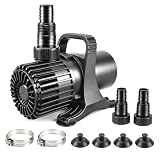
- AMPHIBIOUS - Our fully submersible water pump is functions at 100% in fountains, ponds, aquariums, hydroponics, and other small waters. Our functional and versatile design can be used for diving or land, giving users needed flexibility.
- DURABLE - Our water pump is made from premium quality materials,the shaft and drive ring piece are made from silicon carbide material featuring anti-dry safety protection. This ensures our product reliably services your fish tank, aquarium, and hydroponic needs with less risk of accident damage.
- ULTRA QUIET & OVER-HEAT PROTECTION - Our pond pump is designed to be nearly silent. It features a unique inlet mesh cover that prevents garbage suction as well and reduces motor sounds, ensuring your water bodies are quietly circulated and maintained.Engineered for 24-hour continuous use, while a heat-overload sensor prevents a burnout
- ENERGY-SAVING - As compared with other pumps, less power consumption with higher flow rate (1700GPH,6435LPH).But please consider the friction of installation will to the loss of energy.
- Note: Our pump requires routine maintenance, if your water is very dirty, please check the maintenance video and clean the pump rotor every month. If the routine maintenance is neglected, warranty is null and void.
Arrange a prompt professional assessment if you find:
- visible seepage or muddy discharge;
- sinkholes, new cracks, settlement, or depressions;
- significant gully erosion;
- a damaged, displaced, or leaking pipe;
- repeated emergency-spillway flow;
- a spillway that directs water toward the dam; or
- erosion, wetness, or boils at the downstream toe.
For these conditions, contact a pond spillway inspection engineer or other qualified dam-safety or geotechnical professional familiar with your state’s requirements. New construction, substantial alteration, and major repairs may also require a licensed engineer, dam-safety permit, environmental approval, water-rights review, floodplain compliance, or downstream notification, depending on the jurisdiction.
Emergency response: when water is rising or the dam is actively eroding
Treat the following as an emergency: rapidly rising water, water flowing over the dam crest, active erosion of the embankment, a widening breach, or a sudden muddy jet downstream. Keep people, vehicles, livestock, and pets away from the dam and spillway. Do not enter flowing water or attempt an improvised repair while the structure is unstable.
Contact the appropriate emergency-management or dam-safety authority and follow the site’s emergency action plan if one exists. Document conditions only from a safe location. Sandbags, pumps, or temporary diversion may be appropriate in some situations, but their use should follow professional or emergency-authority direction; an improvised diversion can redirect flow into the embankment or worsen a breach.
Permits and standards: the numbers are local
NRCS national conservation standards provide a technical framework, but NRCS expressly cautions that the national standard should not be used by itself to plan or install a conservation practice. State and local Field Office Technical Guide criteria may be more restrictive.
Before construction or alteration, confirm requirements with the local conservation district, NRCS field office, state dam-safety agency, engineer, and other authorities that regulate the site. The applicable rules can depend on dam height, storage, downstream hazard, drainage area, environmental impacts, water rights, and floodplain location. A general online diagram cannot establish that a particular pond is safe or compliant.
Frequently Asked Questions
Can the principal spillway replace the emergency spillway?
Only in the limited case where the principal spillway has been demonstrated to be sufficiently large, unobstructed, and capable of passing the required design hydrograph without overtopping the dam. Do not make that determination from pipe diameter alone; it depends on the complete site-specific hydraulic and dam-safety design.
How often should a pond spillway be inspected?
Inspect it at least annually, after unusually large storms, and whenever water has flowed through the emergency spillway. Also inspect after construction, land-use, animal, or sediment changes that could affect the pond or watershed.
Can I use a decorative waterfall spillway on a farm pond?
A decorative waterfall spillway is suitable for pumped, recirculating landscape water features, not as a substitute for an engineered auxiliary spillway or principal dam outlet. Farm-pond overflow must be designed for watershed runoff, debris, erosion resistance, and downstream safety.
What should I do if water is overtopping the dam?
Keep people and animals away, do not enter flowing water or attempt an unsafe repair, and contact the appropriate emergency or dam-safety authority. Follow the site’s emergency action plan if one exists, particularly if erosion is active or a breach is forming.
Crashes, No Sound, or Screen Glitches?
Random freezes, missing sound and display glitches usually trace back to one bad driver. Find and replace yours safely.Free scan · under a minuteWindows Errors? Fix Them Before They Spread
Repair common Windows errors and clear accumulated junk for a smoother, more stable PC - no reinstall needed.Free scan · no reinstallThe Bottom Line
A safe pond spillway is a designed flow path, not simply a pipe, trench, or pile of rocks. Keep the principal outlet clear, provide a properly located auxiliary spillway where required, maintain continuous erosion-resistant cover, control burrowing animals and livestock, and inspect after major storms. Because storm criteria and dam-safety rules are site- and jurisdiction-specific, use a qualified professional before changing elevations, excavating, lining, or repairing a dam spillway.
Quick Recap
Product prices and availability are accurate as of the date/time indicated and are subject to change. Any price and availability information displayed on Amazon at the time of purchase will apply.




