Recommended Free Tools
You do not need a humidifier by default. Consider using one if a hygrometer shows that your indoor air is below the useful humidity range and you are experiencing dry-air discomfort. Aim for 30%–50% relative humidity, and reduce or stop humidifying if moisture appears on windows, walls, or other surfaces.
A humidifier can add moisture to dry air, but it does not cure a cold or other underlying condition. Its benefits depend on the room’s humidity and careful upkeep: dirty water or excessive moisture can create their own problems.
As an Amazon Associate I earn from qualifying purchases.
When does a humidifier make sense?
Start with two questions: Is the air in the room actually dry, and are you experiencing symptoms that dry air can aggravate? Dry indoor air can irritate the sinuses and contribute to bloody noses and cracked lips. Adding moisture may soothe these common discomforts, but it is not a remedy for every cause of nasal, skin, or breathing symptoms.
A humidifier is most reasonable when measured humidity is low and dry-air discomfort is present. If humidity is already within the target range, running one automatically may push the room into excessive dampness without offering a clear benefit. A room’s humidity can vary, so measure the space where you spend time rather than assuming the whole home has the same conditions.
#1 Best Overall

- Face Icon Comfort Indicator: Humidity temperature gauge features face icons to indicate DRY/COMFORT/WET air conditions, quickly informs you how to adjust your humidifier or dehumidifier to achieve optimal comfort.
- Highly Accurate Sensors: This temperature humidity sensor features a high accuracy of +/-1°F/°C and +/-2% to 3%RH, making it ideal for measuring dynamic environments like greenhouses.
- Fast Refresh Rate: This digital indoor thermometer refreshes every 10 seconds to provide the latest updates for temperature and humidity readings.
- Compact Display with Large Digits: This digital thermometer indoor outdoor features a compact LCD display with large bold digits, allowing you to read the room thermometer indoor from any angle and distance.
- Mini Size, 3-Way Mount, Use Anywhere: Compact mini humidistat with 3 placement options — Tabletop Stand / Magnetic Back / Hanging Mount, easily fits a nursery, baby room, craft room, grow tent, greenhouse, chick brooder, RV, outdoor patio, kitchen, guitar room, office or cellar.
Check the room before buying or turning one on
Use an indoor hygrometer to measure relative humidity. Some humidifiers include a humidistat, which measures humidity and may let you set a target, but a separate humidity monitor can still help you check the room’s actual conditions. Measurement is useful both before use and while the device is running: it helps establish whether added moisture is needed and whether the room is becoming too damp.
If humidity is low and you have dry-air discomfort, a humidifier is an option—not a requirement. If the reading is already in range, first consider whether the symptoms may have another cause rather than assuming that more moisture will help.
What humidity level should you aim for?
The practical target is 30%–50% relative humidity. Mayo Clinic describes 30%–50% as ideal for the home, and the U.S. Environmental Protection Agency (EPA) advises against humidifying above 50%. EPA’s broader guidance on indoor particulate matter says to keep humidity below 60% if possible, ideally between 30% and 50%; for deciding whether and how to run a home humidifier, use the more conservative 50% ceiling in its dedicated humidifier guidance.
Rank #2

- Wellness Indicator: This humidity meter with humidity level icon indicates air conditions - DRY/COMFORT/WET, allowing this humidity sensor to ensure you’re always aware of changes to your home/household with just a quick glance
- High Accuracy & Quick Refresh Rate: This inside thermometer features a high accuracy of +/-2 to 3%RH and +/-1°F, making it ideal for measuring fluctuating readings like those found in a greenhouse, data measurements are updated every 10 seconds to give you the latest updates on your environment
- High & Low Records: This hygrometer digital thermometer displays high/low temperature and humidity levels to allow you to make proper comparisons using your home’s data
- Healthier Home & Environment: This thermometer hygrometer with temperature and humidity monitor ensures proper indoor humidity that achieves important health benefits for skin and allergen, can also serve as a refrigerator thermometer, freezer thermometer, reptile thermometer, soil thermometer, humidor hygrometer, cigar hygrometer, and more
- Practical Design: This indoor room thermometer features a tabletop stand and a magnetic back, place the temperature monitor on your counter or fridge; °F/°C selector; Includes 1 AAA battery
These percentages are relative humidity readings, not a measure of how much water is in the tank. Follow the room reading rather than choosing a setting based only on how much mist you see. If the device has no humidistat, check the room periodically with a hygrometer and adjust its output or run time accordingly.
Signs you are adding too much moisture
Condensation on windows, walls, or pictures is a warning that moisture is accumulating. If it appears, lower the humidifier’s setting, move the unit, or reduce or stop use. Keep nearby surfaces and absorbent materials dry. A stuffy-feeling room is another reason to check the humidity rather than continuing to run the device unchanged.
Excess indoor moisture can contribute to condensation, mold, bacteria, and dust mites. A humidifier is not improving the room if it is making surfaces damp or allowing humidity to climb beyond the recommended range.
Rank #3

- Face Icon Comfort Indicator: Humidity temperature gauge features face icons to indicate DRY/COMFORT/WET air conditions, quickly informs you how to adjust your humidifier or dehumidifier to achieve optimal comfort
- Highly Accurate Sensors: This temperature humidity sensor features a high accuracy of +/-1°F/°C and +/-2% to 3%RH, making it ideal for measuring dynamic environments like greenhouses
- Fast Refresh Rate: This digital indoor thermometer refreshes every 10 seconds to provide the latest updates for temperature and humidity readings
- Compact Display with Large Digits: This digital thermometer indoor outdoor features a compact LCD display with large bold digits, allowing you to read the room thermometer indoor from any angle and distance
- Multiple Placement Options: This humidistat has 3 placement options - Tabletop Stand / Magnetic Back / Hanging Mount, place the wall thermometer anywhere you wish such as living room, baby room, kitchen, greenhouse, guitar room, office or cellar
What a humidifier can—and cannot—do for a cold
Cool mist may ease a stuffy nose, cough, or congestion during a cold. Mayo Clinic notes that more research is needed, so treat this as a possible symptom benefit, not a proven cure or a substitute for medical care. A humidifier does not treat the virus or establish why someone is coughing or congested.
The Tool Desk
Outbyte Driver Updater FREEScan for outdated or missing drivers - takes under a minuteDriver Scan →Outbyte PC Repair FREEClear out junk files and repair common Windows errorsFree Scan →Heated humidified air does not appear to provide the same cold-symptom result, according to Mayo Clinic. Choosing warm mist therefore should not be based on an assumption that hotter vapor is more effective. If symptoms persist, worsen, or concern you, seek appropriate medical advice rather than relying on a humidifier.
Which type of humidifier should you choose?
Common categories include central humidifiers, ultrasonic units, impeller units, evaporators, and steam vaporizers. They all add moisture, but the practical differences include suitability for the space, how humidity is measured or controlled, cleaning access, filter requirements, how the unit handles minerals in water, and whether it uses hot water or steam. The available evidence does not establish one type as best for every home.
Rank #4

- This 2-pack indoor hygrometer thermometer helps monitoring room temperature and humidity in real time. Temperature range: -58 ~ 158 ℉( -50 ~ 70℃ ), Humidity range: 10%~99%
- Separate temperature and humidity sensors ensure a more accurate reading over time. After turning on, its reading will rapidly fluctuate in seconds for 3~5 minutes until stabilize at a value closest to your room air conditions. Temperature accuracy: +/-2℉ (+/-1℃), Humidity accuracy: +/-5%RH. Design for home use
- The bigger digital letters on the larger LCD screen make it easier to read from any angle and distance. It comes with CR2032 button battery, providing long-last using. You can turn it off to extend battery lifespan when not in use
- It features durable kickstand and strong magnets. Simple to place it wherever you want. Stick on metal surface, place on bedside table, or just put on top of square doorbell on the wall. You will be proud to use this great product for years to come
- Pack of 2, worth every cent! One for bedroom table, another one for baby nursery, living room, kitchen refrigerator, sauna, bathroom, warehouse, greenhouse, garage, vehicle, guitar room, basement, greenhouse, vacuum-seal jar, jewelry box, gun case, egg incubator, reptile terrarium, tortoise house, aquarium, hermit crab habitat, snake / frog tank, crawl pet terrarium, cellar, or office
| Type or group | What is established | Decision point |
|---|---|---|
| Ultrasonic and impeller units | EPA says these types can efficiently disperse minerals from tap water into the air. | Consider water mineral content and the manufacturer’s water guidance. |
| Steam vaporizers and warm-mist devices | They involve hot water or steam, which can burn children. | Avoid placing them where a child could reach or tip them; use cool mist around children. |
| Central humidifiers, evaporators, and other cool-mist units | The sources identify these as humidifier types but do not establish a universal performance advantage or a single cleaning or filter requirement for each category. | Check the specific model’s room suitability, cleaning instructions, filter needs, and humidity controls. |
Warm-mist and cool-mist devices can both humidify air. The clearest safety distinction in the guidance is the burn hazard associated with hot water and steam, not evidence that one category is universally more effective. Compare the unit’s care requirements and controls with the way you will use it, not just its mist label.
Is a cool-mist humidifier safer for a child?
Yes, when choosing between mist types for a child, cool mist avoids the hot water and steam burn hazard of warm-mist devices. Mayo Clinic advises using cool-mist humidifiers for children. Place any device where a child cannot reach, pull down, or spill it, and follow the manufacturer’s safety directions.
Quick wins for a faster PC:
Repair Windows errors before they cause bigger problemsFix Now →Scan for outdated or missing drivers - takes under a minuteDriver Scan →A humidifier may be used to make the air more comfortable during a child’s cold, but it should not be presented as treatment for the illness. The possible congestion or cough relief is limited evidence, and the device does not replace appropriate medical care.
Best Value
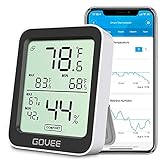
- Smart Features: The Govee Wireless Thermometer Hygrometer supports all basic functions as well as smart functions such as remote monitoring and temp humidity graphs. Our humidity meters are reliable and easy to use for homes, greenhouses and more.(Only supports 164ft Bluetooth connection)
- High Accuracy and Fast Refresh Time: With the Swiss-made smart hygrometer sensor, the temperature is accurate up to ±0.54°F while the humidity is ±3%RH, a 40% increase. Up to 2S refresh speed always gives you the lastest changes of temp and humidity.
- Upgraded Display: This room humidity gauge is easy to read due with a 3-inch bright LCD screen with large numbers. The max/min temp humidity records and the comfort indicators (dry/comfort/wet) will keep you aware of the indoor humidity at any time.
- Smart App Alerts: You'll receive an instant alert once the temperature or humidity is out of its preset range. Know the status of your bedroom, baby room, wine cellar, basement, plant nursery or other areas, even when you're not beside the device.
- Free Data Storage: Make plans according to historic temp and humidity data. The 20-day curve graphs provide a clear data-changing track. You can export data from the past 2 years and convert it to a CSV format. Stay on track of your daily routine.
What water should you use?
Water choice matters because some humidifiers disperse minerals as well as moisture. EPA specifically notes that ultrasonic and impeller units can efficiently disperse minerals from tap water. Mineral content may contribute to scale and deposits in the device, and the particles may be released into the room.
Mayo Clinic advises distilled or demineralized water and frequent water changes for portable units. That is useful guidance, but it does not mean every humidifier requires distilled water: check the device’s instructions, since requirements and compatibility vary. Where the manufacturer permits it, distilled or demineralized water can reduce mineral dispersal and scale compared with mineral-rich tap water.
EPA says the possible health effects from dispersal of microorganisms and minerals are not fully understood and recommends prudent exposure reduction. This is a reason to choose water thoughtfully and maintain the unit—not grounds to claim that every use of tap water causes illness.
How to clean and maintain a portable humidifier
Standing water and dirty tanks or filters can support bacterial or mold growth. A poorly maintained device may release microorganisms into the air. EPA’s routine for portable humidifiers is to empty, dry, and refill daily, and clean every third day. The manufacturer’s instructions still matter, especially for cleaning agents, filters, and replacement parts.
- Every day: Empty the tank, wipe its surfaces dry, and refill it with the water recommended for your model.
- Every third day: Clean the portable humidifier, following its manual and EPA guidance. Remove scale and film rather than allowing deposits to build up.
- After using a cleaning agent: Rinse thoroughly so that cleaning chemicals are not dispersed into the room air.
- For filters and parts: Follow the manufacturer’s directions for inspection, cleaning, and replacement; do not assume all models use the same parts or schedule.
Console and central humidifiers may have different care requirements, so use their device-specific instructions rather than applying the portable-unit routine without checking. If you cannot maintain a unit as directed, its potential comfort benefit may not justify the added maintenance and exposure concerns.
When should you lower output or stop using it?
- Humidity reaches 50% or higher: Reduce or stop humidifying rather than pushing the room beyond EPA’s dedicated home-humidifier ceiling.
- Condensation or dampness appears: Lower the setting, relocate the device, or stop use; dry nearby surfaces and materials.
- Respiratory symptoms seem linked to operation: Stop using the humidifier and contact a physician, even if you have followed maintenance guidance.
- You cannot keep it clean: Pause use until you can follow the model’s cleaning and water instructions.
People with asthma or allergies should consult a healthcare professional before using a humidifier. If use appears to trigger or worsen respiratory symptoms, do not keep running it while waiting to see whether the problem resolves.
Quick Recap
A simple decision checklist
- Measure the room’s relative humidity with a hygrometer.
- If the reading is below 30% and you have dry-air discomfort, consider a humidifier rather than treating it as a default appliance.
- Use humidity readings to guide operation, keeping the room in the 30%–50% range and not humidifying above 50%.
- Choose a type based on the room, its controls, cleaning and filter needs, water guidance, and whether children could encounter hot water or steam.
- Empty, dry, refill, and clean the unit on the recommended schedule, and stop or adjust use if moisture or associated respiratory symptoms arise.
Sources and guidance
- U.S. Environmental Protection Agency, Use and Care of Home Humidifiers (June 2022 revision).
- U.S. Environmental Protection Agency, Sources of Indoor Particulate Matter (PM) (accessed October 12, 2026).
- Mayo Clinic, Humidifiers: Ease skin, breathing symptoms (July 12, 2026).
- Mayo Clinic, Warm-mist versus cool-mist humidifier: Which is better for a cold? (May 11, 2023).
Product prices and availability are accurate as of the date/time indicated and are subject to change. Any price and availability information displayed on Amazon at the time of purchase will apply.
Do these 3 things before closing this tab:
1Fix the driver behind crashes, sound loss and screen glitches2Repair Windows errors before they cause bigger problems3Scan for outdated or missing drivers - takes under a minute



