Quick wins for a faster PC:
Scan for outdated or missing drivers - takes under a minuteDriver Scan →Repair Windows errors before they cause bigger problemsFix Now →A French drain or footing drain collects water and carries it toward an outlet; a sump pump lifts water from a pit and discharges it elsewhere. You may need one, the other, or both. The right choice depends on where the water is coming from, how it moves across or beneath the site, whether gravity can carry it to a suitable outlet, and what local rules allow. If the problem is roof runoff or water flowing over the ground, begin by correcting surface drainage rather than treating a buried drain or pump as the first answer.
What each system does
The key distinction is collection versus discharge. A drain provides a path for water to enter and travel through. A sump pump moves water that has reached a sump pit. Neither term describes a complete solution in every setting: the water still needs a route from its source to the collection point, and from that point to a suitable place away from the building.
As an Amazon Associate I earn from qualifying purchases.
French drain
A French drain is typically a trench filled with gravel and lined with filter fabric, with perforated pipe used to collect and convey water. It is commonly used to intercept water moving through soil or to manage water in a yard. Its location and depth depend on the water problem it is intended to address. The term alone does not tell you whether a drain is for a yard, a foundation, or another site condition.
The Tool Desk
Outbyte PC Repair FREERepair Windows errors before they cause bigger problemsFix Now →Outbyte Driver Updater FREEScan for outdated or missing drivers - takes under a minuteDriver Scan →Footing drain
A footing drain is a more specific kind of foundation drainage: it runs around or alongside the foundation footing to intercept water near the foundation. It may use drain tile or perforated pipe, gravel, and filter fabric. The PNNL Building America Solution Center describes a continuous perimeter drainage path that slopes toward a collection point and has a suitable final outlet. That foundation-specific purpose distinguishes a footing drain from a yard drain, even though the materials can be similar.
#1 Best Overall

- Efficient Sump Pump: Aquastrong sump pump with 1HP powerful motor. Draining water up to 4500GPH Per Hour( 75 gallons per minute) at 5ft. Lift water up to 30ft of vertical height
- Portable Design: Plug in to play while unplug to stop. Bottom suction design filters debris and removes water down to 1/5 inch from the surface. It can handle up to 1/5″solids , ideal for draining hot tub and flooded basement window wells
- Easy Installation: 1-1/4'' NPT discharge comes with 1-1/2'' elbow adapter and snap coupling adapter of 3/4'', 1'' or 1-1/4'', which makes Submersible pump easy to install. 10ft UL power cord provides safety and convenience
- Safe & Durable: The submersible water pump is made of reinforced engineering thermoplastic casing resists corrosion and abrasion. Quality mechanical seal prevents leakage effectively for long service life. Built-in thermal overload protector will keep the motor from burning out when dry running
- Quality Service: Aquastrong customer service provides professional technical supports, keeps your water system stable and worry-free
Sump pump
A sump pump sits in a sump pit and pumps water out through a discharge route. It is a mechanical way to move collected water when gravity alone cannot carry it to an appropriate outlet. A pump does not, by itself, intercept water across a yard or around a foundation; it needs water to reach the pit first, by a drain system or another designed collection path.
Start by identifying where the water comes from
Water in a basement or wet area can have more than one source. DOE and Oak Ridge National Laboratory distinguish surface drainage from subsurface drainage, while Illinois Department of Natural Resources guidance notes that basement water can have several possible causes. Identifying the source matters because a system aimed at the wrong water path may not address the actual problem.
| Observed problem | First question to answer | What the distinction means |
|---|---|---|
| Water running across the ground or collecting near the house during rain | Is roof runoff or surface flow being directed toward the building? | DOE/ORNL identifies grading, gutters, and downspouts as surface-drainage measures. Check those pathways before assuming that a buried drain or sump is the needed fix. |
| Water appearing through or near the foundation | Is water moving through soil toward the foundation, and is there a functioning collection route? | A footing drain may intercept water at the foundation. Whether it needs to lead to a sump or can discharge by gravity depends on the site and outlet. |
| Water collecting in a sump pit | Does the pit have a suitable working discharge route, and is the pump operating? | The pump’s job is to discharge water from the pit. A blocked intake, power loss, or overload can interfere with that job. |
| Water after a plumbing leak, sewer backup, or flooding | Has the specific source been identified and stopped or addressed? | These are not interchangeable with routine roof runoff or groundwater problems. Do not assume that a drain or pump alone resolves every cause of water intrusion. |
These observations are a starting point, not a diagnosis. The same visible symptom can have different causes, and site conditions such as soil, slope, seasonal groundwater, flood exposure, and foundation design affect what drainage arrangement is suitable.
Rank #2

- Efficient Design - This small submersible pump uses a top suction design that eliminates air lock and minimizes clogging from debris at the bottom of the sump pit. Install in about 15 minutes with no need to drill a weep hole.
- Tough And Durable - A corrosion-resistant epoxy coated steel motor housing, stainless steel fasteners a cast-iron volute give this small pump long life in tough sump pump applications
- Quality You Deserve - This corded electric water pump is proudly assembled in the USA and warrantied for 3 years. Its dependable, efficient, ultra-quiet performance provides quality you can trust
- Indoor Use Only - This 1/3 HP WAYNE sump pump supports basement water removal during heavy water flow from rain or snow melting. Model CDU790 can pump up to 4,600 GPH to help keep your basement dry
- Tested Vertical Float Switch - Integrated float switch tested to 1 million cycles for dependable automatic operation
When a drain, pump, or combination makes sense
Consider a drain when water needs to be intercepted and conveyed
A French drain may be relevant when the problem is water moving through a yard or soil and the plan is to collect it along a trench and route it away. A footing drain is the relevant concept when the collection path needs to run around or alongside the foundation. In either case, the drain must connect to an outlet that can accept the water. Installing a collection trench without resolving where its water goes leaves a central part of the system unanswered.
Consider a sump pump when collected water must be lifted
A sump pump is appropriate to consider when water reaches a pit and needs mechanical discharge to a suitable destination. The pump solves the lifting and discharge part of the path, not the upstream collection problem. If water is reaching a basement but not the sump, for example, the question is not only whether the pump runs; it is also whether the water has a designed route into the pit.
Consider both when a drain needs a pumped outlet
A common combined arrangement is for foundation drains to collect groundwater and carry it to a sump pit, after which the pump sends it away from the house. PNNL describes perimeter drainage connected to a sump pit; DOE/ORNL describes subsurface drainage systems that can lead either to a sump or to daylight. This is why “French drain or sump pump?” is not always an either-or choice: one component may collect the water and the other may discharge it.
Rank #3
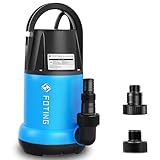
- EFFICIENT DRAINAGE: Utility pump with 1HP power motor for Draining water up to 4600 GPH( 76 GPM) at 5ft. Lift water up to 31ft of vertical height. Removing water to 1/5" of the surface.
- PORTABLE PUMP: Plug in to play while unplug to stop. Sump pump filters debris and removes water down to 1/5 inch from the surface. Handle up to 1/5″solids , ideal for pool pond draining hot tub and flooded basement window wells
- 4 DETAILS: 10FT power cord for greater range of use;Removable bottom easy to clean and maintain pump life; Rounded handle prevents cuts and comfortable to use; Thermoplastic housing for corrosion resistant and durable.
- QUICK TO CONNECT: Comes with a NPT 1-1/2" discharge size, a NPT 3/4" garden hose adapter and a hose adapter fits Ф1-1/2", Ф1" or NPT 1" inch hose. You can use different sizes of hoses depending on the flow
- ENERGY SAVING & SAFETY: 100% manufacturer tested, low noise and energy saving. Built-in automatic thermal overload protects the motor from burning out when dry running
Consider gravity discharge if the property has a suitable outlet
A drain may be able to discharge by gravity to daylight when the site’s elevation and layout permit a suitable route. Depending on the property, possible destinations discussed in the building guidance include daylight, a suitable storm sewer, a drywell, or a sump. Availability is not the same as permission: local authorities may restrict discharge destinations, and a site must provide a workable path. If gravity is not practical and the water is routed to a pit, a pump may be part of the design.
How to make the decision in a useful order
- Trace the water before choosing equipment. Note where it first appears, when it appears, and whether it seems to come from roof runoff, surface flow, soil near the foundation, a sump pit, or another source. If the cause is unclear, avoid treating a visible symptom as proof that one particular system is needed.
- Check surface-water management first when the problem follows rain or surface flow. Review how grading, gutters, and downspouts direct water around the property. These are surface-drainage measures identified by DOE/ORNL. A subsurface system should not be used as a substitute for understanding where surface water is coming from.
- Decide where water should be collected. For water moving through a yard, a French drain may be considered; for water at the foundation, assess whether a footing-drain path is needed. A pump is not a replacement for this collection decision.
- Identify a lawful, workable outlet before settling on the system. Determine whether a gravity route to a suitable destination is possible. If not, consider whether the drainage path should lead to a sump pit and be discharged by a pump. Confirm permitted destinations with the relevant local authority rather than assuming a particular outlet is allowed.
- Plan the complete route. Follow the water from the collection area, through any pipe or drain, to the final discharge location. The design should not simply move water to a point beside the foundation where it can return through the soil.
- Account for failure conditions. If the design depends on a sump pump, consider how the system would respond to a blocked intake, heavy inflow, or loss of power. The appropriate pump and backup plan depend on the property and require site-specific judgment.
- Get an evaluation when the source, outlet, or building implications are uncertain. Persistent intrusion, structural concerns, or uncertainty about discharge calls for a qualified professional familiar with the site and applicable local requirements.
Why outlet design and installation details matter
A drain is not effective simply because it contains pipe and gravel. PNNL’s footing-drain guidance describes a continuous drainage path, clean washed gravel, filter fabric, a slope toward a collection point, and an appropriate final outlet. These pieces work as a system: the trench and pipe collect and convey water, the slope supports movement toward the collection point, and the outlet determines where the water goes next.
Discharge location is especially important. PNNL warns that discharging water next to the foundation can recycle it through the drainage system. In practical terms, the end of the route is part of the design, not an afterthought. A proposed destination also has to be suitable for the property and allowed under local rules; guidance for one property cannot establish what is permitted on another.
Rank #4
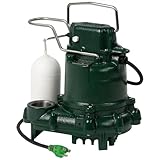
- Automatic with float activated switch
- Non-clogging vortex impeller design
- Durable cast iron switch case, motor, and pump housing
- Cast iron switch case, motor, and pump housing, plastic base
For a sump arrangement, the pit and pump likewise need to fit into the full drainage route. PNNL describes the sump pump as installed in the basement or crawlspace floor to collect water from foundation drainage piping and pump it away from the house to a storm sewer or drywell. The quotation describes one system layout, not a universal requirement that every property use those destinations.
Independent reader supportYour contribution helps us test, update, and keep practical guides available for everyone.Plan for sump-pump interruptions and overload
A pump depends on an unobstructed intake and power. Illinois IDNR discusses sump-flooding scenarios and operational responses, including clearing the intake and backup electricity. A pump may also be overwhelmed by the amount of water arriving. These failure modes are reasons to consider access, maintenance, backup arrangements, and discharge design as part of the system rather than assuming that installing a pump removes all risk.
Free tools Windows power users keep installed
One-click scans. No signup required.
- Blocked intake: Water may not enter or pass through the pump as intended. The Illinois guide discusses clearing the intake as an operational measure.
- Power loss: A pump that relies on electrical power may stop operating during an outage. Backup electricity is among the measures discussed in the Illinois guidance.
- Excess inflow: A system can be overwhelmed. A backup plan does not establish that a pump is correctly sized or that the drainage route is adequate; those questions require site-specific assessment.
- Unsuitable discharge: A working pump can still send water to an unsuitable or impermissible location. Confirm the destination and route, not only whether the pump turns on.
These are planning considerations, not a pump-sizing formula or a guarantee that a particular backup arrangement will protect a particular home. The available guidance does not establish a universal pump capacity or a single best backup setup.
Best Value

- High-Capacity 3/4 HP Motor: Pumps up to 5,490 gallons per hour for reliable basement water removal during heavy storms
- Heavy-Duty Cast Iron & Stainless Steel Construction: Designed for long-lasting durability in tough sump conditions
- Integrated Vertical Float Switch: Provides dependable automatic operation while fitting into narrow sump pits
- Top Suction Anti-Airlock Design: Helps prevent clogging and eliminates the need for a weep hole during installation
- Assembled in the USA with 5-Year Warranty: Built for dependable, ultra-quiet performance
Common mistakes to avoid
- Buying a pump before determining how water reaches the pit. The pump discharges collected water; it does not gather water across the yard or foundation perimeter on its own.
- Treating every wet basement as a groundwater problem. Surface runoff, plumbing leaks, sewer backup, and flooding are different possible sources. Establishing the source comes before selecting a drainage component.
- Using “French drain” and “footing drain” as though they always mean the same layout. Both may use similar materials, but a footing drain specifically serves foundation drainage; a French drain can be a yard solution or another subsurface collection path.
- Stopping the design at the pipe or pump. Every arrangement needs a complete path to a suitable destination. Sending discharge back beside the foundation can recycle water.
- Assuming a gravity outlet or sewer connection is available and allowed. Elevation, site layout, and local discharge rules determine what can be used.
- Assuming a generic system will solve every water problem. No drain or pump configuration is established as a universal remedy for all basement-water problems.
When to bring in a building or drainage professional
General drainage guidance cannot diagnose a particular property. A qualified, appropriately experienced professional can evaluate the source of water, soil and groundwater conditions, grading, foundation details, possible gravity outlets, the proposed discharge destination, and any local requirements. Seek site-specific evaluation if water intrusion persists, the foundation or other structure raises concerns, the water source is uncertain, or there is no clear permitted outlet.
Ask the professional to explain the proposed route from collection to final discharge, why that route fits the observed source, and what the system depends on during heavy inflow or power loss. Those questions keep the decision focused on the whole water path rather than a product in isolation.
What the evidence does—and does not—establish
DOE/ORNL, PNNL, Fairfax County conservation guidance, and Illinois IDNR explain system functions, example layouts, installation considerations, and failure modes. They do not provide a head-to-head performance statistic proving that French drains or sump pumps are universally more effective, and they do not establish that either option alone will solve every basement-water problem. The defensible decision is site-specific: identify the source, determine how it should be collected, choose a suitable gravity or pumped outlet, and verify local discharge requirements.
Do these 3 things before closing this tab:
1Fix the driver behind crashes, sound loss and screen glitches2Clear out junk files and repair common Windows errors3Scan for outdated or missing drivers - takes under a minuteQuick Recap
Product prices and availability are accurate as of the date/time indicated and are subject to change. Any price and availability information displayed on Amazon at the time of purchase will apply.




