Quick wins for a faster PC:
Clear out junk files and repair common Windows errorsFree Scan →Fix the driver behind crashes, sound loss and screen glitchesFind Drivers →Yes—termite bait systems can suppress or eliminate subterranean termite colonies, but they are not instant barriers. Termites must find a station, consume the cellulose bait, and carry its slow-acting insecticide through the colony. Results depend on termite species, foraging patterns, station placement, product label, weather and soil conditions, and continued professional inspection. An untouched station does not prove that termites are gone.
How termite bait systems work
A bait system uses cellulose material—the same basic food source termites seek—combined with a slow-acting insecticide. Common active ingredients discussed by the U.S. Environmental Protection Agency (EPA) include diflubenzuron, hexaflumuron and noviflumuron. These compounds interfere with insect development or activity rather than killing every termite immediately.
As an Amazon Associate I earn from qualifying purchases.
Worker termites discover the bait while foraging, feed on it and share food with nest-mates. Because the effect is delayed, exposed workers have time to return to the colony. The intended outcome is progressive suppression of the colony or population, not a quick kill at the station.
Do these 3 things before closing this tab:
1Clear out junk files and repair common Windows errors2Fix the driver behind crashes, sound loss and screen glitches3Repair Windows errors before they cause bigger problemsSystems differ in how bait is introduced. Some place bait in stations from installation. Others begin with wood or another monitor; when termites are detected, the monitor is replaced with active bait. Above-ground stations can be installed where termites are directly accessible inside a structure, while in-ground stations are placed around the building. The product label and local rules determine the permitted configuration.
#1 Best Overall
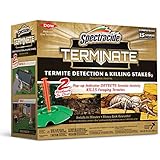
- Two termite products IN one: pop-up indicators detect termite activity, and the stakes kill foraging termites
- Installs IN minutes: place stakes in the ground 2 to 3 feet away from your home and no more than 10 feet apart
- Pop-up indicator: check the stakes for termite activity when the pop-up indicator is seen
- Complete kit: includes 15 stakes with locator shields, instruction booklet and digging tool
What the research actually shows
Published evidence supports baiting in the situations studied, but no single percentage predicts the result at every property. The strongest figures come from particular products, termite species, locations and study designs.
| Evidence | Reported result | How to interpret it |
|---|---|---|
| Annual Reviews article, “Development of Baits for Population Management of Subterranean Termites” (2019), summarizing 34 hexaflumuron field studies conducted from 1995 to 2003 | At least 158 of 165 baited colonies or populations were reported eliminated (at least 96%). | This is a historical synthesis of specific studies, not a guaranteed present-day success rate for every bait or house. |
| Commercial-service survey reported in that 2019 review, covering applications in 2003 | Successful control was recorded at 1,414 of 1,456 sites (98.6%). | The figure reflects that survey and its service conditions; it is not an independent contemporary guarantee. |
| California Structural Pest Control Board and University of California project, 15 single-family homes in the San Francisco Bay Area and greater Los Angeles area, followed for two years; UC summary published 2023 | None of the homes became infested during the study period despite significant termite pressure. | The sample was small and geographically limited, so the result should not be generalized to every climate, house or system. |
| Peer-reviewed 2021 study of novaluron bait | Reported evidence of colony elimination for Reticulitermes flavipes and a feasible area-wide strategy in the settings tested. | The finding applies to the tested bait, species and locations. |
The EPA efficacy guideline explains why these qualifications matter: product performance should be evaluated with both laboratory and field experiments, and field work should identify termite species and continue monitoring activity after treatment. A laboratory result or one successful property cannot establish universal effectiveness.
How long does termite bait take to work?
There is no fixed number of days. The first clock is discovery: termites must encounter the station. In the California project, some stations were not found until six months after installation. In pooled first-year observations, winter-installed stations were intercepted about 100 days faster than summer-installed stations. That seasonal difference was observed in California and should not be treated as a rule for other climates.
Recommended Free Tools
Rank #2

- Trelona ATBS Annual Bait Stations give ongoing structural protection through colony elimination; however, conditions such as competing insects, floods, the presence of alternative food sources, and cold weather may alter complete structural protection
After discovery, colony suppression takes additional time because the active ingredient is deliberately slow acting. A provider should be able to tell you when stations were found, when bait was installed or replaced, how much bait was consumed and what observations indicate declining activity. “No termites seen today” is not the same as documented colony elimination.
Do bait stations stop termites from entering a house?
Usually, no. A bait system is not an instant treated perimeter that blocks every termite from crossing into a structure. It affects termites that encounter and feed on the bait. Other workers may continue foraging elsewhere, and a colony can remain active while a particular station is untouched.
That does not make an inactive station useless. It may mean termites have not reached that location, are using another route, or have temporarily shifted their foraging. Inactivity must be interpreted alongside inspection findings, evidence of structural activity and the service plan’s monitoring records.
Rank #3

- TWO TERMITE PRODUCTS IN ONE: Pop-up indicators detect termite activity, and the stakes kill foraging termites.
- REPLACEMENT STAKES: Includes 5 stakes with locator shields – designed to replace termite stakes already in use with the Spectracide Terminate Termite Detection & Killing Stakes2 complete kit (sold separately).
- INSTALLS IN MINUTES: Place stakes in the ground 2 to 3 feet away from your home and no more than 10 feet apart.
- POP-UP INDICATOR: Check the stakes for termite activity when the pop-up indicator is seen.
If live termites, fresh shelter tubes, damaged wood or repeated swarmers are present inside the building, arrange a qualified inspection promptly. The inspector can assess whether baiting alone is sensible or whether a different or combined treatment is needed to address immediate structural activity.
Installation and servicing: the steps that determine performance
Stations are not a set-and-forget product. Placement, inspection and bait replacement are part of the treatment itself.
- Obtain a complete inspection. Ask the inspector to identify termite evidence, moisture or construction conditions that could affect foraging, likely entry points and, where possible, the termite species.
- Choose a system permitted for the property. Confirm whether the design uses monitors first, bait from the outset, above-ground stations, in-ground stations or a combination. The current local product label controls placement and use.
- Install stations according to the label. In the California study, the evaluated in-ground labels used spacing of no more than 20 feet, but that study detail is not a universal instruction. Spacing, depth and locations vary by product and jurisdiction.
- Record baseline conditions. The provider should document station locations, monitor type, bait amount, termite evidence and the date of installation. A map or numbered station list makes later checks meaningful.
- Inspect on the stated schedule. The service plan should specify inspection frequency and what happens when termites are found, bait is partly consumed or a station is damaged or inaccessible.
- Replace or replenish bait when required. Different products use different replacement triggers and directions. Do not substitute generic material or assume that one system’s refill procedure applies to another.
- Verify the outcome over time. Continuing inspections should check stations and the structure itself. Success means more than an empty station; it requires evidence that activity is controlled and that no unresolved structural infestation remains.
How to compare bait systems
There is no evidence here establishing one universally best brand. Compare the treatment design and the evidence relevant to your property instead of treating a manufacturer’s promotional statement as a head-to-head trial.
Rank #4
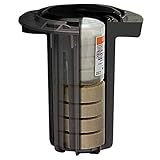
- Includes one CASE of TBS systems: 10 x Advance Termite Inspection Cartdrdge (TIC), 10 x TBS station, 10 x wood block for monitor
- This bait system functions as a DETECTION tool, and does NOT contain termiticides. Install first to detect if termites are present before buying termiticides
- After termites are detected, replace with Trelona cartridges that work with these stations. Trelona is a termiticde by the same brand.
- Does Not Include Spider Tool To Open It
| Comparison point | Questions to ask |
|---|---|
| Active ingredient and formulation | Which compound is used, at what labeled concentration, and in what cellulose formulation? Examples described in the California project include 0.5% noviflumuron, 0.5% novaluron and 0.25% diflubenzuron. |
| Monitoring design | Is monitoring installed first, or is active bait present from the beginning? What event triggers conversion from monitor to bait? |
| Station location | Are stations in-ground, above-ground, or both? Can the design reach termites already active inside the structure? |
| Spacing and label directions | What spacing, depth, inspection interval and replacement rules appear on the current local label? |
| Evidence fit | Were the studied termite species, climate and construction conditions similar to yours? |
| Service commitment | Who performs inspections, how are visits documented, what counts as continuing activity, and what happens if termites remain active? |
The concentrations listed above are the configurations described in the California study, not a recommendation to mix products or a substitute for the current label. Labels can change, and only the current approved directions govern use.
Independent reader supportYour contribution helps us test, update, and keep practical guides available for everyone.Are bait systems better than liquid treatment?
“Better” depends on the problem being solved. Baiting is designed for termites to discover and share a slow-acting toxicant, with colony-level suppression as the objective. A liquid treatment is a different treatment approach with its own label, application pattern, risks and service requirements. The evidence summarized here does not establish a universal winner or a single success rate that can be applied to both approaches.
The Tool Desk
Outbyte PC Repair FREEClear out junk files and repair common Windows errorsFree Scan →Outbyte Driver Updater FREEScan for outdated or missing drivers - takes under a minuteDriver Scan →Ask the inspector to explain the trade-off for your building: whether termites are currently active inside, whether soil or construction features make station placement practical, how quickly visible activity needs to be addressed, what ongoing access is available for inspections and what warranty or retreatment terms are actually written into the agreement. A combined approach may be discussed when immediate structural activity and longer-term colony management are separate concerns.
Best Value

- TWO TERMITE PRODUCTS IN ONE: Pop-up indicators detect termite activity, and the stakes kill foraging termites.
- INSTALLS IN MINUTES: Place stakes in the ground 2 to 3 feet away from your home and no more than 10 feet apart.
- POP-UP INDICATOR: Check the stakes for termite activity when the pop-up indicator is seen.
- COMPLETE KIT: Includes 15 stakes with locator shields, instruction booklet and digging tool.
Common mistakes and how to avoid them
- Expecting an instant barrier. Bait must be found and eaten; it does not automatically seal every route into a house.
- Removing a station because it is empty. Lack of termites at one visit may reflect foraging elsewhere, not elimination.
- Skipping scheduled inspections. Without checks and replenishment, the system cannot reliably deliver its intended treatment.
- Using the wrong spacing or refill. Follow the current label for that exact product and jurisdiction rather than copying instructions from another system.
- Ignoring active indoor evidence. Baiting may require time, so visible structural activity warrants a professional assessment of immediate control options.
- Generalizing a study too broadly. Results for one species, region, season or formulation do not automatically apply elsewhere.
- Buying generic stations without checking compatibility. The cited field studies involved specified systems and professional servicing; a retail station is not automatically equivalent to a complete, labeled structural protection program.
Questions to ask before signing a service plan
- Which termite species or species group is affecting this property?
- Where will every station be placed, and how will inaccessible areas be handled?
- What active ingredient and formulation are being used under the current label?
- How often will stations and the structure be inspected?
- What observation triggers bait replacement or a change in treatment?
- How will you distinguish an unvisited station from a treated colony?
- What documentation will I receive after each inspection?
- What is the response if termites remain active inside the building?
- Which service, retreatment and cancellation terms are written into the agreement?
When baiting is a reasonable choice
Baiting can be a reasonable option when the property can support regular station access, the owner accepts that discovery and suppression take time, and a qualified provider will monitor both stations and the structure. It is especially important to match the system’s evidence and label to the local termite species and environment.
It is not a sound do-it-yourself assumption that any station, any refill and any spacing will protect a house. Product compatibility, legal application directions and follow-up inspections determine whether the installed system is actually being used as tested.
Bottom line
Termite bait systems do work under the right conditions: termites must encounter the bait, feed on it and transfer its slow-acting active ingredient through the colony. Field studies and long-term reviews document substantial control in specific settings, including 158 of 165 baited colonies in historical hexaflumuron studies and no new infestations among 15 California homes followed for two years. Those figures are evidence of capability, not promises for every property. Treat the stations, inspections, bait replacement and response to continuing activity as one integrated service, and use the current label and a qualified inspection to decide whether baiting alone is appropriate.
Quick Recap
Product prices and availability are accurate as of the date/time indicated and are subject to change. Any price and availability information displayed on Amazon at the time of purchase will apply.

