Windows Errors? Fix Them Before They Spread
Repair common Windows errors and clear accumulated junk for a smoother, more stable PC - no reinstall needed.Free scan · no reinstallCrashes, No Sound, or Screen Glitches?
Random freezes, missing sound and display glitches usually trace back to one bad driver. Find and replace yours safely.Free scan · under a minuteYes—designing certain new buildings above the minimum requirements in the 2015 International Codes was modeled to deliver about $4 in benefits for every $1 invested nationwide. The estimate comes from the National Institute of Building Sciences (NIBS) and covers four hazard groups: flood, hurricane wind, earthquake and wildland-urban interface fire. It is a national modeling result, not a guaranteed return for every building or location.
NIBS’s later 2019 report puts the modeled scale in dollar terms: one year of new construction designed to exceed selected 2015 code provisions was estimated to cost $3.7 billion and produce $15.9 billion in benefits, an overall benefit-cost ratio of 4. The figures help owners, designers and policymakers compare added resilience with expected avoided losses, while recognizing that local exposure, construction costs and code adoption can change the result substantially.
As an Amazon Associate I earn from qualifying purchases.
What the $4-for-$1 finding actually measures
NIBS published the headline finding in its January 2018 announcement about the Natural Hazard Mitigation Saves: 2017 Interim Report. The analysis considered scenarios in which new buildings went beyond selected provisions of the 2015 International Building Code (IBC) or complied with the 2015 International Wildland-Urban Interface Code (IWUIC). NIBS reported an estimated $4 in benefits for each $1 spent on those design approaches.
Recommended Free Tools
The word “estimated” matters. The report modeled national construction and hazard-loss scenarios; it did not promise that an individual project would recover four times its incremental cost. NIBS later cautioned that benefit-cost ratios are national averages and vary by geography. A building exposed to repeated flooding, severe wind or wildfire may have a very different result from one in a low-exposure area.
#1 Best Overall

- 72 HOUR EMERGENCY KIT FOR 2 PEOPLE WITH FOOD AND WATER: Includes 2 emergency food bars totaling 4800 calories and 12 sealed drinking water pouches to support hydration and energy during disasters. Designed for emergency preparedness, survival kits, earthquake kits, and evacuation planning.
- COMPLETE DISASTER SURVIVAL KIT WITH SHELTER AND WARMTH: Equipped with 2 emergency ponchos and 2 survival blankets to help protect against rain, wind, and cold conditions. Critical gear for outdoor emergencies, power outages, and shelter in place situations.
- FIRST AID KIT AND SAFETY PROTECTION SUPPLIES: Features a 33 piece first aid kit, dust masks, and nitrile gloves to support basic medical care and protection from debris and airborne particles. Essential for emergency response, injury care, and disaster safety.
- EMERGENCY LIGHTING AND SIGNALING TOOLS INCLUDED: Comes with 2 long lasting 12 hour lightsticks and a safety whistle for visibility and communication in low light or rescue situations. Ideal for blackout emergencies, nighttime evacuation, and search scenarios.
- COMPACT BACKPACK FOR GRAB AND GO EVACUATION: Lightweight emergency backpack keeps all survival supplies organized and ready for fast response. Perfect for home emergency kits, car emergency kits, office preparedness, and bug out bags.
Do not confuse two different NIBS ratios
The same 2017 interim report also estimated about $6 in future disaster costs avoided for every $1 spent through 23 years of federally funded mitigation grants. That grants analysis concerns completed public mitigation investments over a historical period. The $4-for-$1 figure concerns modeled design choices for new construction. They answer different questions and should not be combined into a single return.
The 2017 loss figure is historical context
NIBS repeated National Oceanic and Atmospheric Administration figures stating that 2017 had 16 U.S. disaster events with losses above $1 billion and approximately $306 billion in total losses. Those numbers explain the report’s urgency; they are not a forecast or a current annual-loss average.
The modeled one-year construction scenario
Table 2-16 of NIBS’s Natural Hazard Mitigation Saves: 2019 Report provides the clearest breakdown. It models one year of design exceeding selected 2015 I-Code requirements. Dollar amounts are billions, and the ratios are the report’s rounded national estimates.
Do these 3 things before closing this tab:
1Clear out junk files and repair common Windows errors2Fix the driver behind crashes, sound loss and screen glitches3Repair Windows errors before they cause bigger problems| Hazard and design approach | Modeled cost | Modeled benefit | Benefit-cost ratio |
|---|---|---|---|
| Riverine flood: exceed 2015 I-Code requirements | $0.91 billion | $4.30 billion | 5 |
| Hurricane surge: exceed 2015 I-Code requirements | $0.01 billion | $0.05 billion | 7 |
| Hurricane wind: exceed 2015 I-Code requirements | $0.81 billion | $4.20 billion | 5 |
| Earthquake: exceed 2015 I-Code requirements | $1.20 billion | $4.30 billion | 4 |
| Wildland-urban interface fire: comply with 2015 IWUIC | $0.80 billion | $3.00 billion | 4 |
| Total for one year of construction | $3.7 billion | $15.9 billion | 4 |
The total is rounded: the category values add to approximately $3.73 billion in cost and $15.85 billion in benefit. The table is a scenario, not a national invoice or a projection of what every builder will spend. It also does not mean that each hazard strategy applies to each building; the appropriate measure depends on the site’s hazard profile.
Rank #2
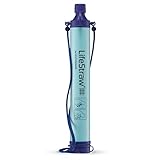
- Removes Bacteria & Parasites: The Microfiltration Membrane Removes 99.999999% of Waterborne Bacteria (Including E. Coli and Salmonella), and 99.999% of Waterborne Parasites (Including Giardia and Cryptosporidium) - Essential for Your Survival Kit
- Removes Microplastics: Removes the Smallest Microplastics Found in the Environment (Down to 1 Micron), and Reduces Turbidity Down to 0.2 Microns - Ideal for Hiking and Camping Essentials
- Rigorous Testing: All Claims Are Verified with Laboratories Using Standard Testing Protocols Set by the US EPA, NSF, ASTM for Water Purifiers
- Long Lifetime: The Microbiological Purification System Will Provide 4,000 Liters (1,000 Gallons) of Clean and Safe Drinking Water - a Must-Have for Your Bug Out Bag
- Make an Impact: For Every LifeStraw Product Purchased, a School Child in Need Receives Safe Drinking Water for an Entire School Year. Essential Camping Accessory Made With BPA Free Materials
What “exceeding code” means for each hazard
Riverine flooding: raise new homes above the minimum
For riverine flooding, the modeled strategy is to build new homes higher than the 2015 IBC requires. Elevation reduces the likelihood that floodwater reaches occupied or serviceable portions of the structure. The design team must establish the applicable flood hazard, determine the locally adopted code and floodplain requirements, and set an elevation target that is higher than that minimum. The report does not prescribe one universal elevation because flood depth, terrain and local rules differ.
Hurricane surge: account for coastal water levels
The surge scenario also calls for exceeding the 2015 I-Code baseline. Coastal surge is not interchangeable with riverine flooding: the hazard source, mapping and exposure can differ even on the same property. A project should use the governing coastal hazard information and verify how the jurisdiction treats elevation, enclosure and critical equipment before selecting the additional protection.
Hurricane wind: use the FORTIFIED Home Hurricane standard
For wind, the article’s example is construction to the Insurance Institute for Business & Home Safety’s FORTIFIED Home Hurricane standards rather than merely meeting the 2015 IBC minimum. The standard is a defined package of hurricane-wind design requirements. Designers and builders should obtain the current technical criteria, confirm that the project type is eligible, and arrange the inspections or documentation required by the program. A generic claim that a building is “stronger” is not equivalent to meeting a named standard.
Earthquake: make the structure stronger and stiffer
The earthquake scenario assumes new buildings are stronger and stiffer than the 2015 IBC requires. Strength addresses the ability of structural components and connections to resist earthquake forces; stiffness limits movement that can damage structural and nonstructural elements. The appropriate design depends on the site’s seismic hazard, soil conditions, occupancy and structural system. A structural engineer should establish the performance goals and document the additional design and detailing, rather than treating a national ratio as a substitute for engineering analysis.
Rank #3

- [Preparedness for the Unknown]: While no one can predict when or how severe a disaster or unexpected event will be, our 262pcs survival kit helps your family stay prepared during the critical first 72 hours. Designed for family use, it was developed in collaboration with survival experts, outdoor professionals, special forces operators, and mountain guides. Whether you're preparing for earthquakes, tornadoes, wildfires, or hurricanes, our survival kit provides peace of mind.
- [Comprehensive Emergency Supply Kit]: The included emergency supplies are stored in a bright red pouch, containing tweezers, scissors and pins, non-woven pad, triangular cotton cloth, cotton swabs, cotton balls, a generous supply of adhesive strips etc., meeting your general emergency and outdoor needs. It also includes an emergency information card to record your basic information, helping others quickly access important information when needed.
- [Safety Companion for Journey]: Our emergency kit includes many survival gear and supplies to ensure access to food, water, warmth, and light in a crisis. The fishing kit and multi-usage spoon help you catch and prepare food, while the collapsible water container bag helps store water. Fire starter and stick make it easy to build a fire. A flashlight, camping lamp, and glow sticks provide up to 72 hours of lighting, crucial for signaling for help and safe navigation.
- [Essential Survival Gear]: Additionally, this survival kit includes a detachable multifunctional axe with hammer and a 2-in-1 shovel with pick, made of sturdy carbon steel. Combined with wire saw, emergency tent and blanket, rope, and compass, you can quickly set up an emergency shelter while helping retain warmth. Unlike other mini axes, our axe and shovel are 17 inches long, providing effective protection in the wild against animals or in other emergencies.
- [Convenient Packaging]: The survival gear and supplies are packed in a crossbody bag, making it easy to carry and access in emergencies. The bag features multiple compartments and molle compatible straps and D-rings, allowing you to attach extra pouches or survival tools. The crossbody strap is also detachable, making it easy to connect to a tactical survival backpack using carabiners or the molle system.
Wildland-urban interface fire: comply with the 2015 IWUIC
For wildfire exposure, the modeled approach is compliance with the 2015 IWUIC. The code addresses buildings in the wildland-urban interface through provisions selected for that setting. Jurisdictions may adopt, amend or supplement the model code, so the design team must identify the locally enforceable edition and any site-specific requirements. The NIBS scenario measures the added value of applying the 2015 IWUIC baseline in places where ordinary code provisions may not provide the same level of wildfire mitigation.
Why an upfront premium can produce a larger benefit
Mitigation changes the building before a disaster occurs, when details such as elevation, structural capacity and fire-resilient construction can be incorporated into the design and construction sequence. The modeled benefit represents losses that the more resilient building is expected to avoid over the analysis period. Those avoided losses can accrue to several parties: owners may face less repair and replacement work, occupants may experience fewer interruptions, insurers may face smaller claims, and communities may recover more quickly.
The party paying the incremental construction cost is not always the party receiving every benefit. A developer may pay for stronger structural design while future owners, tenants, insurers and public agencies receive much of the avoided-loss value. That distribution is important when a project team evaluates incentives, financing, insurance terms or public requirements.
How to use the findings on a real project
- Map the site’s hazards. Identify riverine flood, coastal surge, hurricane wind, earthquake and wildland-urban interface exposure using the maps and engineering information recognized by the local authority. Do not assume that a state, county or neighboring parcel has the same hazard classification.
- Record the enforceable code baseline. The NIBS comparison uses the 2015 IBC and 2015 IWUIC. Confirm which edition and amendments the jurisdiction actually enforces; many jurisdictions have moved to later editions or retain older provisions during a transition.
- Choose a specific above-code intervention. Examples include a higher finished-floor elevation, a documented FORTIFIED Home Hurricane design, enhanced seismic strength and stiffness, or IWUIC compliance. Define the intervention in drawings and specifications so that “above code” is measurable.
- Price the incremental work. Separate the cost of the resilience measure from ordinary construction cost. Include design, permitting, materials, labor, testing, inspection, certification and any schedule effect. Use local bids rather than applying the national category averages directly.
- Estimate local benefits. Compare the added cost with the losses the measure could avoid at that site. Consider the building’s value, contents, occupancy, downtime, critical functions and likely hazard intensity. The NIBS ratios can frame the discussion but cannot replace a local benefit-cost analysis.
- Coordinate all responsible parties. Engage the architect, structural and civil engineers, builder, code official, owner, insurer and—where applicable—the FORTIFIED or wildfire-code authority early. Coordination prevents a late change from undermining the intended performance.
- Verify and preserve evidence. Keep calculations, product information, inspection records, elevation certificates and certification documents with the project record. Future owners, insurers and emergency managers need proof of what was actually built.
Geography can change the ratio
NIBS explicitly warns that its national averages vary by geography. A flood-elevation measure has greater potential value where flood probability and depth are high. Wind detailing matters most where hurricane wind exposure is substantial. Seismic strengthening has different value in a high-hazard zone than in a low-seismicity region, and IWUIC compliance is relevant only where the wildland-urban interface creates meaningful fire exposure.
Rank #4

- 72-HOUR EMERGENCY KIT FOR 2: Built for disaster preparedness at home, work or on the road, this 2-person survival backpack includes food, water, first aid, lighting, hygiene and shelter essentials for up to 3 days.
- FOOD, WATER & PURIFICATION: Includes two 2,400-calorie emergency food bars, six 4.225 oz water pouches, water purification tablets and a 32 oz BPA-free bottle to help support hydration and nutrition during outages or evacuations.
- FIRST AID & PERSONAL PROTECTION: Packed with a 33-piece first aid kit, 2 dust masks, nitrile gloves, hygiene kits, ponchos, survival blankets and tissues for added protection, sanitation and comfort during emergencies.
- POWER, LIGHTING & COMMUNICATION: Includes a hand-crank emergency power station with flashlight, AM/FM radio, siren and cell phone charging, plus 2 emergency lightsticks and an emergency whistle.
- DELUXE SURVIVAL TOOLS IN ONE BACKPACK: Adds a multi-function tool, duct tape, bio-hazard bag and emergency contact card in a portable backpack. Ideal for earthquakes, hurricanes, blackouts, wildfire evacuation, cars and workplaces.
Local construction prices also move the denominator. Labor availability, material transport, foundation conditions, design fees and permitting requirements can make the same intervention inexpensive in one market and costly in another. Conversely, a location with frequent or severe events may realize benefits well above a national average. A project decision should therefore report both the NIBS benchmark and the assumptions used for the local estimate.
Code editions and later NIBS findings
The 2015 code references are essential to interpreting the original article. They establish the baseline against which the modeled improvements were measured; they do not establish the minimum rule in every jurisdiction today.
In a January 2019 announcement, NIBS summarized separate scenarios using the 2018 I-Codes. Those scenarios reported $6 saved per $1 invested for adding at least one foot of flood freeboard, $10 per $1 for specified hurricane-wind detailing, and $12 per $1 for stronger and stiffer earthquake-resistant new buildings relative to the 2018 codes. Because the code edition and scenario definitions changed, these figures do not replace the 2015-based table above. They show why the baseline edition, intervention definition and analysis year must accompany any ratio.
Quick wins for a faster PC:
Scan for outdated or missing drivers - takes under a minuteDriver Scan →Clear out junk files and repair common Windows errorsFree Scan →Common mistakes when presenting above-code economics
- Calling $4 a guaranteed project return. It is a modeled national average for selected strategies, not a promise to an owner.
- Blending grants and new construction. The $6-for-$1 grants result and the $4-for-$1 code-exceedance result come from different analyses.
- Dropping the code year. Saying only “exceeds code” hides that the principal comparison uses the 2015 IBC and IWUIC.
- Applying every measure everywhere. Flood, surge, wind, earthquake and wildfire interventions respond to different exposures.
- Using a ratio without its cost basis. A national benefit-cost ratio cannot substitute for local prices, hazard data and a defined scope of work.
- Assuming adoption equals performance. Plans, inspections and closeout records are needed to show that the specified above-code features were installed correctly.
What builders, owners and policymakers can take from the analysis
For builders and designers, the practical lesson is to identify resilience options during site selection and schematic design, when changing elevation, structure or envelope strategy is least disruptive. For owners, the decision should include lifetime risk, continuity of operations and who will bear the cost of a future loss. For policymakers, the modeled national benefits support evaluating incentives or code provisions that make above-minimum construction financially feasible, while allowing local hazard and market conditions to shape the requirement.
The strongest conclusion is limited but useful: NIBS found that selected measures beyond the 2015 code baseline could produce substantial nationwide avoided-loss benefits, totaling an estimated $15.9 billion against $3.7 billion in modeled one-year construction costs. Whether a particular project achieves a similar result depends on its hazard, design, code edition, added cost and verification of the work.
Quick Recap
Product prices and availability are accurate as of the date/time indicated and are subject to change. Any price and availability information displayed on Amazon at the time of purchase will apply.

