Both outcomes are possible. An interchange can make homes more useful by shortening trips and improving access to jobs, shops, and services. The same project can expose particular properties to louder, faster, or more visible traffic, especially near ramps, elevated sections, and newly opened approaches. Access benefits often spread across a wider area; noise and visual impacts are usually concentrated among homes with a direct line of sight or an unobstructed path to the roadway.
There is no reliable nationwide percentage that predicts what an unnamed interchange will do to a home’s value. The strongest practical answer comes from the project’s traffic and noise documents, the home’s physical exposure, and sale data for comparable properties outside the affected area.
As an Amazon Associate I earn from qualifying purchases.
Why an interchange can help some homes and hurt others
Property prices reflect several changes at once. A new connection may reduce travel time, make a previously difficult route convenient, and support new services or employment. Those gains can influence many homes within a broad travel shed.
Noise follows a different geography. A house beside a ramp, facing an elevated roadway, or newly exposed by tree clearing may experience a substantial change even when a similar house farther away does not. Traffic composition, speed, acceleration, grade, barriers, terrain, and the home’s orientation all matter. The Federal Highway Administration (FHWA) identifies speed and acceleration, traffic volume, vehicle weight, and adjacent land use as important operating and location conditions in traffic-noise analysis (FHWA Cost Allocation Study Final Report: Noise).
#1 Best Overall

- 【Strong Adhesive, Saves Money】Weather stripping door seal prevent heat and cold from escaping, save your heating and cooling bills. block noise, super adhesive, durable, not easy to degumming, easy to install
- 【5P High-Density Soft Hair】Brush weather stripping made of environmental friendly woven material, high density Brush, wear resistance, corrosion resistance, high-temperature resistance, excellent workmanship, soft bending without deformation
- 【Diverse Functions, Durable】The patio door weatherstripping has good anti-aging sealing performance,windproof, rainproof, dustproof, anti-collision, soundproof and energy saving
- 【Wide Application】Window insulation for winter Self adhesive seal strip widely used in various glass doors, aluminum doors windows, plastic steel windows, wooden doors, security doors, sliding doors, closets, cabinets and other gaps
- 【Easy to install】First measure the size of the gap between doors and windows, how much to use, how much to cut, energy saving, and environmental protection. If you have any questions, please contact us, and we will provide a perfect solutio
Traffic can also change after construction. FHWA defines induced travel as observed increases in overall traffic that may occur when a new highway opens or a congested highway is widened, and induced growth as new development after a project is built (FHWA travel and land-use forecasting guidance). These are possibilities to test in the project forecast, not automatic consequences of every interchange.
What historical property-value studies actually found
Older U.S. studies show why a single rule is misleading. They examined particular corridors, neighborhoods, and time periods rather than a representative sample of all interchanges.
| Study and setting | Reported result | How to use it |
|---|---|---|
| Raymond B. Palmquist, Washington State, 1982; five study areas, 9,359 sales records and 383 interviews | Residential areas benefiting from improved access showed 15–17% greater appreciation than comparable areas without that access advantage. | Illustrates a possible access premium in the studied places and period; it is not a current appraisal adjustment. |
| Palmquist, same Washington study | Highway noise had little effect on commercial, industrial, or residential properties more than 600 feet from the highway in those areas. | Do not treat 600 feet as a universal safe distance. Elevation, barriers, traffic mix, background sound, and line of sight can change exposure. |
| Pennsylvania State University research summarized by TRID, 1973 | For one community, abutting properties had an estimated average 4.5% reduction associated with highway disturbances, primarily noise, alongside an estimated 9% access benefit. | Shows offsetting mechanisms in one community, not a transferable percentage. |
| U.S. DOT review of earlier studies | One Washington analysis reported noise-associated reductions ranging from 0.2% to 1.2% per 2.5 dBA above ambient noise across neighborhoods; some homes with significant noise appreciated more slowly. | Historical context only. The figures should not be converted into a present-day discount formula. |
The Palmquist record also reported that accessibility-related appreciation outweighed noise-related depreciation even at the highest noise readings observed in those study areas (Transportation Research Board, Impact of Highway Improvements on Property Values in Washington State). That finding describes the study’s comparison design; it does not mean every interchange produces a net gain or that a heavily exposed house will appreciate faster.
Crashes, No Sound, or Screen Glitches?
Random freezes, missing sound and display glitches usually trace back to one bad driver. Find and replace yours safely.Free scan · under a minuteWindows Errors? Fix Them Before They Spread
Repair common Windows errors and clear accumulated junk for a smoother, more stable PC - no reinstall needed.Free scan · no reinstallThe U.S. DOT review is available in the National Transportation Library’s corridor case study (Impact of Highways on Property Values: Case Study of the Superstition Freeway Corridor). Its range of estimates demonstrates how results vary by neighborhood and measurement method.
Rank #2
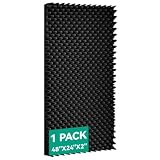
- Superior Soundproofing for Any SpaceTransform your environment with Geynnple Soundproof Foam Panels. These high-density panels are designed to absorb sound, making them perfect for home studios, offices, or any room that requires effective noise control and acoustic enhancement
- Easy Installation (Adhesive Not Included)Installing Geynnple Soundproof Foam Panels is straightforward. While the panels don’t come with adhesive, they are designed to be easily applied using your preferred adhesive or double-sided tape, ensuring simple setup and reliable noise reduction
- Ideal for Home Studios and OfficesGeynnple foam panels provide top-tier soundproofing, making them perfect for music recording, podcasting, or creating a quiet workspace. Reduce distractions and optimize acoustics for a more productive and comfortable environment
- [Quantity Clarification]: Images may show a split or two-part display effect to better illustrate the product’s shape and application. This does not indicate two separate panels. Each order includes 1 Pack = 1 Piece
- Comprehensive Noise Control SolutionAchieve superior sound isolation with Geynnple Sound Foam Panels. Made from high-density foam, these panels improve room acoustics and reduce noise, offering a complete solution for any soundproofing project—just add your preferred adhesive for installation
Why distance alone cannot predict traffic noise
Sound decreases with distance, but a map radius is only a starting point. A property’s exposure can be higher or lower than its straight-line distance suggests because of:
- Elevation and grade: An elevated ramp may have a direct line of sight over a barrier; a roadway in a cut may be screened by earth.
- Barriers and gaps: A continuous, properly designed wall can interrupt the line of sight, while openings for streets, drainage, or driveways can reduce its effect.
- Traffic mix: Heavy trucks and buses generally produce different noise levels than passenger cars.
- Speed and acceleration: Braking, merging, climbing, and rapid acceleration around ramps can alter the sound pattern.
- Existing background sound: A quiet neighborhood may experience a larger perceived change than an already busy arterial, even at similar measured levels.
- Where people spend time: Outdoor patios, yards, and bedroom windows may face the road differently from the front of the house.
FHWA’s historical summary that effects were small beyond 600 feet applies only to the Washington study areas. It is not a regulatory boundary, a guarantee of quiet, or a valuation rule.
When federal noise analysis applies
For qualifying federally aided projects, FHWA policy requires traffic-noise impacts to be identified, mitigation to be examined, and reasonable and feasible mitigation to be incorporated. Type I work generally includes a new highway location and certain physical alterations to an existing highway. FHWA’s guidance specifically identifies some additions of interchanges, ramps, auxiliary lanes, and truck-climbing lanes as Type I projects (FHWA Highway Traffic Noise Policy Guide).
Qualification depends on the project’s physical work and the applicable state policy. A project name alone does not tell you whether the federal Type I process applies. The agency’s environmental documents are therefore more useful than a generic statement that “interchanges are noisy.”
Rank #3

- Soundproofing - Acoustic foam panels triangular grooves structure for better noise absorption, helps to reduce and absorb unwanted echoes, waves, reverb and flutter echoes for better recording effect.
- Upgraded Accessory - Additional 300pcs strong double-side adhesive tape is included for free, which helps you finish the installation better and protect your walls from damage. Can be removed easily.
- Quick Recovery - If this high-density foam doesn't return to shape, please soak it in water for a few minutes and dry in the air to recover the shape in 24 to 48 hours.
- Wide Applications - Suitably used not only for spot treating sound on walls in your studio and office but also for use in recording studios, vocal booths, control rooms.
- Professional Safe - With strong fire resistance and good air permeability, the acoustic foam panels can stop burning to prevent hidden fire hazards. Also, non-toxic materials won't do harm to your body while everyday use.
The two tests used in FHWA analysis
FHWA guidance describes two ways a project can produce a noise impact:
- Approach or exceedance of the Noise Abatement Criteria: Predicted sound levels are compared with the applicable activity-category limit.
- Substantial increase: The predicted level rises substantially above existing conditions under the state highway agency’s definition, even if the absolute level is below the criterion.
Criteria and procedures vary by activity category and state implementation. For a new alignment, field measurements establish existing conditions. For an existing alignment, agencies generally use modeling and may combine measurements with field data. The details are set out in FHWA’s Highway Traffic Noise Regulation: Analysis and Abatement Guidance.
Documents to request for a specific interchange
If you are evaluating a house near a proposed or recently completed project, ask the transportation agency, municipality, or project website for the following items:
- Environmental assessment or environmental impact statement: This establishes the alternatives, affected areas, and mitigation commitments.
- Traffic-noise report: Look for existing measurements, modeling assumptions, receptor locations, predicted levels, and the design year.
- No-build versus build forecasts: Compare traffic volumes, speeds, truck percentages, and turning or merging movements with and without the project.
- Noise-barrier analysis: Check which barriers were studied, whether they were found reasonable and feasible, their proposed height and length, and who will maintain them.
- Final plans and commitments: Confirm whether ramps moved, elevations changed, or promised barriers and landscaping are included in the adopted design.
- Construction schedule: Temporary detours, nighttime work, pile driving, and staging can create short-term conditions that differ from the completed interchange.
Read the receptor maps carefully. A modeled point at the property line may not represent a bedroom, deck, or backyard. Ask whether the analysis includes outdoor activity areas and the façades where bedrooms are located.
Rank #4

- Sound Absorption & Noise Reduction: Made with a polyester woven surface and recycled cotton filling, this 3-layer physical barrier effectively absorbs indoor echoes, and reduces sound reflections. Note: 1. This product provides limited sound insulation and is mainly used as a protective barrier only. 2. Keep the product in a dry environment. If it gets wet, please air dry it promptly. Prolonged dampness may cause unpleasant odors and material damage
- Effective Light Blocking: The thick, dense material and dark color effectively block light, creating a dim environment and avoiding glare. Ideal for home theaters, conference room projections, tents, or temporary darkrooms
- Thickened Design: Secured with zig-zag quilting and double-stitched binding, the soundproof blanket maintains its shape, resists tearing, and stands up to long-term hanging use. No glue bonding and odor-free materials make it friendly for users and households
- Large Coverage: Each blanket measures 80 x 48 in / 2032 x 1219 mm. It provides wide coverage with fewer seams, ideal for covering standard doors and windows or handling large spaces where soundproofing, light blocking, and insulation are needed
- Easy Installation: Equipped with multiple metal grommets and woven straps, the acoustic blankets can be hung with hooks, screws, or curtain rods. Quick to set up and secure, it works as a flexible soundproof, blackout, or insulation barrier on walls, doors, and windows.
How to evaluate a home before buying or selling
1. Map the physical relationship
Visit the property from each side and note whether the roadway or ramp is visible, elevated, downhill, or screened. Identify planned changes in grade, bridge structures, retaining walls, and vegetation removal. Measure distance to the nearest travel lane and to the ramp’s acceleration or braking area, not merely to the interchange’s label on a map.
2. Compare sound at representative times
Listen during morning and evening peaks, overnight, and a weekend period. Record weather, wind, construction activity, and unusual events. A consumer sound-level meter can help document current conditions at selected locations, but it cannot forecast future traffic, isolate the interchange’s contribution from aircraft or local streets, or replace an agency noise study.
3. Test the market with comparable sales
A local appraiser can compare sales before and after the project and against similar homes outside the affected area. Useful controls include lot size, living area, age, condition, school assignment, neighborhood type, access to employment centers, and sale timing. A simple before-and-after comparison is weak if the wider market, zoning, or nearby development changed at the same time.
The Tool Desk
Outbyte Driver Updater FREEFix the driver behind crashes, sound loss and screen glitchesFind Drivers →Outbyte PC Repair FREEClear out junk files and repair common Windows errorsFree Scan →4. Separate current conditions from future risk
A completed interchange can be measured directly, while a proposed project requires reliance on forecasts. Check the design-year assumptions and whether later phases, development parcels, or additional lanes are included. A quiet property today may face a different exposure after a future connection opens; conversely, a planned barrier may reduce the final condition compared with an early construction view.
Best Value

- Upgraded Wedge Design: This window draft stopper features an upgraded wedge design, tapering from 5/32" to 11/32" (0.16"–0.35") to fit a wide variety of gap sizes. Ideal for use on various doors and windows
- Nylon Cloth&PU Foam: Window sound proofing seal outside the use of high tenacity nylon cloth, waterproof and scratch-resistant, doors and windows in the process of switching more silky smooth and not easy to be scratched.The internal by the high elasticity of the PU foam made of dense and delicate such as cream, randomly extruded and not deformed, not only to achieve good sealing effect will not affect the opening and closing of the doors and windows
- Widely Used: Wedge-shaped design of the door space filler can be used in a variety of places in life (sliding windows, casement windows, suspended windows, sliding doors, french doors, exterior doors, interior doors, front doors, cabinets, closets, bathroom cabinets, refrigerators, drawers, etc.), suitable for all kinds of material doors and windows (wood, glass, plastic, metal, etc.)
- Grid Adhesive Backing Design: The around door seal adopts a one-piece grid adhesive backing design, which is more adhesive than the general seal adhesive backing, and will not fall off easily during the use process, realizing long-lasting use
- Multi-Functional:Using our door jamb weather stripping can perfectly realize warmth in winter and coolness in summer, and save energy. At the same time there are sound insulation, anti-collision, shading, dustproof and other effects, make life more comfortable. Please note: When the weather is cold, it is recommended to use a hair dryer to heat the backing to enhance the adhesion
How access and noise show up in a valuation
Access can affect value through shorter travel times, easier freight or customer movement, and the development of nearby services. Noise can affect value through reduced enjoyment of yards and rooms, difficulty opening windows, visual intrusion, and a smaller pool of willing buyers. The balance differs by buyer group: a commuter may value a faster trip, while a household prioritizing outdoor quiet may place a larger discount on exposure.
Do not apply the 15–17% Washington appreciation figure, the 4.5% and 9% Pennsylvania estimates, or any per-decibel percentage to an individual listing. Those numbers came from historical studies with local comparison groups. FHWA also warns that its external noise-cost estimates are not intended to assess damage to a particular development (FHWA Cost Allocation Study Final Report).
Mitigation: what can change the outcome
Noise walls are the most visible measure, but their benefit depends on blocking the line of sight between the road and the receiver. Earth berms, roadway-profile changes, quieter pavement where approved, ramp alignment, and traffic-management decisions may also matter. Building insulation can reduce indoor sound but does not restore a quiet yard or eliminate visual effects.
Mitigation is not automatic for every nearby parcel. Agencies evaluate feasibility, reasonableness, activity categories, predicted levels, cost, and design constraints under state procedures. A project document may show that a barrier was considered but rejected, or that it protects one side of a street while leaving another exposed.
What current evidence can—and cannot—say
There is no finished, generalizable national estimate for how a new interchange changes nearby home values. The Virginia Transportation Research Council lists an ongoing study of noise barriers and residential property values. Its project page, last updated February 9, 2026, says researchers plan to examine at least eight matched neighborhood pairs using 2012–2024 sales data, controlling for factors such as home size, neighborhood type, and sale timing, with cross-sectional and pre-post designs. The page does not report findings (Virginia Transportation Research Council, Impact of Noise Barriers on Residential Property Values).
That evidence gap matters: historical results establish that access gains and noise losses can coexist, but they do not provide a universal multiplier for a present-day home. For a real decision, the project’s forecasts, modeled sound at the dwelling, mitigation commitments, and local comparable sales are more probative than a national average.
A practical decision framework
| Question | Evidence to check | Why it matters |
|---|---|---|
| Will travel become materially easier? | Travel-time forecasts, new route connections, and peak-period traffic operations | Indicates whether an access benefit is likely to reach this neighborhood. |
| Will this lot receive more sound? | Design-year modeled levels at outdoor areas and bedroom façades; existing measurements | Captures exposure better than distance alone. |
| Will traffic composition change? | Forecast volume, speed, truck percentage, and ramp acceleration patterns | Heavy vehicles and merging can alter both level and character of noise. |
| Will mitigation be delivered? | Adopted barrier plans, dimensions, landscaping, and maintenance commitments | Separates a promised measure from an unbuilt concept. |
| Is the market already pricing the condition? | Comparable sales inside and outside the affected area, with dates and property controls | Tests local willingness to pay instead of importing a historical percentage. |
For buyers, make the project documents and an on-site visit conditions of due diligence. For sellers, disclose known project information accurately and avoid promising that access will raise value. A qualified local appraiser or independent traffic-noise consultant can interpret the documents for a particular parcel.
Do these 3 things before closing this tab:
1Clear out junk files and repair common Windows errors2Fix the driver behind crashes, sound loss and screen glitches3Repair Windows errors before they cause bigger problemsQuick Recap
Product prices and availability are accurate as of the date/time indicated and are subject to change. Any price and availability information displayed on Amazon at the time of purchase will apply.

