Do these 3 things before closing this tab:
1Repair Windows errors before they cause bigger problems2Fix the driver behind crashes, sound loss and screen glitches3Clear out junk files and repair common Windows errorsWorkshop wiring should be approached as a safety and compliance question before it is treated as a construction project. Shock, electrocution, arc flash, burns, fire, moisture, damaged tools, overloaded circuits, and unexpected re-energization are all possible hazards. The correct approach is to identify the workshop setting and applicable rules, limit DIY work to tasks you are competent and authorized to perform, and refer installation, panel, grounding, bonding, permit, and uncertain-condition questions to a qualified electrician.
Before touching a circuit, identify all energy sources, de-energize the equipment, prevent unexpected re-energization where appropriate, and verify the absence of voltage with a suitable instrument and procedure. A breaker in the off position, a GFCI tester, or a non-contact voltage pen is not—by itself—a guarantee that a circuit is safe to touch.
As an Amazon Associate I earn from qualifying purchases.
1. Start with the setting: home workshop or workplace?
The first critical question is not which receptacle or breaker to install. It is where the workshop is located and what kind of work is being done. A hobby shop in a detached garage, a commercial fabrication shop, a school workshop, and a construction site can be subject to different requirements.
Crashes, No Sound, or Screen Glitches?
Random freezes, missing sound and display glitches usually trace back to one bad driver. Find and replace yours safely.Free scan · under a minutePC Slower Than It Used to Be?
A free scan shows the junk files, broken settings and background clutter dragging Windows down - then fixes them in one click.Free scan · Windows 10 & 11For a U.S. workplace, OSHA’s electrical standards, including Subpart S and related safe-work requirements, are directly relevant. A home hobby workshop is also governed by the applicable electrical and building codes, permit rules, and requirements enforced by the local authority having jurisdiction (AHJ). OSHA is not the sole authority for residential wiring. In either setting, the date the installation was built or last modified can affect which provisions apply.
#1 Best Overall

- Includes 8 sizes of copper phase THHN wire: AWG 2,4,6,8,10,12,14,16.
- Equipped with climbing buckle, easy to carry.
- Great tool for home inspector students.
| Situation | What the reader should do |
|---|---|
| Inspecting a cord, tool, receptacle, or GFCI | Limit the task to visual inspection and appropriate functional checks. Remove damaged equipment from service. |
| Testing whether a circuit is de-energized | Use a suitable instrument and a safe verification procedure. This is not the same as casually touching a wire or relying only on a breaker label. |
| Adding or moving a receptacle or circuit | Treat it as an electrical installation or modification. Check permit and inspection requirements and use a qualified electrician where required. |
| Opening a panel, changing service equipment, or altering grounding or bonding | Stop and refer the work to a qualified electrician unless you have the required training, authorization, and equipment. |
| Working on energized parts | This is qualified-person work requiring training, procedures, hazard assessment, PPE, and appropriate equipment—not ordinary DIY workshop maintenance. |
2. What must happen before touching a circuit?
Turning off a breaker is only one part of making electrical equipment safe. OSHA guidance treats equipment as energized until the required de-energization, lockout or tagout, and verification steps have been completed. NIOSH likewise recommends de-energizing circuits, preventing unexpected re-energization, and verifying that power is off with an appropriate AC voltage tester.
- Define the task. Know exactly what equipment, receptacle, junction box, or circuit is involved. If you cannot describe the task and its limits, do not begin.
- Identify every possible source. Do not rely solely on a panel directory, a receptacle label, or another person’s assumption. Consider other circuits in the same box, a second power source, backfeed, generator or inverter power, connected equipment, and stored mechanical or pneumatic energy.
- De-energize the equipment. Operate the correct disconnecting means. If the source or circuit cannot be positively identified, stop rather than guessing.
- Prevent re-energization. Where other people, machines, or energy sources are involved, use an appropriate lockout/tagout procedure. A warning note alone may not prevent someone from restoring power.
- Verify the absence of voltage. A person competent to perform the task should use an instrument suitable for the circuit and the verification procedure. A non-contact voltage detector can be a useful preliminary indication, but it should not be treated as the only proof that a circuit is safe to touch.
- Control the work area. Keep other people away, secure tools and conductors, maintain dry footing, and prevent anyone from operating the equipment while work is in progress.
Testing is a procedure, not a magic property of a particular tester. An instrument can be unsuitable, used incorrectly, damaged, or affected by the circuit conditions. If you do not know how to identify the circuit, select and use the instrument, and interpret the result, you are not ready to perform the verification yourself.
Never assume that a breaker being in the off position makes an exposed conductor safe. Never treat insulated handles, rubber gloves, or a voltage pen as permission for an unqualified person to work on energized parts.
Quick wins for a faster PC:
Fix the driver behind crashes, sound loss and screen glitchesFind Drivers →Clear out junk files and repair common Windows errorsFree Scan →3. Know which kind of electrical task you are performing
Many workshop accidents begin when a maintenance task quietly turns into an installation or troubleshooting task. These categories require different boundaries.
| Task category | Examples | Safe boundary |
|---|---|---|
| Observation and maintenance | Looking for damaged insulation, checking a plug, operating a GFCI test button, or removing a visibly damaged extension cord from service | Do not open equipment or expose conductors unless the proper de-energization and verification procedure has been completed. |
| Verification | Determining whether a presumed-dead circuit is actually de-energized | Requires a suitable instrument, a competent person, and a method that accounts for all possible sources. |
| Installation or modification | Adding circuits, moving receptacles, replacing panel equipment, changing grounding or bonding, or wiring permanent machinery | Requirements depend on the jurisdiction, building, installation history, load, wiring method, and permits. This is not a universal DIY recipe. |
| Energized work | Diagnosing or repairing exposed energized parts while power is present | Reserved for qualified persons following applicable procedures, training, PPE, and equipment requirements. |
Replacing a cover or closing an enclosure is not equivalent to changing branch-circuit wiring, but neither action should be used to avoid the basic safety procedure. A panel dead front, junction-box cover, or equipment enclosure can conceal hazards, and a circuit can be misidentified.
Rank #2
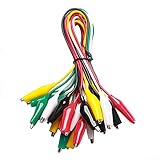
- ✅ 10 Test Leads in 5 Colors – Includes 10 alligator clip test leads ( red x2 , black x2 , yellow x2, green x2, and white x2) for easy identification and organized wiring.
- 🔧 Strong & Secure Clips – Features 20 nickel-plated steel alligator clips with PVC insulation and vinyl coating; durable, corrosion-resistant, and equipped with strong springs for a tight, reliable grip.
- 📏 Convenient Length – Each lead measures 20.5 inches long with 1.6-inch clips. Alligator clips are securely soldered and stamped to wires for enhanced conductivity and long-term use.
- ⚡ High-Quality Copper Wire – Built with 22 AWG copper wire and PVC insulation; flexible, safe, and ideal for light electronic testing and DIY projects.
- 🧪 Multipurpose Use – Perfect for electrical experiments, breadboarding, prototyping, diagnostics, and troubleshooting. Ideal for use in labs, schools, homes, workshops, and industrial environments.
4. Workshop inspection checklist
A routine inspection can identify many problems before someone starts a tool or opens a wall. Make it part of workshop housekeeping, especially after moving equipment, flooding, construction, or a change in how the space is used.
GFCI protection and receptacles
- Identify receptacles that serve a garage, workshop, unfinished basement, damp area, outdoor location, or equipment likely to contact a grounded surface.
- Check that installed GFCI devices have not been bypassed, damaged, painted over, or obstructed.
- Use the device’s test and reset controls according to its instructions. If it will not test, will not reset, trips repeatedly, or behaves unexpectedly, stop using the affected outlet and arrange for diagnosis.
- Do not assume that one GFCI device protects every receptacle in the room. The actual protection arrangement must be established from the installation and tested appropriately.
A GFCI is a protective device, not a general inspection certificate. It does not make damaged wiring acceptable, replace overcurrent protection, establish proper grounding and bonding, or prove that the whole circuit is safe.
Cords, plugs, tools, and housings
- Look for cuts, crushed or brittle insulation, exposed conductors, loose strain reliefs, bent or loose prongs, cracked plugs, burn marks, melted plastic, and evidence of overheating.
- Inspect tool housings, switches, guards, and power-entry points. A cord that looks sound can still be connected to a damaged tool.
- Remove damaged equipment from service. Do not keep using it because the damage is near the plug or appears to be covered by tape.
- Disconnect a tool or machine before inspecting, cleaning, adjusting, or repairing it.
- Never remove the round grounding prong to make a plug fit an older receptacle. Do not use an improvised adapter that defeats grounding or conceals a defect.
Moisture, heat, and physical damage
- Keep receptacles, plugs, power strips, and portable tools away from standing water, wet floors, condensation, rain, solvents, and conductive metal surfaces unless the equipment and installation are specifically suitable for that environment.
- Look for water intrusion, corrosion, damp boxes, staining, or outlets that have been splashed. Do not simply dry and re-energize equipment that may have been wet.
- Keep cords away from heaters, hot work, welding spatter, sharp metal edges, rotating machinery, pinch points, and vehicle traffic.
- Watch for warm receptacle faces, discoloration, buzzing, sizzling, burning odors, flickering, or melted insulation. These are warning signs, not inconveniences to be solved by resetting a breaker.
Loads and circuit behavior
Workshops often combine portable tools with compressors, heaters, dust collectors, welders, battery chargers, and other high-load equipment. Starting current, simultaneous operation, duty cycle, cord length, ambient temperature, and the installation method all matter. A qualified person should determine whether equipment needs a dedicated circuit or other design changes.
Do not solve repeated breaker trips by installing a larger breaker, bypassing a protective device, using a questionable power strip, or moving the problem to an extension cord. A trip may indicate overload, a short circuit, a failing motor, damaged insulation, a loose connection, or an incorrectly designed installation.
5. GFCIs: what they do and what they do not do
Ground-fault circuit-interrupter protection is particularly important in garages, workshops, unfinished basements, outdoor areas, damp locations, and construction or renovation settings. A GFCI is intended to interrupt power when it detects an imbalance consistent with current leaving the intended circuit path. That protection can reduce shock risk, but it is not a guarantee against every electrical injury.
Rank #3

- Locate Open & Short Circuits Fast – Automotive wire tracer helps identify open wires, short circuits, and circuit paths with transmitter signal and audible receiver feedback for faster troubleshooting
- Trace Hidden Wiring – Cable tracker follows wires behind panels, under carpets, through harnesses, and in accessible low voltage areas without cutting or damaging insulation
- 6-42V DC Electrical Tester – Designed for automotive electrical systems, car repairs, trailers, trucks, and other low voltage DC circuit diagnostics
- 7 Inch Flexible Probe – Bendable probe reaches tight spaces around dashboards, fuse boxes, connectors, and wire harnesses for easier circuit tracing and signal detection
- Non-Contact & Easy to Use – Circuit tracer and voltage detector setup helps locate wiring issues without piercing wires, making it useful for automotive and low voltage diagnostic work
Keep these three things separate:
- GFCI device or breaker: The installed protective component. Its correct type, location, wiring, and compatibility depend on the installation and applicable rules.
- GFCI tester: A diagnostic and functional-check tool for a receptacle or circuit. It does not install protection or certify the entire wiring system.
- Electrical inspection: A broader evaluation that may examine conductor sizing, overcurrent protection, box fill, grounding, bonding, wiring condition, moisture exposure, equipment connections, and code compliance.
If a GFCI trips, find out why rather than repeatedly resetting it. Unplug equipment, keep people away from wet or damaged areas, and have the circuit evaluated if the cause is not obvious or the device will not operate normally.
The Tool Desk
Outbyte PC Repair FREEClear out junk files and repair common Windows errorsFree Scan →Outbyte Driver Updater FREEFix the driver behind crashes, sound loss and screen glitchesFind Drivers →6. Extension cords and temporary power
Extension cords are temporary equipment. They are not a substitute for permanent workshop wiring, a convenient way to avoid a required circuit, or an acceptable permanent route through a wall, ceiling, doorway, or floor.
For temporary use:
- Select a cord suitable for the connected load, length, environment, and intended use. Do not choose solely by how heavy or flexible it feels.
- Keep it away from water, heat, sharp edges, moving equipment, and traffic paths. Protect crossings from crushing and trip hazards without creating a second hazard.
- Inspect the cord and plug before each use. Remove it from service if the insulation, grounding feature, plug, or strain relief is damaged.
- Do not use extension cords as a permanent substitute for receptacles, bury them, run them through concealed spaces, or make improvised repairs.
- Avoid daisy-chaining cords or using a power strip to supply equipment beyond its rating.
- Do not defeat the grounding connection or use an adapter to make incompatible equipment appear usable.
Construction and renovation work deserves additional planning. NIOSH identifies GFCI protection as an important control for temporary electric power, while OSHA generally subjects temporary wiring to permanent-wiring requirements except where specific modifications apply. The exact requirements still depend on the workplace, project, jurisdiction, and installation.
7. Safety tools that fit the job—and their limits
The most useful consumer-level addition for a workshop is a GFCI outlet tester, provided it is treated as a functional-check aid rather than a safety certificate. For electrical work beyond inspection, the correct next purchase may be training or professional service—not another hand tool.
8. When should you call a professional?
Call a qualified electrician or contact the AHJ before proceeding when the project involves:
Recommended Free Tools
Rank #4

- SAFETY FIRST: It will send out multiple alarms through sound and light. When the voltage is detected, the tip will send out red light and beep. When the higher the sensed voltage is, or the closer it is to the voltage source, it beeps at a higher frequency and the percentage value will be larger. At the same time, the screen will be red or green, red means high voltage and live wire are detected, green means low voltage and null wire are detected
- NON-CONTACT: With NCV inductive probe for AC voltage; Just place the tip near a terminal strip, outlet, or supply cord. When the tip glows red and the pen beeps, you know there's voltage present. The live wire detector can automatically detect the live or neutral wire. Ideal for breakpoint Test. Handy circuit tester for electricians, homeowners
- DUAL RANGE: Detects standard and low voltage (12-1000V AC / 70-1000V AC) for more sensitive and flexible measurements. Press the S button to adjust sensitivity and adapt low range for doorbells, thermostats, irrigation wiring etc.; The NCV sensor automatically recognizes the voltage and displays it on the bar graph, and the percentage value can display the voltage signal intensity more intuitively
- SECURITY LEVEL: IEC rated CAT III 1000V CAT IV 600V, Meets CE requirements; The electrical tester is safely double insulated. High Voltage Alert to warn you of voltage above 90V, the screen turn red and the safety symbol on the screen shines
- COMPACT DESIGN: Bright LED flashlight for work in dim ares; Low-Power-Indicator when battery voltage is below 2.5V; Automatic Power Off after 5 minutes without operation or signal detection; Pocket-sized, pen hook allows you to carry it in your shirt pocket. We provide 36-Month after sale service, Please feel free to contact us if you have any concerns
- A new circuit, a new receptacle location, concealed wiring, or permanent wiring for machinery.
- Panel work, service equipment, disconnects, transfer equipment, or changes to grounding or bonding.
- Permit, inspection, licensing, occupancy, or code questions.
- Recurring breaker or GFCI trips, flickering, buzzing, overheating, burning smells, arcing, or visible damage.
- Water intrusion, flooding, corrosion, wet equipment, or a workshop in a damp or outdoor location.
- Aluminum conductors, deteriorated insulation, obsolete equipment, unidentified modifications, or otherwise suspect wiring.
- An unclear circuit identity, more than one possible power source, or any uncertainty about whether equipment is actually de-energized.
- Any task that would expose energized parts or require you to improvise a procedure.
If you need a licensed electrician for workshop wiring, describe the equipment, its nameplate information, the building’s age, the existing panel and circuits, the workshop environment, and the symptoms you have observed. Do not conceal nuisance trips or temporary fixes; those details help the electrician assess the actual hazard. Service availability, licensing rules, and inspection requirements vary by location.
In a commercial, institutional, or construction workplace, the employer may also need documented procedures and electrical safety training for workers exposed to electrical hazards. NIOSH and OSHA distinguish a qualified person by knowledge and skills—not by confidence, job title, or having used a tester before.
Independent reader supportYour contribution helps us test, update, and keep practical guides available for everyone.9. Local compliance cannot be answered with one wiring recipe
Before installation or modification, identify the local AHJ and ask what rules apply to the building and project. Questions may include whether a permit is required, whether an inspection is needed, who may perform the work, and which receptacle, GFCI, AFCI, grounding, bonding, conductor, box-fill, and equipment-connection requirements apply.
Those details cannot be stated universally without at least the jurisdiction, building type, project scope, load characteristics, wiring method, and installation history. A rule that applies to a new residential circuit may not answer a question about an existing commercial shop, and an older installation may be treated differently from one that has recently been modified.
For a home workshop, begin with the local building or electrical department and the applicable electrical code. For a workplace, involve the responsible safety and facilities personnel and follow the applicable OSHA requirements, adopted codes, and employer procedures.
Best Value

- NON-CONTACT DETECTION of AC voltage in cables, cords, circuit breakers, lighting fixtures, switches, non-tamper-resistant outlets, and wires
- CLEAR INDICATION: Bright LED illuminates green to indicate tester is operational and flashes red and emits a beeping alert when voltage is detected
- BROAD APPLICATION with a 50 to 1000V AC power detection range
- CONSERVE BATTERIES with auto power-off function
- LIGHTWEIGHT AND DURABLE compact design with a convenient clip fits securely in pocket; 6.6-Foot (2 m) drop protection
10. Final workshop wiring safety checklist
- ☐ I have identified whether this is a home hobby space, workplace, construction site, or another regulated setting.
- ☐ I know whether the task is inspection, verification, installation, modification, or energized work.
- ☐ I have identified all possible energy sources instead of relying only on a panel label.
- ☐ The equipment is de-energized, and lockout/tagout is being used where unexpected re-energization is possible.
- ☐ A competent person has verified the absence of voltage with a suitable instrument and procedure.
- ☐ GFCI protection is present where required and responds properly to its test procedure.
- ☐ Cords, plugs, receptacles, tools, and housings are free from visible damage, overheating, and moisture exposure.
- ☐ Grounding features have not been defeated, and no improvised adapter or repair is being used.
- ☐ Extension cords are temporary, appropriately selected, protected from damage, and not being used as permanent wiring.
- ☐ I will not replace a breaker, bypass protection, or reset a repeatedly tripping device to keep working.
- ☐ A qualified electrician or AHJ has been consulted for panel work, new circuits, grounding or bonding, permits, concealed wiring, or uncertainty.
Frequently Asked Questions
Does a GFCI outlet tester prove that workshop wiring is safe?
No. A GFCI outlet tester checks a specific protective function at a receptacle or circuit. It does not certify the entire installation, prove that every conductor is safe to touch, verify grounding and bonding, or replace a professional electrical inspection.
Can I use an extension cord as permanent workshop wiring?
No. Extension cords should be treated as temporary equipment. They must be suitable for the load and environment, protected from water and physical damage, inspected before use, and never used as a permanent substitute for properly installed wiring.
Does OSHA govern wiring in my home workshop?
OSHA’s electrical standards directly address workplaces and employees. A home hobby workshop is also governed by the applicable electrical and building codes and local permit and inspection rules. Consult the local authority having jurisdiction rather than assuming OSHA alone answers a residential wiring question.
What’s actually slowing this PC down?
Pick the symptom - the matching free tool is one click away.
What should I do if a workshop breaker or GFCI keeps tripping?
Stop using the affected equipment or circuit and have it evaluated. Repeated trips can indicate overload, a fault, damaged equipment, moisture, a loose connection, or an incorrect installation. Do not solve the problem by installing a larger breaker or bypassing protection.
The Bottom Line
Bottom line: Safe workshop wiring starts with identifying the applicable setting and rules, not choosing a wire size from a generic chart. Inspect cords and tools, preserve grounding, use GFCI protection where required, treat extension cords as temporary, and de-energize, lock or tag where appropriate, and verify before work. New circuits, panel or service work, grounding and bonding changes, concealed wiring, code questions, and uncertain conditions belong with a qualified electrician.
Quick Recap
Product prices and availability are accurate as of the date/time indicated and are subject to change. Any price and availability information displayed on Amazon at the time of purchase will apply.




