There is no universal best shade perennial: the right plant depends on the kind of shade, soil moisture, drainage, mature size, and local climate. For a dependable starting point, use hosta for structure, then combine it with ferns, astilbe, bleeding heart, heuchera, and regionally suitable woodland plants.
There is no single “best” shade perennial for every yard. The right choice depends on whether your bed has deep shade, dappled light, or part shade—and whether its soil is moist, well-drained, wet, or dry beneath mature trees. For most shade gardens, start with hosta for dependable foliage, then add plants such as astilbe, ferns, bleeding heart, heuchera, and woodland groundcovers to provide varied texture and seasonal interest.
As an Amazon Associate I earn from qualifying purchases.
Before buying, observe the planting area, match each plant to its moisture and drainage requirements, and check mature size and hardiness for your region. A plant that thrives in cool, moist woodland soil may fail beneath a large tree where roots create dry, competitive conditions. University of Minnesota Extension’s guidance emphasizes evaluating the site rather than treating “shade” as one uniform growing condition. Learn how shade, soil, and moisture interact.
Quick wins for a faster PC:
Repair Windows errors before they cause bigger problemsFix Now →Scan for outdated or missing drivers - takes under a minuteDriver Scan →Quick guide: which shade perennial fits your yard?
| Growing condition or garden role | Good choices |
|---|---|
| Deep or heavy shade | Hosta, Christmas fern, lady fern, wild ginger, Solomon’s seal, selected heucheras |
| Dappled or filtered shade | Astilbe, bleeding heart, brunnera, lungwort, Japanese painted fern, foamflower, Virginia bluebells |
| Moist or wet shade | Astilbe, bigleaf ligularia, lady fern, bleeding heart, Virginia bluebells, suitable regional natives |
| Spring flowers | Bleeding heart, Virginia bluebells, brunnera, lungwort, dwarf crested iris |
| Bold or colorful foliage | Hosta, heuchera, Japanese painted fern, brunnera, lungwort, bigleaf ligularia |
| Low-growing edging or groundcover | Wild ginger, foamflower, dwarf crested iris |
15 best shade perennials for a yard
1. Hosta (Hosta spp.) — best overall foliage plant
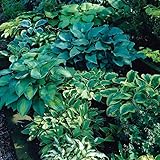
Hosta is the strongest all-purpose starting point for a shade border. It tolerates deep shade, performs well in filtered or dappled light, and comes in an unusually broad range of leaf sizes, colors, shapes, and textures. Mature plants can be compact or quite large, so hostas work equally well along a path, beneath taller trees, or in a broad mass planting.
#1 Best Overall
- 6 Fresh, Healthy Bare Root Starts
- 100% Grow Guarantee
- Blooms Summer Through Fall
- Perennializing Hostas
- Low Maintenance & Grows To About 18" Diameter
Use broad hosta leaves as a visual anchor, then contrast them with finely divided ferns, heart-shaped brunnera, or smaller groundcovers. Hostas can survive very dark locations, but growth may be slower there. Gold- and yellow-leaved cultivars generally develop their best color with some morning light; intense afternoon sun can be stressful, while complete darkness may reduce the brightness of the foliage. University of Minnesota Extension explains hosta light, size, and buying considerations.
Buying note: Both potted hostas and hosta bare-root plants are legitimate ways to establish a bed. Compare the cultivar’s mature spread and hardiness, and check the seller’s planting-season and shipping information before ordering. Bare-root availability does not guarantee that a particular cultivar or seller is suitable for your location.
2. Astilbe (Astilbe spp.) — best for moist shade and flower plumes
Astilbe adds upright, plume-like flowers above attractive, finely textured foliage. It is particularly effective in a moist, rich bed with dappled or partial shade, where its flower spikes provide vertical accents among hostas and ferns.
Free tools Windows power users keep installed
One-click scans. No signup required.
Do not use astilbe as a carefree solution for dry shade. Soil that repeatedly dries out—especially beneath mature trees—can lead to poor growth unless irrigation is dependable. Astilbe is a moisture-dependent choice, not simply a “plant it anywhere shady” perennial.
3. Bleeding heart (Lamprocapnos spectabilis, formerly commonly called Dicentra spectabilis) — best spring display
Traditional bleeding heart produces graceful, arching stems lined with heart-shaped flowers in spring. It suits moist, shady beds and creates a memorable early-season display beneath trees or beside a woodland path.
The important limitation is seasonal dormancy: traditional bleeding heart often retreats in early or midsummer. Place it beside hostas, ferns, astilbes, or heucheras so their later-season foliage can cover the space and maintain structure after the flowers and stems disappear. This pairing is more successful than expecting bleeding heart to remain a full-season focal point by itself.
4. Heuchera or coral bells (Heuchera spp.) — best foliage color
Heuchera is a foliage-first perennial for part shade or filtered light. Depending on the cultivar, leaves may be green, bronze, purple, silver, or marked with contrasting patterns. Its relatively compact form makes it useful near the front of a border, around steps, or between larger hostas and ferns.
Recommended Free Tools
Do not assume that every coral-bells cultivar has the same light tolerance. Leaf color, vigor, mature size, and tolerance of brighter conditions vary by cultivar, so follow the plant label. Pair the rounded or lobed foliage with the feathery texture of a fern or the broad leaves of a hosta. Heuchera is also useful beside bleeding heart when the bed needs foliage after spring flowering.
5. Japanese painted fern (Athyrium niponicum var. pictum) — best silver foliage
Japanese painted fern brings a cool silver and gray-green effect to moist, well-drained shade. Its arching, finely divided fronds make an especially strong contrast with broad hosta leaves and darker green woodland plants.
Ferns contribute foliage and texture rather than showy flowers, so use this plant when the design depends on layered leaves instead of constant blooms. Cultivars differ substantially in color and mature size. Confirm the label’s eventual height and spread before placing one near a walkway or under a low branch.
Rank #2

- Mix of perennial, hosta plants with heart-shaped leaves
- Produce mildly fragrant white or purple flowers on tall stems
- Low-maintenance plant, perfect for all level gardeners
- Pack includes: 6 bare roots
- Shade-tolerant, ideal for boarders, trees and shady areas
6. Lady fern (Athyrium filix-femina) — best delicate, native-style texture
Lady fern offers light, finely divided foliage where a bed needs a softer texture. It is suited to moist to wet shade or part shade and can occupy the middle or rear of a woodland-style planting without creating the heavy visual mass of a large-leaved perennial.
Windows Errors? Fix Them Before They Spread
Repair common Windows errors and clear accumulated junk for a smoother, more stable PC - no reinstall needed.Free scan · no reinstallOutdated Drivers Are Slowing You Down
One free scan finds every outdated or missing driver and matches the right update for your exact hardware.Free scan · exact hardware matchNative status and performance are regional, so treat “native-style” as a design description unless the plant is verified for your area. Pennsylvania State University includes lady fern among plants suitable for shade to part shade and wet to moist soil in its regional plant guide. Use the regional guide to compare moisture-loving shade plants.
7. Christmas fern (Polystichum acrostichoides) — best woodland structure
Christmas fern provides a strong, fern-like framework for a woodland bed and can help the planting look intentional beyond the main flowering season. Combine it with spring ephemerals and broad-leaved perennials for a useful contrast of form and timing.
Check local hardiness and drainage requirements rather than assuming that every fern performs identically across the United States. A shady site can still be poorly suited if it stays saturated or if its soil conditions differ from those of the plant’s natural habitat.
8. Brunnera (Brunnera macrophylla) — best heart-shaped leaves and spring blue flowers
Brunnera combines heart-shaped foliage with delicate blue spring flowers. It is a good fit for moist, shaded or filtered-light beds, particularly where hostas alone would create too much repetition.
What’s actually slowing this PC down?
Pick the symptom - the matching free tool is one click away.
Variegated cultivars can brighten a dark corner, but their vigor and light tolerance may differ from those of green-leaved forms. Check the cultivar label and provide enough moisture for consistent growth. Illinois Extension lists brunnera among distinctive alternatives for a shade garden. See Illinois Extension’s shade-garden plant suggestions.
9. Lungwort (Pulmonaria spp.) — best early-season color
Lungwort provides early pink-to-purple flowers and spotted or silver-marked foliage. The leaves can remain useful after flowering, especially when planted with hostas and ferns that extend the bed’s visual interest into summer.
Keep the soil reasonably moist and avoid treating lungwort as a universal answer for hot, dry shade. Its best placement is a cooler, more protected part of the garden where the soil does not repeatedly dry out.
10. Bigleaf ligularia (Ligularia dentata) — best bold foliage for damp shade
For a large-scale foliage statement, few shade perennials have the same presence as bigleaf ligularia. Its large leaves create a focal point in filtered to heavy shade, and later daisy-like flowers add another season of interest.
Rank #3

- Mix of perennial, hosta plants with heart-shaped leaves
- Produce mildly fragrant white or purple flowers on tall stems
- Low-maintenance plant, perfect for all level gardeners
- Includes 6, 12 or 24 hosta bare roots, 24 pack includes planting shovel
- Shade-tolerant, ideal for boarders, trees and shady areas
Moisture is central to its success. Ligularia can wilt in full sun or during hot weather, so it belongs in damp shade or a consistently moisture-retentive bed. Avoid placing it where the soil dries rapidly or where afternoon exposure creates heat stress.
11. Solomon’s seal (Polygonatum spp.) — best arching woodland form
Solomon’s seal adds graceful, arching stems and a natural woodland silhouette beneath trees or along a shaded border. Its foliage complements both coarse-leaved hostas and finely textured ferns, making it useful for connecting plants with contrasting shapes.
Species and cultivar availability varies by region. Confirm which Polygonatum is being sold, its mature dimensions, and whether the plant is appropriate for your local conditions rather than relying only on the common name.
12. Wild ginger (Asarum canadense) — best native groundcover for moist shade
Wild ginger is a low, spreading woodland groundcover for moist shade. Its foliage provides a dense-looking carpet beneath taller perennials, while its flowers are inconspicuous and should not be the reason to choose it.
Native status is geographic. Pennsylvania sources identify wild ginger as a native option for Mid-Atlantic shade and moist conditions, but that does not make it native throughout the United States. Verify regional status before using it in a native-plant project.
13. Virginia bluebells (Mertensia virginica) — best native spring ephemeral
Virginia bluebells bring valuable spring color to moist, part-shade woodland gardens. They are especially effective in naturalistic plantings beneath trees, where their seasonal timing fits the open spring canopy.
Like many spring ephemerals, Virginia bluebells may recede after flowering. Surround them with hostas, ferns, or other later-season plants that can occupy the visual space once the bluebells go dormant. Native status is regional; Pennsylvania’s native-plant guidance supports this plant for Mid-Atlantic shade and moist conditions.
14. Foamflower (Tiarella spp.) — best low-growing filler
Foamflower is a compact, low-growing perennial for the front of a shade border. Use it to soften the edge of a bed, fill spaces between larger plants, or create a textural transition between hostas and ferns.
Performance is not identical among all Tiarella species and cultivars. Verify hardiness, soil moisture needs, mature spread, and whether the selected cultivar retains foliage in your climate instead of assuming universal evergreen behavior.
Rank #4
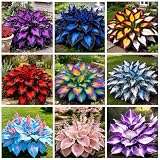
- Vibrant Plant: Hosta plants are grown primarily for their foliage. Enjoy the vibrant foliage changes throughout the growing season, dividing the plants every few years to keep them alive and looking beautiful throughout the garden
- Propagation: It can be sown at any time of the year, with spring and autumn being the best options for most people. September is a good time to sow indoors, with common hostas germinating and producing seedlings in about 1-3 weeks at 20°C
- Simple Care: Hosta plants prefer well-drained soil. It is one of the few plants that can grow well in the shade, but be careful not to go into full shade
- Attracting Pollinators: Hostas are easy-to-grow perennial flowers that bloom every year, and their brightly colored flowers attract hummingbirds to the garden
- Multiple Choices: Whether you have a large garden or limited balcony space, hosta seeds are easily grown in pots, containers or flower beds, making them perfect for experienced gardeners and beginners alike
15. Dwarf crested iris (Iris cristata) — best native spring edging plant
Dwarf crested iris is a useful low spring-flowering plant where a short edge is needed beneath taller hostas, ferns, or woodland perennials. It suits moist shade or part shade and is small enough for the front of a border or a path-side planting.
Pennsylvania’s plant guide lists it at approximately 4 to 8 inches for shade or part shade and moist soil. That size is regional guidance rather than a guarantee for every site, so allow room for spread and verify native status locally.
How to choose among shade perennials
1. Identify the type of shade
Watch the bed over a clear day and note whether it receives direct morning or afternoon light, filtered light through leaves, or almost no direct light. “Part shade,” “dappled shade,” and “deep shade” are not interchangeable labels.
Do these 3 things before closing this tab:
1Clear out junk files and repair common Windows errors2Scan for outdated or missing drivers - takes under a minute3Repair Windows errors before they cause bigger problems- Deep or heavy shade: prioritize foliage, texture, and form. Hostas, Christmas fern, lady fern, wild ginger, Solomon’s seal, and suitable heucheras are logical starting points. Flowering may be reduced, and growth can be slower in very dark sites.
- Dappled or filtered shade: this is the most flexible condition for combining flowers and foliage. Consider astilbe, bleeding heart, brunnera, lungwort, Japanese painted fern, foamflower, and Virginia bluebells.
- Part shade: plants receiving some direct light can offer more flowering, but the amount and timing of sun still matter. Morning light is often different from hot afternoon exposure.
2. Test moisture and drainage
Shade does not automatically mean wet soil. A bed beneath a mature tree may be shaded but dry because tree roots compete for water and the canopy intercepts rainfall. Conversely, a low area may remain wet after storms.
Choose astilbe, ligularia, bleeding heart, lady fern, Virginia bluebells, or other moisture-loving plants only where the soil stays appropriately moist and drains according to the plant’s needs. “Moist” is not the same as permanently saturated. If a site remains waterlogged, select plants specifically recommended for those conditions rather than assuming any shade perennial will tolerate it.
3. Treat dry shade as a separate challenge
Dry shade beneath mature trees is often harder than ordinary shade. Competition from roots, seasonal rainfall, soil compaction, and access to irrigation may matter more than the light level itself. Do not promise easy success simply because a plant label says “shade.”
Begin with plants that local extension services and reputable nurseries identify as adaptable to your specific dry-shade conditions. Improve establishment by planting when conditions are favorable, watering consistently while new plants develop roots, and allowing for the fact that tree-root competition may limit eventual size.
4. Match mature size, not just the nursery pot
A small container can conceal a plant’s eventual spread. Check mature height and width before planting, especially near foundations, walkways, patios, retaining walls, and construction improvements where crowding can create maintenance problems. University of Minnesota’s shade-plant information shows substantial variation, from low groundcovers to perennials that reach four feet or more. Review mature-size information before laying out a shade bed.
Independent reader supportYour contribution helps us test, update, and keep practical guides available for everyone.Design combinations that keep the bed interesting
A successful shade garden usually depends on contrast rather than a long list of unrelated plants. Combine:
- Broad leaves: hosta or brunnera.
- Fine texture: Japanese painted fern, lady fern, or Christmas fern.
- Colorful foliage: heuchera or a marked lungwort.
- Seasonal flowers: bleeding heart, astilbe, Virginia bluebells, brunnera, or dwarf crested iris.
- Low cover: wild ginger or foamflower.
Plan for succession. Bleeding heart and Virginia bluebells may retreat after spring, while hostas, ferns, heucheras, and other foliage plants can cover the transition. A bed designed around one brief flowering period may look empty for much of the year; a bed designed around overlapping foliage forms remains structured after individual plants finish blooming.
Before-you-buy checklist
- How many hours of direct or filtered light does the planting area receive?
- Is the shade deep, dappled, filtered, or part shade?
- Does the soil stay dry, evenly moist, wet, or saturated?
- Does the site drain after heavy rain?
- Are mature tree roots competing for water?
- What are the plant’s mature height and spread?
- Is the plant hardy in your USDA zone or local climate?
- Does the cultivar have different light, moisture, or size requirements from the species description?
- Will the plant go dormant after spring flowering?
- Is the plant actually native to your region, or merely native somewhere else in North America?
- For mail-order plants, are the cultivar, seller, shipping season, and planting instructions clear?
Where to buy shade perennials
Local nurseries and garden centers can be useful when you need plants suited to your regional hardiness and current planting conditions. Native-plant sellers are especially helpful when regional native status and habitat value are priorities. Availability, shipping restrictions, planting season, and cultivar selection vary geographically, so confirm those details before ordering live plants.
The Tool Desk
Outbyte Driver Updater FREEFix the driver behind crashes, sound loss and screen glitchesFind Drivers →Outbyte PC Repair FREEClear out junk files and repair common Windows errorsFree Scan →Mail-order bare-root hostas can be a practical format, but the format alone does not determine quality. Check the named cultivar, expected mature size, hardiness, seller information, shipping timing, and planting directions. Do not assume that a currently available online listing has been tested for your yard or that inventory is the same in every region.
Frequently asked questions
What is the easiest perennial to grow in full shade?
Hosta is one of the most dependable general-purpose choices for full or deep shade, particularly when the soil is not excessively dry or waterlogged. It offers many sizes and foliage colors, although very dark sites may slow growth and reduce the color intensity of some cultivars.
What shade perennials tolerate wet soil?
Astilbe, bigleaf ligularia, lady fern, bleeding heart, and Virginia bluebells are among the plants on this list associated with moist conditions. Confirm drainage and regional suitability: wet soil is not identical to permanently saturated soil, and individual cultivars may differ.
What can I plant beneath mature trees?
Start by determining whether the site is merely shaded or also dry from tree-root competition. Hostas, selected ferns, Solomon’s seal, wild ginger, and some heucheras can be considered for deep shade, but establishment may require careful watering. Moisture-loving plants such as astilbe and ligularia are poor choices for a bed that regularly dries out.
Do all shade perennials flower?
No. Some of the strongest shade plants are chosen primarily for foliage and texture, including hostas, ferns, heucheras, Solomon’s seal, and wild ginger. Others flower early and then become dormant or less prominent, so combine them with later-season foliage plants.
Are these plants native everywhere in the United States?
No. Native status is geographic. Virginia bluebells, wild ginger, dwarf crested iris, and some ferns may be native or regionally appropriate in one part of the country but not another. Check state or regional native-plant references before labeling a plant native to your area.
Frequently Asked Questions
What is the easiest perennial to grow in full shade?
Hosta is one of the most dependable choices for full or deep shade, provided the soil is not excessively dry or waterlogged. It offers many foliage sizes and colors, though very dark locations can slow growth.
What shade perennials tolerate wet soil?
Astilbe, bigleaf ligularia, lady fern, bleeding heart, and Virginia bluebells are moisture-suitable options from this list. Match the plant to drainage as well as moisture; permanently saturated soil requires specialized choices.
Are these shade perennials native everywhere in the United States?
Not necessarily. Native status depends on geography. Verify plants such as Virginia bluebells, wild ginger, dwarf crested iris, and regional ferns with a local native-plant or extension resource.
The Bottom Line
The best shade-perennial planting is matched to conditions rather than ranked universally. Use hostas and ferns for dependable structure, add flowering plants such as astilbe or bleeding heart where moisture is adequate, and use woodland groundcovers or spring ephemerals only when their regional and seasonal behavior fits the site. Shade type, soil moisture, drainage, mature size, and local hardiness should determine the final plant list.
Quick Recap
Product prices and availability are accurate as of the date/time indicated and are subject to change. Any price and availability information displayed on Amazon at the time of purchase will apply.