Some links on this page are affiliate links: if you buy through them we may earn a commission, at no extra cost to you.
A good toothbrush holder should do more than match the soap dispenser. It should keep brush heads separated, let water drain, avoid trapping moisture, stay stable during daily use, and fit the way the vanity is actually built. For most homes, the best default is an open-air vertical holder with separated slots and a removable washable drip tray. From there, the right choice depends on counter space, user count, finish, tile layout, electrical needs, and whether the bathroom is a quick refresh or part of a larger remodel.
On our bathroom projects, we treat the toothbrush holder as part of the vanity zone: faucet reach, backsplash height, mirror clearance, outlet location, lighting, medicine cabinet storage, and cleaning access all affect whether a small accessory looks intentional or becomes clutter. The good news is that this is one of the lowest-cost bathroom upgrades available. Basic holders often run $5 to $15, decorative ceramic or glass pieces commonly land between $10 and $40, wall-mounted stainless or glass holders range roughly $9 to $75, and many UV or drying holders fall around $20 to $50. Installation can be free if it sits on the counter, or about $65 to $150 if a handyman is mounting hardware, especially into tile.
As an Amazon Associate I earn from qualifying purchases.
Free tools Windows power users keep installed
One-click scans. No signup required.
Start With Hygiene, Then Choose the Look
The American Dental Association’s basic guidance is simple: rinse toothbrushes after use, store them upright, and let them air-dry. That immediately rules out a lot of novelty holders that look clever online but trap water around the handle or enclose a wet brush head. A closed container is useful for travel, but routine storage of a damp brush in a sealed holder can encourage microbial growth.
The most hygienic designs have four traits: vertical storage, open airflow, separated slots, and a removable tray or cup that can be washed. If two brush heads touch, the holder is too cramped. For a family bathroom, we like individual slots spaced at least 1 inch apart at the top, with enough depth to keep brushes from tipping when children put them back quickly. For electric toothbrushes, measure the handle diameter before buying. Many manual-brush slots are too narrow for electric handles, which often need openings closer to 1.25 to 1.5 inches.
#1 Best Overall

- Detachable & Easy to clean: The tooth brush holder is easy to disassembled for cleaning. Just take apart the base of the bathroom toothbrush holder and remove the insert, then rinse it with water or wipe clean with damp a cloth.
- Bamboo Divider: The bathroom caddy has a bamboo divider, which make electric toothbrushes and toothpaste fit nicely in individual compartments. Also, Bamboo partition is hung on the shelf, improving the problem of mould caused by the contact of bamboo with water.
- Unique Design: This toothbrush cup holder has a unique design that incorporates several innovative elements. The streamlined design of the stand is classy and sleek, and ventilation holes on both sides allow air to flow and prevent moisture from growing on the toothbrush. In addition, the container features drainage holes and a water-receiving tray for easy drying and to avoid water build up.
- Premium Material: Made of plyprpylene material, very sturdy, which is shatter-resistant plastic. The tootbrush and toothpaste holder complements the bamboo wood, giving it a fresh scent and bringing us closer to nature.
- Space Saver: The toothbrush organizer measures 3.5"L×3.5"W×4.5"H, which is roomy to hold your kids electric toothbrush, tooth paste, razor, floss, tongue scrapers, dental accessories, various facial hair trimmers and other bathroom essentials. This ensures that everything is neatly organized and conveniently stored, helping you keep everything in place while maximizing space efficiency.
Drainage matters as much as appearance. A solid-bottom cup without a liner collects cloudy water and toothpaste residue. If you love the look of a ceramic tumbler, place a removable silicone insert or washable drip tray inside it. For stone countertops, especially marble, limestone, or honed surfaces, use a tray under the holder to prevent rings and toothpaste staining.
The Best Creative Toothbrush Holder Styles for 2026
The strongest options this year combine design personality with real wet-room performance. These are the categories we would consider first in a finished bathroom, ranked by where they work best.
What’s actually slowing this PC down?
Pick the symptom - the matching free tool is one click away.
Sculptural Ceramic Cups
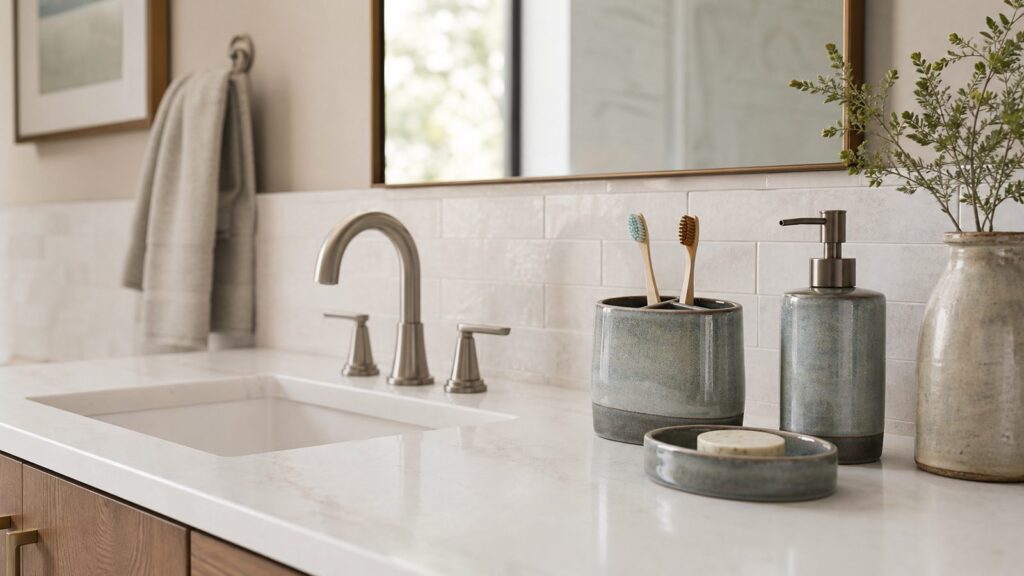
A glazed ceramic cup is the easiest way to make a vanity feel decorated without remodeling. Look for a wide base, a fully glazed interior, and enough height to support the brush handles. A good size is about 3 to 4 inches wide and 4 to 5 inches tall. Ceramic works especially well in powder rooms and guest baths where the holder can double as a small design object.
Cost: usually $10 to $40 for mass-market ceramic, and $30 to $100 or more for handmade pieces. Avoid unsealed clay or rough interiors that hold residue.
Terrazzo, Stone-Look, and Solid Surface Tumblers
Terrazzo and stone-look holders pair well with tile-heavy bathrooms because they echo the materials already in the room. Choose resin, sealed stone, or solid-surface construction instead of porous natural stone unless you are willing to seal and clean it carefully. These holders are heavier, which helps prevent tipping, but they can chip a stone counter if dropped.
Cost: commonly $15 to $45 for resin or stone-look pieces, and $40 to $100-plus for boutique or real-stone versions.
Recommended Free Tools
Wall-Mounted Stainless Steel Rails
For small bathrooms, a wall-mounted rail or cup holder is often the cleanest solution. It frees up 8 to 20 square inches of counter space and makes wiping the vanity faster. Stainless steel is the practical choice. SUS304 or 304 stainless is preferred in wet areas because it resists corrosion better than low-grade plated metal.
Cost: simple wall-mounted stainless holders can be around $9 to $25, while larger multi-user shelves or systems with dispensers often run $35 to $70. A single name-brand wall-mount stainless holder can be found around the $10 range, while double frosted-glass and SUS304 models can approach $75.
Frosted-Glass Tumbler Holders
Frosted glass mounted in a metal ring gives a bathroom a more finished, hotel-style look. It works well with chrome, brushed nickel, and polished nickel fixtures. The caution is durability. In a children’s bath, we usually avoid glass at lower heights. In a guest bath or primary suite, it can be a strong choice if the tumbler lifts out for cleaning.
Rank #2

- Spacious storage: Holds up to 4 toothbrushes and a full tube of toothpaste upright, making this toothbrush organizer a smart choice for shared bathrooms and family spaces
- Quick, easy reach: Wide angled opening makes this toothbrush organizer simple to access, so toothbrushes and toothpaste remain within easy reach
- Hygienic ventilation: Top and bottom slots provide airflow that helps toothbrushes dry faster, maintaining a clean and hygienic toothbrush holder
- Divider with flexible grips: Removable divider keeps brushes separated and prevents heads from touching, while allowing thorough cleaning whenever needed
- Durable stainless steel: Sleek, rust-resistant construction blends with modern bathroom accessories and ensures long-lasting use
Bamboo or Wood Slotted Organizers
Wood can warm up a white or gray bathroom, but unfinished wood is a poor choice next to a sink. If you choose bamboo or wood, look for sealed surfaces, raised feet, and drainage that keeps the base from sitting in water. Avoid porous wood blocks with drilled holes unless they can be cleaned thoroughly and dried.
Quick wins for a faster PC:
Repair Windows errors before they cause bigger problemsFix Now →Scan for outdated or missing drivers - takes under a minuteDriver Scan →Cost: expect roughly $12 to $35 for typical bamboo organizers, with higher prices for larger vanity trays.
Magnetic and Electric-Toothbrush Docks
Electric toothbrushes create a different storage problem: bigger handles, chargers, cords, and heads that need room to dry. A magnetic wall dock or dedicated electric holder can keep the charging base off the counter, but verify the handle diameter and weight rating. Also plan the cord path. A cord stretched across the sink area makes the bathroom look unfinished and creates a cleaning problem.
In remodels, our preferred solution is often a recessed medicine cabinet with an interior outlet or a vanity drawer outlet. That keeps chargers accessible without leaving them exposed on the countertop.
Drawer Inserts
A drawer insert is the best solution when the homeowner wants a clear counter. It works only if the brushes can dry. Choose an insert with open slots or a ventilated tray, and avoid closing wet brush heads into a tight plastic compartment. For electric brushes, confirm drawer depth and cord clearance. Many vanity drawers are 4 to 6 inches deep, while some electric handles are too tall to lie comfortably with the head attached.
Adhesive Shower or Mirror Holders
Adhesive holders are useful for renters, dorms, and temporary setups. They are not our first choice for a long-term family bathroom. Adhesives depend heavily on surface prep, tile texture, humidity, weight, and cure time. Smooth glazed tile and glass are better than textured tile or painted drywall. Clean the surface, let it dry completely, and respect the manufacturer’s cure time, often 12 to 24 hours, before loading it.
UV or Heated-Drying Holders
UV and drying toothbrush holders appeal to homeowners who want a tech-forward bathroom, but they introduce electrical and maintenance considerations. Many cost around $20 to $50, with higher-end multi-slot models above that. Before buying, confirm whether the unit is battery-powered, USB-rechargeable, or corded. If it needs a nearby receptacle, plan the placement carefully and keep it away from direct sink spray.
Cost Comparison: What You Actually Pay
The holder itself is usually inexpensive. The cost changes when you drill tile, add blocking, coordinate finishes, or move electrical service during a larger remodel. Here is a practical 2026 cost guide for US homeowners.
| Holder Type | Typical 2026 Cost | Best Use | Watch For |
|---|---|---|---|
| Basic countertop plastic, silicone, or stainless | $5-$15 | Rentals, quick refreshes, kids’ baths | Lightweight bases can tip; trays need cleaning |
| Decorative ceramic, glass, resin, or stone-look | $10-$40 | Guest baths, powder rooms, finished vanities | Protect stone counters from rings and residue |
| Designer, handmade, marble, or terrazzo | $30-$100+ | Primary baths and high-design spaces | Porosity, weight, and cleaning access |
| Wall-mounted stainless or glass holder | $9-$75 | Small vanities, shared baths, cleaner counters | Anchor choice, tile drilling, alignment |
| Wall-mounted shelf with dispenser | $35-$70 | Family bathrooms with limited storage | Dispensers need regular cleaning |
| UV or heated-drying holder | $20-$50+ | Electric toothbrush users, tech-forward baths | GFCI outlet location, cords, replacement parts |
| DIY holder | $5-$35 | Temporary or custom decorative projects | Drainage, washable materials, waterproofing |
| Handyman installation | $65-$150 | Drilled wall mount, tile, multiple accessories | Minimum trip charge; tile bits may add cost |
If you are already refreshing the bathroom, bundle the work. Installing a toothbrush holder, towel bar, robe hook, mirror, shelf, and toilet paper holder in one visit is usually more efficient than paying a separate minimum service call for each item. If the bathroom is moving into remodel territory, cosmetic updates can start around $80 to $120 per square foot, while mid-range remodels are often cited around $180 to $280 per square foot. Full bathroom remodels commonly range from about $5,000 to $30,000 or more depending on layout, tile, plumbing, electrical work, and finish level.
Rank #3

- DETACHABLE & EASY TO CLEAN: This plastic toothbrush holder with drain is easy to take apart and thorough clean. Just take apart the toothbrush holder bottom first and take the insert out, then rinse the bathroom toothbrush holder with water or wipe by a duster cloth. It is recommended to pour water to wash regularly to avoid residues of stains.
- COMPACT SIZE & BAMBOO DIVIDER: Measuring 3.6" L × 3.6" W × 4.8" H, this compact square toothbrush holder fits well in small sink areas and helps save valuable countertop space. The removable natural bamboo divider creates 3 organized sections for toothbrushes, toothpaste, and other essentials, while also allowing for easier routine cleaning.
- FOOD-GRADE MATERIAL & VENTILATION: Boperzi plastic toothbrush and toothpaste holder is made of ABS+PP+PTR, not BPA, very sturdy and durable. This rust-proof electric tooth brush caddy is suitable for kids and adults, family. And both sides have many ventilation holes, is very breathable.
- ANTI-SLIP & DRAINAGE: The heightened rubber anti-skid strips at the bottom make the toothpaste storage container stand stable. The protruding strips prevents the brushing teeth cup from moving and falling. This bottom of toothbrush caddy has four drains, excellent internal liquidity.
- MULTIFUNCTIONAL STORAGE: The electric toothbrushes, razor, comb, dental floss and makeup brush and more can be neatly placed inside this countertop to organizer and storage. Saves space and lets your messy counter of bathroom, vanity, kitchen, desk etc. no longer in chaos.
How to Match the Holder to Your Bathroom Style
The best toothbrush holder should look like it belongs to the faucet, cabinet hardware, countertop, and tile. It does not need to match every accessory from the same boxed set. In fact, overmatching can make a bathroom feel generic.
Use chrome or stainless with cool-toned faucets, white counters, blue-gray tile, and modern medicine cabinets. Use brushed brass with warm white walls, walnut vanities, cream tile, or aged bronze lighting. Matte black works well when repeated in cabinet pulls, mirror frames, shower trim, or towel bars, but it can look isolated if it is the only black item in the room. Ceramic, terrazzo, and glass are good choices when the bathroom already has strong tile or a decorative backsplash.
Scale also matters. A 24-inch vanity cannot handle a large multi-slot caddy, soap tray, candle, and cosmetics without looking cluttered. On compact vanities, choose a wall-mounted holder or one narrow cup no wider than 3 inches. On a 60- to 72-inch double vanity, two smaller holders often look better than one oversized family organizer sitting in the middle.
Countertop vs Wall-Mounted: Which Is Better?
Countertop holders are best for renters, low-risk updates, guest bathrooms, and anyone who wants flexibility. They require no drilling, no anchors, and no commitment. Choose a weighted base, washable insert, and a footprint that leaves at least 2 inches of clearance from faucet handles and soap dispensers.
Wall-mounted holders are better when counter space is limited or when the bathroom gets used hard every day. They keep the vanity easier to wipe down and reduce the chance of cups being knocked over. For children’s baths and aging-in-place layouts, wall mounting can also keep the sink area more usable, as long as the holder is placed within comfortable reach.
For long-term durability, screw-mounted hardware beats adhesive. Use anchors appropriate to the wall. On drywall, light-duty plastic anchors may hold a small holder, but toggle anchors or mounting into a stud are more reliable. On tile, use the correct bit, drill slowly, avoid forcing the tile, and seal penetrations as needed. If the holder will see daily use from multiple people, mechanical fasteners are worth it.
Placement Rules That Keep the Vanity Clean
Good placement is where construction experience shows. A holder can be attractive and still fail if it blocks the faucet handle, sits in the sink splash zone, or collides with the medicine cabinet door.
For countertop holders, place the base near the sink but not directly where water pools. Keep brush heads clear of the counter, and avoid storing toothbrushes directly beside the toilet if the vanity layout offers a cleaner option. For wall-mounted holders, wait until the backsplash, mirror, faucet, and lighting are installed before final placement. We typically want the holder visually aligned with another element, such as the faucet centerline, mirror edge, outlet, or tile joint.
PC Slower Than It Used to Be?
A free scan shows the junk files, broken settings and background clutter dragging Windows down - then fixes them in one click.Free scan · Windows 10 & 11Outdated Drivers Are Slowing You Down
One free scan finds every outdated or missing driver and matches the right update for your exact hardware.Free scan · exact hardware matchReach height depends on the user. For adults, a holder mounted around 42 to 48 inches above the finished floor often feels natural, depending on vanity height. For children, lower placement may be appropriate, but avoid putting fragile glass within easy impact range. In accessible bathrooms, consult the 2010 ADA Standards when reach range matters. A common planning target is to keep frequently used items within accessible forward or side reach ranges, with clear floor space and no awkward obstruction from the vanity. Exact compliance depends on the room layout, mounting height, approach direction, and whether the bathroom is required to meet accessibility standards.
Rank #4

- Detachable & Easy to clean: The tooth brush holder is easy to disassembled for cleaning. Just take apart the base of the bathroom toothbrush holder and remove the insert, then rinse it with water or wipe clean with damp a cloth.
- Bamboo Divider: The bathroom caddy has a bamboo divider, which make electric toothbrushes and toothpaste fit nicely in individual compartments. Also, Bamboo partition is hung on the shelf, improving the problem of mould caused by the contact of bamboo with water.
- Unique Design: This toothbrush cup holder has a unique design that incorporates several innovative elements. The streamlined design of the stand is classy and sleek, and ventilation holes on both sides allow air to flow and prevent moisture from growing on the toothbrush. In addition, the container features drainage holes and a water-receiving tray for easy drying and to avoid water build up.
- Premium Material: Made of plyprpylene material, very sturdy, which is shatter-resistant plastic. The tootbrush and toothpaste holder complements the bamboo wood, giving it a fresh scent and bringing us closer to nature.
- Space Saver: The toothbrush organizer measures 3.5"L×3.5"W×4.5"H, which is roomy to hold your kids electric toothbrush, tooth paste, razor, floss, tongue scrapers, dental accessories, various facial hair trimmers and other bathroom essentials. This ensures that everything is neatly organized and conveniently stored, helping you keep everything in place while maximizing space efficiency.
Electrical Safety for UV and Electric-Toothbrush Setups
Powered holders and electric toothbrush chargers require more planning than a simple cup. Bathroom receptacles should be GFCI protected. Modern bathroom electrical planning also generally expects receptacles serving bathroom counters to be on appropriate bathroom branch circuits, with placement that supports safe use near the vanity. If you are adding, relocating, or replacing outlets, use a licensed electrician and follow local code requirements.
Do not run a charger cord across the sink bowl or leave a USB cable dangling where it gets wet. For a clean primary bath, the best options are an outlet inside a medicine cabinet, an outlet inside a vanity drawer designed for electrical use, or a receptacle placed so the charger sits away from direct splash. If you are already remodeling, this is the time to solve it. Moving electrical later can mean opening finished drywall, patching, repainting, or disturbing tile.
Permits vary by jurisdiction, but new electrical work in a bathroom often requires proper permitting or inspection. Swapping a countertop holder does not. Mounting a holder usually does not. Adding a recessed cabinet with internal power, moving a GFCI receptacle, or installing a drawer outlet is a different scope.
The Tool Desk
Outbyte PC Repair FREERepair Windows errors before they cause bigger problemsFix Now →Outbyte Driver Updater FREEScan for outdated or missing drivers - takes under a minuteDriver Scan →When to DIY vs When to Hire a Pro
DIY is reasonable for most countertop holders, adhesive holders, drawer inserts, and simple accessories mounted into drywall. Plan on 10 to 30 minutes for a countertop or adhesive setup, plus any adhesive cure time. For a screw-mounted holder in drywall, a careful homeowner can usually complete the work in 30 to 60 minutes with a level, tape measure, drill, screwdriver, and the right anchors.
Hire a pro when the holder needs to be drilled into porcelain tile, natural stone, glass tile, or a full-height backsplash where a cracked tile would be expensive to replace. Also bring in help when the accessory needs blocking, when several bath accessories must align across a finished wall, or when the project includes electrical changes for UV holders or electric toothbrush charging.
Tile drilling is where small jobs become costly. A simple wall accessory may take a professional less than an hour, but the risk is in the surface. Porcelain is hard, glass tile can chip, and natural stone can crack if drilled incorrectly. That is why a $65 to $150 service call can be worth it for a visible, finished bathroom.
Creative DIY Ideas That Do Not Create Maintenance Problems
DIY toothbrush holders can work if the materials are washable and water-resistant. A small glazed cup on a stone tray, a sealed ceramic vessel with a removable insert, or a stainless cup mounted in a wood shelf can be attractive and practical. Keep the design open to air and easy to rinse.
Do these 3 things before closing this tab:
1Repair Windows errors before they cause bigger problems2Fix the driver behind crashes, sound loss and screen glitches3Clear out junk files and repair common Windows errorsAvoid mason jars without drainage, raw wood blocks with drilled holes, enclosed novelty containers, and anything lined with fabric, cork, or unsealed clay. Those materials look charming at first and then absorb moisture, toothpaste, and residue. If you use wood, seal every surface, lift it off the counter with feet, and inspect it regularly for swelling or discoloration.
For children, use color-coded individual slots, rounded edges, and a stable weighted base. Silicone and plastic are less elegant than glass, but they survive daily use. Place the holder low enough for children to use without climbing, but not so close to the counter that brush heads touch the surface.
Best Value

- 【Fully Detachable & Easy to Clean】Featuring an innovative fully removable design, every part of the tooth brush holder can be easily taken apart for thorough cleaning. No more hard-to-reach corners just with a quick rinse or wipe.
- 【Dry-Wet Separation & Keep Dry Design】The center compartment features a ventilated bottom for quick drying, while the innovative drawer-style water collection tray at the base captures dripping water, keeping your countertop dry and tidy.
- 【Dual-Use & Tool-Free Installation】This toothbrush holder can be used both on the countertop or wall-mount. Wall-mounting use with included adhesive. Countertop use with the 4 silicone pads ensure strong grip and prevent tipping with a gentle press.
- 【Adjustable Dividers for Organized Storage】The movable divider lets you switch between separate compartments and one large space according to your needs. Keep toothbrushes, toothpaste, and other items neatly separated and easily accessible.
- 【Clear View & Space-Saving Build】Made of thickened PET material that is sturdy and durability, the transparent view, no stain can hide. Slim profile is designed to fit neatly into narrow spaces, making organization efficient in any countertop.
When a Toothbrush Holder Should Become a Vanity Refresh
Sometimes the toothbrush holder is not the real problem. If the counter is crowded with chargers, cosmetics, cups, toothpaste, razors, and hair tools, a new holder will only organize one small piece of a larger storage issue. That is when we look at the vanity zone as a system.
A modest refresh might include a new medicine cabinet, wall-mounted accessories, a backsplash, better lighting, a matching tray, and improved drawer organizers. This can often be done without moving plumbing. A larger remodel may involve a wider vanity, new countertop, recessed storage, relocated outlets, new tile, and improved ventilation. Costs vary widely, but the jump from a $25 holder to a $5,000-plus bathroom project should be driven by function, not frustration with clutter alone.
Our rule of thumb: if the bathroom works well and only the counter looks messy, start with accessories. If the vanity lacks drawers, outlets are poorly placed, the mirror is too small, lighting is weak, and everyone is sharing one crowded surface, bundle the holder decision into a broader plan. Small hardware choices look best when the room behind them is doing its job.
Our Practical Recommendation
For most homes, choose an open-air holder with separated slots, a washable drip tray, and a material suited to wet rooms: 304 stainless steel, brass, glazed ceramic, glass, solid surface, sealed stone, resin, or high-quality silicone. Use a countertop holder when flexibility matters. Use a wall-mounted holder when counter space and cleaning matter more. For electric toothbrushes, solve the charger location before buying the holder.
The most creative choice is not always the loudest one. It is the one that fits the faucet, tile, cabinet hardware, cleaning routine, and people who use the bathroom every morning. When that detail is handled well, the vanity feels calmer, the counter stays cleaner, and the bathroom looks more finished without a major investment.
Frequently Asked Questions
What is the most hygienic type of toothbrush holder?
An open-air vertical holder with separated slots and a removable washable drip tray is usually the most hygienic choice. It lets brushes dry upright and keeps brush heads from touching.
Quick wins for a faster PC:
Clear out junk files and repair common Windows errorsFree Scan →Fix the driver behind crashes, sound loss and screen glitchesFind Drivers →Should a toothbrush holder be open or covered?
For daily home use, open is usually better. A covered holder can trap moisture around a damp toothbrush, while open storage allows airflow and faster drying.
Are wall-mounted toothbrush holders better than countertop holders?
Wall-mounted holders are better for small vanities and easier cleaning, but countertop holders are simpler, renter-friendly, and easier to replace. For long-term use, screw-mounted hardware is more reliable than adhesive.
How much does it cost to install a wall-mounted toothbrush holder?
A simple handyman installation commonly runs about $65 to $150 for a single item or minimum service call. Drilling tile, stone, or glass can increase cost because the risk and setup are higher.
Can I drill a toothbrush holder into bathroom tile?
Yes, but use the correct tile bit, drill slowly, and confirm the final location after the backsplash, faucet, and mirror are installed. For porcelain, stone, or glass tile, hiring a pro is often worth it.
What’s actually slowing this PC down?
Pick the symptom - the matching free tool is one click away.
Do UV toothbrush holders need a GFCI outlet?
If a UV holder or electric toothbrush charger plugs in near a bathroom vanity, it should be served by GFCI-protected bathroom receptacle wiring that complies with local code. Use a licensed electrician for new or relocated outlets.
Quick Recap
Product prices and availability are accurate as of the date/time indicated and are subject to change. Any price and availability information displayed on Amazon at the time of purchase will apply.

