Some links on this page are affiliate links: if you buy through them we may earn a commission, at no extra cost to you.
A good low profile range hood should do three things well: fit cleanly under or inside your cabinetry, capture cooking fumes before they spread, and vent in a way that will pass inspection. The best-looking hood in the showroom can still disappoint if the duct is undersized, the blower is too loud, or the front burners sit outside the capture area.
On our kitchen remodels, we treat the hood as part appliance, part mechanical system. The stainless face, LED lights, and touch controls matter, but the duct route, cabinet depth, outlet location, blower rating, and makeup-air requirements matter more. For many US kitchens, the practical sweet spot is a ducted 30-inch or 36-inch low profile hood in the 300 to 400 CFM range, with washable metal filters, quiet medium-speed operation, and a short, smooth duct path to the exterior.
That does not mean every kitchen needs the same hood. A homeowner who boils pasta twice a week has different needs than someone who sears steaks, cooks with a wok, or has a high-output gas range. This guide explains how to choose the right low profile range hood by size, style, CFM, ducting, noise, cost, and installation complexity.
What’s actually slowing this PC down?
Pick the symptom - the matching free tool is one click away.
As an Amazon Associate I earn from qualifying purchases.
What Counts as a Low Profile Range Hood?
A low profile range hood is a ventilation hood designed to keep a slimmer visual line than a traditional chimney or bulky under-cabinet hood. Most models are built to tuck under upper cabinets, slide out only when needed, or disappear into a custom cabinet surround.
The most common types are:
- Slim under-cabinet hoods: Usually 30 inches or 36 inches wide, often 5 to 10 inches tall at the front, and mounted below an upper cabinet.
- Slide-out hoods: A shallow front panel pulls forward during cooking, increasing capture depth while staying hidden when closed.
- Built-in inserts: The blower and filter assembly installs inside a custom wood or metal hood enclosure.
- Compact wall hoods: A lower-profile version of a wall-mounted hood, often used where cabinets are removed above the range.
- Convertible ducted/ductless models: These can either vent outdoors or recirculate through grease and charcoal filters, depending on installation.
Widths commonly match standard ranges and cooktops: 30 inches for a standard range, 36 inches for wider cooking surfaces, and sometimes 42 inches or more for pro-style appliances. When space allows, matching or slightly exceeding the cooktop width improves capture, especially with gas burners or frequent high-heat cooking.
#1 Best Overall

- WORK EFFICIENTLY RANGE HOOD: Under cabinet range hood 30 inch with 2-speed exhaust fan quickly removes greese and smoke in your kitchen, small profile are very suitable small kitchen about condos and apartment. This vent hood is hard-wired without plug
- STAINLESS STEEL KITCHEN STOVE VENT HOOD: This 30-inch under-cabinet range hood is built with 430-grade stainless steel for long-lasting rust and corrosion resistance. The multi-layer aluminum filter efficiently traps grease (replacement carbon pad sold separately, Model FGS-TF39-LW)
- EASY OPERATION VENT HOOD: Rocker button control, simple operate. Easy to turn on and off, Low/ High Speed button suitable for different cooking method. 2W LED offer enough brightness to meet your cooking need. Quiet operation keeps noise level less than 45dB at high speed
- EASY INSTALLATION AND GREAT LOOK: Easy to install with the instruction manual and the installation guide video. Stylish and simple appearance, kitchen exhaust fan suitable for both modern kitchen and old style. Range Hoods Product Dimensions: 29.9 in. (W) x 17.5 in. (D) x 4.7 in. (H)
- PACKAGE INCLUDES: Including a under cabinet range hood, recirculation sheet, air outlet, manual, installation instruction, multi-layer aluminum filter without charcoal filter and hard-wired without plug (plug sold separately, model: FGS-TF39-DYX)
The Best Low Profile Range Hood Types by Kitchen Situation
The “best” low profile hood depends less on brand name and more on what the kitchen can support. Before we recommend a model category, we look at the cabinet layout, exterior wall location, ceiling joists, range type, and how the homeowner cooks.
The Tool Desk
Outbyte Driver Updater FREEScan for outdated or missing drivers - takes under a minuteDriver Scan →Outbyte PC Repair FREERepair Windows errors before they cause bigger problemsFix Now →Best Overall Choice: Ducted Under-Cabinet Hood, 300 to 400 CFM
For most remodels, a ducted low profile under-cabinet hood rated around 300 to 400 CFM is the most balanced option. It can remove smoke, grease, steam, odors, and gas cooking byproducts outdoors without creating the same code and comfort complications that often come with larger blowers.
Look for a hood with a 6-inch round duct connection or a rectangular equivalent approved by the manufacturer. Smooth metal duct is preferred. A short run through an exterior wall is usually better than a long run through cabinets, ceilings, and a roof.
This category works well for standard 30-inch and 36-inch ranges, everyday cooking, moderate frying, and homeowners who want a clean cabinet line without giving up real ventilation.
Best for Tight Cabinet Sightlines: Slide-Out Hood
A slide-out hood is useful when the homeowner wants the hood nearly invisible from the front of the kitchen. The blower body sits inside or under the cabinet, and the front panel pulls out during use. That extra extension helps with capture, especially over front burners.
Quick wins for a faster PC:
Scan for outdated or missing drivers - takes under a minuteDriver Scan →Repair Windows errors before they cause bigger problemsFix Now →The tradeoff is cabinet planning. A slim front can still require meaningful hidden depth inside the cabinet. We verify the hood body height, blower location, duct transition, and remaining shelf space before ordering. It is common to lose part or all of the cabinet above the hood.
Best for Custom Kitchens: Built-In Insert
For high-end remodels, a low profile insert can be the cleanest option. The visible hood may be a custom painted wood surround, stainless trim, or a cabinet-style panel, while the insert handles the actual ventilation.
Inserts require more coordination than basic under-cabinet hoods. The enclosure must meet manufacturer clearances, support the hood weight, allow filter access, and provide a clean path for ducting. If the surround is too shallow, the insert may look good but fail to capture smoke from the front burners.
Best Fallback: Convertible or Ductless Low Profile Hood
Ductless hoods are a fallback, not a first choice. They pull air through grease filters and charcoal filters, then send that air back into the kitchen. They can reduce grease and some odor, but they do not exhaust heat, moisture, carbon monoxide, nitrogen dioxide, or other combustion byproducts outdoors.
We consider ductless only when exterior ducting is impractical because of building layout, structural constraints, condo rules, or budget. For gas ranges, heavy frying, or frequent high-heat cooking, a ducted hood is strongly preferred.
Rank #2

- 【Stainless Steel Range Hood】Our kitchen hood is made of 430 grade stainless steel with brushed finish, simple, classic, and easy to clean. It is equipped with a built-in bright energy-saving LED light to evenly illuminate your cooking area,allowing you to clearly see while cooking.
- 【Improves Kitchen Air Quality】Our under cabinet range hood 30 inch provides a MAX 230 CFM performance to quickly remove smoke and greese in your kitchen while keeping the noise low, and the 2-speed rocker switch allows for quick fan adjustments.
- 【TWO-WAY VENTING】This range hood comes with vertical (top venting) an exhaust pipe is required(NOT included), and horizontal (rear venting). lf you don't have an outlet to the outside, you can choose to install it as ductless installation. A Carbon filter # CF-3976 is inclued in this vent hood.
- 【Ultra Slim Design】Product Dimensions: 29.9" W×17.5" L×4.7"H, which is slimmer than most other range hoods.Our under cabinet range hood is designed for small kitchens.The compact size fits your cabinet perfectly and saves space.Perfect for condos and apartments.
- 【ONE YEAR LIMITED WARRANTY】SNDOAS under cabinet 30 inch range hood (hard-wired WITHOUT plug, Purchase Part # PCK-GF3976) with 1x aluminum mesh filter with carbon cotton composite, 1x round air outlet,1x indoor baffle (required for airexhaust outside, not required when exhausting inside), 1x user manual. If you have any problems with this range hood, please kindly contact our customer service.
How Much CFM Do You Need?
CFM, or cubic feet per minute, measures how much air the fan can move under rating conditions. It is useful, but it is not the whole story. Real-world performance also depends on hood depth, burner coverage, duct diameter, duct length, elbows, static pressure, filter cleanliness, and whether the homeowner actually turns the hood on.
For typical residential kitchens, 200 to 400 CFM is often the practical working range. Basic cooking may be fine around 200 to 250 CFM. A more active kitchen with gas burners, regular frying, or open-plan living space is usually better served by 300 to 400 CFM. High-output ranges, indoor grilling, wok cooking, and large cooktops may need more, but those systems require more planning.
There is an important code threshold: under IRC-based codes, range hoods over 400 CFM can trigger makeup-air requirements. Local amendments vary, so the exact requirement should be confirmed with the local building department. In plain terms, if a hood exhausts a lot of air, the house may need a designed way to bring replacement air back in. Without that, the hood can depressurize the home, make doors harder to open, pull fireplace smoke or combustion gases backward, or reduce HVAC comfort.
Recommended Free Tools
That is why we do not automatically chase the highest CFM number. A well-installed 350 CFM hood with a short, smooth duct can outperform a 900 CFM hood squeezed through a poor duct route.
Size and Fit: What to Measure Before You Buy
Most low profile range hood problems start before installation. The homeowner buys a hood based on the front view, then discovers the cabinet interior, duct outlet, or electrical connection does not line up.
Measure these items before choosing a hood:
- Cooktop or range width: Common sizes are 30 inches and 36 inches. Match the hood width at minimum when possible.
- Cabinet width: A 30-inch hood generally needs a true 30-inch cabinet opening, not an opening narrowed by face-frame details.
- Cabinet depth: Many upper cabinets are about 12 inches deep, while some hoods need more body depth or a slide-out clearance.
- Hood height: Low profile does not always mean shallow inside the cabinet. Check the full body height and blower housing.
- Duct outlet position: Top-vent, rear-vent, round, or rectangular openings must match the planned duct route.
- Cooking surface clearance: Follow the hood and range manufacturer’s required mounting height, often in the general range of 24 to 30 inches above the cooking surface for many residential hoods, but the exact number depends on the appliance.
- Electrical location: Confirm whether the hood is hardwired or cord-and-plug connected and where the junction box or outlet must sit.
Front-burner capture deserves special attention. A very shallow hood can leave the front burners partially exposed. Steam and smoke rise, but they also roll forward with heat and room air movement. If the hood does not cover the plume, CFM alone will not solve the problem.
Ducted vs Ductless: The Decision That Matters Most
If the kitchen can be ducted outdoors, ducted is usually the better answer. A ducted hood removes contaminated air from the home. A ductless hood filters and recirculates it.
| Option | Best For | Strengths | Limitations |
|---|---|---|---|
| Ducted low profile hood | Most remodels, gas ranges, frequent cooking | Exhausts smoke, steam, heat, grease particles, odors, and combustion byproducts outdoors | Higher installation cost; requires exterior termination and code-compliant ducting |
| Ductless low profile hood | Apartments, condos, difficult exterior access, light cooking | Lower installation complexity; no wall or roof penetration | Does not remove moisture, heat, or gas combustion pollutants outdoors; charcoal filters need replacement |
| Convertible hood | Projects where future ducting may be added | Flexible installation path; can start ductless and later convert if supported | Must be installed with the correct kit, filters, and outlet setup for the chosen mode |
A range hood should not vent into an attic, soffit, garage, crawlspace, wall cavity, or ceiling cavity. Kitchen exhaust should terminate outdoors through an approved wall cap or roof cap. Venting into concealed spaces can create grease buildup, moisture damage, mold risk, odors, and inspection problems.
For duct material, use smooth galvanized steel or stainless duct sized to the hood manufacturer’s instructions. Flexible or corrugated duct increases resistance, traps grease, and makes the fan louder. Every elbow and transition reduces performance, so the best duct path is short, direct, and properly sealed.
Noise: The Spec That Decides Whether You Use the Hood
A hood that sounds harsh at normal cooking speed usually gets turned off. That makes noise one of the most practical performance specs.
Rank #3
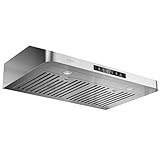
- [Independent Duct + Upgraded Motor + 980 CFM] This 30" kitchen hood features an enhanced motor and independent volute design, delivering 30% stronger suction than traditional models. It refreshes the air in a 180 sq ft kitchen every 90 seconds, quickly removing smoke, grease, and odors. Ideal for heavy-duty cooking like stir-frying or frying.
- [Modern Design + Gesture Control + Touch Panel] Operate effortlessly with a wave or touch. Features 25% more precise detection, high gesture success rate, 3 speed levels, and a seamless touch interface for smooth, hygienic control.
- [Stainless Steel + Durable + Fingerprint-Resistant] This under cabinet stove hood is built with commercial-grade stainless steel and widened filters for long-lasting durability and efficient grease capture. Ideal for busy households, it is smudge-proof and fingerprint-resistant for easy cleaning, extending its service life to 10+ years.
- [Powerful Ventilation + Comfortable Noise Control] Built with a high-efficiency DC motor and noise-reduction design, this range hood delivers strong airflow while keeping noise at a comfortable level. Even during heavy cooking, it helps maintain a more enjoyable kitchen environment for conversations, family time, or watching TV.
- [Bright Lighting + Easy Replacement + Energy Efficient] This under cabinet range hood uses standard GU10 bulbs that are easy to replace. Energy-efficient LED options can reduce energy consumption by up to 30%. With DIY replacement in just one minute, it saves power, time, and cost.
Range hood noise is commonly listed in sones or dBA. Compare sound at working speeds, not just the maximum speed. A hood may advertise a powerful top setting that is too loud for normal conversation, but the medium setting is what most homeowners will use while cooking dinner.
On open kitchens, we look for quiet performance at the speed that will actually be used. Better filters, larger ducting, fewer elbows, and a properly sized exterior cap can all reduce noise. A blower fighting a restricted duct will sound worse and move less air.
Where available, compare HVI-certified or independently rated airflow and sound data. Marketplace CFM claims are not always measured the same way, and a hood’s real performance depends on the entire installation.
What Features Are Worth Paying For?
Low profile hoods range from basic $100 units to premium models above $1,000. Some upgrades are cosmetic, but several affect everyday use.
Features worth prioritizing include:
- Washable metal grease filters: Aluminum mesh or stainless baffle filters should be easy to remove and clean.
- LED task lighting: Good cooktop lighting matters more than decorative lighting.
- Multiple fan speeds: A quiet low speed and useful medium speed are more important than a loud maximum setting.
- Proper duct size: A 6-inch round duct connection is common for many residential low profile hoods, but always follow the manufacturer’s requirements.
- Front-burner coverage: Especially important with slide-out and shallow under-cabinet models.
- Accessible controls: Controls should be reachable without leaning over active burners.
- Replacement filter availability: Charcoal filters and grease filters should be easy to source after installation.
Smart controls, auto sensors, perimeter capture, and touch panels can be useful, but they do not fix poor ducting. We would rather see a homeowner buy a simpler hood and spend the money on a better duct route than buy a premium hood connected to a restrictive vent path.
Free tools Windows power users keep installed
One-click scans. No signup required.
Installed Cost in 2026
In 2026, a low profile range hood project can cost a few hundred dollars or several thousand dollars depending on whether the home already has a usable duct and electrical setup.
| Project Type | Typical 2026 Cost Range | What Is Usually Included |
|---|---|---|
| Basic product only | $100 to $180 | Entry-level 30-inch under-cabinet or convertible hood, often lower CFM and basic controls |
| Midrange product only | $230 to $600 | Stainless ducted or convertible hood, better lighting, improved filters, stronger blower |
| Premium slim product only | $799 to $1,099 | Low profile design, higher advertised CFM, quieter operation, perimeter capture, touch or smart features |
| Simple replacement labor | $200 to $500 | Remove old hood and install new hood using existing correct duct and electrical connection |
| Basic installed replacement | $300 to $700 | Budget hood plus straightforward labor with minimal modification |
| Better hood with minor adjustments | $800 to $1,500 | Midrange or premium hood, light carpentry, minor electrical adjustment, existing duct reuse |
| New ducted installation | $1,200 to $2,500+ | New exterior ducting, wall or roof cap, cabinet cutting, sealing, electrical coordination, finish repair |
| Complex remodel or makeup air | $1,500 to $3,500+ | Premium hood, new duct route, roof or wall penetration, makeup-air system, inspection, drywall or backsplash repair |
National cost references in 2026 put a basic vent hood installation around $564 to $1,030 per hood, while broader range hood projects commonly fall around $650 to $2,500, with averages near $1,750 when ductwork and electrical complexity are included. New ductwork can drive the variance, with contractor guidance often citing about $100 to $400 or more per linear foot depending on access, finish protection, roof or wall penetration, and local labor rates.
The biggest cost drivers are ducted versus ductless installation, replacement versus first-time install, cabinet modification, hood width and weight, stainless or custom covers, roof termination versus sidewall termination, makeup air, dedicated circuit or outlet relocation, drywall and backsplash repair, permit fees, and regional labor rates.
Code, Safety, and Permit Notes
Range hoods touch several areas that inspectors care about: mechanical exhaust, electrical connections, fire safety, weatherproof exterior penetrations, and sometimes makeup air. Requirements vary by jurisdiction, but the same practical rules show up on job sites again and again.
Rank #4

- 【Stainless Steel Range Hood】The range hood 30 inch under cabinet is made of 430 stainless steel,not deform,protect the suction motor and prevent oil or smoke seeping out.
- 【LED Lights and 3-Speed Fan】AMZCHEF undercabinet range hoods come with 2x1.5W LED lamps, provides bright lighting vision.Total 3 power levels fan, instantly exhaust vapour, smoke, oli from kitchen.Save energy and reduct harassment on housework.
- 【Touch Control and Remote Control】With Smart LCD screen, touch control, stove vent hood can be operated remotely by remote control if you are taking care baby or playing with pets. Control simply and conveniently by time setting function.
- 【Easy to Clean: Dishwasher-safe】AMZCHEF kitchen vent hood contains 2 dishwasher-safe stainless steel filters, high temperature resistance and effective resistance to grease, stains and rust. easy to assemble/disassemble.
- 【Easy to Assemble/Disassemble】30 inch width AMZCHEF range hood matchs all modern and classic kitchens.Look concise and save space by installing it under the cabinet or wall-mounted. Kitchen extractor product size: 29.8''x19.7''x5.98''. Air outlet diameter: 6''.
First, kitchen exhaust should terminate outdoors, not into an attic, soffit, garage, crawlspace, or wall cavity. Second, use smooth metal duct sized and routed according to the hood manufacturer’s instructions. Third, seal joints properly with approved materials. Fourth, maintain the required clearance above the cooking surface. Fifth, check whether a permit is needed when adding new ducting, cutting a roof or exterior wall, or changing electrical service.
Makeup air deserves early attention. If the hood is over 400 CFM, many IRC-based jurisdictions require a makeup-air system. Even below that threshold, tight homes and homes with atmospherically vented combustion appliances may need extra review. A strong exhaust fan can create negative pressure and affect fireplaces, water heaters, furnaces, or boiler venting.
We also document the duct route with photos before closing walls, ceilings, or cabinets. Those photos help with inspection questions, future remodels, warranty claims, and troubleshooting.
Independent reader supportYour contribution helps us test, update, and keep practical guides available for everyone.When to DIY vs When to Hire a Pro
A low profile hood replacement can be a reasonable DIY project when the existing hood is the same width, the existing duct is correctly sized and in good condition, the electrical connection is already in the right place, and no cabinet, wall, roof, or backsplash work is required. A straightforward under-cabinet swap may take a skilled DIYer 2 to 4 hours.
Do these 3 things before closing this tab:
1Clear out junk files and repair common Windows errors2Fix the driver behind crashes, sound loss and screen glitches3Repair Windows errors before they cause bigger problemsDIY becomes risky when the project involves new ducting, roof work, exterior wall penetrations, cabinet modification, electrical relocation, gas appliance clearance questions, or a hood above 400 CFM. Those are the situations where a licensed contractor, electrician, HVAC professional, or roofer may need to be involved.
Hire a pro if any of these apply:
- The kitchen has no existing exterior duct.
- The current hood vents into an attic, soffit, or wall cavity.
- The new hood requires a larger duct than the old one.
- The electrical box or outlet must move.
- The hood is heavy or requires cabinet reinforcement.
- The installation needs a roof cap or new flashing.
- The blower is rated over 400 CFM and may require makeup air.
- The range is gas, high-output, or pro-style.
A pro installation is not just about hanging the hood level. It is about making the full system work: correct duct size, clean exterior termination, proper support, code clearance, safe wiring, airtight penetrations, and finish repair that looks intentional.
Common Mistakes We See in Kitchen Remodels
The most common mistake is buying the thinnest hood without checking the hidden cabinet requirements. A low front profile can still have a blower housing, transition, damper, or duct collar that consumes cabinet space.
The second mistake is oversizing the fan. A 900 or 1,000 CFM claim sounds impressive, but if the duct is undersized or makeup air is ignored, the result can be loud, inefficient, and harder to approve. More airflow is useful only when the house and duct system are designed for it.
Outdated Drivers Are Slowing You Down
One free scan finds every outdated or missing driver and matches the right update for your exact hardware.Free scan · exact hardware matchWindows Errors? Fix Them Before They Spread
Repair common Windows errors and clear accumulated junk for a smoother, more stable PC - no reinstall needed.Free scan · no reinstallWe also see shallow hoods installed over powerful front burners. The kitchen still smells smoky because the hood is missing the plume. In that situation, a slide-out hood, deeper capture area, wider hood, or revised cooking habits may do more than simply increasing CFM.
Best Value

- Fresh Air & 3 Speeds: Elegant Under Cabinet Range Hood with 3 –speed exhaust fan provides you fresh air, while keeping the noise low.
- Dual Installation Mode & Ideal Size: The stainless steel thin bodies and ideal sizes fit your cabinet perfectly and save space, and it can be installed in exhaustion mode and recirculation mode
- 5-Layer Reusable Aluminum Filter: The 5-layer aluminum filter effectively removes grease and cooking odors. Also, being easily detached and dishwasher safe, it can always sustain its optimal efficiency.
- Durable Stainless Steel Body & Intuitive Control: The stainless steel body is resistant to high temperature & salt corrosion, and you can clean it with a gentle wipe. Also, you can press intuitive control to change the suction power easily.
- Easy Installation: Humanized design makes your installation process easy. You can follow the step-by-step instructions in the user manual or reference the Comfee installation videos.
Other avoidable problems include flexible duct, too many elbows, dirty grease filters, missing charcoal filter replacement in ductless setups, poor exterior caps, and hoods mounted outside the manufacturer’s clearance range.
Our Practical Buying Checklist
Before ordering a low profile range hood, confirm these details in writing or on the product specification sheet:
- Hood width matches or exceeds the range or cooktop width.
- Body height and depth fit the cabinet without blocking needed storage unexpectedly.
- Duct outlet direction matches the planned route.
- Duct size is supported by the manufacturer.
- Fan rating is appropriate for the cooking style, usually 300 to 400 CFM for many remodels.
- Noise ratings are acceptable at normal cooking speeds.
- Filters are washable, accessible, and replaceable.
- Lighting is bright enough for the cooking surface.
- Electrical requirements match the site conditions.
- Mounting height complies with both hood and range instructions.
- Any hood over 400 CFM has been checked for makeup-air requirements.
- The duct terminates outdoors through a proper wall cap or roof cap.
Also think about user behavior. Run the hood before cooking begins, not after the kitchen is already smoky. Use back burners when practical because they sit farther under the hood. Clean grease filters regularly. Replace charcoal filters on schedule if using ductless mode. A properly sized hood only works when airflow is not blocked and the fan is actually used.
Quick wins for a faster PC:
Scan for outdated or missing drivers - takes under a minuteDriver Scan →Repair Windows errors before they cause bigger problemsFix Now →Fix the driver behind crashes, sound loss and screen glitchesFind Drivers →Bottom Line: The Best Low Profile Hood Is the One the Kitchen Can Support
For most homeowners, the best low profile range hood is a ducted 30-inch or 36-inch model in the 300 to 400 CFM range with quiet working speeds, washable metal filters, LED lighting, and a manufacturer-supported 6-inch round or equivalent duct path. That combination gives strong everyday performance without automatically creating the cost and code complications of very high-CFM systems.
If the kitchen layout allows a short, straight duct to the exterior, prioritize that route before chasing premium appliance features. If the cabinet design demands an ultra-slim look, consider a slide-out hood or built-in insert, but verify the hidden dimensions before cabinets are ordered. If ducting is impossible, a ductless hood is better than no hood, but it should be chosen with realistic expectations.
A low profile range hood can be stylish, quiet, and effective. The key is treating it like part of the construction plan, not just another appliance picked at the end of the remodel.
Frequently Asked Questions
What is a low profile range hood?
A low profile range hood is a slim ventilation hood designed to fit under cabinets, slide out from cabinetry, or sit inside a custom hood enclosure while preserving clean kitchen sightlines.
What’s actually slowing this PC down?
Pick the symptom - the matching free tool is one click away.
Are low profile range hoods as effective as full-size hoods?
They can be effective when properly sized and ducted. Capture area, duct route, fan noise, filter condition, and burner coverage matter as much as the advertised CFM.
Should I choose a ducted or ductless low profile range hood?
Choose ducted whenever practical. Ducted hoods exhaust smoke, moisture, heat, grease, odors, and combustion byproducts outdoors. Ductless hoods mainly filter grease and some odor before recirculating air.
Does a 400 CFM range hood require makeup air?
Many IRC-based codes trigger makeup-air requirements for hoods over 400 CFM. Local rules vary, so confirm with your building department before ordering a high-CFM hood.
How much does it cost to install a low profile range hood in 2026?
A basic replacement using existing ducting may cost about $300 to $700 installed. A better hood with minor adjustments often runs $800 to $1,500. New ducting, exterior penetrations, premium hoods, or makeup air can push the project to $1,500 to $3,500 or more.
Can a range hood vent into the attic or soffit?
No. Kitchen exhaust should terminate outdoors through an approved wall cap or roof cap, not into an attic, soffit, garage, crawlspace, wall cavity, or ceiling space.
Quick Recap
Product prices and availability are accurate as of the date/time indicated and are subject to change. Any price and availability information displayed on Amazon at the time of purchase will apply.

