Construction traffic control is a site-specific plan for moving road users through or around a changing work area while protecting workers and the public. Flaggers, detours, and temporary signals are different tools—not interchangeable defaults—and the right arrangement depends on the road, work, traffic, and the requirements of the agency responsible for it.
What a temporary traffic-control plan does
The Federal Highway Administration’s MUTCD 11th Edition, Part 6 treats temporary traffic control (TTC) as part of project planning, not simply a matter of placing signs around a work crew. A plan should facilitate movement through or around the work zone while protecting road users, workers, responders, and equipment. Its detail should match the project’s complexity, and it should be prepared before the site is occupied by people or equipment.
As an Amazon Associate I earn from qualifying purchases.
Planning includes everyone who needs to travel through or near the site: drivers, pedestrians, bicyclists, and people with disabilities. It also has to account for worker safety and efficient traffic flow. The MUTCD puts it plainly: “No one set of TTC devices can satisfy all conditions for a given project or incident.”
Quick wins for a faster PC:
Clear out junk files and repair common Windows errorsFree Scan →Scan for outdated or missing drivers - takes under a minuteDriver Scan →The four areas of a typical TTC zone
A common way to describe a work-zone layout is as four areas. They are used as appropriate to the site; they are not a rigid template that every project must follow.
#1 Best Overall

- ⭐ Traffic Light Controller Contains 39+ Sequences
- ⭐ Traffic Light Controller More Safer - Isolated Power 80-260V
- ⭐ Solid State Relay Output - Longer Life
- ⭐ Traffic Light Controller Visual Settings, Settings are More Concise.
- ⭐ Red, Yellow, Green Light Delay Time is 0-250s
- Advance warning area: tells road users that conditions ahead are changing.
- Transition area: guides road users from their usual path into a changed one.
- Activity area: contains the work space and the space used by traffic moving through the site.
- Termination area: guides road users back to normal movement after the work area.
The MUTCD calls for engineering judgment by people knowledgeable about TTC and the work. The public body or official with jurisdiction is responsible for the TTC plan and devices.
How flaggers coordinate traffic using one lane
When traffic from opposing directions must take turns using one lane, the two movements need coordination so vehicles are not released into the restricted section from both ends at once. FHWA’s current federal reference generally describes a flagger at each end, with one acting as coordinator and communication maintained between the flaggers. A single flagger may be an option when the restricted section is short enough for the person to see end to end and maintain effective control. If that visibility or control is not possible from one station, control at both ends is needed as specified by the agency-approved plan.
Rank #2
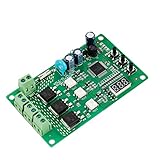
- 36 LIGHTING PATTERNS – Enjoy up to 36 selectable light sequences, including 12 authentic traffic modes. Programming is as simple as pressing a button, allowing you to switch freely between patterns and recreate the feel of real traffic lights for a relaxing and immersive experience
- USER-FRIENDLY OPERATION – Features realistic wait intervals and customizable yellow light delays. You can set traffic delays from 1–120s and yellow light delays from 1–8s via independent button controls. The digital display shows real-time delay times clearly, making operation effortless for everyday leisure use
- 3 OUTPUT CHANNELS – Equipped with three independent output channels, supporting loads from 4W up to 662W per channel. Built with solid-state relays for quiet, reliable, and maintenance-free performance that won’t disturb your daily environment
- RELIABLE PROTECTION – Constructed with FR-4 flame-retardant PCB for enhanced safety. Integrated MOV surge protection shields against voltage spikes and inductive kickback. Both MOV and fuse components comply with UL standards. Wide input voltage range: 85–265VAC
- WIDE COMPATIBILITY – Works seamlessly with all types of traffic light bulbs, including incandescent, fluorescent, and LED (even non-dimmable). A great replacement solution for older traffic lights
Flaggers use hand-signaling devices, including paddles and flags, as part of flagger control. The applicable plan and agency requirements determine the specific device, apparel, position, procedures, and personnel qualifications; a general article cannot specify an approved setup for a particular road.
Other ways to manage alternating movement
Flaggers are not the only possible method. FHWA materials identify several approaches, but their suitability depends on the site and governing requirements. The options below are examples, not a design prescription.
Rank #3

- GOOD VISIBLE- The long lighted portion provides great visibility. And you can use the red traffic wand in all types of weather from heavy fog to pouring down rain.
- LIGHTWEIGHT & DURABLE- The traffic wand is made of PVC material, it's so light that your arms won't be sore even after long time use, and it's very bright at night.
- 3 FLASHING MODES - Each traffic safety baton has 3 flashing modes: fast flashing & slow flashing & steady-glow. You can easily switch modes according to your needs.
- WIDE USE- The hand-held traffic wand LED light stick is very versatile, you can use it as a signal flashlight for traffic controls, parking attendants, construction crews, etc.
- SIZE DETAIL- There are 10 pieces hanging warning batons in each package. The size of the light stick is 21*1.4 inch, the net weight is 0.33 pounds for each(Using 2 C-size batteries which is not included). Water-resistant IPX-4 and with a metal side clip to clip on the pocket so don't have to hold it in hand.
| Approach | How it manages movement | Important consideration |
|---|---|---|
| Flaggers | People at the ends of the restriction coordinate which direction proceeds. | Consider whether both ends can see one another, whether one person can maintain control, and what staffing and communication the plan requires. FHWA, MUTCD 11th Edition, Part 6 |
| Pilot car | A pilot vehicle guides traffic through the restricted section. | Use only where the site-specific plan and responsible agency allow it. FHWA, MUTCD 2009 Edition, Chapter 6C |
| Flag transfer | A transferred flag is used as part of coordinating alternating traffic. | It is an option described in FHWA’s one-lane control material, not a universal procedure. FHWA, MUTCD 2009 Edition, Chapter 6C |
| Temporary signal | A signal controls which direction may use the lane. | Its phasing, timing, operation, power, inspection, and maintenance need to be addressed. FHWA, MUTCD 11th Edition, Part 6 |
| STOP/YIELD control or warning devices | Signs or warning devices may be considered instead of flaggers or a signal in suitable situations. | FHWA’s older chapter identifies STOP/YIELD for appropriate visible, low-volume settings; confirm current state or local requirements before use. FHWA, MUTCD 2009 Edition, Chapter 6C |
Useful selection factors include sight distance; the length and duration of the restriction; traffic volume, speed, queues, and capacity; nearby side streets and driveways; pedestrian, bicycle, and accessible travel; work staging; and the staffing, communication, equipment, and upkeep each method needs. Changing the work staging to avoid alternating one-way traffic may be preferable to adding a control method.
Detour or diversion: what is the difference?
A detour sends road users onto an existing highway to avoid the temporary traffic-control zone. A diversion sends them onto a temporary highway or alignment around the work. FHWA gives these definitions in its MUTCD 2009 Edition, Chapter 6C; the MUTCD 11th Edition is the current federal reference, and the responsible agency’s adopted rules govern a real project.
Rank #4

- ⭐ Traffic Light Controller Contains 39+ Sequences,with 3 colors light board ( Red ,Yellow, Green)
- ⭐ Traffic Light Controller More Safer - Isolated Power 80-260V
- ⭐ Solid State Relay Output - Longer Life
- ⭐ Traffic Light Controller Visual Settings, Settings are More Concise.
- ⭐ Red, Yellow, Green Light Delay Time is 0-250s
For a detour, signing should guide travelers along the full route, including the way back to the original highway. A sign at the closure alone does not explain the route to its end. The route also needs to account for the road users who rely on it, including pedestrians, bicyclists, and people with disabilities.
Do these 3 things before closing this tab:
1Repair Windows errors before they cause bigger problems2Fix the driver behind crashes, sound loss and screen glitches3Clear out junk files and repair common Windows errorsWhen temporary traffic signals make sense
Temporary signals can control alternating one-way traffic on a one-lane, two-way road, bridge, reversible lane, or intersection; FHWA also describes their use at temporary haul-road crossings. They are one possible control, not the automatic choice whenever a lane is closed. Under the current Part 6, they should be used when they are preferable to alternatives such as changing the work staging, using flaggers, using STOP/YIELD signs, or relying on warning devices alone.
Best Value

- 【Vintage Industrial Traffic Light Design】Inspired by classic traffic signals, this retro industrial traffic light lamp features three sturdy metal visors, frosted glass lenses, and integrated red, yellow, and green indicator lights. The robust metal housing with matte black finish ensures durability and a vintage look, while the simple yet unique design turns any wall into an eye-catching display—perfect for home, bar, restaurant, cafe, garage, classroom, office, or kids’ room.
- 【Adjustable Lighting Modes & Soft, Uniform Effect】This wall lamp adopts intelligent circuit design for stable current and safe operation. Multiple adjustable lighting modes let you switch between single color, dual-color, or all three signals on. Use the convenient cord button switch to easily turn on/off, change colors, or adjust brightness without hassle—ideal for bedrooms, living rooms, dining rooms, or party spaces.
- 【Robust Construction & Reliable Protection】Built with high-quality powder-coated metal body, PC housing, and sealed frosted glass lenses, this lamp resists dust, noise, and harsh indoor environments. The integrated overload protection circuit and safe plug connection ensure stable performance under standard 110V power. Perfect for creating a safe, durable atmosphere with consistent brightness and long-lasting operation.
- 【Plug-and-Play Installation】Features convenient plug-and-play design—mount vertically or horizontally with included mounting accessories. Installation is simple: plug directly into a standard outlet and control with the cord button. Suitable for indoor use in bedrooms, living rooms, kitchens, dining rooms, or man caves—add a vintage statement piece anywhere you like.
- 【Wide Applications & Retro Night Decoration】This unique traffic light decoration is ideal for home decor, birthday or holiday gifts, classroom or bar accent, car-themed room, or industrial-style cafe. With durable construction and weather-resistant sealed design, it’s safe for indoor use and creates a beautiful, nostalgic atmosphere. Perfect for parties, kids’ rooms, or adding a fun stop signal vibe to any space—turn any wall into a retro display.
What the signal plan needs to address
Signal selection and operation depend on conditions at the site. The MUTCD’s considerations include:
- Road-user safety, traffic volumes and capacity, sight distance, speeds, pedestrians, and access from side streets or driveways.
- Work staging and whether another control method can meet the need.
- Signal phasing and timing; whether it will operate full-time or part-time; and whether operation will be fixed-time, actuated, or manual.
- Power failures, inspection, maintenance, recordkeeping, and who is responsible for operating the signal.
- Whether the signal will be portable or mounted on fixed supports. FHWA notes that fixed supports resist displacement or damage better in severe weather, impacts, and vandalism.
A signal must also work as part of the full TTC arrangement, including the needs of people walking, cycling, or using accessible routes. The appropriate design and operating details depend on the governing plan and agency requirements.
Who sets the requirements—and why upkeep matters
The MUTCD 11th Edition, Part 6, is the current federal reference cited here, but the rules adopted by the state or local agency with jurisdiction determine what applies to a particular project. Before implementing a closure, detour, or lane restriction, the responsible road authority must determine the applicable plan, approvals, and requirements. The general examples in this article are not an approved traffic-control layout.
What’s actually slowing this PC down?
Pick the symptom - the matching free tool is one click away.
Controls need attention throughout the work, not just when they are installed. Devices should be maintained while appropriate and removed or covered when conditions change and they no longer apply. OSHA’s Highway Work Zones and Signs, Signals, and Barricades overview notes hazards both inside and outside work zones, including struck-by hazards, and points readers to the MUTCD for guidance on work-zone signs, barricades, and flagging.
Quick Recap
Product prices and availability are accurate as of the date/time indicated and are subject to change. Any price and availability information displayed on Amazon at the time of purchase will apply.




