Quick wins for a faster PC:
Clear out junk files and repair common Windows errorsFree Scan →Scan for outdated or missing drivers - takes under a minuteDriver Scan →Repair Windows errors before they cause bigger problemsFix Now →A durable village concrete road depends on more than a sound concrete surface: water must have a continuous route away from the pavement, the foundation and concrete must follow approved project details, curing must be carried out and recorded, and inspection results must be traceable. Use the road authority’s current specification, approved drawings and contract documents for all design values, testing limits, acceptance decisions and traffic-opening conditions. There is no single set of dimensions, mix proportions, curing duration or test frequency that applies to every village road.
Start with the governing design and contract
Before work begins, establish which road authority and contract govern the project. Gather the approved drawings, specifications, concrete mixture approval, construction method statement and inspection and test plan. The Federal Highway Administration (FHWA) Field Materials Manual describes itself as general guidance and says that the contract governs if the manual conflicts with an FLH contract. It is not a substitute for the requirements that apply to a particular road.
As an Amazon Associate I earn from qualifying purchases.
Confirm that the project documents address the site and construction decisions inspectors will need to verify:
Do these 3 things before closing this tab:
1Clear out junk files and repair common Windows errors2Fix the driver behind crashes, sound loss and screen glitches3Repair Windows errors before they cause bigger problems- Design traffic and the specified pavement, joint and reinforcement details, where applicable.
- Subgrade conditions, foundation layers and preparation requirements.
- Surface drainage, shoulders, side drains, cross-drainage and discharge points.
- Approved materials and concrete mixture documentation.
- Required inspection stages, tests, acceptance criteria and records.
- Specified curing method and the criteria for protecting and opening the road to traffic.
If a drawing, specification or site condition is unclear or inconsistent, refer it to the responsible engineer or road authority for resolution before the affected work proceeds. Do not fill a gap with a typical value taken from another project.
#1 Best Overall

- Advanced Moisture Retention Formula - This professional concrete curing compound acts as an effective moisture barrier for fresh concrete. Our curing and sealing liquid locks in water to ensure proper hydration, maximize strength development, and prevent early cracking on new slabs and driveways.
- Dual-Action Cure & Seal Protection - Apply this efficient cure and seal for concrete to new surfaces. It forms a protective concrete curing membrane that retains crucial moisture while providing a temporary sealing layer to shield against stains and weather during the critical initial curing period.
- Integrates Corrosion Inhibiting Benefits - Formulated with a built-in corrosion inhibitor, this concrete treatment helps protect embedded steel rebar and metal from rust. This contributes to longer-lasting durability for your concrete structures, driveways, and patios.
- Easy Spray-On Application & Coverage - This ready-to-use liquid concrete sealer is designed for easy spray or roller application. One gallon covers approximately 50-80 sq ft, making it a user-friendly solution for DIY projects and professional concrete finishing alike.
- Promotes Optimal Strength & Durability - By significantly reducing moisture loss, this concrete curing aid promotes proper cement hydration. This results in a harder, more durable concrete surface with increased abrasion resistance and reduced dusting for a superior final finish.
Plan drainage as one connected system
Trace where water goes from the pavement surface to the road edge, across or along the shoulder, into a drain or cross-drainage structure, and onward to a safe outlet. Surface shape, roadside features, culvert inlets and outlets all need to work together. A drain that ends at a blocked opening or has no effective outlet does not solve the water problem.
Site-specific geometry and capacity must come from the approved design and local standards, informed by site hydrology. Do not assume that maintenance advice supplies dimensions for a new road. A Bangladesh rural-infrastructure handbook, for example, advises maintaining camber so water drains, keeping drains clean, providing adequate drain slope, and inspecting culverts and keeping their inlet and outlet openings clear. Those are useful maintenance principles, but they do not establish universal design criteria for other locations.
Check the drainage route in the drawings and on site
- Confirm that the specified road crossfall or camber directs surface water toward the intended collection point.
- Check that shoulders and roadside grading do not trap water beside the pavement or block its path to a drain.
- At natural flow paths, confirm the designed cross-drainage connection and that inlet and outlet locations can be accessed for inspection and cleaning.
- Look for low spots, interrupted flow paths, erosion risk or a discharge point that could cause a problem downstream, and refer design concerns to the responsible engineer.
Drainage is both a durability and a safety concern. FHWA’s rural-road safety resource points to maintenance guidance on common drainage-feature problems and corrective measures; it should be treated as guidance for inspection, not as a source of dimensions for a particular site.
Rank #2

- Mix with water at a 9:1 ratio; Covers 2000-4000 sq ft per gallon after mixing
- Reduces surface moisture loss by approximately 80% in windy conditions and 40% in direct sunlight
- Keeps surface plastic and "finishable" for a longer time
- Will not interfere with the adhesion of subsequent curing and sealing compounds
- Leaves no surface finish
Prepare, place and finish to approved details
Build each layer and concrete operation to the approved drawings, specification and method statement. The project documents—not a generic village-road recipe—must determine foundation preparation, forms or paving method, concrete delivery and handling, placement, consolidation, surface finishing, joints, reinforcement where applicable, and protection of completed work.
Sequence inspection so that work is checked while it can still be corrected. Verify required subgrade and foundation acceptance before covering those layers. Before placement, check the approved materials and mixture documentation, the readiness of forms or paving equipment, and the specified joint and reinforcement arrangements. During placement, observe delivery, handling, consolidation and finishing against the project requirements. After placement, inspect the details that will be concealed or become difficult to change, including joints and curing coverage.
FHWA’s 2013 Field Reference Manual for Quality Concrete Pavements organizes pavement-construction processes in work sequence and includes inspection items, quality-control measurements and checklists. It directs readers to a separate testing guide for test procedures and interpretation. These references can help structure an inspection plan; they do not make one test suite or one acceptance limit mandatory for every contract.
Rank #3
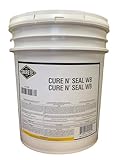
- Cure and seal surfaces
- Interior or exterior applications, new or existing applications
- Concrete, masonry, terrazzo, brick, stone, masonry, and other cementitious materials
- Commercial and residential applications
- Seal many types of resilient floor coverings and porous ceramic tile
Make curing a specified, inspectable operation
Curing is part of construction quality, not an informal task to begin after the important work is finished. Put the approved curing method in the method statement and identify who will apply it, when it must start, how coverage will be checked and maintained, and how the concrete will be protected under the conditions anticipated on site.
The Bangladesh rural handbook advises proper curing during construction, and FHWA’s pavement publications catalogue includes dedicated references on curing Portland cement concrete pavements. Those sources support treating curing as essential, but they do not justify one universal curing material, duration or traffic-opening time for every climate, mixture and project.
Record the curing operation as it occurs. Use the project specification for the required method, application details, duration and release criteria; if weather or site conditions threaten compliance, notify the responsible engineer and follow the approved corrective direction.
Rank #4

- Spray or roller applied***
- Eliminating the need for water curing***
- Ready-to-use, milky white color dries to clear satin finish***
Build quality checks around the work sequence
Use the contract’s inspection and test plan to set the required tests, frequency, limits and acceptance authority. The following is a framework for subjects to address—not a universal checklist or a claim that every item requires a particular test on every job.
| Work stage | What to verify | What to record |
|---|---|---|
| Before construction | Current drawings and specifications; approved materials and mixture documentation; required testing and hold points; drainage route and structure connections. | Document revisions, approvals, inspection plan and any resolved design queries. |
| Subgrade and foundation | Preparation and layer work against the specified requirements; required inspection or test results before the next layer covers the work. | Inspection date and location, measured or tested results where required, acceptance decision and corrective work. |
| Concrete delivery and placement | Delivery records and fresh-concrete properties or samples where required; placement, consolidation and finishing against the approved method and specification. | Delivery and sample identification, required test results, placement location and time, observations and any nonconformance. |
| Joints and curing | Joint and reinforcement details where applicable; specified curing method, start, coverage, maintenance and protection. | Locations checked, curing application and condition, issues found and actions taken. |
| Completed road and drainage | Specified surface and drainage checks; connections to shoulders, drains, culverts and outlets; required acceptance and release conditions. | Inspection results, deficiencies, closeout evidence, acceptance decision and traffic-release authorization. |
Use the test method and interpretation required by the contract. The FHWA Field Materials Manual offers field testing and verification guidance, while emphasizing sound engineering practice and contract requirements. A field instrument or a single test result does not, by itself, establish pavement acceptance unless the governing specification says it does.
Keep records that support decisions
A useful project record connects each check to a place, time, requirement and decision. Keep records in the form required by the contract, and make them clear enough that another responsible reviewer can follow what was inspected and what happened when a result did not meet a requirement.
Best Value

- Great tools at a great price
- Identify the project, date, location or road section, inspection stage and person responsible.
- Reference the applicable drawing, specification clause, approved method or inspection-plan item.
- Record observations and required test results with sample or equipment identifiers where applicable.
- Document deficiencies, notifications, corrective actions and any reinspection or retest.
- Record who made the acceptance decision and any authorization required before covering work or opening the road to traffic.
Preserve the completed inspection and test records with the handover documents. The FHWA Field Reference Manual provides process-oriented inspection aids, but the project’s contract controls the required records and acceptance process.
Inspect drainage after handover
Include drainage features in the local maintenance plan and inspect them periodically, including after significant rainfall when safe and practical. The Bangladesh rural-infrastructure handbook recommends regular culvert inspection, clear inlet and outlet openings, clean drains and adequate drain slope. FHWA’s rural-road safety resource likewise points to drainage-feature maintenance guidance.
During inspection, look for blocked inlets or outlets, sediment or debris in drains, standing water, erosion, damaged shoulders, and visible pavement distress. Clear obstructions and arrange repairs under the responsible authority’s maintenance procedures; escalate damage or recurring ponding that may indicate a design or structural issue. Keep a dated record of findings and maintenance actions so persistent problems can be identified.
Use references for guidance, not as a replacement for local requirements
The FHWA Field Materials Manual page identifies a 2021 manual and was last updated March 15, 2024. FHWA’s publications catalogue also lists separate references on drainage, bases and subbases, curing and quality assurance, including technical briefs from 2016. These publications can help engineers and supervisors organize questions and inspections, but the responsible road authority’s current requirements and the project contract determine the values and decisions for a specific village road.
Quick Recap
Product prices and availability are accurate as of the date/time indicated and are subject to change. Any price and availability information displayed on Amazon at the time of purchase will apply.




