Some links on this page are affiliate links: if you buy through them we may earn a commission, at no extra cost to you.
Companion planting works best as deliberate garden design, not as a guaranteed pest-control system. The most dependable combinations save space, match crops with different growth rates or root patterns, provide support, manage shade, and create habitat for pollinators and beneficial insects. Some plant pairings may reduce specific pests, but their results depend on the crop, pest, spacing, season, and local conditions.
Companion planting at a glance
Before choosing a pairing, decide what you want the arrangement to accomplish. A plant can be a useful companion because it occupies a different layer of the garden, flowers at the right time, attracts beneficial insects, acts as a trap crop, or simply fits well into the available space. It does not need to have a permanent or mystical compatibility relationship with the neighboring crop.
As an Amazon Associate I earn from qualifying purchases.
| Garden goal | Examples | What to expect |
|---|---|---|
| Save space and time | Radishes between slower brassicas; lettuce beneath young tomatoes or corn; early crops between larger transplants | One crop is harvested before the other needs the space |
| Use vertical space | Climbing beans with sturdy corn or a trellis; squash as a ground layer | Different plants occupy vertical, middle, and ground-level zones |
| Manage heat and shade | Lettuce, spinach, peas, or endive near taller crops | Temporary afternoon shade can extend the season for cool-season crops |
| Support beneficial insects | Flowering dill, cilantro, fennel, calendula, thyme, oregano, or sweet alyssum | Flowers provide nectar or pollen for predators and parasitoids |
| Test a pest-management idea | Basil near tomatoes; herbs near brassicas; flowering plants near squash | Possible reduction in a named pest under particular conditions—not guaranteed control |
| Concentrate pests away from a main crop | Mustard or arugula for some flea beetles; Blue Hubbard squash for certain cucurbit pests | A trap crop requires regular scouting and a management plan |
What companion planting means
Companion planting generally means growing two or more plant species near each other with an intended practical benefit. It overlaps with several related techniques:
- Interplanting: sharing space between crops, often to use time, light, or soil more efficiently.
- Relay planting: establishing one crop before another becomes large enough to occupy the same space.
- Polyculture: growing multiple species together rather than relying on a single crop.
- Trap cropping: planting a crop that may be more attractive to a pest than the main crop.
- Cover cropping: growing plants primarily to protect or improve the soil, rather than to accompany a harvest crop.
- The Three Sisters system: a traditional polyculture combining corn, climbing beans, and squash.
These terms are not interchangeable. Interplanting describes the spatial arrangement; companion planting usually adds the idea that the arrangement is intended to provide a complementary effect.
Popular on Amazon

- IDEAL GIFTS FOR MEN, WOMEN - Our gardening tools set is the ultimate gift for any men women who loves to garden. Including rust-proof and durable tools, this set ensures she has everything she needs for a flourishing garden. The ergonomic design makes it comfortable to use, making it a thoughtful gift for wife, mom, daughter, or grandma.
- A COMPLETE GARDEN TOOL SET - A durable garden tools set is all you need for your gardening.
- PREMIUM GARDEN TOOLS - Our gardening tool set comes with a Spray Bottle, Shovel, Crack Weeder, Hand Rake, Weeder, Pruner, 15 Plant tags, a pair of Hand Gloves, and a Heavy Duty Garden Bag to keep all your tools packed away provides everything you need to maintain a beautiful and healthy garden.
- DURABLE & RUST PROOF - Our gardening tool set is made of high-quality aluminium alloy, ensuring that the tools are strong, durable, and resistant to rust and corrosion. The aluminium alloy material is lightweight, making it easy to handle and reducing hand fatigue during use. Additionally, the material is eco-friendly and non-toxic. With our toolset, you can be confident that you're using high-quality, reliable tools that will stand the test of time.
- COMFORTABLE ERGONOMIC HANDLE - Our gardening tool set is designed with your comfort in mind. The ergonomic handle design allows for a comfortable grip and reduces hand fatigue, even during long gardening sessions. The soft yet sturdy handle provides a secure grip and helps prevent slipping, so you can work with confidence. Whether you're planting delicate seedlings or digging up stubborn weeds, our tool set's comfortable design will help you get the job done with ease.
The most reliable reasons to combine plants
1. Save space with different growth rates
This is one of the strongest forms of companion planting because the benefit comes from timing and geometry rather than an unproven claim about pest-repelling chemicals.
Fast crops such as radishes, lettuce, scallions, or beets can be sown between slower-growing or larger crops. Radishes may be harvested between young brassicas. Lettuce can occupy space beneath or beside tomatoes, corn, or another tall crop while the taller plants are still small. Early greens can also be grown between young transplants, provided the mature crop will not eventually crowd them out.
Free tools Windows power users keep installed
One-click scans. No signup required.
Carrots and onions can sometimes share a bed when their leaf growth, root depth, moisture needs, and harvest timing fit the space. The pairing is not automatically beneficial to either crop; it is simply a potentially efficient use of the bed.
Plan for the mature size of the slower crop. An intercrop that looks perfectly spaced in May may become shaded, humid, and difficult to harvest in July.
2. Use plants as living supports
Corn can act as a living support for climbing beans, while squash spreads across the ground. This vertical arrangement is the structural logic behind the Three Sisters system. In a smaller garden, a purpose-built garden trellis can provide a more predictable alternative for beans, cucumbers, peas, or other climbers.
A support relationship works only when the host or structure is strong enough, the climbing crop is not excessively heavy, and the plants are spaced so that leaves can dry after rain. Corn may not be sturdy enough for every vigorous bean variety, particularly in exposed locations. A trellis also makes it easier to inspect foliage, harvest beans, and manage disease.
What’s actually slowing this PC down?
Pick the symptom - the matching free tool is one click away.
3. Manage shade and seasonal temperature
Tall crops can provide useful temporary or afternoon shade for cool-season plants such as lettuce, spinach, peas, and endive. Lettuce positioned behind tomatoes or corn may remain productive longer as summer heat increases, but it still needs enough light to grow and enough airflow to reduce disease pressure.
Carrots may benefit from cooler conditions near tomatoes in some arrangements. That result depends on the climate, planting date, tomato spacing, and how much shade reaches the soil. In a cool or cloudy garden, the same arrangement could reduce growth rather than improve it.
Shade should be designed, not assumed. Observe the bed at different times of day and keep enough room between plants for watering, harvesting, and scouting.
Also popular on Amazon

- Sturdy and Stainless Steel Garden Set: Made of Stainless Steel, this stainless steel gardening tools is durable and rust-proof. Moreover, with stable material like this, these gardening tools are hardly deformed
- One for All Package: Grenebo garden tools set includes a total of 8 tools and 1 storage bag. Pruning Shears, Weedier, Transplanter, Cultivator, etc., nearly everything you need in daily garden maintenance
- Ergonomic Handle Design: In order to realize a more comfortable and effortless user experience, the gardening tools were non-slipped wooden handles, well-designed and suitable for different hand sizes. No matter kids or seniors, these gardening tools made things easy during digging, carrying, weeding, planting, and pruning
- Garden Tote Bag: The biggest concern of buying a big gardening tool set is storage, but for this consideration, Grenebo gardening tools for gardening come with a heavy-duty storage bag, is floral design with a vintage style, adds additional beauty to your garden. Moreover, there is a specialized hole on each tool handle for hanging them up in the off-season or after use
- Show your love with a premium Garden Tools Set: The tote bag durable and easy to carry, which is the choice for women, neighbors, and all enthusiastic gardening lovers
4. Provide food and habitat for beneficial insects
Flowering herbs and flowers can supply nectar or pollen for beneficial organisms, including lady beetles, lacewings, syrphid flies, spiders, and parasitic wasps. Useful candidates include calendula, cilantro, dill, fennel, rosemary, oregano, thyme, and sage.
The plants generally need to be allowed to flower to provide the relevant resource. A gardener growing dill only for its leaves will get a different ecological benefit from one who allows some plants to bloom. Staggering flowers through the season is often more useful than planting one token row that blooms for a short period.
Do not assume that every aromatic herb repels every pest. The more defensible goal is to create a diverse habitat and test whether a particular flowering plant supports beneficial insects near a particular crop.
5. Test selected pest-management effects
Research is most useful when the claim identifies the crop, pest, companion, and growing conditions. Extension summaries describe several crop-specific examples:
- Thyme, dill, chamomile, hyssop, or sage near cole crops may deter egg-laying by cabbageworm or looper moths in some situations.
- Calendula near collards may attract predators that feed on aphids.
- Cilantro or dill near greens can support aphid-eating beneficial insects when the plants flower.
- Basil near tomatoes has been studied in relation to thrips, tomato hornworms, and yellow-striped armyworms.
- Sage and thyme reduced diamondback moth populations on Brussels sprouts in greenhouse work summarized by University of Minnesota Extension.
- Some studies found basil or marigolds associated with fewer thrips in tomatoes, while other research found nasturtiums and marigolds reduced certain squash pests.
These results are conditional. They do not mean the companion will eliminate the pest, work in every garden, or replace crop inspection and other integrated pest-management practices.
6. Use trap crops strategically
A trap crop is planted because a pest may prefer it, potentially drawing damage away from a valuable main crop. Possible flea-beetle trap crops include arugula, mustard, rapeseed, and napa cabbage. Blue Hubbard squash may attract cucumber beetles, squash bugs, and squash vine borers away from other cucurbits.
Trap crops need enough room, appropriate timing, and regular observation. If a gardener never inspects the trap crop, it can become a pest reservoir rather than a useful diversion. Decide in advance what will happen if the trap crop becomes heavily infested: remove it, treat it under an appropriate local recommendation, or accept the damage if it is serving as a deliberate monitoring plant.
More diverse trap-crop combinations may perform better than relying on a single species, but the arrangement still needs to be tested in the specific garden.
Also popular on Amazon

- 3 Piece Garden Tool Set: The gardening hand tools set includes a garden trowel, a garden rake and a transplanting spade with graduated scale. Great gardening supplies for weeding, digging, transplanting, planting, loosening soil, etc. The great lawn and garden tools to meet most of your daily gardening needs
- Sturdy and Long lasting: The main body of our garden tools set is made with high-quality thickened aluminum alloy material, which is rust-resistant, long lasting and extremely sturdy. Would not easily break even when dealing with thick roots or rocky soil
- Ergonomic Design: The handle is designed with contoured finger grips and palm rest to reduce hand fatigue and strain while planting. The high-quality TPR material of the handle makes the trowel garden tool easy to hold and comfortable to use. Saving your labor, time and energy. The hanging hole on the top makes the garden tools for gardening easy to carry and store
- Hand Trowel: With wide spade and 0.08 inch thickness, the hand shovels for gardening is suitable for digging, planting and transplanting plants without damaging the roots
- Transplant Trowel: The depth measurement on our transplanting shovel will help you to quick measure how depth you want to dig, makes it easier to transplant potted plants and flowers
Evidence-based companion combinations by crop
Tomatoes
- Tomatoes and basil: Crop-specific studies and extension summaries have examined basil in relation to thrips, tomato hornworm behavior, and yellow-striped armyworm egg-laying. Plant basil for its culinary and habitat value, and treat any pest reduction as a result to monitor rather than a promise.
- Tomatoes and thyme: Thyme has been included in research-based guidance concerning yellow-striped armyworm egg-laying. The result should not be generalized to all tomato pests.
- Tomatoes and carrots: Carrots can fit near tomatoes when root space and moisture are adequate, and some arrangements may give carrots useful cooler conditions. Do not place carrots where dense tomato foliage will block nearly all light.
- Tomatoes and lettuce: Lettuce can be harvested as a seasonal intercrop while tomato plants are small. Later, some lettuce may tolerate the tomatoes’ partial shade, but check that humidity and competition do not become excessive.
Keep tomato foliage, basil, and other companions accessible. A dense understory can make it harder to find aphids, caterpillars, or early signs of fungal disease.
Windows Errors? Fix Them Before They Spread
Repair common Windows errors and clear accumulated junk for a smoother, more stable PC - no reinstall needed.Free scan · no reinstallCrashes, No Sound, or Screen Glitches?
Random freezes, missing sound and display glitches usually trace back to one bad driver. Find and replace yours safely.Free scan · under a minuteBrassicas
Broccoli, cabbage, collards, kale, Brussels sprouts, and related crops can be combined with dill, thyme, sage, calendula, cilantro, and other flowering herbs. Choose the companion according to the intended function:
- Use flowering herbs to provide resources for beneficial insects.
- Test thyme, dill, sage, chamomile, or hyssop where cabbageworm or looper moth egg-laying is a concern.
- Consider calendula or flowering cilantro near greens and brassicas where aphids and their natural enemies are being monitored.
Popular charts often recommend marigolds or green onions beside brassicas for flea beetles, but research support for those claims is weak or contradictory. Do not treat those pairings as established control measures.
Leafy greens
Lettuce and other greens can benefit from flowering dill, cilantro, fennel, calendula, or similar plants that support aphid predators and parasitoids. Keep the flowering plants at the edge or in spaced clusters so they do not shade the greens excessively or obstruct airflow.
For summer lettuce, use the shade of a taller crop only when the site still provides sufficient indirect or filtered light. For spring and autumn greens, avoid arrangements that leave the plants cold, wet, or crowded.
Recommended Free Tools
Squash and pumpkins
Nasturtiums, marigolds, sweet alyssum, and other flowering plants have been studied in relation to squash pests and beneficial insects. They may be worthwhile when there is room for them to bloom and when the gardener can monitor the squash for beetles, bugs, and vine-borer symptoms.
Blue Hubbard squash is a more deliberate trap-crop option for several cucurbit pests, but it is large and must be planted where its vines can be inspected without taking over the main crop. Its use makes sense only if the gardener has a plan for monitoring and managing the pests it attracts.
Corn, beans, and squash: the Three Sisters system
The Three Sisters arrangement combines three growth layers:
Also popular on Amazon

- 【7-PIECE ALL-IN-ONE GARDEN KIT】Highly praised by 98% of customers for its exceptional quality-to-price ratio.This gardening tool set includes a garden trowel, hand rake, weeding tool, pruning shears, gloves, bag, and our exclusive repotting mat. One package handles it all.
- 【HEAVY-DUTY CAST-ALUMINUM】Tired of gardening tools that bend or snap on their first use? Made of polished aluminum alloy, these heavy duty garden tools ensure zero snapping. Rust-proof and sturdy, the solid design endures years of daily digging in hard soil.
- 【EXCLUSIVE BONUS REPOTTING MAT】This garden tools set is perfect for indoor gardening! Includes a waterproof repotting mat that catches spilled soil and water, keeping your floors, tabletops, and balconies spotless.
- 【ERGONOMIC NON-SLIP GRIP】Say goodbye to hand fatigue and slippery tools. Our gardening tools feature ergonomic handles with a soft rubber grip that prevents slipping even when hands are wet or sweaty. Enjoy absolute comfort and control.
- 【PERFECT GIFTS FOR WOMEN & MOM】Our gardening essentials is a standout choice for Mother’s Day gifts, birthday gifts for women, and mom birthday gifts. Ideal starter kit for beginners and plant lovers.
- Corn provides an upright structure.
- Climbing beans use the vertical space and may contribute nitrogen through root nodules, particularly when plant residue remains in the soil after harvest.
- Squash occupies the ground layer with broad leaves and sprawling vines.
The system can make efficient use of space and may reduce the need for separate bean supports. It is not automatically more productive than growing the crops separately. The corn must be established and sturdy enough before beans climb it; the squash needs enough room; and the whole planting must still receive adequate light, water, and airflow.
Do not crowd the plants simply because the traditional design contains three crops. Use spacing appropriate to the varieties and climate, and consider growing the beans on a separate trellis if the corn is short, the beans are heavy, or access is important.
Flowers and herbs: habitat, not universal pest repellents
Rosemary, oregano, basil, thyme, dill, cilantro, fennel, calendula, and related plants can contribute nectar, pollen, or shelter when they are allowed to flower. Place them where beneficial insects can reach them and where their mature size will not overwhelm vegetables.
Mint deserves special handling because it can spread aggressively. Grow it in a container or use another effective containment method if you do not want it moving through the bed.
Flowering plants are most useful as part of a broader management system that includes crop rotation, sanitation, physical exclusion, suitable spacing, and regular scouting. Strong scent alone is not reliable evidence that a plant will repel a pest.
Quick wins for a faster PC:
Repair Windows errors before they cause bigger problemsFix Now →Fix the driver behind crashes, sound loss and screen glitchesFind Drivers →Clear out junk files and repair common Windows errorsFree Scan →Claims to avoid
| Common claim | More accurate interpretation |
|---|---|
| Marigolds repel all garden pests. | Research has not supported marigolds as a universal deterrent. Results vary by pest and crop, and some popular recommendations have little or contradictory support. |
| Every vegetable has one perfect companion. | Results depend on crop, pest, cultivar, spacing, climate, season, and management. |
| Companion planting eliminates the need for pesticides. | Some arrangements may reduce selected pest problems or support beneficial insects, but monitoring and other IPM practices remain necessary. |
| The Three Sisters always produces more. | It can use space efficiently and reduce the need for bean supports, but greater yield than separate plantings is not established for every garden. |
| Any strongly scented herb repels insects. | Some aromatic plants have crop- and pest-specific evidence; scent alone is not a dependable general rule. |
How to design a companion-planting bed
Step 1: Choose the main crop and one clear goal
Start with the crop that matters most and define the purpose. Are you trying to harvest more from a small bed, provide temporary shade, support a climbing plant, attract beneficial insects, or test a possible trap crop? A bed designed around one question is easier to evaluate than one filled with dozens of unrelated pairings.
Step 2: Check basic site compatibility first
Before considering a companion claim, compare the plants’ fundamental requirements:
- Sun: Most vegetables prefer full sun, while some leafy crops tolerate partial shade.
- Water: Avoid pairing a drought-tolerant herb with a crop that requires consistently moist soil unless irrigation is arranged by zones.
- Soil and fertility: Heavy feeders can compete in a confined bed.
- Mature size: Use the final height, width, and root spread—not the size of the seedling.
- Airflow: Dense foliage can increase humidity and make disease scouting harder.
- Timing: Match planting and harvest windows so one crop does not overwhelm the other.
Step 3: Select one or two defensible combinations
Prefer a combination with a clear mechanism: different growth rates, separate vertical layers, compatible shade tolerance, flowering habitat, or a named crop-pest hypothesis. Avoid adding many untested pairings at once. If the bed performs well or poorly, you should be able to identify why.
Also popular on Amazon
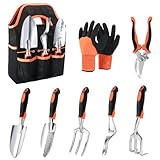
- Versatile Gardening Tool Set: Our garden tools for gardening include a soil scoop, small trowel, cultivator, hand rake, weeder, pruning shears, a pair of protective gloves, and a sturdy storage tote for convenient storage. A great choice for gardening tools for women, gardening set for women, gardening tools for men, gardening gifts for women and men
- High-quality Material: The main body of our garden hand tools (soil scoop,small trowel, cultivator, hand rake, weeder) is made with thickened aluminum alloy material, which is rust-resistant, long lasting and extremely sturdy. Would not easily break even when dealing with thick roots or rocky soil
- Ergonomic Handle Design: The handle of these planting tools is designed with contoured finger grips and palm rest to reduce hand fatigue and strain while planting. The TPR material of the handle makes the garden hand tools easy to hold and comfortable to use, providing optimal leverage for planting, weeding, and digging. The precisely scaled small trowel allows you to transplant the correct depth, while the cultivator shovel ensures effortless soil penetration
- Garden Tool Bag and Gloves Included: The garden bag is made of tear-resistant Oxford cloth, with large in capacity with 8 external pockets, enough space to hold the hand gardening tools to ensure you won't lose them. The gloves have a breathable knitted base for a comfortable fit, and a soft but sturdy foamed latex coating to help reduce fatigue. These garden supplies are not only long lasting but also easy to clean, making our garden tool set a reliable companion for all your gardening tasks
- Sharp and Safe Garden Shears:The gardening shears are designed with carbon steel blades that are sharp for precise cutting without harm to plants. The pruning shears for gardening are lightweight and easy to hold, with a strong spring providing leverage for effortless pruning. In addition, the gardening scissors feature a safety lock design for secure storage when not in use
Step 4: Preserve access
Leave paths or reach-in space for watering, harvesting, pruning, and inspection. Companion plants should not hide the main crop from view. This is especially important for tomatoes, squash, brassicas, and trap crops, where early pest detection can make management much easier.
Do these 3 things before closing this tab:
1Fix the driver behind crashes, sound loss and screen glitches2Clear out junk files and repair common Windows errors3Scan for outdated or missing drivers - takes under a minuteStep 5: Monitor and record results
Check the bed regularly and record:
- When each crop was planted and began flowering.
- Plant vigor, visible competition, and signs of water stress.
- Which pests appeared, on which plants, and in what numbers.
- Whether beneficial insects were present.
- Harvest dates and approximate yields.
- Whether the companion improved the design or merely occupied valuable space.
Compare the arrangement with a similar unpaired section when possible. Even an informal comparison is more informative than assuming a pairing worked because the plants survived.
Step 6: Use physical protection when appropriate
Companion planting and exclusion are not competing ideas. If a crop is vulnerable during a predictable pest period, floating row cover or insect netting may provide more reliable protection than a companion plant. Use the correct material and remove or manage covers when pollination is required. Exclusion tools are supplements to a garden design, not proof that a companion pairing failed.
Step 7: Rotate crop families
Crop rotation is separate from companion planting, but it remains useful for reducing repeated pressure from some soil-borne diseases and pests. Avoid placing the same crop family in the same bed year after year when your space allows rotation. A carefully designed companion arrangement does not compensate for continual repetition of the same susceptible crop in the same soil.
Step 8: Adapt to your region
Planting dates, mature size, pest pressure, rainfall, and day length vary by location. Use local extension recommendations for crop timing, spacing, pest identification, and legal or label-compliant management options. A pairing that works in a warm greenhouse or a humid trial environment may perform differently in a cool, dry, windy, or short-season garden.
The Tool Desk
Outbyte Driver Updater FREEScan for outdated or missing drivers - takes under a minuteDriver Scan →Outbyte PC Repair FREEClear out junk files and repair common Windows errorsFree Scan →A simple planning worksheet
| Question | Your decision |
|---|---|
| What is the main crop? | For example: tomatoes, kale, lettuce, squash, or corn |
| What is the intended benefit? | Space, support, shade, beneficial insects, or a specific pest hypothesis |
| What companion will provide that benefit? | Choose one or two plants with a plausible, evidence-based role |
| Will both plants tolerate the same light and moisture? | Check the site before planting |
| What will their mature size be? | Account for root space, canopy width, and access paths |
| When must each plant be harvested or removed? | Prevent the faster or earlier crop from becoming trapped beneath the larger one |
| How will you monitor the result? | Record pests, beneficial insects, vigor, flowering, and harvest |
| What is the backup plan? | Use hand removal, exclusion, pruning, sanitation, rotation, or another locally appropriate IPM measure if needed |
Optional resources for putting the plan into practice
If you want a durable reference rather than a long list of untested pairings, a companion planting book can be useful for comparing crop-specific strategies. Jessica Walliser’s Plant Partners: Science-Based Companion Planting Strategies for the Vegetable Garden is a 216-page Storey trade paperback published in 2020, identified by ISBN 9781635861334. It is an optional reference, not a requirement for growing a successful garden.
For implementation, choose vegetable and herb seeds suited to your region and planting season rather than buying a generic assortment. A trellis or support is useful when the design depends on climbing beans, cucumbers, or other vigorous vines. Row cover or insect netting can complement the planting when the goal is to exclude a known pest. None of these supplies is required for companion planting; each should match a specific task in the garden.
Evidence note
The strongest recommendations in this guide concern spacing, timing, support, shade, compatible growing requirements, and habitat creation. The pest-related examples are crop-specific findings summarized by extension and horticultural sources, including University of Minnesota Extension, Penn State Extension, Oregon State University Extension, and the Royal Horticultural Society. Their findings support testing and monitoring—not universal compatibility charts or guaranteed pest control.
Frequently Asked Questions
What are the best companion plants for tomatoes?
Basil, thyme, carrots, and lettuce are reasonable combinations for different reasons. Basil and thyme have been studied in relation to particular tomato pests; carrots can share space when light and root room are adequate; and lettuce can serve as a seasonal intercrop. None is guaranteed to protect tomatoes from every pest.
The Tool Desk
Outbyte Driver Updater FREEFix the driver behind crashes, sound loss and screen glitchesFind Drivers →Outbyte PC Repair FREEClear out junk files and repair common Windows errorsFree Scan →Do marigolds really repel garden pests?
Not universally. Some studies have found effects against particular pests or in particular crop systems, but extension summaries also report weak or contradictory support for popular marigold claims. Grow marigolds for flowers and habitat if you like them, but do not rely on them as stand-alone pest control.
Can companion planting replace pesticides or other pest controls?
No. Some combinations may reduce selected pest problems or attract beneficial insects, but results vary. Regular scouting, sanitation, crop rotation, physical exclusion, hand removal, and locally appropriate integrated pest-management practices may still be necessary.
Is the Three Sisters method more productive than growing corn, beans, and squash separately?
Not necessarily. The arrangement can use vertical, middle, and ground-level space efficiently and may reduce the need for bean supports. However, greater yields than separate plantings are not guaranteed, especially when spacing, light, water, or airflow are limiting.
Should companion herbs be allowed to flower?
Usually, if the intended benefit is attracting beneficial insects. Flowers provide nectar or pollen that leaves alone may not provide. Allowing some dill, cilantro, fennel, calendula, thyme, oregano, or similar plants to bloom can make the habitat function more meaningful, as long as the herbs do not crowd or excessively shade the crop.
The Bottom Line
Choose companion plants for a specific job: share space, provide support, moderate heat, supply flowers, or test a named crop-pest relationship. Start with compatible light, moisture, spacing, and timing; monitor the result; and keep physical protection and other integrated pest-management tools available. Companion planting is most useful when it makes the garden work better as a system—not when it is treated as a guaranteed list of plant friendships.
Quick Recap
Product prices and availability are accurate as of the date/time indicated and are subject to change. Any price and availability information displayed on Amazon at the time of purchase will apply.

