Free tools Windows power users keep installed
One-click scans. No signup required.
Some links on this page are affiliate links: if you buy through them we may earn a commission, at no extra cost to you.
A cast-iron skillet is not fragile, but it is unforgiving about one thing: moisture. The right way to clean a cast-iron skillet is simple. Scrape food while the pan is still warm, wash it with hot water and a brush or sponge, use a little mild dish soap when needed, rinse it, dry it immediately, heat it briefly to drive off hidden moisture, then wipe on the thinnest possible coat of oil.
That routine takes 3 to 7 minutes after dinner. It costs almost nothing if you already own dish soap, towels, and cooking oil. It also prevents the two problems homeowners call us about most often when we are working around kitchens: rusty cookware stored in damp cabinets and sticky, smoky pans caused by too much oil.
On our job sites, we treat cast iron the same way we treat good tools. Clean it, dry it, oil it lightly, and store it where water cannot sit on it. The pan itself may be a $25 Lodge skillet or a $180 premium polished pan, but the maintenance rules are nearly identical.
Quick Answer: The Daily Cleaning Method
For everyday cast-iron skillet care, use the least aggressive cleaning method that gets the food off. You are not trying to scrub the pan back to new metal after every meal. You are trying to remove food residue while preserving the seasoning layer.
- Let the skillet cool slightly. Clean it while it is warm, not smoking hot. A warm pan releases stuck-on food more easily.
- Scrape loose food. Use a plastic pan scraper, wooden spatula, or nylon brush. Lift food off instead of gouging at the surface.
- Wash with hot water. Use a non-scratch sponge or stiff dish brush. Add a small amount of mild dish soap if the pan is greasy or has food residue.
- Rinse well. Do not leave soap, salt, or loosened food in the pan.
- Dry immediately. Use a clean cotton towel or paper towels. Do not let cast iron air-dry in the sink rack.
- Heat dry. Put the skillet on a low burner for 2 to 4 minutes, until all moisture is gone from the cooking surface, handle, pour spouts, and underside rim.
- Oil lightly. Add about 1/4 teaspoon of neutral oil for a 10- to 12-inch skillet, then wipe until the pan looks almost dry.
That last phrase matters: almost dry. If you can see shiny puddles or streaks of oil, there is too much oil on the pan. Excess oil is the main reason cast iron turns sticky after seasoning or storage.
What You Need to Clean Cast Iron
You do not need a specialized kit, but the right small tools make the work faster and reduce over-scrubbing. A basic setup usually costs $5 to $20 if you are buying dish soap, a brush, towels, and oil separately. Cast-iron-specific accessories can add $10 to $40 depending on how complete you want the setup to be.
As an Amazon Associate I earn from qualifying purchases.
| Item | Typical 2026 Cost | Best Use |
|---|---|---|
| Mild dish soap | $3-$6 | Grease, food residue, normal washing |
| Non-scratch sponge or nylon brush | $3-$15 | Daily cleaning without stripping seasoning |
| Plastic pan scraper | $3-$8 | Stuck bits after searing, roasting, or baking |
| chain-mail scrubber | $10-$25 | Stubborn residue and light rust |
| Coarse kosher salt | $3-$8 | Dry scouring when water is not enough |
| Canola or vegetable oil | $4-$10 | Routine oiling and seasoning |
| Grapeseed, flaxseed, or branded seasoning oil | $8-$20+ | Oven seasoning, if preferred |
| silicone handle cover | $5-$15 | Burn protection when drying or seasoning |
| pan protector, towel, or shelf liner | $5-$15 | Stacking and cabinet protection |
A care kit is convenient, but not mandatory. If you buy one, expect common kits to run $15 to $40, with premium kits higher. For most homes, the best value is a brush, plastic scraper, cotton towel, and a bottle of neutral oil.
Can You Use Soap on Cast Iron?
Yes, you can use mild dish soap on cast iron. Modern cast-iron seasoning is polymerized oil bonded to the metal through heat. It is not just loose grease sitting on top of the pan. A small amount of dish soap will not ruin a properly seasoned skillet.
Popular on Amazon

- Versatile Cooking Skillet: The Lodge Cast Iron Skillet is a multipurpose, everyday cooking pan that excels at searing, sautéing, baking, frying, and campfire meals
- Pre-Seasoned & PFAS-Free: This pre-seasoned skillet is made with 100% natural vegetable oil for a naturally nonstick finish and is a non-toxic cookware option, completely PFAS-free
- Superior Heat Distribution: The heavy-duty cast iron frying pan cooks evenly, making it ideal for precision recipes and consistent results
- Safe & Comfortable Handling: The skillet includes a silicone heat-resistant handle holder for transport after cooking, plus a teardrop handle for easy lifting and control
- About Lodge Cast Iron: Made in the USA, Lodge cookware is versatile and as easy to clean as it is to cook with; taste a difference in your cooking with cast iron
The real problems are long soaking, harsh degreasers, dishwashers, and aggressive scrubbing after every use. Those conditions attack the seasoning layer and invite rust. If you cooked bacon, burgers, fish, onions, or anything that left odor or residue behind, wash the pan. Leaving old oil in the skillet because you are afraid of soap is worse than using a few drops of mild detergent.
Use soap like a finish carpenter uses sandpaper: enough to solve the problem, not so much that it creates another one.
What’s actually slowing this PC down?
Pick the symptom - the matching free tool is one click away.
How to Clean Cast Iron After Different Kinds of Cooking
After Eggs, Cornbread, or Light Sauteing
If the pan is lightly used, wipe it with a paper towel while warm, then wash with hot water and a sponge if needed. Dry it on the stovetop for 2 to 4 minutes and wipe on a thin coat of oil. This is the low-effort routine that builds good seasoning over time.
After Steak, Burgers, or Fried Food
Pour off excess grease into a heat-safe container. Do not send large amounts of grease down the sink. Scrape browned bits with a pan scraper, wash with hot water and mild soap, rinse, dry, heat, and oil. If you have a stainless sink or stone counter, lift the pan instead of sliding it. A loaded 12-inch cast-iron skillet can weigh 7 to 8 pounds before food is added, and it can scratch sinks, quartz, granite, laminate, and glass cooktops when dragged.
After Sticky Sauces or Burned-On Food
Add 1/4 to 1/2 inch of water to the pan and bring it to a brief simmer for 2 to 5 minutes. Use a wooden spatula or scraper to loosen the stuck food. Pour out the water, wash, rinse, dry, and oil. Avoid soaking the pan for an hour. Cast iron can handle water during cleaning; it should not sit wet.
Cleaning Cast Iron With Salt
For stuck food that does not need soap, add 1 to 2 tablespoons of coarse kosher salt to the warm pan and scrub with a folded paper towel or cloth. The salt acts as a mild abrasive. Dump the dirty salt, rinse if needed, dry immediately, and oil lightly. Salt cleaning is useful, but it is not magic. If the pan is greasy or has food residue, soap and hot water are cleaner.
The Tool Desk
Outbyte Driver Updater FREEScan for outdated or missing drivers - takes under a minuteDriver Scan →Outbyte PC Repair FREEClear out junk files and repair common Windows errorsFree Scan →How to Dry a Cast-Iron Skillet Correctly
Drying is where many cast-iron problems start. A towel removes visible water, but moisture hides around the helper handle, pour spouts, outside rim, textured bottom, and the joint where the handle meets the pan body.
Also popular on Amazon

- Quality Cast Iron Frying Pan: The Lodge Seasoned Cast Iron Skillet is loved for its great heat retention, incredible durability, and ability to make almost any recipe you dream up
- Naturally Seasoned for Non-Stick Finish: Each pre-seasoned skillet arrives ready to use with a smooth non-stick finish that cooks evenly and improves with every use, perfect for eggs, meats, and more
- Heavy-Duty & Long-Lasting: This cast iron frying pan is crafted for durability and multipurpose use, with an easy-grip teardrop handle designed for comfort and control
- Versatile & Multipurpose: This versatile cooking skillet is oven safe, stovetop compatible, and ideal as a camping cooking pan
- About Lodge Cast Iron: Made in the USA, Lodge cookware is versatile and as easy to clean as it is to cook with; taste a difference in your cooking with cast iron
After towel drying, put the skillet on a low burner for 2 to 4 minutes. You are looking for full evaporation, not high heat. If the pan starts smoking, the burner is too hot or oil was added too early. Once dry, turn off the heat and apply a thin oil film while the pan is warm enough to help the oil spread.
In a humid kitchen, basement apartment, coastal home, or poorly ventilated cabinet, this heat-drying step matters even more. We see the same principle in construction: moisture that stays trapped against a surface eventually shows up as staining, corrosion, swelling, or odor. Cast iron is just a smaller version of the same building-science problem.
How to Oil Cast Iron Without Making It Sticky
Use a high-smoke-point neutral oil such as canola, vegetable, grapeseed, or a branded cast-iron seasoning oil. For routine maintenance, add about 1/4 teaspoon to a 10- or 12-inch skillet. Spread it over the cooking surface, sidewalls, handle area, and exterior if needed. Then wipe it again with a clean towel until it looks like you removed the oil.
Recommended Free Tools
That nearly dry look is correct. The oil film should be microscopic. Thick oil does not create better seasoning. It creates sticky, gummy patches that attract dust and smoke the next time the pan heats up.
If your cast iron is sticky after seasoning, the usual cause is too much oil, too low a seasoning temperature, or not enough time in the oven. Wash the sticky area with hot water and mild soap. If it remains tacky, scrub lightly with chain mail or a non-scratch pad, dry thoroughly, and bake on a very thin coat of oil.
How to Season a Cast-Iron Skillet
Seasoning is a baked-on layer of polymerized oil that helps resist rust and makes the cooking surface easier to use. You do not need to oven-season after every wash. Routine cooking and light oiling usually maintain the surface. Oven seasoning is useful after rust removal, heavy scrubbing, restoration, or when the pan looks dull and dry.
- Wash the skillet with hot water and mild soap.
- Dry it with a towel, then heat it on the stovetop until fully dry.
- Rub a very thin coat of oil over the entire pan, inside and out.
- Wipe the pan until it looks almost dry.
- Place it upside down in a 450°F to 500°F oven, depending on the oil used.
- Put foil or a baking sheet on the rack below to catch any drips.
- Bake for 1 hour, then let the pan cool in the oven.
Use range ventilation during oven seasoning. Thin oil coats reduce smoke, but some odor is normal. Open a window if needed, and avoid overheating oil well beyond its smoke point. If your kitchen does not have good exhaust, this is one of those small maintenance tasks that exposes a larger design issue. A properly sized range hood, ducted outdoors where possible, is not just a luxury for people who cook often. It protects finishes, cabinets, indoor air quality, and smoke alarms.
Quick wins for a faster PC:
Scan for outdated or missing drivers - takes under a minuteDriver Scan →Clear out junk files and repair common Windows errorsFree Scan →Fix the driver behind crashes, sound loss and screen glitchesFind Drivers →Cast-Iron Skillet Rust Removal
Light rust is usually repairable. A rusty inherited skillet does not need to go in the trash unless it is cracked, badly warped, or deeply pitted. Most rust happens because the pan was stored damp, left in the sink, run through a dishwasher, or stacked in a humid cabinet.
For light rust, scrub the rusty area with chain mail or steel wool until you reach solid metal. Wash with mild soap and hot water. Dry immediately with a towel, heat dry on the stove, apply a thin coat of oil, and oven-season the pan. Expect the first seasoning layer to look bronze, gray, or patchy. That is normal. The black finish develops through repeated cooking and thin coats of oil.
For heavier rust or flaking seasoning, restoration may require stripping the pan closer to bare metal. Many homeowners can do this for under $25 in supplies if the pan is structurally sound. Local cookware, knife-sharpening, or antique-restoration services may charge roughly $20 to $75 or more per pan depending on size, carbon buildup, rust depth, and whether electrolysis or full stripping is used.
When to DIY vs When to Hire a Pro
Most cast-iron cleaning and rust removal is a DIY job. No building permit is required to clean, season, or restore a home skillet. You need hot water, mild soap, drying heat, oil, and patience.
Also popular on Amazon
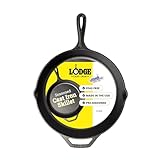
- Quality Cast Iron Frying Pan: The Lodge Seasoned Cast Iron Skillet is loved for its great heat retention, incredible durability, and ability to make almost any recipe you dream up
- Naturally Seasoned for Non-Stick Finish: Each pre-seasoned skillet arrives ready to use with a smooth non-stick finish that cooks evenly and improves with every use, perfect for eggs, meats, and more
- Heavy-Duty & Long-Lasting: This cast iron frying pan is crafted for durability and multipurpose use, with an easy-grip teardrop handle designed for comfort and control
- Versatile & Multipurpose: This versatile cooking skillet is oven safe, stovetop compatible, and ideal as a camping cooking pan
- About Lodge Cast Iron: Made in the USA, Lodge cookware is versatile and as easy to clean as it is to cook with; taste a difference in your cooking with cast iron
DIY is the right call when the skillet has normal food residue, light surface rust, dull seasoning, sticky oil, or a few bare spots. Plan on 5 minutes for daily cleaning, 20 to 40 minutes of hands-on work for light rust, and 1 to 3 oven cycles if you are rebuilding seasoning.
Consider professional restoration when the pan is collectible, heavily carbonized, badly rusted, or valuable enough that you do not want to experiment. Replacement cost matters here. A mass-market 10- to 12-inch skillet is commonly $20 to $40, with a 10.25-inch Lodge example around $24.90 and some classic skillets listed from about $19.90. Premium US-made polished skillets can run roughly $120 to $220, including examples like a Field No.8 at $165, a Smithey No.10 at $180, a Smithey No.10 Chef at $160, and a Stargazer 10.5-inch at $155. Across the market, practical options range from about $17 to $250, with many good pans near $100.
If you own a $25 skillet with severe pitting, replacement may be more sensible than restoration. If you own a family pan, vintage piece, or premium skillet, a $50 restoration charge can be reasonable.
How to Store Cast Iron Pans
Storage is part of cleaning. A perfectly washed skillet can rust if it is put away damp or sealed in a humid cabinet. Store cast iron in a dry, ventilated place. If you stack pans, place a dry cotton towel, paper towel, cork separator, or pan protector between them. This prevents abrasion and allows a little airflow.
PC Slower Than It Used to Be?
A free scan shows the junk files, broken settings and background clutter dragging Windows down - then fixes them in one click.Free scan · Windows 10 & 11Crashes, No Sound, or Screen Glitches?
Random freezes, missing sound and display glitches usually trace back to one bad driver. Find and replace yours safely.Free scan · under a minuteDo not store cast iron with a tight lid sealed on top unless both pieces are completely dry and there is a spacer for airflow. A lid can trap moisture inside the pan and create rust rings. In coastal homes, basement kitchens, lake houses, and seasonal properties, check stored pans every few weeks during humid periods.
Protect the cabinet too. Cast iron is heavy and slightly abrasive. A shelf liner helps prevent black marks and scratches inside base cabinets. If you store several pans in a pull-out drawer, check the slide rating. Many residential drawer slides are rated around 75 to 100 pounds, but the real capacity depends on installation quality, drawer width, and fasteners. Four heavy skillets plus lids can add up faster than homeowners expect.
Kitchen Design Details That Make Cast-Iron Care Easier
Good kitchen layout reduces damage. When we design or remodel a cooking zone, we think about the path between range, sink, counter, and storage. Cast iron makes that path more demanding because the cookware is heavy, hot, and sometimes oily.
A useful cast-iron setup has a landing zone near the range and sink. A 18- to 24-inch clear counter area gives you room to set down a hot skillet on a trivet, scrape food, and move safely to the sink. Good task lighting helps you see residue and oil streaks. A towel hook or drawer within arm’s reach keeps the pan from sitting wet while someone hunts for a cloth.
Do these 3 things before closing this tab:
1Scan for outdated or missing drivers - takes under a minute2Clear out junk files and repair common Windows errors3Fix the driver behind crashes, sound loss and screen glitchesCountertop protection matters. Lift cast iron instead of dragging it across quartz, stone, laminate, stainless, or butcher block. Use a trivet, silicone mat, or heat-rated pad when setting down a hot pan. On glass cooktops, avoid sliding the skillet. The pan’s weight and rough base can scratch the surface, especially if salt, grit, or food particles are trapped underneath.
Ventilation also belongs in this conversation. Oven-seasoning and high-heat searing can create smoke. If your range hood is weak, recirculating only, or rarely used because it is loud, the kitchen will absorb more grease and odor. Permits may enter the picture if a project includes new ducted ventilation, gas or electrical changes, sink relocation, plumbing changes, commercial kitchen conversion, or hood and fire-suppression work. Cleaning a skillet needs no permit; changing the kitchen systems around it might.
Also popular on Amazon

- Superior Heat Retention: The Cast Iron Skillet distributes heat evenly across the surface for perfect cooking results. Ideal for searing, sautéing, frying, baking, and more.
- Versatile Cooking: Our cast iron cookware is suitable for use on stovetops, ovens, grills, and even campfires, offering unmatched versatility for indoor and outdoor cooking.
- Pre-Seasoned for Immediate Use: Comes pre-seasoned with vegetable oil, to enhance the non-stick performance and deliver authentic flavors right out of the box. Is an ideal cooking gift for men and women.
- Easy-Grip Handles: Features ergonomically designed handles, for a secure grip and safe handling, even with oven mitts.
- Easy Care: It is recommended to rub the pan with a light coating of vegetable oil after every wash. Allow the cast iron skillet to cool completely before washing it in hot soapy water with a sponge and a regular dish washing liquid soap.It is not dishwasher-safe.
Commercial and Shared Kitchen Notes
For ordinary private home cooking, cast iron is straightforward. Commercial kitchens, church kitchens, shared rentals with food service, and small food businesses can have different rules.
The 2022 FDA Food Code allows cast iron as a cooking surface, but it generally restricts cast iron as food-contact equipment or utensils except for specific cooking-through-service uses. In practical terms, a skillet used as a cooking vessel may be acceptable where the local authority allows it, but operators should not assume every cast-iron item is approved for every food-contact use.
If you are building or remodeling a food-service space, check local health department requirements before selecting cookware, sinks, storage, ventilation, and warewashing equipment. In commercial work, the cleaning question is tied to approved surfaces, sanitation workflow, hood design, hand sinks, three-compartment sinks, and inspection requirements.
Common Mistakes That Ruin Cast-Iron Care
The dishwasher is the biggest avoidable mistake. Prolonged water, detergent, and heat can strip seasoning and cause rust. Long soaking is next. A few minutes of hot water during cleaning is fine; leaving the skillet in the sink overnight is not.
Too much oil is another common problem. Homeowners often add a tablespoon of oil after washing, spread it around, and put the pan away shiny. That pan usually comes out sticky. Use about 1/4 teaspoon, then wipe until nearly dry.
Do not scrub aggressively after every use. A chain-mail scrubber is useful, but it does not need to touch the pan after every egg. Use a sponge or brush first. Save chain mail for stuck food and light rust. Save steel wool for rust removal or restoration.
Do not assume every patchy area requires a full strip. Cast iron seasoning is allowed to look uneven. If the pan is clean, dry, not rusty, and cooks well, keep using it. Cooking, cleaning, drying, and light oiling will improve the surface over time.
Bottom Line
The best way to clean a cast-iron skillet is not complicated: wash it promptly, dry it completely, and oil it lightly. Soap is allowed. Dishwashers and soaking are not. Stuck food calls for a scraper, salt, chain mail, or a short water simmer. Rust usually means the pan was stored wet, and most rusty pans can be repaired with scrubbing, drying, oil, and oven seasoning.
Also popular on Amazon

- Exceptional Heat Retention: Enjoy perfectly cooked meals with cast iron skillets that provide even heat distribution, ideal for searing, frying, and baking in a 12 inch frying pan.
- Versatile Cooking Options: Utilize this multipurpose skillet on the stove top, during camping trips, or on the grill; perfect for various cooking methods and outdoor adventures
- Pre-Seasoned for Immediate Use: Comes pre-seasoned with vegetable oil, to enhance the non-stick performance and deliver authentic flavors right out of the box. Is an ideal cooking gift for men and women.
- Ideal Size for Any Occasion: The 12 Inch Skillet is perfect for both indoor and outdoor cooking a reliable Chef's Pan that meets all your culinary needs.
- Ample Cooking Space: Experience the convenience of a large frying pan that can handle family meals also great for smaller tasks with a small cast iron skillet option available.
From a builder’s perspective, cast-iron care is really moisture control and workflow. A dry cabinet, protected shelf, strong range ventilation, durable landing zone, and good lighting will do more for daily skillet maintenance than any expensive accessory. Treat the pan like a tool, and it will outlast most of the kitchen around it.
Frequently Asked Questions
Can you use soap to clean a cast-iron skillet?
Yes. Mild dish soap is safe for seasoned cast iron. Avoid long soaking, harsh degreasers, and the dishwasher, which can damage seasoning and cause rust.
What is the best way to clean cast iron after cooking?
Scrape the warm pan, wash with hot water and a brush or sponge, use mild soap if needed, rinse, towel dry, heat on the stovetop for 2 to 4 minutes, then wipe on a very thin coat of oil.
How do you remove rust from a cast-iron skillet?
Scrub light rust with chain mail or steel wool, wash the pan, dry it completely, oil it lightly, and oven-season it. Heavy rust or flaking seasoning may need a full restoration.
Why is my cast iron sticky after seasoning?
Sticky seasoning usually comes from too much oil or not enough heat/time during seasoning. Scrub the tacky area, dry the pan, apply a thinner oil coat, and bake it again.
Can cast iron go in the dishwasher?
No. Dishwasher detergent, prolonged water exposure, and heat can strip seasoning and cause rust. Wash cast iron by hand and dry it immediately.
How should cast iron be stored to prevent rust?
Store it fully dry in a ventilated cabinet. If stacking pans, use a dry towel, paper towel, cork spacer, or pan protector between pieces, and avoid sealing a lid on the pan while moisture is trapped inside.
Quick Recap
Product prices and availability are accurate as of the date/time indicated and are subject to change. Any price and availability information displayed on Amazon at the time of purchase will apply.

