Short answer: Do not put dog poop in a normal backyard compost pile. Dog feces can be processed only in a separate, contained, actively managed dog-waste composting system that reaches and maintains high temperatures, is monitored with a thermometer, and is used exclusively for non-food landscaping. If you cannot manage those conditions, dispose of the waste according to local rules or use a locally approved service.
This distinction matters because the EPA’s general home-composting guidance lists pet waste and cat litter among materials to avoid, while specialized USDA guidance describes a separate dog-waste process designed to reduce pathogens. That specialized method is not permission to add pet waste to an ordinary household pile.
As an Amazon Associate I earn from qualifying purchases.
Why dog poop is different from kitchen scraps
Dog feces can contain parasites and disease-causing organisms. Untreated waste can also contaminate soil or surface water and attract flies and other pests. The CDC’s pet-waste guidance recommends cleaning up feces, keeping children away from contaminated areas, and washing hands after contact with dogs or outdoor areas.
Free tools Windows power users keep installed
One-click scans. No signup required.
Normal backyard composting is not automatically hot enough, large enough, or thoroughly turned enough to expose every part of a dog-waste pile to pathogen-reducing conditions. A pile may look dark and earthy on the outside while raw material remains inside. That is why the safe answer depends on the system, not simply on whether the waste eventually appears to decompose.
#1 Best Overall

- FLEXIBLE: Outdoor & indoor system with proprietary odor lock technology.
- LOCKS ODORS: Sliding lever that locks odors in, and top handle secures lid from opening. Included multi-layer refill film with odor-locking barrier technology that can last up to 2 months for one dog.
- FITS VARIOUS DOG WASTE: Dog waste, dog poop bags, dog diapers, training pads and dog litter.
- OUTDOOR USE: Durable, rugged plastic with UV protection. Lightweight portable dog poop disposal system to help you keep your lawn and garden healthy and clean. Reduce plastic dog poop bags by direct scooping into the pail. Not for extreme weather. Do not use below : -10 °C / 14 °F
- INDOOR USE: Ideal for puppies, adult and senior dogs. From training pads to dog diapers, Pet Genie odor locking technology helps you keep your home smelling fresh.
What can and cannot go into a dog-waste composting system?
| Material or system | What to do | Why |
|---|---|---|
| Dog feces | Use only in a separate, actively managed dog-waste composting system. | Specialized USDA guidance describes a controlled process using carbon, moisture, adequate mass, turning, and temperature records. |
| Dog feces in an ordinary household compost pile | Do not add it. | EPA household guidance lists pet waste among materials to avoid in a typical backyard pile. |
| Cat feces or cat litter | Exclude them completely. | The cited study evaluated dog waste only, and the USDA publication specifically recommends against cat waste and cat litter. |
| Compostable dog-poop bags | Do not assume they belong in a home pile. | EPA lists compostable bags among materials to avoid in ordinary backyard composting. Acceptance depends on the specific system or commercial facility. |
| Finished dog-waste compost | Use only for non-food landscaping after proper processing and curing. | The USDA guidance permits uses such as lawn establishment, revegetation, planting beds, and landscaping, but not food crops. |
How to compost dog poop using the specialized method
The following process is based on the USDA dog-waste composting fact sheet. It is a controlled waste-management project, not a casual addition to a garden compost pile.
1. Choose a separate location
Place the system in a sunny, dry location near the dog area so waste can be transferred easily. Do not place it where rainwater or other runoff can flow into the dog yard, a drainage channel, a stream, or another area where contamination could spread.
The USDA guidance also says not to locate the pile near pregnant or nursing dogs. Keep the site away from children’s play areas and choose a location where pets cannot investigate or disturb the active material.
2. Use a dedicated, contained bin
Use a dedicated compost bin that is covered, well-contained, and designed to allow aeration and turning. A bin is preferable to an unmanaged pile or pit because it makes it easier to mix the material, retain heat, and turn the outside material into the hotter center.
A two-bin arrangement is particularly practical:
- Collection bin: holds newly gathered waste and carbon material until there is enough to build a batch.
- Active-composting bin: holds the batch while it heats, is turned, and is monitored.
Do not assume that any ordinary backyard bin is suitable. The container needs enough capacity to build an adequately sized mass, a cover to control rain, and access for turning and temperature checks. A small decorative bin may be convenient for leaves but unsuitable for the heat-management requirements of dog waste.
3. Mix dog waste with a carbon-rich material
Dog waste supplies nitrogen. The USDA example uses approximately two shovels of dog waste to one shovel of sawdust or another carbon source. Mix the ingredients thoroughly rather than leaving layers of feces and carbon separated.
Fine sawdust was identified as the best carbon source in the cited study, but the guidance also identifies alternatives such as:
- chopped straw or hay;
- shredded newspaper;
- dog bedding; and
- fallen leaves.
The ratio is an example for building the mixture, not a guarantee that every batch will heat successfully. The amount of carbon required can vary with the moisture, particle size, weather, and quantity of waste.
4. Control moisture and cover the bin
Add water gradually while mixing until the material has approximately the consistency of a wrung-out sponge. It should be damp throughout, not dripping wet and not dusty or dry.
Rank #2
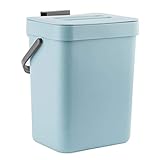
- Notice: Please note the size of the 3L small trash can. If you want larger garbage cans, we also have 5L, 7L, 9L.
- Works as Compost Bin: It's odor-blocking. Say goodbye to the smelly kitchen waste. Our kitchen scraps container comes with a lid. You can let the fruit scraps, vegetable peelings and other materials build up for several days without worrying about attracting flies or terrible smells into your kitchen.
- Hangable & Mountable: The compost container can be easily hung on the doors of kitchen cabinets, office lockers or bedroom drawers. Moreover, this compost bucket can also be wall-mounted to your cupboard, kitchen wall or bathroom wall with adhesive pad.
- Works as Desktop Wastebasket: The small trash can with lid is perfect for makeup tables, vanities, office desktops, countertops, inside cabinets and more. Mini trash can could be used throughout the house in the bathroom, laundry room, home office, craft room, pet room, kids room (diaper bin) and more.
- Light & Sturdy: LALASTAR under sink trash can is made up with high quality plastic. The sturdy handle makes the compost pail easy to carry the filled bin. Perfect for everyday counter-top use.
Keep the bin covered. Excess rain can saturate the mixture, remove air spaces, and cool the material. If the mix becomes too wet, it may smell and lose the conditions needed for active aerobic composting. If it becomes too dry, decomposition slows. Correct the moisture gradually rather than flooding the bin.
5. Build enough mass to retain heat
In its step-by-step procedure, the USDA fact sheet describes a pile approximately two to three feet deep. It also notes that a three- to five-foot cube provides insulation and helps the pile maintain high temperatures. These dimensions illustrate the scale needed for heat retention; they are not a universal guarantee for every climate or bin.
What’s actually slowing this PC down?
Pick the symptom - the matching free tool is one click away.
This is an important limitation for a household with one dog. The fact sheet warns that fewer than roughly 10 dogs may not produce enough waste to maintain a hot bin without additional nitrogen-rich material, such as grass clippings. If your household cannot generate enough material to build and sustain a substantial batch, the specialized hot-composting method may be impractical.
Do not solve a small or inactive pile by simply using the finished-looking material. If the batch never develops and maintains the conditions required by the procedure, treat it as incompletely processed waste and use ordinary disposal or a locally approved service instead.
6. Measure temperatures and keep records
Temperature monitoring is essential. Insert a long-stem compost thermometer toward the center of the pile and check more than one location. Record the readings and the dates so you can tell whether the batch is heating, cooling, or failing to develop evenly.
7. Turn the entire batch when the temperature falls
The USDA procedure says the temperature commonly begins to decline after about two weeks. When it does, turn the entire pile so material from the cooler outside moves toward the hotter center. Repeat the process whenever the temperature drops again.
Turning is especially important with dog waste because the outside edges may not receive the same heat as the center. Mix thoroughly, check several locations with the thermometer, and keep recording the results. The goal is to expose all of the material to the high-temperature conditions described in the procedure, not merely to heat one central spot.
8. Allow active processing and a separate curing period
The USDA recipe describes an active “cooking” period of approximately six to eight weeks. That is not a universal deadline. Weather, pile size, moisture, carbon balance, turning, and the ability to maintain heat all affect how long the process actually takes.
Rank #3

- Countertop Fit - The countertop compost bin measures 7.2 inches wide and 11.2 inches high, offering a slightly larger capacity while maintaining a compact cylindrical design that fits neatly on your countertop without taking up excessive prep space.
- Durable Build - Made with stainless steel, the composter resists scratching, cracking, and chipping, so it can handle onion skins, coffee grounds, and daily scraps without showing the wear.
- Stylish Design - With a sturdy, sleek design that complements most kitchen decor, the compost bucket with lid looks like it belongs on your counter, not tucked away out of sight. Its clean lines fit right in, whether your style is modern or classic.
- Odor Control - This kitchen compost bin with lid comes with charcoal filters that trap odors naturally, so food scraps can build up for a full week without any bad smell taking over your kitchen, no matter how close you get to trash day.
- Easy Care - Line the bottom of this small compost bin with newspaper or cardboard to absorb liquid, and drain excess moisture from food scraps before adding them. A quick weekly rinse with water, mild soap, or vinegar keeps things smelling fresh.
After active heating stops and the visible feedstock has broken down, allow the material to cure for at least another four weeks. This follows the EPA’s general compost guidance. Curing is an additional maturation period; it does not make up for a batch that never reached appropriate pathogen-reducing conditions.
Do these 3 things before closing this tab:
1Scan for outdated or missing drivers - takes under a minute2Clear out junk files and repair common Windows errors3Fix the driver behind crashes, sound loss and screen glitchesThe finished material should be dark and soil-like, with no recognizable dog feces or obvious original ingredients. Appearance alone is not proof of safety, so do not shorten the process because the material looks finished.
Temperature does not mean the compost is sterile
The USDA document reports that fresh dog-waste compost mixtures can reach approximately 160°F or higher. EPA says a well-maintained backyard compost pile may reach approximately 130°F to 160°F. Those figures show why a properly sized and managed pile can reduce pathogens, but temperature by itself does not prove that every organism has been destroyed.
Three conditions make a major difference:
- Uniform exposure: the entire batch, including the outer material, must be moved through the hot center by turning.
- Enough time: a brief temperature spike is not the same as completing the active processing and curing periods.
- Reliable monitoring: readings should be taken in multiple places and recorded rather than guessed from the weather or the appearance of the pile.
Do not describe home-produced dog-waste compost as sterile or universally pathogen-free. If you cannot monitor temperatures, maintain the bin, or keep children and pets away from it, do not use this method.
Where finished dog-waste compost can be used
Properly processed dog-waste compost is limited to non-food landscaping. The USDA guidance identifies uses including:
- revegetation;
- lawn establishment;
- ornamental planting beds; and
- general landscaping.
Never use it on crops grown for human consumption. That includes vegetable gardens, edible herb beds, fruiting plants, and other food-producing areas. Keep this restriction in place even if the compost looks mature and has been cured.
The USDA guidance recommends a 25-percent compost blend for potting mixes or flower beds. It also cautions that the material’s relatively high salinity makes it unsuitable for germinating seedlings. Do not use dog-waste compost as seed-starting mix or around seedlings that are especially sensitive to salts.
When spreading it for ornamental landscaping, keep the material away from edible crops and prevent runoff toward food gardens, wells, streams, and surface water. The objective is to reduce exposure, not to treat the compost as an ordinary all-purpose soil amendment.
Why cat feces and cat litter should stay out
Do not extend this dog-waste method to cats. The USDA publication covers dog waste only and recommends against adding cat waste or cat litter. Cat litter may also contain clay, minerals, or other materials that are not appropriate for this process.
Quick wins for a faster PC:
Fix the driver behind crashes, sound loss and screen glitchesFind Drivers →Clear out junk files and repair common Windows errorsFree Scan →Scan for outdated or missing drivers - takes under a minuteDriver Scan →Rank #4

- FEATURED IN BON APPETIT & FORBES: Recognized by renowned magazines, EPICA’s compost bin is a perfectly sized marvel for your kitchen, compact yet spacious enough to hold days' worth of compostable organic waste. Measures 7.16" in diameter x 11" high.
- CONTROL KITCHEN ODORS NATURALLY: This indoor compost bin with a charcoal filter features an airtight lid and a replaceable activated-charcoal filter to help reduce odors. Enjoy a fresher kitchen with an odor-free compost bucket designed for daily use.
- EASY TO CLEAN & RESISTANT TO LEAKS: This countertop bin features a one-piece molded design that resists rust and leaks. The container's construction is easy to hand-wash with warm water and is built for everyday convenience. Empty & clean weekly for best results. Rinse the filters and air dry them to extend their life, or replace them (they last 3-6 mo. with regular use). Don't saturate the charcoal filters- gentle rinsing is enough.
- BUILT TO LAST A LIFETIME: Crafted from premium stainless steel, this stainless steel compost container resists scratches and rust for lasting durability. An ideal compost bin for kitchen counter use that combines style with everyday performance.
- REPLACEABLE CHARCOAL FILTER FOR ODORLESS COMPOSTING: Activated-charcoal filters help keep this countertop compost bin fresh by reducing odors. With proper care, each filter lasts 3–6 months, making this compost bucket easy to maintain.
That means no cat feces, used cat litter, or mixed dog-and-cat waste in the dedicated dog-waste bin. Keep the dog-waste system limited to the material the guidance actually evaluated.
What about compostable dog-poop bags?
A bag labeled compostable is not automatically suitable for a backyard compost pile. The EPA lists compostable bags and compostable foodservice ware among materials to avoid in ordinary home composting. Commercial facilities may accept certain certified items under specific conditions, but acceptance is facility-specific.
Unless the particular composting system or facility explicitly accepts the bag, keep it out of the compost. Check the local facility’s rules before bringing bagged dog waste to a commercial organics program. If no approved organics option exists, follow local instructions for bagging and disposing of the waste in the trash.
Alternative: an in-ground dog-waste digester
If your goal is continuous yard disposal rather than producing a soil amendment, an in-ground digester is a different type of system. It should not be described as composting.
For example, Doggie Dooley pet-waste digester systems are described by the manufacturer as septic-style or leach-bed devices. According to the manufacturer, dog waste is mixed with water and proprietary tablets or powder, then broken down into liquid that percolates into the surrounding soil. Its product page lists models including the Model 3000, Model 3800X, and Model 3535; product availability and models can change.
This system does not produce finished garden compost. The manufacturer’s FAQ says performance depends on soil drainage and recommends a percolation test. It also states that the system is not designed for winter operation when air temperatures remain below 40°F. Those are manufacturer claims, not independent safety validation.
Before installing an in-ground digester, verify local environmental-health and wastewater rules. Do not place one near a private well, stream, food garden, or another location where subsurface discharge is prohibited or could reach groundwater. The manufacturer’s product information should be read together with local site requirements, not treated as a substitute for them.
Existing owners should use only the manufacturer-specified Doggie Dooley Waste Terminator tablets or powder for that digester. Do not add those products to an ordinary compost pile as a general-purpose compost activator.
Recommended Free Tools
When ordinary disposal is the safer choice
Choose ordinary disposal or an approved service if any of the following apply:
Best Value
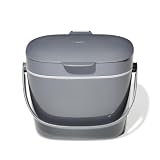
- Unique design keeps bags tucked inside for a neat look
- 1.75-gallon/6.62-liter capacity perfect for busy kitchens
- Smooth interior makes Bin easy to clean
- Odor-containing and pest-reducing since oxygen can flow through the soft-close lid
- Stay-open lid makes it easy to toss scraps in while you’re working
- You have only a small amount of waste and cannot build enough mass to sustain heat.
- You cannot use a separate, covered bin.
- You cannot take and record readings with a long-stem thermometer.
- You do not have a location protected from runoff and access by children or pets.
- You need compost for a vegetable garden, edible herbs, fruit, or seedlings.
- You are dealing with cat waste, cat litter, or mixed pet waste.
- Your local rules prohibit the proposed composting or subsurface disposal method.
- The pile never heats properly or repeatedly becomes saturated, dry, or unmanageable.
For routine disposal, bag the waste and follow local trash rules. A commercial organics or pet-waste program may be an option where one specifically accepts dog feces, but availability, bag requirements, and legal conditions vary by city and state. Do not assume that a service accepting food scraps also accepts pet waste.
Safety checklist
- Wear gloves when collecting, mixing, or turning dog waste.
- Wash your hands thoroughly after handling feces, the active bin, or contaminated outdoor areas.
- Avoid touching your face while working.
- Keep children and pets away from the collection and active-composting bins.
- Keep the bin covered and prevent runoff from leaving the site.
- Do not locate the system near pregnant or nursing dogs.
- Use tools dedicated to the waste system, or clean them thoroughly before another use.
- Keep cat feces and cat litter out.
- Do not add compostable bags unless the specific system or receiving facility accepts them.
- Record temperatures from multiple parts of the pile and turn the material as readings decline.
- Do not use the finished material on food crops or for germinating seedlings.
- If the process is incomplete or uncertain, do not spread the material; dispose of it through an approved route.
A simple decision guide
- Is this an ordinary backyard compost pile? If yes, do not add dog poop. EPA household guidance excludes pet waste from that type of pile.
- Do you have a separate covered bin, adequate material volume, a carbon source, and a way to monitor and turn the batch? If no, choose ordinary disposal or a locally approved service.
- Can you use the finished material only on non-food landscaping? If no, do not compost dog waste for that purpose.
- Is the waste from a cat or mixed with cat litter? Do not put it in the dog-waste system.
- Do you want continuous disposal rather than compost? Investigate an in-ground digester only after checking soil drainage, seasonal limitations, and local rules.
For a homeowner who can maintain the controls, dedicated dog-waste composting is possible. For everyone else, the safer and simpler answer is to keep pet waste out of the compost pile.
Frequently Asked Questions
Can I put dog poop in my regular backyard compost pile?
No. EPA home-composting guidance lists pet waste among materials to avoid. Dog feces should be processed only in a separate, controlled dog-waste composting system, or disposed of through an approved local route.
The Tool Desk
Outbyte PC Repair FREEClear out junk files and repair common Windows errorsFree Scan →Outbyte Driver Updater FREEScan for outdated or missing drivers - takes under a minuteDriver Scan →Can dog-waste compost be used in a vegetable garden?
No. The USDA guidance limits properly processed dog-waste compost to non-food uses such as lawns, revegetation, ornamental beds, and landscaping. Do not use it on food crops, edible herbs, fruiting plants, or seed-starting mixes.
Are compostable dog-poop bags safe for a home compost pile?
Not automatically. EPA lists compostable bags among materials to avoid in ordinary backyard composting. Use a bag only where the specific composting system or commercial facility expressly accepts it.
Can cat poop or cat litter go into the dog-waste compost bin?
No. The cited dog-waste study covered dog waste only, and the USDA publication recommends against adding cat waste or cat litter.
Is an in-ground dog-waste digester the same as composting?
No. An in-ground digester is a disposal system that the manufacturer describes as breaking waste down into liquid that percolates into soil. It does not produce finished garden compost and requires appropriate drainage and compliance with local rules.
The Bottom Line
Bottom line: Keep dog poop out of a normal backyard compost pile. Compost it only in a dedicated, covered, adequately sized system that is mixed with carbon, kept moist, monitored, turned, and cured—and use the finished material only for non-food landscaping. If you cannot control those conditions, ordinary disposal or a locally approved waste service is the safer choice.
Quick Recap
Product prices and availability are accurate as of the date/time indicated and are subject to change. Any price and availability information displayed on Amazon at the time of purchase will apply.

