Yes—but only with an important qualification. The University of Maine’s Factory of the Future 1.0 is a real, record-scale polymer 3D-printing system whose published capabilities suggest it could manufacture the primary structure of a modest single-storey home in about 80 hours. That is not the same as completing a move-in-ready, code-approved house from an empty site in 80 hours.
Which 3D printer does the headline mean?
The claim refers to Factory of the Future 1.0, or FoF 1.0, developed by the University of Maine’s Advanced Structures and Composites Center.
As an Amazon Associate I earn from qualifying purchases.
At its April 2024 unveiling, the university’s system was described as the world’s largest polymer 3D printer. That category and date matter: “world’s largest” is not a permanent, category-free title, and FoF 1.0 is not the world’s largest concrete construction printer by definition.
Windows Errors? Fix Them Before They Spread
Repair common Windows errors and clear accumulated junk for a smoother, more stable PC - no reinstall needed.Free scan · no reinstallCrashes, No Sound, or Screen Glitches?
Random freezes, missing sound and display glitches usually trace back to one bad driver. Find and replace yours safely.Free scan · under a minuteThe reported machine measures approximately 96 feet long, 32 feet wide and 18 feet high. It can process up to 500 pounds of material per hour, according to reported specifications. The system is intended for more than residential construction, with applications including infrastructure, maritime manufacturing and defence-related production.
#1 Best Overall

- 【Extra-Large 400×400×400 mm Build Volume】 Create significantly bigger models or batch-produce multiple parts at once with the expansive large build volume of 400 mm³. This large build volume gives designers and businesses more flexibility when using the Ender 5 Max 3D printer, enabling oversized prototypes and print-farm tasks without splitting models. The large build volume helps maximize productivity for demanding 3D printing workflows.
- 【Ultra-Efficient CoreXY System Up to 700 mm/s】 Print more in less time with the ultra-fast Ender 5 Max 3D printer. The CoreXY structure and high-torque motors deliver high-speed output ideal for creators and print farms seeking efficient 3D printing performance. Engineered by Creality, this high-speed 3D printer maintains precision even during rapid production and pairs seamlessly with its fast heating platform.
- 【Built for Print Farms & Scaled Production】 Boost throughput on your Creality Ender 5 Max with WLAN multi-printer control, grouped management, and a tri-color status indicator visible from afar. Designed for studios and businesses using multiple 3D printers, it keeps large-scale production organized and efficient. The Ender 5 Max is ideal for expanding a Creality-based 3D printing farm.
- 【Rigid All-Metal Frame & Precision Linear Rail】 The reinforced die-cast aluminum frame minimizes vibration on the Ender 5 Max 3D printer, ensuring stability for tall or heavy models. A precise X-axis linear rail boosts accuracy across wider prints. For users seeking durability and reliability, this Creality metal structure ensures consistent, repeatable high-quality results.
- 【 Fully Automatic 64-Point Leveling + Auto Z-Offset】 Start each project with perfect calibration on your Creality Ender 5 Max. The 64-point auto leveling system and automatic Z-offset ensure strong first-layer adhesion without manual adjustment. Ideal for beginners and professionals using this 3D printer, the automated system improves success rates and saves time.
Read the reported specifications and project background.
What does “print a house in 80 hours” actually mean?
The 80-hour figure is best understood as a projected manufacturing time for a modest, single-storey home or its main structural components. Available coverage says the printer’s specifications suggested it should be capable of producing such a home in roughly 80 hours. It does not document FoF 1.0 completing a finished, habitable house in that time.
There are several different clocks involved:
- Machine throughput: how quickly material can be deposited or processed.
- Printing time: how long the selected structure or components remain in the machine.
- Construction time: printing plus transport, assembly, installation and conventional trades.
- Occupancy time: the point at which the building is inspected, connected to services and legally ready to live in.
A headline can compress the first two into “a house in 80 hours.” A homeowner experiences the last two.
What’s actually slowing this PC down?
Pick the symptom - the matching free tool is one click away.
What the Factory of the Future 1.0 can do
FoF 1.0 is not simply an oversized desktop printer. It is a large-scale, multi-process manufacturing platform. A digital design controls the tool path, allowing material to be deposited layer by layer at architectural scale.
Its reported capabilities include:
- Large-scale polymer additive manufacturing
- Subtractive manufacturing, such as machining material away after fabrication
- Continuous tape layup for composite structures
- Robotic-arm operations
That combination is significant. Additive printing can create complex forms without conventional moulds, while machining and tape layup are better suited to other structural or finishing requirements. The machine is therefore intended to manufacture substantial components and structures, not merely print decorative wall patterns.
Rank #2
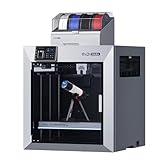
- Ultra-Large Build Volume: QIDI Max4 Combo has a 390×390×340mm printing area, 55% larger than its predecessor MAX3, enables you to print large industrial parts, complex molds and custom prototypes in one go without splitting; full-surface silicone heated bed ensures even temperature distribution and strong first-layer adhesion to avoid warping.
- High Precision & Stability: QIDI Max4 Combo 3D Printer equipped with closed-loop motors on X/Y axes, Achieve a maximum printing speed of 800mm/s and an acceleration of 30,000mm/s²; 2mm lead screw and anti-backlash nut on Z-axis reduce vertical gaps, ensuring smooth and precise printing with excellent surface quality.
- Wide Material Compatibility: 40mm³/s high-flow hotend with hardened steel nozzle supports standard materials (PLA/ABS) and industrial-grade abrasive materials (carbon fiber-reinforced nylon); 65℃ active heated chamber and self-developed Polar Cooler system create ideal printing conditions for high-temperature materials like ABS-CF, PC, PPS-CF.
- Smart Monitoring & User-Friendly Design: Built-in AI camera automatically detects printing abnormalities (e.g., spaghetti-like failures) and pauses printing instantly to save materials and time; large touch screen with optimized interface offers smooth operation, QIDI Max4 Combo suitable for both professionals and enthusiasts.
- Expandable Multi-Color Printing: Seamlessly connect with QIDI BOX to achieve 16-color and multi-material printing and enjoy intelligent filament management (e.g., real-time filament level monitoring, automatic pause when filament runs out); providing you with a worry-free 3D printing experience.
What materials does it use?
The strongest documented material angle is the use of bio-based composite materials, including wood residuals. The goal is to turn material that might otherwise be treated as waste into feedstock for large manufactured structures.
Some printed materials may also be ground down and reused. However, recyclability is conditional. It depends on the exact polymer or resin formulation, additives, contamination, and whether the recovered material retains suitable performance. A house made with bio-based feedstock is not automatically carbon-neutral, fully recyclable or environmentally superior across its entire life cycle.
Quick wins for a faster PC:
Fix the driver behind crashes, sound loss and screen glitchesFind Drivers →Clear out junk files and repair common Windows errorsFree Scan →Scan for outdated or missing drivers - takes under a minuteDriver Scan →A proper sustainability assessment would also consider electricity use, resin or binder content, transport, foundations, insulation, finishes, maintenance and end-of-life processing.
What has already been demonstrated?
The University of Maine’s earlier large-scale printer had been used to manufacture a 600-square-foot single-family home from wood-fibre and bio-resin materials. FoF 1.0 was described as approximately four times larger than that predecessor.
This is meaningful evidence that the university has worked at house scale. It is not evidence that FoF 1.0 produced a comparable, finished home in 80 hours. The earlier demonstration and the newer projected capability should not be treated as the same achievement.
Rank #3

- Up to 16 Colors: Bring your designs to life with vibrant multi-color/multi-material printing capabilities, perfect for showcasing your creativity. Note: Connecting Bambu Lab AMS is required.
- 500mm/s and 20000 mm/s² Acceleration True High Speed: Don't wait around for your masterpieces. Lightning-fast printing speed lets you focus on creating, not waiting.
- Enclosed Design: Fully enclosed body improves print performance for advanced filaments. Automatic Bed Leveling: Say hello to high-quality, successful prints. Auto bed leveling makes 3D printing such an easy thing.
- Set Up in 15 Minutes: Spend more time printing and less time setting up. User-friendly design ensures a hassle-free assembly experience for all skill levels.
- Supported Filament: Ideal: PLA, PETG, TPU, PVA, PET ABS, ASA; Capable : PA, PC; Not Recommended: Carbon/Glass Fiber Reinforced Polymer.
What still has to happen after printing?
Printing a structural shell does not eliminate the rest of construction. Depending on the design and whether the printer produces a complete component or a structure assembled on site, the project may still require:
- Site acquisition, surveys and ground preparation
- Foundations, footings and a slab
- Transport, lifting and connection of printed components
- Roofing and weatherproofing
- Windows and external doors
- Insulation and moisture management
- Electrical, plumbing, heating, ventilation and air-conditioning systems
- Interior walls, floors, cabinets, fixtures and finishes
- Utility connections
- Structural engineering, permits, inspections and code approval
These tasks can remain schedule-critical even if the printer produces the main structure quickly. The practical result might be a much faster structural-manufacturing stage—not an 80-hour move-in date.
Is a printed house automatically compliant?
No. A novel construction method must still satisfy the rules that apply where the building is located. Review may cover structural capacity, connections, fire performance, moisture control, energy efficiency, durability, installation methods and the safety of electrical and mechanical systems.
Approval can require engineering calculations, laboratory testing, product documentation and project-specific review by the relevant building authority. A machine’s ability to fabricate a shape does not by itself make that shape legal or suitable for occupation.
How is it different from a concrete house printer?
FoF 1.0 is often confused with systems such as COBOD’s BOD2. They address related problems but are substantially different machines.
The Tool Desk
Outbyte Driver Updater FREEScan for outdated or missing drivers - takes under a minuteDriver Scan →Outbyte PC Repair FREERepair Windows errors before they cause bigger problemsFix Now →Rank #4

- 600mm/s Speed & CoreXY Structure — Powered by an all-metal CoreXY frame and 20,000mm/s² acceleration, Adventurer 5M Pro reaches speeds up to 600mm/s. Integrated vibration compensation algorithms eliminate ghosting and ringing for smooth, high-precision surface finishes.
- 3-Second Quick-Swap Nozzle & Auto Leveling — Features a tool-free, quick-release nozzle mechanism for effortless 3-second replacements across multiple sizes (0.25/0.4/0.6/0.8mm). One-click full auto-leveling ensures precise bed calibration and a perfect first layer every time.
- Dual Filtration System & Quiet Enclosure — Built with an integrated dual filtration system and a fully enclosed chamber to ensure a clean printing environment and thermal stability. Powered by low-noise motion control, it operates quietly under 50dB for seamless home, office, or classroom use.
- 280°C High-Temp Extruder & Broad Material Compatibility — With a 280°C max nozzle temperature and a 110°C heated bed, it reliably prints engineering materials like ABS, ASA, and PETG-CF, as well as standard PLA and PETG.
- Smart Camera & Mobile Control — Features a built-in camera for real-time monitoring and time-lapse video creation. Monitor progress, adjust settings, and receive instant status alerts via Flash Studio. Integrated with filament detection, power loss recovery, and a 4.3-inch touchscreen for effortless operation.
| Feature | University of Maine FoF 1.0 | COBOD BOD2 |
|---|---|---|
| Primary material | Polymer and bio-based composite materials | Locally sourced concrete |
| Form | Factory-scale industrial manufacturing platform | Modular gantry installed around the building site |
| Main purpose | Research and production of large composite structures and components | On-site printing of walls and building structures |
| Commercial position | University-led research and industrial demonstrator | Commercial equipment sold for project-specific configurations |
| Typical users | Research, infrastructure, maritime and defence manufacturers | Contractors, developers, homebuilders and infrastructure firms |
COBOD lists BOD2 specifications including a maximum printing speed of 250 mm per second, layers up to 75 mm high and 500 mm wide, and a configuration-dependent printable area of approximately 14.62 m by 49.41 m by 8.53 m. Those are printer specifications, not guarantees about the time or cost of a completed building.
See COBOD’s BOD2 specifications.
Could this technology make homes cheaper?
It could reduce some forms of waste, shorten certain production stages and reduce dependence on conventional framing labour. It may also make customised geometries more practical and allow local or waste-derived feedstocks.
But faster production does not automatically mean a cheaper house. The total project cost can still include:
- Printer purchase, installation and maintenance
- Material preparation and quality control
- Design and structural engineering
- Operators and specialist supervision
- Transport, lifting and assembly
- Foundations, services and conventional trades
- Testing, permits, inspections and insurance
- Downtime, repairs and facility costs
A high-capital machine may make economic sense for a company producing many buildings or large components. It is much harder to justify for one bespoke home. FoF 1.0 is presented as a research and industrial-manufacturing platform, not as a consumer product or turnkey homebuilding service.
Where could large-scale printing be useful?
Housing is only one application. A factory-scale polymer system could be valuable for producing infrastructure components, large composite structures, maritime vehicles, prototypes and defence-related equipment. The ability to manufacture unusual parts without traditional moulds could be especially useful where designs change frequently or where conventional supply chains are difficult to maintain.
Best Value
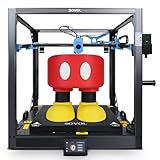
- Go Big Without Slowing Down: Sovol SV08 Max redefines true large-format printing, slashing print times by up to 50%. With up to 500×500×500mm³ of print space, SV08 Max empowers you to tackle industrial parts, full-scale prototypes, and oversized props — all in one go. From furniture and industrial parts to oversized collectibles, it brings blazing-fast 700mm/s performance with 40,000 mm/s² acceleration and a powerful 50mm³/s high-flow nozzle. Less waiting, more creating
- CoreXY Kinematics: With compact design, minimal moving mass, and optimized motion path, the CoreXY system enables Sovol SV08Max faster acceleration, reduced vibration, and unmatched print precision. Experience smoother, high-speed printing; perfect for large, complex models
- Eddy Current Sensor: Advanced Eddy Current Scanning system that delivers high-speed, contactless bed leveling with exceptional accuracy. It detects even the smallest surface deviations to ensure a perfectly leveled bed before every print. By utilizing eddy current scanning and pressure-sensing touch points for automatic bed calibration, achieving a perfect first layer becomes effortless, requiring no action on your part
- Camera & Remote Monitoring: Sovol SV08 Max comes equipped with a built-in 1280×720 HD camera, enabling seamless remote monitoring, time-lapse recording, and integration with Obico for advanced cloud-based control and intelligent print failure detection
- High-Temp Nozzle: The hotend of SV08 Max supports a maximum temperature of 300°C. Perfectly handling a wider range of advanced and challenging filaments, such as PLA/TPU/PETG/ABS/ASA/PA/PC/PLA-CF/PETG-CF/HP-PLA, catering to more applications and diverse printing needs. The 3D printer comes with 2 standard 0.4mm nozzles. Optional nozzle sizes include 0.4mm, 0.6mm, and 0.8mm(sold separately). SV08 Max is designed with a reserved interface for a Heated Chamber module, allowing users to upgrade their printer for high-temperature filament compatibility in the future. The heating module needs to be purchased separately
Remote or emergency construction is a possible long-term application, but it would require more than transporting a printer. Projects would need reliable feedstock, power, trained operators, site preparation, engineering support, spare parts and a dependable way to install utilities and finish buildings.
What should a buyer or developer evaluate?
Anyone considering construction printing should ask:
- What is being printed? A complete structural system, wall sections, modular components or only a shell?
- Which material is involved? Polymer composite, wood-based material, concrete or proprietary mortar?
- Where does printing happen? Factory production may require transport and assembly; a gantry printer may operate on site.
- What does the throughput number measure? Pounds per hour and millimetres per second are not finished-home metrics.
- How much conventional work remains? Request a complete programme, not just a print-time estimate.
- What approvals exist locally? Confirm structural testing, code pathways, permits and inspection arrangements before committing.
- What durability evidence is available? Ask about moisture, fire, ultraviolet exposure, connections, repair and long-term performance.
- Does the production volume justify ownership? Compare buying equipment with outsourcing printing to a specialist contractor.
What does commercial 3D construction equipment cost?
For comparison, COBOD’s BOD2 product page listed pricing starting from $400,000 when checked on August 18, 2026. The final figure depends on the printer’s size, configuration and accessories. COBOD also states that delivery to independent operation takes about five months, including production, shipping, installation and training.
Recommended Free Tools
That price is for construction equipment—not a finished house. Buyers still need concrete supply, site preparation, engineering, operators, maintenance and conventional construction trades. COBOD says it does not directly offer rentals, although local distributors may have alternative arrangements.
Explore COBOD’s construction-printer range. A service model may be more practical than ownership for a developer with one project; providers such as PERI 3D Construction present BOD2-based construction and training services, subject to location, project scope and quotation.
What would need to happen before mass adoption?
Wider use would depend on repeatable material quality, independently verified structural and fire performance, practical utility integration, local approval pathways, reliable supply chains and enough production volume to justify the equipment.
It would also require confidence from insurers, lenders, inspectors and homeowners. The central question is not merely whether a machine can deposit material quickly. It is whether the complete building system can be designed, approved, financed, built, maintained and repaired competitively over decades.
Free tools Windows power users keep installed
One-click scans. No signup required.
Quick Recap
Product prices and availability are accurate as of the date/time indicated and are subject to change. Any price and availability information displayed on Amazon at the time of purchase will apply.

