The Tool Desk
Outbyte PC Repair FREERepair Windows errors before they cause bigger problemsFix Now →Outbyte Driver Updater FREEFix the driver behind crashes, sound loss and screen glitchesFind Drivers →A drone can document roof surfaces and exterior areas that are difficult or unsafe to reach, but a drone-only flight is not automatically a complete home inspection. Overhead photographs may miss conditions beneath eaves, inside crevices, or on details that can be found only from roof level. In the United States, a roof-inspection flight is generally a non-recreational operation that must follow the applicable Federal Aviation Administration (FAA) Part 107 framework, even when the homeowner is not being charged.
What a drone home inspection actually provides
A drone inspection is an aerial documentation method. A pilot flies a small unmanned aircraft around the building and records still images or video of roof planes, flashing, chimneys, skylights, gutters, siding, upper stories and other exterior features. The imagery can give an inspector a safe visual record without immediately putting a person on a steep, fragile or obstructed roof.
As an Amazon Associate I earn from qualifying purchases.
That record is useful for locating visible damage, documenting the condition before or after construction, showing areas that are difficult to see from the ground and deciding whether a closer examination is warranted. It does not prove that every defect has been observed. The Texas Real Estate Commission (TREC) specifically cautions that some roofing deficiencies are found only by walking the roof and that an overhead view may not reach under eaves or into crevices. That is Texas regulatory guidance, not a nationwide inspection rule. TREC explains the limitation here.
What’s actually slowing this PC down?
Pick the symptom - the matching free tool is one click away.
What the camera can see well
- Large roof surfaces and their overall layout.
- Visible missing, displaced or damaged roof-covering materials.
- Chimneys, vents, skylights, rooftop equipment and portions of gutters.
- Upper-wall areas, tree clearance and exterior features that are hard to photograph from the ground.
- Changes documented in repeat flights, provided the images are captured from comparable positions and conditions.
What remains difficult from the air
- Material hidden beneath eaves, behind parapets or inside narrow crevices.
- Subsurface moisture, concealed framing damage and defects that have no visible exterior symptom.
- Roof details that require touching, probing, lifting a component or observing how a surface feels underfoot.
- Any area blocked by vegetation, neighboring structures, glare, rain, low light or an unsafe flight position.
A report should identify the inspection method and its boundaries. A photograph is evidence of what the camera captured, not a guarantee about what exists outside the frame.
#1 Best Overall

- No Registration Needed - Under 249 g, this drone with camera for adults 4K does not require FAA registration or Remote ID for recreational use. Visit the FAA's official website for requirements related to drone registration and Remote ID. [1]
- 4K Ultra HD & 3-Axis Gimbal for Cinematic Quality Shooting - Capture stunning moments in any light—sunrises, sunsets, and night scenes with crystal-clear 4K resolution. Thanks to the 3-axis gimbal, you can achieve cinematic-quality footage with this advanced drone with camera.
- 38kph (Level 5) Wind Resistant - This drone for adults has a stable flight even in Level 5 winds. Brushless motors enhance power and allow takeoff at altitudes up to 4,000 meters.
- Due to platform compatibility issue, the DJI Fly app has been removed from Google Play. To ensure a better product usage experience, please log in to the DJI official website to download the latest version of DJI Fly.
- Uninterrupted Creation with Extended Battery Life - There are three sets available for you to choose from: 1-battery set (31-min), 2-battery set (62-min), or 3-battery set (93-min). [3] Say goodbye to battery anxiety and let nothing hold you back.
Can a drone replace climbing onto the roof?
Not as a blanket rule. The appropriate answer depends on the roof, the inspector’s professional judgment, local requirements and the purpose of the inspection.
| Inspection question | Drone view | Roof-level review |
|---|---|---|
| Visibility of broad roof surfaces | Provides an elevated view and repeatable images of visible areas. | Provides close-range observation while moving across accessible surfaces. |
| Under eaves and inside crevices | May not see these areas; TREC warns that an overhead view can miss them. | Can reach or inspect details that are physically accessible from roof level. |
| Safety and possible roof damage | Can document some areas without placing a person on the covering. | Walking may be unsafe or may significantly damage fragile roof-covering materials. |
| Report scope | Must explain that conclusions are based on aerial images and identify excluded or obscured areas. | Still requires documentation of inaccessible or unsafe portions, but the observation method is different. |
TREC Enforcement Staff put the limitation plainly: “Although a drone can look directly down at the surface of the roof, it may not be able to look under eaves or into crevices.” The statement appears in TREC’s February 19, 2025 article, “Using a Drone to Inspect the Roof? Keep This In Mind”.
U.S. flight rules that apply to roof inspections
The FAA lists roof inspections among non-recreational Part 107 operations. The purpose of the flight matters; an unpaid flight is not automatically recreational. A homeowner, contractor or inspector should determine which operating category applies before launching. The FAA’s recreational-flyer guidance, last updated March 18, 2026, is available at this FAA page.
The FAA’s Part 107 overview, published July 6, 2026, describes the framework for small unmanned aircraft weighing less than 55 pounds. It is a current starting point, not a substitute for checking the rule and any local restrictions on the date of the flight. Read the FAA Part 107 overview.
Core Part 107 requirements described by the FAA
- Qualified pilot: The remote pilot needs a remote pilot certificate with a small UAS rating, or must operate under the direct supervision of a certificate holder as allowed by the rule.
- Aircraft registration: Each drone flown under Part 107 must be registered. FAA pages also describe Remote ID obligations that apply as specified by current regulations.
- Visual line of sight: The remote pilot must keep the aircraft within visual line of sight, directly or through a permitted visual observer arrangement.
- Airspace authorization: Operations in Class B, C, D and E airspace require air traffic control authorization. Class G operations are allowed without that authorization under the stated framework.
- Operating conduct: The pilot must avoid manned aircraft and careless or reckless operation. Flight over people is restricted unless the people are directly participating under the applicable rule.
- Waivers: Some proposed operations require a waiver. A waiver is an authorization decision, not an automatic permission to ignore a limit.
Altitude, visibility and time-of-day limits
The FAA overview states a general ceiling of 400 feet above ground level. It also describes an allowance to fly higher when the aircraft remains within 400 feet of a structure. The same page states a minimum weather visibility of three statute miles from the control station. Normal Part 107 daylight operation runs from 30 minutes before official sunrise to 30 minutes after official sunset; civil twilight operation is allowed when the aircraft has the required anti-collision lighting. Confirm the exact current rule, local airspace status and lighting requirements before each flight.
Rank #2

- No Registration Needed - Under 249 g, this drone with camera for adults 4K does not require FAA registration or Remote ID for recreational use. Visit the FAA's official website for requirements related to drone registration and Remote ID. [1]
- 4K Ultra HD & 3-Axis Gimbal for Cinematic Quality Shooting - Capture stunning moments in any light—sunrises, sunsets, and night scenes with crystal-clear 4K resolution. Thanks to the 3-axis gimbal, you can achieve cinematic-quality footage with this advanced drone with camera.
- 38kph (Level 5) Wind Resistant - This drone for adults has a stable flight even in Level 5 winds. Brushless motors enhance power and allow takeoff at altitudes up to 4,000 meters.
- 10km Max HD Video Transmission-up to 10 km (32,800 feet) [2] of HD video transmission and has excellent anti-interference capabilities, giving you the ability to freely explore vast landscapes and see clearer.
- Due to platform compatibility issue, the DJI Fly app has been removed from Google Play. To ensure a better product usage experience, please log in to the DJI official website to download the latest version of DJI Fly.
Preflight planning: the checks that prevent an avoidable incident
Section 107.49 of the federal regulations requires a preflight assessment and briefing. The remote pilot in command should treat the following as a working checklist, not as optional paperwork. The regulation is reproduced at 14 CFR § 107.49.
- Check weather and visibility. Review wind, precipitation, temperature, visibility and the effect of sun angle or glare on the camera. Do not launch if the conditions exceed the aircraft, pilot or mission limits.
- Check airspace and restrictions. Identify the operating class, temporary flight restrictions, airport proximity and any authorization needed for the address. A clear view of the roof does not mean the airspace is clear to use.
- Map people and property. Locate residents, workers, neighbors, vehicles, power lines, trees, antennas, fences and other objects that could be affected by a loss of control or a forced landing.
- Define roles and brief participants. Anyone directly participating should understand operating conditions, emergency and contingency procedures, assigned roles and known hazards.
- Verify control links. Confirm that the aircraft, controller, batteries, navigation equipment and any visual-observer communication link work at the planned operating distance.
- Plan an emergency route. Choose launch and recovery areas, a safe hold position and an alternate landing area. Account for a lost-link event, sudden gusts, a person entering the area or an aircraft appearing nearby.
- Confirm adequate power. The regulation requires sufficient available power for the intended operation. Include the flight, return, landing and a reasonable reserve; battery compatibility and limits are aircraft-specific.
- Set the inspection path. Decide which elevations, roof planes and exterior details must be photographed, how the sun will affect each face and where the pilot can maintain visual line of sight without crossing a hazard.
A practical drone inspection workflow
1. Establish the inspection question
Clarify whether the client needs a general condition record, storm documentation, construction progress, a pre-purchase aid or a closer look at a suspected defect. The question determines the image plan and prevents a broad “whole roof” claim when only selected surfaces can be observed.
2. Walk the site from the ground
Before powering the drone, inspect the launch area and note overhead wires, tree limbs, roof edges, reflective surfaces, people and animals. Ground photographs can document features the aircraft cannot safely approach and provide context for later image review.
3. Capture an orientation set
Begin with wide images showing the entire structure, then record each roof plane and exterior elevation. Keep the aircraft stable, avoid unnecessary proximity to the covering and capture overlapping angles so a viewer can understand where each detail is located.
4. Capture detail images without losing context
For a suspected issue, take a wider establishing frame, a medium frame showing the surrounding component and a close frame of the visible condition. Record the direction of view and any obstruction. Do not fly into a position that sacrifices visual line of sight or safe separation merely to obtain a tighter image.
Rank #3

- No Registration Needed - Under 249 g, this drone with camera for adults 4K does not require FAA registration or Remote ID for recreational use. Visit the FAA's official website for requirements related to drone registration and Remote ID. [1]
- 4K Ultra HD & 3-Axis Gimbal for Cinematic Quality Shooting - Capture stunning moments in any light—sunrises, sunsets, and night scenes with crystal-clear 4K resolution. Thanks to the 3-axis gimbal, you can achieve cinematic-quality footage with this advanced drone with camera.
- 38kph (Level 5) Wind Resistant - This drone for adults has a stable flight even in Level 5 winds. Brushless motors enhance power and allow takeoff at altitudes up to 4,000 meters.
- 10km Max HD Video Transmission-up to 10 km (32,800 feet) [2] of HD video transmission and has excellent anti-interference capabilities, giving you the ability to freely explore vast landscapes and see clearer.
- Due to platform compatibility issue, the DJI Fly app has been removed from Google Play. To ensure a better product usage experience, please log in to the DJI official website to download the latest version of DJI Fly.
5. Review files before leaving
Check focus, exposure, glare, motion blur, image sequence and coverage while the aircraft and pilot are still on site. If an important area is blocked, note it rather than implying that a missing image confirms a defect-free condition.
Free tools Windows power users keep installed
One-click scans. No signup required.
6. Write a method-and-limitations section
The deliverable should state that observations are based on aerial imagery, list the areas viewed, identify areas not visible and explain whether roof-level access was considered or declined. Keep original files and the date, time and location record required by the inspector’s documentation practice.
Texas-specific inspection guidance
TREC’s February 19, 2025 enforcement article addresses the question, “Can I use a drone to inspect the roof instead of climbing it?” Under TREC Rule 535.228(c)(2), as described by the agency, an inspector may decline roof-level inspection when the inspector reasonably judges that the roof cannot be safely reached or stayed on, or that walking it could significantly damage roof-covering materials.
TREC says the inspector should document the basis for departing from roof-level inspection. The agency also says inspectors are not required to use specialized equipment such as drones. If an inspector elects to use one, TREC Rule 535.227(a)(4) requires competent use. These are Texas requirements and enforcement guidance; they should not be presented as a universal rule for every state, licensing system or inspection type.
Independent reader supportYour contribution helps us test, update, and keep practical guides available for everyone.Choosing equipment without overpromising performance
The central tool is a camera-equipped drone capable of producing stable, sufficiently detailed images for the inspection question. No particular manufacturer, model, camera resolution, price or live product listing is established by these facts alone, so no model can responsibly be recommended from these facts alone.
Quick wins for a faster PC:
Repair Windows errors before they cause bigger problemsFix Now →Scan for outdated or missing drivers - takes under a minuteDriver Scan →Rank #4
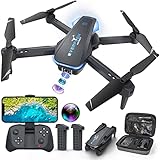
- Drone with 1080P Camera: A camera mounted on it can be manually adjusted to see what's in front of the drone while it's flying, or it can be aimed down to see what's directly below it. I'm sure you can take some interesting photos & videos, or even use it to inspect the roof of a house or other hard-to-reach areas. Friends can shoot each other skating & capture really cool videos. Please charge the product using the provided charging cable. Before using this item, make sure to fully charge it.
- Play Longer: The FPV drone has two rechargeable batteries, each providing approximately 12 minutes of flight time. 2 batteries can be swapped & charged in rotation, greatly extending the fun time. Note that more flips & faster speeds will reduce the flight time per battery
- Remote Control & App: You can fly the mini drone with remote control or a smart phone. But in order to capture video or images, you must be connected to the drone via WiFi & the ''Hiturbo FPV'' app. If you need to use the voice control, trajectory flight & other functions which under the ''control switch'' button in the app, you need to disconnect the remote control from the drone, connect the drone with the app individually.
- Discover new adventures: 2 batteries provide you with up to 24 minutes of flying experience. Features such as altitude hold, 3D flip, headless mode, one key take off/landing, speed adjustment & voice control make it easy & fun for beginners or novices.
- Suitable for Beginners: This drone is a little easier to operate than other drones (it has fewer steps to fly, no manual pairing required), so it's suitable for people just starting out. If you're considering learning how to fly a drone, make this drone your first one. You'll be surprised at how easy it is to take your imagination to the next level with this starter drone
Evaluate equipment against the site and mission: image quality in the expected light, stable control at the planned distance, obstacle awareness, weather operating limits, flight time and the ability to maintain a reliable control link. Carry only aircraft-specific, compatible spare batteries and follow the manufacturer’s charging, storage and temperature limits. Extra power supports the preflight requirement for adequate available power; it does not authorize a longer or more complex flight than the pilot has planned.
When to arrange a follow-up inspection
Arrange a qualified roof or home inspector follow-up when the imagery shows a possible defect that cannot be characterized from the air, when a roof component must be touched or opened, when eaves or crevices remain hidden, or when the property condition affects a purchase, claim or repair decision that requires a complete inspection scope. A drone image can prioritize the follow-up and preserve a record of the visible condition, but it cannot fill in concealed information that the camera never observed.
Official FAA and TREC materials cited here do not establish a universal drone-inspection accuracy rate, cost saving, time saving or safety advantage. Treat any such number from a vendor or article as a separate claim that needs its own evidence and conditions.
Bottom line for homeowners and inspectors
Use a drone to expand exterior visibility and create a documented aerial record. Do not label the result a complete roof inspection unless the inspection method, accessible areas and governing requirements support that conclusion. In the United States, plan roof flights under the applicable Part 107 rules, and in Texas document why roof-level access was not used when that decision is made. The most defensible report says exactly what the camera saw, what it could not see and what should happen next.
Quick Recap
Product prices and availability are accurate as of the date/time indicated and are subject to change. Any price and availability information displayed on Amazon at the time of purchase will apply.

