Quick wins for a faster PC:
Clear out junk files and repair common Windows errorsFree Scan →Fix the driver behind crashes, sound loss and screen glitchesFind Drivers →Butternut (Juglans cinerea), also called white walnut or oilnut, is a deciduous tree native to eastern and central North America. It is not abundant through most of its range, and its numbers have declined. Its sweet nuts and workable wood have long been valued, but butternut canker is now a major threat.
What does a butternut tree look like?
Butternut is a small-to-medium walnut-family tree with compound leaves. The most useful field clues for distinguishing it from black walnut are the hairs on its leaflets and old leaf scars. The USDA Forest Service’s Fire Effects Information System (FEIS) describes the scar feature this way: “Butternut has a pad of small dense hairs extending crosswise along the upper margin of the old leaf scars; in black walnut this pad is absent.”

As an Amazon Associate I earn from qualifying purchases.
FEIS also notes that “The underside leaflets of butternut are densely covered with stellate hairs, while in black walnut leaflet hairs are almost inconspicuous.” These traits are useful comparison points, not a complete identification key for every walnut relative or possible hybrid.
Free tools Windows power users keep installed
One-click scans. No signup required.
How does butternut differ from black walnut?
| Feature | Butternut | Black walnut |
|---|---|---|
| Range position | Extends farther north and less far south | Overlaps butternut’s range, extending farther south |
| Hair pad on old leaf scar | Present along the upper margin | Absent |
| Hairs beneath leaflets | Densely covered with star-shaped (stellate) hairs | Hairs almost inconspicuous |
The range and identification comparisons are described by the USDA Forest Service Silvics of North America account and the USDA Forest Service FEIS review. Check more than one feature when identifying a tree, especially if the specimen is difficult to inspect.
#1 Best Overall

- 🌳 3 WHITE WALNUT (BUTTERNUT) TREES Includes three live white walnut saplings (Juglans cinerea), a native hardwood tree known for producing rich, edible nuts.
- 🌱 BARE ROOT FOR STRONG TRANSPLANT SUCCESS Shipped with exposed root systems to promote healthy establishment and faster adaptation when planted in soil.
- 🥜 EDIBLE NUT PRODUCING TREE Produces flavorful walnuts ideal for baking, cooking, or wildlife attraction once mature.
- 🌿 GREAT FOR LANDSCAPING & CONSERVATION Perfect for large yards, food forests, and native planting projects. Supports wildlife and long-term tree growth.
- 🌿 BEAUTIFUL CANOPY Butternut trees typically grow 40–60 feet tall with a spread of 30–50 feet at maturity, forming a broad, open canopy. Adequate spacing is important to accommodate long-term growth.
Where do butternut trees grow?
Butternut is native from southeastern Canada through much of the northeastern and central/eastern United States. Its broad range reaches west to parts of the upper Midwest, including Iowa and Minnesota, and includes scattered southern populations. It overlaps with black walnut but occurs farther north and not as far south. The USDA Forest Service’s range description was published in 1990; it is a broad regional account rather than a current county-by-county boundary map.
The tree occurs in mixed hardwood forests and is often found on well-drained streambanks, stream terraces, slopes, coves, and bottomlands. It is seldom found on dry, compact, or infertile soils, though it can do better than black walnut on dry rocky soils, particularly those derived from limestone. Butternut is shade intolerant and needs space in the forest canopy to thrive.
Rank #2
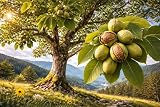
- 🌳 Live Butternut Tree (1–2 Ft Tall): Healthy, well-rooted White Walnut sapling ready for planting. Establishes quickly and adapts well to a variety of soil conditions.
- ❄️ Cold Hardy & Resilient: Thrives in colder climates (Zones 3–7), making it an excellent choice for northern growers and homesteads.
- 🌰 Delicious, Edible Nuts: Produces rich, flavorful butternuts perfect for baking, cooking, or fresh eating once mature.
- ⚡ Fast Growing Shade Tree: Rapid early growth creates beautiful shade and landscape value while developing into a long-lived tree.
- 🪵 Highly Valuable Hardwood: Butternut wood is prized for woodworking, adding long-term investment value beyond nut production.
What are butternuts used for?
Nuts
The sweet nuts are eaten by people and wildlife. The Forest Service’s 1990 species account describes them as prized food; this describes the tree’s uses and does not establish current availability or supply.
The Tool Desk
Outbyte PC Repair FREERepair Windows errors before they cause bigger problemsFix Now →Outbyte Driver Updater FREEScan for outdated or missing drivers - takes under a minuteDriver Scan →Wood
Butternut wood is soft and coarse-grained. The Forest Service account says it works, stains, and finishes well, and that small quantities have been used for furniture, cabinetwork, and novelties. Those historical uses should not be read as evidence of a dependable present-day commercial supply.
Size and lifespan
The USDA Forest Service’s 1990 account gives an average height of 12–18 m (40–60 ft), not a universal maximum. It describes butternut as short-lived and says it seldom reaches 75 years.
What is butternut canker?
Butternut canker is a serious disease caused by the fungus Ophiognomonia clavigignenti-juglandacearum. NatureServe identifies it as the major threat across the species’ range. In its global status record, last reviewed December 20, 2019, NatureServe ranked butternut G3 (Vulnerable) and estimated a 44% rangewide decline. That decline estimate and rank belong to the 2019 assessment; they are not a new 2026 population count.
Rank #4
- 🌳 Live Butternut Tree (1–2 Ft Tall): Healthy, well-rooted White Walnut sapling ready for planting. Establishes quickly and adapts well to a variety of soil conditions.
- ❄️ Cold Hardy & Resilient: Thrives in colder climates (Zones 3–7), making it an excellent choice for northern growers and homesteads.
- 🌰 Delicious, Edible Nuts: Produces rich, flavorful butternuts perfect for baking, cooking, or fresh eating once mature.
- ⚡ Fast Growing Shade Tree: Rapid early growth creates beautiful shade and landscape value while developing into a long-lived tree.
- 🪵 Highly Valuable Hardwood: Butternut wood is prized for woodworking, adding long-term investment value beyond nut production.
NatureServe’s record also reports that resistant trees are rare but occur in many parts of the range. Resistance is not guaranteed in any particular tree, seed, or nursery stock. The USDA Forest Service’s 2021 restoration blueprint describes conservation work that locates surviving trees, collects seed, and plants it in suitable habitat. The blueprint also reports relatively high genetic diversity across the range, apart from small, isolated populations. These efforts aim to retain genetic material and support restoration, not promise disease eradication.
Growing or conserving butternut
The Forest Service account says butternut can be grown readily but recommends transplanting early because the root system develops quickly. For conservation planting, the Forest Service restoration blueprint recommends finding surviving trees and collecting seed for planting in suitable habitat. Choose a regionally appropriate site with adequate light and suitable soil; the cited sources do not establish that ordinary seed or nursery trees are canker-resistant.
Quick Recap
Best Value
- 🌳 Live Butternut Tree (1–2 Ft Tall): Healthy, well-rooted White Walnut sapling ready for planting. Establishes quickly and adapts well to a variety of soil conditions.
- ❄️ Cold Hardy & Resilient: Thrives in colder climates (Zones 3–7), making it an excellent choice for northern growers and homesteads.
- 🌰 Delicious, Edible Nuts: Produces rich, flavorful butternuts perfect for baking, cooking, or fresh eating once mature.
- ⚡ Fast Growing Shade Tree: Rapid early growth creates beautiful shade and landscape value while developing into a long-lived tree.
- 🪵 Highly Valuable Hardwood: Butternut wood is prized for woodworking, adding long-term investment value beyond nut production.
Product prices and availability are accurate as of the date/time indicated and are subject to change. Any price and availability information displayed on Amazon at the time of purchase will apply.

