Outdated Drivers Are Slowing You Down
One free scan finds every outdated or missing driver and matches the right update for your exact hardware.Free scan · exact hardware matchWindows Errors? Fix Them Before They Spread
Repair common Windows errors and clear accumulated junk for a smoother, more stable PC - no reinstall needed.Free scan · no reinstallSome links on this page are affiliate links: if you buy through them we may earn a commission, at no extra cost to you.
A gazebo can change how a backyard works: shade at noon, a dry place for dinner, a defined outdoor room, or a protected grill station. The budget mistake we see most often is buying the biggest kit that fits the patio and leaving the base, anchors, drainage, and local rules as afterthoughts. That is backwards. A smaller, level, properly anchored 10-by-12 gazebo usually performs better than a larger structure that twists in wind, leaks at the roof seams, or sits on a soft corner of the yard.
For 2026, a professionally installed gazebo commonly lands around $4,700 on national averages, with many projects falling between about $1,580 and $7,866. Wood gazebo installation can price much higher, often around $60 to $90 per square foot before local adjustments. That puts a 120-square-foot professionally installed wood structure around $7,200 to $10,700. Custom builds, masonry, electrical, larger roofs, and difficult sites can push projects into the $15,000 to $27,000 range.
As an Amazon Associate I earn from qualifying purchases.
DIY can save real money, but only when the structure is simple and the site is forgiving. The six ideas below are realistic budget paths: a pop-up or soft-top canopy, a hardtop kit on an existing slab, a grill gazebo, a small wood gazebo, a screened gazebo kit, and a pergola-gazebo hybrid. Each one has a place. Each one also has a point where hiring a pro becomes cheaper than fixing a failed installation.
Start With The Site, Not The Gazebo
Before choosing a kit size, make a simple site plan. Mark the house, doors, windows, property lines, fence gates, existing patio edges, utilities, drainage flow, sun path, prevailing wind, and the furniture you actually want under the roof. For a table and chairs, a 10-by-10 gazebo is usually the minimum comfortable size. A 10-by-12 gives better walking clearance. A 12-by-12 works well for a dining set or conversation layout. A 12-by-14 starts to feel like a true outdoor room, but cost, wind load, and roof handling all go up.
#1 Best Overall

- Complete Heavy-Duty Ground Anchor Kit: Comes with 4×18″ ground anchors, 50 ft of galvanized cable, bolt-type clamps, extra-wide tree straps, drill adapter, T-Socket & clamp wrench—all you need to secure sheds, mobile home, tents, trampolines, and canopies
- High-Hold Shed Anchor kit & Tree Anchors: Designed for maximum grip, our mobile home tie down anchors secure structures even in high winds. Works as canopy anchor, swing set anchors, trampoline anchors and outdoor anchor systems for versatile applications
- Quick Installation – All-in-one Solutions: Use the included drill adapter for fast setup, or screw manually. Works perfectly as trampoline stakes heavy duty, tie down anchors, backyard anchor system parts for your outdoor setup or changing anchor points
- Robust Spiral Ground Anchors: Made from solid steel, these long spiral ground anchors have a weather-resistant coating for year-round use. Perfect earth anchors for soft soil, sand, clay, or gravel and more, ensuring long-term stability outdoors
- Outdoor Anchor Systems for Every Sea-son: From holiday decoration anchors to inflatable anchors, this trampoline stakes heavy duty kit is part of a reliable outdoor anchor systems lineup, giving you peace of mind in all weather and soil type
A gazebo differs from a pergola because a gazebo has a full roof and is usually freestanding. That roof is the useful part, but it is also the structural problem. It catches wind uplift, adds dead load, collects snow, and demands better anchoring. A pergola with open slats may be fairly forgiving. A roofed gazebo is less forgiving.
On our job sites, we spend money in this order: base, anchoring, structure, roof, then accessories. Curtains, lights, screens, rugs, and furniture are easy to improve later. A poor foundation is expensive to correct after the gazebo is assembled.
Quick Comparison: Six Budget DIY Gazebo Options
| DIY idea | Typical 2026 budget | Status | Best foundation | DIY difficulty | Best use | Poor fit |
|---|---|---|---|---|---|---|
| Pop-up or soft-top canopy | $150-$900, plus $40-$250 for weights or anchors | Temporary | Patio, deck, lawn with weights or stakes | Easy | Renters, seasonal shade, parties | Snow, storms, year-round use |
| Hardtop kit on existing concrete | $900-$3,500, plus $75-$250 for anchors and sealant | Semi-permanent to permanent | Sound, level concrete slab | Moderate | Patios with good drainage and access | Thin, cracked, sloped, or weak slabs |
| Grill gazebo | $300-$1,500 | Semi-permanent | Concrete patio or compacted paver base | Easy to moderate | Dedicated grill shade and light rain cover | Tight clearances, enclosed cooking areas |
| Small wood gazebo from plans | $1,200-$4,500+ in materials | Permanent | Piers or footings below frost depth where required | Advanced | Long-term custom backyard feature | Weak carpentry skills or high-wind sites without engineering |
| Screened gazebo kit | $700-$3,500+ | Semi-permanent to permanent | Slab, deck verified for load, or level framed base | Moderate | Bugs, dining, humid climates with airflow | Low airflow, poor drainage, heavy snow without rating |
| Pergola-gazebo hybrid | $800-$3,500 DIY; custom roofed versions can reach $3,000-$10,500+ | Semi-permanent to permanent | Concrete piers, slab, or manufacturer-approved anchors | Moderate | Filtered shade with partial rain protection | Homeowners expecting full gazebo weather protection |
1. Upgrade A Pop-Up Or Soft-Top Canopy
This is the lowest-cost way to get a gazebo-like space fast. Expect to spend about $150 to $900 for the structure and another $40 to $250 for weights, tie-downs, stakes, curtains, mosquito netting, or simple lighting. Most homeowners can set one up in 1 to 3 hours with two people.
The right use case is seasonal shade: a rental house, a party, a small patio, or a backyard where you are still deciding what permanent structure belongs there. A 10-by-10 canopy covers a small table or four lounge chairs. A 10-by-12 gives more comfortable circulation. Stay with common sizes if budget matters because replacement tops, curtains, mosquito screens, and hardware are easier to find.
The limitation is durability. A soft-top canopy is not the same as a permanent outdoor structure. It should usually come down before strong storms, heavy rain, high wind, and winter weather. If the instructions say to remove the canopy fabric during severe weather, take that seriously. Fabric tops stretch, seams leak, and lightweight frames rack when the legs are not weighted evenly.
Builder Tips For This Option
Use broad leg weights on hard surfaces and stake kits only where the soil can actually hold. On grass, a short stake in loose topsoil is false security. Keep the roof pitched tight so water does not pocket in the fabric. If the frame sits on a patio, add rubber pads under the feet to reduce sliding and protect the surface. For renters, use freestanding weights rather than drilling into concrete without written approval.
Recommended Free Tools
Best budget move: buy a smaller canopy with better frame tubing, better corner brackets, and available replacement fabric instead of the largest low-cost unit on the shelf.
2. Install A Hardtop Gazebo Kit On An Existing Concrete Patio
For many homeowners, this is the strongest value. Hardtop kits from major retailers commonly use steel or aluminum frames, galvanized steel roof panels, cedar posts on some models, mosquito netting, privacy curtains, and predrilled hardware. A typical 10-by-10, 10-by-12, 12-by-12, or 12-by-14 kit often runs about $900 to $3,500 before delivery, tools, anchors, and any slab work. Budget another $75 to $250 for concrete anchors, sealant, masonry bits, washers, and touch-up supplies.
The reason this option works is simple: the patio is already there. Avoiding new concrete can save hundreds or thousands of dollars. But the slab has to be worth building on. We look for concrete that is structurally sound, reasonably level, drains away from the house, and has enough thickness and edge distance for the anchors the manufacturer requires. A cracked, thin, settling, or steeply sloped slab can turn a budget kit into a repair project.
Assembly is usually a two- or three-person job. Roof panels are awkward, posts must be squared before final tightening, and a slightly twisted frame can create roof leaks or doors and screens that never hang correctly. A realistic schedule is one full weekend for a careful DIY crew, plus extra time if you need to repair concrete, add pavers around the slab, or correct drainage.
Anchoring Matters More Than Accessories
Do not rely on the gazebo’s weight alone. A roofed structure can lift in wind. Use the anchor type and spacing required by the kit, and drill with the correct bit diameter and embedment depth. Keep anchors far enough from slab edges to avoid breaking out the concrete. Seal penetrations where appropriate, especially if water can stand around the base plates.
In cold climates, watch the roof rating. Avoid flat or low-slope budget roofs unless the kit has an explicit snow rating suitable for your location. Also think about where snow will shed. Do not aim roof runoff or sliding snow toward a door, grill, stair, or main walkway.
Rank #2

- Stable in High Winds: The wider(2.5 inches) spiral blade screws deeper into soil, sand, or clay, offering reliable holding power. Perfect for securing mobile homes, sheds, trampolines, swing sets, carports, and more, even in windy conditions
- Easy Installation with Drill Adapter: Comes with an adapter for electric drills and self-tapping screws, making installation quick and effortless. Simply attach to your drill, and the anchor penetrates soil with ease—saving you time and labor
- Fully Welded Design: Crafted from premium solid steel with a fully welded spiral blade, these 20" ground anchors provide exceptional strength and durability. Rust-resistant coating ensures long-lasting use in different weather conditions
- Multi-Purpose Applications: This ground anchor kit is designed to tackle most outdoor securing needs. It is versatile and suitable for sheds, trampolines, fences, gazebos, playsets, tents, and other outdoor facilities—one earth anchor fits all needs
- Convenient 4 Pack Set: Includes 4 heavy-duty 20" screw in ground anchors with L-brackets, U-ring, screws, and drill adapter.This 4-pack brings together every component you need to secure your outdoor gear effortlessly, firmly, and for years to come
3. Build A Small Grill Gazebo
A grill gazebo is a compact structure, often 6-by-8 to 8-by-10 feet, designed to give shade and light rain protection around a cooking station. Typical kit pricing runs about $300 to $1,500. It is one of the most useful budget upgrades when you do not need a full seating pavilion.
The main design issue is clearance. Follow the grill manufacturer’s required clearances from combustibles, side walls, roof materials, and overhead surfaces. Do not assume a metal roof makes every layout safe. Heat, grease, flare-ups, and smoke still need room to move. Keep fabric curtains, screens, vinyl fencing, wood railings, and siding out of the heat zone.
Do these 3 things before closing this tab:
1Fix the driver behind crashes, sound loss and screen glitches2Repair Windows errors before they cause bigger problems3Scan for outdated or missing drivers - takes under a minuteFor the base, a concrete patio is ideal. A compacted paver area can work if it is level, drained, and built with proper base material. Grass is usually a poor long-term choice because grill legs settle, grease stains the soil, and the gazebo frame can shift.
What To Spend Money On
Prioritize roof material, frame stiffness, anchoring, and shelf quality. Thin shelves bend quickly under tools, pans, and prep trays. If you cook after dark, plan lighting early. Solar lights may handle ambience, but task lighting over a grill often needs a better solution. If you want outlets, a fan, or a hardwired fixture, treat that as an outdoor electrical project, not an accessory.
A grill gazebo is a good DIY project if the patio is ready and the clearances work. Hire help if gas lines, electrical, masonry counters, or a built-in outdoor kitchen enter the plan.
4. Build A Small Wood Gazebo From Plans
A modest pressure-treated or cedar wood gazebo can be beautiful and long-lasting, but it is the first option on this list where DIY skill matters a lot. Materials for a small build commonly run about $1,200 to $4,500 or more, excluding specialized tools. Lumber grade, roofing, connectors, railing or bench details, concrete, and finish system drive the price. Professional wood gazebo installation can price around $60 to $90 per square foot, which explains why DIY looks attractive on paper.
Quick wins for a faster PC:
Fix the driver behind crashes, sound loss and screen glitchesFind Drivers →Repair Windows errors before they cause bigger problemsFix Now →Scan for outdated or missing drivers - takes under a minuteDriver Scan →For a permanent wood structure, do not bury untreated post bottoms or let posts sit directly in wet concrete. Use proper post bases to raise wood off concrete, seal cut ends, slope grade away from the structure, and keep mulch or soil away from post bottoms. Moisture management is what separates a five-year backyard project from a structure that still looks right after a decade.
Plan for footings based on your climate and soil. In cold regions, permanent supports generally need frost protection, which often means footings below local frost depth. That can be much deeper than a homeowner expects. In high-wind, coastal, hurricane-prone, tornado-prone, or open rural sites, a cheap plan set without documented uplift resistance is not enough.
Where DIY Wood Gazebos Usually Go Wrong
The common failure points are layout, squareness, roof framing, connectors, and waterproofing. Octagonal gazebos look simple in photos but involve more angled cuts and roof geometry than a rectangular kit. A square or rectangular footprint with a simple hip or gable roof is usually more budget-friendly.
Use exterior-rated fasteners and connectors compatible with pressure-treated lumber. Mixing the wrong metal with treated wood can accelerate corrosion. Finish all exposed wood, then keep a maintenance calendar: inspect fasteners and posts yearly, clean the roof, and recoat stain or sealer as needed.
5. Add A Screened Gazebo Kit For Bug Control
A screened gazebo is a practical choice for evening dining, humid regions, lake properties, and wooded lots. Expect about $700 to $3,500 or more for soft-screen or hardtop screened kits. Budget extra for replacement screen panels, door hardware, insect-proof floor edges, threshold details, and drainage control.
The screen changes the structure’s behavior. It catches wind, wears at zippers and tracks, and can trap heat if airflow is poor. In hot climates, orient curtains or solid panels to block afternoon sun while keeping cross-ventilation. A screened gazebo that blocks breeze can become uncomfortable even when it looks perfect in the catalog.
Rank #3

- [Upgrade Version With Thick Spiral Blade Design] Compared to traditional manual anchors, these ground anchors are improved the full spiral blade design and their thickness to 2.16mm, creating spaces between the spirals to the rock layer that can creep into and keep anchors more firmly. Effectively prevent the tent from being blown away by the wind. Perfect for a variety of life scenes, outdoor activities, and other outdoor furniture.
- [Superior Durability & Strength] Made of powder-coated solid steel, strong and sturdy, rustproof and anti-corrosion, not easy to break or warp after a long time use. The side faces are thoroughly welded to keep their shape and ensure durability regardless of hard rock. At the same time, the upper domed cap is upgraded to increase maximum force resistance and ensure the stake will not be pulled up from the ground.
- [Wide Range Of Applications] Trampoline tie-down anchor kits are suitable for a wide variety of applications and suited for grassland & soil for all weather. Help you secure the swing sets, slides, canopies, sheds, temporary shelters, campers, camping tents, fence posts, trampolines, carports, gazebos, trees, pet houses, and other outdoor furniture.
- [Easy Installation] Our trampoline anchor kits are easy to use with the help of a drill machine. To the anchors penetrate into hard clay or rocky soils easily, fix the anchor on the drill machine via the power nut driver first, and mark an insertion point. Then press the button and the anchor will quickly drill into the ground. Just 10 seconds for each stake to install, saving you time and effort, giving you much convenience.
- [Ensure Your Convenience] You will get not only 4 ground anchors which are 15 inches long with detachable eyelets, but also a power nut driver for connecting with the drill. Each ground anchor has a cover to protect the sharp tips, providing better safety while moving. Our ideal ground anchor set, swing set anchors, trampoline stakes, tent stakes heavy duty, playset anchors, or as anchor shed augers - greatly improve your experiences.
Floor edges matter. Mosquitoes and other insects find gaps at the bottom first. If the kit sits on decking, pavers, or an uneven slab, plan a clean bottom closure. That may be as simple as careful threshold strips and sweeps, or it may require a framed platform with tight edges.
Best Layout For A Screened Kit
A 10-by-12 screened gazebo is a strong size for a small dining table and walking clearance. A 12-by-12 works better for six seats or a mixed lounge layout. Keep doors aligned with the natural path from the house so people are not dragging chairs across the room to get in and out.
Do not skip drainage. A screened room with a wet floor becomes a mildew problem. The base should slope or drain away from the house, and roof runoff should not splash back through the screen panels.
6. Use A Pergola-Gazebo Hybrid With Shade Panels
A pergola-gazebo hybrid gives you more shade and weather protection than an open pergola, without the full mass of a traditional gazebo. Common approaches include a pergola frame with polycarbonate panels, metal roof panels, retractable shade, louvers, or fabric shade panels. Many small DIY kits or simple builds fall around $800 to $3,500. Larger custom roofed versions can climb toward professional pergola pricing, often $3,000 to $10,500 or more for a 12-by-16 wood structure.
This option is best when you want filtered shade, partial rain protection, and a lighter visual profile. It is not the same as a fully enclosed gazebo. Wind-driven rain can still enter from the sides, and shade panels need maintenance or replacement over time.
The design detail to get right is slope. Any solid roof panel needs enough pitch to shed water, and the attachment method has to allow expansion, contraction, and drainage. Polycarbonate panels, for example, should be installed according to the panel manufacturer’s fastening and overlap requirements. Over-tightened fasteners can crack panels; under-fastened panels can chatter or lift.
What’s actually slowing this PC down?
Pick the symptom - the matching free tool is one click away.
Budget-Smart Hybrid Choices
Use standard bay spacing and standard panel sizes to reduce waste. Keep the footprint modest. A 10-by-12 or 12-by-12 hybrid structure is easier to brace and anchor than a wide custom span. If you want fans, outlets, heaters, or a fully waterproof outdoor room, the project is moving out of basic DIY territory.
Permits, Setbacks, And Code Triggers
Many IRC-based jurisdictions exempt small detached accessory structures at or below 200 square feet from a building permit, but that does not mean every 10-by-12 gazebo is automatically free from rules. Zoning setbacks, HOA requirements, floodplain restrictions, easements, utility clearances, electrical permits, and local amendments can still apply. Some cities and counties use different thresholds or define accessory structures differently.
Before buying a kit, call or check your local building department with the actual size, height, roof type, foundation, location on the lot, and whether power will be added. A 12-by-14 gazebo is 168 square feet, which may fit under a 200-square-foot building permit exemption in many areas. Add electrical, attach it to the house, place it in a floodplain, or build near a property line, and the answer may change.
Floodplain sites deserve special attention. A gazebo may be considered an accessory structure, and local floodplain rules can affect foundations, anchoring, materials, and placement. If your property is near mapped flood hazard areas, verify before digging or ordering.
Free tools Windows power users keep installed
One-click scans. No signup required.
Foundation And Anchoring Choices
The foundation is the biggest cost and durability variable in a budget gazebo. A compacted gravel pad is cheap and can work for temporary or light structures, but it is not a universal substitute for footings. Existing concrete saves money if it is sound, level, thick enough, and positioned correctly. Deck mounting requires structural verification because a gazebo adds concentrated loads and wind uplift that many decks were not designed to resist.
For permanent wood structures or high-wind installations, poured piers or footings are usually the better answer. In frost areas, footings typically need to extend below local frost depth. In warm regions, depth may be driven more by soil bearing, uplift, and local code. Either way, shallow blocks sitting on disturbed soil are rarely a good foundation for a permanent roofed structure.
Rank #4
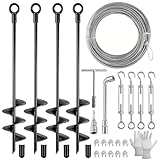
- Complete Shed Anchor Kit: Includes 4 heavy-duty 18" ground anchors with removable eyes, 50 ft galvanized steel cable, 10 rope clamps, 4 adjustable turnbuckles,1 drill adapter, clamp wrench, T-handle wrench and gloves for anchoring outdoor structures
- Superior Strength: Ground anchor features a pointed tip and 2.76-inch spiral blades for superior grip and stability. The 50-ft galvanized steel cable is long enough to securely anchor larger or heavier items like sheds, fences, and large garden furniture
- Exquisite Craftsmanship: Made from premium metal, our ground anchors feature 360° precision welding, securely attaching thickened spiral blades to the shaft. The black coating resists rust and wear, while the solid cast ensures durability in harsh weather
- Easy Installation: Using an impact wrench or drill, trampoline anchors easily penetrate all soil. The spiral blades easily screw in, and turnbuckles adjust cable tension for a secure hold. Gloves ensure safe use. Not suitable for rocky or root-heavy soil
- Wide Applications: This ground anchor kit is ideal for securing sheds, trampolines, swing sets, mobile homes, canopies, gazebos, RVs, playgrounds, yards, playsets, traps, fences, inflatables, decorations, garages, boats, tents, and trees
Photograph anchor locations, footing depth, post bases, and any hidden wiring before covering the work. Those photos can help with inspections, repairs, resale questions, and insurance discussions later.
When To DIY And When To Hire A Pro
DIY makes sense when the gazebo is freestanding, the site is level, the foundation is already suitable, the kit has clear instructions, and you have at least two capable adults for assembly. A pop-up canopy, grill gazebo, many screened kits, and many hardtop kits on a good slab are reasonable weekend projects.
The Tool Desk
Outbyte PC Repair FREERepair Windows errors before they cause bigger problemsFix Now →Outbyte Driver Updater FREEScan for outdated or missing drivers - takes under a minuteDriver Scan →Hire a pro when the project involves elevated decks, attached structures, electrical circuits, gas lines, masonry, complex roof framing, engineered wind or snow loads, floodplain sites, steep grades, drainage corrections, or any project requiring stamped drawings. Also hire help if the kit roof is too large to lift safely. Saving $800 on assembly is not a win if panels bend, anchors fail, or someone gets hurt.
Professional assembly for a kit can add several hundred to several thousand dollars depending on size, access, anchoring, roof complexity, and whether concrete work is included. Full custom professional builds commonly move into the $8,000 to $15,000-plus range. That price can be reasonable when the site is difficult or the structure needs to perform like a true permanent building.
Best Budget Recommendation
If you own the home and already have a good patio, the best value is usually a 10-by-12 hardtop metal or cedar-and-steel kit anchored to sound concrete. It gives real shade, better rain protection than fabric, standard replacement parts, and a finished look without custom-build pricing. Keep the footprint under 200 square feet when possible, verify local rules, and put the first dollars into anchors, drainage, and roof quality.
If you rent or want a trial run, choose a better pop-up or soft-top canopy and treat it as seasonal equipment. If bugs are the main problem, a screened 10-by-12 kit can be a strong upgrade. If cooking is the priority, a grill gazebo is the most targeted use of money. If you want a permanent architectural feature, a small wood gazebo can be worth it, but only with proper footings, post bases, connectors, and carpentry.
The Tool Desk
Outbyte PC Repair FREEClear out junk files and repair common Windows errorsFree Scan →Outbyte Driver Updater FREEFix the driver behind crashes, sound loss and screen glitchesFind Drivers →The cheapest gazebo is not always the most budget-friendly one. The real win is a structure that fits the site, meets local requirements, stands up to your weather, and does not need to be rebuilt after the first bad season.
Frequently Asked Questions
What is the cheapest DIY gazebo option?
A pop-up or soft-top canopy is usually the cheapest, around $150 to $900 plus $40 to $250 for weights or anchors. It is best for seasonal shade, not permanent year-round use.
Can I put a gazebo on an existing concrete patio?
Yes, if the slab is sound, reasonably level, drains away from the house, and has enough thickness and edge distance for the required anchors. Cracked, thin, or badly sloped concrete should be evaluated before installation.
Do I need a permit for a backyard gazebo?
Maybe. Many IRC-based areas exempt small detached accessory structures at or below 200 square feet from a building permit, but zoning setbacks, HOA rules, floodplain rules, electrical permits, and local amendments can still apply.
PC Slower Than It Used to Be?
A free scan shows the junk files, broken settings and background clutter dragging Windows down - then fixes them in one click.Free scan · Windows 10 & 11Crashes, No Sound, or Screen Glitches?
Random freezes, missing sound and display glitches usually trace back to one bad driver. Find and replace yours safely.Free scan · under a minuteWhat size gazebo is best on a budget?
A 10-by-10, 10-by-12, or 12-by-12 gazebo is usually the budget sweet spot. These sizes are common, easier to assemble, and more likely to have available replacement parts, curtains, screens, and roof panels.
When should I hire a contractor instead of building a gazebo myself?
Hire a pro for elevated decks, attached structures, electrical, gas, masonry, complex roofs, engineered wind or snow loads, floodplain sites, or any project that requires stamped drawings.
Quick Recap
Product prices and availability are accurate as of the date/time indicated and are subject to change. Any price and availability information displayed on Amazon at the time of purchase will apply.

