Free tools Windows power users keep installed
One-click scans. No signup required.
A brushed motor switches electrical current mechanically, using carbon brushes and a commutator. A brushless motor uses electronic controls to energize its windings instead, eliminating those contact parts. That design can reduce friction and brush-replacement maintenance, and manufacturers associate it with potential runtime, heat, size, and weight benefits. It does not guarantee that any brushless tool will outperform any brushed tool: compare the exact models against the work you need to do.
How brushed and brushless motors work
Brushed motors use mechanical switching
In a brushed motor, carbon brushes press against a commutator to deliver current to the rotating armature. The commutator and brushes make the electrical connection as the armature turns. This is the defining feature of the brushed design, and the contact also creates friction and means the brushes are parts that can wear and need replacement. DEWALT’s explanation of brushed and brushless construction is available in its motor overview; Makita describes the conventional arrangement of brushes, commutator, armature, and stator magnets in its brushless motor explanation.
As an Amazon Associate I earn from qualifying purchases.
The brushes are not batteries, nor are they a separate power source. They are contact parts in the motor’s switching arrangement: current passes through the brushes and commutator to the rotating armature. Because those parts make physical contact, their design has a friction point that a brushless motor does not have. The practical ownership difference is that carbon brushes are wear items that may need replacement, while the brushed construction remains a perfectly valid way to build a motor.
Recommended Free Tools
Brushless motors use electronic control
A brushless motor removes the brushes and commutator. Instead, electronic controls coordinate when current is delivered to the motor windings. Makita describes a circuit board coordinating energy delivery; the precise implementation varies by tool. Removing brush-to-commutator contact eliminates that particular source of friction and avoids carbon-brush replacement.
#1 Best Overall

- Brushless motor delivers more run time over brushed
- Lightweight design fits into tight areas
- Ergonomic comfort grip handle provides ideal balance and tool control
- LED light with 20-second trigger release delay provides increased visibility in dimly lit spaces
- 3 Year Limited Warranty
The practical distinction is not simply “old motor versus new motor.” It is mechanical commutation versus electronic commutation, with different maintenance needs and potential efficiency and packaging trade-offs. In a brushless design, control electronics take on the role of coordinating energy delivery that the brush-and-commutator arrangement performs mechanically in a brushed motor. That is why the label describes the motor’s construction, not a complete promise about a tool’s output, life, or value.
It is useful to keep that distinction in mind when reading product descriptions. “Brushless” tells you that the motor does not use carbon brushes and a commutator to switch current. It does not, by itself, tell you a tool’s torque, speed, dimensions, runtime, included battery, or which control features it offers. Those depend on the exact tool and its system.
What the motor difference means on the job
Brush maintenance
A brushless motor has no carbon brushes to replace, which manufacturers identify as a maintenance benefit. That does not make the entire tool maintenance-free: batteries, switches, electronics, bearings, and other components can still require service or repair. Follow the tool maker’s maintenance instructions rather than treating “brushless” as a guarantee of trouble-free operation.
The Tool Desk
Outbyte Driver Updater FREEScan for outdated or missing drivers - takes under a minuteDriver Scan →Outbyte PC Repair FREEClear out junk files and repair common Windows errorsFree Scan →For an owner comparing tools, the concrete question is whether the brushed model has replaceable brushes and what the manufacturer says about service. Brush replacement is a specific maintenance task associated with the brushed design; it is not evidence that every brushed tool will need the same service at the same time. The available information does not establish a universal service interval or expected brush life, so do not assume one. Conversely, the absence of brushes in a brushless motor does not rule out repair to other components.
Maintenance may matter more to someone who expects frequent or sustained tool use than to someone who uses a tool occasionally, but the sources do not establish a universal user profile or a threshold where the choice changes. Use your expected workload and the manufacturer’s documented service needs to decide how much weight to give the brush-replacement difference.
Efficiency and battery runtime
DEWALT and Makita describe efficiency and runtime benefits for their brushless designs, while Milwaukee says removing brushes avoids friction-based energy loss. These are manufacturer descriptions, not a universal runtime formula. Actual runtime depends on the specific tool and battery as well as the load, material, operating mode, and work cycle. A motor label alone cannot tell you how long two tools will run through the same job.
When runtime matters, look for evidence tied to the exact tool and a workload that resembles yours. Battery capacity is one comparison point, but it is not a substitute for tool-specific runtime evidence under a relevant load. The work a tool performs, the material, its operating mode, and how continuously it is used all affect the comparison. Two models with different batteries or different specifications are not a controlled motor-type comparison simply because one is brushed and one is brushless.
Outdated Drivers Are Slowing You Down
One free scan finds every outdated or missing driver and matches the right update for your exact hardware.Free scan · exact hardware matchWindows Errors? Fix Them Before They Spread
Repair common Windows errors and clear accumulated junk for a smoother, more stable PC - no reinstall needed.Free scan · no reinstallDEWALT’s sustainability page states “up to 57% more runtime versus standard brushed motors.” The page does not show a test protocol, matched models, battery, workload, or publication year alongside that claim. Treat it as DEWALT’s qualified, model-unspecified claim—not as an independent result or a promise that a particular tool will last 57% longer. See DEWALT’s sustainability page.
Rank #2
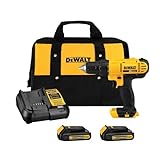
- Lightweight design fits into tight areas
- High performance motor delivers 300 unit watts out (UWO) of power ability completing a wide range of applications
- High speed transmission delivers two speeds (0-450 & 1,500 rpm) for a range of fastening and drilling applications
- 1/2' single sleeve ratcheting chuck provides tight bit gripping strength. Ergonomic handle delivers comfort and control
The phrase “up to” matters: it describes a stated maximum, not a result every user should expect. The comparison is also attributed to DEWALT, and the retrieved page does not supply the conditions needed to reproduce it. It can be noted as a manufacturer claim, but it should not be used to predict how many screws, cuts, or minutes another tool will deliver. No independent, matched brushed-versus-brushless runtime statistic is established by the sources cited here.
Heat, size, and weight
Manufacturers also associate brushless designs with cooler operation or more compact tools. DEWALT says its brushless motors run cooler than its brushed units. Makita says its brushless tools can be shorter and lighter, and Milwaukee describes its brushless motors as smaller and lighter. Those statements refer to the companies’ designs; they do not establish that every brushless tool is cooler, smaller, or lighter than every brushed alternative. Compare the complete tools in the configuration you will use, not just the motor type.
For a buyer, that means checking the actual published dimensions and weight of each candidate rather than inferring them from the motor label. Consider the complete tool in the configuration you will use, since a comparison of the motor alone does not tell you how the assembled tool will fit or feel. If compactness or weight is important for your work, check those model-specific details directly; the manufacturers’ statements describe possible design benefits, not a universal size rule.
Heat claims should be read with the same care. DEWALT describes its brushless motors as running cooler than its brushed units, but the retrieved material does not provide a neutral, matched test or conditions for all tools. The claim supports saying that cooler operation is a manufacturer-described potential advantage. It does not show that every brushless tool will remain cooler than every brushed one during every task.
Power, speed, and control
Electronic control can adjust motor behavior, but “brushless” by itself does not establish a tool’s torque, speed, or suitability for a particular job. Milwaukee says its tools electronically adjust torque, speed, and power usage to tailor performance, and describes that approach this way: “With torque, speed, and power usage all electronically adjusted, they are optimised to deliver tailored performance for the task at hand.” The statement describes Milwaukee’s technology, not a specification shared by every brushless tool. Check the model’s published specifications and control features for your application.
That distinction helps prevent a common shopping mistake: treating motor architecture as a substitute for the actual specification sheet. A brushless label is not a torque rating, a speed range, or a list of operating modes. Check the figures and features the manufacturer lists for the precise model, and compare them with the demands of the work you plan to do. The available sources do not establish that brushless tools as a category always have greater torque or are always better suited to a task.
For a concrete example of model-specific information, Milwaukee lists its M18 Compact Brushless 1/2-inch Drill/Driver (model 3601-20) at 550 in-lb of torque and 0–1,700 RPM. Those published figures describe that drill/driver, not all brushless tools, and they do not provide a comparison with a brushed drill. The Milwaukee product listing is useful as an example of the kind of specification to inspect, not proof of a motor-type advantage.
Do these 3 things before closing this tab:
1Fix the driver behind crashes, sound loss and screen glitches2Clear out junk files and repair common Windows errors3Scan for outdated or missing drivers - takes under a minuteHow to choose between specific tools
Compare the actual models and the work you expect them to perform. A brushed tool can be a reasonable choice if its capabilities meet the task and the brushless advantages are not important for your use. The evidence here does not establish a universal buyer profile, price rule, or value winner; the right choice depends on the tool, workload, and features.
Rank #3

- Ergonomically Designed: Work in tight areas with a compact design that gets into tough spots
- Compact and Lightweight: Both tools are designed to fit into difficult to reach spaces. The 1/4" impact driver has a length of 5.55 in. and weighs just 2.8 lbs, while the 1/2" drill/driver measures only 7.5 in. and weighs 3.6 lbs
- Both the DEWALT impact driver and electric drill driver feature integrated LED work lights with a convenient 20-second delay, ensuring enhanced visibility in dimly lit or challenging work areas
- One-Handed Loading - Keep one hand free with a 1/4 in. hex chuck that accepts 1 in. bit tips
- Power drill cordless with 1/2" single sleeve ratcheting chuck provides tight bit gripping strength, making bit changes faster and more secure
A practical comparison can proceed in a few deliberate steps:
- Define the work. Note the materials, task, expected duty cycle, and how the tool will actually be used. A motor label cannot substitute for considering the workload.
- Choose the exact models to compare. Compare complete tools, not a general brushed category with a general brushless category. Record the model numbers and configurations so that the specifications you read apply to the tools under consideration.
- Check task-relevant performance. Look at each model’s published torque, speed, control modes, and other specifications that matter for the work. Do not infer a rating or capability from the word “brushless.”
- Assess runtime in context. Check battery capacity and look for tool-specific runtime information under a relevant load. Keep any manufacturer claim within its stated scope, and do not treat a broad claim as a universal test result.
- Compare handling and system details. Check dimensions and weight for the complete tool in the configuration you will use, then account for the battery platform and features that matter to your application.
- Consider maintenance and cost for the models in front of you. Find out whether the brushed model has replaceable brushes and what other service needs each manufacturer documents. Compare current prices for the exact models if cost is part of your decision; the available information does not establish a general brushless premium or an apples-to-apples price result.
This process keeps the decision grounded in requirements rather than assumptions. For example, if you prioritize avoiding carbon-brush replacement, that is a concrete brushless design advantage to weigh. If your main question is whether one particular drill will be faster, run longer, or cost less than another, you need specifications or evidence for those exact models. The available manufacturer material does not supply a neutral matched test that answers every such comparison.
| What to compare | What to check |
|---|---|
| Task and workload | Materials, duty cycle, and the work the tool will actually perform. A comparison is more useful when both tools are assessed against the same intended job. |
| Runtime | Battery capacity and tool-specific runtime evidence under a load relevant to your work. Note the battery, workload, and conditions where available; do not treat a broad manufacturer claim as a universal test result. |
| Maintenance | Whether the tool has replaceable brushes and what other service the manufacturer documents. Brushless removes carbon-brush replacement, not every possible service need. |
| Performance | The exact model’s torque, speed, control modes, and other specifications relevant to the task. Motor type alone does not establish these values. |
| Size and weight | Dimensions and weight of the complete tool in the configuration you will use, not an assumption based on motor design. |
| Features and system | Tool electronics, battery platform, and application-specific features. Check whether those details suit the work and the system you intend to use. |
| Cost | Current prices for the exact models and configurations under consideration. No universal price premium or value winner is established by the cited sources. |
For example, Milwaukee lists its M18 Compact Brushless 1/2-inch Drill/Driver, model 3601-20, with 550 in-lb of torque and a speed range of 0–1,700 RPM on its product page. Those figures describe that model only; without a matched brushed tool and comparable test conditions, they do not show how it performs relative to a brushed drill.
Quick wins for a faster PC:
Repair Windows errors before they cause bigger problemsFix Now →Fix the driver behind crashes, sound loss and screen glitchesFind Drivers →Clear out junk files and repair common Windows errorsFree Scan →What about price and value?
There is no reliable general price comparison in the retrieved evidence. It does not establish that brushless tools always cost more, how large any difference is, or which motor type offers better value. Prices vary by model and market, and the sources do not provide an apples-to-apples comparison of similarly specified tools. If price matters, check current prices for the specific models and configurations you are considering, then weigh that against the features and service needs that matter to you. Avoid using an assumed price premium as a rule for choosing either type.
Value is similarly specific. One buyer may place weight on avoiding brush replacement, runtime evidence, or a particular electronic feature; another may care most about the exact model’s specifications, dimensions, battery system, or cost. The available information supports comparing those criteria, but not declaring one motor type the better value for every buyer.
Independent reader supportYour contribution helps us test, update, and keep practical guides available for everyone.Does brushless always mean better?
No. Brushless describes how the motor switches current; it is not a standalone performance rating. Its design removes brush replacement and can reduce friction, while manufacturers describe possible advantages in runtime, heat, size, weight, and electronic control. Whether those advantages matter more than a particular tool’s specifications, features, and fit for the task requires a model-by-model comparison. The manufacturer sources cited here do not provide a neutral, matched head-to-head test of brushed and brushless tools or establish a general price premium.
It is fair to say that brushless construction removes a specific friction point and the need to replace carbon brushes. It is not fair to turn that fact into a blanket promise about every tool’s speed, power, runtime, durability, or cost. Manufacturer statements can help explain the intended benefits of a company’s own design, but they are not independent head-to-head results unless the comparison and its conditions are established.
In short, treat “brushless” as one useful piece of information about construction and maintenance. Use it to frame questions about runtime, heat, size, control, and service, then answer those questions with the exact model’s specifications and evidence. A brushed model may still suit a task if its capabilities meet the need; a brushless model may be attractive when its specific advantages are relevant. The decision is about the whole tool and the work, not just the motor label.
Rank #4
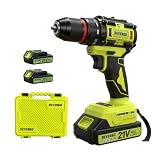
- Point 1|Powerful Brushless Motor, High Efficiency & Long Service Life This DEVENBO 21V cordless drill equipped with upgraded brushless motor, delivers stronger torque with less friction, generates lower heat and noise compared with brushed drills. No carbon brush wear problem, effectively extend tool service life, reduce maintenance cost, perfect for daily heavy-duty drilling and screw driving tasks.
- Point 2|2 Pack 2.0Ah Large Capacity Lithium Batteries & Fast Charger Comes with two replaceable 21V MAX 2.0Ah rechargeable lithium batteries, support long-time continuous work without frequent charging. Matching dedicated fast charger greatly shorten charging waiting time, you can prepare one spare battery for uninterrupted home renovation, woodworking and repair work.
- Point 3|3/8" Keyless Auto Chuck & 2 Variable Speed Control 3/8 inch all-metal keyless chuck allows quick bit installation and removal without extra tools, compatible with most drill bits and screwdriver bits. 2 adjustable speed modes: low speed for high-torque screwdriving, high speed for fast drilling on wood, metal, plastic, flexible to meet different operation demands.
- Point 4|Ergonomic Anti-slip Handle & Complete Portable Storage Case Rubber wrapped anti-slip grip reduces hand fatigue during long-time operation, built-in LED work light illuminates dark corners for accurate drilling. Custom hard plastic tool storage case holds drill, batteries, charger and accessories neatly, easy to carry outdoor and store at home, avoid tool loss.
- Point 5|Wide Application & Safe Household Power Drill Tool Multi-function drill driver ideal for furniture assembly, wall drilling, wood cutting, metal tapping, home appliance repair and daily DIY projects. Compact lightweight body design, suitable for both amateur DIY enthusiasts and professional handymen, ideal holiday gift for family, husband and repair workers.
Frequently Asked Questions
What is the main difference between a brushed and a brushless power-tool motor?
A brushed motor uses carbon brushes and a commutator to switch current to the rotating armature. A brushless motor removes those contact parts and uses electronic control to coordinate current to the motor windings.
Do brushless power tools run longer on a battery?
Manufacturers including DEWALT and Makita describe runtime or efficiency benefits for their brushless designs, but runtime depends on the exact tool, battery, load, material, operating mode, and work cycle. DEWALT states “up to 57% more runtime versus standard brushed motors,” but the retrieved page does not show matched models or test conditions, so that should not be treated as a universal result.
Are brushless tools maintenance-free?
No. A brushless motor has no carbon brushes to replace, but other parts of the tool may still need service or repair. Follow the manufacturer’s maintenance instructions.
Does brushless mean more power or torque?
Not by itself. The motor label does not establish a tool’s torque, speed, or suitability for a task. Compare the specifications and control features for the exact models.
Are brushless power tools always smaller, lighter, or cooler?
No. DEWALT, Makita, and Milwaukee describe cooler-running or smaller and lighter designs among their brushless offerings, but those are manufacturer statements, not guarantees for every comparison. Check dimensions, weight, and any relevant model-specific information.
Do brushless power tools cost more?
The available information does not establish a general brushless price premium or a universal value winner. Compare current prices for the exact models and configurations you are considering.
Should I choose a brushed or brushless tool?
Compare the tools against your task and workload. Consider model-specific performance, runtime evidence, maintenance, size and weight, features, battery platform, and current cost. A brushed tool can be reasonable if it meets the task and the brushless advantages are not decisive for your use.
The Bottom Line
Brushless motors replace the brushes and commutator with electronic control, eliminating carbon-brush replacement and one source of friction. Manufacturers describe potential gains in runtime, heat, size, weight, and control, but none is guaranteed across every model. Compare the exact tools, batteries, specifications, maintenance needs, and prices against your workload rather than choosing by motor label alone.
Quick Recap
Product prices and availability are accurate as of the date/time indicated and are subject to change. Any price and availability information displayed on Amazon at the time of purchase will apply.




