Some links on this page are affiliate links: if you buy through them we may earn a commission, at no extra cost to you.
The best weed killer is the one matched to the exact place you are treating. A driveway crack, a fescue lawn, a gravel parking pad, a mulched bed, and a poison ivy patch all need different chemistry and different timing. Use the wrong product and you can kill turf, stain hardscape, contaminate runoff, or keep new plants from growing for months.
On our jobsites, we treat weed control the same way we treat drainage, grading, or concrete prep: identify the condition first, then choose the tool. For most homeowners, that means keeping three categories straight. Use a non-selective post-emergent spray for cracks, gravel, fence lines, and bed edges. Use a selective lawn herbicide for broadleaf weeds in turf. Use a pre-emergent before annual weeds germinate, not after they are already mature.
As an Amazon Associate I earn from qualifying purchases.
Recommended Free Tools
For 2026, typical ready-to-use weed killers run about $6 to $33 per gallon. Organic contact sprays commonly land around $9 to $40 or more depending on size and sprayer. Concentrates usually run about $20 to $52. Granular pre-emergents are commonly $20 to $50 or more per bag, with coverage and residual length driving the real cost.
One legal point comes before every product recommendation: the label is the law. The EPA treats pesticide labels as legally enforceable instructions. That means application rate, turf restrictions, personal protection, re-entry time, rainfast time, disposal, and where the product may be used are not suggestions.
Popular on Amazon
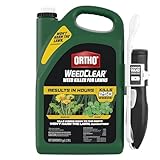
- LAWN FRIENDLY FORMULA: Our lawn friendly weed killer spray formula contains three proven ingredients that specifically target common lawn weeds, so it won't harm your grass (when used as directed)
- EASY APPLICATION: The continuous spray Comfort Wand weed killer sprayer applicator makes it easy to apply for lawn care, allowing for precise spray control and maximum accuracy without any pumping required
- LAWN WEED CONTROL: Use Ortho WeedClear Weed Killer for Lawns with Comfort Wand, a lawn weed killer, to kill weeds down to the root without harming your grass (when used as directed), with visible results in hours
- KILLS OVER 250 WEEDS: This broadleaf weed killer for lawns targets over 250 common broadleaf lawn weeds, including dandelions, clover, poison ivy, chickweed, and dollarweed (see product label for complete weed list)
- FAST VISIBLE RESULTS: See visible results in hours; this lawn care formula that is rainproof in 1 hour after drying, and people and pets may re-enter the treated area after the spray has dried
Quick Picks: The 9 Best Weed Killers by Use Case
If you want the short version, these are the products and categories we would look at first for common homeowner and light construction-site conditions.
| Best Use | Product | Type | Typical 2026 Cost | Best Fit |
|---|---|---|---|---|
| Driveway and sidewalk cracks | Spectracide Weed & Grass Killer | Non-selective post-emergent | About $14 per 1-gallon ready-to-use sprayer | Fast spot spraying on hardscape joints |
| Overall non-selective control | Roundup Weed & Grass Killer4 | Non-selective post-emergent | About $6 for 24 oz to $26 per gallon | Patios, walkways, edging, isolated weeds |
| Organic/contact option | Green Gobbler 20% Vinegar Weed Killer | Contact burn-down | About $30 to $33 per gallon | Small annual weeds in sun and warm weather |
| Herbicidal soap option | Sunday Weed Warrior | Contact weed and grass killer | About $9 for 32 oz to $40 per gallon | Spot treatment where a non-glyphosate option is preferred |
| Broadleaf weeds in lawns | Ortho Weed B Gon | Selective lawn herbicide | Often $10 to $25 depending on size | Dandelion, clover, chickweed, plantain in compatible turf |
| Budget lawn broadleaf concentrate | Southern Ag Amine 2,4-D | Selective broadleaf concentrate | Commonly about $20 to $30 per quart | Large lawns when the applicator can mix accurately |
| Garden bed prevention | Preen Garden Weed Preventer | Granular pre-emergent | About $20 to $50 per bag | Mulched ornamental beds after existing weeds are removed |
| Longer prevention window | Preen Extended Control | Granular pre-emergent | Usually higher than basic preventers | Ornamental beds needing months of prevention |
| Gravel and fence-line control | Ortho GroundClear | Non-selective or residual control, depending on formula | Often $15 to $35 ready-to-use | Driveways, gravel edges, patios, and non-lawn areas |
Always check the active ingredient panel before buying. Some familiar brand names have changed formulas over time, and not every product under the same brand uses glyphosate, 2,4-D, vinegar, or the same residual chemistry.
How We Choose Weed Killers on Jobsites
Our first question is not “What is the strongest weed killer?” It is “What are we protecting?” On a residential construction site, that might be new sod, a concrete driveway, a paver walk, storm drains, ornamental beds, a fence line, or a gravel staging area. A product that works well on a gravel shoulder can be a costly mistake beside new turf or vegetable beds.
We look at five things before spraying. First is the surface: turf, mulch, gravel, bare soil, concrete, pavers, or planting beds. Second is the weed: annual crabgrass, broadleaf weeds, perennial grasses, vines, brush, or seedlings. Third is the weather window: wind below label limits, no immediate rain unless the label allows it, and weeds actively growing. Fourth is the next step in the project: seeding, planting, mulching, grading, or installing hardscape. Fifth is the label, because reseeding and replanting intervals vary widely.
Rainfast time and visible-results time are different. A product may become rainfast in 10 to 30 minutes, but full root kill can still take several days or longer. Contact products often brown foliage quickly but may not kill deep perennial roots in one pass. Systemic herbicides often look slower at first because the product has to move through the plant.
1. Spectracide Weed & Grass Killer: Best for Driveway and Sidewalk Cracks
Spectracide Weed & Grass Killer is a practical ready-to-use choice for cracks in sidewalks, driveways, patios, and along fence lines. The appeal is speed and convenience: grab the sprayer, spot treat the crack, and move on. A 1-gallon AccuShot-style ready-to-use container was listed around $13.99 in 2026 retail pricing, which puts it in the normal homeowner range for hardscape maintenance.
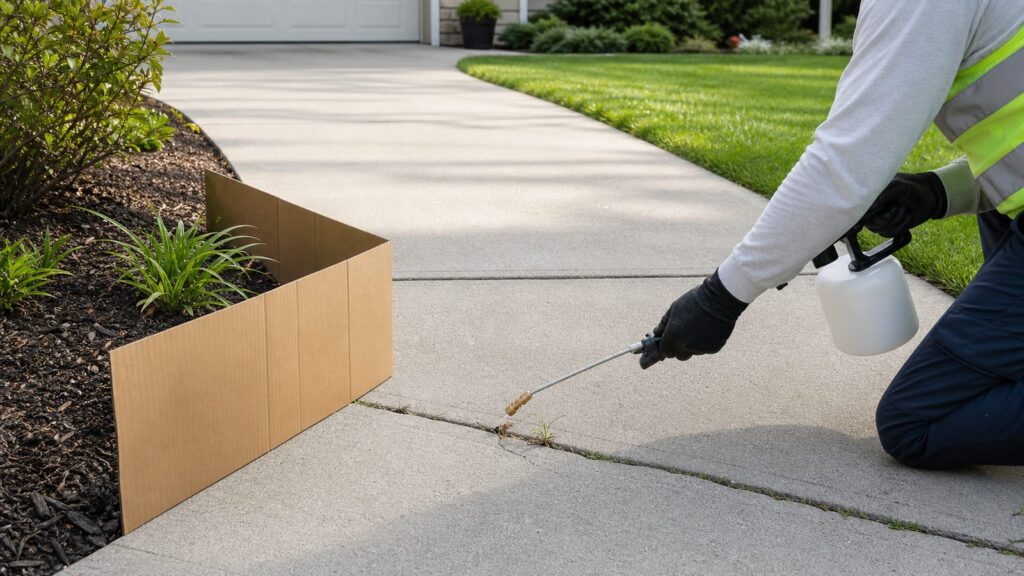
This is a non-selective product, so it does not know the difference between a weed and a desirable plant. We would use it on cracks, gravel edges, isolated weeds along a curb, and unwanted growth in a construction staging area. We would not broadcast it across a lawn or use it near newly planted ornamentals without shielding and careful spray control.
For hardscape, apply only to the weed foliage and avoid over-saturating joints. Many cracks and paver joints drain toward storm systems. More product is not better if it runs across concrete or into a drain. On new concrete, decorative pavers, or natural stone, test an inconspicuous spot if the label allows use near that surface, and keep overspray tight.
2. Roundup Weed & Grass Killer4: Best All-Purpose Non-Selective Spot Spray
Roundup Weed & Grass Killer4 is a common homeowner pick for non-selective control around patios, walkways, driveways, and bed edges. Current consumer Roundup-branded products vary by formula, so do not assume every bottle contains the same active ingredients. Check the label panel every time.
Also popular on Amazon

- WEED KILLER SPRAY FOR LAWNS: With a simple hose-end application, kill weeds in your lawn, including dandelions, chickweed, clover, crabgrass and foxtail with Ortho WeedClear Lawn Weed Killer Ready-to-Spray
- FAST-ACTING WEED CONTROL: This weed killer hose sprayer kills listed weeds like crabgrass, dandelion, clover, chickweed and creeping charlie down to the root and gets results with 1 application
- COVERAGE: This 32 fl. oz. container of Ortho WeedClear Lawn Weed Killer Ready-to-Spray provides up to 5,000 sq. ft. of lawn care
- HOW TO USE: Apply to listed lawn weeds that are young and actively growing by connecting your garden hose to the weed killer sprayer, sliding the switch to "ON" and spraying evenly until the lawn is wet
- WHERE TO USE: This spray weed killer for lawns won't harm lawn grasses when used as directed - use on northern lawn grasses including Bermudagrass, Buffalograss, Fescues, Kentucky Bluegrass, Ryegrass and Zoysiagrass
Retail pricing in 2026 showed small ready-to-use containers starting around $5.99 for 24 oz and 1-gallon wand products around $25.99. The wand costs more than a trigger bottle, but it reduces hand fatigue if you are walking a fence line or treating a long driveway edge.
This category is best for spot treatment, not blanket spraying. Keep it off turf, shrubs, tree suckers, exposed roots, vegetable gardens, and newly planted areas unless the label specifically allows that use. If you are planning to reseed or plant, read the waiting period before spraying. Some products allow planting within days; residual formulas can prevent growth for months.
3. Green Gobbler 20% Vinegar Weed Killer: Best Vinegar-Based Contact Option
Green Gobbler 20% Vinegar Weed Killer is a good fit when a homeowner wants a non-glyphosate, contact-style burn-down product for small weeds. Manufacturer and local retail listings in the 2026 research set showed 1-gallon pricing around $29.99 to $32.99, so it is usually more expensive per treated area than many synthetic ready-to-use sprays.
The strength of vinegar-based products is visible burn-down. On small annual weeds in warm, sunny weather, foliage can brown quickly. The limitation is root control. Perennial weeds, established grasses, and vines often regrow because contact products mainly damage the tissue they hit.
Use eye and skin protection. A 20% vinegar herbicide is not household vinegar from the kitchen; it is more concentrated and can irritate or injure skin and eyes. Keep it away from desired plants, metal finishes, and sensitive hardscape unless the label permits the use.
Quick wins for a faster PC:
Clear out junk files and repair common Windows errorsFree Scan →Fix the driver behind crashes, sound loss and screen glitchesFind Drivers →4. Sunday Weed Warrior: Best Herbicidal Soap-Style Spot Treatment
Sunday Weed Warrior is another non-glyphosate contact option. 2026 pricing in the research pack showed a 32 oz size around $8.96 at Walmart and a 1-gallon wand product around $40.49 at Target. That puts it at the higher end for ready-to-use weed control, but some homeowners prefer the active-ingredient profile and spot-spray format.
This kind of product works best on young, actively growing weeds where the spray can thoroughly cover foliage. It is less convincing on deep-rooted perennials unless you are willing to repeat applications. For cracks and bed edges, that may be acceptable. For a large gravel drive with mature weeds, a concentrate or systemic non-selective product may be more economical.
Do not treat it as lawn-safe unless the label says so for your exact use. “Weed and grass killer” usually means it can injure grass too.
5. Ortho Weed B Gon: Best Lawn Weed Killer for Common Broadleaf Weeds
For dandelion, clover, chickweed, plantain, and other broadleaf weeds in turf, a selective lawn herbicide such as Ortho Weed B Gon is often the right category. These products are designed to kill broadleaf weeds while leaving compatible turfgrass standing when applied according to label directions.
Also popular on Amazon

- WEED KILLER FOR LAWNS: Ortho WeedClear Lawn Weed Killer Concentrate weed killer spray kills crabgrass, dandelions, clover, and other listed common weeds in your lawn
- HOW TO USE: Dilute this weed killer concentrate for sprayers per label directions and apply using a tank sprayer or apply with the Ortho Dial N Spray
- FAST-ACTING WEED CONTROL: This fast-acting grass and broadleaf weed killer for lawns kills listed weeds down to the root and gets results with just 1 application
- WHERE TO USE: This concentrated weed killer won't harm lawn grasses when diluted and used as directed - use on northern lawn grasses including Bermudagrass, Buffalograss, Fescues, Kentucky Bluegrass, Ryegrass and Zoysiagrass
- COVERAGE: This 32 fl. oz. container of Ortho WeedClear Lawn Weed Killer Concentrate treats up to 5,000 sq. ft.
The key word is compatible. Grass species matters. A formula that is fine on some cool-season lawns may be restricted on St. Augustine, centipede, bahiagrass, newly seeded turf, or stressed turf. Before spraying, match the product to the lawn species and check temperature limits. Many broadleaf herbicides perform best when weeds are actively growing and the lawn is not drought-stressed.
For a typical homeowner lawn, spot treatment is usually smarter than blanket spraying. Treat visible weeds, then fix the reason they are thriving: thin turf, low mowing height, compacted soil, poor drainage, or bare spots. Herbicide can remove weeds; it does not build a dense lawn by itself.
6. Southern Ag Amine 2,4-D: Best Budget Concentrate for Large Lawns
Southern Ag Amine 2,4-D is a concentrated selective broadleaf herbicide that can make sense for larger lawns when the applicator is comfortable measuring, mixing, and calibrating a sprayer. A quart often falls around $20 to $30, but the real cost depends on dilution rate, lawn size, and label-permitted application rate.
2,4-D is a well-known broadleaf herbicide active ingredient. It is not a general-purpose weed killer for every surface. It is intended for labeled uses, and drift can injure ornamentals, garden plants, trees, and neighboring landscapes. Use extra care near tomatoes, grapes, flowers, and young trees.
What’s actually slowing this PC down?
Pick the symptom - the matching free tool is one click away.
We recommend concentrates only for homeowners who will read the label carefully and measure accurately. A pump sprayer, clean water, marked measuring cup, gloves, long sleeves, and dedicated equipment are the minimum. Do not guess the mix rate. Do not reuse a herbicide sprayer for insecticide, fertilizer, or anything intended for edible plants unless the label and cleaning procedure support it.
7. Preen Garden Weed Preventer: Best for Mulched Ornamental Beds
Preen Garden Weed Preventer is a granular pre-emergent for ornamental beds. It does not kill established weeds. It helps prevent new weed seeds from germinating after you have already pulled, hoed, or sprayed existing weeds.
This is where many homeowners waste money. They scatter pre-emergent over mature weeds and expect the bed to clear itself. That is not how the category works. Remove existing weeds first, apply the product according to the label, water it in if required, then maintain mulch at roughly 2 to 3 inches where appropriate. Too little mulch lets light hit the soil. Too much mulch can trap moisture against stems and foundations.
Typical 2026 consumer pricing for pre-emergent granular preventers was about $20 to $50 or more per bag. Coverage area and residual length matter more than bag price. A cheaper bag that covers half the square footage may not be cheaper at all.
The Tool Desk
Outbyte PC Repair FREEClear out junk files and repair common Windows errorsFree Scan →Outbyte Driver Updater FREEFix the driver behind crashes, sound loss and screen glitchesFind Drivers →8. Preen Extended Control or Crabgrass Control: Best for Longer Prevention
For longer prevention windows, Preen Extended Control-style products or crabgrass-focused preventers can be useful. Choose the exact product by location: ornamental beds, lawns, or specific turfgrass use. Bed-only products should not be assumed safe for turf, and lawn pre-emergents should be matched to the grass species.
Also popular on Amazon

- KILLS WEEDS – NOT THE LAWN: When used as directed
- VISIBLE RESULTS IN 5 HOURS: Conquer unruly weeds and see visible results in as fast as 5 hours
- KILLS 470+ WEED TYPES AS LISTED: Kills broadleaf and grassy weeds including dandelion, chickweed and clover as well as crabgrass and yellow nutsedge – see product label for complete list of weed types
- KILLS THE ROOT: Kills weeds by contact down to the root
- READY-TO-USE FORMULA: No mixing required
Timing is everything. Pre-emergents work before weeds emerge. For crabgrass, many extension programs use spring soil temperature as the trigger, often when soil temperatures approach about 55 degrees Fahrenheit for several days. Calendar timing varies by region: that may be early spring in the South and later in the Upper Midwest or Northeast.
Pre-emergents also affect seeding. If you plan to overseed, repair turf, or plant new beds, check the reseeding and planting interval before application. Some pre-emergents are specifically incompatible with new seed for a period of weeks or months.
9. Ortho GroundClear: Best for Gravel, Fence Lines, and Non-Lawn Areas
Ortho GroundClear is a useful category for gravel drives, fence lines, patio edges, and other places where you do not want vegetation. The caution is that GroundClear-branded products vary by formula. Some are simple non-selective sprays. Others include residual control intended to prevent regrowth for months.
Crashes, No Sound, or Screen Glitches?
Random freezes, missing sound and display glitches usually trace back to one bad driver. Find and replace yours safely.Free scan · under a minuteWindows Errors? Fix Them Before They Spread
Repair common Windows errors and clear accumulated junk for a smoother, more stable PC - no reinstall needed.Free scan · no reinstallResidual vegetation killers are powerful tools in the wrong place. They are not appropriate near desired tree roots, future planting beds, drainage paths, vegetable gardens, or spots you plan to reseed. On construction sites, we avoid residual products where grading, drainage, landscaping, or final planting plans are still changing.
For a gravel parking pad or fence line that will remain vegetation-free, residual control can save labor. For a bed edge beside shrubs or a future lawn repair area, choose a non-residual spot spray instead.
Independent reader supportYour contribution helps us test, update, and keep practical guides available for everyone.What Weed Killer Costs in 2026
Price per container is only part of the decision. Ready-to-use sprays cost more per treated square foot but are convenient for small properties. Concentrates cost less over larger areas but require accurate mixing and dedicated equipment. Contact organic products often need repeat applications, which raises the real cost.
| Category | Typical 2026 Price | Best For | Cost Watch-Out |
|---|---|---|---|
| Ready-to-use non-selective sprays | $6 to $33 per gallon range | Cracks, patios, fence lines, small spot treatments | Convenient but higher cost per treated area |
| Organic/contact sprays | $9 to $40+ depending on size | Small weeds, non-glyphosate preference, visible burn-down | May require repeat applications |
| Concentrates | $20 to $52 for common homeowner sizes | Large lawns, long edges, repeated maintenance | Requires measuring, mixing, and sprayer calibration |
| Granular pre-emergents | $20 to $50+ per bag | Crabgrass prevention, ornamental beds, seasonal control | Must be applied before germination |
| Residual vegetation killers | Often premium-priced | Gravel drives, industrial edges, fence lines | Can prevent desired growth for months |
Safety, Weather, and Label Rules That Actually Matter
Good weed control is often won or lost before the first spray. Avoid spraying in wind that can move droplets onto cars, siding, flowers, vegetable gardens, or neighboring lawns. Avoid spraying drought-stressed turf. Avoid applying many lawn herbicides during high heat unless the label allows it. Weeds need to be actively growing for many post-emergent products to work well.
Free tools Windows power users keep installed
One-click scans. No signup required.
Protect hardscape. Keep sprays off new concrete, stained pavers, decorative stone, metal edging, and painted surfaces unless the label permits contact. On driveways and sidewalks, aim for the foliage inside the joint, not the slab.
Dispose of leftovers correctly. Do not pour herbicide into drains, soil, storm sewers, or roadside ditches. Use the product according to label directions or follow local household hazardous-waste guidance. Keep products in their original containers with the label intact.
Also popular on Amazon

- Roundup For Lawns₁ is a ready-to-use tough weed killer for Northern grasses that kills weeds, roots and all (when used as directed), with up to 3 month weed control (as listed)
- Kills 253 types of weeds (see inside booklet for weed list), including crabgrass, dandelion, clover, yellow nutsedge, poison ivy, chickweed, oxalis, and purslane
- Roundup For Lawns₁ starts working immediately and is rainproof in 3 hours
- Use this tough weed killer on listed Northern grasses, including Kentucky Bluegrass, Perennial Ryegrass, Fescue spp. including Tall, Red, and Fine Leaf Fescues, and Zoysiagrass
- The easy reach extendable spray wand makes application a breeze with its continuous spray
When to DIY vs. When to Hire a Pro
DIY makes sense for small, clearly defined jobs: a few driveway cracks, a 1-gallon spot treatment around a patio, a small dandelion patch in a compatible lawn, or pre-emergent in a known ornamental bed. Expect to spend $10 to $50 for most homeowner containers and another $15 to $40 for a basic pump sprayer if you are using concentrate.
Hire a licensed professional when the job involves a large lawn, repeated applications, hard-to-identify turf species, steep slopes, drainage toward water, poison ivy or brush, commercial property, HOA requirements, or treatment for compensation. Commercial applicators generally need state licensing when applying pesticides for hire. Rules vary by state; Texas, Illinois, North Carolina, Florida, and other states all have their own categories, exams, renewal cycles, and business requirements.
Do these 3 things before closing this tab:
1Scan for outdated or missing drivers - takes under a minute2Clear out junk files and repair common Windows errors3Fix the driver behind crashes, sound loss and screen glitchesA professional quote can vary widely because lot size, weed pressure, number of visits, insurance, travel, treatment type, fertilization, aeration, mowing, and bed maintenance all affect price. The cheapest one-time spray is not always the cheapest season plan if the lawn is thin and needs cultural correction.
Final Recommendation
For most homeowners, the best setup is not one bottle. Keep a ready-to-use non-selective spray for cracks and hardscape, use a selective broadleaf product only on compatible turf, and apply a pre-emergent before annual weeds germinate. For beds, combine hand removal, 2 to 3 inches of mulch, and a labeled pre-emergent. For gravel, decide whether you need short-term burn-down or months of residual control before buying.
The biggest mistake is treating weed killer as a shortcut around good site conditions. Dense turf, proper mowing height, corrected drainage, healthy soil, and clean mulch lines reduce the amount of herbicide you need. The right chemical can solve the visible weed problem. Good construction and landscape maintenance keep the problem from coming back.
Frequently Asked Questions
What is the best weed killer for lawns that will not kill grass?
Use a selective lawn herbicide labeled for your turf species. Products such as Ortho Weed B Gon or 2,4-D blends can control broadleaf weeds like dandelion and clover, but they are not safe for every grass. Check the label for St. Augustine, centipede, bahiagrass, newly seeded lawns, and heat-stressed turf.
What weed killer works best for driveway and sidewalk cracks?
A ready-to-use non-selective weed and grass killer is usually best for cracks. Spectracide Weed & Grass Killer, Roundup Weed & Grass Killer4, and similar spot sprays are practical choices. Spray the foliage in the joint, not the whole slab, and keep runoff out of storm drains.
Are vinegar weed killers as effective as synthetic herbicides?
Vinegar weed killers can burn down small annual weeds quickly, especially in warm sun, but they usually have weaker root control on perennial weeds. A 20% vinegar herbicide is also much stronger than kitchen vinegar and should be handled with eye and skin protection.
When should I apply pre-emergent weed killer for crabgrass?
Apply pre-emergent before crabgrass germinates. A common spring trigger is when soil temperatures approach about 55 degrees Fahrenheit for several days. Timing varies by region, so soil temperature and local extension guidance are more reliable than a fixed calendar date.
How long after spraying weed killer is it rainfast?
Rainfast time depends on the exact product. Some sprays become rainfast in 10 to 30 minutes, while others need longer. Rainfast does not mean dead; visible results may take hours, days, or longer depending on whether the product is contact or systemic.
Do these 3 things before closing this tab:
1Repair Windows errors before they cause bigger problems2Scan for outdated or missing drivers - takes under a minute3Clear out junk files and repair common Windows errorsCan I plant or reseed after using weed killer?
Sometimes, but the waiting period depends on the product. Some non-residual sprays allow planting within days. Pre-emergents and residual vegetation killers can prevent seed germination or plant growth for weeks or months. Read the reseeding and replanting section of the label before applying.
Quick Recap
Product prices and availability are accurate as of the date/time indicated and are subject to change. Any price and availability information displayed on Amazon at the time of purchase will apply.

