Recommended Free Tools
Yes, you can often use a different construction material, but not simply because it looks similar, costs less, or carries a higher marketing rating. The project must follow the code adopted by its jurisdiction, and a non-prescribed product or assembly generally needs the building official’s written approval before installation.
Under Section R104.2.2 of the 2024 International Residential Code (IRC), an alternative must satisfy the code’s intent and be at least equivalent in quality, strength, effectiveness, durability, safety, and fire safety. The International Building Code (IBC) applies the same equivalency principle to a wider range of occupancies. Treat the entire installed assembly—not an isolated component—as the thing being approved.


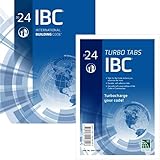

As an Amazon Associate I earn from qualifying purchases.
Start with the code your project actually uses
There is no universal national substitute chart. A material accepted on one project can be rejected on another because the jurisdiction adopted a different code edition, added local amendments, classified the building differently, or exposed the assembly to different fire, weather, structural, or moisture conditions.
What’s actually slowing this PC down?
Pick the symptom - the matching free tool is one click away.
Confirm the jurisdiction and adopted edition
Ask the building department which code edition and local amendments govern the permit. Model codes are updated on a three-year cycle, but jurisdictions do not all adopt the newest edition at the same time. The edition printed on a code book is therefore not enough to establish what your project must meet.
#1 Best Overall
Confirm occupancy and construction type
The IRC generally addresses one- and two-family dwellings and townhouses. The IBC is the broader model code for other occupancies, including many commercial, institutional, and multifamily buildings. Occupancy, construction type, height, area, location in the building, and exposure can change the required performance of a wall, floor, roof, door, window, finish, or protective layer.
Define the material’s exact job
Record where the material is installed and what it does. A panel may be structural sheathing in one location, a weather barrier in another, and a fire-protection component elsewhere. Those are different compliance questions even when the product name is the same.
Know which approval path applies
Prescriptive permission
First look for a code table, referenced standard, listed product, or approved assembly that already permits the proposed material. If the code specifies a listed product, installation must follow the listing and the manufacturer’s instructions. Staying within that prescriptive path is usually faster than requesting an alternative.
Alternative material, design, or method
If the code does not specifically prescribe the proposed product or assembly, submit it as an alternative material, design, or method. Section R104.2.2 of the 2024 IRC states: “The provisions of this code are not intended to prevent the installation of any material or to prohibit any design or method of construction not specifically prescribed by this code, provided that any such alternative has been approved.”
The IBC expresses the same approach: “An alternative material, design or method of construction shall be approved where the building official finds that the proposed design is satisfactory and complies with the intent of the provisions of this code.” Approval is a decision by the building official; the model-code language does not create an automatic right to substitute.
Why the distinction matters
A product can be legal to sell and still require a project-specific approval. Conversely, a product with a recognized listing may be usable without an alternative request when the listing covers the actual application and the installation follows its conditions. Ask the permit reviewer which path they expect before ordering material.
Evaluate equivalency as a complete assembly
Price, appearance, and a single laboratory rating do not establish equivalency. Compare the proposed assembly with the specified one across every function that affects code compliance.
Do these 3 things before closing this tab:
1Clear out junk files and repair common Windows errors2Scan for outdated or missing drivers - takes under a minute3Repair Windows errors before they cause bigger problems| Performance question | What to compare |
|---|---|
| Structural capacity | Loads, spans, thickness, fastener schedule, edge support, connections, load path, deflection, and resistance to uplift, shear, compression, or impact as applicable. |
| Fire performance | Required fire-resistance rating, flame spread, smoke characteristics where applicable, combustibility, fire stopping, continuity, penetrations, joints, and protection of connectors. |
| Water and weather durability | Drainage, flashing, water-resistive barriers, vapor control, UV exposure, freeze-thaw conditions, corrosion, wetting and drying, and expected service life. |
| Thermal and energy performance | Insulating value, air leakage, thermal bridging, condensation risk, continuity at joints, and compliance with the energy provisions adopted for the project. |
| Compatibility | Contact with adjacent materials, sealants, adhesives, coatings, membranes, fasteners, preservatives, and dissimilar metals. |
| Installation conditions | Substrate, supports, tolerances, temperature, moisture, sequencing, access, required tools, quality control, and inspection points. |
| Service and ownership | Maintenance, replacement intervals, warranty conditions, lead time, availability, and the consequences of a failure. |
The unit of evaluation is the end-use configuration. A component’s standalone rating may not prove that the assembled wall, roof, floor, ceiling, or penetration detail complies. Fasteners, joints, membranes, coatings, supports, fire stopping, and penetrations can change the result.
A step-by-step substitution workflow
1. Write a substitution brief
Before contacting the building department, prepare a one-page description containing:
- Project address and permit number, if issued.
- Jurisdiction and adopted code edition.
- Occupancy and construction type.
- Exact location of the proposed material.
- Specified product or assembly and the proposed replacement.
- Every function the material performs.
- Reason for the change, such as availability, durability, compatibility, or a design revision.
This prevents a general product comparison from being mistaken for an assembly approval.
2. Check the prescriptive code path
Search the adopted code and referenced standards for the material category, required dimensions, ratings, installation details, and limitations. Check whether the product is listed or covered by an approved assembly. Verify that the listing applies to your occupancy, location, exposure, support conditions, and intended use.
PC Slower Than It Used to Be?
A free scan shows the junk files, broken settings and background clutter dragging Windows down - then fixes them in one click.Free scan · Windows 10 & 11Crashes, No Sound, or Screen Glitches?
Random freezes, missing sound and display glitches usually trace back to one bad driver. Find and replace yours safely.Free scan · under a minute3. Map the performance requirements
Create a side-by-side schedule for the specified and proposed assemblies. Include structural, fire, moisture, thermal, compatibility, installation, durability, and service requirements. Mark which requirement is demonstrated by a code table, which by a listing or evaluation report, which by a test report, and which by engineering calculations.
4. Assemble objective evidence
A useful submission can include:
- Manufacturer product data identifying the exact model, thickness, composition, and limitations.
- Complete installation instructions, including fasteners, joints, laps, supports, and required accessories.
- Engineering calculations showing capacity, load path, connection design, or other project-specific performance.
- Fire, structural, weathering, or other test reports that match the proposed end-use configuration.
- An evaluation report from an approved agency when one is available.
- Drawings or details showing interfaces, penetrations, flashing, fire stopping, and transitions.
- Maintenance and inspection information where long-term performance affects safety.
The IRC allows reports from a qualified engineer, specialist, laboratory, or specialty organization. The building official may require the stamp of a registered design professional, even when a manufacturer has supplied test data.
5. Ask the authority having jurisdiction before installation
Submit the request in the form the building department requires. Some offices handle alternatives through the permit review; others require a separate letter, deferred-submittal package, or formal revision. State exactly what is changing and attach the evidence supporting equivalency.
Request a written decision. If the alternative is rejected, the code framework calls for written reasons. A verbal comment at a counter or jobsite is not a reliable substitute for an approval that can be kept with the permit records.
Free tools Windows power users keep installed
One-click scans. No signup required.
6. Preserve the approval record
Keep the approved request, stamped drawings, evaluation reports, calculations, product data, and any conditions with the permit and inspection documents. Give the approved details to the superintendent and installer. Identify the approved product by model and configuration so procurement cannot silently substitute a different version.
7. Install exactly what was approved
Equivalency is conditional. Changing thickness, support spacing, fasteners, joints, fire stopping, exposure, or adjacent materials can invalidate the approval. If a field condition requires a change, pause that portion of the work and obtain review before installation. Photograph concealed work when the approved detail will no longer be visible.
How to compare two or more substitute materials
When several alternatives are available, rank them on code evidence first and commercial factors second. A lower purchase price does not compensate for an unapproved assembly, unavailable test data, or difficult inspection.
| Decision factor | Questions to answer |
|---|---|
| Code pathway | Is the material already covered by a prescriptive provision, referenced standard, listing, or approved assembly? |
| Proof of equivalency | Can the supplier provide data for the complete end-use assembly, not merely the component? |
| Engineering effort | Will calculations or a registered design professional’s stamp be needed? |
| Inspection clarity | Can an inspector readily verify model, thickness, fastening, joints, and concealed protection? |
| Supply certainty | Are the exact approved model and accessories available for the whole project? |
| Installed cost | Does labor, special tooling, additional layers, or sequencing erase the material-price saving? |
| Durability and maintenance | Will the substitute tolerate the site exposure and remain serviceable for the intended life? |
| Warranty and responsibility | Which party warrants the assembly, and are there conditions that conflict with the proposed installation? |
Use the same assumptions for every candidate. Comparing one product’s laboratory result with another product’s field assembly is not an equivalent comparison.
Quick wins for a faster PC:
Fix the driver behind crashes, sound loss and screen glitchesFind Drivers →Repair Windows errors before they cause bigger problemsFix Now →Common substitution situations and the questions they trigger
Changing a structural component
Focus on the complete load path. Confirm member capacity, connections, bearing, bracing, deflection, fire protection, and the effect on adjacent components. A different size or material can shift loads into supports that were not designed for them. Engineering calculations are commonly needed when the change is outside a prescriptive table or listed assembly.
Changing a wall, roof, or floor panel
Check more than panel strength. Review weather resistance, vapor control, air sealing, thermal continuity, fastener spacing, edge support, joint treatment, and the required fire or sound assembly. The same panel may have different permitted uses depending on whether it is exterior, interior, above a conditioned space, or part of a rated separation.
Changing insulation or air-barrier materials
Verify thermal performance under the adopted energy provisions, continuity around openings and penetrations, condensation control, flame or smoke requirements, and compatibility with membranes and sealants. Installation thickness, gaps, compression, and sequencing can determine whether the claimed performance is achieved.
Changing a fire-protection component
Use the tested or listed assembly as the reference. Confirm rating duration, substrate, joints, penetrations, fasteners, backing, and continuity. A fire-rated coating, sealant, board, or wrap is not interchangeable merely because its label shows a similar number.
Changing exterior cladding, roofing, or waterproofing
Evaluate the drainage plane, flashing, laps, penetrations, wind and impact exposure, ultraviolet exposure, temperature range, and attachment. Confirm that transitions to windows, doors, parapets, and dissimilar materials are covered by the manufacturer’s instructions or project details.
Standards, listings, and evaluation reports
Model codes commonly incorporate standards from organizations such as ASTM, NFPA, and ASCE. A referenced standard can define a test method or material requirement, but passing a test does not automatically approve every installation. Check the edition referenced by the adopted code and whether the proposed product was tested in the configuration you intend to build.
An evaluation report can consolidate test data, calculations, conditions of use, and installation limits. Read the limitations, approved substrates, fasteners, exposure categories, and required inspections. An evaluation report is evidence for the official; it does not override local amendments or replace project-specific approval when the official requires it.
Independent reader supportYour contribution helps us test, update, and keep practical guides available for everyone.Why substitutions fail at inspection
The request was made after installation
Installing first removes the official’s opportunity to evaluate concealed work. It can lead to removal, destructive inspection, redesign, or delay. Obtain the decision before ordering or installing a non-prescribed product.
The package proves only a component rating
A standalone strength, flame-spread, or thermal value may not represent the complete assembly. Add details for joints, supports, fasteners, membranes, penetrations, and transitions.
The product model changed during procurement
Substitute materials often have similar names but different thicknesses, facings, coatings, or approved uses. Match purchase orders and delivery tickets to the model identified in the approval.
Installation departed from the listing
Missing fasteners, altered spacing, unsealed joints, omitted fire stopping, unsupported edges, or incompatible sealants can void the evidence on which approval depended. Conduct a pre-installation meeting and use an installation checklist.
The wrong code or occupancy was assumed
Residential provisions cannot automatically be applied to a commercial or institutional project, and an older permit may use an earlier adopted edition. Confirm the governing rules with the permit office.
The submission ignored local amendments
Local amendments can add requirements for wildfire exposure, coastal weather, seismic design, energy performance, or historic properties. Include the project’s local provisions in the equivalency comparison.
A practical submission checklist
- Jurisdiction, permit number, adopted code edition, occupancy, and construction type.
- Specified and proposed product names, models, dimensions, and quantities.
- Location and function of each material in the assembly.
- Code sections, tables, listings, or referenced standards checked.
- Comparison of structural, fire, moisture, thermal, compatibility, and durability performance.
- Drawings for supports, joints, penetrations, transitions, and fire stopping.
- Product data and installation instructions for the exact model.
- Test reports, calculations, evaluation reports, and professional seals where required.
- Inspection stages and documentation for concealed work.
- Written approval and any conditions attached to it.
When to hire an engineer, architect, or code consultant
Professional help is prudent when the substitution affects a load path, rated assembly, unusual exposure, multiple code disciplines, or a condition not covered by a listing. A registered design professional can prepare calculations and sealed details; a qualified laboratory or specialty organization can supply technical reports; and a code consultant can help interpret the adopted provisions and coordinate the submission.
Ask the professional to evaluate the proposed end-use assembly and to identify assumptions that the contractor must preserve. The goal is not merely to obtain a signature but to create a detail that can be built and inspected as approved.
Questions to resolve before you order the material
- Which code edition and local amendments govern this permit?
- Is the proposed product already allowed by a prescriptive table, listing, or approved assembly?
- What exact functions must be equivalent at this location?
- Does the evidence cover the complete assembly and its interfaces?
- Who will prepare calculations, testing, or a professional seal?
- What written approval is required, and who issues it?
- How will the inspector verify the approved model and concealed details?
- What happens if the approved product becomes unavailable?
The decision rule
Choose a substitute only after the authority having jurisdiction can see, in writing, how the complete installed assembly meets the adopted code’s intent. For residential projects, that means applying the applicable IRC provisions; for broader occupancies, use the governing IBC framework and local amendments. If the product is not prescribed, document equivalency, obtain written approval before installation, and build exactly to the approved details.
Quick Recap
Product prices and availability are accurate as of the date/time indicated and are subject to change. Any price and availability information displayed on Amazon at the time of purchase will apply.

