The safest storage plan is simple: put moisture-sensitive materials in a dry, weather-tight shelter; raise every porous product off the ground or slab; leave enough air space for drying; and stack loads so they cannot shift or overload the building. Cover outdoor lumber with a breathable, well-secured tarp while leaving the pile ends open. Keep paper-faced drywall completely sheltered, and store cement and lime bags dry, elevated, and in stable stepped or cross-keyed stacks.
Before materials are enclosed or installed, inspect them and measure wood moisture. Framing lumber and wood sheathing should be at or below 18% moisture content before enclosure, according to the U.S. Environmental Protection Agency (2018). There is no universally accepted moisture-meter limit for drywall, so rely on visible condition, project specifications, and the product manufacturer’s instructions.
As an Amazon Associate I earn from qualifying purchases.
Why storage conditions determine material performance
Construction materials can be damaged before installation even when they look usable at delivery. Rain, snow, ground moisture, condensation, and water vapor from a concrete slab can enter porous products. The result may be mold, swelling, delamination, loss of strength, poor adhesion, warped wood, or cement that has already begun to hydrate.
The U.S. Environmental Protection Agency’s moisture-control guidance states: “Moisture-sensitive materials and equipment should be kept dry during construction.” That means arranging protected storage before scheduling delivery, rather than assuming a temporary cover will be enough after materials arrive.
#1 Best Overall
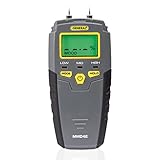
- HUMIDITY SENSOR: Our handy meter tool can quickly determine what level of remediation is needed to keep your family safe from black mold. High levels of dampness that go untreated are the leading cause of harmful fungus growth in the home.
- WATER LEAK DETECTOR: Finding the moisture content in your wood or drywall is the first step in early prevention. Continuously check and test suspicious water stains around the house so you can determine whether the area is wet or has already dried. Low, medium and high moisture tones and on-screen icons, Reading HOLD button
- MOISTURE READER: The mold test features large 0.3" high digits in a backlit LCD for quick and easy detecting. Our mildew scanner includes extra 8mm stainless steel pins, a protective cap that doubles as a calibration checker, and a “9V” battery.
- MOLD TESTER: For an accurate test read, stick the stainless steel pins into the surface of what you're measuring. The gauge has a broad range of 5 - 50% for wood and 1.5 - 33% for building materials such as concrete and drywall.
- GENERAL TOOLS: We're a recognized leader in designing and developing specialized precision tools dedicated to delivering exceptional customer service. We encourage artisans and DIYers to work smarter, measure better, and repair more productively.
Use a dry, weather-tight location first
A locked, enclosed building is the best location for drywall, finished woodwork, insulation, cement, lime, adhesives, and other moisture-sensitive products. A garage can work for drywall only when the roof and walls keep out rain, doors do not allow wind-driven water to reach the stack, and the slab is dry enough that moisture will not wick into the sheets.
If a permanent building is unavailable, use a covered area with a sound roof, protected sides, and a floor that can support the load. Do not treat a loose tarp over materials on bare soil as equivalent to weather-tight storage.
Elevate porous materials above every floor
Place pallets, sleepers, dunnage, or stickers beneath lumber, drywall, bagged cement, and other porous products. Pacific Northwest National Laboratory guidance recommends keeping building materials off the ground with pallets or stickers, including when they sit on concrete slabs. Concrete can transfer moisture upward, and elevation also creates an air path for drying.
Free tools Windows power users keep installed
One-click scans. No signup required.
Use supports that are level, strong enough for the full load, and spaced closely enough to prevent sagging. Keep the supports out of standing water and inspect them for rot, broken boards, or instability before loading.
Balance protection with ventilation
Enclosures should stop liquid water without trapping humid air. Outdoor lumber needs a tarp for rain and snow, but the tarp should not be sealed around the ends of the pile. Open ends let air move through the stack and reduce condensation. The same principle applies to temporary shelters: provide weather protection while allowing humid air to escape.
Rank #2

- FIND HIDDEN WALL MOISTURE EARLY — Check suspicious drywall and building surfaces after a leak, water stain, or other moisture concern. Detect abnormal moisture before a small issue develops into more extensive damage and costly repairs
- CHECK BEFORE YOU REPAIR — Don't rely on a wall looking or feeling dry. Use the moisture meter to check questionable areas before painting, repairing, or covering the surface, helping you make decisions based on actual moisture readings.
- CHECK FIREWOOD BEFORE YOU BURN — Test firewood before placing it in your fireplace or wood stove. Knowing the moisture level of your firewood helps you choose wood that is ready for burning and avoid relying on appearance alone.
- PIN-TYPE TESTING FOR DIRECT MEASUREMENTS — The contact pins penetrate the material to measure moisture inside wood and building materials. This makes it useful for checking areas where surface conditions may not tell the whole story.
- ONE TOOL FOR TWO IMPORTANT HOME CHECKS — Keep it ready for two practical jobs: checking walls for hidden moisture and checking firewood before burning. A simple way to make informed decisions before a moisture problem becomes expensive or wood goes into the fireplace.
Plan for safe access and structural capacity
Storage is also a job-site safety issue. Keep aisles clear, respect the floor-load rating of the room or platform, and never place material where it can fall into a hoistway or unprotected floor opening. OSHA 29 CFR 1926.250 requires lumber piles to stand on level, solidly supported sills and remain stable and self-supporting. Local OSHA state-plan rules, building requirements, and manufacturer instructions can add requirements.
How to store lumber
Outdoor lumber storage
- Choose the highest practical location with drainage away from the pile. Do not put lumber directly on soil, gravel that stays wet, or a slab without a moisture break.
- Set level sills, pallets, or sleepers under the pile. Add intermediate stickers between layers when the lumber must dry, keeping the stickers aligned vertically so the load remains supported.
- Stack boards with the pieces straight and supported. Remove damaged dunnage and correct any leaning before adding more material.
- Cover the top and sides with a heavy-duty tarp or the manufacturer’s wrapping. Secure the cover against wind, but leave both ends open for air circulation.
- Inspect factory wrapping after delivery. Tears, punctures, or water trapped inside the wrap can accelerate moisture problems; repair the cover or move the material to a dry shelter.
Do not pull a tarp tightly around all four sides of a warm, damp stack. That arrangement can hold condensation against the wood and create a wetter microclimate than the surrounding air.
Quick wins for a faster PC:
Repair Windows errors before they cause bigger problemsFix Now →Scan for outdated or missing drivers - takes under a minuteDriver Scan →Indoor lumber storage
Inside a garage, shed, or building, keep lumber elevated and away from exterior walls that show condensation. Leave enough clearance to inspect the underside and to move air around the stack. If the building is heated or dehumidified, allow newly delivered wood time to adjust gradually rather than placing it directly beside a heater or in a strong air stream that can create uneven drying and warping.
Finished woodwork requires especially careful handling. Keep it in its protective packaging only when the packaging is dry and intact, and follow the fabricator’s storage orientation. Do not lean long boards where they can bow or fall into an aisle.
Stack-height and job-site safety limits
Under OSHA 29 CFR 1926.250, lumber piles may not exceed 20 feet in height. When lumber is handled manually, the maximum is 16 feet. Piles must remain stable and self-supporting, and used lumber must have nails withdrawn before stacking. Keep aisles clear and do not store lumber near hoistways or unprotected floor openings.
Rank #3
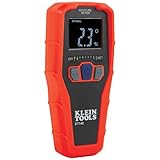
- WATER LEAK DETECTOR detects relative moisture content from leaks and flooding
- PINLESS MOISTURE METER measures relative moisture content in building materials
- NONDESRUCTIVE DETECTION up to 3/4-Inch deep using Electromagnetic field (EMF) technology
- USE ON DRYWALL, MASONRY, HARDWOOD, AND SOFTWOOD; calibrated for these materials only
- REVERSE-CONTRAST DISPLAY for easy viewing of reading and nine LED bars to indicate moisture range
These are maximum safety limits, not a target height. A lower stack is appropriate when the floor, dunnage, access equipment, or stability of the material cannot support a taller pile. Anchor racks and follow their stated load ratings when storing lumber vertically or overhead.
Check lumber moisture before enclosure
Use a calibrated wood moisture meter on representative pieces, including material from the center of the stack and areas that were closest to the floor or weather. Framing lumber and wood sheathing should not exceed 18% moisture content before enclosure, according to the U.S. Environmental Protection Agency (2018). Record readings and investigate unusually high values rather than relying on a single dry surface.
Visual inspection still matters. Look for cupping, bowing, staining, fungal growth, softened areas, and end checking. Drying a board may correct moisture without correcting a permanent distortion or loss of performance.
How to store drywall and gypsum board
Keep paper-faced sheets completely sheltered
Paper-faced drywall is highly moisture-sensitive. Pacific Northwest National Laboratory guidance warns that wet drywall can support mold growth, and its Building America guidance states: “Always protect drywall from moisture.” Store sheets inside a weather-protected shelter as soon as they arrive; do not leave them under an open-sided roof where wind-driven rain can reach the edges.
Can drywall be stored in a garage?
Yes, if the garage is dry, weather-tight, and capable of supporting the stack. Place the sheets on pallets or straight sleepers rather than directly on the slab. Check the slab and surrounding walls for dampness, leaks, or condensation before delivery. Keep vehicles, wet tools, and garden equipment from introducing water into the storage area.
The Tool Desk
Outbyte PC Repair FREEClear out junk files and repair common Windows errorsFree Scan →Outbyte Driver Updater FREEScan for outdated or missing drivers - takes under a minuteDriver Scan →Rank #4

- 🌲【Accurate and fast measurements reveal hidden water leaks】: It has 2 high-precision pins that can penetrate the surface to be tested and quickly measure moisture content to estimate potential moisture increase throughout the home. COCZOW moisture meter is the ideal tool for measuring moisture.
- 🌲【Professional Wood Moisture Meter】: 6 calibrated scales. Our moisture meter is a great tool for manufacturers, floorers, inspectors and wood suppliers to quickly and easily measure moisture content (% Mc). You can quickly determine if the moisture content is low (5-12%), medium (12-17%) or high (17-60%). Checking moisture content prevents wood from cracking and warping.
- 🌲【Widely Used】: PM6811A moisture meter is ideal for carpentry, building construction, agricultural restoration and floor laying. Measure moisture content of wood products such as hardwood floors, cabinets, furniture, lumber, lath, beams, plywood, panels, composite boards, window frames, forestry wood, coils, building materials, etc.
- 🌲【User-friendly】: With LCD backlight, the backlight color is divided into three types of green, yellow and red, or display the moisture content of different measurement types. Hold function, maximum/minimum moisture measurement function and 5-minute automatic shutdown function (no power supply required).
- 🌲【Why choose COCZOW Wood Moisture Meter】: LED display function, large measuring range (wood: 2.0%-75.0%. Building materials: 1.5-30%), durable stainless steel needle, heat insulation, light weight and easy to carry. Get professional and accurate results with Peakmeter Wood Moisture Tester.
Support sheets evenly and keep the stack flat. Avoid leaning large quantities against a wall, where the load can slide or the boards can break. Protect edges from impact and keep the stack clear of doors and vehicle paths.
Inspect every stack before installation
Look for mold, severe swelling, water stains, crumbling or delaminated paper, softened gypsum, and fiber separation. A sheet that has been wet may appear dry on the surface while remaining damaged internally. Do not install material that cannot be cleaned and dried without compromising its performance.
There is no accepted universal drywall moisture standard. Use the project specification and the manufacturer’s instructions, together with visual inspection and moisture testing where the product maker permits it. Wet porous materials must be dried before enclosure; enclosing damp board can conceal continuing mold growth.
How to store cement, lime, concrete products, and masonry materials
Bagged cement and lime
- Keep bags in a dry, enclosed room whenever possible. Rain, slab moisture, and humid air can harden cement before use.
- Place pallets or other raised supports under the bags. A plastic sheet alone is not a substitute for elevation because it can trap water beneath the stack.
- Build a stable stepped or cross-keyed pile. Keep the stack square and inspect it after moving bags.
- Do not stack more than 10 bags high without a setback unless suitable walls restrain the pile. OSHA 29 CFR 1926.250 identifies 10 bags as the height before stepping back or cross-keying bagged materials.
- Use older, undamaged bags first, and discard bags with hard lumps or evidence of moisture exposure unless the product manufacturer specifically approves their use.
Keep cement and lime away from open doors during rain and away from plumbing leaks. Do not place heavy bag stacks on a floor unless the floor-load capacity is adequate.
Concrete, mortar, and masonry units
Concrete and masonry can absorb substantial water. Before applying coatings, flooring, adhesives, or paper-faced gypsum board to or over them, allow the substrate to dry and verify the condition required by the product manufacturer. For wood flooring over a concrete slab, the Portland Cement Association’s 2012 industry practice, cited by PNNL, uses 80% relative humidity near the center of the slab as a reference threshold. That figure applies to the cited wood-flooring practice, not to every flooring or coating system.
Best Value

- Easy to Read with Large LCD Screen: This wood moisture meter is easy to get an accurate reading from the surface of materials and displays accurate moisture readings on the 2.25" big screen. Use this handheld meter to check the moisture content in firewood or drywall, it can stand up on the table, the moisture content is displayed with a bar graph and percentage (_%RH) on the screen. Date Hold and Max/Min function is used to freezes readings, useful for writing down data
- Tricolor Backlight Display, Easy to Use: TopTes Moisture Meter TS-630 features an HD tri-color backlight to easily know if the wood/wall humidity is Dry, Moist, or Wet. Green backlight for Low moisture, orange backlight for middle moisture, and red moisture for high moisture. After selecting the mode, and putting pins into the firewood, easy and quick to get a visible alert from the clear screen
- Seven Calibration Scales, Two Material Mode: It is designed with built-in characteristic parameters of 7 calibration scales for wood and building material, ranging from 0.0% to 57%. This humidity meter is perfect for woodworking, water damage restoration, building construction, and home renovation. Easily Check and test suspicious water leaks around the wall/floor so you can quickly determine what level of remediation is needed
- Pin Type & Battery Operated: TopTes TS-630 moisture meter is a pin-type moisture meter and operates on batteries. With a high precision multi-material sensor, DON’T need calibration. It’ll support an accurate reading after inserting the stainless steel pins into the surface of the wood or building materials. It will auto shut off after 10 minutes of non-use to help save energy. A low-battery indicator will appear on the screen when the battery is running out
- What's in the Box: One TS-630 Moisture Meter, three AAA Batteries, one User Manual, one Carry Pouch, one Pair of Test Pins, one Mini Wrench
Store concrete masonry units, pavers, and similar products on stable pallets where water can drain. Protect them from prolonged saturation and avoid placing them where freeze-thaw exposure can damage a product not intended for outdoor storage. Follow the unit manufacturer’s limits for wrapping, stacking, and curing.
Independent reader supportYour contribution helps us test, update, and keep practical guides available for everyone.Storage choices compared
| Storage arrangement | Weather protection | Elevation and airflow | Best use | Main risks to control |
|---|---|---|---|---|
| Enclosed, weather-tight room | Highest protection from rain and snow | Use pallets or stickers; provide inspection space | Drywall, cement, lime, finished woodwork, adhesives, and equipment | Overloading the floor, condensation, blocked aisles |
| Covered, ventilated shed | Good if roof and sides stop wind-driven water | Raised supports and open ventilation paths required | Lumber and products that tolerate controlled outdoor conditions | Leaks, wind, trapped humidity, unstable stacks |
| Tarp-covered outdoor pile | Limited; depends on tarp condition and setup | Requires pallets or stickers; ends must remain open | Short-term lumber storage when no shelter is available | Condensation, torn wrapping, wind damage, ground moisture |
| Directly on a slab or soil | Little or none | No reliable separation from moisture | Not appropriate for porous building materials | Wicking, mold, swelling, hardened cement, hidden damage |
Regardless of the arrangement, verify the support’s rated capacity, maintain access and aisle clearance, and apply local OSHA or state-plan requirements. A storage option is acceptable only when it protects the specific material and safely carries the load.
Receiving and setting up a material-storage area
- Inspect the destination. Confirm that the roof, walls, doors, slab, drainage, and ventilation are ready before ordering delivery. Repair leaks and remove standing water.
- Calculate the load. Check the floor or platform rating, pallet condition, rack rating, and equipment limits. Spread heavy loads rather than concentrating them in one weak area.
- Install elevation. Set level pallets, sills, sleepers, or stickers. Make sure supports cannot roll, collapse, or sink into soft ground.
- Separate material types. Keep cement and lime away from drywall and finished woodwork. Separate wet or questionable deliveries so they cannot contaminate dry stock.
- Provide safe access. Maintain clear aisles, protect edges, and keep materials away from hoistways and unprotected openings. Do not block exits or firefighting equipment.
- Cover appropriately. Use intact factory wrapping or a breathable tarp. For lumber outdoors, cover the top and sides while leaving the ends open.
- Label and rotate stock. Mark delivery dates and use older, sound materials first. Do not mix visibly wet products into a dry stack.
- Reinspect after weather events. Check for leaks, torn covers, standing water, shifted stacks, and condensation after rain, snow, or a rapid temperature change.
What to do when materials get wet
Separate and document the exposure
Move wet materials away from dry stock and identify which surfaces and layers were exposed. Photograph damage for the project record and notify the responsible supervisor, supplier, or manufacturer when the product may be covered by delivery requirements.
Outdated Drivers Are Slowing You Down
One free scan finds every outdated or missing driver and matches the right update for your exact hardware.Free scan · exact hardware matchPC Slower Than It Used to Be?
A free scan shows the junk files, broken settings and background clutter dragging Windows down - then fixes them in one click.Free scan · Windows 10 & 11Dry materials promptly and safely
Increase sheltered airflow and use dehumidification when appropriate. Do not use intense direct heat that can warp wood, damage paper facings, or create unsafe conditions. Keep materials elevated while they dry and do not enclose them until they meet the project’s moisture requirements.
Know when to discard
Mold, delamination, swollen edges, softened gypsum, fiber separation, and cement that has hardened in the bag are warning signs. Discard pieces that cannot be cleaned and dried without compromising performance. A dry appearance does not restore a product that has permanently lost strength, bond, dimensional stability, or its protective facing.
Quick Recap
Pre-installation checklist
- The storage area is weather-tight, clean, and free of standing water.
- Every porous product is elevated above soil and concrete slabs.
- Supports are level, stable, and rated for the load.
- Outdoor lumber has an intact cover with open ends for ventilation.
- Drywall has no mold, severe swelling, water stains, delamination, or softened edges.
- Framing lumber and wood sheathing read no higher than 18% moisture content before enclosure, using representative meter readings.
- Drywall decisions follow the project specification and manufacturer instructions because no universal moisture-meter limit is established.
- Cement and lime bags are dry, stable, and stacked no more than 10 high without setback or suitable restraint.
- Lumber piles comply with the 20-foot maximum, or 16-foot maximum when handled manually, and remain self-supporting.
- Aisles, exits, hoistways, and floor openings remain clear and protected.
- Concrete and masonry substrates are dry enough for the coating, flooring, adhesive, or gypsum product being installed.
Product prices and availability are accurate as of the date/time indicated and are subject to change. Any price and availability information displayed on Amazon at the time of purchase will apply.

