The Tool Desk
Outbyte Driver Updater FREEFix the driver behind crashes, sound loss and screen glitchesFind Drivers →Outbyte PC Repair FREEClear out junk files and repair common Windows errorsFree Scan →Some links on this page are affiliate links: if you buy through them we may earn a commission, at no extra cost to you.
The best time of year to treat a wood fence is usually spring or fall, but the calendar is only the starting point. The real answer is this: stain or seal the fence when the boards are clean, dry, below the stain manufacturer’s moisture limit, within the label temperature range, out of harsh direct sun, and protected from rain, dew, and irrigation long enough to cure.
For most U.S. homes, that means a mild stretch with daytime air and surface temperatures around 50-90 degrees F, no rain for at least 24 hours after application, and preferably a 24-48 hour dry window before and after the work. Around 70 degrees F is close to ideal for many exterior stains. If the fence is new pressure-treated lumber, recently washed, shaded, or in a humid climate, we give it more drying time and verify with a moisture meter instead of guessing.
On our job sites, we do not schedule fence staining by saying, “It is May, so it must be time.” We look at the wood, the forecast, the sun path, sprinkler overspray, overnight lows, and the product label. That is the difference between a stain that penetrates evenly and one that flashes, laps, peels, or washes off before it ever had a fair chance.
Windows Errors? Fix Them Before They Spread
Repair common Windows errors and clear accumulated junk for a smoother, more stable PC - no reinstall needed.Free scan · no reinstallCrashes, No Sound, or Screen Glitches?
Random freezes, missing sound and display glitches usually trace back to one bad driver. Find and replace yours safely.Free scan · under a minuteAs an Amazon Associate I earn from qualifying purchases.
The Simple Rule: Treat the Fence When the Wood and Weather Are Both Ready
A wood fence is ready for stain or sealer when five things line up at the same time:
- The fence is clean. Dirt, mildew, pollen, gray oxidation, and old failing coating have been removed.
- The wood is dry. A moisture meter should generally read below about 13-15 percent for many staining jobs, unless the product label gives a different limit.
- The temperature is in range. Many exterior stain products perform best from about 50-90 degrees F, though some labels allow 40-90 degrees F or wider ranges.
- The fence is not baking in direct sun. Hot boards can make stain dry too fast before it penetrates.
- The finish can cure undisturbed. No rain, heavy dew, sprinkler spray, or irrigation runoff should hit the fence during the early cure window.
If one of those conditions is wrong, wait. A one-week delay is cheaper than stripping and redoing a failed finish.
Popular on Amazon
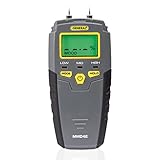
- HUMIDITY SENSOR: Our handy meter tool can quickly determine what level of remediation is needed to keep your family safe from black mold. High levels of dampness that go untreated are the leading cause of harmful fungus growth in the home.
- WATER LEAK DETECTOR: Finding the moisture content in your wood or drywall is the first step in early prevention. Continuously check and test suspicious water stains around the house so you can determine whether the area is wet or has already dried. Low, medium and high moisture tones and on-screen icons, Reading HOLD button
- MOISTURE READER: The mold test features large 0.3" high digits in a backlit LCD for quick and easy detecting. Our mildew scanner includes extra 8mm stainless steel pins, a protective cap that doubles as a calibration checker, and a “9V” battery.
- MOLD TESTER: For an accurate test read, stick the stainless steel pins into the surface of what you're measuring. The gauge has a broad range of 5 - 50% for wood and 1.5 - 33% for building materials such as concrete and drywall.
- GENERAL TOOLS: We're a recognized leader in designing and developing specialized precision tools dedicated to delivering exceptional customer service. We encourage artisans and DIYers to work smarter, measure better, and repair more productively.
Spring vs Fall: Which Season Is Best?
In many parts of the United States, spring and fall are the best seasons to stain or seal a wood fence because temperatures are moderate and sun exposure is less punishing than midsummer. But regional climate matters.
Free tools Windows power users keep installed
One-click scans. No signup required.
Spring works well when the fence can dry fully
Spring is a good window after winter moisture has dried out and before summer heat arrives. It is especially practical in colder regions where early fall can turn damp quickly. The risk is that spring can bring pollen, frequent rain, and cool nights. A fence can feel dry at 2 p.m. and still pick up dew overnight before the stain cures.
If you stain in spring, wait for a true dry stretch. We like to see at least 24 hours without rain before application and at least 24 hours after. For shaded fences, older porous boards, or oil-based products, a 48-hour dry window on both sides of the job is a better target.
Fall is often the cleaner, more predictable window
Fall is often our preferred season in hot or humid markets. The worst summer heat has passed, UV exposure is lower, and boards are less likely to be sun-baked by midafternoon. In the Southeast and Gulf states, fall or a mild dry winter window can beat spring because thunderstorms, pollen, and humidity are less disruptive.
The main fall concern is overnight temperature. Do not look only at the afternoon high. If the day reaches 68 degrees F but the fence is hit with heavy dew at midnight or the temperature falls below the product’s cure range overnight, the finish can stay tacky, cure unevenly, or develop early performance problems.
Regional Timing Guide for U.S. Homeowners
The best month depends on where the fence sits. The following ranges are practical starting points, not guarantees. Always let the forecast and moisture reading make the final call.
| Region | Best typical window | Watch-outs |
|---|---|---|
| Northeast and Midwest | Late spring through early fall | Cold nights, spring rain, short fall curing windows, shaded damp runs |
| Southeast and Gulf Coast | Fall, mild winter dry stretches, or early spring | High humidity, afternoon storms, pollen, mildew, overnight dew |
| Southwest | Spring or fall | Extreme surface heat, direct sun, fast evaporation, lap marks |
| Pacific Northwest | Reliable dry stretches in late spring, summer, or early fall | Shade, mildew, slow drying, damp soil against bottom boards |
| Mountain and high-elevation areas | Late spring through early fall | Cold overnight lows, sudden storms, intense UV, rapid temperature swings |
South- and west-facing fence runs usually weather faster because they take more UV and heat. North-facing and heavily shaded runs may not fade as quickly, but they are more likely to stay damp and develop mildew. One property can have both problems on different sides of the yard.
The Weather Window That Matters Most
A good fence staining forecast is more specific than “sunny this weekend.” Before we put stain on a fence, we check the next three to five days.
Also popular on Amazon

- ✅【Accurate & Trusted Measures, Identify Moisture Level】With accurate & trusted performance, Mecurate moisture meter can detect moisture content from wood to building material. A reliable must-have tool for home owners, woodworkers, painters & architects to detect moisture level and spot hidden damage, which would save potential expensive repairs.
- ✅【2 Mode 8 Scale,Guaranteed Accuracy】With 0.1% resolution, the moisture meter has 2 mode : wood and building material. Wood mode has 8 calibrated scales for different wood types with full list on manual. Integrated with "Self-Testing" Aid on protective cap, users can calibrate the tool before use.
- ✅【3 Colored Indicators, Fast Spot Problem】Integrated with 3 colored indicators, together with intuitive on-screen icons for low/medium/high moisture content. Fast and accurately identify the dampness.
- ✅【Multi Function Easy Use】Integrated with temperature detection in °C/°F, one button click to know ambient temperature. Hold button to freeze the reading plus low battery icon to remind battery replacement. Comes with a jumbo smart backlit display, gives extended visibility suited to any ambient brightness. Side covered with anti-slip material, provides comfort firm grip.
- ✅【Packed for Convenience】Comes with a water resistant carry pouch. A "Wood Type Quick-Search Index Table" printed on back of the device, help adjust setup quick-and-easy.A full wood list on user manual to help quick identify correct scale.
Temperature
Most exterior fence stains should be applied when the air and surface temperature are roughly 50-90 degrees F. Some products allow application down to about 40 degrees F, but the label controls. If the air is 86 degrees F and the west-facing boards are much hotter in direct sun, we treat the surface as too hot.
Quick wins for a faster PC:
Scan for outdated or missing drivers - takes under a minuteDriver Scan →Clear out junk files and repair common Windows errorsFree Scan →Fix the driver behind crashes, sound loss and screen glitchesFind Drivers →Hot boards cause stain to flash-dry. That means the solvent or water carrier evaporates before the stain can soak in evenly. The result can be lap marks, blotchy color, poor penetration, and early surface failure.
Rain and humidity
At minimum, plan for no rain for 24 hours after staining. In real field conditions, 24-48 hours before and after is better, especially if the fence was washed, the air is humid, or the fence gets limited sun. Humidity slows drying. Shaded yards, dense landscaping, and fences close to wet soil all add time.
Dew and overnight lows
Dew is easy to underestimate. A day can be 70 degrees F and still be a bad staining day if dew forms on the boards before the finish sets. This is common in spring and fall when afternoons are mild but nights cool quickly. If the grass is soaked every morning, assume the fence is getting moisture too.
Sun exposure
We schedule fence staining by the sun path. Start on shaded sides. Avoid west-facing boards during afternoon heat. Move with the shade when possible. This gives the stain more open time, reduces lap marks, and helps the finish penetrate instead of skinning over on the surface.
New Pressure-Treated, Cedar, Redwood, and Older Fences Are Not Ready at the Same Time
The age and species of the fence change the timing. New pressure-treated pine, cedar, redwood, gray weathered boards, and previously stained fences all need different readiness checks.
| Fence condition | When to treat | Readiness check | Prep priority |
|---|---|---|---|
| New pressure-treated pine | After the treatment moisture has dried enough; this can be a few weeks to as long as 6 months for wet-treated lumber | Moisture meter near or below about 13-15 percent, plus product label guidance | Clean lightly, remove mill glaze if present, confirm absorption |
| KDAT or ADAT treated lumber | Often much sooner than wet-treated lumber, sometimes immediately depending on product and storage | Moisture meter and splash test | Keep surface clean and stain before UV graying starts |
| Cedar or redwood | After installation dust and surface moisture are gone, before heavy UV graying | Dry surface, open grain, even absorption | Use a compatible exterior wood stain; avoid overapplication |
| Older gray weathered wood | After cleaning and brightening restore the surface | Wood is clean, sound, dry, and free of loose fibers | Clean, brighten, sand rough spots, repair damaged boards |
| Previously stained fence | When old finish is sound or after failing coating is stripped | No peeling, no glossy sealed spots, stain can absorb or bond as designed | Wash, scrape, strip where needed, test a small area |
Pressure-treated wood deserves special caution. Wet-treated lumber can look dry on the face while still holding moisture inside. If stain cannot penetrate, it may sit on top and fail. A basic moisture meter is inexpensive compared with the labor and materials in a fence project, and it removes most of the guesswork.
How Long After Rain or Washing Should You Wait?
After light rain, many fences need at least 24-48 hours of dry weather before staining. After pressure washing or a deep cleaning, shaded or humid sites may need 48-72 hours or longer. The correct answer is not only the clock; it is the moisture content of the wood.
Also popular on Amazon

- FIND HIDDEN WALL MOISTURE EARLY — Check suspicious drywall and building surfaces after a leak, water stain, or other moisture concern. Detect abnormal moisture before a small issue develops into more extensive damage and costly repairs
- CHECK BEFORE YOU REPAIR — Don't rely on a wall looking or feeling dry. Use the moisture meter to check questionable areas before painting, repairing, or covering the surface, helping you make decisions based on actual moisture readings.
- CHECK FIREWOOD BEFORE YOU BURN — Test firewood before placing it in your fireplace or wood stove. Knowing the moisture level of your firewood helps you choose wood that is ready for burning and avoid relying on appearance alone.
- PIN-TYPE TESTING FOR DIRECT MEASUREMENTS — The contact pins penetrate the material to measure moisture inside wood and building materials. This makes it useful for checking areas where surface conditions may not tell the whole story.
- ONE TOOL FOR TWO IMPORTANT HOME CHECKS — Keep it ready for two practical jobs: checking walls for hidden moisture and checking firewood before burning. A simple way to make informed decisions before a moisture problem becomes expensive or wood goes into the fireplace.
On our jobs, we do not rely on surface appearance alone. We check several areas: sunny boards, shaded boards, lower rails, posts near grade, and boards behind shrubs. The lower third of a fence often dries last because soil, mulch, and vegetation hold moisture close to the wood.
Do these 3 things before closing this tab:
1Clear out junk files and repair common Windows errors2Scan for outdated or missing drivers - takes under a minute3Repair Windows errors before they cause bigger problemsBefore staining, pause irrigation 24-48 hours before the job and keep it off for 24-48 hours after. Redirect sprinkler heads that hit the fence. Trim vines, shrubs, and tall grass away from the boards so air can move. Pull mulch or soil back from the bottom rail and pickets where moisture is being trapped.
Prep Work Determines Whether the Season Pays Off
Good timing cannot make up for poor prep. Stain is not a cleaner, a mildew treatment, or a wood restorer. If the fence is dirty, gray, slick, or coated with failing finish, the new product is being asked to bond to the wrong surface.
For newer fences
Remove construction dust, mud splash, and surface contaminants. Check whether water beads or absorbs. If water beads on pressure-treated lumber, the fence may still be too wet or may have surface conditions that need more prep. If water absorbs within a reasonable time and the moisture reading is within range, the fence is a better candidate for stain.
For gray or weathered fences
Use a wood cleaner and brightener before staining. Gray wood fibers and mildew can block even absorption. A brightener helps bring the surface back after cleaning, especially on cedar, redwood, and older pressure-treated boards. Replace soft, split, or badly cupped boards before finishing.
Recommended Free Tools
For fences with old stain
Sound, compatible old stain may only need washing and a maintenance coat. Peeling, glossy, or uneven coating needs scraping, sanding, stripping, or a different coating strategy. Solid stains hide more grain and can last longer cosmetically, but they behave more like coatings. If applied too heavily or over damp, dirty wood, they can peel. Transparent and semi-transparent stains show more grain and usually need more frequent renewal, but they tend to fail more gracefully when maintained on schedule.
Spray, Roll, Brush, or Spray and Back-Brush?
For fences, spraying is fast, but spray-only application is not always the best finish. Our crews often use spray-and-back-brush on wood fencing because it combines production speed with better penetration and more even coverage.
Back-brushing works stain into board texture, checks, knots, and edges. It also evens out heavy spots before they dry. This matters on rough-sawn cedar, older weathered pine, shadowbox fences, lattice, and any fence with many edges or board overlaps.
Rolling can work on flat fence panels, but rollers still need a brush for edges, gaps, rails, and runs. Brushing alone gives excellent control but is slow on a long privacy fence. For a small gate or short decorative run, brushing may be the cleanest option. For 150-250 linear feet of privacy fence, spray-and-back-brush is usually more efficient.
Also popular on Amazon

- Wide measuring range:0~99.9%;Accuracy:± 0.5%,resolution:0.1%
- Large screen digital display, easy to read,Probe protection cover design, cover when not in use to avoid injury to others.The probe is built into the instrument and is not easily damaged
- 4 modes(A B C D):This instrument is a precision testing instrument, suitable for measuring the moisture content of all kinds of wood set four kinds of measurement mode, including more than 100 kinds of common wood, the user can choose the corresponding group, improve the measurement accuracy.Wood not in the above table can be selected according to the hardness of wood, A(harder)> B (hard) > C (soft)> D(softer), generally default A file, the number of files does not affect the measurement data.
- With read value locking function, can lock the measured value at any time.Automatic shutdown and low voltage automatic warning function
- Easy to use,Insert the instrument probe firmly into the object being measured until it reads.
How Much It Costs to Treat a Wood Fence in 2026
Fence staining prices vary widely because fence size is often quoted poorly. Linear-foot pricing is only useful if height and number of sides are clear. A 6-foot privacy fence stained on both sides has twice the surface area of a one-sided job.
Use this estimating formula:
Fence length x fence height x number of sides = square feet to treat
Then add gates, lattice, waste, overspray loss, and extra product for rough or thirsty wood.
| Cost item | 2026 typical range | What it means |
|---|---|---|
| Professional staining national project range | About $240-$4,000, with a national average near $1,900 | Small one-sided jobs sit low; large privacy fences with prep land much higher |
| Professional per linear foot | About $2-$14 per linear foot | Can be misleading unless height and one side vs both sides are stated |
| Professional per square foot | About $0.50-$2.50 per square foot, with another national estimate around $1.33-$2.71 per square foot before local adjustments | Better for comparing real scope |
| Example: 209 linear feet, 6 feet tall, both sides | About 2,508 square feet | At $1.33-$2.71 per square foot, roughly $3,336-$6,797 before condition and market adjustments |
| DIY stain volume for 200 linear feet, 6 feet tall, both sides | Roughly 8-16 gallons | Based on about 150-300 square feet per gallon, depending on porosity, opacity, and method |
The biggest cost drivers are fence height, total square footage, one side versus both sides, board style, cleaning or stripping needs, mildew removal, old coating failure, number of gates, terrain, access, local labor rates, stain grade, and whether the work includes spray-and-back-brush.
What’s actually slowing this PC down?
Pick the symptom - the matching free tool is one click away.
DIY costs usually start with stain, cleaner, brightener, brushes, masking, drop cloths, and sprayer rental or purchase. The hidden cost is time. A 200-linear-foot privacy fence can represent roughly 2,400 square feet of surface if both sides are treated. Cleaning, drying, masking, staining, back-brushing, and touch-up can consume a full weekend or more for a homeowner.
Independent reader supportYour contribution helps us test, update, and keep practical guides available for everyone.When to DIY and When to Hire a Pro
DIY can make sense when the fence is small, accessible, relatively new, and only needs cleaning plus a maintenance coat. A straight 60-foot run with sound boards and no coating failure is a reasonable homeowner project if the weather cooperates.
Hire a professional when the fence is large, weathered, coated with failing old stain, close to neighboring property, or difficult to access. A pro is also worth considering if the fence has mildew, sprinkler staining, grade issues, lattice, shadowbox construction, or expensive cedar or redwood boards where blotchy application would be costly to correct.
The practical difference is sequencing. A good crew can clean, protect adjacent surfaces, read moisture, stage equipment, spray, back-brush, and keep a wet edge across long runs. They also know when to stop. If the west side is too hot at 3 p.m., forcing it usually creates more work later.
Safety, Neighbor, HOA, and Permit Notes
Staining or sealing an existing fence usually does not require a building permit by itself, but fence repair, replacement, height changes, wall work, or location changes may trigger local rules. Cities commonly regulate fence height, front-yard visibility, corner sight lines, retaining walls, historic districts, and materials. HOA rules may also control color, opacity, and whether both sides must be finished.
Also popular on Amazon

- 2-in-1 Moisture Meter: The 2-in-1 Dr.meter moisture meter offers ideal dual functions of pin-type and pinless scanning in one. The pinless scanning mode with non-invasive measurement is ideal for high-end wood and building materials. The pin-type mode with faster response and higher accuracy is great for all kinds of wood and building materials.
- Wide Measuring Range: Different measurement modes correspond to different measurement ranges. In the pin-type mode: wood: 5%-50%, building materials: 1.5%-33%, error range: +/-2%; In the pinless scanning mode: wood: 0%-53%, building materials: 0-35%, error range: +/-4%.
- Over-range Alert: There are four pinless scanning modes of softwood, hardwood, masonry and drywall. The general algorithm has been written into the user manual to reduce the redundant settings before use to facilitate customers. When the wood moisture exceeds 17% or the wall humidity exceeds 70%, the wood moisture tester will beep to alert you.
- Current Ambient Temperature Measurement: The Dr.meter intelligent wood moisture meter can not only measure the humidity of wood and building materials, but also it can measure 0-40 degree current environmental temperature with only +/- 2 degree error.
- User-friendly Design: Designed with green backlight display, reading hold on function and measurement signal bar display for more intuitive measurement tips, the digital moisture detector is more user-friendly. A bonus nylon storage bag is provided to store the product conveniently.
Before work starts, confirm property-line access. If the outside face of the fence is on or near a lot line, you may need neighbor permission to enter the adjacent yard. Protect plants, patios, siding, vehicles, pools, and outdoor furniture from overspray. Turn off sprinklers. Keep stain, cleaners, and rinse water away from storm drains, ponds, and edible gardens unless the product instructions specifically allow the exposure.
Use gloves, eye protection, long sleeves, and appropriate ventilation. Oil-based products and stain-soaked rags require careful handling because of fire risk. Follow the disposal instructions on the container. Do not ball up wet oily rags and toss them in a trash can.
A Contractor’s Checklist for Picking the Exact Day
Use this checklist before committing to the job date:
- Forecast shows no rain for at least 24 hours after staining; 48 hours is better for humid, shaded, or oil-based jobs.
- Wood moisture is below the product limit, commonly around 13-15 percent for many fence staining projects.
- Air and surface temperature are within the label range, commonly about 50-90 degrees F.
- Overnight lows will stay within the product’s cure requirements.
- Morning dew is light or the work can start after the boards fully dry.
- Sprinklers are off 24-48 hours before and after the job.
- Vegetation is trimmed back from the fence.
- Mulch and soil are not holding moisture against bottom boards.
- South- and west-facing sides can be stained outside peak sun.
- Cleaner, brightener, stain, brushes, sprayer, masking, and drop cloths are ready before the weather window starts.
If you can only remember one rule, remember this one: the best time to treat a wood fence is the first mild, dry window after the fence is properly cleaned and the wood is actually dry. Season helps you find the window. Moisture, temperature, sun, and cure time decide whether the job should happen.
Frequently Asked Questions
What month is best to stain or seal a wood fence?
In many U.S. climates, the best months are in spring or fall, but the exact month depends on local weather. Look for temperatures around 50-90 degrees F, dry wood, low-to-moderate humidity, and no rain for at least 24 hours after application.
What temperature is too hot or too cold to stain a fence?
Many exterior stains work best from about 50-90 degrees F, with around 70 degrees F being close to ideal. Some products allow lower temperatures, but the stain label controls. Avoid sun-baked boards even if the air temperature is technically acceptable.
How long after rain should I wait before staining a fence?
Wait at least 24-48 hours after rain, and longer for shaded, humid, or recently washed fences. A moisture meter is the best check; many pros look for readings below roughly 13-15 percent before staining.
How soon can you stain a new pressure-treated wood fence?
Wet pressure-treated lumber may need a few weeks to as long as 6 months before staining. KDAT or ADAT treated lumber can be ready much sooner. Use a moisture meter and follow the stain manufacturer’s moisture limit.
How much does it cost to stain a wood fence in 2026?
Professional fence staining commonly runs about $0.50-$2.50 per square foot, with another national estimate around $1.33-$2.71 per square foot before local adjustments. Full projects often range from about $240-$4,000, with a national average near $1,900.
Should a fence be sprayed, rolled, brushed, or sprayed and back-brushed?
For many wood fences, spray-and-back-brush is the best professional method. Spraying is fast, while back-brushing improves penetration, evens out lap marks, and works stain into rough grain, knots, edges, and checks.
Quick Recap
Product prices and availability are accurate as of the date/time indicated and are subject to change. Any price and availability information displayed on Amazon at the time of purchase will apply.

