Recommended Free Tools
Some links on this page are affiliate links: if you buy through them we may earn a commission, at no extra cost to you.
For most U.S. homeowners, the best time of year to install a fence is early fall, roughly September through early November. The weather is usually workable, the soil is often still diggable, landscaping is less vulnerable than it is in spring, and fence contractors are usually less backed up than they are during the spring and early-summer rush.
That said, there is no single best month for every property. A fence in Minnesota has different timing risks than a fence in Texas, Florida, Colorado, or coastal Oregon. On our job sites, we look at five practical factors before we recommend a schedule: soil condition, frost depth, rain pattern, permit or HOA lead time, and the homeowner’s real deadline.
As an Amazon Associate I earn from qualifying purchases.
The Tool Desk
Outbyte PC Repair FREERepair Windows errors before they cause bigger problemsFix Now →Outbyte Driver Updater FREEFix the driver behind crashes, sound loss and screen glitchesFind Drivers →If you want the fence ready for a pool opening, new dog, garden season, or summer privacy, you need to start planning well before the season you have in mind. A good rule is to begin layout, property-line checks, HOA review, permit research, and contractor outreach 6 to 10 weeks before your desired installation window. For pools, historic districts, large properties, custom gates, or ornamental metal, start earlier.
The Short Answer: Early Fall Is Usually Best
Early fall is the best all-around season because it balances weather, access, scheduling, and site protection. In many markets, the ground is still warm enough to dig clean post holes, concrete can be placed under reasonable conditions, and crews can work efficiently without the extreme heat of July or the mud of early spring.
Popular on Amazon

- This level has a magnetic strip and a rubber strap for convenient hands-free installation of posts, railings, pipes, and more
- Allows you to plumb and level posts, poles, pipes, railings and more
- Molded frame is durable in all conditions
- Durable molded frame
Fall also comes after the peak demand period. Many homeowners call fence contractors in April, May, and June because they suddenly want privacy, pet containment, or a finished backyard before summer. By September, that pressure often eases. Shorter lead times do not always mean lower prices, but they can mean better scheduling choices, fewer weather delays, and more time to handle details correctly.
Early fall has another advantage: landscaping is usually less sensitive. Crews still need access for augers, concrete, panels, posts, and tear-out, but turf and planting beds are not in the same fragile spring growth cycle. If you plan to install sod, irrigation, a patio, or new planting beds, do the fence first whenever possible. It is easier to repair tire tracks and disturbed soil before the final landscape work is complete.
Best Fence Installation Season by Climate
The right season changes by region. A calendar date matters less than whether the ground is workable, the layout is clear, and the materials can be installed under the manufacturer’s conditions.
Cold Northern Climates
In cold northern markets, the best installation window is usually late spring through early fall. Once the ground has thawed and drained, crews can dig to the correct post depth, place concrete, and keep the fence line accurate. Early fall is still excellent, but waiting too long can push the project into frozen soil, snow cover, and shorter workdays.
For many 6-foot privacy fences, post holes are commonly around 30 to 36 inches deep or more, depending on frost depth, soil, wind exposure, fence height, and gate loads. In colder areas, frost-line requirements may be deeper than a standard rule of thumb. The post depth should be the deeper of the structural requirement and local frost requirement, not just whatever is easiest to dig.
Hot Southern and Southwestern Climates
In hot southern markets, fall, winter, and early spring can be better than midsummer. Extreme heat slows crews, dries out soil, and can make hard-baked clay or caliche difficult to drill. Summer thunderstorms can also interrupt installation, especially when old fence removal leaves a yard temporarily open.
Do these 3 things before closing this tab:
1Scan for outdated or missing drivers - takes under a minute2Repair Windows errors before they cause bigger problems3Fix the driver behind crashes, sound loss and screen glitchesWinter is not automatically a bad season in mild climates. If the ground is not frozen and rain is manageable, winter can be one of the smartest times to build. Contractor schedules may be more flexible, and your fence is ready before spring landscaping and outdoor living season begin.
Wet or Coastal Regions
In wet regions, avoid the muddiest part of the year when possible. Saturated soil does not hold shape well, post holes can slump, and equipment access can damage lawns. A fence can still be installed in damp weather, but there is a difference between normal moisture and a site that is too soft to support clean layout, accurate post setting, and safe access.
If your property has drainage issues, low areas, or a slope, timing the work after a dry stretch can prevent avoidable problems. On sloped lots, wet soil also makes it harder to maintain consistent panel stepping, racking, and gate alignment.
Season-by-Season Comparison
Every season can work. The question is what you are trading off. The table below shows the practical differences we see most often in residential fence projects.
| Season | Best For | Main Advantages | Common Problems |
|---|---|---|---|
| Late winter | Mild climates, early planners, off-peak scheduling | Shorter contractor lead times, fence ready before spring, less landscape conflict | Frozen ground in cold regions, snow cover, concrete temperature concerns |
| Spring | Privacy before summer, pets, gardens, pool season | Backyard is ready for warm weather, good planting coordination if scheduled early | High demand, rain delays, saturated soil, muddy access |
| Summer | Dry-weather work, urgent replacements, long daylight | Long workdays, generally dry conditions in many regions | Peak backlog, heat, hard soil, storms, vacation scheduling |
| Early fall | Best all-around choice in many U.S. markets | Workable temperatures, diggable soil, reduced demand, less landscape damage | Cold regions can run into frost if delayed too late |
| Late fall | Simple projects before winter, mild regions | Off-peak scheduling, dormant landscaping | Shorter days, wet weather, frost risk, holiday scheduling |
Why Spring Is Popular but Not Always Best
Spring is when homeowners tend to notice the fence. Dogs are spending more time outside, gardens are being planned, pools are being opened, and neighbors are back in their yards. If the goal is to have privacy and containment before Memorial Day, spring installation makes sense.
The problem is that everyone else is thinking the same thing. Spring is often the busiest estimating and scheduling period. A contractor who can install within 2 weeks in February may be 6 to 10 weeks out by April in a busy market. If your fence needs HOA review, a permit, custom gates, demolition, or survey work, that delay can push a spring idea into a summer build.
Also popular on Amazon

- Hands-Free Strip Magnets: Strip magnets lock the level onto steel posts and pull flat to the surface.
- Plumb + Level, Two Axes at Once: Wraps a post, pipe, or pole. Reads plumb on two perpendicular axes simultaneously so the buyer sets one tool instead of two.
- Elastic Strap for Non-Steel Surfaces: Elastic strap holds the level on wood, vinyl, or composite posts where the magnets have nothing to pull against.
- Two-Axis Plumb Read: Both plumb vials read at the same time. Set the face of the post and the side of the post in one wrap; rotate the level to check the third axis.
Spring soil can also be difficult. Saturated clay, thawing ground, and repeated rain can slow drilling and make it harder to keep post holes clean. Mud is not just a nuisance. It can affect access, cleanup, post placement, and the condition of the yard after the crew leaves.
If you want a spring fence, start in January or February. Get the layout decided, check property lines, confirm HOA requirements, choose the material, and get on the schedule before the first warm week triggers the seasonal rush.
Summer Installation: Workable, but Expect Pressure
Summer is a common installation season because the days are long and many areas have more predictable dry weather. For chain link, vinyl, aluminum, and wood fences, summer can be perfectly workable if the contractor has availability and the site is accessible.
The tradeoff is demand. Summer is usually peak backlog season. It is also when heat becomes a real job-site factor. In hot regions, crews may start earlier, take heat breaks, or split work across multiple days. Drought can bake clay soil hard enough that drilling post holes takes longer and puts more wear on equipment. In storm-prone areas, afternoon thunderstorms can interrupt concrete placement, panel setting, and gate adjustment.
Summer can still be the right choice for urgent needs: a failed fence, a new pool, a pet containment issue, or a security concern. Just be realistic about lead time. If you call in June hoping for a custom 6-foot privacy fence by the Fourth of July, the schedule may already be tight.
Winter Fence Installation Is Possible in the Right Conditions
Winter gets dismissed too quickly. In mild climates, winter can be one of the better seasons to install a fence. The yard is often less active, landscaping is dormant, and contractors may have more schedule flexibility.
Free tools Windows power users keep installed
One-click scans. No signup required.
In colder regions, winter is more complicated. Frozen soil can slow digging or require different equipment. Snow can hide grade changes, old fence lines, irrigation heads, and property markers. Frost depth matters because posts must be set deep enough to resist heaving. Concrete placement also has temperature limits and curing considerations, so the crew needs to use the right product and protect the work when conditions require it.
We do not treat winter as a yes-or-no decision. We look at the actual site. If the ground is diggable, access is safe, utilities are marked, and the post-setting method matches the conditions, a winter fence can be a smart move. If frost, snow, or saturated soil will compromise the work, waiting is cheaper than repairing a bad installation later.
Cost Timing: Can the Season Change What You Pay?
Fence pricing is usually built around linear footage, material, height, gates, post spacing, demolition, soil conditions, slope, permits, and local labor. The season affects price indirectly through availability, urgency, access, and weather delays.
In 2026, national installed fence cost references vary widely. A broad all-material range is about $6 to $50 per linear foot, with one common national average around $23 per linear foot. Another national baseline for generic fence installation starts around $33.48 to $53.87 per linear foot, depending on ZIP code, size, and options. Project-level averages commonly land between about $1,435 and $4,985, with many homeowners spending roughly $2,000 to $5,000. Large, custom, difficult, or premium projects can exceed $10,000.
Here is a practical 2026 cost snapshot for common residential fence types:
| Fence Type | Typical Installed Cost | Notes |
|---|---|---|
| Chain link | $10-$40 per linear foot | Basic galvanized is lowest; vinyl coating, taller heights, heavier gauge, and privacy slats raise cost. |
| Wood | About $10-$45 or $20-$50 per linear foot | Cost depends on species, height, picket style, post size, staining, slope, and demolition. |
| Vinyl | $30-$60 per linear foot on average | Vinyl privacy often runs $40-$85 per linear foot; many real projects fall around $45-$74. |
| Aluminum or ornamental metal | Often higher than basic wood or chain link | Design, grade, rackability, gates, and pool-code requirements can change pricing sharply. |
Waiting can have real cost consequences. If you wait until summer, you may not pay a formal seasonal surcharge, but you may face longer lead times, fewer material choices, rush decisions, and less flexibility on crew dates. If you wait until winter in a freeze-prone climate, deeper frost detailing, difficult digging, or delayed concrete work can add labor. If you need a pool barrier before an inspection, missed timing can delay the pool opening or require temporary safety measures.
Also popular on Amazon

- Strip magnets and rubber strap for hands-free work
- Constructed of high impact composite material
- Reflective backing increases vial visibility
- This tool is used to level and plumb posts, flagpoles, water pipes, railings and decks
- Recommended for heavy duty use
Permits, HOA Approval, and 811 Should Drive the Schedule
The best installation season does not help if the fence layout is not legally ready. Before digging post holes, call 811 a few business days in advance or confirm your contractor is handling the locate request. Fence posts and mailbox posts are exactly the kind of digging that can hit shallow utilities. Utility marking is not optional job-site paperwork; it is basic safety.
Fence permits vary by city and county. Many places allow shorter backyard fences with minimal review but regulate front-yard height, corner visibility, retaining walls, pool barriers, historic districts, easements, and fences over certain heights. Some cities treat a 6-foot backyard privacy fence differently from an 8-foot fence, a masonry wall, or a fence near a driveway sight triangle.
PC Slower Than It Used to Be?
A free scan shows the junk files, broken settings and background clutter dragging Windows down - then fixes them in one click.Free scan · Windows 10 & 11Outdated Drivers Are Slowing You Down
One free scan finds every outdated or missing driver and matches the right update for your exact hardware.Free scan · exact hardware matchHOA review can matter as much as the permit. HOAs may regulate material, color, height, picket orientation, finished side, gate style, and placement. We have seen projects lose weeks because the homeowner selected a fence before checking the architectural guidelines.
Plan the administrative work 6 to 10 weeks ahead. For a straightforward backyard fence, that may feel conservative. For a pool fence, corner lot, custom metal fence, historic district, or large property, it is often the difference between building in your preferred season and slipping into the next one.
Pool Fences Need Their Own Timeline
A pool fence is not just a privacy fence around a pool area. Pool barriers must satisfy the code adopted by your local jurisdiction. Requirements commonly cover barrier height, maximum gaps, gate swing direction, self-closing and self-latching hardware, latch placement, climb resistance, and clearances around the bottom of the fence.
Because pool rules are inspection-driven, timing matters. If the barrier is required before pool use or before final approval, a late fence can hold up the entire project. A 2-week fence delay may become a 4-week pool delay if inspections are booked out or corrections are needed.
Quick wins for a faster PC:
Fix the driver behind crashes, sound loss and screen glitchesFind Drivers →Clear out junk files and repair common Windows errorsFree Scan →For pool projects, choose the fence type before hardscape and landscaping are finalized. Gate locations should match real walking paths, not just a drawing. Posts, footings, deck edges, drainage, and equipment access all need to work together. If you are planning a new pool, start the fence conversation as part of the pool layout, not after the shell, deck, and landscaping are complete.
Material Timing: Wood, Vinyl, Chain Link, and Metal
Wood Fences
Wood is flexible, repairable, and familiar, but moisture matters. Pressure-treated lumber may need time before staining, depending on moisture content and the finish manufacturer’s instructions. Do not rely on a fixed number of days for every board in every climate. Test moisture and follow the product guidance.
For a wood privacy fence, fall installation works well because the structure can be built before winter, then finished when the wood and weather are ready. In dry climates, finish timing may be faster. In humid or wet regions, it may take longer. After installation, plan a maintenance calendar: inspect annually, clean as needed, touch up exposed cuts or damaged areas, and restain or reseal on the schedule recommended for the product and exposure.
Vinyl Fences
Vinyl avoids staining and painting, which makes timing simpler after installation. It is still affected by temperature during handling and layout. Posts must be set accurately because vinyl panels and rails have less forgiveness than a site-built wood fence. Fall and mild winter conditions are often good for vinyl because crews can work without extreme heat and the yard is easier to access than during muddy spring conditions.
Chain Link Fences
Chain link is one of the most schedule-friendly fence types. It is common for pet containment, utility areas, side yards, and budget-conscious perimeter work. Cost often runs $10 to $40 per linear foot installed, depending on height, gauge, coating, terminal posts, gates, and privacy features. Because chain link has less wind load than a solid privacy fence, it can also be a practical choice in exposed areas.
Aluminum and Ornamental Metal
Aluminum and ornamental metal fences need early planning because layout, grade transitions, pool-code details, gate hardware, and product lead times can drive the schedule. Some products rack to follow slope; others require stepped panels. If the fence must meet pool barrier requirements, hardware and spacing details need to be confirmed before ordering.
Also popular on Amazon
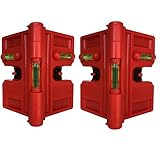
- For simultaneously determining the horizontal and vertical plane for posts, pipes, flag poles, railings.
- Foldable Design, Save time by quickly aligning ceiling joists for rafters.
- Includes three spirit level vials providing incomparable accuracy.
- With 4 magnetic strip and a elastic band for convenient hands-free install.
- Made of PVC for impact resistance. Package Includes: 2 Pack Foldable Post Level
Post Setting Is Where Fence Timing Becomes Structural
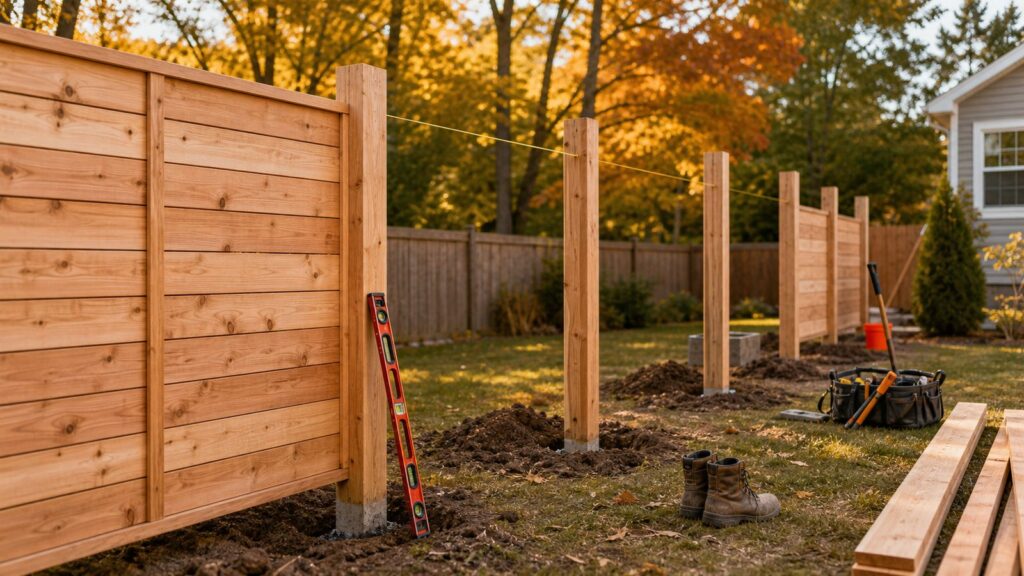
A fence is only as good as its posts. Seasonal timing affects digging, depth, concrete behavior, and alignment. On our job sites, we string the fence line, brace posts, check plumb more than once, and re-check alignment before the concrete hardens. A straight fence is not an accident; it comes from layout discipline.
For a typical 6-foot privacy fence, many projects require post holes around 30 to 36 inches deep or deeper. Frost depth, soil type, wind exposure, gate width, and corner loads can increase that requirement. Gate posts, terminal posts, and corner posts usually deserve extra attention because they take more force than line posts.
What’s actually slowing this PC down?
Pick the symptom - the matching free tool is one click away.
Wind also matters. A solid 6-foot privacy panel catches far more wind than chain link or open ornamental metal. In windy or storm-prone areas, we look at stronger posts, deeper footings, closer post spacing, better fasteners, and panel designs that reduce wind load where appropriate. Most leaning fences do not fail because the pickets were weak. They fail because the posts, footings, or gate supports were undersized, shallow, rotten, or reused when they should have been replaced.
Replacement Projects: Do Not Let Old Posts Decide the New Fence
Replacement fences move faster when demolition is simple, but old posts should not be reused automatically. Reusing posts only makes sense after checking alignment, depth, rot, concrete condition, spacing, and structural capacity. If the old fence is leaning, the posts are usually part of the problem.
Old fence removal, haul-off, root conflicts, buried concrete, and rock can all affect schedule and price. This is another reason early fall works well: crews can see the site clearly, the ground is usually workable, and there is still time to correct post or layout problems before winter.
If your fence failed in a storm, do not rebuild the same weak detail. Look at why it failed. Were the posts too shallow? Were gate posts undersized? Did solid panels take too much wind? Was the fence installed in saturated soil? The replacement should solve the failure, not repeat it with new boards.
When to DIY and When to Hire a Pro
A small, straight fence section can be a reasonable DIY project for a careful homeowner. Examples include a short chain-link run, a simple garden fence, or a small wood screen where property lines are clear, utilities are marked, and no permit complications exist.
DIY becomes harder when the fence is long, tall, sloped, near utilities, near a pool, subject to HOA rules, or built with large gates. A 6-foot privacy fence with multiple gates is not just a weekend carpentry project. You are managing layout, post depth, concrete, grade changes, wind load, hardware, property lines, and code limits. Mistakes show up as sagging gates, wavy fence lines, heaved posts, failed inspections, or disputes with neighbors.
Hire a professional when the fence affects safety, code compliance, security, pool access, pets, or property boundaries. Also hire a pro when the site has rock, steep slope, drainage problems, old concrete, retaining walls, or large gate openings. The labor cost is usually cheaper than rebuilding a fence that was laid out wrong or set too shallow.
A Practical Planning Timeline
For a smooth fence project, work backward from the date you want the fence finished. If you want privacy by June 1, you should not start calling contractors in mid-May.
PC Slower Than It Used to Be?
A free scan shows the junk files, broken settings and background clutter dragging Windows down - then fixes them in one click.Free scan · Windows 10 & 11Crashes, No Sound, or Screen Glitches?
Random freezes, missing sound and display glitches usually trace back to one bad driver. Find and replace yours safely.Free scan · under a minute8 to 10 weeks before installation: Decide the fence purpose, rough location, material, height, and gate needs. Check your survey or property documents. Review HOA rules if applicable.
6 to 8 weeks before installation: Talk with contractors, confirm permit requirements, identify easements, and choose a layout. For pools, custom gates, or ornamental metal, finalize code and product details.
Also popular on Amazon

- Set of 4 Magnetic Post Levels: each package includes 4 Magnetic post levels for pipes; The post level utilized for simultaneous determination of the horizontal and vertical planes, fast alignment to save time; This set equips you with extra levels for multiple projects or replacements when necessary
- Magnetic Edge for Secure Positioning: the post leveler tool comes with 4 powerful magnets which allows for secure positioning on metal surfaces; This helps in preventing the level from falling from high places while working, enhancing safety and precision
- Precision Measurement with 3 Vials: the post and pipe level features 3 vials, providing high precision in measurements; It is an ideal tool for leveling posts, poles, pipes, railings, flagpoles, and decks, offering comprehensive utilities for your versatile needs
- Extensive Uses: our magnetic post level is designed for decorative, home, and related alignment work, making it suitable for carpentry and personal woodworking; Plus, it allows you to erect straight posts for decks with ease
- Adjustable Elastic Band Design: the pipe level has 4 magnetic strips and an rubber band with an adjustable elastic design that fits most poles of different thicknesses; This makes it convenient for simple installation of posts, railings, pipes, and more
2 to 4 weeks before installation: Approve the estimate, confirm materials, schedule demolition if needed, and coordinate with landscaping, irrigation, pets, and neighbors.
A few business days before digging: Make sure 811 utility locating is requested and markings are visible. Clear the fence line, unlock gates, move stored items, and identify irrigation heads or low-voltage lighting.
Installation week: Keep access open. Confirm gate swings, latch locations, and finished-side orientation before posts are set. Once posts are in concrete, changes become slower and more expensive.
So, What Month Should You Choose?
If you are looking for the best general-purpose answer, choose early fall. In many U.S. markets, September through early November gives you the best mix of contractor availability, workable soil, reasonable temperatures, and reduced landscape disruption.
If you live in a cold northern climate, aim for late spring through early fall, and do not push too close to freeze-up. If you live in a hot southern climate, look seriously at fall, winter, and early spring. If you live in a wet region, choose the driest reliable window rather than the warmest month. If your fence is tied to a pool, pet, inspection, or HOA approval, the best season is the one you plan for 6 to 10 weeks in advance.
The best time to install a fence is not just a date on the calendar. It is when the ground can be dug correctly, the posts can be set to the right depth, the layout is legally cleared, the material is available, and the crew can finish before your real deadline.
What’s actually slowing this PC down?
Pick the symptom - the matching free tool is one click away.
Frequently Asked Questions
What is the best month to install a fence?
In many U.S. markets, September or October is the best choice because temperatures are workable, soil is usually still diggable, and contractors are often less backed up than in spring and early summer.
Can a fence be installed in winter?
Yes, if the ground is not frozen and the contractor can set posts correctly. In cold climates, frozen soil, frost depth, snow cover, and concrete curing conditions can add labor or delay the project.
How far ahead should I schedule fence installation?
Start planning 6 to 10 weeks before your preferred installation window. Allow more time for HOA approval, permits, pool barriers, custom gates, historic districts, or large properties.
How much does fence installation cost in 2026?
Many residential fences fall around $6 to $50 per linear foot installed, with common total project spending around $2,000 to $5,000. Material, height, gates, slope, demolition, permits, soil, and local labor rates can move the price significantly.
Free tools Windows power users keep installed
One-click scans. No signup required.
Should I install a fence before or after landscaping?
Install the fence before major landscaping, sod, irrigation changes, or pool opening whenever possible. Fence crews need access for materials, post-hole equipment, demolition, and concrete, which can damage finished planting or new turf.
Do I need to call 811 before installing a fence?
Yes. Before digging post holes, call 811 a few business days in advance or confirm your contractor is handling utility locating. Fence posts can hit buried utility lines even when the holes seem shallow.
Quick Recap
Product prices and availability are accurate as of the date/time indicated and are subject to change. Any price and availability information displayed on Amazon at the time of purchase will apply.

