Free tools Windows power users keep installed
One-click scans. No signup required.
Some links on this page are affiliate links: if you buy through them we may earn a commission, at no extra cost to you.
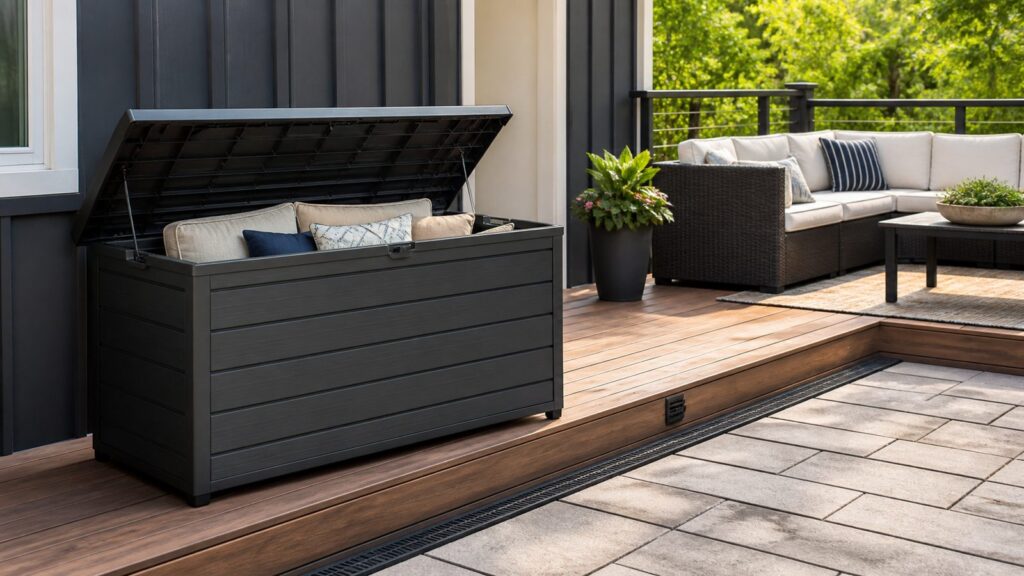
A good resin deck box solves a simple problem: outdoor gear needs to be close at hand without turning the deck, patio, pool area, or side yard into clutter. The right box keeps cushions, garden tools, toys, grill accessories, and pool supplies organized while standing up to rain, sun, and routine abuse. The wrong one cracks at the hinges, traps mildew, blocks a walkway, or becomes a heavy wet mess sitting on wood decking.
For most homeowners, the best resin deck box is not the largest one on sale. It is the smallest box that fits the longest item you actually need to store, with 2 to 3 inches of spare interior length and height, a reinforced lid, a positive latch, UV-stabilized resin, and a placement plan that keeps water moving away from the box and the structure beneath it.
In 2026, national retailers show resin and plastic deck boxes ranging from about $30 to $2,000 overall. Most practical residential resin deck boxes fall between $50 and $400, depending on capacity, wall thickness, hinge hardware, UV protection, lockability, finish, and whether the lid is rated for seating. On our job sites, we treat these boxes as small outdoor storage components, not just patio accessories. Placement, drainage, weight, and safety matter as much as gallon capacity.
As an Amazon Associate I earn from qualifying purchases.
Best Resin Deck Box Categories by Use Case
There is no single best deck box for every yard. A balcony cushion box, a pool storage chest, and a bench-style deck box solve different problems. Start with the use case, then compare capacity, interior dimensions, lid strength, and hardware.
Best Small Patio Box: 22 to 45 Gallons
A small resin deck box works well for hand tools, pruners, grill brushes, dog toys, hose nozzles, citronella candles, small outdoor pillows, and balcony storage. Typical 2026 pricing runs about $50 to $90 for 22- to 45-gallon resin or plastic units. Top-rated 22-gallon Suncast-style boxes have recently listed around $51.99 to $59.99, while 30-gallon resin examples at major retailers have been around $73.55.
Popular on Amazon

- Resistant Resin Material: Deck box is made of waterproof resin, with a complementing rattan pattern design, effectively preventing fading and rusting, while also maintaining a fresh appearance even with all-weather use
- Large Storage Space: Deck storage box's exceptionally spacious 78 gallon storage space can hold anything you need, making it the perfect choice for furniture cushions
- Clever Function Design: Patio storage box features handles on both sides for easy mobility. The hydraulic hinge design prevents pinching and ensures safety. It also comes with a lockable lid for added security
- Decorate Your Home: Not only serves as a deck box and storage bench but also serves as an excellent decoration for your home, adding color and vitality to your patio, garden, yard, porch, or even indoors
- Dimension: Internal capacity of 78 gallons, the lid is smooth around the raised part, to ensure no injury
For apartments, townhomes, and compact patios, small boxes are usually easier to live with than oversized chests. They can tuck beside a chair, fit under some windows, and move without two people. The tradeoff is length. A 22-gallon box may handle hand tools, but it will not fit long cushions, pool poles, or folded umbrellas unless the interior dimensions specifically allow it.
Do these 3 things before closing this tab:
1Repair Windows errors before they cause bigger problems2Fix the driver behind crashes, sound loss and screen glitches3Clear out junk files and repair common Windows errorsBest Cushion Box: 70 to 100 Gallons
Most homeowners storing chair cushions should look in the 70- to 100-gallon range first. These boxes commonly fit several seat cushions, small pillows, garden supplies, and grilling accessories without taking over the deck. In 2026, medium resin deck boxes generally cost about $100 to $180. Examples include a 73-gallon resin/plastic deck box listed around $136.51 and a 100-gallon resin box around $159.99.
For cushions, interior dimensions matter more than gallons. Measure the longest cushion from seam to seam, then add 2 to 3 inches so you are not forcing fabric into the box. If your largest cushion is 44 inches long and 6 inches thick, a box with a 46-inch exterior length may still be too tight inside because wall thickness, hinge pockets, and lid shape reduce usable space.
Best Bench-Style Box: 70 to 150 Gallons
Bench-style resin boxes are useful on patios where every square foot needs to work twice. They provide storage and occasional seating, but only if the manufacturer states a seating weight rating. Do not assume every flat lid is a bench. One 71-gallon Keter-style listing shows a 485-pound seating capacity, while a separate product Q&A for a similar size lists only a 66-pound internal storage capacity. Those are different ratings: one is for people sitting on the lid, the other is for stored contents inside the box.
Look for a reinforced lid, molded seat profile, metal or robust resin hinge hardware, and a latch that keeps the lid closed in wind. If the box will be used by children, soft-close or piston-assisted hardware is worth paying for because it reduces lid slamming.
Quick wins for a faster PC:
Scan for outdated or missing drivers - takes under a minuteDriver Scan →Clear out junk files and repair common Windows errorsFree Scan →Best Large Pool and Patio Box: 120 to 180 Gallons
Large resin deck boxes in the 120- to 180-gallon range are the workhorses for families. They can handle multiple cushions, pool toys, floats, small sports gear, outdoor blankets, and grill covers. In 2026, large resin deck boxes typically run about $110 to $250. A 120-gallon resin box has recently listed around $109.99, while 150- to 180-gallon resin boxes commonly sit around $176 to $180 depending on brand and features.
At this size, placement becomes more important. A large box full of wet towels, pool toys, garden soil, or tools can get surprisingly heavy. On a wood deck, we prefer setting heavy storage near beams or joist lines instead of at the weakest midspan area. On patios, we look for a level slab or paver base so the lid and latch stay aligned.
Best Extra-Large Storage Box: 200 to 270 Gallons
Extra-large resin boxes are best for bulky items: deep seating cushion sets, oversized pool floats, sports equipment, outdoor games, and seasonal patio accessories. In 2026, expect about $225 to $400 or more for 200- to 270-gallon resin boxes. Recent examples include a 230-gallon resin deck box around $225.99 and a 260-gallon resin box around $388.15.
These boxes need more thought than a small patio chest. Check the lid swing, walking clearances, access to gates and doors, and whether one person can move the box after assembly. If you are placing a 230-gallon box near a pool, make sure it does not block code-required access paths, gates, rescue equipment, or sightlines to children in the water.
Crashes, No Sound, or Screen Glitches?
Random freezes, missing sound and display glitches usually trace back to one bad driver. Find and replace yours safely.Free scan · under a minutePC Slower Than It Used to Be?
A free scan shows the junk files, broken settings and background clutter dragging Windows down - then fixes them in one click.Free scan · Windows 10 & 11Best Heavy-Duty HDPE Box
For exposed sun, rental properties, pool areas, and high-use family decks, double-wall HDPE or heavy-duty resin is usually worth the upgrade. HDPE is popular because it resists rot, does not need painting, and handles moisture better than wood. The better products use UV inhibitors, thicker wall panels, reinforced lids, and stronger hinge systems.
Pay close attention to the hardware. On budget boxes, thin plastic hinge pins and lightweight hasps are common failure points. For a box that will be opened every day, choose piston hinges, gas struts, soft-close hardware, or replaceable hinge parts when available.
Resin Deck Box Size and Cost Comparison
Gallons are helpful for quick comparison, but they do not tell the whole story. Long, rigid items need length. Cushions need usable interior height. Heavy items need a strong floor and a sensible location. The table below gives practical sizing and 2026 cost expectations for typical residential use.
| Capacity | Best For | Typical 2026 Cost | What to Check Before Buying |
|---|---|---|---|
| 22-45 gal | Small tools, hose parts, toys, balcony items | $50-$90 | Interior length, lid latch, footprint |
| 70-100 gal | Chair cushions, pillows, garden supplies | $100-$180 | Cushion length, ventilation, hinge quality |
| 120-180 gal | Multiple cushions, pool items, grill accessories | $110-$250 | Deck loading, lid reinforcement, water runoff |
| 200-270 gal | Large cushion sets, pool floats, sports gear | $225-$400+ | Level base, lid swing, access clearance |
| Premium HDPE | High-sun, high-use, rental, poolside areas | $250-$947+ | UV rating, hardware, warranty, wall thickness |
Hidden costs are usually modest, but they are real. A padlock may add $8 to $30. Interior waterproof bags or bins can add $10 to $50. A furniture cover may cost $20 to $80. A paver or composite base can run $25 to $150. Replacement gas struts or hinge parts commonly fall around $15 to $40 if the design supports them.
What Makes a Resin Deck Box Durable
Resin boxes are popular because they are lightweight, low-maintenance, water-resistant, and immune to rot. That does not mean all plastic boxes are equal. The difference between a $70 box and a $300 box often shows up after two summers of sun, one winter freeze, or a few months of daily lid use.
Also popular on Amazon

- LARGE OUTDOOR STORAGE BOX: Fashionably store your outdoor furniture cushions, pool floats, and more. This outdoor storage bench offers lots of convenient, lockable storage space and has enough room to seat 2 adults.
- VERSATILE DECK BOX: This multipurpose outdoor storage container has a large interior with a 150-gallon storage capacity and gives you extra seating for those big backyard parties or a place to rest after working in your yard.
- DURABLE & ATTRACTIVE RESIN CABINET: This deck storage box is attractive and rugged and is made from strong, durable resin with a wood-plank look. It has an easy-lift mechanism for an effortless open and a quiet close.
- ALL-WEATHER-RESISTANT: The all-weather-resistant materials make this low-maintenance patio storage easy to use and enjoy for years to come. Unlike real wood, the thick exterior resin prevents rusting, peeling, and denting.
- BETTER WITH KETER: We are driven to invent. We create lifestyle solutions for use in and around the home in ways that only we can. We design using sustainable and innovative technologies to create products that enhance people's spaces and elevate their experiences.
UV-Stabilized Resin
Sun exposure is the main long-term enemy of cheaper plastic. Low-grade resin can fade, chalk, warp, or crack after prolonged UV exposure. In hot and sunny climates, we look for UV-stabilized resin, lighter colors, reinforced lids, and hardware that can be replaced. Dark resin looks sharp when new, but it can get hot enough to make cushions and plastic toys unpleasant to handle in direct afternoon sun.
Double-Wall Panels and Reinforced Lids
Double-wall resin or HDPE panels feel stiffer and resist bowing better than thin single-wall panels. That matters on large boxes because long side panels can flex when the box is full. Reinforced lids also matter, especially if the box will double as seating or sit under roof runoff, snow, or falling leaves.
If a product claims bench seating, look for the stated seating weight rating. A true bench-style model may be rated around several hundred pounds, while the internal storage floor may have a much lower load rating. Do not store bags of concrete, stone, wet soil, or heavy power tools in a light-duty resin box unless the manufacturer provides a clear internal capacity rating.
Hinges, Struts, and Latches
Lid design is one of the biggest quality differentiators. Piston hinges, hydraulic hinges, and soft-close hardware reduce slamming and make the box easier to use. They also reduce stress on the rear panel. Thin plastic hinges can work for occasional storage, but they are a weak point on boxes that get opened daily.
A positive latch matters for wind. A lockable lid is useful for child deterrence, keeping the lid closed, and discouraging casual theft. It is not jobsite-grade security. A padlocked resin hasp can be cut or pried, so keep power tools, expensive equipment, and chemicals in a locked garage, shed, or metal cabinet instead.
How to Measure Before You Buy
Before buying, gather the actual items you plan to store and measure the largest one. This takes 10 minutes and prevents most deck box regrets.
Measure length, width, and thickness of the largest cushion, umbrella, folded chair, pool float, or tool. Then choose a box with at least 2 to 3 inches of spare interior length and height. Interior dimensions are the numbers that matter. Exterior dimensions include wall thickness, decorative panels, hinge housings, feet, and lid overhangs.
For cushion storage, avoid packing the box tight to the lid. Cushions need a little air space, and the lid needs to close without compressing fabric into the weather channel. If you have deep seating cushions, a 100-gallon box may be too small even though the gallon rating sounds generous. For a sectional cushion set, start in the 150- to 230-gallon range and confirm the interior length against the longest back cushion.
For pool storage, measure rigid items separately. Pool poles, skimmer nets, foam noodles, and inflatable toys all store differently. A large gallon rating does not help if the box is too short for the longest pole or too shallow for a rolled float.
Water Resistance, Ventilation, and Mildew Control
Most resin deck boxes are water-resistant, not truly waterproof in every condition. They are designed to shed normal rain, but wind-driven storms, standing water, snowmelt, splashback, and a lid left slightly open can still get contents wet. We never treat a deck box like a sealed marine locker.
For cushions, dry them fully before storage. Resin boxes keep rain out better than they remove humidity. If a cushion goes in damp, the box can hold that moisture long enough for mildew to start. In humid climates, use breathable cushion bags, small vented bins, or moisture absorbers, and open the box on dry days to air it out.
The Tool Desk
Outbyte PC Repair FREEClear out junk files and repair common Windows errorsFree Scan →Outbyte Driver Updater FREEFix the driver behind crashes, sound loss and screen glitchesFind Drivers →Placement helps. Keep boxes out of low spots where water ponds. Avoid setting them directly under roof runoff unless gutters or diverters control the water. Do not push a large box tight against siding where it can trap leaves, dirt, and moisture. Leave a small gap for airflow and inspection.
Where to Place a Deck Box Safely
A deck box should make the outdoor space easier to use, not create a trip hazard or maintenance problem. On our projects, we check four things before placing large storage: walking clearance, lid swing, water movement, and structural support.
On Wood Decks
Wood decks need airflow and inspection access. A large resin box sitting in one place all year can trap moisture, stain boards, hide mildew, and accelerate fastener corrosion. Use protective feet or a breathable outdoor-rated pad, not a solid rubber mat that holds water against the boards. Move the box seasonally and inspect the decking underneath.
Also popular on Amazon
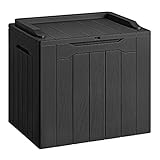
- Light & Solid: Made of a high density resin material, it is stable, waterproof and UV resistant. The net weight of this deck box is only 8.8 pounds
- Extra Seat: It can be used as an extra seat with a maximum load capacity of 220 pounds and can easily carry an adult. The 20-inch height is especially friendly, and an extra bump around it makes it more like a seat
- Moved and Locked: With built-in armrest, water and UV protection features allow you to transport it anywhere without fear of damage; And can be locked, to ensure the safety of items in the box to prevent the entry of reptiles
- Easy to Install: The product comes with instructions for fitting six side panels together in five minutes to create a new 30-gallon resin deck box
- Dimension: Internal capacity of 30 gallons, size is 22*16*20", the lid is smooth around the raised part, to ensure no injury, the raised height is 1"
Weight also matters. Lightweight cushions are usually not a concern. Heavy contents are different. Store heavier items near joists, beams, posts, or bearing lines when possible. Avoid concentrating weight at the far outside edge of an older deck without knowing its condition. If the deck boards feel soft, fasteners are rusted, rail posts are loose, or framing is questionable, inspect and repair the deck before adding large storage.
What’s actually slowing this PC down?
Pick the symptom - the matching free tool is one click away.
On Patios and Pavers
On concrete, pavers, and compacted stone, the key is a flat base. A twisted box will not latch correctly, and the lid may leak at one corner. If the patio slopes for drainage, place the box so the lid still closes evenly and water runs away from the opening. For pavers, reset low stones or add a compacted base before assembling a large box.
Near Grills, Fire Pits, and Utilities
Keep deck boxes clear of grills, fire pits, HVAC equipment, dryer vents, hose bibs, and electrical service areas. Resin can soften, discolor, or deform near heat. Boxes also should not block access to shutoffs, exterior outlets, cleanouts, or service panels. Leave enough clearance for a technician or homeowner to work without moving a full storage chest.
Near Stairs, Doors, and Pool Areas
Do not place a deck box where it narrows stairs, blocks a door, interferes with egress, or creates a climbable hazard near a railing. Around pools, keep storage from blocking gates, rescue equipment, and walking paths. If children use the space, choose soft-close hardware and avoid storing anything that attracts climbing or rough use near the pool edge.
Safety and Permit Notes
Most movable resin deck boxes are not treated like permanent accessory structures because they are portable, non-walk-in storage containers. That generally makes them lower permit risk than sheds, gazebos, or attached roof structures. Still, local rules and HOA restrictions can apply, especially in front yards, side yards, townhome communities, historic districts, and neighborhoods with exterior storage standards.
Many residential building codes exempt small one-story detached accessory structures below certain size thresholds, but those rules are written for structures, not every portable box. A deck box usually does not need a building permit, but a small shed, permanent cabinet, roofed storage structure, or built-in enclosure may. If your box is part of a larger project, such as a new deck, covered patio, pool enclosure, or under-deck storage area, the project may trigger permit review even if the box itself would not.
Do not store propane cylinders in a resin deck box. Propane cylinders need proper outdoor placement, ventilation, and separation from ignition sources. Pool chemicals also deserve caution. Chlorine, acids, oxidizers, and fuels should not be mixed casually in a closed patio box, especially in heat. Follow product labels and local fire safety guidance, and use dedicated ventilated storage where required.
Resin vs Wood vs Metal Outdoor Storage
Resin is the right answer for many homeowners because it is affordable, light, water-resistant, and does not rot. It is also easy to assemble. Most resin deck boxes take 15 to 60 minutes with basic hand tools, depending on size and hardware.
Wood looks more custom and can tie into a deck or built-in bench, but it needs drainage gaps, sealing, fastener care, and ongoing maintenance. Wood storage can rot if it sits wet or traps leaves. Metal storage is stronger for security and tools, but it can dent, rust if coatings fail, heat up in sun, and look more utilitarian on a finished patio.
Recommended Free Tools
For cushions, toys, and ordinary patio gear, resin is usually the best balance. For power tools, jobsite equipment, fuel, or high-value items, use a locked garage, shed, or metal cabinet. For a high-end outdoor living area, custom built-in storage may look better and last longer than a standalone plastic box.
Independent reader supportYour contribution helps us test, update, and keep practical guides available for everyone.When a Deck Box Is Not Enough
A resin deck box is a good solution when the storage need is portable, seasonal, and modest. It is not the answer to every outdoor storage problem.
Consider built-in benches when you need seating and storage integrated into a deck layout. These can be framed to match the railing, maintain clear walking paths, and use proper drainage gaps. Consider under-deck drainage systems when the real problem is wasted space below an elevated deck. A properly designed under-deck area can store bikes, bins, tools, and seasonal equipment while directing water away from the house.
For lawn equipment, pool service gear, large tools, and bulky seasonal storage, a small shed or custom outdoor cabinet may be more practical. That is where permits, setbacks, foundation choices, and HOA rules become more important. A 230-gallon deck box is large for cushions, but it is not a substitute for a well-built shed if you need walk-in access and tool security.
Also popular on Amazon

- Chic Design: This all-weather wicker plastic storage box with modern rattan pattern design, which is a great decoration for deck, garden, yard, porch and poolside
- Large Storage Space: This deck box has a storage capacity of 100 Gallon with inner dimensions: 47.8"L x 21.4"W x 24.6"H. It will provide enough room to store all your belongings for indoors and outdoors, such as pillows, tools and equipments
- Strong and Resistant: Made of weather-resistant and waterproof poly resin that prevent fading, rusting, peeling and bending, which can keeps looking new for long time using
- Extra Bench Seating: This storage box provides two comfortable seatings( weight capacity of 500 lbs), which can be used as a bench in your home. With two side handles, you can easily to move arround
- Functional Design: Equipped with two gas rods for easy opening and slowly closing, and prevents hands from getting clamped. Lockable lid will keep your belongings safe and secure
When to DIY vs When to Hire a Pro
Most resin deck boxes are DIY purchases. Assembly usually takes 15 to 60 minutes. A small box may snap together with a screwdriver. A large bench-style or extra-large unit may need two people to align panels, hinges, and lid hardware. If the surface is level and the contents are light, professional installation usually is not necessary.
Hire a pro when the storage problem exposes a construction problem. If your deck boards are soft, the framing is old, the patio holds standing water, the box needs a new paver base, or roof runoff dumps directly onto the storage area, fix that first. Professional help also makes sense when you want custom built-in storage, under-deck storage, drainage correction, a shed plan, or confirmation that a deck can handle heavier storage loads.
On our job sites, we often pair storage planning with deck repair, patio leveling, or drainage improvements. A $180 box sitting in the wrong low spot can ruin cushions and stain decking. A $75 paver base, a gutter diverter, or a simple relocation can make the same box perform much better.
Maintenance Checklist for Resin Deck Boxes
Resin is low maintenance, not no maintenance. Twice a year, empty the box, rinse the interior, and check the floor corners for dirt, insects, mildew, and standing water marks. Wash the outside with mild soap and water. Avoid harsh solvents unless the manufacturer approves them because they can dull or weaken plastic.
Inspect hinges, gas struts, screws, and latch points. Tighten loose hardware before it elongates holes or cracks the resin. If the box sits on a wood deck, move it and inspect the boards underneath. Look for dark staining, soft spots, cupping, mildew, or rust marks from nearby fasteners.
In snow climates, remove heavy snow from lids unless the manufacturer provides a clear snow-load rating. In windy locations, use the latch and consider a sheltered placement. Do not leave the lid open in gusty weather because the hinge side can crack when the lid catches wind.
Our Practical Buying Formula
For most homes, the best resin deck box is a 70- to 150-gallon UV-stabilized resin model with a reinforced lid, positive latch, piston or soft-close hinges, and interior dimensions that exceed the largest stored item by at least 2 to 3 inches. Expect to spend about $100 to $250 for a dependable mainstream box. Spend more for double-wall HDPE, extra-large capacity, bench seating, high-sun exposure, or daily use.
Choose a 22- to 45-gallon box for small patios and hand tools. Choose 70 to 100 gallons for chair cushions. Choose 120 to 180 gallons for family patio and pool gear. Choose 200 gallons or more only when you have bulky items and enough clear, level space for the footprint and lid swing.
What’s actually slowing this PC down?
Pick the symptom - the matching free tool is one click away.
Finally, buy the box after you know where it will sit. Keep it out of ponding water, away from heat and propane, clear of doors and stairs, and positioned so it does not damage the deck beneath it. That is what turns a simple resin box into outdoor storage that stays useful year after year.
Frequently Asked Questions
What size resin deck box do I need for patio cushions?
Measure your longest cushion first, then choose a box with at least 2 to 3 inches of extra interior length and height. Many chair cushion sets fit in 70- to 100-gallon boxes, while sectional cushions often need 150 gallons or more.
Are resin deck boxes waterproof?
Most resin deck boxes are water-resistant, not fully waterproof. They usually shed normal rain, but wind-driven rain, snowmelt, standing water, or a partly open lid can let moisture in.
Can you sit on a resin deck box?
Only sit on a resin deck box if the manufacturer provides a seating weight rating. Some bench-style boxes are rated for several hundred pounds, but storage load ratings and seating ratings are not the same.
Do these 3 things before closing this tab:
1Repair Windows errors before they cause bigger problems2Fix the driver behind crashes, sound loss and screen glitches3Clear out junk files and repair common Windows errorsDo I need a permit for a deck box?
A movable, non-walk-in resin deck box usually does not need a building permit, but local rules and HOA restrictions can still apply. Built-in storage, sheds, roofed structures, and larger outdoor projects may require review.
Can I store propane tanks or pool chemicals in a resin deck box?
Do not store propane cylinders in a resin deck box. Pool chemicals also require caution because heat and poor ventilation can create hazards. Follow product labels and use dedicated ventilated storage where required.
How do I keep cushions from mildewing inside a deck box?
Dry cushions fully before storage, avoid packing them tightly, use breathable cushion bags or vented bins, and open the box on dry days. Resin boxes keep rain out better than they remove trapped humidity.
Quick Recap
Product prices and availability are accurate as of the date/time indicated and are subject to change. Any price and availability information displayed on Amazon at the time of purchase will apply.
Free tools Windows power users keep installed
One-click scans. No signup required.

