The Tool Desk
Outbyte PC Repair FREEClear out junk files and repair common Windows errorsFree Scan →Outbyte Driver Updater FREEFix the driver behind crashes, sound loss and screen glitchesFind Drivers →Some links on this page are affiliate links: if you buy through them we may earn a commission, at no extra cost to you.
A good portable electric stove can keep a household cooking through a remodel, add a second burner for holiday meals, or make a small apartment kitchen more usable. The best choice for most homeowners is a 1,800-watt portable induction cooktop, provided the cookware is magnetic and the kitchen circuit can safely support the load. It heats quickly, responds better than a coil hot plate, wipes clean, and leaves less residual heat on the countertop.
That said, portable does not mean unlimited. Most single-burner units sold in the U.S. run on 120 volts and draw 1,500 to 1,800 watts. At full power, an 1,800-watt unit pulls about 15 amps before any other appliance is considered. On our kitchen remodels, this is where homeowners get surprised: the burner may be fine, but the toaster oven, kettle, microwave, coffee maker, and temporary refrigerator on the same circuit can create nuisance trips or unsafe cord setups.
As an Amazon Associate I earn from qualifying purchases.
This guide looks at portable electric stoves the way a builder looks at them: not just which one boils water quickly, but where it will sit, what it costs to operate, what the counter can tolerate, whether the outlet is right, and when a temporary cooking station should involve an electrician.
What Counts as a Portable Electric Stove?
Most homeowners use the phrase portable electric stove to describe one of three appliances: an exposed coil hot plate, an infrared or ceramic hot plate, or a portable induction cooktop. They all plug into a receptacle, sit on a counter, and provide one or two cooking zones. They are not the same tool.
Popular on Amazon
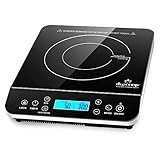
- PORTABLE INDUCTION BURNER: Duxtop induction cooktop uses 110/120 V 15 amp electrical outlet–standard in all North American homes. ETL listed and built to North American electrical standards. It is lightweight and compact for easy handling and storage
- Choose from 20 preset power levels (100 to 1800 W) and 20 preset temperature level settings (100 °F to 460 °F). With an 83% energy efficiency, induction burner is more efficient than traditional gas or electric stoves
- DIGITAL LCD SENSOR: Touch control panel: child safety lock keeps the cooking and timer settings from being accidentally changed once they have been set; fast boil button; keep warm button (for 1-30 minutes at 140 °F); up to 10-hour timer button
- Induction stoves rely on cookware to heat, so it’s essential to choose magnetic bottom cookware with a minimum diameter of 5 inches. Auto-pan detection will shut off automatically after 60 seconds if no cookware, or the incorrect cookware is detected
- Although induction itself is a noiseless process, there may be high pitched sounds from the cookware due to multiple layers of metals sandwiched together. Please allow the induction cooker to cool down before cleaning
Coil Hot Plates
Coil hot plates are the least expensive option. A basic single-burner model usually costs about $20 to $50 in 2026, while simple double-burner models often run $35 to $80. They use exposed resistance coils, similar in concept to an older electric range.
The advantages are price and cookware flexibility. Most flat-bottomed pans will work. The drawbacks are slower response, harder cleanup around the coil, exposed hot surfaces, and lighter construction on budget units. We will use them for very temporary job-site style setups, but they are not our first choice for a homeowner trying to cook dinner every night for six weeks during a kitchen remodel.
What’s actually slowing this PC down?
Pick the symptom - the matching free tool is one click away.
Infrared and Ceramic Hot Plates
Infrared or ceramic portable stoves generally cost about $40 to $100 for a common single-burner 120-volt unit and about $70 to $160 for a double-burner model. They usually have a glass or ceramic cooking surface over an electric heating element.
The biggest benefit is that they work with most cookware, including aluminum, copper, cast iron, and stainless pans that may not work on induction. They also clean more easily than exposed coils. The tradeoff is retained heat. The cooking surface gets hot and stays hot after use, so countertop protection, child access, and burn risk matter.
Portable Induction Cooktops
Portable induction cooktops use magnetic energy to heat compatible cookware directly. Mainstream 1,800-watt single-burner units usually cost about $55 to $140 in 2026. Higher-end or commercial-grade models can run $150 to $300 or more, especially when they include stainless housings, larger coils, NSF-style commercial certification, long timers, and tighter temperature controls.
Induction is usually the best all-around choice if the home has compatible cookware. It is fast, efficient, and easier to keep clean. ENERGY STAR reports induction cooking tops are about 5% to 10% more efficient than conventional electric resistance units and roughly three times more efficient than gas. The pan heats, while the glass surface around it stays cooler than a coil or infrared plate, though it can still become hot from contact with the cookware.
Free tools Windows power users keep installed
One-click scans. No signup required.
Quick Comparison: Coil vs Infrared vs Induction
| Type | Typical 2026 Cost | Best Use | Main Caution |
|---|---|---|---|
| Coil hot plate | $20-$50 single burner; $35-$80 double burner | Lowest-cost backup cooking, occasional use, simple pans | Slower response, exposed hot coil, harder cleanup |
| Infrared/ceramic hot plate | $40-$100 single burner; $70-$160 double burner | Portable cooking with non-induction cookware | Glass surface stays hot and can damage sensitive counters |
| Portable induction cooktop | $55-$140 mainstream; $150-$300+ premium | Daily temporary cooking, remodel survival, precise control | Requires magnetic cookware and adequate circuit capacity |
If we were setting up a temporary kitchen for a client during a remodel, our default recommendation would be a single 1,800-watt induction burner, a compact microwave, a toaster oven only if there is another circuit available, and a clear written plan for which appliances can run at the same time. That plan matters more than buying the most expensive burner.
The Best Portable Electric Stove for Most Homes
For most U.S. kitchens, the sweet spot is a 120-volt, 1,800-watt portable induction cooktop with a stable base, responsive controls, pan detection, overheat protection, auto shutoff, and a heating zone that matches the cookware you actually use. Brand names that commonly appear in the 2026 market include Duxtop, Hamilton Beach, Nuwave, Amazon Basics, Classic Cuisine, and ChangBERT. Prices range widely, but a capable homeowner-grade unit is usually available between about $70 and $140.
The wattage number gets attention, but it is not the only spec that matters. A small induction coil under a 12-inch skillet will often cook like a small hot spot in the center of a large pan. If you regularly use a 10-inch or 12-inch skillet, look for a model with a larger effective heating zone, not just a big painted circle on the glass. The magnetic coil beneath the glass is what matters.
Controls also matter. A unit with 10 to 20 power levels is easier to live with than one that jumps from too weak to too aggressive. Physical buttons or a responsive touch panel are both fine, but they need to work with damp hands and quick adjustments. For simmering sauces, cooking eggs, or keeping rice warm, low-end control is just as important as high-end boil speed.
Electrical Reality: Can You Plug It Into a Regular Kitchen Outlet?
Usually, yes, a portable electric stove can plug into a regular kitchen receptacle if the appliance is designed for 120 volts and the circuit is in good condition. The better question is whether the circuit can carry the full load along with everything else plugged into it.
A 1,800-watt burner at 120 volts draws about 15 amps. That is already the practical limit of a 15-amp circuit. Many kitchen small-appliance circuits are 20 amps, but they may serve multiple countertop receptacles. Add a 1,500-watt electric kettle, a toaster oven, or a microwave, and the math changes quickly.
Also popular on Amazon

- HIGH EFFICIENCY - ChangBERT Induction cooktop offers 9 preset power levels (200-1800W) and 18 preset temperature settings (120-460℉, 20F per level). With an 83% energy efficiency rating, the induction cooker is more efficient than traditional gas or electric stoves, providing quick heat-up and faster cooking times.
- CONSISTENTLY STABLE HIGH-POWER OUTPUT - Built for constant use, it features continuous-duty circuitry for non-stop cooking. The unique power control technology ensures stable high-power output, reduces the temperature of internal electronics, and facilitates low-noise heat dissipation, providing reliable cooking performance. This dependable performance sets it apart from others.
- LARGE COOKING AREA - Features an expanded magnetic coil design that optimizes the winding structure to enhance the transfer of electromagnetic energy directly to the cookware, significantly improving heating efficiency and ensuring more even heat distribution across the bottom of the cookware.
- NSF CERTIFIED & COMMERCIAL GRADE - UL commercial standard 197, completely ETL & NSF approved. It meets industry durability standards, passing a drop test with an impact of 1.5 ft lbs. Designed for large-volume usage, it is ideal for commercial and professional settings such as restaurants, industrial kitchens, and other catering services.
- EASY TO CONTROL & CLEAN - The control buttons with solid tactile response make operation intuitive and precise.With simple and clear display, the Key-Press-Control Panel provides clear visibility and easy control, even with gloves or wet hands. With no open flame or heating element, food does not burn onto the glass cooktop, making it easy to clean greasy dirt.
| Appliance | Typical Load | Approx. Amps at 120V |
|---|---|---|
| Portable induction burner | 1,800W | 15A |
| Lower-power hot plate | 1,000-1,200W | 8.3-10A |
| Electric kettle | 1,500W | 12.5A |
| Toaster oven | 1,200-1,800W | 10-15A |
| Microwave | 1,000-1,500W input range | 8.3-12.5A |
On our job sites, we check the breaker label, identify what else is on the circuit, and avoid extension cords for high-wattage cooking appliances. A power strip or cube tap is the wrong answer for a portable stove. If the cord does not reach a proper receptacle, move the cooking station or have the electrical setup corrected.
Modern kitchen receptacles commonly require GFCI protection, and many circuits may also need AFCI protection depending on local code adoption and the work being performed. Island and peninsula receptacle rules have also changed in recent code cycles, and local jurisdictions do not all adopt the same edition at the same time. If you are adding, moving, or upgrading an outlet for a portable cooking station, treat it as real electrical work, not a casual accessory purchase.
How Much Does a Portable Electric Stove Cost to Use?
Operating cost is usually modest, but it is easy to calculate. An 1,800-watt burner running for 30 minutes uses about 0.9 kilowatt-hours. At a July 2026 U.S. average residential electricity rate around 18.83 cents per kilowatt-hour, that half-hour of cooking costs about $0.17. In a high-cost state such as Hawaii, at about 46.62 cents per kilowatt-hour, the same half-hour costs about $0.42.
Real cooking does not always run at full power for the full time. Boiling pasta water may use high power for several minutes, then lower power to maintain a boil. Simmering soup or reheating leftovers may average much less than the nameplate wattage. For remodel budgeting, the appliance purchase usually matters more than the electricity. The bigger cost is often the temporary kitchen setup: a stable table, washable surface, lighting, fire extinguisher, induction-ready cookware, and possibly electrical work.
Best Uses for Portable Electric Stoves
Kitchen Remodels
A portable electric stove is one of the most useful temporary kitchen tools during a remodel. Before we disconnect a main kitchen, we like to plan a working station with a dedicated or known-safe receptacle, a washable work surface, task lighting, a nearby trash setup, safe water access, and a ventilation path. That might be a laundry room, dining room wall, basement kitchenette, garage workbench, or protected area near a utility sink.
The biggest mistake is waiting until demolition day to figure it out. Once the sink, range, and countertops are gone, daily cooking becomes a logistics problem. A simple setup planned one week early can save weeks of takeout.
Do these 3 things before closing this tab:
1Scan for outdated or missing drivers - takes under a minute2Clear out junk files and repair common Windows errors3Fix the driver behind crashes, sound loss and screen glitchesSmall Apartments, ADUs, and Rental Spaces
Portable induction and infrared burners can work well in small apartments, accessory dwelling units, and rentals where allowed. The limit is not only counter space. You need a compliant receptacle, enough clear area around the burner, safe cord routing, ventilation, and permission if the lease or building rules restrict cooking appliances.
For an ADU or finished rental unit, a portable stove is not a substitute for a properly designed kitchen when the space is intended for regular independent living. Built-in cooking equipment, permanent ventilation, countertop clearances, cabinet protection, and code-compliant electrical layout matter for durability, safety, and resale.
Holiday Cooking and Batch Prep
A single portable induction burner is excellent as a second station for stock, gravy, sauces, frying, or keeping a pot warm while the main range is full. For this use, buy for stability and control. A non-skid base, clear display, long timer, and quick power changes are more useful than a flashy maximum temperature number.
Outdoor Prep and Covered Work Areas
Portable electric stoves are sometimes used in garages, covered patios, or outdoor prep areas. This can be useful, but the setup needs protection from weather, proper GFCI-protected power, a level noncombustible or heat-resistant work surface, and manufacturer approval for the environment. Many consumer appliances are not built for damp locations.
Recommended Free Tools
What to Look For Before You Buy
Power Level and Circuit Fit
For serious cooking, 1,500 to 1,800 watts is the useful range for a single burner. Lower-cost 1,000- to 1,200-watt models can handle soups, reheating, and small pans, but they may feel slow for boiling water or searing. If you choose a two-burner portable unit, read the power-sharing details carefully. Many 120-volt dual-burner units split total available power between the two zones. Some larger models may require 240 volts depending on design.
Heating Zone Size
Match pan diameter to the actual heating zone. A portable induction unit with a small coil can technically run a large skillet, but the food in the center may brown while the edges lag behind. For daily cooking, a larger coil is worth paying more for.
Also popular on Amazon

- High Efficiency & Rapid Heating: 1800W induction heating transfers energy directly to compatible cookware for fast boiling and responsive temperature changes. The 6.8-inch induction coil ensures even heat and consistent cooking results.
- Precise Temperature Control: Features 20 power levels (P1–P20) and 20 Preset Temperature Levels from 120°F to 465°F for precise control. Easily adjust to your cooking needs—from gentle simmering to high-heat searing.
- Smart Preset Cooking Modes: Electric single burner includes 4 preset functions: Boil, Hot Pot, Stew, and Keep Warm. Designed with a responsive touch panel that simplifies operation and helps achieve consistent, delicious meals.
- Safe & Convenient Design: Equipped with child safety lock, residual heat indicator, and 4-hour timer for peace of mind. Compact and lightweight (under 5kg), easy to store, low noise, ideal for small spaces or outdoor use.
- Reliable Support: Our support team is always available to help with any questions or issues, ensuring a worry-free cooking experience.
Cookware Compatibility
Induction needs magnetic cookware. The quick test is simple: hold a magnet to the bottom of the pan. If it sticks firmly, the pan will usually work. Cast iron and many stainless pans pass. Aluminum, copper, glass, and some stainless pans do not unless they have an induction-compatible base.
Controls and Safety Features
Look for multiple power levels, temperature settings that do not jump too far apart, pan detection, automatic shutoff, overheat protection, and a stable housing. A hot plate that slides when you stir is not acceptable in a family kitchen.
Surface and Countertop Protection
Do not assume a portable burner can sit anywhere. Laminate, butcher block, painted surfaces, temporary folding tables, and some stone surfaces can be damaged by heat, moisture, or concentrated weight. Follow the manufacturer’s clearance requirements. If a heat-resistant silicone mat or trivet is allowed by the appliance maker, it can help protect the work surface, but never block required ventilation openings under the unit.
Portable Stove vs Built-In Cooktop
A portable electric stove is convenience and backup. A built-in cooktop is a permanent kitchen system. That distinction matters.
Portable units are excellent when the need is temporary, supplemental, or space-constrained. They are easy to store, affordable, and useful during construction. Built-in cooktops are better for daily cooking, long-term durability, integrated countertop design, permanent ventilation, dedicated circuits, appliance clearances, and resale value.
If a homeowner asks whether a portable unit can replace a built-in cooktop, our answer is usually: for a short period, yes; as the main cooking plan for a finished kitchen, usually no. A finished kitchen should be designed around how the household actually cooks, including counter landing space, range hood capacity, cabinet materials, outlet placement, and the electrical panel’s available capacity.
When to DIY vs When to Hire a Pro
Reasonable DIY
Buying a listed portable unit, placing it on a stable counter, plugging it directly into an existing code-compliant kitchen receptacle, and using compatible cookware is normal homeowner territory. You can also do basic load management: avoid running the portable burner, kettle, microwave, and toaster oven on the same circuit at the same time.
You should also be able to create a basic temporary cooking station during a remodel if the electrical and plumbing are already suitable. Keep the burner away from sink edges, loose paper, towels, plastic storage, and cabinet overhangs that violate the appliance clearance instructions.
Call an Electrician or Contractor
Hire a licensed electrician if you need a new receptacle, a dedicated 20-amp small-appliance circuit, GFCI or AFCI corrections, a panel capacity review, island or peninsula outlet work, or troubleshooting for breakers that trip repeatedly. Costs vary too much by house to give one honest national number. Panel access, distance from the electrical panel, wall finish repair, permit fees, available breaker spaces, and older wiring such as aluminum or knob-and-tube can all change the scope.
Bring in a contractor when the portable stove is part of a larger remodel plan. Temporary kitchens are easier to live with when they are coordinated with demolition, dust control, sink shutdowns, appliance delivery, cabinet installation, countertop templating, and final electrical inspection.
Quick wins for a faster PC:
Fix the driver behind crashes, sound loss and screen glitchesFind Drivers →Clear out junk files and repair common Windows errorsFree Scan →Common Mistakes to Avoid
Do not choose by wattage alone. A poorly controlled 1,800-watt unit with a small coil can be less useful than a better-built model with steadier controls and a larger heating zone.
Do not plug a portable stove into an extension cord, power strip, cube tap, or overloaded shared circuit. High-wattage cooking appliances need direct, appropriate power.
Also popular on Amazon

- 【CHECK YOUR PAN FIRST — MAGNET TEST + FLAT BASE 4 –10 IN】Works only with magnetic, flat-bottom cookware: cast iron, magnetic 430 stainless steel, or enameled iron. Fridge-magnet test on the flat bottom: clings = works; slides = no heat. Not for aluminum, copper, glass, ceramic, or non-magnetic 304 stainless steel. Measure the flat magnetic base, not the rim: 4 –10 in (10–26 cm). Round-bottom/warped pans or small magnetic dots won’t work. “E0” = pan mismatch, not a defect.
- 【Portable & Versatile Induction Cooktop】 This lightweight induction burner is designed for effortless portability and compact storage, easily fitting into small kitchens, dorms, RVs, apartments, offices, patios, or camping trips. Simply plug it into any standard 110V/120V outlet and enjoy 1800W of powerful, efficient cooking wherever you go. This safe, flameless induction burner delivers professional results without compromising on space—ideal for anyone seeking a versatile, space-saving solution.
- 【Precise Power & Temperature Control】 This portable induction cooktop features 10 power levels (180W to 1800W) and 10 temperature settings (120°F to 460°F), giving you complete control for any cooking style. Whether you need a gentle simmer for sauces, a steady boil for pasta, or high heat for searing steaks and stir-fry, simply adjust the settings to match your recipe. Including Rapid Boil and Keep Warm modes. A 3-hour timer adds flexibility for effortless meal preparation.
- 【ETL Certified & Energy Efficient】 This induction hot plate is ETL certified to meet North American electrical standards, ensuring safe and reliable operation with any standard 110V/120V outlet. With 83% energy efficiency, it outperforms traditional gas and electric cooktops by transferring heat directly to your cookware—minimizing energy loss, reducing cooking time, and saving on electricity costs.
- 【Intuitive LCD Display & Smart Touch Controls】 This induction stove features an easy-to-read LCD display and responsive touch panel for effortless control. Auto pan detection automatically powers off when no cookware is detected, while the child safety lock and overheat protection ensure worry-free cooking. The sleek ceramic glass surface is also easy to clean—just wipe with a damp cloth.
Do not assume every pan works on induction. Test your cookware before relying on an induction burner for a remodel or rental kitchen.
Do not ignore retained heat. Coil and infrared units can stay hot long after the food is done. Even induction glass can be hot from pan contact.
PC Slower Than It Used to Be?
A free scan shows the junk files, broken settings and background clutter dragging Windows down - then fixes them in one click.Free scan · Windows 10 & 11Crashes, No Sound, or Screen Glitches?
Random freezes, missing sound and display glitches usually trace back to one bad driver. Find and replace yours safely.Free scan · under a minuteDo not set up a temporary cooking station without thinking about cords, children, pets, water, ventilation, and counter protection. A portable appliance still creates real heat and real electrical load.
Our Practical Buying Recommendation
For most homeowners, start with a mainstream 1,800-watt portable induction cooktop in the $70 to $140 range. Make sure your pans pass the magnet test, choose a model with a larger heating zone and enough power levels, and plug it directly into a suitable kitchen receptacle. Add a fire extinguisher, a stable washable work surface, and a written rule for which appliances can run together.
Choose an infrared or ceramic hot plate if your cookware is not induction-compatible and you do not want to replace pans. Choose a coil hot plate only when the budget is tight or the use is occasional. Step up to a commercial-grade induction unit in the $150 to $300-plus range if you expect long daily use, heavier pots, longer timers, or a tougher housing.
The best portable electric stove is not just the fastest burner on the shelf. It is the one that fits the way you cook, the pans you own, the circuit you have, and the space where it will safely live.
Frequently Asked Questions
What is the best type of portable electric stove for everyday cooking?
For most homeowners, a 1,800-watt portable induction cooktop is the best everyday choice. It heats quickly, offers better control, wipes clean, and keeps the surrounding surface cooler than coil or infrared units.
Can I plug a portable electric stove into a regular kitchen outlet?
Usually yes, if the unit is rated for 120 volts and the circuit is in good condition. An 1,800-watt burner draws about 15 amps, so avoid running it with a kettle, microwave, or toaster oven on the same circuit.
Do portable induction cooktops need special cookware?
They need magnetic cookware. Cast iron and many stainless pans work. Aluminum, copper, glass, and some stainless pans will not heat unless they have an induction-compatible base.
How much electricity does a portable electric stove use?
An 1,800-watt burner used for 30 minutes consumes about 0.9 kWh. At a July 2026 U.S. average residential rate of about 18.83 cents per kWh, that costs roughly $0.17.
Recommended Free Tools
Do I need a permit to add an outlet for a portable cooktop?
Often, yes. Adding or relocating a kitchen receptacle is electrical work and may require permit, GFCI protection, AFCI protection, and local code compliance. Check with your jurisdiction or hire a licensed electrician.
Can a portable electric stove replace a built-in cooktop?
It can work as a temporary or supplemental cooking tool, but it is usually not the right permanent replacement for a finished kitchen. Built-in cooktops are better for daily cooking, ventilation, clearances, code-compliant layout, and resale.
Quick Recap
Product prices and availability are accurate as of the date/time indicated and are subject to change. Any price and availability information displayed on Amazon at the time of purchase will apply.

