Quick wins for a faster PC:
Fix the driver behind crashes, sound loss and screen glitchesFind Drivers →Clear out junk files and repair common Windows errorsFree Scan →Some links on this page are affiliate links: if you buy through them we may earn a commission, at no extra cost to you.
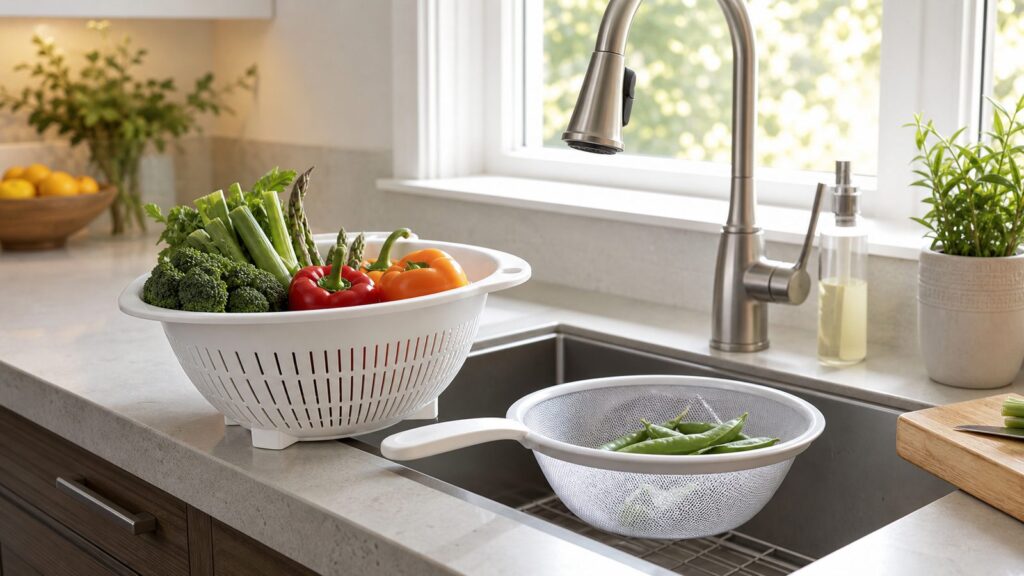
A good plastic food strainer should do three things well: drain fast, stay stable in or over the sink, and clean up without trapping food in seams or tiny holes. For most homes, the best setup is not one expensive gadget. It is a two-strainer setup: a sturdy 4- to 5-quart BPA-free polypropylene colander for pasta and vegetables, plus a fine nylon mesh strainer for rice, quinoa, berries, sauces, and baking tasks.
In 2026, most residential plastic food strainers cost about $7 to $35. Basic plastic colanders and produce baskets usually run $7 to $15. Better 3- to 5-quart BPA-free plastic colanders are commonly $10 to $25. Collapsible silicone and plastic models tend to land around $12 to $30, while over-the-sink expandable strainers usually cost $15 to $35. Larger nesting sets can reach $45 when they include bowls, lids, or multiple sizes.
As an Amazon Associate I earn from qualifying purchases.
On our kitchen remodel jobs, the strainer itself is rarely the expensive part. The expensive part is when the sink, faucet, disposal, dishwasher air gap, or cabinet storage was never planned around how the kitchen is actually used. A deep farmhouse sink, a large single-bowl undermount sink, or a compact apartment sink can each call for a different strainer style. Buy for the layout first, then the brand.
What Makes a Plastic Food Strainer Worth Buying?
The best plastic food strainers are not always the thickest or the largest. They are the ones that fit the sink, stay above dirty drain water, and match the food you actually cook. A 5-quart colander is useful for pasta night, but it is clumsy for rinsing a half cup of quinoa. A fine mesh strainer is excellent for berries and rice, but frustrating for draining a full pot of penne because the water backs up too slowly.
Popular on Amazon

- Elongated holes allow for fast water flow and efficient draining
- Non-slip handles provide a secure, comfortable grip, even when hands are wet
- Contoured feet for in-sink stability, even when straining heavy food
- Colander height and 3-qt capacity prevents water from pooling
- Dishwasher safe
For everyday residential use, BPA-free polypropylene is the practical rigid plastic choice. It is lightweight, affordable, and common in dishwasher-safe kitchen tools. Silicone and plastic hybrids make sense where storage is tight because they collapse flat, but they need a careful look at heat and dishwasher limits. Nylon mesh is the better choice for fine rinsing because small grains and seeds do not escape through the holes.
Our crews pay attention to the same details homeowners notice after six months of use: raised feet, stable handles, hole pattern, cleaning access, and how the strainer behaves when loaded. A flimsy plastic colander may seem fine empty, then flex or tip when it holds a pound of cooked pasta. A strainer with low feet may sit directly in sink backwash. A model with decorative seams or deep molded ribs may hold starch, berry pulp, or onion skins after washing.
Windows Errors? Fix Them Before They Spread
Repair common Windows errors and clear accumulated junk for a smoother, more stable PC - no reinstall needed.Free scan · no reinstallCrashes, No Sound, or Screen Glitches?
Random freezes, missing sound and display glitches usually trace back to one bad driver. Find and replace yours safely.Free scan · under a minuteFor most families, the sweet spot is a rigid 4- to 5-quart plastic colander with large side handles, a raised pedestal or feet at least 1/2 inch high, and enough perforations across the bottom and lower sides to drain quickly. Add a 6- to 8-inch fine nylon mesh strainer for smaller foods, and the kitchen is covered for most cooking tasks.
Best Plastic Food Strainer Types by Use
Different strainers solve different problems. The right answer for a busy family kitchen is not always the right answer for a small condo, an aging-in-place remodel, or a homeowner who cooks grains and produce more often than pasta.
Rigid Plastic Bowl Colanders
A rigid plastic bowl colander is the basic workhorse. Look for a 3- to 5-quart capacity for most homes. A 3-quart model is enough for vegetables and small pasta portions. A 5-quart model is better for a family of four or more, especially when draining one pound of pasta. Expect to spend about $10 to $25 for a better BPA-free model with thicker plastic, comfortable handles, and a dishwasher-safe rating.
The most useful designs have holes on the bottom and lower sides, not just the bottom. Side perforations help drain faster when the colander is full. Smooth perforations also matter. Rough or sharply molded holes collect starch and can be harder to clean.
Handled Plastic Strainers
Handled strainers are useful when you want to rinse produce or drain a small amount of food without setting a full bowl in the sink. They are usually smaller than bowl colanders and often cost $7 to $20 depending on size and construction. For homeowners with limited grip strength, a long handle can be easier than lifting a full bowl-style colander, but it must be stiff enough not to twist under load.
Over-the-Sink Expandable Strainers
Over-the-sink strainers are a strong choice for large single-bowl sinks, workstation sinks, and deep farmhouse sinks. They rest on the sink edges so the food stays above the drain and away from standing water. Most cost about $15 to $35. Models with reinforced rails, non-slip grips, and larger capacity sit at the higher end of that range.
The key measurement is the inside basin width, not the countertop cutout and not the nominal sink size printed on the box. A sink sold as 30 inches wide may have a smaller inside bowl dimension once the rim, radius corners, and ledges are considered. Measure the clear inside span where the strainer will sit. If the expandable rails barely reach, choose a different model.
Collapsible Silicone and Plastic Colanders
Collapsible strainers are practical in apartments, galley kitchens, and remodels where drawer or cabinet space is tight. They usually cost $12 to $30. The tradeoff is durability. Hinges, folds, and flexible sections can deform faster than rigid polypropylene if exposed to boiling water, high-heat dishwasher cycles, or heavy pots of food.
Do these 3 things before closing this tab:
1Repair Windows errors before they cause bigger problems2Fix the driver behind crashes, sound loss and screen glitches3Clear out junk files and repair common Windows errorsBefore draining pasta directly into a collapsible model, check the heat rating and product instructions. Some are fine with hot water; others are better suited for rinsing produce. If the frame flexes when loaded, do not use it for a full pot of pasta.
Fine Nylon Mesh Strainers
A fine nylon mesh strainer fills the gap left by standard colanders. It is the right tool for rice, quinoa, berries, tea, sauces, and sifted dry ingredients. A one- to three-piece set usually costs about $6 to $20. Finer mesh and stronger plastic frames cost more, but they also last longer and hold their shape better.
Also popular on Amazon

- Colander is 11 x 5 inches in size with a 5 quart capacity
- Large holes allow water to easily flow out
- Balanced feet allow colander to sit sturdily on counter or in sink
- Made of durable, safe BPA free plastic
- Dishwasher safe for easy clean up
For most kitchens, a 6- to 8-inch fine mesh strainer is the most useful size. Smaller 3- to 4-inch strainers are handy for tea or citrus seeds. Larger 9- to 10-inch strainers work for baking and bigger batches, but they take more drawer space.
Produce Baskets and Berry Strainers
Plastic produce baskets are low-cost and convenient for rinsing berries, grapes, herbs, and small vegetables. They often cost $7 to $15. They are not a substitute for a full colander because the capacity is limited and the base may not be stable under heavier food. Their best role is prep work, not draining a hot pot.
Recommended Free Tools
Sink Drain Basket Strainers
A sink drain basket strainer is not the same as a food colander, but it belongs in the same conversation. It catches scraps before they enter the drain. Parts usually cost $5 to $25. If a plumber is needed to deal with a disposal, trap, air gap, leak, or clog, a service call can run roughly $125 to $350 or more depending on the market and access.
Even with a garbage disposal, the drain basket matters. Pasta, rice, peels, grease, and fibrous scraps can create problems in traps and branch lines. Scrape solids into trash or compost first, use the basket strainer, and never treat the disposal as a trash can.
Plastic Food Strainer Cost Comparison
Plastic food strainers are inexpensive compared with sinks, faucets, and cabinet accessories, but price still tells you something. Better strainers usually have thicker molded plastic, stronger handles, better feet, cleaner perforations, higher heat tolerance, or a more useful shape.
| Type | Typical 2026 Cost | Best Use | What to Check Before Buying |
|---|---|---|---|
| Basic plastic colander or produce basket | $7-$15 | Produce, light prep, occasional use | Plastic stiffness, drainage holes, foot height |
| BPA-free rigid plastic colander, 3-5 qt | $10-$25 | Pasta, vegetables, daily family cooking | Capacity, handles, dishwasher-safe rating, raised base |
| Collapsible silicone/plastic colander | $12-$30 | Small kitchens, compact storage | Heat rating, frame stiffness, fold durability |
| Over-the-sink expandable strainer | $15-$35 | Large single-bowl, farmhouse, workstation sinks | Inside sink width, rail grip, loaded stability |
| Nesting colander and bowl set | $15-$45 | Meal prep, rinsing and soaking, organized storage | Cabinet space, bowl usefulness, lid quality |
| Fine nylon mesh strainer set | $6-$20 | Rice, quinoa, berries, sauces, baking | Mesh fineness, frame strength, handle comfort |
| Sink drain basket or disposal splash guard | $5-$25 parts only | Drain protection and disposal use | Drain size, disposal compatibility, seal condition |
If you cook most nights, avoid the cheapest thin plastic. The difference between a $9 colander and an $18 colander is usually paid back in stability, easier cleaning, and fewer replacements. If you cook occasionally, a basic model may be fine, provided it fits your sink and is rated for your intended use.
Match the Strainer to Your Sink Layout
This is where most product lists fall short. A strainer that works beautifully in a shallow double-bowl stainless sink may be awkward in a deep apron-front sink. In remodeling, we look at the sink, faucet, disposal, dishwasher connection, and storage together because they affect daily kitchen habits.
| Sink Layout | Best Strainer Choice | Why It Works | Remodel Note |
|---|---|---|---|
| Single-bowl undermount sink | Over-the-sink expandable strainer or 5-qt raised colander | Keeps food above the drain and leaves room for large pots | Measure inside bowl width before buying accessories |
| Double-bowl sink | Rigid 3- to 5-qt colander with feet | One bowl can hold the colander while the other stays clear | Check faucet reach to both bowls |
| Farmhouse or apron-front sink | Over-sink strainer or tall pedestal colander | Deep basins can allow backwash around low colanders | Plan under-sink plumbing and disposal space early |
| Workstation sink | Fitted ledge colander or expandable model | Uses sink ledges for prep and draining | Only pay for accessory systems you will store and use |
| Small apartment sink | Collapsible colander plus fine mesh strainer | Saves storage space and handles smaller batches | Confirm the collapsed size fits the drawer or cabinet |
| Accessible or aging-in-place kitchen | Lightweight plastic over-sink strainer with large handles | Reduces lifting and wrist strain | Pair with pull-down faucet and clear knee or cabinet access as needed |
For deep sinks, the main risk is letting clean food sit too close to drain water. A colander with short feet can end up sitting in dirty water if the sink drains slowly or if the disposal side backs up. Raised feet, a pedestal base, or an over-sink design solves that problem.
For double-bowl sinks, the faucet matters. A short fixed faucet may not reach the bowl where the colander sits. A pull-down faucet with a spray head is usually better for rinsing produce and washing starch out of perforations. If we are already remodeling the kitchen, faucet reach is one of the small details we settle before countertops are templated.
Food Safety and Material Standards
Plastic strainers contact food directly, so vague marketing language is not enough. For residential kitchens, look for products described as food-contact safe and BPA-free. Polypropylene is common for rigid colanders because it is light, affordable, and suitable for many kitchen uses. Nylon mesh is common for fine strainers. Silicone and plastic hybrids are useful, but the heat rating needs to match the task.
The Tool Desk
Outbyte Driver Updater FREEScan for outdated or missing drivers - takes under a minuteDriver Scan →Outbyte PC Repair FREERepair Windows errors before they cause bigger problemsFix Now →FDA food-contact rules apply to materials that come into contact with food. In commercial and shared-use kitchens, NSF/ANSI 51 is more relevant because it addresses food equipment materials and sanitation expectations. A homeowner buying a $15 colander does not need to become a materials engineer, but a church kitchen, office kitchen, rental clubhouse, or small food-service operation should use products with documented food-contact suitability instead of relying on broad claims like “food grade.”
Heat is the practical safety issue most homeowners run into. Boiling pasta water is about 212 degrees F at sea level. Some plastic strainers handle that fine; others warp, soften, or crack over time. Dishwasher heat can also deform collapsible pieces, especially on heated-dry or sanitize cycles. Read the product rating. If the manufacturer does not clearly state dishwasher-safe or high-heat suitability, use that strainer for produce and cool rinsing tasks, not boiling water.
Also popular on Amazon

- Versatile & Efficient Draining – This simple yet stylish kitchen colander features ergonomic plastic handles and generously sized side and bottom holes, making it quick and easy to rinse and drain spaghetti, salad veggies, fruits, and more.
- Heat-Resistant & Sturdy – Made of heavy-duty, BPA-free silicone that withstands heat up to 175°F, so you can safely blanch vegetables in hot water. The sturdy base provides stable balance when rested on countertops or in the sink.
- Generous 5-Quart Capacity – Measuring 12.5 inches in length, this folding colander holds a variety of foods with ease. It fits comfortably over small, medium, or large pots, sinks, and bowls.
- Space-Saving Collapsible Design – Lightweight and expandable, it collapses from 5 inches to just 2 inches high with one simple push. Stores neatly in any kitchen drawer, cabinet, or drying rack without taking up valuable space.
- Easy to Clean & Store – No need to hand wash. Just rinse with warm water or place on the top rack of the dishwasher. After cleaning, fold it flat and press the center to expand it for next use.
Replace a plastic food strainer when it cracks, develops rough cuts, stains heavily, holds odors after washing, or has warped enough that it no longer sits level. Cracks and damaged mesh hold food residue and are harder to sanitize.
Features That Matter More Than Brand
A food strainer is a simple tool, but several details separate a keeper from a drawer-clutter purchase.
Hole Size and Drainage Pattern
Large holes drain pasta quickly but lose rice, quinoa, or small peas. Tiny perforations keep small food in place but clog with starch and drain slowly. For a main colander, choose medium holes with plenty of open area across the base and lower sides. For small grains, use a separate fine nylon mesh strainer.
Stable Feet or Pedestal Height
Feet should lift the bottom at least 1/2 inch above the sink surface. A taller pedestal is better in deep sinks. Non-slip feet help when the sink is wet and the colander is loaded. Avoid rounded bases that rock under weight.
Large Handles
Handles should be wide enough to grip with wet hands or a towel. For aging-in-place kitchens, large handles are not a luxury. They reduce wrist strain and make it easier to lift produce or cooked food safely.
Smooth Molded Surfaces
Fewer seams mean faster cleaning. Smooth perforations release starch better. Deep ribs, decorative cutouts, and hollow handle cavities can trap food. In a busy family kitchen, simpler usually lasts longer.
What’s actually slowing this PC down?
Pick the symptom - the matching free tool is one click away.
Usable Capacity
Overall size is not the same as usable capacity. A wide shallow colander may look large but spill when loaded. A 4- to 5-quart colander is the practical everyday range for most family kitchens. Larger than that can become hard to store and awkward to lift.
How Plastic Compares With Stainless Steel
Stainless steel colanders are durable and handle heat well, but plastic has real advantages in the right kitchen. Plastic is lighter, usually cheaper, less heat-conductive, and less likely to scratch stainless, fireclay, composite, or enamel sink surfaces. That matters in new kitchens where the sink finish is part of the investment.
The downsides are also real. Plastic can stain from tomato sauce, turmeric, berries, or hard water. It can retain odors if not cleaned promptly. It may crack after years of dishwasher heat or rough handling. It can warp if used beyond its heat rating. It is not the right place to dump a heavy pot aggressively or cut food with a knife.
For most residential kitchens, we like plastic for everyday rinsing and draining, especially where weight and sink protection matter. For heavy-duty, high-heat, long-term use, stainless may be better. Many serious home cooks keep both: a plastic over-sink or lightweight colander for produce and a stainless colander for repeated boiling-water work.
Drain Care: What a Food Strainer Can and Cannot Do
A food strainer helps keep food out of the sink, but it does not replace proper drain protection. The sink drain basket, disposal splash guard, P-trap, dishwasher drain line, and air gap or high loop all matter. Once food scraps get past the basket, they can collect in the trap or disposal chamber.
Use the trash or compost for solids first. That includes peels, pasta, rice, coffee grounds, eggshells, grease, and fibrous vegetable scraps. Run cold water when using a garbage disposal, and give the disposal time to clear before shutting the water off. Never pour grease into the drain. It may be liquid when hot, but it cools inside the piping and catches other debris.
Also popular on Amazon
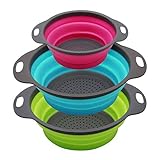
- Foldable and space-saving design - ergonomic, space-saving design. Strainers are foldable, so they do not take up much room in your kitchen cupboards.
- Easy to use - this round colander is used for draining most foods like spaghetti, pasta, potatoes, broccoli, green beans, carrots, spinach, and other veggies, and to rinse your salad leaves, fruits, and fresh vegetables.
- Safe - using environmentally friendly Rubber and plastic materials, no smell.
- Multi-Use - You can use it in or over a sink and freestanding on a counter or table.
- Good service - if you are not satisfied with the collapsible colanders, please feel free to contact us, we promise to help you solve any problems within 24 hours.
Dishwasher air gaps and drain routing also matter in remodels. A dishwasher must be protected from dirty sink water backing into the appliance. Depending on the local code and installation method, that may involve an air gap fitting mounted at the sink or countertop, or a properly installed high loop where allowed. If the kitchen has a disposal, the dishwasher drain connection must be handled correctly when the disposal is installed or replaced.
For homeowners, the takeaway is simple: a $15 strainer can reduce mess, but it cannot fix poor drain habits or bad plumbing layout. If a sink drains slowly, smells bad, gurgles, or backs up when the dishwasher runs, treat that as a plumbing issue rather than buying another accessory.
Free tools Windows power users keep installed
One-click scans. No signup required.
Planning Strainer Storage During a Kitchen Remodel
Storage is where kitchen accessories either become useful or become clutter. During remodel planning, we ask where the colander, cutting boards, drying rack, sheet pans, and mixing bowls will actually live. A workstation sink with fitted accessories can be excellent, but only if there is a cabinet, drawer, or vertical divider nearby to store the pieces.
For base cabinets, a 9- to 12-inch vertical divider works well for cutting boards, sheet pans, and flat collapsible strainers. Deep drawers, often 10 to 12 inches tall inside, are better for nesting bowls and rigid colanders. If the sink base is crowded with a disposal, water filter, instant hot system, or pull-out trash, do not assume there will be room for bulky accessories under the sink.
A small kitchen benefits from collapsible strainers, nesting sets, and wall or cabinet-door storage. A larger kitchen can handle a full-size 5-quart colander and separate mesh strainers. The best design is not the one with the most accessories. It is the one where the tools used every week are within one or two steps of the sink and dishwasher.
Independent reader supportYour contribution helps us test, update, and keep practical guides available for everyone.When to DIY vs. When to Hire a Pro
Buying and using a plastic food strainer is a DIY decision. Replacing a simple sink basket, stopper, or disposal splash guard may also be DIY-friendly if the homeowner is comfortable working under the sink and there are no leaks, seized fittings, or electrical issues. Parts commonly cost $5 to $25, and a careful homeowner may handle a basic swap in 15 to 45 minutes.
Hire a plumber or remodel professional when the work touches the disposal, trap configuration, dishwasher drain, air gap, sink replacement, countertop opening, or recurring clogs. A plumbing visit commonly starts around $125 to $350 or more depending on the market, access, and repair scope. That is still cheaper than water damage in the sink base, swollen cabinet floors, or a dishwasher backflow problem.
Permits depend on local rules and the scope of work. Swapping a loose accessory usually does not trigger a permit. Moving supply or drain lines, replacing a sink as part of a larger remodel, adding a disposal circuit, or changing dishwasher drain routing may require code-compliant work and inspection. In a permitted kitchen remodel, fixture and faucet installation must follow the adopted plumbing code for that jurisdiction.
On our job sites, we do not treat the sink as a standalone fixture. We coordinate sink depth, faucet reach, disposal clearance, dishwasher drain protection, and cabinet storage before installation. That is how a low-cost kitchen essential works smoothly with the more expensive parts of the room.
Common Buying Mistakes
The first mistake is buying by the outside dimensions printed online instead of usable capacity and actual sink fit. For over-sink strainers, measure the inside basin width. For drawer storage, measure the inside drawer height and depth. A product that does not fit either location will not get used.
PC Slower Than It Used to Be?
A free scan shows the junk files, broken settings and background clutter dragging Windows down - then fixes them in one click.Free scan · Windows 10 & 11Crashes, No Sound, or Screen Glitches?
Random freezes, missing sound and display glitches usually trace back to one bad driver. Find and replace yours safely.Free scan · under a minuteThe second mistake is using a low-cost plastic strainer with boiling water when it is not rated for heat. Warping, cracking, and softening are signs the tool is being pushed beyond its design. Use heat-rated polypropylene or switch to stainless for repeated hot pasta draining.
The third mistake is letting the colander sit directly in standing sink water. That defeats the purpose of rinsing produce or draining cooked food. Choose raised feet, a pedestal, or an over-sink model, especially in deep sinks.
Also popular on Amazon

- One-Touch OXO Salad Spinner: Did you know that OXO invented the one-touch salad spinner? Its one-handed pump gives you maximum drying of lettuce with minimum effort
- What Makes the OXO Salad Spinner OXO Better: This salad spinner has been designed to be the best - from the one-touch press to pump with force to the patented brake to stop the basket immediately with a simple press. And the non-skid base keeps it firmly in place
- Store Salad Spinner Neatly After Use: When you're done using the spinner as a fruit and vegetable cleaner, press the pump handle down, then slide the storage lock into place. This holds the pump flush with the lid for stacking and storing
- Multi-Tasker Not Just For Lettuce: The OXO salad spinner doubles as a vegetable and fruit strainer, and as a serving bowl. Spin lettuce, herbs, beans or fruit. Or use it for meal prep as a lettuce keeper - wash your lettuce before dinner, pop it in the fridge and take it out when ready to serve
- Lid Comes Apart for Easy Clean: The lid comes apart on this salad spinner, so moisture won't build up. All parts are dishwasher safe - top rack is recommended
The fourth mistake is expecting one hole pattern to do everything. Large holes are good for pasta and vegetables. Fine mesh is good for rice, quinoa, and berries. A two-strainer setup is cleaner and more efficient than forcing one tool to handle every job.
The fifth mistake is ignoring drain protection. Food strainers are for food prep. Sink basket strainers and disposal-compatible stoppers are for plumbing protection. Use both.
What’s actually slowing this PC down?
Pick the symptom - the matching free tool is one click away.
Our Practical Recommendation
For a typical American family kitchen, start with a BPA-free polypropylene colander in the 4- to 5-quart range. Choose one with large handles, raised non-slip feet, smooth perforations, and a dishwasher-safe rating. Budget $10 to $25. Then add a 6- to 8-inch fine nylon mesh strainer for grains, berries, sauces, and baking. Budget another $6 to $20.
If the kitchen has a deep farmhouse sink or a large single-bowl undermount sink, consider an over-the-sink expandable strainer in the $15 to $35 range. Measure the inside basin width before ordering. If storage is tight, use a collapsible silicone/plastic model, but confirm the heat rating before pouring boiling water through it.
For a remodel, make the strainer part of the sink conversation. The right sink depth, faucet reach, disposal layout, dishwasher drain protection, and cabinet storage will matter more over the next 10 years than the difference between a $14 and $24 colander. Small tools work best when the kitchen around them is designed with real habits in mind.
Frequently Asked Questions
Are plastic food strainers safe for hot pasta water?
Only if the product is rated for high heat. Boiling water is about 212 degrees F at sea level, and some low-cost plastic strainers can warp or crack. For frequent pasta draining, choose a heat-rated BPA-free polypropylene colander or use stainless steel.
Recommended Free Tools
What size plastic colander is best for a family kitchen?
A 4- to 5-quart rigid colander is the best everyday size for most families. It can handle a pound of pasta or a large batch of vegetables without being too bulky to store.
Is an over-the-sink strainer better than a regular colander?
It is better for deep farmhouse sinks, large single-bowl sinks, and workstation sinks because it keeps food above the drain. Measure the inside sink width before buying because nominal sink size is not accurate enough.
Do plastic colanders need to be BPA-free?
For food-contact kitchen tools, BPA-free plastic is a sensible baseline. Also look for clear food-contact suitability, dishwasher guidance, and heat limits instead of relying only on vague marketing terms.
Can a food strainer prevent kitchen sink clogs?
It helps, but it is not enough by itself. Scrape solids into trash or compost, use a sink drain basket, avoid grease down the drain, and do not send rice, pasta, peels, or fibrous scraps into the disposal.
When should I hire a pro for sink or drain issues?
Hire a pro if the sink drains slowly, backs up, leaks, smells, gurgles, or if work involves the disposal, trap, dishwasher drain, air gap, or a larger kitchen remodel. Plumbing service calls often run about $125 to $350 or more depending on the repair.
Quick Recap
Product prices and availability are accurate as of the date/time indicated and are subject to change. Any price and availability information displayed on Amazon at the time of purchase will apply.

