
The Tool Desk
Outbyte Driver Updater FREEFix the driver behind crashes, sound loss and screen glitchesFind Drivers →Outbyte PC Repair FREEClear out junk files and repair common Windows errorsFree Scan →Some links on this page are affiliate links: if you buy through them we may earn a commission, at no extra cost to you.
The best outdoor patio heater for most open patios is still a freestanding propane tower in the 46,000 to 50,000 BTU range. It is portable, widely available, and strong enough to make a cool evening usable around a table or seating group. For covered patios, porches, pergolas, and tighter seating zones, a mounted electric infrared heater is usually the better choice because it heats people directly, does not use an open flame, and can be integrated cleanly during construction. Natural gas patio heaters make sense when the patio is a permanent outdoor-living project and the gas line, shutoff, mounting, and permits are part of the plan from the beginning.
That is the short answer. The better answer is this: buy the heater that matches the structure, not the one with the biggest number on the box. On our job sites, patio-heater problems usually come from poor placement, not poor equipment. A 48,000 BTU propane heater can feel weak in a windy corner. A 1,500-watt electric heater can feel excellent when it is aimed at two lounge chairs from the right height. A natural gas unit can be the lowest-cost heater to run and still be the wrong choice if the gas meter, line size, or finished ceiling cannot support it without expensive retrofit work.
As an Amazon Associate I earn from qualifying purchases.
This guide is written for homeowners who want a practical buying decision, not just a list of products. We will compare heater types, real 2026 costs, fuel use, clearance concerns, wiring, gas-line planning, and when to handle the work yourself versus when to bring in a contractor, electrician, or plumber.
Start With the Patio Structure, Not the Heater
The structure around the heater determines what is realistic. A heater that is fine on an open concrete slab may be a bad fit under a vinyl soffit, fabric awning, low pergola, screened porch, or wood ceiling. Before comparing brands, look at the patio as a builder would.
#1 Best Overall

- SOOTHING WARMTH: Outdoor gas heater for cozy warmth when sitting outside; ideal for cafes, restaurants, and home patios
- EASY TO USE AND MOVE: One-touch ignition button for quick start ups; wheels for maneuvering into place
- POWERFUL HEAT: 46,000 BTUs for heating up to a 9 foot radius; adjustable temperature knob for controlling the output
- SAFETY FEATURES: Tilt safety auto-shut off valve; water box for weighing down the base and wheel kit; chain included to secure the tank
- DURABLE EXTERIOR & REQUIRES: Powder-coated finish in Slate Gray for lasting strength; 20 pound liquid propane gas tank to operate (not included)
Open concrete patio or paver patio
This is the easiest place to use a portable propane heater. There is usually plenty of overhead clearance, fewer combustible materials nearby, and enough room to keep the unit away from walls, cushions, planters, and doors. A typical freestanding propane heater stands about 7 to 8 feet tall, uses a 20-lb cylinder in the base, and produces roughly 46,000 to 50,000 BTU per hour.
For an open seating area, plan on one full-size propane tower for one table or one seating group, not the entire backyard. In mild weather, one heater may make a 6- to 9-foot comfort zone. In wind, that comfort zone can shrink fast.
Wood deck
Propane towers can be used on some decks, but they require more care. The heater must be stable, level, and placed away from railings, siding, furniture, grill covers, umbrellas, and overhead construction. We prefer heaters with a weighted base, wheels that lock or sit firmly, anti-tilt shutoff, flame-failure protection, and a manufacturer clearance table that fits the actual deck layout.
On a deck, also think about traffic. A 7-foot heater with a hot emitter and a propane cylinder in the base should not sit where kids, guests, or pets squeeze past it. If the deck is small, a wall-mounted or ceiling-mounted electric infrared heater may be safer and cleaner.
Covered porch or roofed patio
Covered patios are where many homeowners buy the wrong heater. A tall propane tower under a low roof is often not appropriate. You must account for overhead clearance, side clearance, nearby curtains, fans, TV mounts, vinyl trim, wood beams, screens, and furniture. Manufacturer clearance tables control here, and local fire rules may be stricter.
For covered outdoor rooms, we usually look first at electric infrared heaters. Common residential units are 1,500 to 2,400 watts. Hardwired units can be more powerful and cleaner-looking, but they need proper circuit capacity, GFCI protection where required, weather-rated controls, and solid blocking or framing for the mount.
What’s actually slowing this PC down?
Pick the symptom - the matching free tool is one click away.
Pergola
A pergola can work with propane, electric, or natural gas depending on height, material, and how enclosed it is. Open-beam pergolas shed heat quickly, so the best approach is usually to heat seating positions directly. If the pergola is being built new, rough in conduit, blocking, switch legs, and low-profile heater locations before stain, trim, lighting, and ceiling accessories go in. Retrofitting after the pergola is finished costs more and almost always looks less intentional.
Outdoor kitchen or permanent entertainment area
If the patio already includes masonry, a roof structure, lighting, fans, audio, and a grill island, natural gas or hardwired electric heaters may be worth the installed cost. These are no longer simple product purchases. They are part of the construction scope: gas sizing, electrical load, switch locations, finish repair, weatherproofing, and permit inspections.
Patio Heater Types Compared
Every patio heater is trying to solve the same problem, but they do it in different ways. Propane heaters produce high output and are easy to move. Electric infrared heaters are cleaner and more precise. Natural gas heaters are convenient once installed but require planning.
| Heater type | Typical 2026 output | Typical 2026 cost | Best use | Main limitation |
|---|---|---|---|---|
| Tabletop propane | 10,000-12,000 BTU/hr | $60-$150 | One table, short sessions, small open areas | Limited comfort zone and frequent tank changes |
| Freestanding propane tower | 46,000-50,000 BTU/hr | $140-$300 | Open patios, pavers, concrete slabs, flexible seating | Wind loss, tank refills, clearance restrictions |
| Pyramid propane heater | 40,000-48,000 BTU/hr | $190-$550 | Decorative open patios where flame appearance matters | Often costs more without improving useful heat |
| Plug-in electric infrared | 1,500 watts common | $80-$300 | Small seating zones, covered patios, balconies where allowed | Lower output and circuit limits |
| Hardwired electric infrared | 1,500-6,000+ watts depending on model | $300-$1,500+ before electrical work | Covered outdoor rooms, pergolas, fixed lounge or dining zones | Requires electrical planning and proper mounting |
| Natural gas fixed heater | Commonly 30,000-50,000+ BTU/hr | $400-$1,500+ before installation | Permanent outdoor living spaces | Gas-line sizing, permit, installation cost |
Propane patio heaters
Propane is the easiest high-output option. A standard 20-lb propane cylinder contains roughly 430,000 BTU. A 48,000 BTU/hr heater can run about 9 hours at full output in simple math: 430,000 divided by 48,000. Real-world runtime may be lower because of cold weather, regulator behavior, wind, and how much propane is actually in the cylinder.
Crashes, No Sound, or Screen Glitches?
Random freezes, missing sound and display glitches usually trace back to one bad driver. Find and replace yours safely.Free scan · under a minutePC Slower Than It Used to Be?
A free scan shows the junk files, broken settings and background clutter dragging Windows down - then fixes them in one click.Free scan · Windows 10 & 11Propane towers are best for open patios where you want heat now and do not want to run wire or gas piping. Look for a wide reflector, sturdy pole, accessible tank compartment, wheels, stainless burner hardware, anti-tilt shutoff, and a clear listing mark. For coastal or humid climates, stainless hardware and a good cover matter. Cheap painted steel often becomes the real cost after two or three seasons of rust.
Electric infrared patio heaters
Electric infrared heaters do not try to warm all the air on the patio. They radiate heat toward people, furniture, and surfaces. That is why they perform best when aimed at chairs, dining seats, or a bar counter. The rule we use is simple: heat the people, not the patio.
A 1,500-watt plug-in unit is convenient, but it is not a substitute for a 48,000 BTU propane tower in an open yard. It is better for a small balcony, a covered porch seating pair, or a tight dining nook. A 2,400-watt or larger mounted unit may require a dedicated circuit or hardwired installation. That is where the project starts to involve an electrician, especially if the existing outdoor receptacles already serve lights, a refrigerator, a TV, or landscape equipment.
Natural gas patio heaters
Natural gas is usually cheaper per BTU than propane and eliminates cylinder refills. The tradeoff is installation. A fixed natural gas patio heater needs an appliance that is listed for the application, a properly sized gas line, shutoff valve, pressure test, secure mounting, and usually a plumbing or mechanical permit. If the gas meter is undersized or the route from the meter to the patio is long, the installed cost can rise quickly.
For a finished patio, natural gas can mean trenching, opening walls, cutting pavers, repairing stucco or siding, and coordinating inspections. For a new patio or outdoor kitchen, it can be a clean upgrade if planned before concrete, decking, stone veneer, and ceiling finishes are installed.
Our Best Patio Heater Picks by Use Case
Model availability changes every season, so we do not recommend buying only by a ranked list. Instead, match the category and specifications to the way the patio is built. These are the heater choices we would start with during a project conversation.
Best overall for open patios: 46,000-50,000 BTU propane tower
For an uncovered patio, a full-size mushroom-style propane heater is still the most useful all-around choice. Expect to pay about $140 to $300 in 2026 for a mainstream steel or stainless model. The price difference usually reflects steel gauge, burner quality, reflector size, ignition reliability, wheel design, finish, and warranty.
Choose this style if you have an open slab, paver patio, or large deck with enough clearance. It works well for dinner, fire-pit-adjacent seating, and shoulder-season evenings. Buy a fitted cover, store it out of harsh weather when possible, and keep a spare propane cylinder if you entertain often.
Best budget choice: tabletop propane heater
A tabletop propane unit, usually around 10,000 to 12,000 BTU, can be a good $60 to $150 solution for one small table. It is not a whole-patio heater. It is best for two to four people sitting close, short evening use, or renters who cannot mount anything.
The main caution is stability. A tabletop heater still has flame, heat, and fuel. Use it only on a stable, noncombustible or manufacturer-approved surface with the required clearance from umbrellas, table decor, cushions, and overhead materials.
Best for covered patios: wall- or ceiling-mounted electric infrared
For a roofed patio, covered porch, or pergola with a defined seating area, we usually prefer mounted electric infrared heat. Common residential products are 1,500 to 2,400 watts, while larger hardwired units can serve bigger zones. Plug-in units often cost $80 to $300. Better hardwired heaters usually start around $300 and can exceed $1,500 per unit before electrical labor.
Rank #2

- Pyramid Flame Warmth: Powerful propane patio heater heats your outdoor space fast, while the mesmerizing quartz glass tube flame column turns any evening into an event - real warmth you can actually see. It delivers reliable heat coverage for up to 15 feet diameter, concentrating heat at the top and dispersing it efficiently.
- Propane Powered with Easy Ignition: Runs on a standard 20 lb propane tank (not included) with reliable pulse ignition - no matches, no electricity. Side-access door makes tank changes quick and clean.
- Triple Safety Protection: Tip-over auto shut-off valve, flame-failure protection and overheat guard. The stable weighted base keeps the tower secure on your patio, deck or porch.
- Assemble in About 1 Hour: Pre-fitted parts and clear illustrated instructions - most customers are warming up within an hour. Smooth-rolling wheels enable easy movement between patio and poolside.
- All-Season Outdoor Living: Extend your season from spring cookouts to fall dinners by the dining set, poolside, gazebo or garden. Custom-fit, fade-resistant cover included to protect your outdoor heater between parties.
The right layout matters more than the heater count. One heater aimed at the back of people’s heads from too high up will disappoint. A properly placed heater covering the actual chair positions can feel much better with less total output.
Free tools Windows power users keep installed
One-click scans. No signup required.
Best appearance heater: pyramid propane heater
Pyramid heaters with glass flame tubes are popular because they look good. They typically produce about 40,000 to 48,000 BTU and cost roughly $190 to $550. They are a reasonable choice when the visible flame is part of the patio atmosphere.
Do not assume the flame tube means better comfort. A well-designed dome reflector on a standard propane tower often throws more useful heat toward seated people. Buy a pyramid heater for appearance first, heat second.
Best permanent system: natural gas or hardwired electric
For a patio that is being built as an outdoor room, the best heater is often not portable. A fixed natural gas heater or hardwired electric infrared system can be integrated with switches, smart controls, ceiling framing, masonry, and outdoor kitchen layouts.
Budget realistically. A natural gas patio heater may cost $400 to $1,500 or more for the appliance, but the installed project often lands around $1,200 to $4,000 or more when a new line, permit, shutoff, mounting, pressure test, and finish repairs are included. Hardwired electric systems can also add several hundred to several thousand dollars depending on panel capacity, breaker space, GFCI requirements, conduit routing, controls, and mounting conditions.
Quick wins for a faster PC:
Scan for outdated or missing drivers - takes under a minuteDriver Scan →Repair Windows errors before they cause bigger problemsFix Now →Fix the driver behind crashes, sound loss and screen glitchesFind Drivers →Operating Cost: Electric vs Propane vs Natural Gas
Operating cost is not complicated if you use the right units. For electric heat, multiply heater watts by your local electricity rate. For propane, divide the heater BTU per hour by about 91,500 BTU per gallon, then multiply by your propane cost per gallon. For natural gas, divide BTU per hour by about 100,000 BTU per therm, then multiply by your local gas cost per therm.
Using 2026 national reference numbers, electric heaters are often cheaper per hour than propane cylinder exchange, but they also produce less total heat. EIA’s May 2026 national average electricity revenue across all sectors was 13.83 cents per kWh, while many residential customer summaries are closer to the high teens per kWh nationally and much higher in states such as Hawaii, California, New England, and parts of the Northeast. EIA’s off-season residential propane benchmark for the week of March 30, 2026 was $2.674 per gallon, but retail cylinder exchange often costs materially more.
| Example heater | Fuel use math | Example rate | Approx. cost per hour |
|---|---|---|---|
| 1,500-watt electric infrared | 1.5 kW x electric rate | $0.188/kWh | $0.28/hr |
| 2,400-watt electric infrared | 2.4 kW x electric rate | $0.188/kWh | $0.45/hr |
| 48,000 BTU propane tower | 48,000 / 91,500 = 0.52 gal/hr | $2.674/gal bulk benchmark | $1.40/hr |
| 48,000 BTU propane tower with cylinder exchange | About 0.52 gal/hr | Retail exchange varies widely | Often $2-$4/hr |
| 40,000 BTU natural gas heater | 40,000 / 100,000 = 0.4 therm/hr | Local gas rate | Usually lower per BTU than propane |
Those numbers do not mean electric is always better. If you need to heat an open patio in 45-degree weather with a breeze, a small plug-in electric unit may be cheap to run because it is not doing much. The better comparison is comfort per seating position. Sometimes two well-placed electric heaters cost less to run and feel better than one oversized heater placed where heat misses the chairs.
Clearances, Safety, and Code Issues Homeowners Miss
Patio heaters are simple appliances, but they combine heat, fuel, electricity, weather, and combustible construction. That deserves more attention than most product pages give it.
Read the clearance table before buying
Every serious heater should have a manual with required clearances above, beside, and sometimes below the unit. Do not buy first and measure later. For covered patios, compare the required clearance to the actual ceiling height, beam depth, fan location, curtain track, screen frame, TV mount, soffit, and furniture layout.
Clearances are not suggestions. If a heater requires more overhead room than your porch has, the answer is a different heater or a different location.
Keep heaters away from movable combustibles
Movable items cause many near-misses: outdoor curtains, umbrellas, cushions, throw blankets, paper plates, planter baskets, seasonal decor, grill covers, and storage bins. A heater that was safe in April can become unsafe in October after someone adds curtains or moves furniture closer.
We like to mark a clear heater zone during layout: no fabric, no storage, no walking pinch point, and no furniture that encourages someone to lean against the unit.
Recommended Free Tools
Do not use outdoor propane heaters indoors
Outdoor propane patio heaters are not indoor space heaters. They need ventilation and must be used according to their listing and instructions. Screened rooms, tents, garages, and partially enclosed areas can create carbon monoxide and fire risks. Local fire authorities may restrict or prohibit certain heaters on balconies, under tents, in dining structures, or near exits.
Electric heaters still need electrical discipline
A 1,500-watt heater on a 120-volt circuit draws about 12.5 amps before considering other loads. That is already a large share of a 15-amp circuit. Add string lights, a TV, a beverage fridge, or another heater, and nuisance trips or overheated wiring become real concerns.
Outdoor electrical work should use weather-rated equipment, proper covers, GFCI protection where required, suitable conductor and conduit methods, and compliant mounting. Extension cords are not a permanent wiring method. If the heater manual calls for a dedicated circuit or hardwired installation, follow it.
Placement: Heat the People, Not the Patio
Good placement beats raw output. Infrared heaters should be aimed where people sit, not across empty floor space. Propane heaters should be close enough to the seating area to help, but not so close that people bump the pole or crowd the burner.
Do these 3 things before closing this tab:
1Scan for outdated or missing drivers - takes under a minute2Clear out junk files and repair common Windows errors3Fix the driver behind crashes, sound loss and screen glitchesFor dining tables, one freestanding propane tower typically works best near a corner or side of the table, with enough clearance that chairs can slide back without hitting the base. For lounge seating, place the heater to cover the seated bodies, not the coffee table. For long outdoor kitchens or bar counters, multiple smaller heat zones are usually more comfortable than one large heater at the end.
Wind matters. A patio between two walls can create a wind tunnel. A yard with no fence, hedge, screen, or overhead protection can lose heat quickly. If wind is the main issue, consider whether a privacy wall, partial screen, solid railing, or pergola change would improve comfort more than simply buying a bigger heater.
Independent reader supportYour contribution helps us test, update, and keep practical guides available for everyone.What to Look For Before You Buy
For propane heaters, check BTU output, reflector diameter, base weight, wheel quality, ignition system, tip-over shutoff, flame-failure shutoff, tank access, listing mark, warranty, and replacement parts. Stainless hardware is worth paying for in wet, coastal, humid, or freeze-thaw climates. A $180 heater that rusts through quickly is not cheaper than a $280 heater that lasts longer and can be serviced.
For electric heaters, check wattage, voltage, IP or weather-resistance rating, mounting height, side and overhead clearances, bracket design, remote or wall-control options, replacement element availability, and whether the unit is plug-in or hardwired. Confirm that your circuit can support the load. Two 1,500-watt heaters usually cannot share one ordinary 15-amp outdoor circuit.
Rank #3
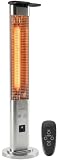
- INSTANT WARMTH: Relax on cool days with our patio heaters for outdoor use, delivering sun-like, odorless heat in seconds—no gas or propane needed. Two heat levels and a remote control ensure immediate, convenient comfort.
- WEATHER-RESISTANT: With an IP65 rating, this patio heater's aluminum alloy frame ensures durability and corrosion resistance, ideal for outdoor spaces.
- ENERGY EFFICIENCY - Our ETL-certified 900-watt infrared outdoor space heater features high-efficiency carbon fiber heating elements. With an 88% efficiency rating, this heater helps reduce your energy costs.
- 15 SQ. FT. HEATING RANGE: The 37.4" outdoor patio heater effectively warms areas up to 15 sq. ft, making it ideal for gazebos, patios, outdoor cafes, and various indoor or outdoor living spaces.
- SAFETY FEATURES: This outdoor heater includes a 360-degree tip-over switch, overheat protection, and a mesh guard to prevent contact with the heating element, ensuring safety for children and pets.
For natural gas heaters, check input BTU, mounting type, required gas pressure, appliance listing, shutoff requirements, clearances, wind rating, ignition type, service access, and whether your gas system has enough capacity. The heater price is only one line item. The gas route, permit, inspection, trenching, wall repair, and finish work can cost more than the appliance.
When to DIY vs When to Hire a Pro
Reasonable DIY work
Buying and assembling a freestanding propane patio heater is a reasonable DIY project for many homeowners. Expect 45 to 90 minutes for assembly, depending on hardware quality and instructions. Use two people when lifting the reflector or aligning the pole. Leak-check propane connections according to the manual, keep the unit level, and test the tip-over shutoff if the manufacturer provides a procedure.
Plug-in electric heaters can also be DIY when they are used exactly as listed: plugged into a suitable outdoor GFCI-protected receptacle, mounted to approved structure with the included bracket, and kept within the manufacturer’s clearance limits. The mounting surface matters. Thin soffit material, hollow trim, and decorative paneling are not structural supports.
Hire a pro for these situations
Hire an electrician for hardwired heaters, new outdoor circuits, new breakers, GFCI changes, conduit runs, smart controls, or any installation where the existing circuit load is uncertain. A finished covered patio with fans, lighting, TV, refrigerator, and heaters may need load calculations and panel review.
Hire a licensed plumber or mechanical contractor for natural gas heaters, propane hard-piping, gas stubs, shutoff valves, pressure testing, or gas-line resizing. Gas work is not the place to improvise. A permit and inspection are often required, and the line must be sized for all connected appliances, not just the new heater.
Hire a contractor when the heater affects the structure: adding blocking above a finished ceiling, modifying a pergola, routing conduit through masonry, trenching under pavers, protecting wood or composite materials, or coordinating heat with an outdoor kitchen. On new builds, heater planning should happen before rough electrical, rough gas, framing inspection, and finish installation.
Best Patio Heater Setup by Scenario
Budget open patio
Choose one 46,000 to 50,000 BTU propane tower, a fitted weather cover, and a spare 20-lb cylinder. Budget $180 to $350 total depending on heater quality and tank setup. This is the most flexible option for renters and homeowners who do not want construction work.
Covered porch with two lounge chairs
Choose one or two electric infrared heaters aimed at the seating positions. A single 1,500-watt plug-in unit may work for a small zone. A cleaner permanent setup may use a hardwired unit with a wall switch or controller. Budget $150 to $600 for a simple plug-in approach, or $700 to $2,500+ for a better hardwired installation depending on electrical access.
Free tools Windows power users keep installed
One-click scans. No signup required.
New pergola or outdoor room
Plan heater locations during design. Add blocking, conduit, dedicated circuits, switch boxes, and gas stubs before finish work. Decide where chairs and dining seats will actually sit. Budget $1,500 to $5,000+ for a multi-heater permanent setup depending on electric versus gas, number of zones, finish materials, and permit requirements.
Outdoor kitchen with frequent entertaining
Consider natural gas or hardwired electric infrared. If a gas grill line is already planned, ask the plumber to evaluate capacity for heaters at the same time. If the electrical panel is being upgraded for the kitchen, coordinate heater circuits before surfaces are closed. This is where planning can save thousands compared with retrofitting after stone, tile, ceiling boards, and finished walls are complete.
Final Recommendation
If you have an open patio and want heat without construction, buy a sturdy 46,000 to 50,000 BTU propane tower with good safety shutoffs, a wide reflector, wheels, and corrosion-resistant hardware. It is still the most practical high-output patio heater for the money.
If you have a covered patio, porch, pergola, or fixed seating area, start with electric infrared. Measure clearances, aim heat at the seats, and have an electrician review the circuit if you need more than one plug-in unit or any hardwired heater.
What’s actually slowing this PC down?
Pick the symptom - the matching free tool is one click away.
If you are building a permanent outdoor living space, consider natural gas or hardwired electric as part of the construction plan. The heater itself may not be the expensive part. The real cost is routing utilities cleanly, passing inspection, and building a layout that keeps heat where people sit without creating clearance or safety problems.
The right patio heater is the one your structure can support safely, your utilities can power, and your seating layout can actually feel. Buy for those three conditions first, and the brand decision becomes much easier.
Frequently Asked Questions
Are propane or electric patio heaters better for a covered patio?
Electric infrared heaters are usually better for covered patios because they can be wall- or ceiling-mounted, aim heat directly at seating, and avoid an open propane flame under a roof. You still must follow the heater’s clearance table and use proper outdoor-rated electrical installation.
How much does it cost to run a patio heater in 2026?
At about 18.8 cents per kWh, a 1,500-watt electric heater costs roughly $0.28 per hour and a 2,400-watt unit costs about $0.45 per hour. A 48,000 BTU propane heater uses about 0.52 gallons per hour, or about $1.40 per hour at EIA bulk propane pricing, often closer to $2 to $4 per hour with retail cylinder exchange.
How many BTUs do I need for an outdoor patio heater?
For an open residential patio, full-size propane heaters commonly produce 46,000 to 50,000 BTU per hour and serve one seating or dining zone. Tabletop propane units around 10,000 to 12,000 BTU are suitable for one small table. For covered zones, watts and placement matter more than BTU because infrared electric heaters heat people directly.
Can I put a patio heater under a pergola, awning, or covered porch?
Only if the heater is listed for that use and the actual installation meets the manufacturer’s required overhead and side clearances. Check beams, fabric, curtains, fans, TVs, screens, and trim. Many propane towers are a poor fit under low covers, while properly mounted electric infrared heaters are often more practical.
How long does a 20-lb propane tank last on a patio heater?
A standard 20-lb propane cylinder contains roughly 430,000 BTU. A 48,000 BTU per hour heater can run about 9 hours at full output in simple math. Real runtime varies with temperature, regulator performance, wind, heater setting, and how full the cylinder actually is.
When should I hire a professional for a patio heater installation?
Hire a pro for hardwired electric heaters, new outdoor circuits, natural gas lines, propane hard-piping, gas shutoffs, pressure testing, mounting into finished ceilings, or any installation that needs permits. Portable propane heaters and some plug-in electric units can be DIY when installed exactly according to the manual.
Quick Recap
Product prices and availability are accurate as of the date/time indicated and are subject to change. Any price and availability information displayed on Amazon at the time of purchase will apply.

