Free tools Windows power users keep installed
One-click scans. No signup required.
Some links on this page are affiliate links: if you buy through them we may earn a commission, at no extra cost to you.
A good one-touch can opener should do three things well: start with minimal hand force, cut cleanly without wrist twisting, and fit naturally into the kitchen prep zone where cans are actually used. For most homeowners, the best choice in 2026 is a mainstream handheld one-touch model in the $25 to $45 range, especially if it has auto shutoff, a smooth-edge side-cut blade, a lid magnet or lift, and a shape that is easy to position on common household cans.
That said, the “best” opener changes with the kitchen and the person using it. A lightweight battery model may be right for a small apartment kitchen. A stable countertop electric opener may be better for someone with tremor, low vision, or severe hand weakness. A rechargeable one-touch opener can be convenient, but only if the charging location is easy to reach and safely placed away from splash zones.
As an Amazon Associate I earn from qualifying purchases.
Recommended Free Tools
On our kitchen remodel and punch-list work, we see the same pattern again and again: homeowners buy helpful small appliances, then store them where they are hard to reach, hard to plug in, or poorly lit. A one-touch can opener is inexpensive, usually about $10 to $70, but it works best when the surrounding kitchen supports it. That means usable counter space, reachable outlets, under-cabinet lighting, shallow storage, nearby trash or recycling, and enough clearance for the user to operate the tool without fighting clutter.
Best One-Touch Can Opener Choices by Use Case
If you want a practical shortlist, start by matching the opener type to the user instead of starting with brand, color, or online rating. The right opener for a healthy adult who opens two cans a week is not always the right opener for an older homeowner with arthritis who opens soup, tomatoes, tuna, and pet food every day.
Popular on Amazon

- 𝐎𝐧𝐞 𝐓𝐨𝐮𝐜𝐡 𝐄𝐥𝐞𝐜𝐭𝐫𝐢𝐜 𝐂𝐚𝐧 𝐎𝐩𝐞𝐧𝐞𝐫 -- This black electric can opener streamlines the opening process with simple one-touch control. The automatic can opener starts and stops smoothly, reducing the hand effort normally required with a manual can opener. This design is helpful for users dealing with Rheumatoid Arthritis or Carpal Tunnel discomfort who prefer a lighter, easier kitchen routine
- 𝐅𝐢𝐭𝐬 𝐟𝐨𝐫 𝐀𝐥𝐥 𝐂𝐚𝐧𝐬 -- Made with durable stainless steel, this can opener electric works with round, square, and oval cans. The electric can opener provides stable assistance in daily cooking. Its smooth rotation can also support users with occasional Tendinitis symptoms who want a simpler way to open cans
- 𝐒𝐮𝐢𝐭𝐚𝐛𝐥𝐞 𝐟𝐨𝐫 𝐄𝐯𝐞𝐫𝐲𝐨𝐧𝐞 -- This can openers for seniors and home cooks offers ease and convenience in any kitchen. It is suitable for daily use and can be a thoughtful option for Thanksgiving, holidays, or Christmas. The electric can opener also supports users experiencing mild Frozen Shoulder stiffness by reducing the need for arm rotation
- 𝐄𝐚𝐬𝐲 𝐭𝐨 𝐔𝐬𝐞 -- Place the electric can opener on the can, press the button to activate, and the automatic can opener rotates steadily along the lid. Press again to stop within about 2 seconds. This helps anyone—including users with Arthritis—open cans with less strain compared with traditional tools. A practical can opener electric for all ages
- 𝐏𝐨𝐰𝐞𝐫𝐟𝐮𝐥 𝐂𝐚𝐧 𝐎𝐩𝐞𝐧𝐢𝐧𝐠 -- The electric can opener maintains consistent turning power whether opening large or small cans. It can handle continuous use, making this can opener suitable for busy home kitchens, RVs, or compact spaces. Users with occasional arm or wrist strain, such as Cubital Tunnel discomfort, may appreciate the reduced effort
Best overall for most kitchens: handheld one-touch smooth-edge opener
A handheld one-touch smooth-edge opener is the most flexible option for most households. It stores in a drawer, works without a permanent countertop footprint, and usually requires only a single button press. In 2026, a reliable mainstream model typically falls between $25 and $45. At that price, look for true one-touch start and stop, auto shutoff, a side-cut blade, enough motor strength for standard 10.5-ounce soup cans and 28-ounce tomato cans, and a lid magnet that does not drop the lid back into the food.
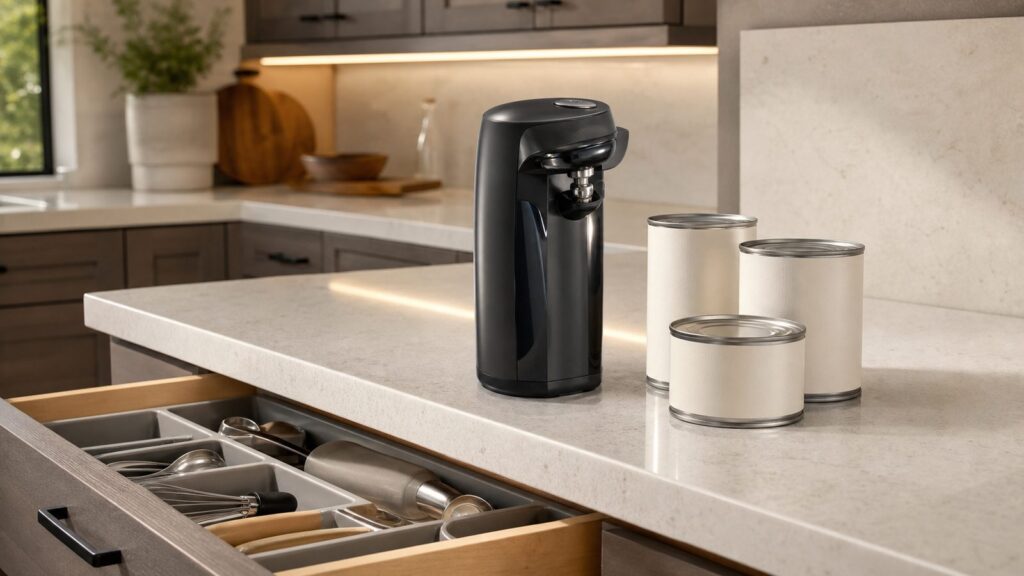
The practical advantage is storage. If the opener can live in a shallow top drawer within 24 to 36 inches of the main prep counter, most users will actually use it. If it gets buried in a deep utility drawer or put above the refrigerator, the accessibility benefit disappears.
Best for seniors with arthritis: large-button one-touch opener
For arthritis, prioritize low force over extra features. A good arthritis-friendly opener should not require squeezing handles together, twisting a crank, or holding a can at an awkward angle for 20 seconds. CDC data shows arthritis affects a large share of American adults: 21.3% of adults age 18 and older had diagnosed arthritis in 2024, and a 2025 CDC analysis estimated 67.1 million adults age 20 and older had diagnosed arthritis. This is not a niche concern; it is a normal kitchen design issue.
For these users, look for a large button, light body weight, smooth exterior shape, automatic shutoff, and clear visual or tactile feedback that the opener has started. A countertop model may be better than a handheld model if the user has trouble placing a small device accurately on the can rim.
Best budget option: AA-battery one-touch opener
Budget handheld models often run about $10 to $20. They can be a good low-risk purchase for occasional use, guest suites, RVs, or a secondary prep area. The tradeoff is consistency. Lower-cost models may have weaker motors, less precise cutting assemblies, shorter warranty support, and more trouble with dented cans or oversized cans.
If you choose a battery model for someone with limited dexterity, think through the whole system. AA batteries in a sealed blister pack on a high shelf are not accessible. Store spare batteries in an easy-open container in the same drawer or choose a rechargeable model with a simple charging routine.
Best for heavy use: countertop electric can opener
Countertop electric can openers usually cost about $25 to $60. They take up more space, but they can be easier to align and operate, especially for tall cans or repetitive cooking. A stable base, tall-can clearance, removable cutting assembly, and simple lever action matter more than built-in knife sharpeners or bottle openers.
For a homeowner who opens cans daily, a countertop unit can justify its footprint. Plan for a counter zone roughly 12 inches wide by 12 inches deep, plus room to set the opened can down. Avoid placing it directly beside the sink where cords, splashing, and wet hands create avoidable problems.
Cost Comparison for 2026
One-touch can openers are small purchases, but prices still vary enough to matter. Household goods pricing has been moving with broader inflation pressure; the June 2026 CPI reported household furnishings and operations up 2.5% year over year. Promotional pricing also swings widely, especially around holidays and major online sales.
Also popular on Amazon
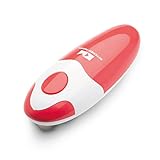
- Effortless Can Opening: Hand free operation for seniors, arthritis sufferers, and everyone who wants convenience. Open cans with simple one-touch ease
- Smooth & Safe Edges: Our blade cuts along the side of the can, leaving smooth edges and no sharp parts for safer kitchens
- Battery Operated & Portable: Cordless, no fuss. Lightweight and compact for travel, camping, or small kitchens
- User-Friendly Design: Ergonomic and easy to hold. Suitable for those with limited hand strength with arthritis
- Thoughtful Gift: A practical kitchen gift for elderly loved ones, caregivers, or anyone who appreciates stress-free kitchen appliances and gadgets
| Type | Typical 2026 Cost | Best For | Main Tradeoff |
|---|---|---|---|
| Budget handheld battery opener | $10-$20 | Occasional use, small kitchens, backup opener | Weaker motors and less consistent performance on dented or large cans |
| Mainstream handheld one-touch opener | $25-$45 | Most kitchens, arthritis-friendly prep, drawer storage | Requires accurate placement on the can rim |
| Countertop electric opener | $25-$60 | Daily use, users with grip weakness, tall cans | Takes permanent counter or cabinet space |
| Premium or specialty accessibility opener | $50-$70+ | Rechargeable use, gift setups, multi-opener features | Higher cost and sometimes more complicated charging or cleaning |
As a benchmark, several well-known one-touch and hands-free models were selling in the mid-$30 range in 2026, with some official pricing around $34.99 and many big-box listings from about $9.99 to $69.99. For most homeowners, the value range is $25 to $45. Below that, quality gets hit-or-miss. Above that, make sure you are paying for a real benefit such as rechargeable power, better ergonomics, stronger support, or a more stable design.
Features That Matter More Than Brand
A one-touch opener is a mechanical tool first and a kitchen gadget second. We evaluate them the same way we evaluate cabinet hardware or drawer slides on a remodel: does it work repeatedly, does it reduce effort, and does it hold up under normal use?
True one-touch operation
Some products use “one-touch” loosely. The better versions start with one press, travel around the can without being held the entire time, and stop automatically or with a simple second press. If the user must squeeze, guide, and fight the opener through the cut, it is not solving the main problem.
Smooth-edge cutting
Side-cut or smooth-edge openers cut below the rim and often leave a lid that is less sharp than a traditional top-cut lid. That can reduce cut risk and makes lid removal cleaner. It does not make the can harmless. The lid and can edge can still have sharp spots, especially if the can is damaged, the blade is dull, or the opener slips out of alignment.
Lid control
A lid magnet, lid lift, or clean separation system is worth having. Without it, the user may still need to fish a lid out of food, which defeats part of the safety benefit. Check whether the magnet actually holds the lids from the cans you buy most: tuna cans, pet-food cans, soup cans, tomato cans, and large vegetable cans can behave differently.
Power type
AA-battery models are inexpensive and simple, but batteries need replacement. Rechargeable models reduce battery handling, but the charging cord and port must be accessible. Countertop plug-in models avoid battery maintenance, but they depend on a safe, code-compliant outlet location and a cord path that does not cross a sink or burner zone.
Cleaning access
Cutting wheels and lid-contact parts can collect food residue. Choose a model with a removable or easy-to-wipe cutting assembly. If the mechanism is hard to see and harder to clean, it can become sticky, unsanitary, or unreliable.
Test the Opener Before the Return Window Closes
Do not judge a can opener by one perfect can. Before keeping it, test it with 3 to 5 cans your household actually uses. Include a small tuna can, a standard soup can, a 28-ounce tomato can, one pull-tab can, and one slightly dented can if you have one. If the household buys large commercial-size cans, test those too.
Watch for four things. First, the opener should attach without multiple frustrating attempts. Second, it should complete the cut without stalling. Third, the lid should separate cleanly without falling into the food. Fourth, the user should be able to remove, clean, and store the opener without pain or confusion.
This testing takes 10 to 15 minutes and tells you more than a star rating. If the opener cannot handle your pantry staples while it is new, it will not get better after six months in a drawer.
Also popular on Amazon

- 【Advanced PRO model 】 – Beauty, brains and power.The Canslab Ultrablade PRO brings kitchen can opener into modern times with its powerful motor, easy-to-use design, and stylish appearance. Autop stop, reduced noise, faster and more steady cutting, fast USB rechargeable, easy one touch operation, magnetic lid lifter, smooth edge, food safe, easy storage are some of the enhanced features built into the sleek and ergonomic black electric can opener.
- 【True ONE-TOUCH Operation with Auto Shut-off】 - The upgraded smart chip allows the opener to automatically shut off when the cut is complete. Saving you time and energy by freeing up your hands for other cooking tasks . It is a set and forget.
- 【USB Rechargeable】 - Canslab USB rechargeable can opener has a built-in 2000mAh rechargeable battery that opens approximately 120 cans*, which is 4 times the quantity cut by the aa batteries type until the batteries are drained. It is a cost-effective choice. Best for home kitchen and outdoor camping. *Data from Canslab lab, can sized 10.75oz. The number of cans opened may vary depending on the size of the can.
- 【Side Cut Tech for Smooth Lids 】- The heavy duty hands free can opener cuts along the side of the lid rather than the top leaving a safe smooth edge, without touching the food inside. The underside magnet catch the lid and makes it easy to remove the lid. There is built-in retractable lid picker to help easily remove lids from sticky food cans or high-pressure ones.
- 【Reduced Noise and Faster Speed】 - The robust industrial leading motor enables the Canslab automatic can opener to open cans with 28% less noise and 28% more speed, compared with the old fashioned aa battery type can opener. Just press the easy-touch start/stop button for hands-free, painless use.
Design the Can-Opening Zone, Not Just the Gadget
For a construction company, this is where the conversation gets practical. The opener is only one piece of an accessible prep zone. A strong setup puts can storage, the opener, a landing surface, trash or recycling, and lighting within a short reach path.
In a well-planned kitchen, everyday tools should sit between knee and shoulder height. For many adults, that means roughly 24 to 54 inches above the finished floor. Avoid storing frequently used openers in upper cabinets above 60 inches, deep pantry shelves, or cabinets over the range. Those locations force reaching, twisting, or stepping, which is exactly what the opener is supposed to reduce.
Drawer and cabinet placement
A shallow top drawer near the main prep counter is usually best for handheld openers. Use a drawer insert or small tray so the opener does not get buried under spatulas and peelers. For countertop electric openers, plan either a permanent counter location or an appliance garage with a usable outlet and enough ventilation. Do not bury a daily-use opener behind a stand mixer, toaster, or stack of cutting boards.
Do these 3 things before closing this tab:
1Clear out junk files and repair common Windows errors2Scan for outdated or missing drivers - takes under a minute3Repair Windows errors before they cause bigger problemsCounter landing space
Leave at least 18 inches of clear landing space beside the opener zone when possible. That gives the user room to set down the unopened can, operate the opener, remove the lid, and move the food to a pot or bowl. In tighter kitchens, even a clear 12-inch section can make a difference if it is intentionally kept open.
Lighting
Under-cabinet lighting is one of the most useful upgrades for aging-in-place kitchens. Good task lighting helps the user align the opener, see whether the lid has separated, and avoid spills. We typically look for continuous LED task lighting over the prep zone, switched or dimmed where it can be reached easily, with no dark gap directly where cans are opened.
Outlet and Remodel Considerations
A battery-operated opener does not need a wall outlet during use, but charging stations, countertop openers, appliance garages, and revised prep zones often bring electrical planning into the project. Kitchen receptacle rules are detailed, and local adoption of electrical codes can vary. During a remodel, outlet changes may trigger permit and inspection requirements.
For kitchen work, plan more usable outlets than the bare minimum. The issue is not just code spacing; it is whether cords can be routed safely and whether the appliance can be used without crossing the sink, cooktop, or a main walking path. Many kitchen receptacles now involve GFCI protection, AFCI protection, tamper-resistant devices, and specific rules for islands, peninsulas, countertops, and wet areas. Your local inspector has the final say.
What’s actually slowing this PC down?
Pick the symptom - the matching free tool is one click away.
If you are adding an outlet inside an appliance garage, relocating a receptacle, changing circuits, adding under-cabinet lighting, or opening walls during a kitchen refresh, involve a licensed electrician. The cost varies heavily by region, wall access, panel capacity, finish materials, and permit requirements. A simple device replacement is very different from fishing new cable behind tile backsplash or adding a circuit from a full panel.
When to DIY vs. When to Hire a Pro
Buying and testing a one-touch can opener is a simple DIY task. Most homeowners can compare models, load batteries, charge the unit, and test common cans in under 30 minutes. Organizing a drawer with a tray or moving the opener to a more reachable cabinet is also usually DIY.
Also popular on Amazon

- 𝐎𝐧𝐞 𝐓𝐨𝐮𝐜𝐡 𝐄𝐥𝐞𝐜𝐭𝐫𝐢𝐜 𝐂𝐚𝐧 𝐎𝐩𝐞𝐧𝐞𝐫 -- This electric can opener streamlines the opening process with simple one-touch control. The automatic can opener starts and stops smoothly, reducing the hand effort normally required with a manual can opener. This design is helpful for users dealing with Rheumatoid Arthritis or Carpal Tunnel discomfort who prefer a lighter, easier kitchen routine
- 𝐅𝐢𝐭𝐬 𝐟𝐨𝐫 𝐀𝐥𝐥 𝐂𝐚𝐧𝐬 -- Made with durable stainless steel, this can opener electric works with round, square, and oval cans. The electric can opener provides stable assistance in daily cooking. Its smooth rotation can also support users with occasional Tendinitis symptoms who want a simpler way to open cans
- 𝐒𝐮𝐢𝐭𝐚𝐛𝐥𝐞 𝐟𝐨𝐫 𝐄𝐯𝐞𝐫𝐲𝐨𝐧𝐞 -- This can openers for seniors and home cooks offers ease and convenience in any kitchen. It is suitable for daily use and can be a thoughtful option for Thanksgiving, holidays, or Christmas. The electric can opener also supports users experiencing mild Frozen Shoulder stiffness by reducing the need for arm rotation
- 𝐄𝐚𝐬𝐲 𝐭𝐨 𝐔𝐬𝐞 -- Place the electric can opener on the can, press the button to activate, and the automatic can opener rotates steadily along the lid. Press again to stop within about 2 seconds. This helps anyone—including users with Arthritis—open cans with less strain compared with traditional tools. A practical can opener electric for all ages
- 𝐏𝐨𝐰𝐞𝐫𝐟𝐮𝐥 𝐂𝐚𝐧 𝐎𝐩𝐞𝐧𝐢𝐧𝐠 -- The electric can opener maintains consistent turning power whether opening large or small cans. It can handle continuous use, making this can opener suitable for busy home kitchens, RVs, or compact spaces. Users with occasional arm or wrist strain, such as Cubital Tunnel discomfort, may appreciate the reduced effort
Hire a pro when the improvement affects electrical work, cabinetry, lighting, or accessibility planning beyond a single gadget. That includes adding or relocating receptacles, installing under-cabinet lighting, building a new appliance garage, modifying cabinets for pull-out shelves, changing island or peninsula electrical layouts, or planning a kitchen for aging in place after surgery, arthritis progression, or mobility changes.
A small accessibility upgrade can be bundled efficiently with other work. If a backsplash is already being replaced, that is the time to review outlet locations. If cabinets are being refaced or replaced, that is the time to add pull-outs, shallow drawers, and better tool storage. If lighting is being upgraded, that is the time to make sure the primary prep counter is evenly lit.
Quick wins for a faster PC:
Scan for outdated or missing drivers - takes under a minuteDriver Scan →Clear out junk files and repair common Windows errorsFree Scan →Common Mistakes to Avoid
The first mistake is buying only by rating. Online reviews rarely tell you whether the opener works on your exact cans, with your grip strength, in your actual kitchen layout. Test real cans before the return window closes.
The second mistake is choosing a battery model for accessibility, then making battery replacement difficult. If the user cannot open the battery compartment, handle small batteries, or reach the storage location, choose rechargeable or countertop power instead.
The third mistake is assuming smooth-edge means no sharp edges. Smooth-edge openers reduce some risks, but damaged cans, thin lids, and poor alignment can still create sharp metal.
The fourth mistake is bad storage. A one-touch opener stored in an upper cabinet, a deep pantry shelf, or a cluttered drawer is not accessible. Put it where the user can reach it without bending low, reaching high, or moving three other appliances.
The Tool Desk
Outbyte PC Repair FREERepair Windows errors before they cause bigger problemsFix Now →Outbyte Driver Updater FREEFix the driver behind crashes, sound loss and screen glitchesFind Drivers →The fifth mistake is adding appliances without checking electrical layout. Cords near sinks, overloaded countertop zones, and poorly placed charging stations create daily annoyances and potential hazards. In remodel work, these details should be planned, not improvised after the cabinets are installed.
What Most Product Roundups Miss
Most can opener comparisons focus on cutting speed, price, and whether the opener looks good on the counter. Those details matter, but they are not enough for a homeowner designing a kitchen that works for the next 10 to 20 years.
The missing piece is the built environment. An accessible can-opening setup needs the right reach height, the right light, the right outlet location, the right drawer or counter space, and the right waste path. It also needs to match the user’s real limitations. Someone with mild wrist pain may do well with a compact handheld opener. Someone with tremor or low vision may need a stable countertop model and stronger lighting. Someone with severe hand weakness may need caregiver-tested placement, not just a better gadget.
Also popular on Amazon

- Effortless One-Button Operation:Simplify your kitchen routine. This automatic can opener makes opening cans as easy as pressing a button. It operates hands-free, completing a perfect cut and using a magnet to retrieve the lid, which keeps your hands clean and safe from contact.
- Family-Safe Can Opening:Your safety is engineered into every cut. This electric can opener is designed to leave a smooth, blunt edge on cans, protecting you and your family from sharp metal. The magnetic lid lifter provides safe, hygienic lid removal.
- Long-Lasting Zero-Waste Power:Choose a greener option. This rechargeable can openers comes with a powerful, long-life battery and a Type-C charging cable. A single full charge supports opening 60+ cans, making it a reliable, zero-waste appliance that performs consistently, opening many cans per charge.
- Easy Grip For Weak Hands:Specifically crafted to aid those with physical limitations, this can opener for seniors features an easy-grip body and simple controls. It’s a versatile electric can opener that empowers individuals with arthritis or weak hands to prepare meals independently.
- Style Meets Practical Gifting:With its modern, attractive design, this top rated can opener enhances any kitchen's style. It’s a thoughtful and practical gift that combines elegant looks with the invaluable benefit of effortless, safe can opening for loved ones.
That is why we treat one-touch can openers as part of a prep zone. The tool should sit near canned goods, near a clear work surface, near trash or recycling, and near the cookware or bowl where the food is going next. When those pieces are within a short reach path, the kitchen feels easier without looking institutional.
Outdated Drivers Are Slowing You Down
One free scan finds every outdated or missing driver and matches the right update for your exact hardware.Free scan · exact hardware matchWindows Errors? Fix Them Before They Spread
Repair common Windows errors and clear accumulated junk for a smoother, more stable PC - no reinstall needed.Free scan · no reinstallOur Practical Buying Checklist
Before buying, answer these questions. Does the opener work with the cans you use weekly? Can the user start it with one finger or a light press? Is the button large enough to see and feel? Does it shut off automatically? Does it leave a smoother edge? Does it control the lid? Can it be cleaned without tools? Can the user replace batteries or charge it without help? Does it fit in a reachable drawer or a stable counter location?
For most homes, the sweet spot is a $25 to $45 handheld one-touch smooth-edge opener stored in a shallow drawer at the primary prep counter. For heavier use or greater physical limitations, a $25 to $60 countertop electric model may be the better long-term choice. For occasional use, a $10 to $20 budget model can be fine as long as it passes your real-can test.
The larger lesson applies across kitchen design: small tools work best when the room is built to support them. A one-touch can opener can reduce grip force, wrist twisting, and sharp-lid handling, but only if it is reachable, visible, powered, clean, and used in a clear prep area. That is the difference between buying another gadget and making the kitchen genuinely easier to live with.
Frequently Asked Questions
What is the best one-touch can opener for seniors with arthritis?
For most seniors with arthritis, choose a lightweight one-touch opener with a large button, auto shutoff, smooth-edge cutting, and a lid magnet. If placement on the can rim is difficult, a stable countertop electric opener may be better than a handheld model.
Are smooth-edge electric can openers safer than regular can openers?
They can reduce sharp lid rims because they usually cut from the side rather than through the top. They are not risk-free, though. Damaged cans, thin lids, and misalignment can still leave sharp metal edges.
Do one-touch can openers work on all can sizes?
No. Many work well on standard soup, vegetable, tuna, and tomato cans, but some struggle with dented cans, very small cans, oversized cans, or unusual rims. Test 3 to 5 common household cans before keeping one.
Is a battery-operated or rechargeable can opener better?
Battery models are inexpensive and simple, usually about $10 to $20 for budget versions. Rechargeable models reduce battery handling but need an easy, safe charging location. For limited dexterity, the charging routine matters as much as the opener itself.
Do I need a permit to add an outlet for a kitchen can opener or charging station?
Often, yes, if you are adding or relocating wiring rather than simply using an existing receptacle. Kitchen electrical work may involve GFCI, AFCI, countertop spacing, island, peninsula, and local inspection rules. Check with your local building department or electrician.
Quick wins for a faster PC:
Repair Windows errors before they cause bigger problemsFix Now →Scan for outdated or missing drivers - takes under a minuteDriver Scan →Where should I store a can opener in an aging-in-place kitchen?
Store it between knee and shoulder height, ideally in a shallow drawer near the main prep counter. Keep it close to canned goods, trash or recycling, and a clear landing surface so the user does not have to reach, bend, or carry open cans across the kitchen.
Quick Recap
Product prices and availability are accurate as of the date/time indicated and are subject to change. Any price and availability information displayed on Amazon at the time of purchase will apply.

