The Tool Desk
Outbyte Driver Updater FREEFix the driver behind crashes, sound loss and screen glitchesFind Drivers →Outbyte PC Repair FREEClear out junk files and repair common Windows errorsFree Scan →The best mini split depends on what you need it to do. Mitsubishi, Daikin, and Fujitsu are strong candidates for professionally installed premium systems, while MRCOOL, Senville, GREE, and Pioneer offer budget or DIY-oriented alternatives. The right choice depends on your climate, heating requirements, room size, single-zone or multi-zone design, installation method, warranty, and local service support—not just the highest SEER2 rating.
This guide explains which mini-split type fits each project, how to compare heating and cooling performance, how to size the system correctly, and which installation details determine whether it performs well.
As an Amazon Associate I earn from qualifying purchases.
Quick recommendations
| Use case | Best direction to investigate | What matters most |
|---|---|---|
| Premium all-around system | Mitsubishi, Daikin, or Fujitsu | Installer quality, heating performance, parts, warranty, and sound |
| Cold-climate heating | Mitsubishi Hyper-Heat-type, Daikin Aurora-type, or Fujitsu cold-climate lines | Capacity at 5°F or lower, low-temperature COP, defrost behavior, and backup heat planning |
| Budget professional installation | Senville, GREE, Pioneer, or selected MRCOOL systems | Matched-system certification, service availability, warranty, and installed cost |
| DIY-oriented installation | MRCOOL DIY family | Quick-connect requirements, permits, electrical work, and warranty conditions |
| Single-room cooling | A correctly sized single-zone system | Humidity control, noise, cooling efficiency, and price |
| Whole-home zoning | Established Mitsubishi, Daikin, Fujitsu, LG, or comparable multi-zone platform | Indoor-head combinations, simultaneous operation, balance, and serviceability |
| Garage or workshop | Single-zone cooling or heat-pump system matched to the space | Insulation, dust, low-temperature use, drainage, and electrical capacity |
These are buying directions, not universal rankings. Exact performance applies to a specific matched indoor and outdoor unit combination. Check the current ENERGY STAR product finder and the AHRI directory or manufacturer submittal before purchasing.
Recommended Free Tools
What is a mini split?
A mini split is a permanently installed ductless air conditioner or air-source heat pump. It normally includes an outdoor condenser and compressor, one or more indoor air handlers, refrigerant lines, a condensate drain, electrical wiring, and controls.
#1 Best Overall
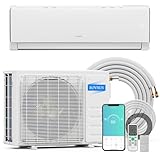
- 【All-Season Integrated Mini Split】: Our mini split air conditioner and heating system is an all-season solution, featuring air conditioning, robust heat pump, dehumidifie and fan function. It includes automatic defrosting, self-diagnosis, 24-hour timer, wind swing, sleep mode, ECO mode, and more
- 【Energy-Saving Cooling & Heating】: This split air conditioner is equipped with high-power compressor, heat pump & innovative inverter technology. Its 17 SEER2 grade ensures optimal performance in every season with 25% energy-savings rather than others' 14 SEER2 ac unit. It is also ETL and AHRI certified, guaranteeing the reliability of electricity bill savings (functioning in temperatures 5°F-122°F)
- 【WIFI-Enabled & Voice Control】: Apart from the remote control, it can seamlessly integrate with a mobile APP or voice control (compatible with Alexa/Google Assistant). Set routines for optimal temperature changes, allowing you to adjust your mini split air conditioner from anywhere so you can enjoy endless comfort as soon as you arrive home
- 【Ultra-Quiet Operation】: This air conditioner operates ultra-silently at only 29 dBa at low speed. The smart 24-hour timer and low-noise operation ensure a sweet night of sleep. More importantly, the display screen on the indoor unit can be turned off when not needed, so it won't disturb your sleep
- 【100% Satisfaction】: We are confident to stand behind our product and would like to guarantee you a best shopping experience upright position for 24 hours. Extra professional installation is required. Perfect for Home, Storage, Office, Business or Light Commercial Use. We are confident to stand behind our product and would like to guarantee you a best shopping experience
A single-zone system connects one indoor head to one outdoor unit. A multi-zone system connects several indoor heads to one outdoor unit, allowing occupants to control rooms independently. Indoor units may be wall-mounted, floor-mounted, cassette-style, or concealed in a short duct run.
A cooling-only mini split is appropriate when another system provides dependable winter heat. A mini-split heat pump reverses operation to provide both heating and cooling. ENERGY STAR describes ductless systems as useful for homes without ductwork, additions, sunrooms, garages, outbuildings, hot or cold rooms, and homes heated with electric resistance, propane, oil, radiators, or baseboards. See ENERGY STAR’s ductless heat-pump guidance.
When a mini split is a good fit
- Older homes without forced-air ducts
- Room additions, sunrooms, home offices, and guest rooms
- Finished rooms over garages
- Garages, workshops, and outbuildings
- Rooms that are consistently hotter or colder than the rest of the house
- Zoned heating and cooling
- Replacing a window or portable air conditioner
- Supplementing or replacing baseboard, radiator, propane, oil, or electric-resistance heat
A mini split may be less suitable when you want completely hidden equipment, already have usable ductwork throughout the home, cannot provide adequate outdoor-unit clearance, or lack a reliable local contractor and parts network. If every room needs a separate head, a ducted heat pump may provide a cleaner result. ENERGY STAR specifically notes that ducted equipment can be more appropriate where serviceable ductwork already exists.
Quick wins for a faster PC:
Fix the driver behind crashes, sound loss and screen glitchesFind Drivers →Clear out junk files and repair common Windows errorsFree Scan →Best mini-split brands and product directions
Mitsubishi: premium performance and zoning
Mitsubishi has a broad ductless range, multiple indoor-unit formats, strong contractor recognition in many U.S. markets, and cold-climate product families such as Hyper-Heat. It is a leading option when low-temperature heating, quiet operation, controls, and long-term service support justify a higher installed price.
The drawbacks are higher equipment and installation costs, dealer-dependent pricing, and significant differences between model families. A product appearing in an old review may be discontinued or replaced. Start with Mitsubishi Comfort and verify the exact current model combination.
Daikin: broad range and contractor support
Daikin offers single-zone, multi-zone, and cold-climate systems such as the Aurora family. It can be a strong choice when local dealer support, product availability, and manufacturer guidance are important.
Specifications, rebates, and warranty terms depend on the exact combination and installer. Daikin’s published rebate information shows a 2026 manufacturer-rebate period for certain qualifying products from May 1 through September 30, 2026, but eligibility and installation deadlines vary. Confirm current terms at Daikin’s rebate page before treating a rebate as savings.
Fujitsu: ductless specialization and indoor-unit choice
Fujitsu offers many ductless configurations, quiet high-efficiency options, and cold-climate product families. It deserves consideration where a qualified local installer can support the specific equipment.
Availability, parts support, and warranty experience vary by market. Begin with the Fujitsu General U.S. site and request current matched-system documentation.
Rank #2
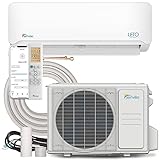
- Alexa Enabled Mini Split AC/Heating System: Integrate with voice control or app, allowing you to adjust your mini split air conditioner from anywhere. Set routines for temperature changes.
- Versatile 4-in-1 Mini Split: All-season solution with air conditioning, heat pump (functional up to 5F/-15C), dehumidifier, fan, and turbo function. Includes a DC Inverter that's UL Listed, AHRI Certified, and works with Alexa.
- Stylish & Functional Mini Split AC: Suitable for both home and business. Provides performance without compromising aesthetics. Ideal for bedrooms, living areas, stores, eateries, and warehouses.
- Installation Package Included: Includes indoor air handler, outdoor condenser, remote control, and installation kit with a 16ft. line set and communication wire. Pre-loaded with refrigerant for up to 25 ft. Note: Professional installation required.
- 5 Year Manufacturer's Warranty: Includes 5 years on parts replacement and 5 years on the compressor. Senville offers complimentary technical assistance. Labor not included.
LG: design and smart-home features
LG can appeal to homeowners who prioritize indoor-unit appearance, controls, and smart-home integration. Its HVAC lineup includes single-zone and multi-zone products.
Do not assume consumer-electronics familiarity guarantees local HVAC support. Efficiency can also differ substantially between capacity variants. Verify the exact indoor and outdoor model numbers through LG HVAC rather than relying on a retailer headline.
MRCOOL: DIY-oriented systems
Selected MRCOOL DIY systems use quick-connect line sets that can reduce some refrigerant-work complexity. They may lower installation cost for a qualified homeowner, but they do not eliminate electrical work, permits, structural work, drainage, code compliance, or commissioning.
DIY installation is not automatically legal or warranty-safe everywhere. Read the exact product terms and local requirements at MRCOOL.
Senville, GREE, and Pioneer: value-oriented alternatives
Senville, GREE, and Pioneer can be reasonable alternatives when the exact system is properly certified, supported locally, and matched to the climate. Compare cold-weather capacity, warranty coverage, parts access, refrigerant requirements, installer acceptance, and customer support—not just purchase price.
How to choose between cooling-only and heat-pump systems
Choose cooling-only equipment when winter heating is unnecessary or already handled by a dependable system. A heat pump is more versatile and can replace or supplement electric resistance, oil, propane, radiator, or baseboard heat.
For a heat pump, do not compare only the maximum heating output. Request:
- Heating capacity at 47°F
- Heating capacity at 17°F
- Heating capacity at 5°F or the local design temperature
- HSPF2 and COP at relevant temperatures
- Minimum operating temperature
- Defrost behavior
- Whether supplemental heat is required
A system advertised as operating below zero may deliver substantially less heat at that temperature. “Operates at 5°F,” “retains useful capacity at 5°F,” and “can heat the entire home without backup at 5°F” are different claims.
Understanding SEER2, EER2, HSPF2, and COP
- SEER2
- Seasonal cooling efficiency under standardized conditions. It is useful for comparison but does not predict every household’s annual bill.
- EER2
- Cooling efficiency at a defined operating condition. It can be particularly relevant in hot climates with sustained cooling loads.
- HSPF2
- Seasonal heating efficiency. It does not fully describe performance during the coldest weather.
- COP
- The ratio of heat delivered to electricity consumed at a particular temperature and operating condition. COP changes as outdoor temperature changes.
ENERGY STAR’s listed criteria for standard split heat pumps include minimum thresholds of 15.2 SEER2, 11.0 EER2, and 7.8 HSPF2. Its listed cold-climate non-ducted split criteria include 15.2 SEER2 and 8.5 HSPF2. See the current ENERGY STAR heat-pump criteria.
Rank #3

- All-in-One Comfort Control: This mini split AC/heating system provides cooling, heating, dehumidifying, and fan modes with 61°F–90°F settings, plus a 24-hour timer and sleep mode for everyday comfort
- Energy-Efficient Performance: Featuring an advanced invert heat pump with a SEER2 18 rating, this system delivers strong airflow while cutting energy usage and electricity costs without reducing comfort
- Stable & Reliable Year-Round Use: This 12,000 BTU ductless mini split AC/heating operates in extreme conditions (5°F to 122°F) and efficiently covers spaces up to 750 sq. ft. for all-season comfort
- Quiet Operation & Easy Control: This split AC unit runs quietly below 29dB to create a peaceful environment at home or work, with simple, intuitive controls for effortless daily operation
- Self-Cleaning & Warranty Protection: This Air Conditioner offers self-cleaning function, easily removable filters and air blades for convenient cleaning, plus a 5-year compressor and 7-year parts warranty
A high SEER2 rating does not automatically mean better cold-weather heating, better humidity control, lower installed cost, longer service life, or better parts availability.
Cold-climate performance: what to compare
Cold-climate buyers should examine low-temperature data, not simply a marketing label. Compare heating capacity at 5°F, 0°F, or the local design temperature; capacity retained from 47°F; minimum operating temperature; low-temperature COP; supplemental heat needs; outdoor base-pan heating; and defrost operation.
ENERGY STAR’s cold-climate designation requires a COP of at least 1.75 at 5°F and at least 70% of rated 47°F heating capacity at 5°F. That designation is useful, but it still does not prove that one head can heat every room in a particular house.
Snow and ice can block an outdoor coil, falling ice can damage equipment, and defrost cycles temporarily interrupt heating. Install the outdoor unit above likely snow accumulation, maintain airflow clearances, and plan backup heat where local winter conditions require it.
How many BTUs do you need?
Do not size a mini split from a simple BTU-per-square-foot rule. A contractor should perform a room-by-room Manual J load calculation or equivalent analysis. The calculation should account for floor area, insulation, windows and orientation, air leakage, ceiling height, occupancy, solar exposure, local outdoor design temperature, internal heat gains, and the target indoor temperature.
PC Slower Than It Used to Be?
A free scan shows the junk files, broken settings and background clutter dragging Windows down - then fixes them in one click.Free scan · Windows 10 & 11Outdated Drivers Are Slowing You Down
One free scan finds every outdated or missing driver and matches the right update for your exact hardware.Free scan · exact hardware matchENERGY STAR recommends verifying mini-split sizing with Manual J. An oversized system may short-cycle, dehumidify poorly, create temperature swings, and cost more. An undersized system may run continuously, require backup heat, and fail to maintain comfort during design conditions.
A single wall head also cannot distribute air evenly through a house with closed rooms and hallways. If several rooms require independent comfort, compare several single-zone systems with a multi-zone design rather than assuming one large head will serve the whole home.
Single-zone versus multi-zone systems
Advantages of single-zone systems
- More accurate room-by-room sizing
- Simpler installation and diagnosis
- Often lower cost per zone
- More redundancy if one system fails
- Greater flexibility for future additions
Advantages of multi-zone systems
- Fewer outdoor units
- Cleaner exterior appearance
- Independent indoor controls
- Useful where outdoor-unit space is limited
Multi-zone systems also have trade-offs. One outdoor-unit failure can affect every connected room. The outdoor unit cannot necessarily deliver the maximum output of every indoor head simultaneously. Some systems cannot heat one zone while cooling another, and minimum-load performance, branch-box arrangements, piping, and compatible combinations matter.
Ask for the manufacturer’s combination table and capacity data at the temperatures your home actually experiences. The capacity of a multi-zone system is not simply the sum of each indoor head’s maximum rating.
Free tools Windows power users keep installed
One-click scans. No signup required.
Rank #4

- Powerful 12,000 Btu Cooling & Heating: Rellytech mini split AC/heating system delivers 12,000 BTU cooling and 12,500 BTU heating, covering up to 750 sq. ft. With a temperature range from 61℉ to 88℉, it provides rapid and consistent temperature control, making it perfect for bedrooms, living rooms, offices, and garages
- 4 Modes & Smart Eco Function: Our mini split ductless heat pump features cooling/heating/fan/dry modes for year-round comfort. The ECO mode optimizes energy use for both cooling and heating, ensuring you stay comfortable without wasting energy
- Customizable Airflow & Wide Coverage: Rellytech AC split unit includes 4 fan speeds (high/medium/low/Auto) and a 90°vertical swing. Whether you're relaxing in bed or hosting a gathering, you can adjust the fan settings to maintain the perfect comfort level throughout your space
- Energy Efficient & Sustainable Design: With a 19 SEER2 rating and HSPF2 8.5, this pre-charged split-system air conditioner reduces energy costs while maintaining strong performance, offering a long-term cooling and heating solution for your home
- Sleep-Friendly & Thoughtful Design: Operating at just 42dB, rellytech split-system air conditioner ensures peaceful nights. Sleep Mode gradually adjusts the temperature for comfort. The 24-hour timer and LED-off function further reduce disturbances. Note: Requires professional HVAC installation
Installation quality often matters more than the brand
Mini-splits require careful installation and commissioning. Before signing a contract, confirm that the installer will:
- Perform or review a room-by-room load calculation
- Verify circuit, disconnect, grounding, and panel requirements
- Use the approved line-set diameter and maximum length
- Make correct flares or approved connections
- Pressure-test refrigerant lines
- Evacuate the lines with a vacuum pump where required and verify that the vacuum holds
- Install a properly sloped condensate drain
- Seal and protect the wall penetration
- Mount the outdoor unit securely above likely snow or flooding
- Maintain manufacturer-required airflow clearances
- Test heating and cooling operation
- Explain filter cleaning, controls, and warranty registration
Common failure sources include poor sizing, leaking flares, inadequate evacuation, blocked condensate drains, excessive line-set length, incorrect electrical protection, poorly placed indoor heads, and outdoor units buried by snow or blocked by vegetation.
DIY installation: when it may and may not make sense
A quick-connect system can simplify refrigerant connections, but it does not make every project a homeowner installation. Before choosing DIY, confirm all of the following:
- The exact product is designed for the proposed installation method.
- Local law allows the work and required permits are obtained.
- A qualified electrician can complete any required circuit or disconnect work.
- The wall penetration, mounting, drainage, and weather sealing can be done correctly.
- The line-set length and elevation are within the manufacturer’s limits.
- The warranty does not require authorized installation or registration.
- You have a realistic plan for future service and replacement parts.
Refrigerant-handling tools and procedures must not be recommended as though every homeowner can legally or safely use them. When in doubt, use a qualified HVAC contractor.
Do these 3 things before closing this tab:
1Clear out junk files and repair common Windows errors2Fix the driver behind crashes, sound loss and screen glitches3Repair Windows errors before they cause bigger problemsNoise, humidity, controls, and appearance
Noise ratings are standardized or laboratory measurements and may not match perceived sound in every room. Ask for both indoor and outdoor sound ratings, and consider the placement of bedrooms, property lines, and outdoor living areas.
Humidity control deserves special attention. An oversized system may cool a room quickly but shut off before removing enough moisture, leaving the space clammy. In humid climates, prioritize low-load modulation and latent-performance information; basements or shoulder-season spaces may still need a separate dehumidifier.
Wall-mounted heads are simplest and usually most economical. Cassettes, floor units, and concealed ducted units can improve appearance or air distribution but generally increase installation complexity. Smart controls are useful only if they remain serviceable and compatible with the chosen system.
Installation cost and operating cost
Equipment price is only one part of the project. Total cost may include labor, permits, electrical upgrades, line-set length, wall repairs, condensate pumps, mounting hardware, line-hide covers, surge protection, and commissioning.
What’s actually slowing this PC down?
Pick the symptom - the matching free tool is one click away.
A less expensive system may cost more overall if it requires difficult installation, has limited local support, or performs poorly in the home’s climate. Conversely, a premium system is not automatically the best value if the project only needs inexpensive seasonal cooling and dependable local service is unavailable.
Best Value

- One Unit, All Seasons — 11500 BTU for 550 Sq.Ft.: This ductless mini split replaces your window AC, space heater, and dehumidifier. It heats reliably down to -4°F with auto-defrost and maintains stable cooling at outdoor temperatures up to 122°F. Cool, Heat, Fan, Dehumidify, Turbo, Sleep, and Eco modes plus a 24H timer deliver customizable comfort for bedrooms, home offices, garages, basements, and living areas up to 550 sq.ft.
- Ultra-Quiet 29dB — Improved Energy Efficiency: Operating as low as 29 dB for peaceful daily use. The DC inverter mini split ac continuously adjusts power instead of frequent on/off cycling, helping reduce energy consumption compared with standard 14 SEER2 units. Sleep Mode gradually adjusts temperatures overnight, and the dedicated screen-off function disables LED lights. It uses low-GWP R32 refrigerant and is certified ETL & AHRI verified.
- Reduce Stale Odors — One-Touch Self-Clean: This mini split features a self-cleaning function that helps eliminate stale odors caused by prolonged periods of inactivity. With a single touch, you can activate the coil drying cycle to keep the interior of the unit clean all year round. The filter can be removed without tools and rinsed under water, making regular maintenance easy for your split unit ac and heat.
- 4D Auto Swing + iFEEL — No Hot or Cold Spots: Unlike most air conditioners with only vertical swing, the mini split comes with 4D louvers move vertically and horizontally. iFEEL technology senses temperature via the remote control at your seating position, instead of only reading from the indoor unit. Enjoy balanced airflow and reduce uncomfortable direct air blasts.
- 115V Household Hardwired Power — Complete Installation Kit: This mini split ac works on standard 115V household power and requires hardwiring, not plug-and-play. Factory pre-charged R32 refrigerant, paired with a 16.42ft copper line set and full installation kit (power cord not included). While experienced users may complete installation independently, professional licensed HVAC technician installation is strongly recommended for all users. Vacuum-pumping is required before startup. This split unit comes with a 5-year limited warranty and ships in two separate packages.
Ask contractors to separate equipment, labor, electrical work, permits, accessories, and warranty coverage in the proposal. Compare matched systems rather than brand names alone.
Tax credits, rebates, and verification
Incentives can depend on tax year, installation date, location, equipment eligibility, income rules, utility territory, and whether the system is a qualifying heat pump rather than a cooling-only unit. Federal guidance can change, and manufacturer promotions have their own deadlines.
Do not assume a retailer’s “tax credit eligible” label is current. Verify the exact model combination through current federal guidance, the manufacturer, and your electric or gas utility. Check ENERGY STAR’s ductless guidance, the Department of Energy’s purchasing guidance, and applicable IRS and state resources before committing to projected savings.
Verification checklist before naming a system the best
- Record the exact indoor-unit model number.
- Record the exact outdoor-unit model number.
- Find the matched-system AHRI certificate.
- Confirm cooling capacity and heating capacity at 47°F, 17°F, and 5°F where available.
- Check SEER2, EER2, HSPF2, and COP data.
- Verify ENERGY STAR and cold-climate status if relevant.
- Confirm minimum outdoor operating temperature.
- Check indoor and outdoor sound ratings.
- Verify circuit requirements, refrigerant type, line-set limits, and elevation limits.
- Read warranty, installation, and registration conditions.
- Confirm current availability and obtain an installed quote.
Bottom line
For a professionally installed premium system, start by comparing current Mitsubishi, Daikin, and Fujitsu matched systems with strong local contractor support. For a cold climate, choose the system with documented capacity and COP at your design temperature—not merely the one with the highest SEER2. For a budget or DIY project, investigate MRCOOL, Senville, GREE, and Pioneer carefully, while treating installation, electrical work, permits, warranty terms, and service access as part of the product.
The best mini split is the correctly sized, correctly installed system that can meet your room’s heating and cooling load, control humidity, fit your electrical capacity, and be serviced locally.
Frequently Asked Questions
Can a mini split heat an entire house?
Yes, but only with an appropriately designed system. Multiple single-zone units, a multi-zone system, or a ducted mini split may be needed to serve separate rooms; one wall-mounted head rarely distributes heat evenly through a multi-room house.
Do mini splits work below zero?
Some cold-climate heat pumps are designed to operate below zero, but operating temperature is not the same as full heating capacity. Check capacity and COP at the local design temperature and plan supplemental heat if necessary.
The Tool Desk
Outbyte PC Repair FREERepair Windows errors before they cause bigger problemsFix Now →Outbyte Driver Updater FREEScan for outdated or missing drivers - takes under a minuteDriver Scan →Can a mini split remove humidity?
Yes, while cooling, but an oversized system may run too briefly to remove enough moisture. Humid homes may need careful sizing, low-load modulation, or separate dehumidification.
What happens during a power outage?
A mini split stops heating or cooling during an outage unless the home has an appropriately sized backup power system. Restart behavior and generator compatibility should be checked with the manufacturer.
How long do mini splits last?
Service life depends on installation quality, climate, maintenance, operating hours, and parts availability. No fixed lifespan should be promised without product-specific reliability evidence.
Quick Recap
Product prices and availability are accurate as of the date/time indicated and are subject to change. Any price and availability information displayed on Amazon at the time of purchase will apply.
What’s actually slowing this PC down?
Pick the symptom - the matching free tool is one click away.

