PC Slower Than It Used to Be?
A free scan shows the junk files, broken settings and background clutter dragging Windows down - then fixes them in one click.Free scan · Windows 10 & 11Outdated Drivers Are Slowing You Down
One free scan finds every outdated or missing driver and matches the right update for your exact hardware.Free scan · exact hardware matchSome links on this page are affiliate links: if you buy through them we may earn a commission, at no extra cost to you.
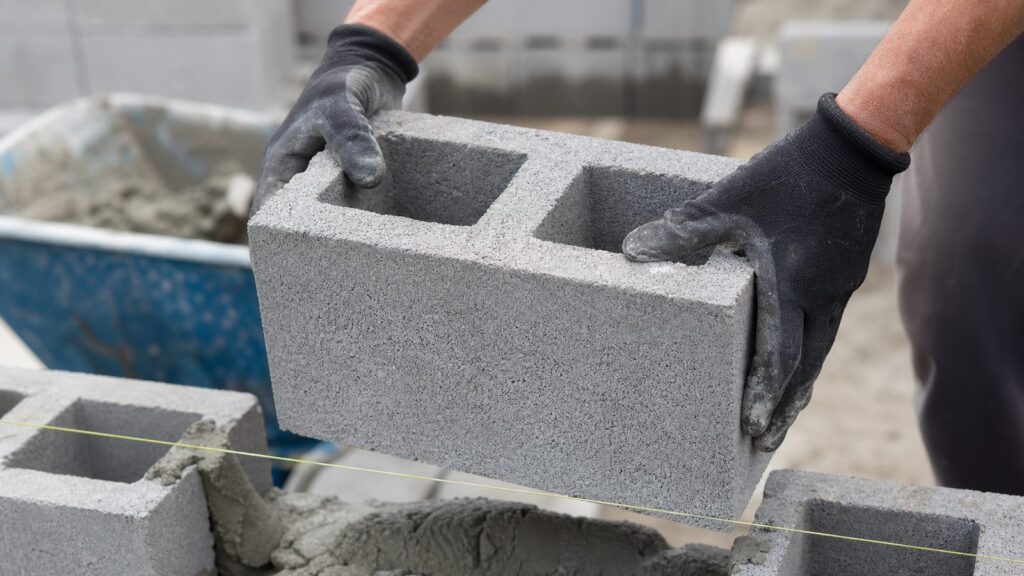
The best gloves for handling concrete blocks are not one universal pair. On a real masonry job, the right answer is usually a two-glove setup: one breathable, high-abrasion glove for dry concrete masonry units, and one waterproof, alkali-resistant glove for wet mortar, grout, fresh concrete, and washout.
If you are only moving dry 8 in. x 8 in. x 16 in. concrete blocks around a garage or small patio project, a good nitrile-coated or latex-coated knit glove with strong abrasion resistance may be enough. If you are laying block with mortar, filling cells with grout, washing tools, or touching fresh concrete, you need waterproof chemical-resistant gloves made from nitrile, neoprene, butyl rubber, or PVC. Leather and cotton can become a problem around wet cement because they hold alkaline slurry against the skin.
As an Amazon Associate I earn from qualifying purchases.
Free tools Windows power users keep installed
One-click scans. No signup required.
A standard 8 in. x 8 in. x 16 in. concrete block commonly weighs about 28 to 40 pounds, depending on density and configuration. Lightweight units may be closer to 18 to 28 pounds, while normal-weight structural CMUs can run roughly 35 to 42 pounds. After a few hundred lifts, glove grip, palm padding, fingertip wear, and cuff fit are not comfort details. They affect fatigue, dropped blocks, pinched fingers, and whether a worker keeps the gloves on.
On our job sites, we choose gloves by task first, price second, and brand last. A $4 pair that turns slick before lunch is not cheaper than a $12 pair that lasts three abrasive workdays. The goal is simple: keep hands dry when cement is wet, keep palms gripping when block is dry, and add cut or impact protection when the work adds metal, demolition, saw cutting, or repeated pinch points.
Popular on Amazon

- 【ROBUST DEFENSE】 Our 8mil thick disposable nitrile gloves offer heavy-duty protection, boasting 2-3 times the thickness of standard black disposable nitrile gloves. Experience superior puncture resistance and an excellent barrier against grease, gasoline, and various petroleum-based chemicals.
- 【RAISED DIAMOND TEXTURE FOR SECURE GRIP】 Experience superior grip with our diamond-patterned gloves, designed for non-slip performance, enhanced dexterity, and optimal tactile sensitivity. Stay connected with touchscreen compatibility, allowing you to seamlessly switch between manual and digital tasks without removing your rubber work gloves.
- 【LATEX & POWDER-FREE COMFORT】 Perfect for sensitive skin, our thick nitrile gloves are latex-free, reducing the risk of irritation. Additionally, they're powder-free, ensuring a clean workspace and providing confidence in your protection.
- 【MULTI-USE PROTECTION】 The heavy duty mechanix gloves are versatile for home and workplace applications worldwide. Ideal for food handling, sanitation, exams, automotive tasks, industrial settings, and more. Trust in reliable hand protection whenever you need it.
- 【BULK NITRILE GLOVES】 Ambidextrous design in 4 sizes [M to XXL], these thick gloves with various packaging options are essential for professionals. Backed by 60-day money back and exchange guarantee, choose NEOTRIL for your personal care supplies!
Quick Answer: The Best Glove Type by Concrete Block Task
For dry CMU handling, choose a nitrile-coated knit glove or reinforced masonry glove with ANSI/ISEA abrasion level 4 to 6, puncture level 3 to 5, a textured palm, and a reinforced thumb crotch. That combination gives better grip on rough concrete, better dexterity than bulky leather, and enough abrasion resistance for staging, stacking, carrying, and cleanup.
For wet mortar, grout, wet concrete, or washout, choose waterproof alkali-resistant gloves. Look for nitrile, neoprene, butyl, or PVC-coated gloves with a long cuff. Ordinary cotton gloves and many leather work gloves are not the right protection for wet cement exposure. Portland cement is alkaline and can cause dermatitis or caustic burns, especially when moisture and grit are trapped against the skin.
For block handling around rebar, wire mesh, metal ties, broken block edges, flashing, utility knives, or demolition debris, start with ANSI A4 or A5 cut-resistant gloves. Move up to A6 when crews are regularly handling sharp metal, broken masonry, or demo material. Cut resistance does not mean waterproof or cement-safe, so it has to be paired with the correct coating for the exposure.
For demolition, block splitting, equipment handling, or repeated knuckle exposure, consider impact-rated gloves. Look for ANSI/ISEA 138 impact ratings if back-of-hand protection is part of the buying decision. You do not need impact gloves for every block-laying task, but they make sense when pinch and strike hazards are frequent.
| Task | Best Glove Type | Key Specs to Look For | Typical 2026 Cost |
|---|---|---|---|
| Dry CMU carrying and staging | Nitrile-coated or latex-coated knit work glove | ANSI abrasion 4-6, puncture 3-5, textured palm, knit cuff | $3-$20 per pair |
| Laying block with mortar | Waterproof nitrile, neoprene, butyl, or PVC glove | Alkali resistance, long cuff, liquid barrier, washable surface | $6-$25 per pair |
| Block plus rebar or wire mesh | Cut-resistant coated glove | ANSI A4-A6 cut level, reinforced palm, good grip | $8-$25+ per pair |
| Demolition or block splitting | Impact demolition glove | Back-of-hand protection, reinforced fingertips, impact rating | $20-$35 per pair |
| Weekend homeowner project | Mid-grade coated glove plus waterproof cement glove | One pair for dry block, one pair for wet mortar | $15-$40 total |
Why Concrete Blocks Destroy Ordinary Gloves
Concrete block work is rough in a very literal way. CMUs have abrasive faces, sharp arrises, gritty webs, and hollow cores that pinch fingers when blocks are lifted, rotated, and set. Even when the block is dry, the work creates constant friction across the palm, fingertips, and thumb crotch.
The thumb crotch is one of the first places we see gloves fail. That area rubs every time a worker grabs a block by the web or corners. Once the coating splits there, grit gets into the liner, the glove loses structure, and the worker starts gripping harder to compensate. That increases fatigue and makes the glove more likely to be pulled off during repeated lifts.
Do these 3 things before closing this tab:
1Clear out junk files and repair common Windows errors2Fix the driver behind crashes, sound loss and screen glitches3Repair Windows errors before they cause bigger problemsWeight also matters. Moving a few 30-pound blocks is one thing. Moving 150 to 300 blocks over a day is another. Even a modest wall can involve thousands of pounds of cumulative handling. A 100-block delivery of normal-weight CMU can represent roughly 3,500 to 4,200 pounds of material. Gloves with a secure textured palm reduce the squeeze force needed to control each unit, especially when blocks are dusty or slightly damp.
Cheap cotton garden gloves are the wrong tool for this work. They wear quickly, absorb moisture, allow grit to grind against the skin, and offer poor grip on dusty block. Thin disposable gloves are also inadequate for block handling. They may keep a little dust off the skin, but they do not provide abrasion, puncture, or pinch protection.
Dry Block Handling: What to Buy
For dry block handling, the best daily glove is usually a nitrile-coated knit glove or a reinforced masonry glove. The glove should be snug enough that fingertips do not fold over, flexible enough to pick up line blocks and small tools, and durable enough that the palm coating does not polish smooth after a few hours.
Nitrile-coated knit gloves are a strong default because nitrile resists abrasion, grips well on dry rough surfaces, and keeps decent dexterity. Latex-coated gloves can also grip well, especially on rough masonry, but latex may not be right for workers with latex sensitivity and can vary in chemical compatibility. Reinforced leather palm gloves still have a place for dry carrying, especially where heat, sparks, or rough handling are involved, but leather is not our first choice around wet cement.
Also popular on Amazon

- HEAVY DUTY GLOVES: TitanFlex 8-mil premium nitrile gloves are 2–3 times thicker than typical disposable nitrile gloves, providing enhanced puncture resistance and excellent barrier protection against grease, gasoline, oils, automotive fluids, and many petroleum-based chemicals.
- THOR GRIP DIAMOND TEXTURE: Fully textured fingers and palms with raised diamond patterns provide up to 60% more gripping power than standard nitrile gloves while maintaining excellent dexterity for handling small parts, tools, and equipment. The raised diamond texture channels away liquids to help maintain a secure grip in wet, oily, greasy, or slippery conditions.
- HIGH VISIBILITY ORANGE: The bold orange color makes hands easier to see in garages, auto repair shops, workshops, warehouses, construction sites, and manufacturing facilities. Improved visibility helps increase safety, quickly identify contaminants or glove damage, and maintain efficiency in demanding work environments.
- LATEX & POWDER FREE: Free of natural rubber latex and powder, these disposable nitrile gloves help reduce allergic skin reactions while providing a comfortable, flexible fit for extended wear. The premium nitrile material delivers excellent durability, tactile sensitivity, and greater chemical resistance than traditional latex or vinyl gloves.
- MULTIPURPOSE APPLICATIONS: Work gloves are ideal for mechanics, automotive repair, oil changes, detailing, cleaning, construction, manufacturing, maintenance, plumbing, janitorial work, and general workshop use. Heavy-duty disposable nitrile gloves provide reliable protection for industrial, commercial, and household use. Also suitable for food handling and BBQ preparation when durable disposable protection is needed.
For a contractor buying gloves for a crew, we would start with these minimum specs for dry CMU work: ANSI/ISEA abrasion level 4 to 6, puncture level 3 to 5, textured nitrile or latex palm coating, reinforced thumb crotch, snug knit cuff, and multiple sizes from small through 2XL as needed. For a homeowner moving 20 to 60 blocks, a mid-grade coated work glove around $8 to $15 per pair is usually worth the small upgrade over bargain multi-pack gloves.
Why Coating Texture Matters
A smooth palm coating becomes slippery once it fills with concrete dust. A sandy, foam, micro-foam, or crinkle texture usually grips CMU better. The exact coating style matters less than what happens after several hours of dust, sweat, and abrasion. If the palm becomes shiny, slick, torn, or hard, replace the glove.
For crews, we recommend tracking glove life by workday instead of only by purchase price. If a $4 pair lasts half a shift and a $12 pair lasts three full shifts, the $12 glove is the cheaper working glove. It also reduces the chance that workers keep using worn-out gloves because the next pair is locked in a trailer or treated like a premium item.
Wet Mortar and Fresh Concrete: Use Chemical-Resistant Gloves
Wet cement changes the glove decision completely. Dry block handling is mostly abrasion, grip, puncture, pinch, and fatigue. Wet mortar, grout, and fresh concrete add chemical exposure because portland cement is alkaline. Skin exposure can lead to irritation, dermatitis, or caustic burns. The injury can develop slowly enough that a worker may not feel the full problem at first.
Recommended Free Tools
For wet cement work, use waterproof alkali-resistant gloves made from nitrile, neoprene, butyl rubber, or PVC. A long cuff matters when hands may be dipped into mortar tubs, grout, wet concrete, or wash water. For higher-exposure work, sleeves should overlap the glove cuff, and the cuff may need to be taped or otherwise secured so slurry cannot run inside.
Do not rely on cotton gloves for wet mortar. Do not keep working in leather gloves once they are saturated. Wet cement trapped inside absorbent gloves can stay against the skin and make exposure worse. The same applies to gloves that have cement drying inside the liner. If contaminated gloves cannot be cleaned and dried properly, replace them.
Good wet-cement practice is straightforward: wash and dry hands before putting gloves on, wash hands whenever gloves come off, keep the inside of gloves clean, and replace gloves that are soaked through, stiff with cement, torn, or contaminated inside. Barrier creams are not a substitute for proper gloves.
Do You Need Two Pairs on One Job?
Yes, most masonry jobs are easier and safer with two glove categories on site. Use breathable coated gloves for dry block staging, layout, and moving units. Switch to waterproof chemical-resistant gloves when working mortar, grout, wet concrete, washout, or any task where wet cement can stay on the hands.
Quick wins for a faster PC:
Clear out junk files and repair common Windows errorsFree Scan →Fix the driver behind crashes, sound loss and screen glitchesFind Drivers →The tradeoff is dexterity. Waterproof cement gloves are protective, but they are often bulkier and hotter. Wearing them for every dry task can make layout, stringline work, and detailed handling clumsy. That is why the two-glove strategy works better than trying to force one glove to do everything.
Cut Resistance, Puncture Resistance, and Impact Protection
Concrete blocks alone do not always require a high cut rating, but masonry jobs rarely involve only clean blocks. Crews handle rebar, ladder wire, metal ties, flashing, broken block, utility knives, saw-cut edges, demolition debris, and sometimes wire lath. That is when cut protection becomes a real buying criterion.
Also popular on Amazon
- HEAVY DUTY GLOVES: TitanFlex 8-mil premium nitrile gloves are 2–3 times thicker than typical disposable nitrile gloves, providing enhanced puncture resistance and excellent barrier protection against grease, gasoline, oils, automotive fluids, and many petroleum-based chemicals.
- THOR GRIP DIAMOND TEXTURE: Fully textured fingers and palms with raised diamond patterns provide up to 60% more gripping power than standard nitrile gloves while maintaining excellent dexterity for handling small parts, tools, and equipment. The raised diamond texture channels away liquids to help maintain a secure grip in wet, oily, greasy, or slippery conditions.
- HIGH VISIBILITY ORANGE: The bold orange color makes hands easier to see in garages, auto repair shops, workshops, warehouses, construction sites, and manufacturing facilities. Improved visibility helps increase safety, quickly identify contaminants or glove damage, and maintain efficiency in demanding work environments.
- LATEX & POWDER FREE: Free of natural rubber latex and powder, these disposable nitrile gloves help reduce allergic skin reactions while providing a comfortable, flexible fit for extended wear. The premium nitrile material delivers excellent durability, tactile sensitivity, and greater chemical resistance than traditional latex or vinyl gloves.
- MULTIPURPOSE APPLICATIONS: Work gloves are ideal for mechanics, automotive repair, oil changes, detailing, cleaning, construction, manufacturing, maintenance, plumbing, janitorial work, and general workshop use. Heavy-duty disposable nitrile gloves provide reliable protection for industrial, commercial, and household use. Also suitable for food handling and BBQ preparation when durable disposable protection is needed.
ANSI cut ratings run by level, and for mixed masonry work we consider A4 a reasonable starting point. A5 is a better default when workers regularly handle metal ties, rebar, wire mesh, or sharp debris. A6 and above make sense for demolition-heavy work or sharp metal exposure, but higher cut levels can reduce flexibility depending on the glove.
Puncture resistance is different from cut resistance. A glove may resist slicing but still perform poorly against a sharp tie wire, nail, or jagged edge. For dry block work, look for puncture level 3 to 5 when available. For demolition and cleanup, do not buy only on cut rating; compare puncture, palm reinforcement, fingertip reinforcement, and grip.
Impact gloves are useful when the back of the hand is exposed to equipment, swinging material, falling debris, or repeated contact with block corners. Look for ANSI/ISEA 138 impact ratings if you want a measurable standard. For normal block laying, impact protection can be optional. For demolition, splitting, forklift unloading, or handling damaged material, it becomes much easier to justify.
How Much Should Concrete Block Gloves Cost in 2026?
For 2026 US pricing, budget coated work gloves commonly run about $3 to $8 per pair when bought in multi-packs. They are fine for short DIY jobs, dry staging, cleanup, and light handling, but they may wear fast on rough CMU edges.
Mid-grade nitrile, latex-coated, or reinforced masonry gloves usually cost about $8 to $20 per pair. This is the range where most homeowners and small contractors should shop for dry block work. You get better abrasion resistance, better grip, more consistent sizing, and often a reinforced thumb crotch.
Cut-resistant construction gloves commonly run about $8 to $25 per pair for many ANSI A4 to A5 options. Premium A6 and higher models can cost more, especially with reinforced palms, better liners, or impact features. Impact and demolition gloves commonly cost $20 to $35 per pair. Waterproof chemical-resistant cement gloves generally run $6 to $25 per pair depending on cuff length, coating thickness, liner, and ratings.
The Tool Desk
Outbyte PC Repair FREEClear out junk files and repair common Windows errorsFree Scan →Outbyte Driver Updater FREEScan for outdated or missing drivers - takes under a minuteDriver Scan →National retail ranges are broad. Big-box work glove categories can show general work gloves from about $10 to $250 and construction-filtered gloves from about $10 to $150 because those listings include single pairs, multi-packs, winter gloves, impact gloves, and specialty PPE. For most block projects, the realistic budget is simpler: $15 to $40 total for a homeowner buying one dry-handling pair and one wet-cement pair, or $8 to $25 per worker per glove type for a contractor buying job-specific PPE.
Fit Is a Safety Requirement, Not a Nice Extra
A glove that does not fit is a glove workers stop wearing. Loose fingertips get caught under block edges. Oversized palms bunch up and reduce grip. Tight gloves fatigue the hand and split early at the seams. One-size-fits-most purchasing is not good enough for a serious crew.
OSHA construction PPE rules require PPE to properly fit each affected employee. For gloves, that means contractors should stock multiple sizes and replace gloves that no longer perform. Proper fit is also practical risk control. A snug glove improves grip and lowers the temptation to work barehanded during layout, cleanup, or small adjustments.
For a crew, keep at least medium, large, XL, and 2XL on the truck, then add small or 3XL when the workforce needs them. For homeowners, try gloves before the workday if possible. Fingertips should reach close to the end without folding. The cuff should keep grit out without cutting off circulation. You should be able to pick up a pencil, grab a trowel, and lift a block without the glove sliding around.
Also popular on Amazon

- READY FOR THE SHOP: Built with 10 mil nitrile, TREEGO black nitrile gloves provide a substantial feel for automotive repair, oil changes, equipment maintenance, and daily workshop tasks. Designed for mechanics who need dependable heavy duty nitrile gloves with the flexibility to handle tools, fasteners, parts, and equipment throughout the workday
- GRIP WHERE IT MATTERS: Raised diamond texture across the palms and fingers helps improve traction when handling tools, automotive parts, hardware, and equipment. These mechanic gloves support controlled handling in wet or oily work areas, making them practical for auto repair, maintenance, inspections, and hands-on shop projects
- A FIT FOR DAILY WORK: Size L provides a balanced combination of coverage, flexibility, and dexterity for users who need a comfortable larger fit. The flexible nitrile material supports natural hand movement, while latex free and powder free construction makes these disposable gloves practical for repeated repairs, maintenance, cleaning, painting, and workshop tasks
- FROM GARAGE TO SERVICE BAY: Designed for automotive repair, truck maintenance, equipment service, oil changes, facility work, warehouse tasks, and general shop projects, these rubber gloves adapt to a wide range of hands-on applications. Black helps conceal everyday grease and grime during busy repair and maintenance work
- 100 COUNT READY: The 100 count package provides a practical supply for professional mechanics, independent repair shops, contractors, maintenance teams, and home garages. TREEGO 10 mil black nitrile gloves are manufactured under an ISO 13485 certified quality management system and supported by 510(k) clearance, giving frequent users a convenient option for ongoing work
When to Replace Concrete Block Gloves
Concrete block gloves are consumables. Some pairs are durable consumables, but they are still consumables. Replace them when the coating is torn, polished smooth, soaked through, stiff with cement, or worn through at the fingertips. Replace them when the liner is exposed, the thumb crotch splits, or grip performance drops enough that workers squeeze harder to control the block.
For dry CMU work, a low-cost coated glove may last one hard shift or less. A better mid-grade glove may last two to five shifts depending on the block texture, moisture, and amount of handling. On abrasive jobs, cost per shift is the number that matters. If glove failure is predictable, stock spares before the job starts.
For wet cement gloves, replacement depends on contamination as much as visible wear. If cement slurry gets inside the glove, the glove needs to be cleaned and dried before reuse. If it cannot be cleaned properly, replace it. Never let wet cement dry inside the glove and then put it back on the next day.
Independent reader supportYour contribution helps us test, update, and keep practical guides available for everyone.Common Mistakes to Avoid
The first mistake is using cotton garden gloves for block work. Cotton wears quickly, absorbs moisture, and gives poor protection against cement slurry. It is not a masonry glove.
What’s actually slowing this PC down?
Pick the symptom - the matching free tool is one click away.
The second mistake is assuming cut-resistant means waterproof. ANSI cut ratings tell you about blade resistance, not whether the glove protects against wet cement. A cut-resistant liner with the wrong coating may still be a bad choice for mortar work.
The third mistake is buying one glove size for the whole crew. Poor fit reduces use, grip, and control. It also conflicts with the direction modern PPE rules are moving: properly fitted protection for the affected worker.
The fourth mistake is keeping gloves after the palm coating is slick or torn. Once the grip is gone, the worker compensates with more squeeze force. That increases fatigue and raises the chance of dropping or pinching.
The fifth mistake is ignoring wrists and forearms. Wet cement can enter at the cuff when workers reach into mortar, grout, or washout water. Use long cuffs, sleeve overlap, or taped transitions when exposure is high.
When to DIY vs. When to Hire a Pro
A homeowner can usually DIY small dry-block tasks with the right gloves and basic lifting discipline. Moving a few dozen blocks, building a small garden wall, replacing a few loose units, or staging CMUs for a contractor is reasonable if the blocks are manageable and the work area is level.
Hire a pro when the job involves structural masonry, retaining walls over local height limits, foundation walls, reinforced block cells, large grout pours, saw cutting, demolition, or work near utilities. Also hire a pro when the block quantity moves from a weekend project to a production job. Handling 30 blocks is not the same as handling 300 blocks, especially when each unit can weigh 28 to 40 pounds.
Also popular on Amazon

- DURABLE MATERIALS - The ergonomically shaped reusable work gloves are made of imported nitrile, offer high resistance to chemicals, acid, alkali, solvent, and mechanical risks, also can maintain the high performance for the oily environment.
- 15 GAUGE SEAMLESS COTTON LINER - With 15 gauge seamless cotton liner, these heavy duty gloves are breathable, easy to pull on and off. You will be able to wear these gloves for long periods of time without discomfort. The extended cuffs provide effective barrier protection for wrist and forearm from splashes, abrasives and dangerous chemicals.
- GREAT GRIP - The non-slip MicroFoam textured palm chemical resistant gloves offer good grip to grab the wet and greasy parts. They passed the highest level 4 (at least 8000 cycles) of abrasion resistance test, level 1 (1.2 times) of blade resistance test, level 2 (25 force) of tear resistance test and level 1 (20 force) of puncture resistance test.
- MULTIPURPOSE - The two-tone designed NBR work gloves are latex free, better solutions for people with sensitive skin. They are ideal for handling chemicals, petrochemical, mechanical manufacturing, mining, agriculture, farm, gardening, construction, automotive industry, forestry and more.
- CERTIFICATIONS - LANON industrial gloves for hand protection are certificated by CE 0075 CAT III, with Standards EN 388:2016, EN 420, EN ISO374-5:2016, EN ISO374-1:2016/Type A, and meet CA Prop.65 regulations for phthalates. It also passed the FDA regulation test.
Permits depend on the work, location, height, structural use, drainage, and whether the wall retains soil. Many decorative landscape borders do not need the same review as a structural retaining wall or foundation wall, but local rules vary. Before building a retaining wall, foundation wall, basement wall, or property-line masonry feature, check your local building department. PPE protects your hands; it does not solve engineering, drainage, reinforcement, or code issues.
Our Practical Buying Recommendation
For most concrete block work, buy three categories and keep them separated. First, stock mid-grade nitrile-coated or latex-coated knit gloves for dry CMU handling. Second, stock waterproof alkali-resistant long-cuff gloves for wet mortar, grout, concrete, and washout. Third, stock cut-resistant A4 to A6 or impact gloves for rebar, wire, demolition, and sharp debris.
If you are a homeowner doing one weekend project, do not overcomplicate it. Buy one good coated masonry glove in the $8 to $20 range and one waterproof cement glove in the $6 to $25 range. If the project includes rebar, metal ties, or demolition, upgrade the dry glove to ANSI A4 or A5 cut resistance.
If you are buying for a crew, set a minimum spec and buy sizes. For dry CMU handling, start with abrasion level 4 to 6, puncture level 3 to 5, textured coating, reinforced thumb crotch, and enough spare pairs to replace gloves the moment they fail. For wet cement, require waterproof alkali-resistant gloves and train workers to wash hands when gloves come off. That simple system prevents most of the hand problems we see in block work: worn palms, slick grip, cement exposure, poor fit, and workers taking gloves off because the pair they were given does not match the task.
Frequently Asked Questions
What type of gloves are best for handling concrete blocks?
For dry concrete blocks, use nitrile-coated or latex-coated knit gloves with high abrasion resistance, good grip, puncture protection, and a reinforced thumb crotch. For wet mortar or fresh concrete, use waterproof alkali-resistant gloves made from nitrile, neoprene, butyl, or PVC.
Are leather gloves safe for wet concrete or mortar?
Leather gloves are acceptable for some dry handling tasks, but they are not the best choice for wet concrete or mortar. Once saturated, leather can hold alkaline cement slurry against the skin and increase irritation or burn risk.
What ANSI cut rating do I need for masonry work?
For block work that includes rebar, wire mesh, metal ties, broken block, or demolition debris, ANSI A4 is a reasonable minimum. A5 or A6 is better for frequent sharp metal or demolition exposure.
Do I need waterproof gloves for laying concrete blocks?
Yes. If you are touching wet mortar, grout, fresh concrete, or washout water, use waterproof alkali-resistant gloves. Dry block gloves are not enough for wet cement exposure.
How often should concrete block work gloves be replaced?
Replace gloves when the palm coating is slick, torn, soaked through, stiff with cement, worn at the fingertips, split at the thumb crotch, or no longer grips well. For abrasive CMU work, some coated gloves should be treated as consumables.
Are employers required to provide gloves for concrete and masonry workers?
When gloves are required as PPE for the hazard, employers are responsible for providing appropriate protection and making sure it properly fits affected employees. Crews should not be issued one-size-fits-most gloves for serious masonry work.
Quick Recap
Product prices and availability are accurate as of the date/time indicated and are subject to change. Any price and availability information displayed on Amazon at the time of purchase will apply.

